Unknown's avatar

About lsstuhler

Linda Stuhler is a Genealogy Geek from Rochester, New York, who loves to find out the facts. She has been researching her family tree for over twenty years and has accumulated an abundance of information on various subjects that she enjoys sharing on her blog at: https://inmatesofwillard.com/. She was responsible for the creation of the New York State Senate Bill S840, initiated in August 2011, which allows for the release of the names, dates of birth and death, of former patients who were buried in anonymous graves in New York State Custodial Institutions. The bill was changed from the original draft to S840A and does not work the way it was intended. It became a law on August 18, 2016, but it did not include provisions for a searchable database available to the public as New York State attorneys and the Office of Mental Health believed that if they did so, they would be sued. She is the author of "THE INMATES OF WILLARD 1870 TO 1900, A GENEALOGY RESOURCE."

1898 Drugs For Mental Illness

I know that WIKIPEDIA is not the best place to find reliable information, however, finding definitions of drugs used in the late 1800s is not an easy task. I have provided the definitions from WIKIPEDIA, and the Merriam-Webster online dictionary, to help you understand what medications were prescribed to the mentally ill population incarcerated at insane asylums across the United States and abroad during the nineteenth century. The detrimental effects that some of these drugs had on the human mind and body were not fully understood.

These are the drugs that were mentioned in the book A Compendium of Insanity by John B. Chapin, M.D., L.L.D., first Medical Superintendent of The Willard Asylum for the Insane, published on 1898.

Drug Definitions:

Bromide: 1: a binary compound of bromine with another element or a radical including some (as potassium bromide) used as sedatives. 2: a dose of bromide taken usually as a sedative (MW)

Chloral: 1: a pungent colorless oily aldehyde C2HCl3O used in making DDT and chloral hydrate (MW)

Chloral Hydrate: a bitter white crystalline drug C2H3Cl3O2 used as a hypnotic and sedative or in knockout drops (MW)

Cocaine: a bitter crystalline alkaloid C17H21NO4 obtained from coca leaves that is used medically especially in the form of its hydrochloride C17H21NO4·HCl as a topical anesthetic and illicitly for its euphoric effects and that may result in a compulsive psychological need (MW)

Digitalis: 1: a capitalized : a genus of Eurasian herbs of the snapdragon family (Scrophulariaceae) that have alternate leaves and racemes of showy bell-shaped flowers and comprise the foxgloves b : foxglove  2: the dried leaf of the common European foxglove (Digitalis purpurea) that contains physiologically active glycosides, that is a powerful cardiotonic acting to increase the force of myocardial contraction, to slow the conduction rate of nerve impulses through the atrioventricular node, and to promote diuresis, and that is used in standardized powdered form especially in the treatment of congestive heart failure and in the management of atrial fibrillation, atrial flutter, and paroxysmal tachycardia of the atria ; broadly : any of various glycosides (as digoxin or digitoxin) that are constituents of digitalis or are derived from a related foxglove (D. lanata) (MW)

Ergot: 1 a: the black or dark purple sclerotium of fungi of the genus Claviceps that occurs as a club-shaped body which replaces the seed of various grasses (as rye) b: any fungus of the genus Claviceps. 2: a disease of rye and other cereals caused by fungi of the genus Claviceps and characterized by the presence of ergots in the seed heads. 3 a: the dried sclerotial bodies of an ergot fungus grown on rye and containing several ergot alkaloids (MW)

Ferric: 1: of, relating to, or containing iron.  2: being or containing iron usually with a valence of three (MW)

Hycoscin hydrobromate & Hycoscin: Scopolamine, also known as levo-duboisine, and hyoscine, is a tropane alkaloid drug with muscarinic antagonist effects. It is obtained from plants of the family Solanaceae (nightshades), such as henbane, jimson weed and Angel’s Trumpets (Datura resp. Brugmansia spec.), and corkwood (Duboisia species). It is among the secondary metabolites of these plants. Therefore, scopolamine is one of three main active components of belladonna and stramonium tinctures and powders used medicinally along with atropine and hyoscyamine. Scopolamine was isolated from plant sources by scientists in 1881 in Germany and description of its structure and activity followed shortly thereafter. The search for synthetic analogues of and methods for total synthesis of scopolamine and/or atropine in the 1930s and 1940s resulted in the discovery of diphenhydramine, an early antihistamine and the prototype of its chemical subclass of these drugs, and pethidine, the first fully synthetic opioid analgesic, known as Dolatin and Demerol amongst many other trade names.  Scopolamine has anticholinergic properties and has legitimate medical applications in very minute doses. As an example, in the treatment of motion sickness, the dose, gradually released from a transdermal patch, is only 330 micrograms (µg) per day. In rare cases, unusual reactions to ordinary doses of scopolamine have occurred including confusion, agitation, rambling speech, hallucinations, paranoid behaviors, and delusions. (W)

Hyoscyamine: a poisonous crystalline alkaloid C17H23NO3 of which atropine is a racemic mixture; especially : its levorotatory form found especially in the plants belladonna and henbane and used similarly to atropine (MW)

Hyoscyamus: Henbane (Hyoscyamus niger), also known as stinking nightshade or black henbane, is a plant of the family Solanaceae that originated in Eurasia, though it is now globally distributed.  Henbane can be toxic, even fatal, to animals in low doses…Common effects of henbane ingestion in humans include hallucinations, dilated pupils, restlessness, and flushed skin.  Less common symptoms such as tachycardia, convulsions, vomiting, hypertension, hyperpyrexia and ataxia have all been noted. (W)

Mercuric Chloride: a heavy crystalline poisonous compound HgCl2 used as a disinfectant and fungicide and in photography—called also bichloride, bichloride of mercury, corrosive sublimate, mercury bichloride (MW)

Morphia: morphine (MW)

Morphine: a bitter crystalline addictive narcotic base C17H19NO3 that is the principal alkaloid of opium and is used in the form of its hydrated sulfate (C17H19NO3)2·H2SO4·5H2O or hydrated hydrochloride C17H19NO3·HCl·3H2O as an analgesic and sedative (MW)

Opium: a highly addictive drug that consists of the dried milky juice from the seed capsules of the opium poppy obtained from incisions made in the unripe capsules of the plant, that has a brownish yellow color, a faint smell, and a bitter and acrid taste, that is a stimulant narcotic usually producing a feeling of well-being, hallucinations, and drowsiness terminating in coma or death if the dose is excessive, that was formerly used in medicine to soothe pain but is now often replaced by derivative alkaloids (as morphine or codeine) or synthetic substitutes, and that is smoked illicitly as an intoxicant with harmful effects (MW)

Potassium Bromide: a crystalline salt KBr with a saline taste that is used as a sedative and in photography (MW)

Potassium Iodide: a crystalline salt KI that is very soluble in water and is used medically chiefly in the treatment of hyperthyroidism, to block thyroidal uptake of radioactive iodine, and as an expectorant (MW)

Sodium Bromide: a crystalline salt NaBr having a biting saline taste that is used in medicine as a sedative, hypnotic, and anticonvulsant (MW)

Strychnine: a bitter poisonous alkaloid C21H22N2O2 that is obtained from nux vomica and related plants of the genus Strychnos and is used as a poison (as for rodents) and medicinally as a stimulant of the central nervous system (MW)

Sulfate: 1: a salt or ester of sulfuric acid  2 : a bivalent group or anion SO4 characteristic of sulfuric acid and the sulfates (MW)

Sulfonmethane (Sulfonomethane, Sulfonal: Acetone diethyl sulfone) is a chemical compound formerly used as a hypnotic drug, but now superseded by newer and safer sedatives. Its appearance is either in colorless crystalline or powdered form. In United States, it is scheduled as a Schedule III drug in the Controlled Substance Act. It produces lengthened sleep in functional nervous insomnia, and is also useful in insanity, being given with mucilage of acacia or in hot liquids, owing to its insolubility, or in large capsules. Its hypnotic power is not equal to that of chloral, but as it is not a depressant to the heart or respiration it can be used when morphine or chloral are contra-indicated. It is, however, very uncertain in its action, often failing to produce sleep when taken at bedtime, but producing drowsiness and sleep the following day. The drowsiness the next day following a medicinal dose can be avoided by a saline laxative the morning after its administration. It is unwise to use it continuously for more than a few days at a time, as it tends to produce the sulfonal habit, which is attended by marked toxic effects, disturbances of digestion, giddiness, staggering gait and even paralysis of the lower extremities. These effects are accompanied by skin eruptions, and the urine becomes of a dark red color (hematoporphinuria). Sulfonal is cumulative in its effects. Many fatal cases of sulfonal poisoning are on record, both from chronic poisoning and from a single large dose. (W)

Tonic: an agent (as a drug) that increases body tone (MW)

Trional: (Methylsulfonal) is a sedative-hypnotic and anesthetic drug with GABAergic actions. It has similar effects to sulfonal, except it is faster acting. (W)

SOURCES:

Merriam-Webster OnLine

WIKIPEDIA, The Free Encyclopedia

1879 Moral & Physical Causes of Insanity

An interesting passage from the book, A Manual of Psychological Medicine, published in England in 1879 by John Charles Bucknill and Daniel Hack Tuke, lists the “Exciting or Determining Causes of Insanity” which are divided into Moral and Physical categories. This list provides the reasons, upon admission, why people were admitted to mental hospitals in England. The same basic list holds true for the United States.

Intemperance, in Drink”, caused roughly fifty per cent of admissions. Around 1840, Spiritualism was the newest fad that had swept across the U.S. and Western Europe, thus “Religious Excitement” is listed as a moral cause. In America, there were new religious movements such as the Millerites, Mormons and Shakers, just to name a few. “Self Abuse (Sexual)” is of course, masturbation, which we all know causes insanity, dementia and imbecility. I was always told that it also caused blindness. To the Victorian’s, masturbation was a crime that was absolutely despised.

“MORAL CAUSES:
Domestic Trouble (including loss of relatives and friends).
Adverse Circumstances (including business anxieties and pecuniary difficulties).
Mental Anxiety and “Worry” and Overwork.
Religious Excitement.
Love Affairs (including Seduction).
Fright and Nervous Shock.

PHYSICAL CAUSES:
Intemperance, in Drink.
Intemperance, Sexual.
Venereal Disease.
Self Abuse (Sexual).
Over-exertion.
Sunstroke.
Accident or Injury.
Pregnancy.
Parturition and the Puerperal State.
Lactation.
Uterine and Ovarian Disorders.
Puberty.
Change of Life.
Fevers.
Privation and Starvation.
Old Age.
Other Bodily Diseases or Disorders.
Previous Attacks.
Hereditary Influence ascertained.
Congenital Defect ascertained.
Other ascertained causes.”
(Bucknill & Tuke 3:92)

“To estimate with anything like accuracy the relation which Sexual Vice bears to Insanity, requires considerable discrimination. In Dr. Earle’s recent tables of the Northampton State Lunatic Hospital, it appears that out of the male admissions (572) 19 were attributed to masturbation. In those of the York Asylum prepared by Dr. Needham, out of 603 male admissions this cause is set down at 15. Reliable facts are of course most difficult to obtain, and such figures reveal little of the real truth – the extensive mental mischief done – of which there can be no doubt whatever.” (Bucknill & Tuke 3:98)

Religious Anxiety and Excitement. – In the analysis of our collected cases, we find it assigned in 3 per cent of the total admissions. Doubtless, in many instances it was in reality the initial symptom of the disorder. Still we cannot for a moment doubt that the form in which religion is but too frequently presented is a serious cause of Insanity. Dr. Earle gives 17 cases out of the total numbers already mentioned, as due to “religious excitement” and 6 to “Spiritualism;” Dr. Needham, 26 out of 1029 admissions, as due to the former.” (Bucknill & Tuke 3:99)

SOURCES:
Bucknill, John Charles & Tuke, Daniel Hack, A Manual of Psychological Medicine, (John Charles Bucknill, M.D, Lond., F.R.S., F.R.C.P. Formerly Lord Chancellor’s Visitor of Lunatics and by Daniel Hack Tuke, M.D., F.R.C.P. Joint Editor of “The Journal of Mental Science”; Formerly Lecturer on Psychological Medicine at The York School of Medicine and Visiting Physician to The York Retreat), Fourth Edition, London, J. & A. Churchill, New Burlington Street, 1879, Page 92, 98 & 99.

1882 High Expectations Disappointed

High Expectations Disappointed
From the Rochester Democrat, November 19, 1882.

Willard State Hospital, Main Building, circa 1898.

Willard State Hospital, Main Building, circa 1898.

Willard Asylum for the Insane, at Ovid, has among its inmates a Danish lady of good education, and who, previous to the loss of her reason, occupied a respectable position in society. Her delusion is that she is immensely wealthy – the Queen of the universe. On all other subjects she is rational, and converses with ease and fluency. She has an idea that the asylum is her castle, built for her special benefit, and that the attendants and inmates are her servants. Recently she managed to elude the vigilance of the attendants and mail a letter to a brother in Denmark, stating that she had become wealthy and was living in a magnificent mansion surrounded by luxury and attendants, and had abundance to provide for himself and family, and closed by urging him to accept her hospitality and spend the balance of his life with her. Having frequently heard of the good luck of his countrymen in the land across the sea, he did not have a suspicion but what fortune had favored his sister and that she had actually become rich. He therefore proceeded immediately to close out his little tailoring business, in which he had managed with difficulty to support his family, and with the proceeds purchased tickets for the transportation of his wife and five children to Central New York. Allowing the letter announcing his intention of coming only a few days’ start, the little family took ship for America with light hearts and great expectations. Arriving in New York, they set aside barely sufficient to take them to their destination and spent the remainder in improving their appearance so that they should not bring discredit upon their rich kinswoman. On reaching Ovid they recognized Willard from the description given in the sister’s letter. At the asylum, nobody being able to talk Danish, the attendants were in a quandary what to do. Finally an old Dane was found, and the true state of affairs was made known to both parties. The cruel disappointment of the brother and his wife was pitiable. Instead of finding a wealthy sister to welcome them to her palatial abode, they found her in a hopeless condition and an inmate of an insane asylum, and they penniless in a strange land. The hearts of the managers were touched by the piteous scene, and a snug sum was made up and a situation was provided for the man in the laundry of the asylum.
SOURCE: Reprinted from “The New York Times” Published November 27, 1882, Copyright @ The New York Times.

1902 Insane Patient Escapes

Insane Patient Escapes – Jumps From Ward’s Island Into The East River – Picked Up by Steamboat and Returned to Institution – Claims to Have Recovered His Reason. 1902.

Augustus C. Ward, who for the past seventeen months has been an inmate of the State Insane Asylum on Ward’s Island, escaped from the institution yesterday by jumping into the East River. He took with him a ten-foot plank, and when he was tired swimming he rested himself on the plank. He found it very difficult to steer a true course and was being carried rapidly down stream by the strong tide when he was picked up by the steamboat Middleton of the Hartford Line, bound from Hartford to this city. Ward was detained by the harbor police at Pier A, and later was taken back to Ward’s Island. When seen in the station house, Ward said that he came from Rastus, Banks County, Georgia, about three years ago and secured a position with Broadway Rouss in the tinware department. His health failed him and he became very nervous. He was sent to Bellevue Hospital, and he believes that through his brother’s wife, who lives in Washington, he was sent to Ward’s Island March 2, 1901. He said that he had written many times to his mother since his imprisonment in the asylum, saying that he was well and wanted to come home, but he thinks that his letters were intercepted. Whenever he received a message from home the letter was always opened and it would be marked, ‘Opened by mistake.’ He declared further that whatever trouble he may have had, he had entirely recovered, and that the authorities were only keeping him at the institution because he could do work with which others could not be trusted.

Joseph Reid, who has charge of the tinware department at Charles Broadway Rouss’s store, where Ward worked, said yesterday that the young man was there for about three months in the early part of 1901. One day he became melancholy, burst into tears, and was then sent to Bellevue Hospital. He was there examined by physicians, who said that Ward would have to go to some asylum for treatment. About three months ago, Mr. Reid said, he received a letter from Ward asking him to take him back into the store. Reid wrote to the authorities on Ward’s Island and received word from them that Ward was not in a fit condition to leave that institution. Superintendent A.E. MacDonald of the East Hospital, where Ward now is, said yesterday afternoon that the young man was very penitent, and had promised not to try to escape again.
SOURCE: Reprinted from The New York Times. Published July 24, 1902, Copyright @ The New York Times.

PUTMAN / PUTNAM – Dutch Roots

Johannes (Jan) Pootman (Putman, Potman, Poutman) landed on the shores of New Netherland in the year 1661. He is the progenitor of my Dutch “Putman” family. I don’t know if he was an orphan upon one of the many ships from Holland to New Netherland bringing poor children to be “bound out” as servants, but he was about the age of sixteen when he arrived as an indentured servant working as an apprentice in “Beverwyck.” He was born in Leiden, Holland, Netherlands in 1645. In 1661, at age 16, he was apprenticed to Phillip Brower of Albany, New York, for a three year period. On September 14, 1661, he signed his own name to these papers after arriving in America. It was common in those days to become an apprentice in exchange for passage to America. In 1662, he moved with Brower and was one of the early settlers in Schenectady, New York. Brower died in 1664 and Jan became a free man. Sometime in the early 1670s, Jan married Cornelia Bratt, a daughter of Arent Andres Bratt, the Vice Governor of Renselaerwyck. Jan was Deacon of the Dutch Church and was a Justice of the Peace under the Leyster Administration. Both were very important positions at the time. He remained in Schenectady all his life. He owned considerable lands in the area. Years later, one of his sons sold some of the land and Union College was founded on that property. On the night of February 8, 1690, the Indians made a surprise attack on the white settlers. Both Jan and his wife were murdered in the Schenectady Massacre. He was forty-five and Cornelia was thirty-five at the time of their deaths. In 1715, the following children of Jan and Cornelia are listed: Arent, Maritje, Victoor, David, Cornelis, and Catalyntje. (SOURCE: Bill Putman at www.billputman.com)

I was shocked and saddened to read the accounts of my seventh great-grandparent’s tragic deaths. This is where reliable, documentary proof is essential to back up the story of your ancestors. Whenever you find relevant information that you want to keep, make sure that you include your sources in your notes, otherwise, your discovery means nothing. Even if you aren’t up on the latest and ever changing source citations, at least copy and paste the internet address into your database as your source. If you can cross reference or find multiple sources, do it. It is also common courtesy to acknowledge the people who have taken the time to document your ancestors’ lives. Give credit where credit is due by listing the person or persons who have done the research. In the case of Johannes Pootman, I was lucky enough to stumble upon the work of Warren T. Putman who had recorded the genealogy of the Putman family with articulate notes and reliable sources. If not for his work and the help of Bill Putman, I never would have found my seventh great-grandfather, nor would I have found another branch of my family tree, the Mudge family. (Warren T. Putman’s work is located at www.billputman.com: “ANCESTORS AND DESCENDANTS OF JOHANNES PUTMAN OF HOLLAND”).

Pootman, Potman, and Poutman became Putman. For some unknown reason, in the early to mid 1800’s, my third great-grandfather, James Putman, decided to change the family name to Putnam, which is an English surname. Some descendants continued with the original spelling of Putman, others went with Putnam, and my grandfather, Jarvis Mudge Putnam / Putman, apparently used both which made the searching of my ancestors very confusing. My grandfather was named after his grandfather. The marriage certificate of my grandparents shows the surname as PUTMAN, while the headstone of Jarvis and Bessie (Griswold) Putnam reflects the surname as PUTNAM. As far as I know, all descendants of my grandparents were given the surname of PUTNAM. I have no idea as to why my grandfather did this. This explanation also shows why I have the spelling of Maggie’s last name as Putnam (Putman) in my book, The Inmates of Willard 1870 to 1900 A Genealogy Resource.

According to the “PennYan Democrat” newspaper dated August 17, 1928: PUTNAM-At the State Hospital in Willard, Monday, August 13, 1928, Mrs. Margaret Putnam, aged 76 years. She is survived by one son, Jarvis Putnam, of PennYan. The funeral was held from the Thayer Funeral Home Wednesday afternoon, Rev. W.A. Hendricks officiating. Burial in LakeView cemetery.” 

The headstone of my great-grandfather, Richard T. Putman, who was buried in the Pine Grove Cemetery, Tribes Hill, Montgomery County, New York, reflects the spelling of Putman; while my great-grandmother, Margaret A. Putnam (Putman), who is buried in an unmarked grave in the Lakeview Cemetery, Penn Yan, Yates County, New York, reflects the spelling of Putnam in the cemetery records. Although they are buried in different towns and in different cemeteries, I have no idea why the spellings of their names are different as they were married for forty-one years.

Richard and Maggie lived their entire married lives in Montgomery County, New York. Richard died and was buried there in 1924. Maggie moved in with my grandparents, who lived in Penn Yan, Yates County, New York, sometime after my great-grandfather’s death. About the year 1925, she was committed to Willard State Hospital and died there in 1928. When I sent Form OMH 11 to the Greater Binghamton Health Center requesting Maggie’s medical records from Willard, I wrote her name as “Margaret Orr-Putnam.” The letter that I received from them clearly stated “that they were unable to locate the requested file” of “Margarett Putman.” It is very clear to me that the New York State Office of Mental Health is no longer allowing the release of medical records of former “mental patients.” It would have been greatly appreciated if they would have told me the truth before I took the time and effort to have my physician fill out and mail in all the required paperwork.

I have shown below some of the sources that I used to document the life and death of Johannes Pootman. His property sat on the north corner of Union and Ferry streets which is now the site of Union College in Schenectady, New York.

POOTMAN (PUTMAN) JOHANNES (Jan), sixteen years of age in 1661, was apprenticed by Jan Hendrickse Van Bael for three years to Philip Hendrickse Brouwer for his food and clothes. He married Cornelia, daughter of Arent Andriese Bratt and Catlyntje De Vos. His home lot, in the village, was on the north corner of Union and Ferry Streets, having 100 ft. frontage on the former street; later he purchased the 100 ft. lot next west, of Jan Roeloffse, son of the celebrated Anneke Janse. On the fatal night of the 8th of February 1690, both Pootman and his neighbor Roeloffse with their wives, were slain by the French and Indians. The following children were living in 1715, when they received their mother’s portion of her father’s estate (101 pounds, 13, 4): Arent; Maritie, married Stephen Bedeut; Victoor; David; Cornelis; Catalyntje, married Cornelis Post.”

SOURCE:http://www.schenectadyhistory.org/families/firstsettlers/oh_q.html
Genealogies of the First Settlers of Schenectady – Contributions to the Genealogies of the Descendants of the First Settlers of the Patent and City of Schenectady, from 1662 to 1800 by Jonathan Pearson (1873) is one of the standard works on early Schenectady genealogy, pages 142,143.

“List of ye people kild and destroyed by ye French of Canida and there Indians at Skinnechtady between Sat. and Sun. ye 9th of February, 1689/90. Joh. Pootman kild and his wife kild and her scalp taken off.”
SOURCE: Notes of Warren T. Putman at http://www.billputman.com.  Callaghan, E.B.; Documentary History, State of New York; 1849, Vol 1; p. 305.

“They are both buried under a boulder in the ‘Old’ Cobblestone Church Yard, Rotterdam, Albany County, New York.”
SOURCE: Notes of Warren T. Putman at http://www.billputman.com.  Putman, C.W.; Unpublished manuscript; 1914; p. 1; Schenectady Historical Society.

ROELOFFSEN, JAN (De Goyer), son of the famous Anneke Janse, removed from Albany to Schenectady about 1670, in which year he accidentally killed Gerrit Verbeeck in the former place, for which he was pardoned by the Governor. His lot in Schenectady was on the north side of Union Street 100 Amsterdam ft. west of Ferry, the same lot now owned by Mr. Giles Y. Van der Bogart; this he sold to Jan Pootman, his neighbor on the east, reserving a life interest in the same for himself and wife. On the fatal night, Feb. 8, 1690, both were slain with their wives. Roeloffse left no children.”
SOURCE: http://www.schenectadyhistory.org/families/firstsettlers/r_sh.html

“In 1661 being then a resident of Beverwyck, he was apprenticed by Jan Hendrickse Van Bael for three years to Philip Hendrickse Brouwer. He was then sixteen years of age. (138-1) On Brouwer’s removal to Schenectady in 1662, Pootman became a resident here and shortly after married Cornelia, daughter of Arent Andriese Bratt. His house lot was on the north corner of Union and Ferry streets, having a front of 100 feet on the former street; later he purchased the 100 feet next west, of Jan Roeloffse, son of the well known Anneke Janse. (138-2) On the fatal night of Feb. 8, 1689/90, both Pootman and his neighbor Roeloffse with their wives were slain. Three of his sons, – Arent, Victoor and Cornelis arrived at maturity and had families. On the 6th April, 1709, Arent Pootman, the eldest son, conveyed to his brother Victoor, ‘a certain lot of ground being part of the lot now in my possession and occupation, bounded on the east and south by the common highway (Ferry and Union streets) and on the north and west by the other part of the lot of said Arent Pootman; in length on the east and west sides 217 feet and in breadth on the north and south 69 feet 4 in., wood measure.’ (138-3).

Notes: (138-1) 14 Sept., 1661, “Soo heeft Jan Hendr. Van Bael besteet ende Philip Hendr. Brouwer aen genomen Johannes Pootman, jong gesel out jegenwordich omtrent sestien jaeren, to serve said Brouwer, van drye achtereen volgende jaaren. Jan Pootman signed his name to the indentures in a clear and beautiful hand. Brouwer engaged to pay him 80 gl. a year in lieu of outfit, for his services.”
(138-2) Toll Papers; see also Roeloffse.  (138-3) Old deed.”
SOURCE:http://www.schenectadyhistory.org/resources/patent/pootman.html.  A History of the Schenectady Patent in the Dutch and English Times.  7: Adult Freeholders-Jan Pootman (Putman)  Prof. Jonathan Pearson.  [This information is from pp. 137-138 of “A History of the Schenectady Patent in the Dutch and English Times”; being contributions toward “A History of the Lower Mohawk Valley” by Jonathan Pearson, A. M. and others, edited by J. W. MacMurray, A. M., U. S. A. (Albany, NY: J. Munsell’s Sons, Printers, 1883).

The Dutch Reformed Church in America kept great records. There are a number of websites where volunteers have transcribed these church records dating back to the 1600’s in New Netherland. The Dutch used a system of naming their children called patronymics that used the father’s first name as the child’s middle name and in some cases, eventually, the father’s first name became the family surname. (Matronymics is the use of the mother’s or female ancestor’s name). The use of the beginning of surnames differs from country to country but the Dutch used patronymics in America and in the Netherlands into the 1700’s. Patronymics is a tool to convey one’s lineage. The father’s first name would be accompanied with different endings such as: zoon, sz, se, s and sen, which basically translates into “son of” or “daughter of” as you can see using Jan’s employer-master as an example: Philip Hendrickse Brouwer, means Philip son of Hendrick Brouwer. The problem with Johannes is that he had no patronymic middle name which is very rare considering the Dutch traditions. It is possible that his lineage wasn’t Dutch, maybe he was indeed an orphan and didn’t know his father, or perhaps, he didn’t like his father and wanted to distance himself from him. Attempts to find Jan’s father will be very difficult indeed.

Garret Putman General Store

Garret Putman General Store

Putman’s Lock Grocery

The Erie Canal

New York State Office Of Parks, Recreation & Historic Preservation

Putman General Store Located at Yankee Hill Lock Location: 553 Queen Anne Street, Amsterdam, NY 12010: Garret Putman opened this store in the early 1850’s. Putman’s Store began as a family run business. Garret and his son John were listed as grocers in the 1855 NYS census. By 1860 the Putman’s returned to farming while neighbors ran the canal store for them. In 1892 he was once again a storekeeper. By 1900 (or 1905 at the latest) it was no longer in operation. The store carried dry goods, fresh meat, poultry groceries, liquors and literature.”

Owners of the Putman General Store located on the Erie Canal were my third great-grandparents: GARRET VICTOR PUTMAN: Born September 19, 1793, North Mohawk, Montgomery County, New York. Died February 16, 1875, Yankee Hill, Montgomery County, New York.  At the age of 81 years, 4 months, 28 days; and MARIA DOUWSE HANSEN: Born 1795, New York. Died December 5, 1866, Yankee Hill, Montgomery County, New York.  At the age of 71 years.

Daughter of Garret and Maria Putman was: Deborah A. PUTMAN, born 1826 in Fonda, Montgomery County, New York; died 25 Apr 1898 in Tribes Hill, Montgomery County, New York. Age 72 years. Buried April 1898 in Tribes Hill, Montgomery County, New York, Pine Grove Cemetery. She married on 23 December 1847 in Montgomery County, New York, Jarvis Mudge PUTMAN, born 29 March 1827 in Tribes Hill, Montgomery County, New York; died 16 December 1883 in Amsterdam, Montgomery County, New York. Age 56y/8m/17d. Son of James PUTNAM (PUTMAN) and Catalina (VAN BUREN) PUTNAM.

My second great-grandparents, Jarvis Mudge Putman and Deborah Ann Putman were third cousins.

The line for Jarvis Mudge Putman is: Jarvis Mudge> James (Putnam)> John Arent> Arent Victor> Victoor Janse> Jan Putman (Pootman).

The line for Deborah Ann Putman is: Deborah A.> Garret Victor> Victor Jacob> Jacob Victor> Victoor Janse> Jan Putman (Pootman).

Jarvis Mudge Putman is 34 NY, a shoemaker, living with his wife, Deborah Ann 34 NY, sons; Garrett 9, Richard 6, Charles E. 3, Marcus H. 1.” SOURCE: http://www.billputman.com:  According to the New York State Census of 1860.

Jarvis M. (Mudge) Putman: Amsterdam, Montgomery County, New York. He is a farmer, 44, NY, Debra (also a Putman) 44, NY, Garret H., 19, NY, Richard T., 16, NY, Charles E., 12, NY, Martha F. (Marcus), 11, NY, and Minnie, 7, NY.” SOURCE: http://www.billputman.com:  According to the New York State Census of 1870.

Jarvis Mudge Putman I & Family

Jarvis Mudge Putman I & Family

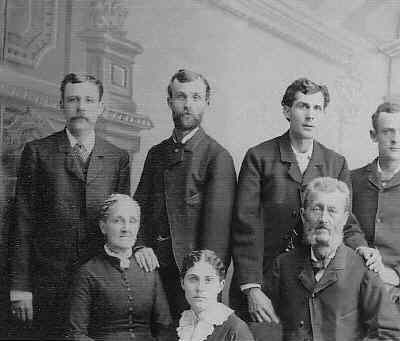
Seated are Jarvis Mudge and Deborah Ann Putman. Standing are sons: Garret H.; Richard T. married Margaret A. Orr ; Charles E. married Lydia A. Barber and Elizabeth Mosher; and Marcus H. (I do not know who is who). Seated is daugher Minnie Estella who married Francis McCabe.

The only child born to Richard T. and Margaret A. (Orr) Putman was my grandfather, Jarvis Mudge Putman (Putnam). He was born on February 4, 1884 in Amsterdam, Montgomery County, New York and died on January 29, 1965 in Penn Yan, Yates County, New York, at the age of 80.

Jarvis Mudge Putman about 1894

Jarvis Mudge Putman about 1894

Jarvis is standing on the bottom, far left corner of this photograph. He has a flower in his lapel. Montgomery County, New York about 1894.

Wedding Certificate of Jarvis & Bessie Putnam

Wedding Certificate of Jarvis & Bessie Putnam

As you can see on my grandparents wedding certificate, Jarvis’s surname is clearly spelled PUTMAN. My grandparents headstone clearly shows the surname PUTNAM. All of Jarvis and Bessie’s children used the surname PUTNAM. My grandparents have been gone a long time but I still miss them and cherish their memories.

Putnam Headstone

Putnam Headstone

Jarvis & Bessie Putnam 4.10.1912

Jarvis & Bessie Putnam 4.10.1912

Jarvis & Bessie 1940s

Jarvis & Bessie 1940s

1872 Miss Louisa Lee Schuyler – The State Charities Aid Association

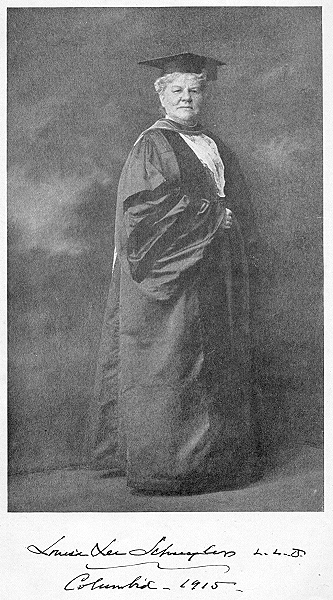
To say that Louisa Lee Schuyler was a humanitarian and a pioneer in social work would be an understatement. Miss Schuyler was the driving force in the movement to reform the poor house system in New York State. She was born into a life of wealth and privilege on October 26, 1837, the daughter of George Lee and Eliza (Hamilton) Schuyler; and great-granddaughter of General Phillip Schuyler and Alexander Hamilton. She founded The State Charities Aid Association on May 11, 1872, which was based in New York City and consisted of volunteer members; men and women, from all walks of life. Her involvement with the Sanitary Commission during the Civil War had taught her the great value and importance of organization. She had read the official reports about the deplorable conditions of the poor houses and alms houses in the state and knew that something had to be done about the inhumane treatment of the poor. She also knew that the “say-so” of one woman wouldn’t change anything; she needed a league of educated citizens united in a common goal.

Louisa Lee Schuyler

Louisa Lee Schuyler

(Photograph Source: http://educationtechnologyreview.com/folio/dodge/images05/index.html)

The association’s purpose was to raise the awareness of the general public to the abuses and sufferings of paupers in the poor house system; to visit every institution of charity supported by public funds in the state of New York; to report findings of mismanagement and corruption, and to make recommendations to the State Commissioners of Public Charities (later renamed The State Board of Charities). Miss Schuyler formed the association first; wrote the by-laws; encouraged her friends to join the association; visited the Westchester County Poor House and Bellevue Hospital with a few of her volunteers; and then, wrote a letter that included a complete report of the association’s findings of both institutions to the State Board of Commissioners. The association immediately received the approval of the State Commissioners and was given the right to visit and inspect the charitable public institutions under the powers and authority already held by the State Commissioners of Public Charities. There were three committees whose purpose it was to focus on the interests of the dependent classes. The categories were divided into: Children (all aspects of their welfare), Adult Able-Bodied Paupers (in poor houses and alms houses), and Hospitals (that included a sub-committee representing the Insane).

Led by Miss Schuyler, Chairman of the Committee on the Insane, the State Charities Aid Association pushed for and eventually forced the passage of The State Care Act, Chapter 126, Laws of 1890. Miss Schuyler started the first Training School for Nurses in connection with Bellevue Hospital in 1873, and was instrumental in After Care of the Insane which was implemented in 1906. In 1907, she was appointed as one of the original Trustees of the Russell Sage Foundation, and in 1908, she organized the first committee of physicians and laymen for the prevention of blindness. Honored by her forty years of charitable work, she was the first woman to receive an honorary degree of laws (LL.D.) from Columbia University in 1915. Miss Schuyler died at the age of eighty-eight on October 10, 1926, in Highland Falls, Westchester County, New York.

The following First Annual Report of the State Charities Aid Association was addressed to The Board of State Commissioners of Public Charities of the State of New York, on March 1, 1873.

 First Annual Report of the State Charities Aid Association

“The objects of our work are of a twofold nature. 1. To promote an active public interest in the New York State Institutions of Public Charities, with a view to the physical, mental and moral improvement of their pauper inmates. 2. To make the present pauper system more efficient, and to bring about such reforms in it as may be in accordance with the most enlightened views of Christianity, Science and Philanthropy.” (54)

“Again another question: Has not the time come for the officers in charge of our County Charities to be appointed and not elected? How can a man with no especial fitness for the position be expected, during his short term of office, to understand the best way of treating several hundred human beings suddenly placed under his care? He is at once obliged to grapple with this great question of pauperism, not as a theory, but practically – a subject to which, in its separate branches, philanthropists have given lives of study and of work. But he is called upon to deal, not merely with single branches, but with the whole question – with the best method of caring for pauper-children, how to keep them from following in the footsteps of their intemperate parents; with the most enlightened treatment of insanity; with the vexed questions of diet-lists for sick and well, of ventilation, and sanitary science, and hospital management; with occupation for the blind, and instruction for the idiot; with the labor question as affected by work-houses. How can one man, who has previously given no study to the subject, fit himself in one, two or three years to fill such a position? And then, when perhaps he may have gained some little knowledge of the subject, the next turn of the political wheel whirls him off and puts in another beginner as his successor. Can we not have carefully selected persons, thoroughly qualified, appointed to fill these positions for long terms of office? Are not the great improvements in our City Charities due to the adoption of this plan? The advanced methods of treatment used in our State Asylums are undoubtedly due to the fact that those in charge are pre-eminently fitted to hold the permanent positions they do. In a large city like ours, where the care of the poor is an enormous business in itself, taking the whole time of those having the supervision of it, good salaries should be paid, for the work is no light task; it demands and should have first-class ability. But in the country, where the supervision required is comparatively slight, taking perhaps a few hours a week, or two or three days a month, we are confident that benevolent and capable citizens can be found to fill these offices without pay, from motives of humanity alone. And even these should be held strictly accountable for the good management of their trust to a supervisory board like your own, as well as to their own county supervisors, for too many safeguards cannot be placed round those who have human beings in their keeping. The streets are out of order, and our carriages break down; the gas is poor, and our eyes pain us every evening; the sewerage is defective, and we tremble for the health of our children; criminals go unpunished, and our lives are in danger; taxes are exorbitant, and we feel it in our pockets; and when these abuses become so great as to be unbearable, we rise in our might, unite with other indignant citizens, drive out the thieves, and insist upon reform. But who knows what goes on in those far-away great buildings called hospitals and poorhouses? There is a class of persons who, if abused, cannot defend themselves – whose sufferings we do not see, whose cries we cannot hear, who have no influence or power to help them break their bonds. At least, let us see to it that those who have the lives of these unfortunate fellow-beings under their control shall be fitted for the position, and shall also be responsible to some authority above them. With this reform, and with the intelligent co-operation of our citizens as Visitors, we may feel that our duty toward these helpless people has been in some degree fulfilled.” (54)

 THE STATE CHARITIES AID ASSOCIATION OF THE
STATE OF NEW YORK
1872-1893

“Voluntary, Unofficial Supervision Of Public Charitable Institutions In Co-Operation With Official Boards, As Illustrated By The Work Of The State Charities Aid Association Of New York. By Miss Louisa Lee Schuyler, Member of the Association.

The following are named as direct results of the work of the State Charities Aid Association. And, in stating them, we wish it borne in mind that what has been accomplished is equally due to the co-operation of the local authorities. In addition to this, and where this has not been attainable, the co-operation of the State Board of Charities and the State Commission in Lunacy have been invaluable.  At times the association as been obliged to carry its reforms single-handed, but these instances are fortunately rare.

1. A higher standard of care has been introduced into every poor house and alms house in the state. – This means better nursing, special diet for the sick, improved hospital accommodation, separation of the sexes, suitable food, proper clothing, and many little comforts for the aged and infirm. It is impossible to enumerate the small and the great benefits conferred upon the inmates of these institutions through the presence of a few humane and intelligent visitors, commanding the confidence and respect of their own communities and sure of a powerful backing from headquarters.

2. Training-School for Nurses, 1873. – This school, attached to Bellevue Hospital, one of the largest pauper general hospitals of the city of New York, was established by our New York County Visiting Committee, who raised the necessary $20,000 with which to begin it, opened the training school on the first day of May, 1873, and to whom is due its efficient management and great success. At first governed by a special committee, the school increased so rapidly in importance that it was soon incorporated as a separate society, merely reporting annually to the parent association in recognition of its origin. The whole number of patients nursed by this school, from 1879 to 1893, is 50,059. Its graduates number 424; of these, 45 are now holding positions in hospitals, 19 as superintendents of training schools, 10 as matrons, and 16 as head nurses.

3. Hospital Book and Newspaper Society, 1874. – Boxes for the reception of fresh daily newspapers are placed, by this society, at the railway stations, the ferry slips, the exchanges, etc., in New York city, whence the papers are collected every day and taken to the hospitals, to be immediately distributed through the wards. In 1892 these daily papers numbered 158,417. Books and pamphlets are received at the office of the society, and are sent every week to hospitals, asylums, poor-houses, prisons, life saving stations, light houses, etc., often forming the nucleus of a small library. During the year 1892 the society distributed 7,716 books, 15,944 magazines, and 54,020 illustrated and weekly papers. The Hospital Book and Newspaper Society, at first a committee of the association, is now a branch with independent membership and treasury.

4. Farming Out the Poor Abolished, 1875. – In one of the counties of the State of New York there yet remained, when the visiting committee of that county was organized, a remnant of the barbarous system of farming out the care of the poor to the lowest bidder. The abuses connected with this practice can well be imagined. Through the exertions of our visiting committee, this system was speedily and completely abolished.

5. Temporary Homes for Children, 1877-85. – In 1875 the New York State Board of Charities secured the enactment of a law, known as ‘the Children’s Law,’ which made obligatory the removal of all children over two years of age from the poorhouses and almshouses of the state. In this great reform the board had the full sympathy of the members of the association throughout the state, who have also been active in promoting the enforcement of the law. To provide a suitable place (the poorhouse being very properly forbidden) where temporary lodging for children could be had, pending their removal to homes in families, the visiting committees of Ulster, Westchester and Queens counties established three Temporary Homes for Children, in 1877, 1880 and 1885.

6. Tramp Act, 1880. – In several counties it was found to be the direct pecuniary interest of the Overseers of the Poor to encourage vagrancy, as they received from the county treasury fifty cents per capita, often more, for each night’s lodging given a tramp. It required three years to obtain the necessary remedial legislation; but since the enactment of this deterrent measure, the State of New York has been less attractive to tramps. (Laws of New York, 1880, Chap. 176.)

7. First Aid to the Injured, 1882. – The serious condition in which accident cases were received at the hospitals in New York city, owing to ignorance of what should be done before a physician could be summoned, induced the organization, by the Hospital Committee of the association, of a Society for Instruction in First Aid to the Injured, modeled upon the English societies of like nature. This society, since its formation, (at first as a committee of the association,) has given 264 courses of lectures, of which 62 were to pay-classes and 202 to free classes, to the police, railroad employees, working girl’s clubs, and to members of the Young Men’s Christian Association and Young Men’s Institute, making a total of 6,595 persons thus instructed, of which number 3,545 received diplomas qualifying them to render first aid to the injured. During the eleven years of the existence of the society, it has received over one thousand testimonials from members of the police force and others, attesting the value of the instructions received.

8. Trained Nurses for the Insane, 1885. – Acting in co-operation with the Bellevue Training-School for Nurses and the City Commissioners of Charities of Kings County, the Association secured for six graduates of that school a special course of training at the Kings County Insane Asylum. Later, one of these nurses was the first principal of a training-school for nurses for the insane, established at the Hudson River State Hospital.

9. Municipal Lodging Houses, 1886. – The association obtained the passage of an act for the establishment, by the New York city authorities, of one or more municipal lodging houses, with the object of diminishing the number of tramps and vagrants at present sheltered without charge by the city in the police-station houses, and of providing decent lodging for respectable persons in temporary distress; labor to be exacted in return for shelter. The act, being permissive and not mandatory, has never been put in operation. An amendment will doubtless be applied for by the Committee on Adult Able-bodied Paupers, to remedy this defect.

10. State Care for the Insane Act of 1890.  State Care Appropriation Act of 1891. – For over fifty years it has been the policy of the State of New York to provide hospital treatment and care for its dependent insane. State asylums were first established for acute cases of insanity, to be succeeded later by state asylums for the reception of chronic cases from the poorhouses. Seven large state hospitals have thus been erected and equipped, for the purpose of giving the insane skilled medical treatment and suitable care. It was owing to an infringement, in recent years, of this humane policy, a backward step of the legislature, through which county after county was authorized to retain its milder cases of insanity, until one-third of all the counties of the state had been exempted from the general law, that brought about the necessity, in 1888, of applying for legislation which should restore to the state its old-time policy, and at one stroke completely abolish the poorhouse system of caring for the insane.” (55)

54. Reprinted from First Annual Report of The State Charities Aid Association To The State Commissioners Of Public Charities Of The State Of New York, March 1, 1873, New York: Cushing, Bardua & Co., Steam Book and Job Printers, Nos. 644 and 646 Broadway, Pages 6, 21-23.

55. Reprinted from The Organization of Charities, Being a Report of The Sixth Section Of The International Congress Of Charities, Corrections, And Philanthropy, Chicago, June 1893, Baltimore: The John Hopkins Press; London: The Scientific Press, 428 Strand W.C., 1894, Pages 62-65.

Louisa Lee Schuyler  

1906 After Care for the Insane

After Care for the Insane was another much needed service that was introduced, organized and came to fruition in 1906 by Miss Louisa Lee Schuyler. When inmates were discharged from the state hospitals, many had no where to go. They had no home, no job, no friends or relatives willing to help them and many had children that had been separated from them during their incarceration. Miss Schuyler and her league of volunteers of The State Charities Aid Association helped these people to re-enter society with a helping hand by working in co-operation with the superintendents of the state hospitals.

 FIRST ANNUAL REPORT OF THE SUB COMMITTEE ON THE AFTER CARE OF THE INSANE

“In our last year’s report we expressed the hope that during the coming year it might ‘be found possible to carry into practical operation some plan of assistance for those among the recovered insane (recently discharged from State Hospitals), who are in need of material relief or advice and counsel.’ This hope has been realized, and it is gratifying to be able to state that this Association, during the past year, has initiated and put into operation the first organized practical work in this country for After Care of the Insane. The first steps in this movement were taken on November 19, 1906, when at a conference of the State Commission in Lunacy with the Managers and Superintendents of State Hospitals, held in New York City, Miss Louisa Lee Schuyler, of our Committee on the Insane, upon invitation of the Chairman, Dr. Mabon, addressed the conference on the subject of ‘After Care of the Insane.’ Miss Schuyler gave a brief account of the work of the English After Care Association, based upon information obtained by her during the previous summer while in England, and closed with the following statement, outlining a plan for the organization of such work in the State of New York:

‘Conditions in England differ from those we have here, but the need of a helping hand to be extended to poor and friendless convalescents, and those discharged cured, upon leaving our State Hospitals, is just as much needed here as there, and this is what we ought to do. We need no new society because we have the machinery ready at hand; nor do we need to establish a new institution, or to own buildings, or incur large expense. All that we need is earnest interest in the subject, co-operation, organization, readiness to work.

I have thought that, with the concurrence of the medical superintendents, of two or three members of the re-established boards of managers of our State Hospitals, and of some of the local visitors of the State Charities Aid Association – those living in the respective State Hospital districts – that, with this combination, a working joint committee to provide After Care might be formed for each State Hospital. The experiment might be tried at first on a small scale, with one State Hospital, to see how it would work. I should like to see it tried, and will gladly help toward it in any way I can.’

The Chairman suggested that the subject be again presented in the form of a paper at a later conference. This suggestion was promptly adopted by the Chairman of the Committee on Topics and, at the next conference of the State Commission in Lunacy with the Managers and Superintendents of State Hospitals, held at the State Capitol at Albany, January 30, 1906, a paper upon After Care of the Insane, by Dr. Adolf Meyer, was read and discussed. The conference was largely attended, by representatives of the State Commission in Lunacy, by the medical superintendents and some of the managers of the State Hospitals, and by several officers and members of the State Charities Aid Association. It was presided over by Dr. William Mabon, President of the State Commission in Lunacy. The following resolutions were adopted by unanimous vote of the conference:

‘Resolved, That in the opinion of this Conference, it is desirable that there shall be established in this State, through private philanthropy, a system for providing temporary assistance and friendly aid and counsel for needy persons discharged, recovered, from State Hospitals for the Insane, otherwise known as ‘After Care for the Insane.’

Resolved, That the State Charities Aid Association be requested, by this Conference, to organize a system of After Care for the Insane in this State, and to put it into practical operation.

Resolved, That the representatives of the State Commission in Lunacy and the managers and superintendents of the State Hospitals for the Insane, here present, hereby pledge to the State Charities Aid Association their earnest and hearty co-operation in the establishment and maintenance of a system of After Care for the Insane in this State.”

“Immediately after this Conference the Committee on the Insane of the Association appointed a Sub-committee on the After Care of the Insane (Miss Schuyler, Chairman, Miss Mary Vida Clark, Secretary), to carry into effect the resolutions adopted by the Conference as quoted above.  At a meeting of the Board of Managers of the State Charities Aid Association, held February 9, 1906, the first report of the Sub-committee was presented and approved.  The report outlines the plan of organization as follows:

‘We propose that After Care Committees for each State Hospital shall be appointed by the Association, which shall work under the immediate control and direction of the ‘Sub-committee on After Care of the Insane’ of our Standing Committee on the Insane. These Hospital District Committees shall consist of the present visitors of the Association to the State Hospitals, or such of them as may be willing to serve, with others added as the need may arise, all residents of their respective Hospital Districts; and with them, as ex-officio members of the Committee, two or more Managers to be appointed by each Hospital Board, and the Superintendent of the Hospital. The chairmen and secretaries of the Committees are to be members of the Association. The Committees are to receive the names of their respective Hospitals, viz.: ‘Manhattan After Care Committee of the State Charities Aid Association,’ ‘Willard After Care Committee,’ etc.

In regard to expenses. Fortunately there is a humane provision on the statute books of our State, which makes it mandatory for Superintendents of Hospitals to supply to each patient leaving hospital, who may require it, clothing suitable to the season, and money, not to exceed $25, for traveling and other necessary expenses until he can reach his home or find employment. That section of the Insanity Law reads as follows:

Section 75. Clothing and money to be furnished discharged patients. No patient shall be discharged from a State Hospital without suitable clothing adapted to the season in which he is discharged; and, if it cannot be otherwise obtained, the steward shall, upon the order of the Superintendent, furnish the same, and money not exceeding twenty-five dollars, to defray his necessary expenses until he can reach his relatives or friends, or find employment to earn a subsistence.

It is expected that money advanced by the Committee for the temporary assistance of needy discharged patients, as defined and limited by the above section, will be repaid by the hospitals upon the presentation of proper vouchers.

For our part, we have offered to pay the entire administrative expenses; more especially for the employment of an agent whose duties, under our direction, will be to help local Committees requiring assistance in different parts of the State. This means a salary, traveling and other After Care expenses, which we estimate to amount to about $2,500 annually. For these purposes and for the assistance, if needed, of patients beyond the $25 allowed by the State, we shall have to ask for contributions from those who may wish to help.’

At the first meeting of the Sub-committee on the After Care of the Insane, held February 15, 1906, the first Hospital District Committee was appointed, that of the ‘Manhattan After Care Committee’ (Miss Florence M. Rhett, Chairman). Shortly afterwards an agent trained and experienced in work among the poor in their homes, Miss E.H. Horton, was engaged as After Care agent by the Sub-committee, and was immediately assigned to the duty of assisting the Manhattan After Care Committee.

After Care Committees were subsequently appointed as follows: For the Willard State Hospital, April 10, 1906; for the Hudson River State Hospital, May 22, 1906; for the Binghamton State Hospital, November 8, 1906.  These Committees have done very valuable work for the patients discharged, recovered, from their respective State Hospitals and have presented interesting reports to the Sub-committee. The work of the Committees outside of New York City has been done almost exclusively by the regular and ex-officio members, but the Agent of the Sub-committee has continued to assist the Manhattan After Care Committee in the great amount of work required in connection with the large numbers of patients discharged from the hospital on Ward’s Island to their homes in the City of New York, or frequently discharged to the Committee in the absence of a home or friends to whom they can go.

The plan of co-operation between the Hospital District After Care Committees and the State Hospitals has been outlined in detail and, to give a definite idea of the actual procedure which is followed, is here presented:

1. The Hospital is to notify the Committee of cases likely to be discharged, as soon as such discharge seems reasonably certain, preferably from a week to a month before the patient is likely to leave the Hospital. The Hospital is to furnish the Committee at that time with a summary of such facts in connection with the history of such patient recommended for supervision as will be of assistance to the Committee in the investigation of the case, including the name, age, nativity, creed, occupation, civil condition, date of commitment, previous commitments, form of insanity, character, habits and tendencies and previous history and circumstances of the patient, and the names and addresses of the patient’s relatives and friends, the character and condition of the home and the number in the family so far as known.

2. The Hospital is to notify the Committee of the final discharge, or discharge on parole, of every patient within 48 hours of such discharge, and to furnish at this time particulars regarding the case, if such particulars have not been previously furnished.

3. The Hospital is to notify the Committee if it learns of a likelihood on the part of any former patient to relapse, or of the desirability of assistance or advice in preventing a relapse on the part of former patients, whether such patients are on parole or have been finally discharged.

The Hospital After Care Committees undertake to visit through their members, or the agent of the Sub-committee, the homes and friends of patients about to be discharged, and to report immediately to the hospital such facts and recommendations as may seem likely to be helpful to the hospital in making a decision as to when and to whom patients should be discharged. The Committees also undertake to visit in their homes all patients discharged on parole, who in the opinion of the hospital may need supervision, and to report to the hospital before the expiration of the period of parole such facts as may be of service to the hospital. The Committees are ready, at the request of the hospital, to investigate the circumstances of any former patients who have been discharged, recovered, who may be considered by the hospital to be in danger of a relapse, and to require assistance or advice to maintain their physical or mental health.

In carrying out this plan of co-operation the hospital physicians have shown a generous appreciation of the value of the work done for their patients, and an earnest effort to fulfill the requirements made of them, by bringing to the attention of the Committees cases requiring assistance or supervision. By making suggestions from their extensive experience of such cases, as to the kind of assistance required, the hospital physicians can be, and have already proved themselves, invaluable allies of the Committees, co-operating with them for the permanent welfare of their patients. The practical operation of this plan may be better understood by a study of individual cases. We therefore select, from among those reported by the different After Care Committees a few individual cases assisted by these Committees, to illustrate the aims and methods and results of this work.

A.B. – A middle-aged woman, discharged from hospital May 14, 1906. She was too weak to work and the After Care agent arranged to send her to board in the country on a farm. While there she has gained steadily.  Upon her return a situation will be found for her.

C.D. – While in hospital for a number of months, her husband died, and her only child, a little girl of 12, had to be cared for by strangers. Mother worried about child, and doctor asked agent to see child and report. She found the child well and happy, and the man and wife with whom it was, much attached to the little girl. Agent secured a place with this family, at low wages, for the mother upon her discharge from the hospital. Has visited C.D. several times, and finds her much improved and very happily settled with her child.

E.F. – Discharged September 8, 1906. Agent visited her relatives several times, but found them not able to assist her in any way; also made various attempts to secure work for her. Finally found a place for her as ward helper in BellevueHospital, purchasing for her the necessary clothing. When calling to see her two weeks later, learned from the nurses that her work was satisfactory and that she was doing well.

G.H. – A married man, about 40 years old, who had broken down from over-work as bookkeeper in a large firm. After a few months at the hospital, he completely recovered, and a position was found for him in a bank, where he had formerly worked and where he was given employment of a less responsible and exacting nature, but at a very good salary.

J.K. – A young woman who had been a domestic. She was without friends to assist her and was provided for by the Committee with a temporary lodging place in the city, through the courtesy of the Children’s Aid Society Emergency Shelter, and later with a good situation, as a domestic, through the Charity Organization Society’s Agency for the Handicapped.

L.M. – A young girl of 17, whose mind became unbalanced largely because of poverty, sickness and unsanitary conditions at home. The Committee, with the co-operation of the Association for Improving the Condition of the Poor, the church and a settlement in the neighborhood, established the home-life on a somewhat better basis, provided better rooms and sent the girl and her little sister to the seashore and after their return, got the girl to join a social club at the Settlement where she will have pleasant associates and more opportunities for recreation.

N.O. – A preventive case, heard of through a State Hospital physician who served at a dispensary in the city, and there met a young girl who was so run down and nervous as to be threatened with a mental breakdown. She was sent to the country for several weeks and was completely restored to health.

P.R. – Young woman from the West who had no friends or relatives in the city; an excellent worker but, when recovered and able to leave the hospital, had no place to go to. She was discharged to the Agent who placed her with a lady, with whom she is happy, and who finds her a most satisfactory servant.

S.T. – Young woman, a Hungarian, entirely recovered, whose husband was anxious to take her home. Agent called to see her home, and found that the man was boarding in very crowded quarters and not working, although a plasterer who could earn good wages. Learned from neighbors and the woman’s family that he never had worked, that his wife had supported him. Her brother was willing to pay her passage home to Germany, where her father and mother have their own home, and she was glad to go. The husband was finally persuaded to consent, and the woman sailed for Germany within a week of her discharge from the hospital.

The Committee is glad to report that the expense of the work has not been so large as was expected at the outset. It has averaged about $100 a month. The comparatively small cost of the work is due to the fact that the Committee has been able to avail itself of the many existing charities in New York City which have shown a gratifying willingness to co-operate with our After Care Agency in furnishing temporary boarding places in the country or at the seashore, in providing material assistance in the home, in helping us to secure employment for our recovered patients, and in other ways.

The Committee has not been obliged, except in a very few instances, to call upon the State hospital funds for reimbursement for expenditures, provided for under section 75 of the Insanity Law, which authorizes the expenditure of $25 for the temporary assistance of a patient discharged from a State hospital. Whenever it has been found necessary to call upon a State hospital for such assistance the bills have been immediately approved and forwarded to the office of the State Commission in Lunacy where they have been honored. While the central office is responsible for the administrative expenses, including the salary and traveling expenses of the After Care Agent, and the hospital district After Care Committees are at liberty to call upon the Sub-committee to assist them, it is hoped that each Committee will endeavor to raise a small fund of its own over and above the amount received from the public funds, to meet the expense of assisting individual patients accepted for supervision by the Committee.

The Committee is gratified to note the many evidences of a widespread interest in After Care work. An account of the work of the Association for the After Care of the Insane was presented by Dr. Adolf Meyer, Director of the New York State Pathological Institute, at the annual meeting of the American Neurological Association, and by Dr. William Mabon, Superintendent and Medical Director of the Manhattan State Hospital, at a meeting of the American Medico-Psychological Association, both held in Boston in June, 1906.

The following resolution was unanimously adopted at the annual meeting of the American Medico-Psychological Association:

‘Whereas, The State Charities Aid Association of New York has recently established a Committee on the After Care of the Insane to work in co-operation with the State Hospitals for the Insane in that State, and to provide temporary assistance, employment and friendly aid and counsel for needy persons discharged from such hospitals as recovered, and Whereas, In the opinion of the American Medico-Psychological Association, it is very desirable that there should be carried on in connection with all hospitals for the insane such a system of After Care, therefore Resolved, That the American Medico-Psychological Association expresses its gratification at the inauguration of this movement in the State of New York, and its earnest hope that similar work may be undertaken for hospitals for the insane generally.’

Editorial articles on the subject appeared in the July, 1906, numbers of the ‘American Journal of Insanity’ and the ‘Albany Medical Annals.’ The Sunday editions of the New York Tribune and the New York Sun had, during the summer months, extensive articles on the work of the Association for the After Care of the Insane. A number of letters have been received from physicians and public officials in different parts of the country, referring to articles which had appeared in papers or medical journals and asking for printed reports and further information. Several of these correspondents have written with a view to the establishment of similar work in their localities. We greatly hope that work for the After Care of the Insane, now in practical operation in the State of New York, may soon be undertaken in other States of this country.”

SOURCE: Reprinted from Fourteenth Annual Report of the State Charities Aid Association to the State Commission in Lunacy, November 1, 1906, No.93, New York City, United CharitiesBuilding, 105 East 22d Street, Pages 20-28.  http://books.google.com/
2010 DSM-IV & HIPAA

1880 Forms of Insanity

In 1880, there were six general categories of insanity: Mania, Melancholia, Paresis (General Paralysis), Dementia, Epilepsy, and Dipsomania. Puerperal Mania was not included with these six but is listed for one woman in the 1880 Defective, Dependent & Delinquent U.S. Federal Census of The Willard Asylum for the Insane under the heading “Form of Disease.”

 DSM-IV

In the year 2010, The Diagnostic and Statistical Manual of Mental Disorders, Fourth Edition (DSM-IV), lists seventeen Criteria for Mental Disorders as opposed to the six general forms of diseases that were presented in 1880. DSM-IV Complete Criteria for Mental Disorders are: Adjustment, Anxiety, Child, Cognitive, Dissociative, Eating, Factitious, Impulse, Mental GMC (Disorder due to Medical Condition), Mood, Other, Personality, Psychotic, Sexual, Sleep, Somatoform and Substance.
(SOURCE: from the website of Dr. James Morrison at http://www.neurosurvival.ca/ClinicalAssistant/scales/dsm_IV/dsm_index.html)

 The HIPAA Law

Health Information Privacy
The Office for Civil Rights enforces the HIPAA Privacy Rule, which protects the privacy of individually identifiable health information; the HIPAA Security Rule, which sets national standards for the security of electronic protected health information; and the confidentiality provisions of the Patient Safety Rule, which protect identifiable information being used to analyze patient safety events and improve patient safety.

Understanding Health Information Privacy
The HIPAA Privacy Rule provides federal protections for personal health information held by covered entities and gives patients an array of rights with respect to that information. At the same time, the Privacy Rule is balanced so that it permits the disclosure of personal health information needed for patient care and other important purposes. The Security Rule specifies a series of administrative, physical, and technical safeguards for covered entities to use to assure the confidentiality, integrity, and availability of electronic protected health information.

For Covered Entities
The Privacy and Security Rules apply only to covered entities. Individuals, organizations, and agencies that meet the definition of a covered entity under HIPAA must comply with the Rules’ requirements to protect the privacy and security of health information and must provide individuals with certain rights with respect to their health information. If an entity is not a covered entity, it does not have to comply with the Privacy Rule or the Security Rule.

A Covered Entity is one of the following:
A Health Care Provider
This includes providers such as: Doctors, Clinics, Psychologists, Dentists, Chiropractors, Nursing Homes, Pharmacies…but only if they transmit any information in an electronic form in connection with a transaction for which HHS has adopted a standard.

A Health Plan
This includes: Health insurance companies, HMOs, Company health plans, Government programs that pay for health care, such as Medicare, Medicaid, and the military and veterans health care programs.

A Health Care Clearinghouse
This includes entities that process nonstandard health information they receive from another entity into a standard (i.e., standard electronic format or data content), or vice versa.”

 HEALTH INSURANCE PORTABILITY AND ACCOUNTABILITY ACT OF 1996
Public Law 104-191, 104th Congress

An Act
“To amend the Internal Revenue Code of 1986 to improve portability and continuity of health insurance coverage in the group and individual markets, to combat waste, fraud, and abuse in health insurance and health care delivery, to promote the use of medical savings accounts, to improve access to long-term care services and coverage, to simplify the administration of health insurance, and for other purposes.

(4) HEALTH INFORMATION

(B) Relates to the past, present or future physical or mental health or condition of an individual, the provision of health care to an individual, or the past, present, or future payment for the provision of health care to an individual.

(6) INDIVIDUALLY IDENTIFIABLE HEALTH INFORMATION

(B) Relates to the past, present or future physical or mental health or condition of an individual, the provision of health care to an individual, or the past, present, or future payment for the provision of health care to an individual, and —

(i) identifies the individual; or

(ii) with respect to which there is a reasonable basis to believe that the information can be used to identify the individual.

 WRONGFUL DISCLOSURE OF INDIVIDUALLY IDENTIFIABLE HEALTH INFORMATION

SEC. 1177.

(a) OFFENSE. – A person who knowingly and in violation of this part –

(1) uses or causes to be used a unique health identifier;

(2) obtains individually identifiable health information relating to an individual; or

(3) discloses individually identifiable health information to another person, shall be punished as provided in subsection (b).

(b) PENALTIES. – A person described in subsection (a) shall –

(1) be fined not more than $50,000, imprisoned not more than one year, or both;

(2) if the offense is committed under false pretenses, be fined not more than $100,000, imprisoned not more than 5 years, or both; and

(3) if the offense is committed with intent to sell, transfer, or use individually health identifiable information for commercial advantage, personal gain, or malicious harm, be fined not more than $250,000, imprisoned not more than 10 years, or both.”

(SOURCE: http://www.hhs.gov/ocr/privacy/)

1892 Hair of the Insane

A Dictionary of Psychological Medicine by Dr. Daniel Hack Tuke 1892

HAIR OF THE INSANE. – Dr. Bucknill has said that a lunatic is a lunatic to his finger ends; he might have added, writes Darwin, ‘and often to the extremity of each particular hair.’ Although this is true, the indications of insanity which the hair affords are not great importance. The prevailing colour of the hair of the insane, there are grounds for supposing, is different from that of sane people of the same class in the same district. Those possessing hair of a black, dark, or dark brown shade, have a greater tendency to become insane than those having hair of a fair or light brown hue, and those having brown hair, neither very light nor very dark, have the least tendency any…

It is commonly believed that people with certain colours of hair are more prone to certain forms of insanity than others. It has long been recognised that black hair very often accompanies a melancholic temperament, and there is an impression that black-haired people are more liable to melancholia than light-haired, and that the latter are more subject to attacks of mania. Though our statistics confirm this impression the difference is not of a very striking nature. Esquirol believed that some people with dark hair and eyes became violently maniacal, and we have found that the percentage of dark-haired among the acutely maniacal is above the average. He also believed that the illness in the dark-haired terminated more frequently in a marked crisis, and that the fair haired fell more readily into chronic disease.

Grey hair is less common among the chronically insane who have become insane when young, and among the demented, owing partly to the fact that the cares and worries of life fall on them less, and are less felt. If, however, a person above middle age be attacked by insanity, greyness of hair rather tends to develop, whether recovery takes place or not, and in this respect insanity does not differ from many other diseases. Grief and fear are well known to turn the hair grey, and it is found that melancholia has a greater tendency to produce greyness than mania. Dr. Hack Tuke reports a case of recurrent insanity in which the hair turned grey during each attack, and recovered its healthy brown colour when the patient was well. Grey hair in the insane is very frequently found patchy.”

Reprinted from Tuke, D. Hack, A Dictionary of Psychological Medicine Giving The Definition, Etymology, And Synonyms Of The Terms Used In Medical Psychology,  with the Symptoms, Treatment, And Pathology Of Insanity And The Law Of Lunacy In Great Britain And Ireland.  (Edited by D. Hack Tuke, M.D., LL.D., Examiner in Mental Physiology in the University of London; Lecturer on Psychological Medicine At The Charing Cross Hospital Medical School; Co-Editor Of The “Journal Of Mental Science”), Volume I, London, J. & A. Churchill, 11 New Burlington Street, 1892, Pages 562, 563.

1906-1907 Elopements, Suicides & Accidents at New York State Hospitals

“The Commission is pleased to report an unusually small number of untoward occurrences at the State hospitals during the year. At the Utica State Hospital a somewhat unusual case was that of a woman patient who, escaping from the institution, found means to reach Albany where she obtained employment as a clerk in a department store. Here her peculiarities were noticed after a few days and her services were discontinued. She also received notice from the mistress of the boarding-house in which she had found domicile that she must look for quarters elsewhere. The excitement which followed these events brought on an attack of considerable violence necessitating her commitment to a local institution for safe keeping. When she became quieter efforts were made to send her to the home of her husband but she declined to consider this, alleging that he was, in the first instance, responsible for her unjustifiable commitment to a hospital for the insane. Through the good offices of a local attorney she consented to return to the Utica State Hospital, upon condition that she would be granted a parole within a short time. As she was able to exhibit considerable self-control she was discharged upon the hospital books within a short time afterward and has not, up to the close of is report, required recommitment. A woman patient at this hospital was paroled by the authorities for the purpose of spending Thanksgiving with her husband at home. Although she had not at any time previously exhibited suicidal tendencies she seized the opportunity thus afforded her to swallow a powerful drug, and although prompt measures were applied she died in a short time.

At the Willard State Hospital a patient secreted binding twine about her clothing and seizing a favorable opportunity hanged herself from the door of a room. At the same institution a male patient died from asphyxiation due to the lodgment of meat in the larynx.

At the Hudson River State Hospital a male patient left the grounds without permission, and was afterward found dead on the railway tracks near the hospital pumping station, his skull having been fractured evidently by contact with the locomotive or cars.

At the Middletown State Hospital a male patient committed suicide by drowning. It appears that he carried a pail of water to his room and held his head far enough in the pail to become asphyxiated. At the same hospital a male patient left the institution without permission or notice and remained for some months about the neighboring counties enlivening the situation at different times by transmitting to the authorities of the institution souvenir postal cards. At the same institution a male patient committed suicide by wading out into a small ice pond in the rear of the institution and lying down in the shallow water until this reached over his head.

At the Rochester State Hospital a woman patient committed suicide by suspension, using a bed sheet, one end of which was attached to the window guard. At the same institution a male patient committed suicide by drowning subsequent to an unsuccessful effort to persuade his wife to remove him from the institution.

At the Kings Park State Hospital a male patient met his death under somewhat unusual circumstances, and the hospital authorities called upon the local coroner to make the usual investigation. The patient’s relatives, not being satisfied with his report, requested the Commissioners to make a special inquiry which was done. Physicians and attendants were placed under oath, and all testimony that could throw light upon the patient’s death was adduced, but nothing was found to contradict the findings of the coroner.

At the Long Island State Hospital a woman patient, while on parole and in the charge of her friends, was accidentally killed by a trolley car.

At the Manhattan State Hospital a woman patient after leaving a dining-room started straight for the river. A nurse went in immediate pursuit and a hospital watchman also tried to intercept the patient, but she outstripped her pursuers and plunged into the river. No trace of her body was afterward discovered. At this same institution a male patient becoming very noisy in a small dormitory to which he had been assigned was attacked by a fellow patient whose rest he had disturbed and struck on the head with a small serving table. The patient died in a few days as a result of the injury. At the same institution a woman patient secured a poisonous drug, died, and upon investigation by the coroner evidences of mercurial poisoning were found. At this institution a male patient was found hanging in the closet in which are usually stored the brooms, polishers, etc., of the ward. The patient had placed a broom handle across the top of two shelves, and with the girdle of his dressing gown about his neck had produced asphyxiation. At this institution a male patient succeeded in throwing himself into the river. His body was taken to the Fordham Hospital, and afterward identified by the institution clothing. Another male patient committed suicide in the same way. At the same institution a woman patient eluded observation while patients were preparing for bed. The premises of the institution were searched throughout the night and the following day, but no traces of her was found. It was supposed she was drowned while attempting to swim the river. A Russian patient, while walking about the exercising court with other patients, eluded observation and rushing to the point of the grounds opposite Hell Gate plunged into the river, and after swimming a few strokes was carried away by the strong tide and soon disappeared. A second patient who had observed the first one escape attempted to throw himself into the river at the same time, but was prevented by the nurse who had started out to overtake the Russian patient.

Owing to the situation of the Manhattan State Hospital on Ward’s Island, it is at all times necessary to detail several attendants to specially guard the river banks and an attendant is also detailed to patrol the river near the shore in a row boat. Almost daily attempts are made to break through this line, but the escapes are relatively few in number. Owing to the proximity of this hospital to the city of New York, and the fact that all occurrences of an unusual character in an institution for the insane are seized upon eagerly by metropolitan dailies, occurrences of this kind are frequently exaggerated as are also injuries received by patients though these may not be actually serious. Charges were made against the Manhattan State Hospital in connection with the somewhat sudden death of a patient named Rodesky. Allegations of cruelty and maltreatment were made by the relatives of this patient, and the managers and the coroner made an investigation of the circumstances attending his death. It appears that he was a bed-ridden paretic and a few days prior to his death, on the thirtieth of July, was found to be suffering from a fracture of the sternum and three fractured ribs. The coroner reported the cause of death as septic poisoning from several large abscesses owing to the patient’s general septic condition. The managers at the close of their special inquiry reported that the patient was not handled in any rough manner.

At the Central Islip State Hospital a male patient who had been given parole of the grounds and was in the habit of taking long walks about the premises was found hanging by the neck in the woods some three miles distant.

At the Gowanda State Hospital two women patients committed suicide by hanging.”

SOURCE: Reprinted from State Commission in Lunacy, Nineteenth Annual Report, October 1, 1906 – September 30, 1907, Albany: J.B. Lyon Company, State Printers, 1908, Pages 39-42.  http://books.google.com/