1858 Biographical Sketch of Amariah Brigham, M.D.

I always try to obtain obituaries from The New York Times but the newspaper wasn’t founded until 1851, two years after the death of Dr. Amariah Brigham, M.D., the first Medical Superintendent of the New York State Lunatic Asylum at Utica. This piece has been reprinted from Biographical Sketch of Amariah Brigham, M.D., published in 1858.  

AMARIAH BRIGHAM, M. D.
December 26, 1798 – September 8, 1849
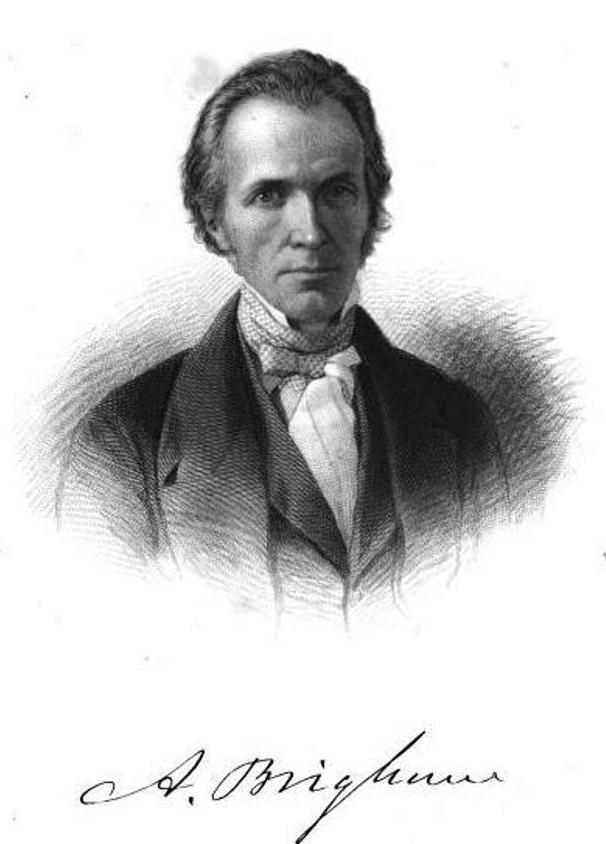
Dr. Amariah Brigham

Dr. Amariah Brigham

The following sketch was written by one of the managers of the Asylum – a distinguished physician – Dr. Charles B. Coventry:

Dr. Amariah Brigham was born in the town of New Marlborough, Berkshire county, Massachusetts, on the 26th day of December, 1798, where his father, John Brigham, was also born. His grandfather, Francis Brigham, one of the first settlers of the place, was from Marlborough, in Worcester county, a descendant of Thomas Brigham, who came over from England, and settled in Cambridge in 1640. In 1805, the father of Amariah moved to Chatham, Columbia county, New York, where he had purchased a farm, and died there in 1809. On the death of his father, the subject of this memoir, who was now eleven years of age, went to reside with an uncle, Dr. Origen Brigham, a highly respectable physician in Schoharie, New York. Here he hoped long to reside, and to follow the profession of his uncle, for which he had already imbibed a fondness. But it was so ordered in Providence, that in the course of a few years, this beloved relative was removed by death, and the nephew left with limited resources, to seek some new home and employment.

After remaining a short period with his mother in Chatham, having little taste for the farm, and an ardent desire for books and knowledge, he started off alone at the age of fourteen, for Albany, in pursuit of a livelihood. He soon found a place there, in a book and stationery establishment, where he resided in the family of the proprietor, and found himself happy. He had there abundant access to books, was in the neighborhood of the courts, the Legislature, and public men, and embraced with eagerness every possible means of acquiring knowledge. One who furnishes the material for this part of the memoir, well remembers the enthusiasm with which he would describe men and scenes of the capital, on his occasional visits to his mother at Chatham. Though but fifteen years of age, he could describe the person and qualities of almost every man of note who came to Albany, had his own opinion formed on nearly all matters of public interest, and could cite book and chapter for the ground of his opinion.

He often mentioned one little occurrence in connection with the late Daniel D. Tompkins, who was then Governor of the State. He was directed, soon after entering on his new employment, to carry some articles of stationery to the Chief Magistrate, who resided in a mansion with spacious grounds in front, near the Capitol. After delivering his parcel, and coming down one of the winding paths to the gate, he picked up a new silk handkerchief which had been accidentally dropped. Presuming it to belong to some of the Governor’s family, he went back and inquired for an owner. The Governor soon appeared in person, gave him many thanks for the return of the article, inquired of him his history, and then dismissed him with a cordial shake of the hand and a generous piece of money. That occurrence, which he often mentioned in later years, impressed deeply on his mind two things: the value of strict integrity in boys, and of kind attention towards them by men of prominence. He said he could not be bribed after that to do a dishonest act for all the wealth of the capital.

During a three year’s residence at Albany, while he had given perfect satisfaction to his employer, he had retained his desire for professional life, and had devoted all his leisure time to reading and inquiry relating to the same. His mother now moving back to his native place in Berkshire, Massachusetts, he soon got released from his engagements and resided with her, and entered on the study of medicine with Dr. Edmund C. Peet, a distinguished physician, brother of H. P. Peet, Esq., President of the New York Deaf and Dumb Asylum.

Here he resided and studied more than four years, subtracting one or two winter terms, when he taught school; and one spent in New York, attending lectures. His study too, was close and thorough, often amounting to twelve hours a day, besides miscellaneous reading.

While he had at this time, when his professional studies commenced, acquired an extensive acquaintance with books, had practiced much in composition, and wrote well, he had never in form studied English grammar. One who was the teacher of a select school in the place, informs us that he was waited on by the young medical student, with a proposition to be taught the grammar, and wished to have it all done in a single day. A day was given him, and a hard day’s work it was, for hundreds of questions had to be thoroughly answered, and different parts of the text-book explained. In the evening several young persons, who had spent months in the same study, undertook to examine the pupil of a day, and found, to their surprise, that he had not only reached their position in the study, but had gone beyond them, and could propose and solve difficulties in the language quite too hard for them. Within a few weeks he commenced the teaching of a school for the winter, in which he had a large class in grammar, and which was so taught, that at the closing examination, both teacher and pupils received high commendation.

In prosecuting his medical studies, he found that many things which he wanted were locked up in the French language. With the same resolution which had led him to master the English grammar, he procured dictionaries and other helps, and without any teacher mastered the French. Nearly one-third of his large library left, is in this tongue, and was read, in later years particularly, with as much facility as his own vernacular.

The year 1820, when his professional studies closed, he spent with Dr. Plumb, of Canaan, Connecticut, engaged, most of the time, in practice with him. In 1821, he commenced practice by himself in the town of Enfield, Massachusetts. Here he remained for two years, with fair prospects, but finding a more inviting field before him in Greenfield, the shiretownof Franklin county, he removed thither, and practiced for two years, when he went to Europe. After a year’s residence in France, Italy, England, and Scotland, he returned to Greenfield, but moved, in April, 1841, to Hartford, Connecticut. Here he had a large and successful practice, much of it in the line of surgery, until 1837, when he moved to New York, and lectured one winter in the Crosby Street Medical College. But his health here not being good, and not liking the confinement, to which he was so unused, he returned in October, 1838, to Hartford, a place which was always dear to him, and where he had hoped, even the last year, to spend the evening of his days. Dr. Brigham was married, January 23, 1833, to Susan C. Boot, daughter of Spencer Boot, Esq., of Greenfield, Massachusetts, by whom he had four children, of whom three, with their mother, survive to mourn his death.

In January, 1840, he was appointed in connection with Dr. Sumner, to take charge of the Retreat for the Insane, at Hartford, and in July, 1840, was appointed Superintendent of the same.

In the summer of 1842, Dr. Brigham was appointed Superintendent of the New York State Lunatic Asylum, at Utica. The institution was opened on the 16th of January, 1843. From this time, until the period of his death, he was unceasing in his devotion to the great cause of humanity in which he was engaged. It is well known that the building first erected, was intended as only a part of the entire establishment, and consequently, was not susceptible of such an arrangement, as was necessary for a proper classification. It was the ambition of Dr. Brigham that the State of New York should have a model institution, and this was impossible without further accommodations; and although his duties were thereby rendered more arduous and responsible, without any increase of remuneration, he was unceasing in his application to the managers and the Legislature, for additional buildings. In May, 1844, an additional appropriation of $60,000 was made by the Legislature, to enable the managers to erect two additional wings for patients, thus doubling the accommodations, and also the necessary room for bakery, wash-rooms, &c, in the rear of the buildings, and thus removing them from the basement of the main building. The new erections were completed in 1846, and were soon filled with patients. From that time until the present, the average number of patients has been from four hundred and fifty to five hundred. Dr. Brigham was not only desirous of establishing an institution which should be creditable to the State, but, in order that our citizens should avail themselves of its advantages, he labored to diffuse a more extended knowledge of the subject of insanity. This he did by popular lectures, and by embodying in his reports details of the causes, the early symptoms, and means of prevention, but particularly by the establishment of a quarterly journal, viz: “The Journal of Insanity,” which was devoted exclusively to this subject. In order to secure its more extensive circulation, it was placed at the low price of one dollar a year, in addition to many copies gratuitously distributed. To the readers of the Journal, nothing need be said of its merits. At the time it was commenced, it was the only Journal of the kind published, either in this or any other country, and elicited the highest encomiums from the medical and legal professions, both in Europe and America. Although Dr. Brigham was the responsible editor, it was the medium of communication for some of the ablest writers in our country. We have reason to know, that in addition to the gratuitous labor of editing and superintending its publication, it was long maintained at a heavy pecuniary sacrifice. In the Prospectus to the first number, the Doctor says:

“The object of this Journal is to popularize the study of insanity – to acquaint the general reader with the nature and varieties of this disease, methods of prevention and cure. We also hope to make it interesting to members of the medical and legal profession, and to all those engaged in the study of the phenomena of mind.

“Mental philosophy, or metaphysics, is but a portion of the physiology of the brain; and the small amount of good accomplished by psychological writers, may perhaps be attributed to the neglect of studying the mind, in connection with that material medium which influences, by its varying states of health and disease, all mental operations.

“We regard the human brain as the chef-d’oeuvre, or master-piece of creation. There is nothing that should be so carefully guarded through all the periods of life. Upon its proper development, exercise, and cultivation, depend the happiness and higher interests of man. Insanity is but a disease of this organ, and when so regarded, it will often be prevented, and generally cured by the early adoption of proper methods of treatment.”

In August, 1848, Dr. Brigham lost his only son, John Spencer Brigham, a promising and particularly attractive lad of the age of 12 years. In this son was treasured a father’s fondest hopes and proudest aspirations. He fell a victim to the dysentery which was prevailing in the Asylum, as also in the neighboring city of Utica and surrounding country, in a malignant form. A few weeks after he was called to follow to the grave his only remaining parent. These repeated afflictions, which were felt as parents who have lost the child of their affections alone can feel, evidently preyed upon a constitution naturally feeble, and seemed to prepare the way for his own premature removal. Though educated by a pious mother, and enjoying the advantages of an early religious education, he, like too many others, had been too much engrossed with the cares of this life to attend much to the future. This circumstance, with some severe strictures in his writings on the pernicious effects of revivals and protracted meetings on the health of young persons, very unjustly gave rise to a charge of skepticism and infidelity. If there was a fault, it was one into which a medical man, like Dr. B., possessed of a strong feeling of benevolence, would naturally run, viz: in his solicitude for the health and physical well-being, to forget that there were other and higher claims than those of this world. For the last four or five years more attention was paid to the subject of religion. The death of his son and mother made him feel more strongly the vanity and uncertainty of all earthly ties, and induced him to place his treasures in heaven. Dr. B. seemed to have a presentiment that his earthly pilgrimage was approaching its termination, and in his letter to his brother, the Rev. John C. Brigham, on the subject of the death of his son and mother, he spoke freely of his own death as not far distant; expressing, however, neither fear or regret. It was but too evident to the friends of Dr. B. that his afflictions, together with his arduous duties, were preying upon a constitution naturally feeble, and he was urged to relax his exertions, and if that could not be done to resign his situation; but he could not consent to leave his work unfinished, and only promised that when the institution was in a condition to dispense with his services, he would retire; but, alas! that period never arrived. In the month of August, the dysentery again made its appearance in the institution, but in a much milder form than in the preceding year. Dr. B. was seized with diarrhoea, which in many cases was the precursor of the more formidable affection. He, however, still persisted in discharging the duties of his office, and attending to his patients, until so far exhausted that it was impossible. The writer first saw him on the 27th of August; he had then been confined to his bed three days, and was suffering from the ordinary symptoms of dysentery; with fever, pain, and discharges of blood, but combined with extreme debility and prostration, so as to cause great apprehensions for the result. The severer symptoms yielded readily to the treatment, and his medical attendants flattered themselves with the hope that he might still be spared; but these hopes proved delusive: the disease, though not severe, had exhausted the little strength which he possessed, and there seemed no power of restoration. Every effort was made to sustain the system, (which was all that could be done,) but these efforts were all vain, and he expired without a struggle or a groan, on the morning of the 8th of September, 1849. The Doctor himself from the first said he should not recover, spoke calmly but freely about his death, gave directions about his affairs, and as to his burial, requesting to be laid beside his beloved son, and that the bodies of both should subsequently be removed to the new cemetery, where a spot has been selected for their interment.

Dr. Brigham was a philanthropist, a lover of his brother man, in the strictest sense of the term; he no doubt was ambitious of fame and distinction, but he was still more ambitious of being useful, and often expressed the idea, that he saw no object in living after a man had ceased to be useful. Fortunately for the community, the usefulness of which he was most ambitious will not perish with him. As the first Superintendent and organizer of the New York State Lunatic Asylum, he has erected a monument as durable as the blocks of stone of which it was built. His teachings too live in his writings. In additional to his annual reports, in which the whole subject of insanity is discussed, and the editorial articles in the “Journal of Insanity,” he has at different times published works of a more permanent character. In 1832, he published a small volume on the epidemic or Asiatic cholera; also a work on mental cultivation and excitement. In 1836, a volume on the influence of religion upon the health and physical welfare of mankind. In 1840, a volume on the brain, embracing its anatomy, physiology, and pathology. His last publication was an appropriate crowning of his labor of benevolence; it is a small duodecimo volume, entitled “The Asylum Souvenir,” and is dedicated to those who have been under the care of the author and compiler. It consists of a collection of aphorisms and maxims, to aid in the restoration and preservation of health, and we have no doubt it will be cherished with a double care, as it may now be considered the parting legacy of their friend and benefactor. The following extracts will exhibit the general tenor of the work:

 “THE ASYLUM SOUVENIR.

“To all those who are or have been in my charge as patients, this little book is affectionately dedicated by their friend, – Amariah Brigham.

 “ ‘Peace be around thee wherever thou rovest,
May life be for thee one summer’s day,
And all that thou wishest, and all that thou lovest,
Come smiling around thy sunny way.
If sorrow e’er this calm should break,
May even thy tears pass off so lightly,
Like spring showers, they’ll only make
The smiles that follow shine more brightly.’ ”

Were we asked what were the leading traits in the character of our departed friend, we should answer, that the first and strongest impulse was one of kindness and benevolence, but this was combined with a high sense of justice, and he would not indulge the former at the expense of the latter. In addition, he possessed a strong feeling of self-reliance, a quickness of perception which enabled him to seize readily the views of others, and use them for his own purpose; but above and before all, an iron will and determination, which brooked no opposition; consequently in whatever situation he was placed, he must be absolute, or he was unhappy. It is seldom we find this strong determination of purpose connected with a feeble constitution, but whenever it exists, the individual may be marked for a premature grave: the strongest constitution can scarcely long maintain itself under the thousand irritations and annoyances to which such a will is subject.

The following extracts from the reports of Dr. B. while Superintendent of the Asylum, at Utica, are a specimen of the tone of kindness which pervades all his writings:

“That education which consults the good of the whole man, that tends to develop and strengthen in just proportion the moral, intellectual, and physical powers, is conducive to health of body and mind. But in all countries the intellect or some of the intellectual faculties are cultivated to the neglect of the moral qualities, while in others the feelings, appetites, and propensities, are too greatly indulged and cultivated, to the neglect of just intellectual improvement. Hence arise unbalanced minds which are prone to become disordered. They feel too intensely, and are too ardently devoted to the accomplishment of certain purposes to bear disappointment without injury. They have not been taught self-denial, without which all education is defective.” – 3d Annual Report, pp. 54, 55.

“Allusion has been made to a predisposition to insanity being given by premature cultivation of the mental faculties. This appears to be a fruitful source of weak, ill-regulated, and, not unfrequently, disordered minds. The mental powers being unduly and irregularly tasked in early life, never after obtain their natural vigor and harmonious action. The dominion of reason should extend over all the feelings and impulses, the good as well as the bad, for insanity is perhaps most frequently produced by the excitement of some of the best impulses of our nature.” – 1st Report, pp. 34, 35.

Dr. Brigham, as we have said, was ambitious, but his was a noble ambition. He was ambitious of being useful to mankind, and of leaving a monument by which he should be remembered in after ages, and be ranked among the benefactors of our race; and most nobly has he succeeded. Few men were less covetous of personal popularity, or more regardless of the opinions of those about him, so long as he was sustained by the approbation of his own conscience. The following extract from Bryant, which he himself selected for “The Asylum Souvenir,” but a short time before his death, beautifully expresses the purpose of his life, and the manner of his death:

“So live, that when thy summons comes to join
The innumerable caravan, that moves
To that mysterious realm, where each shall take
His chamber in the silent halls of death,
Thou go not like the quarry-slave at night,
Scourged to his dungeon; but sustain’d and sooth’d
By an unfaltering trust, approach thy grave,
Like one who draws the drapery of his couch
About him, and lies down to pleasant dreams.” C. B. C.
SOURCE: Reprinted from Biographical Sketch of Amariah Brigham, M.D., Late Superintendent Of The New York State Lunatic Asylum, Utica, N.Y., W.O. McClure, 177 Genesee Street, Curtiss & White, Printers, 171 Genesee Street, 1858, Pages 110-117.

1882 The Shooting of Dr. John P. Gray

1882 The Shooting Of Dr. Gray.
The Force Of A Presentiment – The Assailant Held For Trial.

“WASHINGTON, March 17. – Dr. John P. Gray, who was shot at Utica on Thursday night, has made many warm friends and acquaintances here during the last five months. He was the chief medical expert on the Government side in the Guiteau trial, and his advice was relied upon almost implicitly by Col. Corkhill, the Government’s attorney. Coming here early in the present week, he was occupied until Thursday going over the bid of exceptions filed by Mr. Scoville, examining it particularly with reference to the medical parts. On Wednesday night, with Col. Corkhill, he went to the theatre, and walked from Ford’s Opera-house along Pennsylvania-avenue to Willard’s Hotel after the performance. On the way Dr. Gray remarked to Col. Corkhill that it was, perhaps, a very imprudent thing for them to be strolling about in the city so late at night, as they were exposing themselves to the attack of any “crank” who might entertain a judge against them for the part they had taken in the conviction of Guiteau. Col. Corkhill says he paid little attention to the remark at the moment, but last night, when he received a dispatch from Utica informing him that Dr. Gray had been shot, it recurred to him with something of the force of a presentiment.

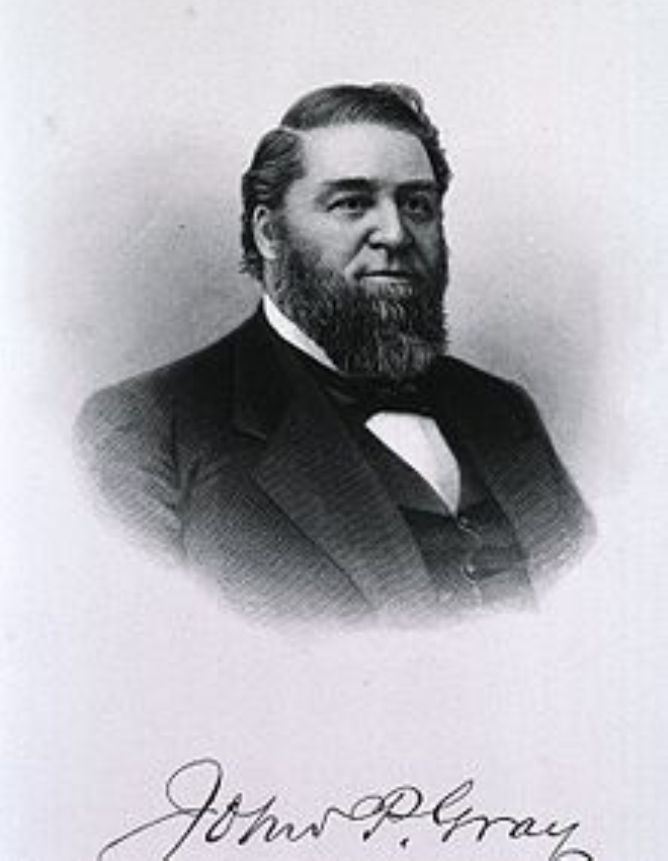
Dr. John Perdue Gray

Dr. John Perdue Gray

UTICA, N.Y. – March 17. – Remshaw, who shot Dr. Gray, Superintendent of the State Lunatic Asylum, was brought before Recorder Bulger this morning, and committed to await the action of the Grand Jury, which meets on Monday. Remshaw is judged insane by those who conversed with him last night and this morning. Dr. Gray is in bed but comfortable. A slight rise in temperature is reported. It is not thought that the pistol wound will much disfigure his face. There will be a small scar under the left eye where the ball entered, but the place whence it issued will be hidden by the Doctor’s beard.”
SOURCE: Reprinted from The New York Times. Published March 18, 1882, Copyright @ The New York Times.

Dr. Gray’s Would-Be Murderer.

“UTICA, May 8. – Dr. McDonald, of Auburn; Dr. Flandrau, of Rome, and William H. Bright, of Utica, the commission appointed by the court in the matter of Henry Remshaw, who shot Superintendent John P. Gray, of the State Lunatic Asylum, reported that Remshaw is insane, and recommend that he be committed to some asylum. They sharply criticise the Directors and others who heard Remshaw make threats against Dr. Gray weeks before the shooting occurred and did not report the fact to the proper authorities. Dr. Gray is again able to be out.”
SOURCE: Reprinted from The New York Times. Published May 9, 1882, Copyright @ The New York Times.

To learn more about Dr. Gray, click on the “Interesting Articles & Documents” page to read his obituary.

1880 The Treatment Of The Insane by William A. Hammond

“In all ages of the world, the most monstrous abuses have found their defenders among good and noble-minded people; and this is especially true of those acts which a subsequent period regards as outrages against the individual, but which at the time were defended by many on the ground of expediency, the advantage of the country, the glory of God, the progress of humanity, or the ultimate good of the person injured. Thus, the gladiatorial exhibitions of ancient Rome were looked upon as politic amusements, which tended to excite harmless emotions to the exclusion of more dangerous sentiments. The Duke of Alva, and others of his type, professed to be actuated by a laudable desire to put down rebellion; and it is entirely within the range of possibility that they were kind and loving fathers and friends. Witches and heretics were burned at the stake or drowned in the flood at the instigation of tender-hearted women, and by judges of gentle bearing, who honestly thought they were serving God and society; and the insane were loaded with chains, beaten and subjected to many other corporeal sufferings by the orders of learned and humane men, who sincerely believed that they were acting in accordance with the most benevolent instincts, – as in fact they probably were. But as time passes on the acts of those who have preceded us are seen in their true light, and judged by a higher standard. The human nature of to-day is more advanced than the human nature of yesterday, and what were deemed to be great truths then are seen to be vile errors now. It denounces the dungeon, the lash, and the fetters for lunatics, but it clings tenaciously to the strap, the camisole, and the Utica crib. It looks back with horror to the time when the insane were flogged as a therapeutical measure “to beat the devil out of them,” but regards with complacency and even favor the forcible feeding of the poor creatures by ignorant and brutal attendants, and the consequent life-long injury or death of the victims. That those who come after us will regard our conduct in these matters very much as we do that of the mad-house keepers of less than a century ago is not a matter for doubt. Already the revolution has begun.

Holding Chair

Holding Chair – Illustration by Etienne Equirol’s Des maladies mentales considérées sous les rapports médicale hygiénique et medico-legal (Paris 1838), at: Diseases Of The Mind: Highlights of American Psychiatry through 1900. http://www.nlm.nih.gov/hmd/diseases/debates.html.

Few, even among those who have given some attention to the subject, know the depth of wretchedness to which within a comparatively short period the lunatic was consigned, and which, even at the present day, is in some places scarcely lessened. Dr. Conolly, (1) whose advanced ideas of science and humanity led to the uniform adoption in England of the “non-restraint” system of treatment, speaking only thirty years ago on this subject, says: “Very few physicians of education were to be found, until a recent period, devoting themselves to mental disorders. Those occupied in asylums were chiefly distinguished by an eccentricity and a roughness which, unfitting them for other professional vocations, made them willing to undertake to treat mad people. By such persons, ill-educated, prejudiced, and without any resources but methods of violence, and who had never studied the forms and treatment of mental disorders, all attempts to ameliorate the condition of the insane were bitterly and unscrupulously opposed with every effort and every contrivance of vulgar minds. Meantime, the outside walls of an asylum were regarded with awe; the shrieks issuing from it made night hideous; the frantic creatures enclosed in their dens furnished appalling subjects for the artist or the novelist; squalor and dirt, and famine and ferocity were everywhere to be met with.” And now in the latter half of the nineteenth century we find that the methods which Conolly so vigorously denounced, and to the abolition of which he gave his life, are in full use in almost every asylum in the United States; that the attempts to improve the condition of the insane are opposed, as in his day, by those who have the charge of them; that dens are still in existence, chains still employed, blows still inflicted, systematic flogging still practised, the strait-jacket still used as a means of restraint; and that these agencies of subjection are supplemented by The Utica Crib. , – an apparatus not only inhuman, but one which no person possessing a competent knowledge of the physiology of the brain and the pathology of insanity would venture to introduce into the wards of a lunatic asylum.

Dress Camisole - Esquirol Bench

Dress Camisole-Esquirol Bench – Illustration by Etienne Equirol’s Des maladies mentales considérées sous les rapports médicale hygiénique et medico-legal (Paris 1838), at: Diseases Of The Mind: Highlights of American Psychiatry through 1900. http://www.nlm.nih.gov/hmd/diseases/debates.html.

I do not mean to be understood as saying that all these various measures for punishing and subduing a maniac are sanctioned by those in authority. No superintendent, so far as I know, approves of his patients being knocked down, beaten, or put in irons; but, nevertheless, these things and even worse are perpetrated in American institutions for the insane, either through the ignorance, the negligence, or the indifference of their superintendents; and others equally bad are done with their full knowledge and approval. Doubtless many of the outrages against humanity which are committed in our asylums are the direct result of the system by which their officers are appointed. But this only makes the matter worse. If it were individuals only with which those who have undertaken the task of ameliorating the condition of the insane had to contend, the contest would be neither long nor doubtful; but there are trustees and commissioners, and legislatures and political parties to meet, who have an interest – one which appeals with great force to the average American mind: the love of patronage – in keeping things as they are.

Now let us see what kind of atrocities are permitted by the system which prevails throughout this country. In this survey, it will not be necessary to go back farther than two or three years, or to refer to more than a few examples of the number which have been unearthed by legislative committees, casual visitors, and newspaper reporters, or which have been revealed by mere accident.

Within about a year four homicides occurred in the New York City lunatic asylum on Ward’s Island. In one of these a patient was beaten to death by an attendant; in another, an attendant was killed by a patient; in the third, a patient was thrown off the wharf and drowned by another patient; and in the fourth, one lunatic was ordered to give a hot bath to another, not only insane, but paralyzed. After getting him into the bath-tub he turned on the hot water and walked away leaving the poor wretch actually to be boiled to death. In the asylum at St. Peter, Minnesota, a patient who refused to eat had his mouth filled with food by a nurse, and the mess pushed down into his stomach with the handle of a knife, while another nurse held him down. On one occasion he ran away, yelling that they wanted to kill him. He was caught and laid on a bench; one attendant held his hands, and sat across his body; another attendant and a patient helped to hold him; his mouth was plugged to prevent his closing it. The food (soup) was poured in from a pitcher; his breath was heard to “gurgle” as the soup went into his windpipe, and in five minutes he was dead.

Force Feeding

Force Feeding

Owing to an erroneous idea that the food is poisoned, to some other delusion, or to a determined intention to commit suicide, it frequently happens that lunatics refuse to eat. The operation of forcible feeding is a delicate one, requiring anatomical skill; and yet it is one which in American asylums is often left to be performed by ignorant and brutal attendants, a physician not even being present. Thus, at the Bloomingdale Asylum in New York, a lady while being fed by a nurse had the soft parts of the roof of her mouth torn away by the spoon being rammed violently down her throat. From the testimony taken in this case, preliminary to a suit for damages, and which has not yet been published, I make the following citations:

Mrs. Cochran says she saw both Jane Eaton and Jane Gordon, nurses in Bloomingdale, forcibly feeding a patient. They had a wooden wedge which they put into her mouth, and then they fed her with a spoon (folio 93). Dr. Choate says it is done by attendants in asylums (folio 119). Jane Eaton, a nurse, puts on the camisole without instructions from the physician (folio 125). Was told to use force in feeding (folio 127). Used a spoon or a wedge to force open the mouth. “The most difficult person I ever had to feed” (folio 132), – and yet the duty was left to a nurse; the doctor was never present when she was fed (folio 133). The nurse does not always report to the physician when she uses the camisole. Has seen blood come from Mrs. N’s mouth when she was feeding her (folio 138). Was taken naked from her room to the bath-room (folio 146). The doctor says forcible feeding is delegated to an attendant (folio 150).

Last winter, rumors in regard to the bad management of the Longview Asylum, in Ohio, became so prevalent that the legislature appointed a committee to investigate them. From the report made on the subject I make the following extracts: –

According to the testimony of several eye-witnesses, a punishment frequently and sometimes gleefully resorted to by attendants in this asylum is one known as “taking down.” “Taking down,” in the words of the testimony, consists in tripping or throwing the patient to the floor, holding her down (for “taking down” is a female punishment; the men being usually knocked down) with the knee on the chest, while another employé gags the patient, and still another holds the patient’s hands. The patient is held down till she is quite weak and exhausted, becomes purple in the face, and the breath is almost gone.

Another punishment is to make a “spread eagle” of a patient. This consists in stripping a patient to nakedness, and making attendants whip him with wet towels. This is a punishment inflicted for a refusal to work. It is described as very painful, and is practised because it leaves no marks.

There is testimony as to ducking, kicking, beating, black eyes, and other marks of cruelty. It is in evidence that weak patients are overworked, and all inmates have not been properly fed and cared for. Hard work has been needlessly compelled in a room in which the mercury stood at one hundred and twenty degrees. The use of “cribs” and the “strong room” is shown. Loathsome vermin in loathsome numbers have been allowed to accumulate upon the bedding, the apparel, and the person of patients. All of these things and others told with a painful plainness is the testimony that is made part of this report.

The report then goes on to speak of the profanity of the attendants; that “the superintendent has been guilty of inattention to his duties and gross neglect;” and that the evidence “seems to the committee to destroy entirely the suggestion that the various hideous things were done without his knowledge and consent.” The Ohio legislative committee appears to have performed its work thoroughly; and it is the more to be commended for this, inasmuch as the superintendent was appointed on political grounds, and the majority of the committee was of the same political faith as this official.”

1880 The Utica Crib

It is so interesting to read original documents from the nineteenth century. It gives us a great insight into how people viewed the “insane.” The following articles feature Dr. William A. Hammond, who fought to remove all mechanical restraints, including the infamous “Utica Crib,” from New York State Insane Asylums. The first article was written by Dr. Hammond in March of 1880 and was published in The International Review. The second article from the Utica Morning Herald and Daily Gazette published on November 25, 1879, argues that Dr. Hammond was making “reckless and wholesale charges,” it also refers to the inmates as “unfortunate creatures” as if they were not human beings. What I discovered was that the Utica Crib was invented by Dr. M.H. Aubanel, of the Marseilles Lunatic Asylum in 1845, and was introduced at the New York State Lunatic Asylum at Utica in 1846 by Dr. Amariah Brigham, the first Medical Superintendent.

On November 29, 1886, Dr. John P. Gray, died. He had held the position as Medical Superintendent at Utica for several years. On December 14, 1886, Dr. George Alder Blumer was appointed as the new Medical Superintendent. On September 30, 1887, Dr. Blumer proudly reported: “Mention should be made in this connection of the so-called ‘Utica Crib,’ generally known in this hospital under the less suggestive euphemism of ‘covered bed.’ I am happy to report that we have been able to dispense with these restraint-beds, and that on January 18, 1887, all that remained of them were removed from the wards.”

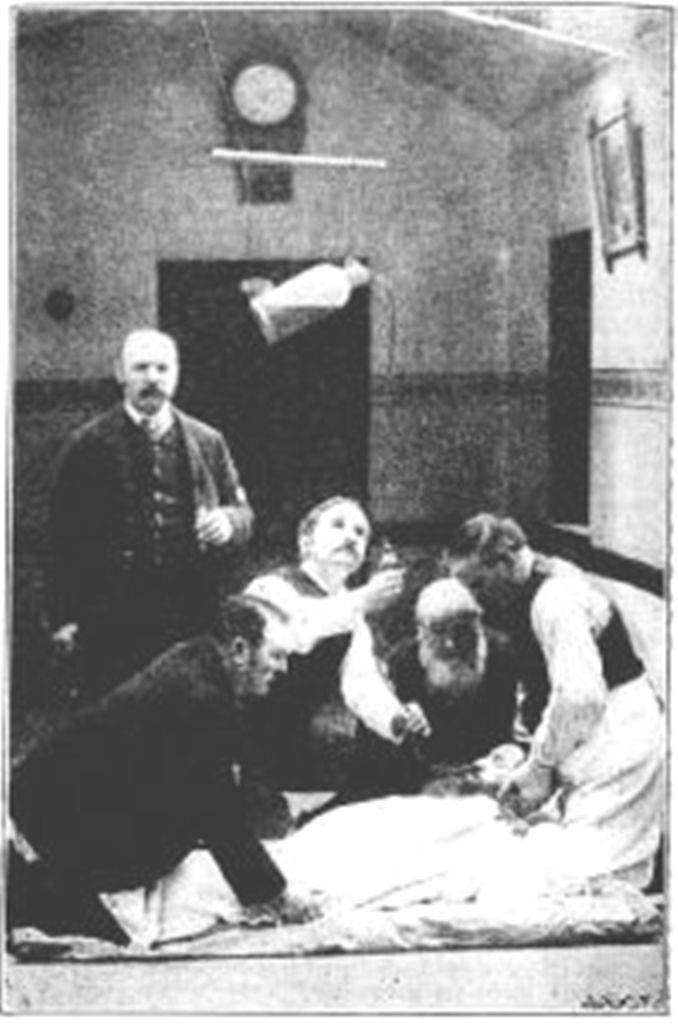
Utica Crib 1

Utica Crib 1

 THE TREATMENT OF THE INSANE

“Now let us take a brief review of the treatment of lunatics as regards mechanical restraint in this country. While it is certainly true that there are lunatic asylums, the superintendents of which are actuated by a desire to keep the number of restraint cases at a minimum, there is not one in which mechanical restraint in some form or other is not employed, and in some the proportion equals that at Hanwell before Dr. Conolly instituted his reform measures. In the New York City lunatic asylum on Ward’s Island, for instance, there is a daily average of over twenty patients kept in mechanical restraint, and twenty-five in seclusion. The means employed are strait-jackets or camisoles, muffs for the hands, some kind of contrivance to restrain the motion of the legs, chairs in which refractory lunatics may be confined, and last, but by no means least, the “Utica crib.” The object in view in using most of these contrivances is readily apparent from their designations; but the crib probably requires a brief description. It is constructed somewhat after the manner of a child’s crib, having like it barred sides and ends; but in addition it is furnished with a lid also of bars or slats on hinges, and fastening with a spring or lock. It is so arranged that the inmate is unable to open it when it has been closed upon him. The space between the body of the lunatic imprisoned in this cage and the lid does not exceed twelve inches, and is probably less. The consequence is that he must lie at full length, and this sometimes for many hours at a time. For those maniacs whose cerebral bloodvessels are full to repletion, the enforced position of recumbency is in the highest degree prejudicial; for those whose brains are anaemic it is not required, as they will lie quiet enough without being thus imprisoned. It is a matter of experience that patients who were previously maniacal while in the crib, dashing themselves with violence against the bars like a wild lion in its cage when first confined, have become entirely quiet and composed when taken from the cage and allowed to sit or stand; and yet its use is held to tenaciously by many superintendents, and long papers are written in its defence. It is true that it is not found in some institutions. There has never been one at Willard, none at Flatbush; and since the agitation for lunatic-asylum reform, it has been discontinued at Bloomingdale, Poughkeepsie, and perhaps other asylums; and even at Ward’s Island the lids have been taken off.”
(SOURCE: The International Review, The Treatment Of The Insane by William A. Hammond, Volume VIII, March 1880, New York: Barnes & Company, Page 236).

Utica Crib 2

Utica Crib 2

 DR. HAMMOND’S ATTACK ON THE ASYLUMS.

“Some notion of the utter wantonness of DR. WILLIAM A. HAMMOND’S statements regarding the lunatic asylums of this state may be obtained from the report of the senate committee, elsewhere published this morning, and the letter of SENATOR GOODWIN, the chairman of that committee, addressed to the editor of this journal. In respect to HAMMOND’S assertion that the investigation SENATOR GOODWIN conducted was one-sided and unfair, it appears from this document – in which all the evidence taken is published in full – that DR. HAMMOND and all the physicians who signed his petition were invited to appear before this committee, and furnish all the evidence in their possession regarding their alleged abuses in the conduct of the state asylums. It is their own fault – the fault more especially of DR. HAMMOND – if they did not make a case; and their failure to do so was admitted by themselves in the testimony here published. The evidence of DR HAMMOND, who makes these reckless and wholesale charges in the New York Herald, is especially noteworthy, as showing his total ignorance of the management of our insane asylums. He was asked if he had ever visited any of the insane asylums; yes, he had visited the Utica asylum twelve and eight years ago – on which latter occasion he merely entered the office; the Po’keepsie asylum four years ago – which was before it was fairly in operation; the Blackwell’s Island asylum – but not during the day of the present superintendent there; and the Bloomingdale asylum, but not since DR. NICHOLS has been in charge there. This was the basis of his personal knowledge of the asylums – and it of course appeared in the investigation, that he knew nothing at all. DR. HAMMOND was not able to make a single allegation, either upon personal knowledge or hearsay, which indicated any basis for the investigation he then demanded. His nearest approach was his denunciation of what he called the “Utica crib” – a contrivance or the confinement of violent lunatics which was invented by AUBANEL, the superintendent of the Marseilles insane asylum in France, and introduced into the Utica asylum, among others, in 1846, by DR. BRIGHAM, and which has been fully described by DR. GRAY in his annual reports to the legislature – notably in the eighteenth report. Even in respect to this crib, so-called, DR. HAMMOND was compelled to admit that the question whether this method of restraint was more objectionable than others was “a matter of opinion.”

The answers of DR. HAMMOND to two questions put to him in this inquiry will be interesting to our readers in Utica. To the question – “How long were you at the Utica asylum?” he answered, “I don’t think I should be warranted in making any observations upon that institution.” – and again, “Utica is the asylum I know least about.” To the question that he knew that the two asylums of which he made the loudest complaint were under the control of the board of charities of New York city, DR. HAMMOND answered: “I believe they are; my personal views do not concern any of the state asylums; I only believe in a general way that this matter ought to be investigated.”

Utica Crib 3

Utica Crib 3

 THE UTICA CRIB. The Covered Bed at the State Asylum for Restless Patients – A Herald Reporter Comfortable within what Dr. Hammond declares a “Barbarous Device.”

The unfortunate creatures who become insane suffer but little or nothing within the walls of humane state institutions when compared with the great anxiety and pain of loving parents and friends over their afflictions. Justice to the friends of the insane in the New York state asylum located in this city demands that nothing be added to their trouble by permitting unfounded reports regarding the care of the insane to go uncontradicted. Such sensations are cruel and unjust, whether they are prompted by malice or ignorance of facts. DR. WILLIAM A. HAMMOND, of New York, in an interview with a reporter of the Sunday Herald, of that city, took occasion to refer to what he is pleased to call “the Utica Crib,” the covered bed in use in the state asylum for the insane in this city, and in what are known as model asylums of America and Europe. When asked to describe the “Utica crib,” DR. HAMMOND said:

“It is a bed like a child’s crib, with slatted sides, eighteen inches deep, six feet long and three feet wide. It has a slatted lid which shuts with a spring lock. A lunatic put in it can barely turn over. There is not as much space between the patient’s head and the lid as if he were in a coffin. He is kept in the crib at the will of an attendant, the key being in the possession of the latter and not of a physician. Patients have sometimes died in these cribs. DR. MYCERT, who is an authority, says the crib is a most barbarous and unscientific instrument because there is already a tendency to a determination of blood to the brain in excited forms of insanity which is increased by the horizontal position in the crib and the struggles of the patient. The crib was introduced by the superintendent of the Utica asylum. The padded room could always be substituted for the crib.”

Following this is what purports to be a cut of the Utica crib. Any one of the thousands who visit the state asylum every year and are shown the covered bed in use at that institution will bear us out in saying that the picture looks as much like the bed as a peach crate does like a cradle. The cut looks like a chicken-hatching machine, and is simply a burlesque upon the truth, for which there is no possible excuse.

 A REPORTER IN A CRIB.

A reporter of the Herald visited the asylum, yesterday, and requested permission to examine one of the cribs which he had frequently seen in visits to the asylum. DR. GRAY cheerfully gave the permission, and the reporter had an opportunity of selecting one of five or six of the covered beds or “barbarous devices,” for actual experiment. Simply removing his outer coat he got into the crib, which was in condition for use, and the lid was closed down upon him. As the reporter is nearly six feet in height, and weighs two hundred and seventy six pounds, and larger in every respect than any patient in the asylum, it will be admitted that this test was a fair one. When the lid was closed the occupant laid with perfect comfort upon either side and upon his back. When lying upon his left side the position was sufficiently easy to permit him to write his description of the covered bed if he had chosen to do so. The hands and arms could be put between the smooth wooden rounds which formed the slatted top, and there was a perfect circulation at the sides and top. The bed was easy and comfortable and there was an abundance of room for lifting the head from the plump pillow so that the lower end of the bed could be seen with ease. In short the reporter found that he could roll and toss about at will as easily as he could in his own bed at home, but he could not get out of it – and this is the humane plan of the device which is styled “barbarous” – as will be seen hereafter.

 THE COVERED BED AND ITS USES.

The covered bed or “Utica crib” is simply an ordinary hospital bed to all intents and purposes. It is made of smoothly finished and varnished wood with a woven wire bottom and slatted sides, like a child’s cradle. The one tested contained a mattress thicker than the ordinary ones, a plump soft pillow, clean and comfortable sheets, blankets and counterpanes. In the sides there are twenty wooden rollers, in the ends eight and in the cover seven rollers of smooth hard wood. The cover is attached to hinges which permit its entire removal at any time. The beds are frequently used without the cover by patients and attendants. A few months ago a venerable Utica patient got into one of these covered beds and permitted a reporter of the Herald to close it tightly to note its workings. The patient moved about easily in it and conversed cheerfully. When asked how he liked to sleep in this bed he replied: “Oh, I like it very much. I am often disturbed in my sleep. When I occupy this bed I rest easily, for I know where to find myself in the morning. Without such restraint, I might do myself some harm during the night.”

The patient, tho’ insane at intervals, really had more sense than those who denounce what they appear to know little about. Covered beds, patterned after those in use at the state asylum, are used in St. Elizabeth’s and other hospitals of Utica and thro’out the state, and they are daily seen and examined by visitors. So simple and harmless is the contrivance that parents, after seeing them, inquire, “Why would not this be a good plan to prevent our babies from falling out of their cradles?” It certainly would.

 THE USES OF COVERED BEDS.

The covered beds are used to secure the excited and restless patients, the requisite quiet and sleep in a horizontal position, that are absolutely necessary for their recovery. Insane people are sick people. When a sane person is sick his physician directs that he shall lie in bed, and a sensible invalid always obeys the orders of his physician. When an insane person requires rest he may be ever so much disposed to obey the doctor and lie in bed, but his mind is disordered and his will is gone so that he can not control his own actions. The result is he is liable to exhaust himself by getting in and out of bed at frequent periods, risking chances of falls and exposure to cold. Epileptics and paralytics are apt to fall out of open beds and receive severe injuries.

If such beds are not used, other more objectionable systems would have to be put into practice, such as the “bed strap,” for holding excited patients in the ordinary beds, or the forcible holding of the patient by attendants. This latter method better deserves the title of barbarous than does the covered bed system. No one or two attendants can hold an excited patient in a bed without using a force that must be more or less cruel and the marks of their grasp will not fail to be undeniably imprinted upon the delicate arms, body or limbs of the invalid. Insane people are endowed at times with extraordinary strength and the utmost exertions of strong men are required to quiet them. The use of the strap is harsh and at times injurious.

 THE ORIGIN OF COVERED BEDS.

The crib, or covered bed for restless patients, is not a new device and was not introduced by the superintendent of the state asylum at Utica as DR. HAMMOND alleges. It was devised in France by DR. AUBANEL of the Marseilles lunatic asylum, in 1845, and described in the Annales Psychologniques of the year. DR. BRIGHAM, in 1846, introduced the crib bedstead into the Utica asylum, and was described in the American Journal of Insanity in that year. In 1852, DR. WILLIAM WOOD, medical official of Bethlem hospital, England, improved upon the crib bed, and gave a description of the same in Winslow’s Journal of Psychological Medicine. This bed was like a child’s crib but the covering was of webbing. In 1854 the AUBANEL bed was abandoned in the Utica asylum and the present one was put into use, resembling DR. WOOD’S, with this exception – the sides were made with rounds like an ordinary child’s crib instead of with boards like the English bed, and a round slatted corner in place of webbing, which powerful patients could easily displace.

 DISTINGUISHED APPROVAL.

The covered bed is spoken of as the “box bed” or “locked bed,” by DR. LINDSAY, in an article on dipsomania, in the Edinburgh Medical Journal, of October, 1808, in which he says: “Its use renders him quiescent for the time, while it maintains warmth and does not prevent free ventilation. I have repeatedly tried it in various forms, and have no doubt as to its having prolonged several lives and prevented many accidents that would have been sacrificed or that would have occurred under the customary arrangements of many or most other asylums. Such is my opinion of its usefulness, that I think it should find place not only in every lunatic asylum, but in every general hospital, for I remember the difficulties that used to occur in the fever and delirium tremens wards of the Royal Infirmary of Edinburgh, and the impossibility of dealing with occasional patients other than by mechanical restraints of the nature of strait-waistcoats and strapping to bed.”

In the Edinburgh Medical Journal of February, 1878, DR. LINDSAY, M.D.,R.S.E., and physician to the Murray royal institution at Perth, published another article commending the covered beds in the highest terms as invaluable for preventing injuries – adding, however, “a lid in the case of patients who would scramble out of bed with sides merely. The kind of bed that I have found most useful is the following, and I venture to recommend some such bed to the attention of the medical profession generally because I am satisfied it is very much wanted in all departments of medical, surgical and obstetric practice.”

Then follows the description of forms of beds all alike, or closely resembling what is called by DR. HAMMOND “Utica crib,” but which is styled by DR. LINDSAY “the protection bed,” a term he says “happily applied to it many years ago by DR. BROWNE of Dumfries, when he was one of her majesty’s commissioners in lunacy for Scotland, and who had occasion to see such beds in use here during his official inspections. Moreover, he had himself, when at the head of Dumfries asylum used beds of a somewhat similar kind. And in America such beds are, and have long been in common use in its hospitals for the insane.”

Finally he adds: “The general result of the use of the protection bed in some of its forms, as compared with the orthodox modes of dealing with the classes of patients already described, is this – in my opinion – that it is directly and decidedly conservative of life and health, and preventive of injury and disease.”

The above is high authority in approval of the covered bed from professional and practical men who have daily opportunities of testing its merits. Laymen or friends of those who are confined in asylums can examine these beds in the Utica asylum and judge for themselves whether they are “barbarous” or “cruel devices” as has been alleged.

 REMARKABLE.

DR. HAMMOND, in his interview with the New York Herald reporter, makes the important announcement that sometimes patients die in covered beds or “Utica cribs.” Can not DR. HAMMOND, without particular effort, recall many instances where sane and insane patients have died in ordinary beds which have no sides or covers?”
(SOURCE: Reprinted from Utica Morning Herald and Daily Gazette. Wednesday, November 25, 1879).

1880 The Treatment Of The Insane by W.A. Hammond

Kings Park: Stories from an American Mental Institution – A Review

Lucy - Kings Park Movie

Lucy – Kings Park Movie

I had the honor of viewing Kings Park: Stories from an American Mental Institution by Lucy Winer in my own home. I watched it twice because there was so much to take in and process. This documentary is about a woman who after more than thirty years returns to Kings Park Hospital where she was committed to the violent ward at the age of seventeen for trying to commit suicide. Lucy had spent two years in a private institution and six months at Kings Park. The young Lucy knew that she needed help and she hoped that she would finally receive it. The adult Lucy was on a mission to confront that seventeen year old girl who was always just under the surface in her memory. Her goal was to unlock the reasons why that young girl was sent there, what caused her depression, and what caused her to leave that part of herself in the past.

I didn’t know what to expect when I turned on the DVD. I think I was expecting an angry woman who viewed herself as a victim as a result of living in a state mental hospital for six months. Not that anyone could blame her but that’s not Lucy. What I saw was an intelligent, honest, compassionate, non-judgmental woman with a calming demeanor who spoke softly and articulately about her past. She interviewed several people and let them say what they wanted and needed to say. She presented a balanced insight into what it was like living in a mental hospital in the year 1967. Her emotions were real and her reactions were sincere. Lucy Winer will forever be endeared to me because of her inner strength, bravery, and persistence in finding the answers that she had long been searching for. The movie is thought-provoking, moving, informative, and disturbing.

There are so many issues that go undetected by the general public because no one talks about them. In law, a defendant cannot claim ignorance, but in life we do it everyday. Not that we intend to ignore everything that is happening around us but because we are a nation of exhausted people; working 40 to 50 hours a week, taking care of our own families, trying to pay the bills, being taxed to death for everything not knowing where our money is going, and getting up the next morning and doing it all over again. Mental Illness and the way we treat people with problems are important issues that must be discussed because it touches us all in so many ways. It could happen to members of your own family: your daughter, son, husband, wife, partner, mother, father, and it could happen to you. What would you have done if faced with the same set of circumstances that Lucy was given? Would you have been courageous enough, and smart enough to survive?

If you are interested in purchasing Kings Park: Stories from an American Mental Institution, you can sign up for their Mailing List and/or like them on Facebook.

Kings Park Movie

1907 The Deportation of Insane Aliens

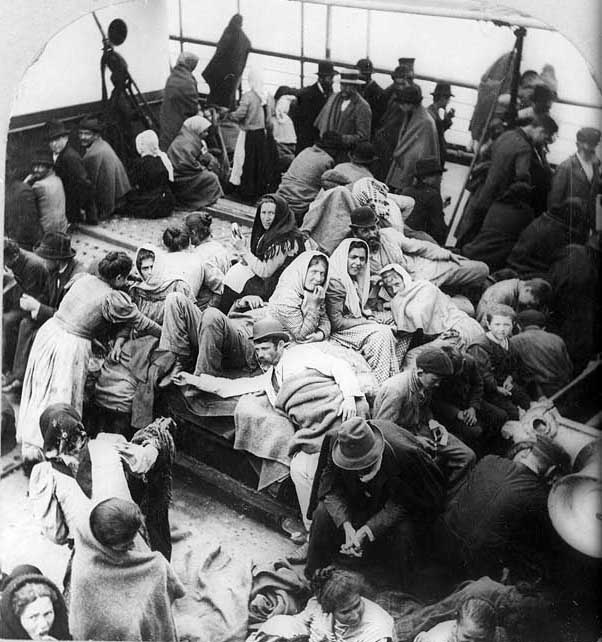
By 1880, New York State was overwhelmed with the immigrant pauper insane population which by its own laws, was required to care for them. The state legislature enacted new laws allowing for the deportation of this “dependant, defective and delinquent class” of immigrants in order to relieve the state of its financial burden. One of the problems that resulted from the actions of the state legislature was that the sick, blind, deaf and dumb, crippled, feeble-minded, and insane class of immigrants, were sent back to their original port of departure in Europe by themselves with little or no money, and many were sick and improperly clothed. No one bothered to make sure that these helpless people actually made it back to their homes, which in many cases was quite a distance from the port. Many of their relatives and friends never saw or heard from them again. Without the efforts of Miss Louisa Lee Schuyler and The State Charities Aid Association in 1904, this problem may never have been brought to light. On February 20, 1907, the problem was resolved with a new immigration law.

Immigrants Aboard Ship 1902

Immigrants Aboard Ship 1902

State Charities Aid Association of New York 1904
“The United States immigration regulations exclude from admission into the United States insane persons, persons who have been insane within five years previous to landing, and persons who have had two or more attacks of insanity at any time previously. Any alien of these classes who succeeds in entering the United States, or any person who becomes a public charge from causes existing prior to landing, may be deported at any time within two years after arrival, at the expense of the person bringing such alien into the United States. Under certain conditions, the secretary of the treasury is authorized to deport such aliens within three years of landing. Under the provisions of this law 147 insane persons were deported to foreign countries from the State of New York during the fiscal year 1903.

From different sources it came to the attention of the Association that insane aliens deported by the government did not always reach their homes so promptly as they should, and sometimes not at all.  In this connection the following quotation from the annual report of the superintendent of the Manhattan State Hospital, West, for the year just closed is significant:

‘While perhaps, it is a matter that does not officially concern the hospital, I desire to state, that I have received several communications from the relatives of patients deported, who claim, up to four or six weeks after such deportation, they have been unable to find that they have arrived at their homes, and could obtain no trace of them. Any conditions which do not afford protection to the insane alien until she reaches her home, are indeed unfortunate, and it appears to me, that some steps should be taken by the proper authorities, toward remedying these matters. The steamship companies do not appear to hold themselves responsible beyond the port where the patient was originally received aboard their steamship.’

The Association, therefore, has made some inquiry into the methods pursued in the deportation of insane aliens, and although it has been possible as yet to make only a cursory examination of a few cases, the conviction is inevitable that the methods of deportation are not such as to afford the patients proper care and protection in all cases, nor to do justice to their friends and relatives. Only five cases have been studied. A brief account of three of the five cases which are at all complete will give some idea of present methods.

1. ‘Case of M.S., a young woman, aged 29 years, a native of Finland, arrived in this country November 1, 1902. About a year and a half later she became insane and was committed to the Manhattan State Hospital, West, April 14, 1904, where she was visited the following week by her friends, the matron and missionary of the Immigrant Girl’s Home. Hearing that the girl was to be deported, these friends offered to arrange for her deportation, hoping to find some woman returning to Finland who would take charge of her. Ten days after this, before the girl’s friends had had time to move in the matter, they received a notice from the hospital that she was to be deported in three days. The names and addresses of the girl’s relatives in Europe were not in the possession of the hospital nor of the steamship company which was to take charge of her, and how she was expected to reach her home, the Association has been unable to discover. The friends of the girl, at the suggestion of the Association, procured these names and addresses, and gave them to the purser of the steamer on which she was to sail, and the Association took the precaution of sending the information to the home office of the steamship company in Glasgow, and of asking the officials there for some particulars regarding the method of transporting the patient from Glasgow to Finland. The following extract from the steamship company’s reply shows the methods employed:

‘Immediately on landing at the dock she was taken to a boarding house where she was properly taken charge of, being attended to by the women of that house. We are forwarding her to-night in charge of our shore interpreter to Hull, and he has instructions to see her safely on board the steamer for Helsingfors, which leaves Hull to-morrow. We have also addressed letters to the owners of the steamer, both in Hull and in Helsingfors, with a request to take some interest in the case, and to give the necessary instructions regarding treatment on board.’

A letter received by the girl’s friends in New York from the girl’s sister in Finland says that no communication was ever received by the friends in Finland from the steamship company, or from any one except the New York friends. The sister writes that she spent three days going from place to place trying to get information regarding the whereabouts of the patient, and finally located her in the Helsingfors hospital for the insane, where she had presumably been sent by the steamship company. This was in July, – two months after the girl sailed from America. The latest letter received from the patient’s sister came in October, and mentioned that she had been unable to find the trunk which was sent with the patient by the New York friends, and which contained all her possessions. The steamship company seems to have done nothing to see that the patient’s property followed her to the hospital.

The features of this case to which we would call attention are these: The failure of the hospital to cooperate with the friends of the patient in providing for her deportation, though no great haste was necessary, as the time in which she could be deported would not expire for six months; the failure of the authorities of this State to take any responsibility for the patient after she had been handed over to the steamship company, including a failure both on their part and on the part of the steamship company to notify the relatives in Europe, or even to ask her friends in this country to notify her relatives; the failure of the steamship company to make any effort to secure the names and addresses of the girl’s family or to make any use of them when furnished by others; the lack of proper care and protection shown in sending an insane person to a boarding house instead of to a hospital, and in forwarding her by night, in the company of a male attendant, on a long railroad journey. It would be interesting to know how this girl fared from the time she left Glasgow in May until her friends found her in July and how she would have fared if her friends in this country and this Association had not actively interested themselves in her case.

2. Case of M.R., an Austrian girl, aged 20 years. The following account of this case was given by the girl’s cousin: ‘When she became insane her brother, who lives in New York city, thought he would send her home, and told the Manhattan State Hospital authorities that he would try to arrange to do this, planning to send her with some acquaintance who was going over. The hospital, however, said that this could not be done; that she was to be returned by the government. The brother was not informed regarding the time of her return until May 3rd, when he received a letter saying that she was to be deported on May 4th. By the time he received the letter she was already on board, and it was impossible for him to go to the steamer that night. He went, however, the next morning about 8 o’clock, and had great difficulty in getting permission to see her. Finally he was allowed to see her for a few minutes. He found her dressed in a cotton wrapper, such as is worn at the State hospital, and provided with no other clothing. He would have brought her clothing if he had known that she needed it, but as nothing had been said by the State hospital it had not occurred to him to do this. He wished to give her money so that she could buy clothing when she got to Hamburg and spoke to the captain about the matter. The captain thought it useless for the girl to have money, but finally consented to take a few dollars for her use.’

The girl was taken to a hospital in Hamburg on landing there, and the parents of the patient were notified by the hospital of her arrival. In this case the significant feature seems to be again the failure of the authorities in this State to co-operate with the friends of the patient for her deportation.

3. Case of F.H. This patient is the son of one of the two sisters whose pathetic story appeared in the newspapers in November, 1904, at the time they committed suicide because of inability to support themselves. The following extract from the newspaper account of the case, though not altogether accurate, gives an idea of the story of the boy: ‘Everything went well with the sisters until a little more than a year ago. Then the boy was taken sick. His illness left him with a deranged brain. He was kept for a time in Bellevue Hospital and then was sent to Ward’s Island. The sisters visited him regularly once a week there. One week, about a year ago, they learned on their regular visit, that he had been sent back to Austria. This, friends of the sisters say, had been done without notification being sent to the mother. Her grief and her fear that some harm would come to him on the voyage were intense. She immediately raised all the money she could get, and, taking also the little which her sister had, she boarded a fast ocean liner for Hamburg. She landed there on the same day that her son landed, and, taking him under her charge, continued the journey to Vienna, where she had him put in an asylum. Then she hurried back to her sister in this country. The strain on the income of the two, however, was too great, and when they got out of work a few weeks ago they became despondent.’

It appears from the records of the Manhattan State Hospital, East, that the boy was admitted there September 25, 1902, and was visited by his mother Sunday, October 5. As he was an alien, having been but nine months in the United States, arrangements were made immediately for his deportation. On October 16, the hospital was informed that the boy would be deported on a vessel sailing October 18, and that he was to be placed on board the 17th. A letter dated October 17 was sent by the hospital to the boy’s mother informing her of his deportation.

Again we note the failure of the State authorities to make any effort to co-operate with the friends of the patient. In this case the hospital did not know of the plans of the Immigration Department for the deportation of the patient until the day before his deportation, and cannot be blamed for not writing earlier to his mother, but under such circumstances it would seem that the friends of the patient should be notified by telegram or special messenger, instead of by a letter, which could hardly be expected to reach its destination before the patient sailed.

To subject insane persons, many of them young and in an acute stage of the disease, to the vicissitudes of a long ocean voyage, with a further journey on the other side of the ocean, is certainly a sufficient risk under the best conditions, and every possible protection should be provided against physical or moral injury. The inhumanity of subjecting relatives of patients to unnecessary anxiety and alarm by leaving them in ignorance of what is happening to those they hold dear, should also be prevented by the establishment of some system which will provide for more personal attention to each case. At present insane aliens are dispatched with little more ceremony than if they were able-minded and able-bodied immigrants, capable of attending to their own interests.”

SOURCE: Reprinted from Twelfth Annual Report of the State Charities Aid Association to the State Commission In Lunacy, No. 89, November 1, 1904, New York City, Untied Charities Building, 105 East 22d Street, Pages 29-34.

To continue reading the rest of the article, click on the PDF file located on the “Interesting Articles & Documents” page.

1898 Drugs For Mental Illness

I know that WIKIPEDIA is not the best place to find reliable information, however, finding definitions of drugs used in the late 1800s is not an easy task. I have provided the definitions from WIKIPEDIA, and the Merriam-Webster online dictionary, to help you understand what medications were prescribed to the mentally ill population incarcerated at insane asylums across the United States and abroad during the nineteenth century. The detrimental effects that some of these drugs had on the human mind and body were not fully understood.

These are the drugs that were mentioned in the book A Compendium of Insanity by John B. Chapin, M.D., L.L.D., first Medical Superintendent of The Willard Asylum for the Insane, published on 1898.

Drug Definitions:

Bromide: 1: a binary compound of bromine with another element or a radical including some (as potassium bromide) used as sedatives. 2: a dose of bromide taken usually as a sedative (MW)

Chloral: 1: a pungent colorless oily aldehyde C2HCl3O used in making DDT and chloral hydrate (MW)

Chloral Hydrate: a bitter white crystalline drug C2H3Cl3O2 used as a hypnotic and sedative or in knockout drops (MW)

Cocaine: a bitter crystalline alkaloid C17H21NO4 obtained from coca leaves that is used medically especially in the form of its hydrochloride C17H21NO4·HCl as a topical anesthetic and illicitly for its euphoric effects and that may result in a compulsive psychological need (MW)

Digitalis: 1: a capitalized : a genus of Eurasian herbs of the snapdragon family (Scrophulariaceae) that have alternate leaves and racemes of showy bell-shaped flowers and comprise the foxgloves b : foxglove  2: the dried leaf of the common European foxglove (Digitalis purpurea) that contains physiologically active glycosides, that is a powerful cardiotonic acting to increase the force of myocardial contraction, to slow the conduction rate of nerve impulses through the atrioventricular node, and to promote diuresis, and that is used in standardized powdered form especially in the treatment of congestive heart failure and in the management of atrial fibrillation, atrial flutter, and paroxysmal tachycardia of the atria ; broadly : any of various glycosides (as digoxin or digitoxin) that are constituents of digitalis or are derived from a related foxglove (D. lanata) (MW)

Ergot: 1 a: the black or dark purple sclerotium of fungi of the genus Claviceps that occurs as a club-shaped body which replaces the seed of various grasses (as rye) b: any fungus of the genus Claviceps. 2: a disease of rye and other cereals caused by fungi of the genus Claviceps and characterized by the presence of ergots in the seed heads. 3 a: the dried sclerotial bodies of an ergot fungus grown on rye and containing several ergot alkaloids (MW)

Ferric: 1: of, relating to, or containing iron.  2: being or containing iron usually with a valence of three (MW)

Hycoscin hydrobromate & Hycoscin: Scopolamine, also known as levo-duboisine, and hyoscine, is a tropane alkaloid drug with muscarinic antagonist effects. It is obtained from plants of the family Solanaceae (nightshades), such as henbane, jimson weed and Angel’s Trumpets (Datura resp. Brugmansia spec.), and corkwood (Duboisia species). It is among the secondary metabolites of these plants. Therefore, scopolamine is one of three main active components of belladonna and stramonium tinctures and powders used medicinally along with atropine and hyoscyamine. Scopolamine was isolated from plant sources by scientists in 1881 in Germany and description of its structure and activity followed shortly thereafter. The search for synthetic analogues of and methods for total synthesis of scopolamine and/or atropine in the 1930s and 1940s resulted in the discovery of diphenhydramine, an early antihistamine and the prototype of its chemical subclass of these drugs, and pethidine, the first fully synthetic opioid analgesic, known as Dolatin and Demerol amongst many other trade names.  Scopolamine has anticholinergic properties and has legitimate medical applications in very minute doses. As an example, in the treatment of motion sickness, the dose, gradually released from a transdermal patch, is only 330 micrograms (µg) per day. In rare cases, unusual reactions to ordinary doses of scopolamine have occurred including confusion, agitation, rambling speech, hallucinations, paranoid behaviors, and delusions. (W)

Hyoscyamine: a poisonous crystalline alkaloid C17H23NO3 of which atropine is a racemic mixture; especially : its levorotatory form found especially in the plants belladonna and henbane and used similarly to atropine (MW)

Hyoscyamus: Henbane (Hyoscyamus niger), also known as stinking nightshade or black henbane, is a plant of the family Solanaceae that originated in Eurasia, though it is now globally distributed.  Henbane can be toxic, even fatal, to animals in low doses…Common effects of henbane ingestion in humans include hallucinations, dilated pupils, restlessness, and flushed skin.  Less common symptoms such as tachycardia, convulsions, vomiting, hypertension, hyperpyrexia and ataxia have all been noted. (W)

Mercuric Chloride: a heavy crystalline poisonous compound HgCl2 used as a disinfectant and fungicide and in photography—called also bichloride, bichloride of mercury, corrosive sublimate, mercury bichloride (MW)

Morphia: morphine (MW)

Morphine: a bitter crystalline addictive narcotic base C17H19NO3 that is the principal alkaloid of opium and is used in the form of its hydrated sulfate (C17H19NO3)2·H2SO4·5H2O or hydrated hydrochloride C17H19NO3·HCl·3H2O as an analgesic and sedative (MW)

Opium: a highly addictive drug that consists of the dried milky juice from the seed capsules of the opium poppy obtained from incisions made in the unripe capsules of the plant, that has a brownish yellow color, a faint smell, and a bitter and acrid taste, that is a stimulant narcotic usually producing a feeling of well-being, hallucinations, and drowsiness terminating in coma or death if the dose is excessive, that was formerly used in medicine to soothe pain but is now often replaced by derivative alkaloids (as morphine or codeine) or synthetic substitutes, and that is smoked illicitly as an intoxicant with harmful effects (MW)

Potassium Bromide: a crystalline salt KBr with a saline taste that is used as a sedative and in photography (MW)

Potassium Iodide: a crystalline salt KI that is very soluble in water and is used medically chiefly in the treatment of hyperthyroidism, to block thyroidal uptake of radioactive iodine, and as an expectorant (MW)

Sodium Bromide: a crystalline salt NaBr having a biting saline taste that is used in medicine as a sedative, hypnotic, and anticonvulsant (MW)

Strychnine: a bitter poisonous alkaloid C21H22N2O2 that is obtained from nux vomica and related plants of the genus Strychnos and is used as a poison (as for rodents) and medicinally as a stimulant of the central nervous system (MW)

Sulfate: 1: a salt or ester of sulfuric acid  2 : a bivalent group or anion SO4 characteristic of sulfuric acid and the sulfates (MW)

Sulfonmethane (Sulfonomethane, Sulfonal: Acetone diethyl sulfone) is a chemical compound formerly used as a hypnotic drug, but now superseded by newer and safer sedatives. Its appearance is either in colorless crystalline or powdered form. In United States, it is scheduled as a Schedule III drug in the Controlled Substance Act. It produces lengthened sleep in functional nervous insomnia, and is also useful in insanity, being given with mucilage of acacia or in hot liquids, owing to its insolubility, or in large capsules. Its hypnotic power is not equal to that of chloral, but as it is not a depressant to the heart or respiration it can be used when morphine or chloral are contra-indicated. It is, however, very uncertain in its action, often failing to produce sleep when taken at bedtime, but producing drowsiness and sleep the following day. The drowsiness the next day following a medicinal dose can be avoided by a saline laxative the morning after its administration. It is unwise to use it continuously for more than a few days at a time, as it tends to produce the sulfonal habit, which is attended by marked toxic effects, disturbances of digestion, giddiness, staggering gait and even paralysis of the lower extremities. These effects are accompanied by skin eruptions, and the urine becomes of a dark red color (hematoporphinuria). Sulfonal is cumulative in its effects. Many fatal cases of sulfonal poisoning are on record, both from chronic poisoning and from a single large dose. (W)

Tonic: an agent (as a drug) that increases body tone (MW)

Trional: (Methylsulfonal) is a sedative-hypnotic and anesthetic drug with GABAergic actions. It has similar effects to sulfonal, except it is faster acting. (W)

SOURCES:

Merriam-Webster OnLine

WIKIPEDIA, The Free Encyclopedia

1879 Moral & Physical Causes of Insanity

An interesting passage from the book, A Manual of Psychological Medicine, published in England in 1879 by John Charles Bucknill and Daniel Hack Tuke, lists the “Exciting or Determining Causes of Insanity” which are divided into Moral and Physical categories. This list provides the reasons, upon admission, why people were admitted to mental hospitals in England. The same basic list holds true for the United States.

Intemperance, in Drink”, caused roughly fifty per cent of admissions. Around 1840, Spiritualism was the newest fad that had swept across the U.S. and Western Europe, thus “Religious Excitement” is listed as a moral cause. In America, there were new religious movements such as the Millerites, Mormons and Shakers, just to name a few. “Self Abuse (Sexual)” is of course, masturbation, which we all know causes insanity, dementia and imbecility. I was always told that it also caused blindness. To the Victorian’s, masturbation was a crime that was absolutely despised.

“MORAL CAUSES:
Domestic Trouble (including loss of relatives and friends).
Adverse Circumstances (including business anxieties and pecuniary difficulties).
Mental Anxiety and “Worry” and Overwork.
Religious Excitement.
Love Affairs (including Seduction).
Fright and Nervous Shock.

PHYSICAL CAUSES:
Intemperance, in Drink.
Intemperance, Sexual.
Venereal Disease.
Self Abuse (Sexual).
Over-exertion.
Sunstroke.
Accident or Injury.
Pregnancy.
Parturition and the Puerperal State.
Lactation.
Uterine and Ovarian Disorders.
Puberty.
Change of Life.
Fevers.
Privation and Starvation.
Old Age.
Other Bodily Diseases or Disorders.
Previous Attacks.
Hereditary Influence ascertained.
Congenital Defect ascertained.
Other ascertained causes.”
(Bucknill & Tuke 3:92)

“To estimate with anything like accuracy the relation which Sexual Vice bears to Insanity, requires considerable discrimination. In Dr. Earle’s recent tables of the Northampton State Lunatic Hospital, it appears that out of the male admissions (572) 19 were attributed to masturbation. In those of the York Asylum prepared by Dr. Needham, out of 603 male admissions this cause is set down at 15. Reliable facts are of course most difficult to obtain, and such figures reveal little of the real truth – the extensive mental mischief done – of which there can be no doubt whatever.” (Bucknill & Tuke 3:98)

Religious Anxiety and Excitement. – In the analysis of our collected cases, we find it assigned in 3 per cent of the total admissions. Doubtless, in many instances it was in reality the initial symptom of the disorder. Still we cannot for a moment doubt that the form in which religion is but too frequently presented is a serious cause of Insanity. Dr. Earle gives 17 cases out of the total numbers already mentioned, as due to “religious excitement” and 6 to “Spiritualism;” Dr. Needham, 26 out of 1029 admissions, as due to the former.” (Bucknill & Tuke 3:99)

SOURCES:
Bucknill, John Charles & Tuke, Daniel Hack, A Manual of Psychological Medicine, (John Charles Bucknill, M.D, Lond., F.R.S., F.R.C.P. Formerly Lord Chancellor’s Visitor of Lunatics and by Daniel Hack Tuke, M.D., F.R.C.P. Joint Editor of “The Journal of Mental Science”; Formerly Lecturer on Psychological Medicine at The York School of Medicine and Visiting Physician to The York Retreat), Fourth Edition, London, J. & A. Churchill, New Burlington Street, 1879, Page 92, 98 & 99.

1882 High Expectations Disappointed

High Expectations Disappointed
From the Rochester Democrat, November 19, 1882.

Willard State Hospital, Main Building, circa 1898.

Willard State Hospital, Main Building, circa 1898.

Willard Asylum for the Insane, at Ovid, has among its inmates a Danish lady of good education, and who, previous to the loss of her reason, occupied a respectable position in society. Her delusion is that she is immensely wealthy – the Queen of the universe. On all other subjects she is rational, and converses with ease and fluency. She has an idea that the asylum is her castle, built for her special benefit, and that the attendants and inmates are her servants. Recently she managed to elude the vigilance of the attendants and mail a letter to a brother in Denmark, stating that she had become wealthy and was living in a magnificent mansion surrounded by luxury and attendants, and had abundance to provide for himself and family, and closed by urging him to accept her hospitality and spend the balance of his life with her. Having frequently heard of the good luck of his countrymen in the land across the sea, he did not have a suspicion but what fortune had favored his sister and that she had actually become rich. He therefore proceeded immediately to close out his little tailoring business, in which he had managed with difficulty to support his family, and with the proceeds purchased tickets for the transportation of his wife and five children to Central New York. Allowing the letter announcing his intention of coming only a few days’ start, the little family took ship for America with light hearts and great expectations. Arriving in New York, they set aside barely sufficient to take them to their destination and spent the remainder in improving their appearance so that they should not bring discredit upon their rich kinswoman. On reaching Ovid they recognized Willard from the description given in the sister’s letter. At the asylum, nobody being able to talk Danish, the attendants were in a quandary what to do. Finally an old Dane was found, and the true state of affairs was made known to both parties. The cruel disappointment of the brother and his wife was pitiable. Instead of finding a wealthy sister to welcome them to her palatial abode, they found her in a hopeless condition and an inmate of an insane asylum, and they penniless in a strange land. The hearts of the managers were touched by the piteous scene, and a snug sum was made up and a situation was provided for the man in the laundry of the asylum.
SOURCE: Reprinted from “The New York Times” Published November 27, 1882, Copyright @ The New York Times.

1902 Insane Patient Escapes

Insane Patient Escapes – Jumps From Ward’s Island Into The East River – Picked Up by Steamboat and Returned to Institution – Claims to Have Recovered His Reason. 1902.

Augustus C. Ward, who for the past seventeen months has been an inmate of the State Insane Asylum on Ward’s Island, escaped from the institution yesterday by jumping into the East River. He took with him a ten-foot plank, and when he was tired swimming he rested himself on the plank. He found it very difficult to steer a true course and was being carried rapidly down stream by the strong tide when he was picked up by the steamboat Middleton of the Hartford Line, bound from Hartford to this city. Ward was detained by the harbor police at Pier A, and later was taken back to Ward’s Island. When seen in the station house, Ward said that he came from Rastus, Banks County, Georgia, about three years ago and secured a position with Broadway Rouss in the tinware department. His health failed him and he became very nervous. He was sent to Bellevue Hospital, and he believes that through his brother’s wife, who lives in Washington, he was sent to Ward’s Island March 2, 1901. He said that he had written many times to his mother since his imprisonment in the asylum, saying that he was well and wanted to come home, but he thinks that his letters were intercepted. Whenever he received a message from home the letter was always opened and it would be marked, ‘Opened by mistake.’ He declared further that whatever trouble he may have had, he had entirely recovered, and that the authorities were only keeping him at the institution because he could do work with which others could not be trusted.

Joseph Reid, who has charge of the tinware department at Charles Broadway Rouss’s store, where Ward worked, said yesterday that the young man was there for about three months in the early part of 1901. One day he became melancholy, burst into tears, and was then sent to Bellevue Hospital. He was there examined by physicians, who said that Ward would have to go to some asylum for treatment. About three months ago, Mr. Reid said, he received a letter from Ward asking him to take him back into the store. Reid wrote to the authorities on Ward’s Island and received word from them that Ward was not in a fit condition to leave that institution. Superintendent A.E. MacDonald of the East Hospital, where Ward now is, said yesterday afternoon that the young man was very penitent, and had promised not to try to escape again.
SOURCE: Reprinted from The New York Times. Published July 24, 1902, Copyright @ The New York Times.