Unknown's avatar

About lsstuhler

Linda Stuhler is a Genealogy Geek from Rochester, New York, who loves to find out the facts. She has been researching her family tree for over twenty years and has accumulated an abundance of information on various subjects that she enjoys sharing on her blog at: https://inmatesofwillard.com/. She was responsible for the creation of the New York State Senate Bill S840, initiated in August 2011, which allows for the release of the names, dates of birth and death, of former patients who were buried in anonymous graves in New York State Custodial Institutions. The bill was changed from the original draft to S840A and does not work the way it was intended. It became a law on August 18, 2016, but it did not include provisions for a searchable database available to the public as New York State attorneys and the Office of Mental Health believed that if they did so, they would be sued. She is the author of "THE INMATES OF WILLARD 1870 TO 1900, A GENEALOGY RESOURCE."

Wreaking Havoc in the Staten Island Farm Colony

1896 Middletown

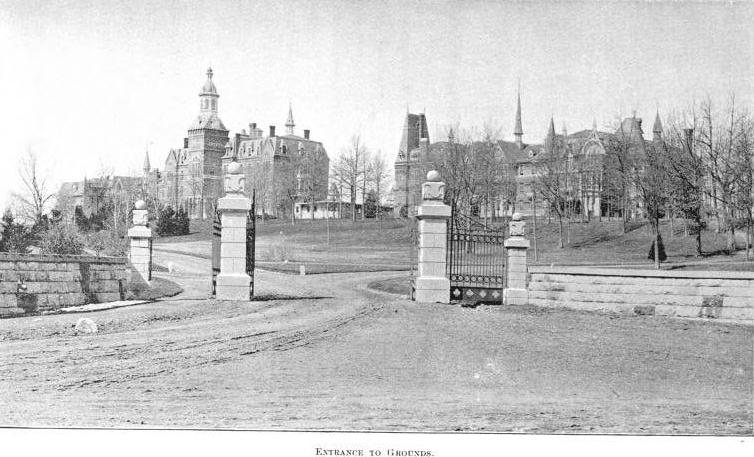
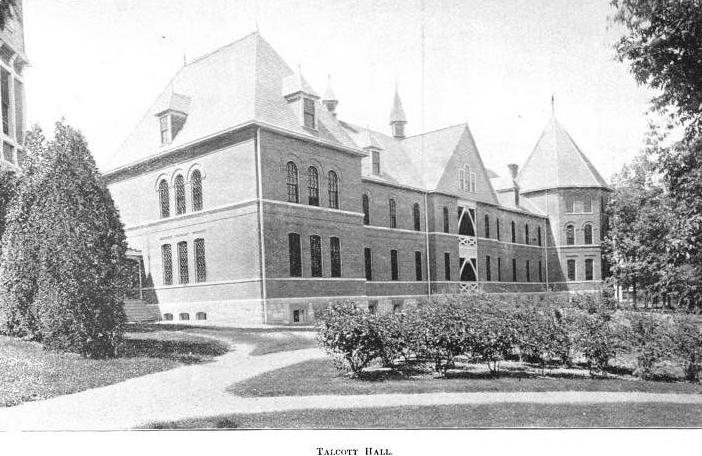
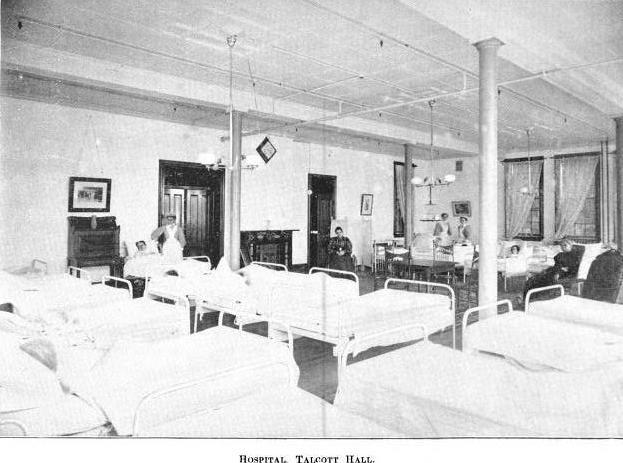
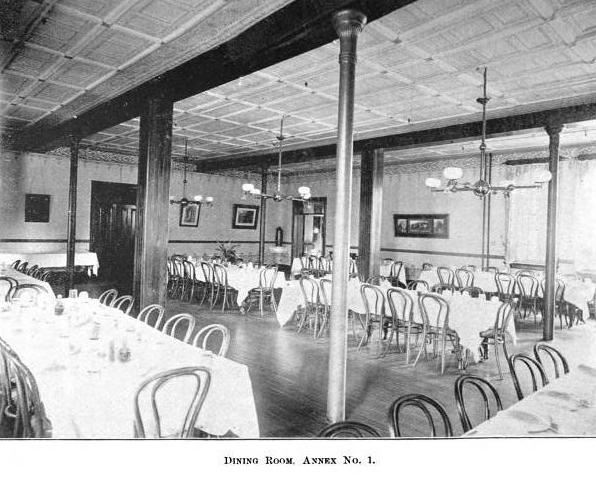
Here are some wonderful photographs from the Twenty Fifth Annual Report of the Middletown State Homeopathic Hospital at Middletown 1896

Entrance to Middletown 1896

Entrance to Middletown 1896

Middletown 1-1896

Middletown2-1896

Middletown2-1896

Middletown3-1896

Middletown3-1896

Middletown4-1896

Middletown4-1896

Middletown5-1896

Middletown6-1896

Middletown6-1896

Middletown7-1896

Middletown7-1896

Middletown8-1896

Middletown9-1896

Middletown9-1896

Middletown10-1896

Middletown10-1896

1891 Middletown State Homeopathic Hospital

This is a very lengthy Letter to the Editor of The New York Times written by MEDICUSThe Medicus – A Journal for the Busy Practitioner, of the nineteenth century. What MEDICUS was basically stating among other things was: After 1890 with the passage of THE STATE CARE ACT, all New York State Hospitals accepted both CHRONIC and ACUTE patients from their corresponding districts so that the patients would be able to remain in their hometown area. There were no longer asylums specifically for the CHRONIC INSANE as in WILLARD and BINGHAMTON State Hospitals. However, if an asylum became overcrowded, the state would transfer patients to another state hospital out of the patients’ district. The main point that MEDICUS made was: If New York State was transferring patients out of their district to another state hospital, why couldn’t the State pay for the transportation of patients whose family and friends wanted them to receive HOMEOPATHIC medical care as opposed to ALLOPATHIC medical care? They eventually won their case. There were two STATE HOMEOPATHIC HOSPITALS for the Insane: MIDDLETOWN located in Middletown (1874), Orange County, New York; and GOWANDA (1898), located in Collins, Erie County, New York.

DEFINITIONS:
“HOMEOPATHY: a system of medical practice that treats a disease especially by the administration of minute doses of a remedy that would in healthy persons produce symptoms similar to those of the disease.

System of therapeutics founded in 1796 by Samuel Hahnemann on the principle that ‘like cures like.’ That is, substances that in healthy persons would produce the symptoms from which the patient suffers are used to treat the patient. Hahnemann further stated that the potency of a curative agent increases as the substance is diluted. When it was introduced, homeopathy was a mild, welcome alternative to heavy-handed therapies such as bleeding, but it has since been criticized for focusing on symptoms rather than causes. With the rise of alternative medicine, it has seen resurgence.”

“ALLOPATHY: a system of medical practice that aims to combat disease by use of remedies (as drugs or surgery) producing effects different from or incompatible with those produced by the disease being treated. 2. a system of medical practice making use of all measures that have proved of value in treatment of disease.”
SOURCE: Merriam Webster.com

Middletown State Homeopathic Hospital 1896

Middletown State Homeopathic Hospital 1896

THE MIDDLETOWN HOSPITAL. It’s History And The Laws Which Govern It.
How It Is Affected By The State Care Of The Insane Act –
How Proposed Legislation Would Affect The Insane Poor.

 To the Editor of the New-York Times:

The State Homeopathic Hospital, or, as it was formerly called, the State Homeopathic Asylum, was established by act of the Legislature of 1870 and was opened in 1874. The friends of homeopathy, in order to secure an asylum for the insane in which the treatment should be exclusively of the homeopathic order, entered into an agreement with the State substantially to contribute $100,000 for each $100,000 which the State should furnish. This agreement was carried out to only a very limited extent.

The utmost claim put forth by the friends of homeopathy as to the extent of the carrying out of the agreement on their part is this – that they contributed a few hundred acres of land and the sum of $50,000 in cash. The State was induced to waive the carrying out of the remainder of the agreement, and the institution was fully organized and equipped as a State institution in all respects whatsoever, differing in no regard from the other hospitals of the State, with the exception of the insertion of a special clause in the statute which provided that the treatment should be wholly of the homeopathic order. Subsequent legislation was obtained providing that the acceptance of the office of Trustee should amount to a pledge on the part of such officer that the principles of homeopathy should be maintained. A reference to the organic act will show that, with the above exception, it was placed precisely upon the same footing as the other, at that time, so-called “acute” asylums for the insane, said act of 1870 providing for the doing of that which had been and might be done without its passage, namely, that to the extent of its capacity courts and Judges should have the power to commit such pauper and insane poor from any part of the State as might desire to secure homeopathic treatment. The right to receive private or pay patients was also conferred upon the MiddletownStateHomeopathicHospital in the same manner and to the same extent only as was conferred upon the UticaStateHospital, which is the governing act of all the State hospitals in the State.

This act provided that such private or pay patients might be received whenever there were vacancies. From the foregoing it will readily be seen that the Legislature unquestionably intended that, while the treatment given should be purely of the homeopathic order, in all other respects the hospital should be conducted under the same laws and in the same manner as all the other State insane asylums.

By the passage of this act and the erection of this asylum the Legislature of 1870 did what had never before been done in the history of its dealings with the dependent insane, to wit, recognize a particular school of medicine-a distinction which to this day no other school has sought or had-yet, so far as a study of the statutes reveals, it was indisputably intended that the corporation of this asylum should be held to as strict a measure of legal accountability as any one of the other State asylums, an that it should enjoy no other or greater privilege than was possessed by all of them.

This institution, from the time of its erection down to the time of the passage of the State Care act, had always been regarded in the same light as the other State asylums of the State. It received appropriations from the Legislature and its capacity was enlarged from time to time, the laws under which it was governed remaining the same as when established, except as modified by the State Care act, which was prepared, it is understood, by Theodore W. Dwight, the distinguished Warden of the Columbia College Law School-than whom a more just or equitable man never lived-provided, as is well known, for the division of the State into as many districts as there were State asylums for the insane, and provided that the insane poor of any particular district should be sent to the hospital situated within said district. But the author of the statute, no doubt having in view the Middletown State Homeopathic Hospital and the special treatment given there, provided that, if a patient or his friends elected so to do, he might be received into an asylum beyond the limits of the district in which he lived upon the following conditions:

First – That there shall be a vacancy in the hospital in which the patient desired treatment.

Second – That the consent of the Superintendent of the hospital and the consent of the Chairman of the State Commission in Lunacy shall be obtained.

Third – That the patient’s friends or relatives should pay the expense of transportation beyond the limits of the district in which the patient resides.

It would not have been necessary to impose any condition upon the free choice by a patient of a hospital in which he might desire treatment, had it not been for the fact that, except for some such condition, Superintendents of the Poor, for the sake of the increased mileage and emoluments which could be derived from traveling long distances, might frequently take patients to asylums situated a long distance from the place in which the patient lived. In fact, but for this reason it perhaps might not have been necessary to have established any districts whatever, as, if the element of greed could have been eliminated, convenience, accessibility, and the desires of the patients and their friends might safely have been trusted to regulate the whole matter. It was necessary, however, that some check should be imposed, in order that patients may not be obliged to travel greater distances than are absolutely necessary; and, therefore, on of the conditions named was that of requiring the consent of the President of the State Commission in Lunacy. But inquiry at the office of the commission shows that since the State Care act went into effect on the lst of October, 1890, less than thirty applications to go beyond the limits of the district have been received, thus clearly showing that a comparatively small number of people have any choice or care anything whatever as to what particular institution their insane relatives of friends shall be cared for in.

The legal rights heretofore enjoyed by the Middletown Hospital have not been interfered with in any way by the passage of this law except in the manner herein indicated. The right to receive private or pay patients under the law is precisely the same to-day as it was at the time the hospital was first opened, namely, the right to receive that class of patients when vacancies exist. The passage of the State Care act did not in any other manner whatever change existing laws upon the subject. But upon the taking effect of the State Care act on the 1st of October, 1890, it was found that there were about two thousand more insane poor to be provided for than could be accommodated in all the State hospitals in the State, and, of course, there ceased to be any vacancies for the admission of private or pay patients in the State hospitals. The State Commission in Lunacy, to which is confided the execution of the laws of the State so far as they affect the insane, were compelled to enforce the law in regard to the admission of private patients. It did not, however, enforce the law as rigorously as it might have done. It held that, at least within the spirit and intent of the law, private patients whose means are limited to the extent of being able to pay but a small sum per week might be admitted, and such patients have been admitted without objection from that time to this: That it declined to permit the admission of wealthy or high-priced private patients on the ground that the admission of such patients was not provided for by the statute, and that they could be provided for in the private asylums of the State, of which there are a large number representing the two principal schools of medicine, or equally open to both.

The bill which has passed the State Senate, if it becomes a law, will for the first time in the history of the State establish a principle which has been justly regarded as foreign to the spirit of our institutions, namely, the principle of paternalism in government – the duty of the State to provide for a class of its citizens able to provide for themselves. Moreover, it places at the disposal of one of the schools of medicine in the State a great hospital for the insane, which has cost in round numbers a million of dollars, and practically discriminates against all the other schools of medicine. This bill, which many have believed to simply restore the law as it existed prior to the passage of the State Care act, not only does this, but goes very much beyond it, as it provides for the admission of the indigent and insane poor from any part of the State, and also for the admission of “private patients” of whatever grade and upon such terms and conditions as may be fixed by the Trustees of the institution. In fact, the words “private patients” are for the first time recognized in the statutes of the State. The words “when vacancies exist” are wholly eliminated, so that it becomes a pure matter of discretion in the Trustees of a State institution, which is owned and controlled by the State and supposedly erected for the benefit of the insane poor now in the poorhouses or the wealthy private or pay patients. This is the really objectionable and dangerous feature of the bill. No matter how pressing may be the necessities of the insane poor, the rich who are able to provide for themselves may have the preference if the Trustees choose to give it. Singularly, too, no restrictions have surrounded the question of the determination of who desire homeopathic treatment. Upon the mere say-so of the patient or his friends, which would be sufficient to a Superintendent of the Poor, a patient may be transported hundreds of miles across the State to this institution simply for the purpose of adding to the fees and emoluments of a Superintendent of the Poor.

The right of the indigent insane for whom homeopathic treatment is desired to free admission to the Homeopathic Hospital from any part of the State might, perhaps, be conceded without any intervention or concurrence on the part of the Lunacy Commission, although in practice, as already stated, the occasion for such concurrence seldom arises. And incidentally, it may be added at the Lunacy Commission office the fact is freely admitted that they would, personally, be glad to be relieved of all connection with the matter, provided that some other efficient safeguard against imposition and abuse in the matter of transportation charges were suggested.

It is claimed by the friends of the Middletown State Hospital that medical liberty has been encroached upon by the passage of the State Care act. It is difficult, however, to see wherein this effect has been produced. The free and unrestricted right of the Middletown State Homeopathic Hospital to give homeopathic treatment has not been abridged in any manner, nor, so far as it is known, is it claimed to have been abridged. But while by the passage of the bill under discussion this liberty demanded in the name of homeopathic profession will have been extended even further than as it was held before the State Care act became law, an equal measure of the same liberty is practically denied to all other schools of medicine.

The laws of the State of New-York, with the exception above indicated, have never recognized any particular school of medicine whatsoever, and do not do so now. The rules and regulations of the Civil Service Commission, so far as they relate to schools of medicine, place them upon an equality, and always have done so. The right of any particular school of medicine, so far as the method of treatment in the other State hospitals is concerned, is not abridged in any way. A homeopathic physician may secure appointment in any of the other hospitals in the State, and enforce such medical treatment as he believes in, without let or hindrance. But, if medical liberty is to be enjoyed by one school of medicine, it is difficult to see why it should be denied to the others; in other words, why a wealthy private patient who desires homeopathic treatment should be afforded by the State magnificent opportunities for its enjoyment at Middletown, while another patient who, for example, desires allopathic treatment in the Buffalo State Hospital or the Utica State Hospital, should be denied an equal privilege. It is hard to conceive how the State can thus discriminate against its citizens, can thus patronize one school of medicine at the expense of another, can place a great hospital, with all the prestige which such an institution commands, at the exclusive disposal of one school of medicine, without conferring a like privilege upon other schools; how, for instance, the eclectic school of medicine be denied the same privilege of the use of a State Hospital wherein only the eclectic method of treatment shall prevail.

The effect of the passage of such an act could not fail to be most pronounced upon State care of the insane, for it can hardly be denied that if this privilege is extended without restriction to the Middletown State Homeopathic Hospital it will ultimately, if not immediately, be claimed for and must be given to all other State hospitals of the State. This would, in practical effect, destroy the distraction system, would greatly embarrass the operation of the law, and would necessitate making large additional provisions for the insane poor, since the amount of space for the insane poor, since the amount of space occupied by the wealthy private or pay patients is out of proportion to that occupied by the insane poor. Frequently it is as high as six to one, sometimes as high as twelve to one. Over and beyond the question of the recognition of one particular school of medicine by the State to the exclusion of the others, the broad question remains of how far the State is to make provision for of its citizens as are able to make provision for themselves, how far it is willing to compete with the efforts of private individuals, who are permitted and in fact encouraged by law to operate and maintain private insane asylums.

Let it be repeated that the passage of this bill will confer privileges which the institution never before enjoyed, and which an examination of the statutes heretofore enacted will clearly show were never intended to be given. It hardly seems credible that the great body of the homeopathic medical profession desire to be relieved from their share of the responsibility of caring for the insane, or to be given privileges which cannot be exercised in an equal degree by the other medical schools of the State.  MEDICUS.
BUFFALO, Sunday, April 12, 1891.

SOURCE: Reprinted from The New York Times. Published April 19, 1891. Copyright @ The New York Times.

1894 Attendant Suspended at Buffalo State Hospital

ATTENDANT CLIFFORD SUSPENDED.
Another Story of Alleged Cruelty at the Buffalo State Hospital.

BUFFALO, N.Y., May 26. – John J. Clifford, an attendant at the Buffalo State Hospital, has been suspended by the Board of Managers pending the action of Acting District Attorney Kendrick in the Felton case.

Clifford is the man whom Attendant Mahoney swore to have seen in Killen’s company just before Felton was assaulted. Mahoney swore before the State Lunacy Commission that Killen went into the next ward and got Clifford; that they came back together, and shortly after he heard Felton crying: “Boys, what have I done?”

Mrs. Jacob Loeb has a sad story to tell regarding the treatment of her son Fred at the hospital. He was confined in July. When taken to the hospital he was a tall, powerfully-built young man, whose mind had been unhinged by misfortune. A few days after his incarceration he was confined to his bed, where he remained in a deplorable condition for months. For a long time his friends were not allowed to see him, and when at last they gained access to his bedside they say they found him a mass of bruises and helpless as a babe. “They hung me up with a towel and pounded me,” he told his mother. Since his release he has spoken but a few words. Several times, however, he has said, when complaining of pains in his chest: “They used me hard out there.”

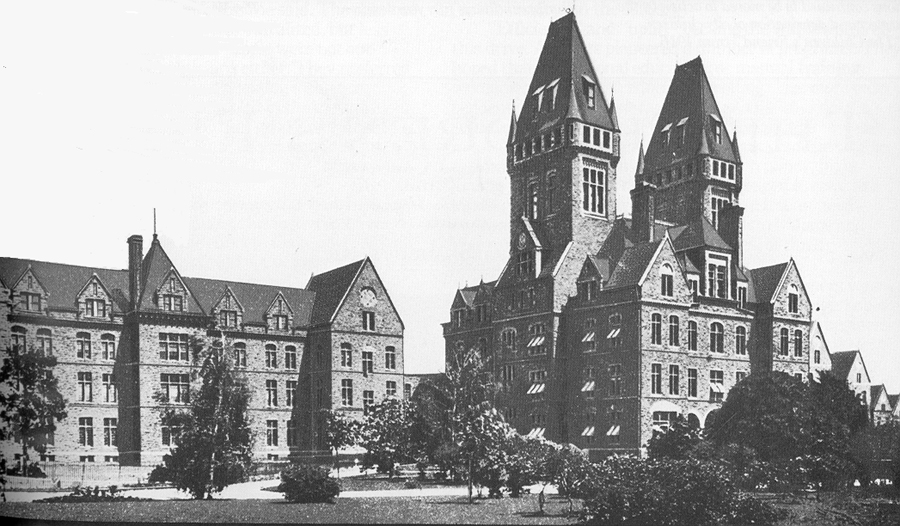
Buffalo State Hospital

Buffalo State Hospital

SOURCE: The New York Times. Published May 27, 1894. Copyright @ The New York Times.

Photo – City of Buffalo, New York Website

1881 Brutal Attendants At Buffalo State Hospital

BRUTES IN AN INSANE ASYLUM.
A Story Of Cruelty From The State Asylum At Buffalo.

BUFFALO, Feb. 6. – A story of terrible cruelties practiced upon patients at the new State Insane Asylum here has been made public to-day, for which Frank P. Churchill, of this city, formerly a keeper, is responsible. He claims to have resigned on account of these practices, and says they were carried on by two men names Jones and McMichael whom Dr. Andrews, Medical Superintendent, brought with him from Utica. He says that John Turney, a monomaniac, was choked with towels so severely tha they had to blow in his mouth to restore consciousness. Being noisy one day while bathing, McMichael held his head under water until he was almost drowned, and pounded him on the stomach until a bunch was raised as large as a hen’s egg. They would go into his room at night and pound and kick him for the slightest disturbance. At one time Jones pressed both thumbs against his windpipe and jammed him into a chair with such violence that the back of the chair made two large holes in the wall. Another object of cruelty was Abraham Vedder, who was apt to be fractious at times. As a result of their attentions, he appeared on day with one eye blackened, the skin peeled off his throat, and the pit of his stomach black and blue. A railroad conductor named White, who was harmless, but so nervous as to be unable to keep quiet, was pounded by McMichael until he cried out, “My God, my God, don’t kill me.” If a man was slow in entering the dining-room he would be knocked down, kicked, and cursed in the vilest manner. A man named Vedder, from Alden, went to Jones and threatened to report if the abuse did not cease, and Jones frightened him from telling, by threatening to pound him to death. None of these things were done when Dr. Andrews was about, but Churchill claims to have frequently reported these things to him, and that the Doctor said he must be mistaken, as he had the fullest confidence in Jones and McMichael.
SOURCE: Reprinted from The New York Times. Published February 7, 1881. Copyright @ The New York Times.

BUFFALO ASYLUM ABUSES.
Commissioner Ordronaux
Recommends The Discharge Of The Accused Attendants.

BUFFALO, March 2. – The State Commissioner in Lunacy has rendered the following decision in regard to alleged abuses in the Buffalo State Insane Asylum:

To the Managers of the Buffalo State Asylum for the Insane:

Gentlemen having been requested by your board to make inquiry into the truth of certain allegations of Frank P. Churchill, late an attendant at your asylum, charging that two fellow-attendants, named Robert H. Jones and J.F. McMichael, had, to his personal knowledge, habitually maltreated patients confided to their care, the Commissioner submits herewith the findings and conclusions to which he has arrived after a careful consideration of the same. The organic act of the Buffalo State Asylum for the Insane lodges in its Board of Managers the original power of control over all the property and concerns of the institution not otherwise provided for by law, and it is made their duty to take charge of its general interest, and to see that its great design be carried into effect and everything done faithfully according to the requirements of the Legislature and the by-laws, rules, and regulations of the asylum. Among these prerogatives is the power of employing and discharging servants, prescribing their duties, and otherwise regulating the domestic service of that institution. A request on your part to the Commissioner in Lunacy for an inquiry into this service is to that extent a surrender o the territory of your proper jurisdiction. Moreover, no formal complaint having been made to the Commissioner against any department of your administration, and no evidence having been laid before him furnishing any ground for his further official interference, the action of the Commissioner in the premises and under these circumstances becomes, strictly speaking, advisory rather than judicial.

The publicity of this inquiry, added to the fact that the evidence received is spread before the public in the files of the daily press, renders it unnecessary for the Commissioner either to refer to it in detail of to weigh its probative force under the rules regulating the value of legal proofs. Besides which this evidence, by reason of its conflicting character, presents no preponderance in favor of either side, and the charges remain not sufficiently established to warrant any affirmative decision upon their truth. It is manifest, however, from the very nature of the guardianship exercised over lunatics in asylums, that attendants who are in constant and immediate appendance upon patients should be free from any taint of suspicion. In these peculiar positions of trust the character of every person implicated in allegations of this kind and brought into the field of public inquiry, although sufficient proof has not been adduced to justify a conviction, yet suffers in public estimation from the fact alone that the evidence is conflicting. Where such evidence, therefore, leaves the presumptions equally in question the effect nevertheless operates to the public discredit of the parties concerned and their services should, in the Commissioner’s judgment, be dispensed with for prudential reasons. I am, very respectfully yours, John Ordronaux, State Commissioner in Lunacy.

SOURCE: Reprinted from The New York Times. Published March 3, 1881. Copyright @ The New York Times.

Buffalo State Hospital

Buffalo State Hospital

THE BUFFALO INSANE ASYLUM.

BUFFALO, N.Y., March 18. – The Assembly sub-committee appointed to investigate the charges of abuse at the State Insane Asylum arrived here and was in session to-day. The testimony of Dr. Andrews was taken, and a visit made to the asylum. All the evidence given before Dr. Ordronaux’s investigation will be reviewed, as the members of the committee express themselves determined to get a the bottom facts of the case.

SOURCE: Reprinted from The New York Times. Published March 19, 1881. Copyright @ The New York Times.

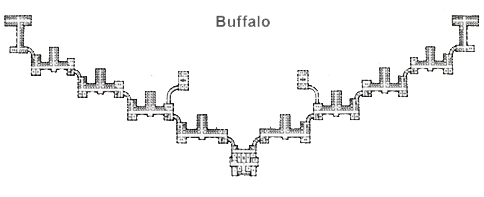
Kirkbride Buildings – Buffalo State Hospital

1896 State Care System Complete

WILL COMPLETE THE STATE-CARE SYSTEM.

The Governor has approved the bill creating the Manhattan State Hospital and providing for the transfer of the lunatic asylums of this city and the care of their inmates to the State. Thirty days are allowed for carrying its provisions into effect, and then the system for the State care and maintenance of the dependent insane will be completed, save for perfecting the accommodations and facilities required.

Sixty years ago all the indigent insane in this State whose friends or relatives could not or would not take care of them were sent to the county poorhouses. The care they got and the condition of their wretched loves may be imagined. In 1836 the State hospital at Utica was established for the reception and treatment of acute cases of insanity only. Nearly thirty years later, in 1865, the movement originated by the State Medical Society for the State care of the chronic insane was carried to partial success by the establishment of the Willard State Hospital. That was a formal adoption of the State-care policy, and was followed by the opening of the Hudson River Hospital, at Poughkeepsie, and the Homeopathic Hospital, at Middletown, in 1871, the Buffalo State Hospital in 1880, and the Binghamton State Hospital in 1881.

Instead of fully carrying out the policy thus adopted, the Legislature began to exempt one county after another from the operation of the act of 1865 and to permit them to retain the milder cases. It caused a relapse in about a third of the counties of the State to the old poorhouse system, with all its horrors. This was deprecated by the State Board of Charities, the Commission in Lunacy, and the State Charities Aid Association, and many reports and recommendations were made in favor of completing the State-care system and transferring all the dependent insane to the State hospitals, whose accommodations and facilities should be enlarged correspondingly. It was in 1886 that the State Charities Aid Association took the first active steps in formulating a plan and preparing for legislation. Its first bill was introduced in 1888 and was defeated. It was defeated again in 1889, but in 1890 it had rallied public opinion to its support with so much effect that the State Care bill was carried through both houses, in the face of vigorous opposition from county authorities, and was approved by the Governor. The same year the St. Lawrence Hospital was completed.

The act of 1890 established the hospital districts and placed the administration of the system in charge of the Lunacy Commission and the first special appropriation f $454,850 was made in 1891. This was for enlarging the facilities of the existing hospitals and preparing for the reception of patients from the county asylums and poorhouses. The three counties of Monroe, Kings, and New-York had been exempted from the operation of the act because they had adequate institutions of their own, but provision was made for bringing them into the system by their own voluntary action upon the transfer of their asylum property to the State. Monroe County took advantage of this in 1891, and her asylum was reorganized as the Rochester State Hospital. The first appropriation for maintenance of the system by a special tax levy was made in 1893, and amounted to $1,300,000, and by the beginning of 1894 the transfer from poorhouses and the miserable “asylums” of counties was completed.

New-York and Kings still remained outside the State system, though they had to contribute their share of the special tax for its support. This payment was contested by New-York, but not by Kings, and last year the act was passed which took possession of the Kings County institution at St. Johnland and made of it the Long Island State Hospital. The bill effecting the corresponding result for this city would have become a law then also, except for the litigation over the unpaid arrears of State taxes and the condition imposed in the bill of their payment and the abandonment of the suit then pending on appeal. A short time ago the litigation was ended, and now the Manhattan State Hospital act is a law of the State. This will bring the dependent insane of the whole State, now numbering 18,898, under one uniform, enlightened, and effective system of care and maintenance.

For this gratifying result much credit is due to the State Charities Aid Association and the Commission in Lunacy, which worked persistently and zealously together for years, and the completion of the system will redound to the honor of the State of New-York.

SOURCE: Reprinted from The New York Times. Published January 30, 1896. Copyright @ The New York Times.

1843 A Christmas Carol

MERRY CHRISTMAS AND HAPPY NEW YEAR!

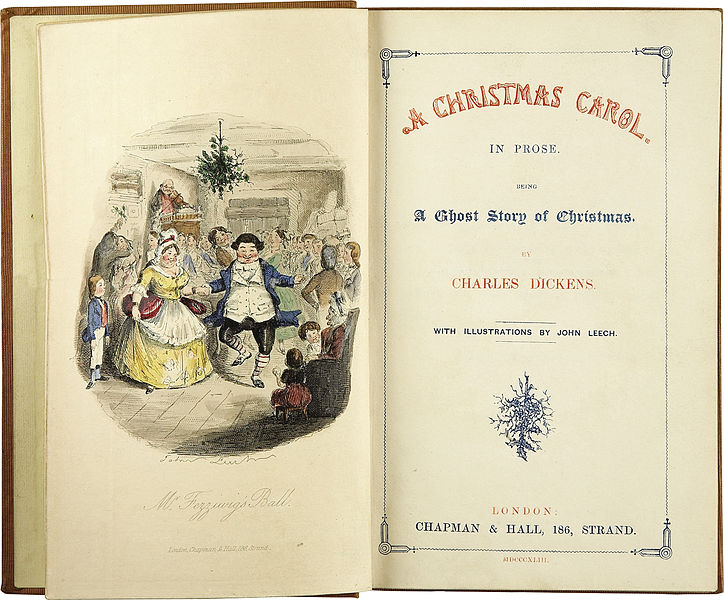
My favorite story of all time is A Christmas Carol by Charles Dickens. The story revolves around Ebenezer Scrooge, a stingy old man of business who is worth a fortune but will not spend any of his money, not even on himself. He lives in his dead business partner’s home and eats gruel or oatmeal for dinner. On Christmas Eve, he is visited by four ghosts who come to persuade him to change his ways, and of course, he does. There is so much more to this story and the time period in which it was written (1843), but at this time, I am focusing on what Dickens was talking about when he wrote the words: Bedlam, Treadmill, Poor Law, and Surplus Population.

A Christmas Carol by Charles Dickens 1843

A Christmas Carol by Charles Dickens 1843

BEDLAM:
“There’s another fellow,” muttered Scrooge; who heard him: “my clerk, with fifteen shillings a week and a wife and family, talking about a merry Christmas. I’ll retire to Bedlam.”

The character Scrooge, along with political economists of 1843, felt that poor people had no right to marry. “Bedlam. A corruption of ‘Bethlehem,’ referring to the Hospital of St. Mary’s of Bethlehem in London, which was founded as a priory in 1247 but became a hospital for the insane as early as 1402. In 1547, after the dissolution of church property by Henry VIII, it was incorporated as a royal foundation as a madhouse. The term was current as early as the late sixteenth century…” (2)

“Are there no prisons?” asked Scrooge.
“Plenty of prisons,” said the gentleman, laying down the pen again.
“Are they still in operation?”
“They are. Still,” returned the gentleman. “I wish I could say they were not.”
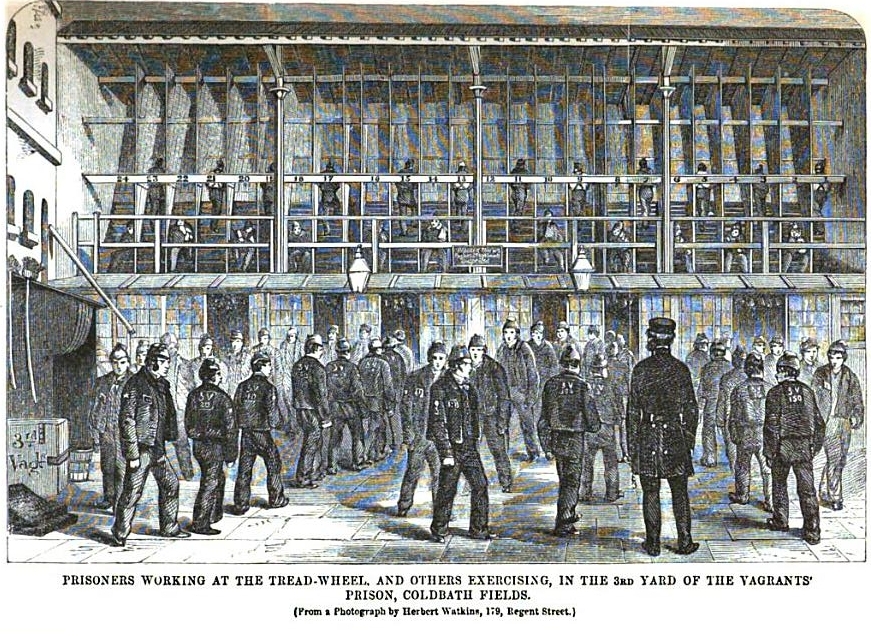
The Treadmill and the Poor Law are in full vigour, then?” said Scrooge.
“Both very busy, sir.”
“Oh! I was afraid, from what you said at first, that something had occurred to stop them in their useful course,” said Scrooge. “I’m very glad to hear it.”
“Under the impression that they scarcely furnish Christian cheer of mind or body to the multitude,” returned the gentleman, “a few of us are endeavouring to raise a fund to buy the Poor some meat and drink, and means of warmth. We choose this time, because it is a time, of all others, when Want is keenly felt, and Abundance rejoice. What shall I put you down for?’
“Nothing!” Scrooge replied.
“You wish to be anonymous?”
“I wish to be left alone,” said Scrooge.” Since you ask me what I wish, gentlemen, that is my answer. I don’t make merry myself at Christmas, and I can’t afford to make idle people merry. I help to support the establishments I have mentioned: they cost enough: and those who are badly off must go there.”
“Many can’t go there; and many would rather die.”
“If they would rather die,” said Scrooge, “they had better do it, and decrease the surplus population.”

Coldbath Fields Treadmill - Wikipedia

Coldbath Fields Treadmill – Wikipedia

I found a reference to a treadmill while searching for historical information on my own hometown of Rochester, Monroe County, New York.

TREADMILL:
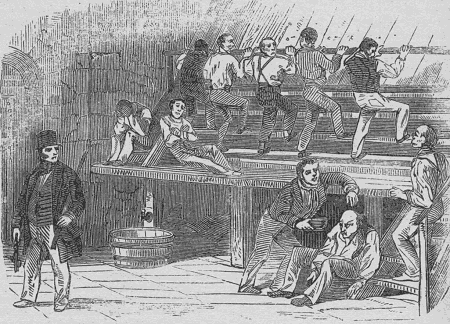
The Treadmill or Treadwheel resembled a giant water wheel and served no purpose other than to punish the inmates of the prisons and workhouses. The inmates would walk on the rotating steps for hours at a time. “As the village grew in size it seems to have become more immoral, for the Telegraph of February 10th, 1824, after making the rather rash assertion that “probably no place in the Union of the size of Rochester is so much infested with the dregs and outcasts of society as this village,” speaks of a meeting that had been held during the previous week, at which a committee was appointed to draft a petition to the legislature for the passage of a law to erect a tread-mill, or ‘stepping-mill’ as it was called. Although the journal applauded the scheme as being likely to inspire non-resident criminals with such terror that they would stay away from this region, the law was never passed, public sentiment being then, and ever since then, too strongly opposed to it in this country, though Great Britain retained that form of torture until five years ago.” (1)

The Treadmill-The Victorian Dictionary

The Treadmill-The Victorian Dictionary

POOR LAW:
The Poor Law of 1834 in England
 was different than the New York State Poor Law of 1824 but the basic premise was the same; you had to pull your own weight. No one was allowed to be idle. No one received their food and shelter unless they worked for it. In New York State, we had county poor houses where families were required to work on the farm and in the house in order to survive, in addition to workhouses or penitentiaries. It appears that in Victorian England, they had only union workhouses.

In 1853, a workhouse was built in Rochester, NY. Its purpose was to segregate the minor offenses of vagrancy, prostitution, drunkenness, and indebtedness, from the hardened criminals. This was a place for short-term confinement of at least three months but not over six months. Before this time, all prisoners were held in the county jail with no distinction as to their misdemeanors or crimes. In 1858, The Workhouse changed its name to The Penitentiary. The county poorhouses, workhouses, and penitentiaries were deplorable, filthy places, and were phased out with the Social Security Act of 1935 in the U.S., and modern social welfare in the 1940s in England.

The Poor Law of 1834 provided that two or more parishes unite to provide a home for the destitute where they might labor in exchange for their room and board. It divided England and Wales into twenty-one districts and empowered in each a commissioner to form ‘poor law unions’ by grouping parishes together for administrative purposes and to build workhouses to contain the poor. The able-bodied were worked in penury, and their dependents were kept in the house where as little as possible was spent on food and shelter. They were characterized by strict discipline; the sexes were segregated and classified, and preliminary inquiries into the private lives of the inmates were generally conducted. It was considered a disgrace to go to such a place. Dickens fiercely attacked these institutions…” (2)

The Last of the Spirits by John Leech 1843

The Last of the Spirits by John Leech 1843

SURPLUS POPULATION:
An Essay on the Principle of Population
, by Thomas Robert Malthus, first published in 1798, foretold of the catastrophe that would occur when overpopulation caused a shortage of food supplies. The Surplus Population was the poor producing large families that they could not afford. I have mentioned Reverend Malthus, an economist, in a previous blog post about social welfare and eugenics. Although the term eugenics wasn’t coined until 1883 by Sir Francis Galton, it was definitely in use during the early nineteenth century in England and in the U.S. The whole point of rounding people up, dumping them in a union workhouse or a county poorhouse, and separating them, was done so that they could not breed. These places were intentionally made uncomfortable so that people would leave and seek employment. The problem was there were not enough jobs to go around. Many people would rather have committed suicide than to live in one of these places.

“This economist made clear ‘What the surplus is, Where it is’ when he wrote: ‘A man who is born into a world possessed, if he cannot get subsistence from his parents, on which he has a just demand, and if society do not want his labour, has no claim of right of the smallest portion of food, and, in fact, has no business to be where he is. At Nature’s mighty feast there is no vacant cover for him. She tells him to be gone…” (2)

SOURCES:
1. Peck, William F., History of Rochester and Monroe County, New York, New York and Chicago, The Pioneer Publishing Company, 1908, Pages 165-180.

2. Hearn, Michael Patrick, The Annotated Christmas Carol, A Christmas Carol by Charles Dickens, Illustrated by John Leech, Avenel Books, New York, 1976, Pages 64-65.

History of Rochester and Monroe County – Crime and Punishment – by William F. Peck 1908.

Thomas Malthus

The Victorian Dictionary

The Victorian Dictionary – The Mysteries of London, Volume II

1948 The INVACAR

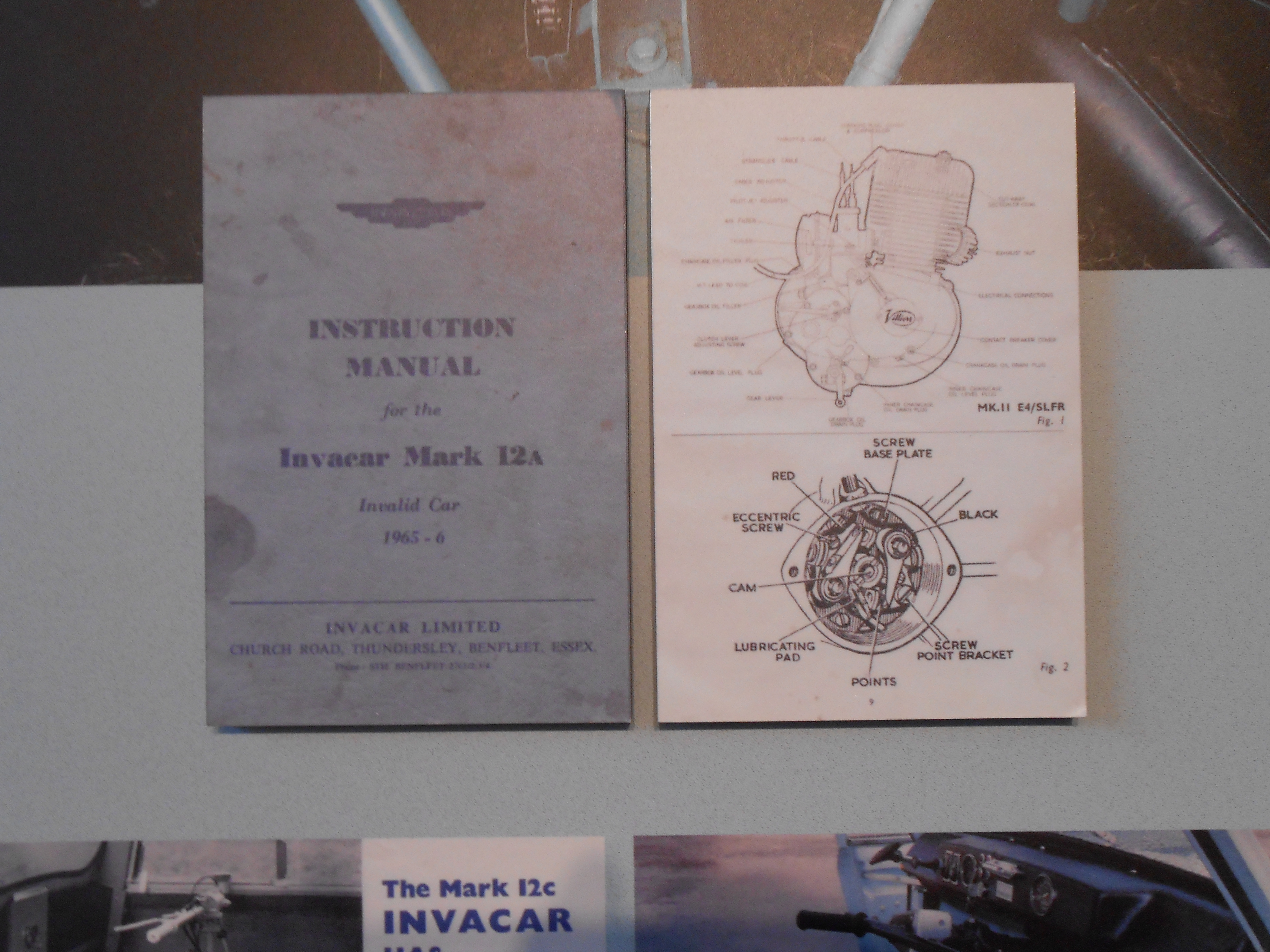
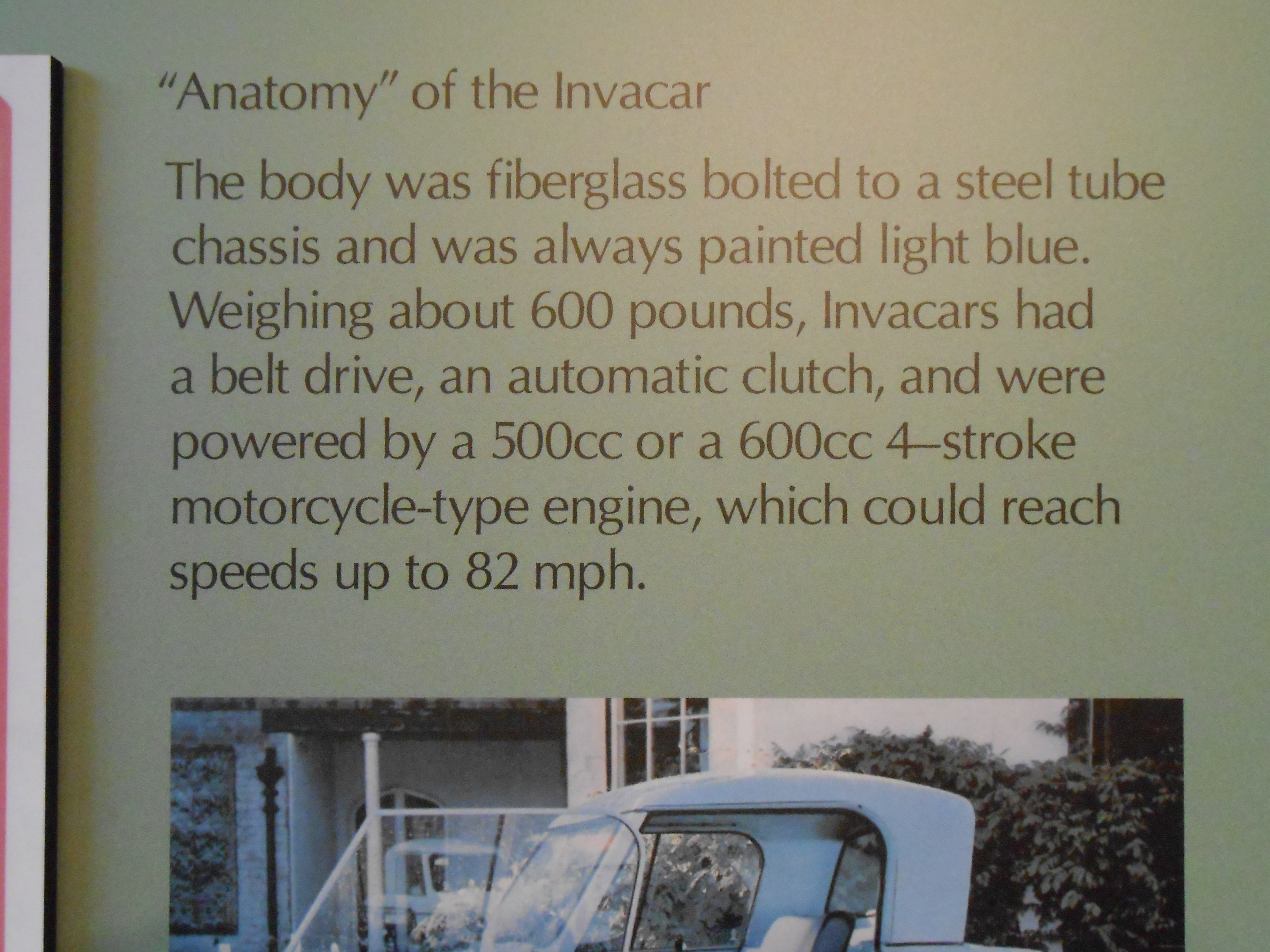
This is part 2 of my visit to The Museum of disABILITY History. I was so intrigued by The INVACAR that I had to learn more about it. I had never heard of or seen one before. According to Elvis Payne at 3-wheelers.com, “The Invacar Ltd (UK) was established in 1948 by Oscar Greeves after having built a 3-wheeler for his paralyzed cousin, Derry Preston-Cobb. As a result of the many casualties from the second World War Greeves realised the need for such transport to be widely available. After contacting the government they agreed to pay for the vehicles to be made of which sold in great numbers.”

INVACAR 01

INVACAR 01

The Museum of disABILITY History may be one of a handful of places in the U.S. where you will ever be able to see The INVACAR. This museum is full of wonderful treasures, so please visit if you have a chance! For more information, please click on the RED links below.

INVACAR 02

INVACAR 02

INVACAR 03

INVACAR 03

INVACAR 04

INVACAR 04

INVACAR 05

INVACAR 05 

INVACAR 06

INVACAR 06

INVACAR 07

INVACAR 07


A Visit To The Museum Of disABILITY History 11.11.2013

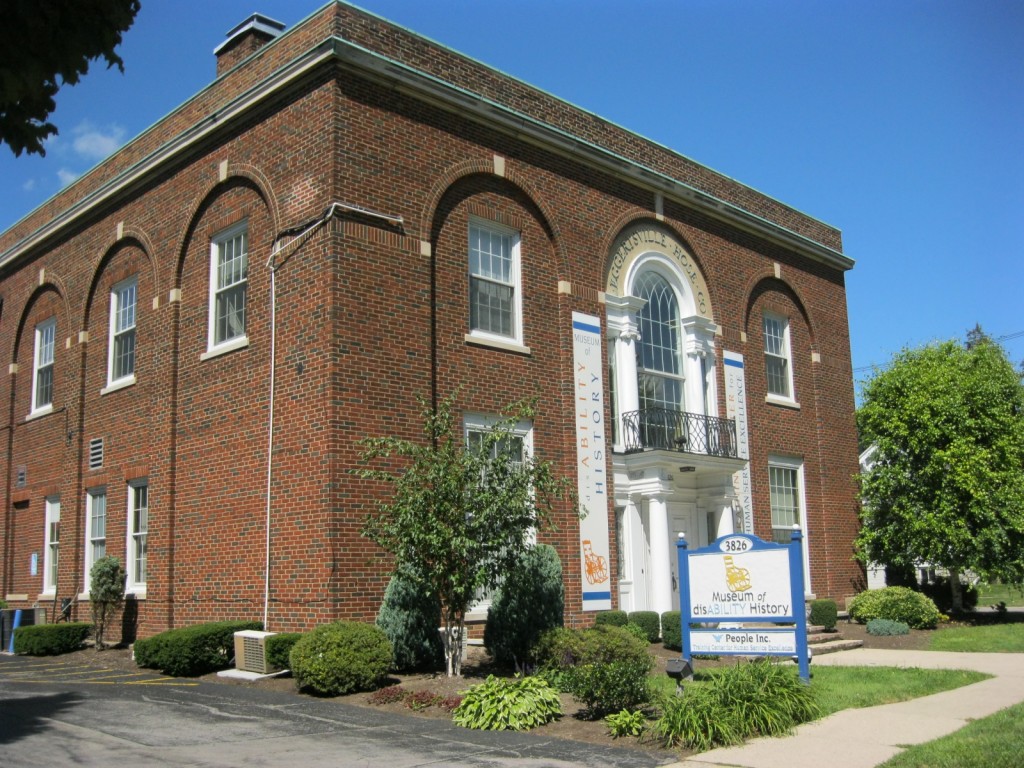
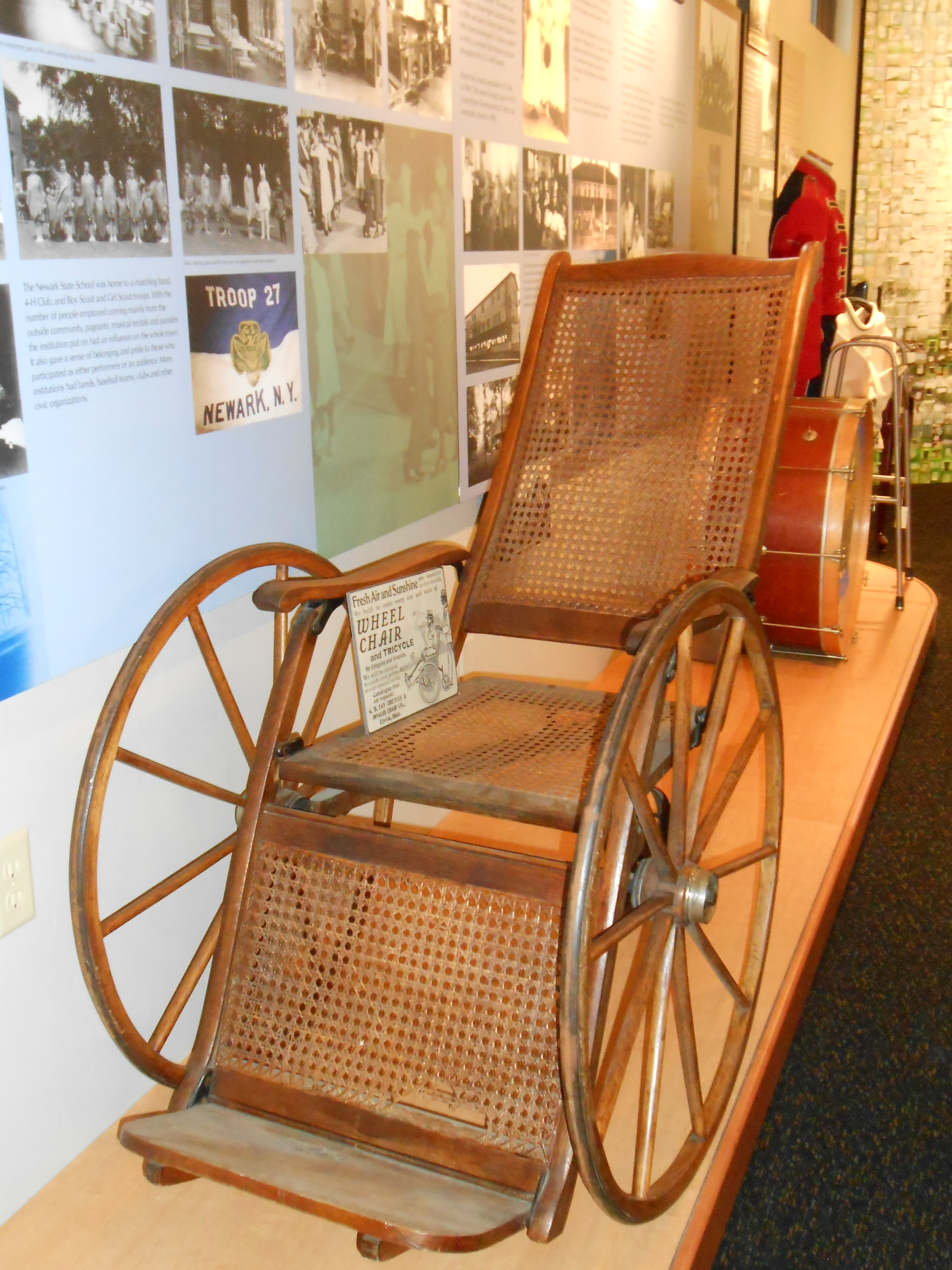
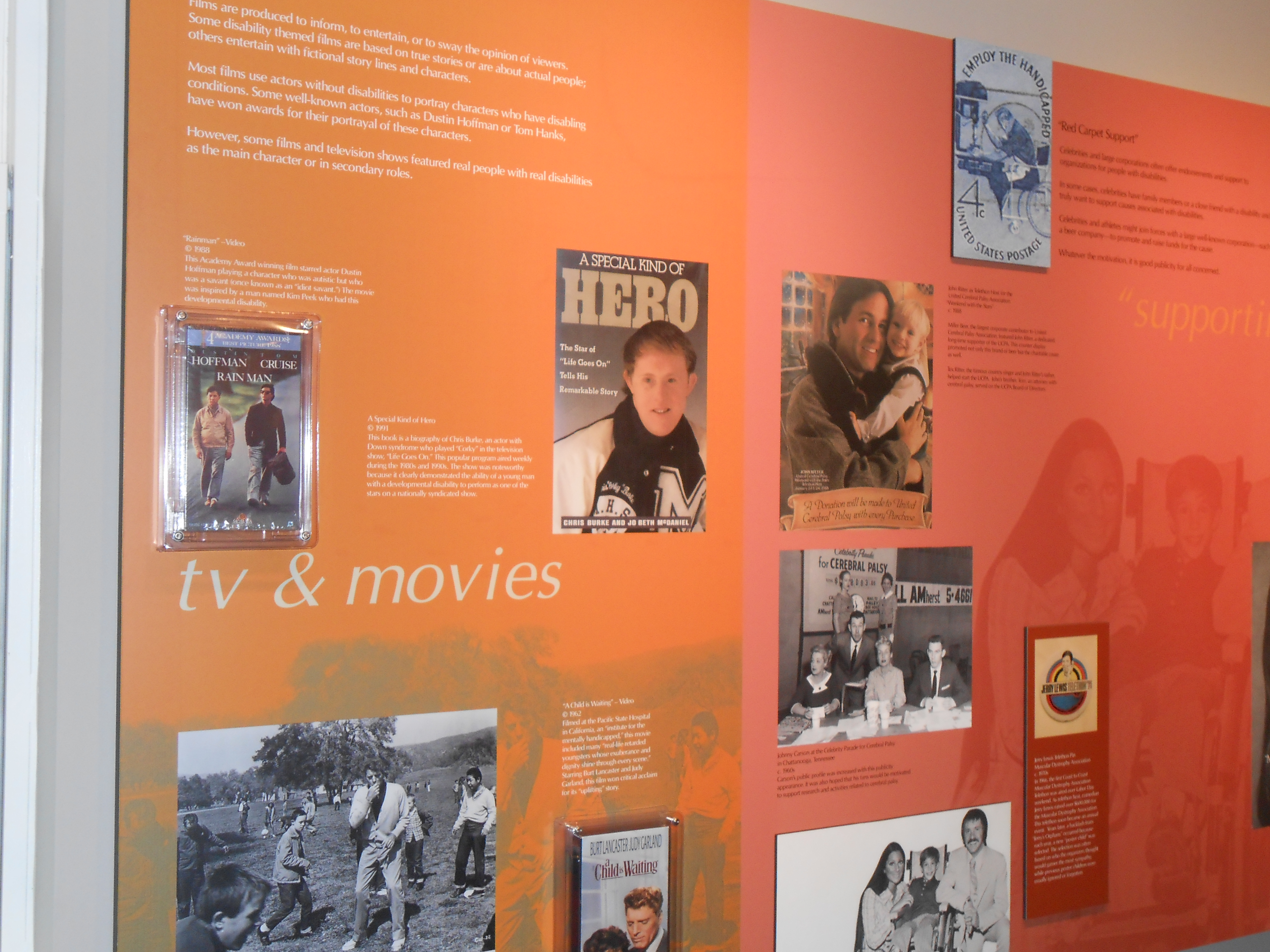
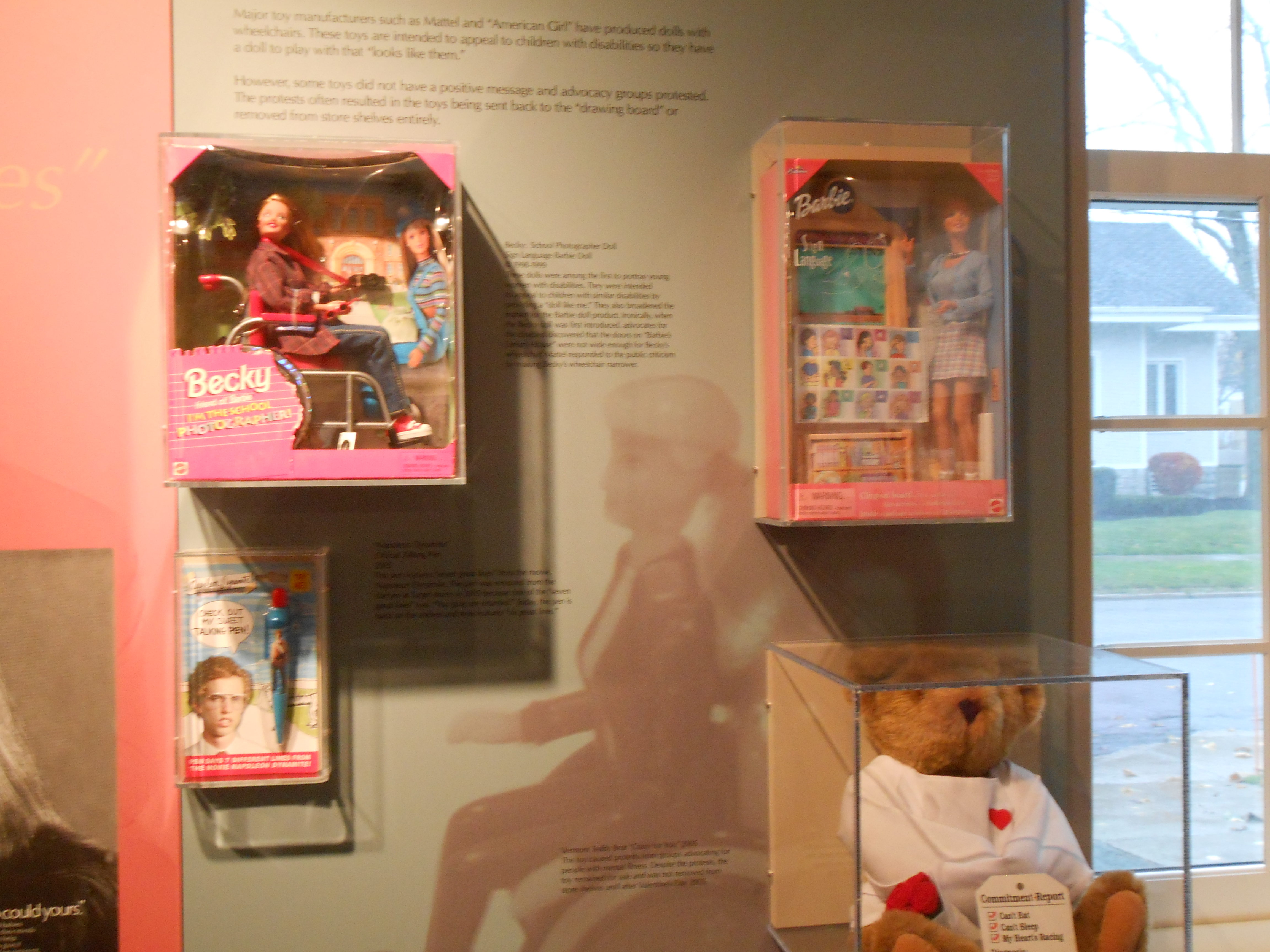
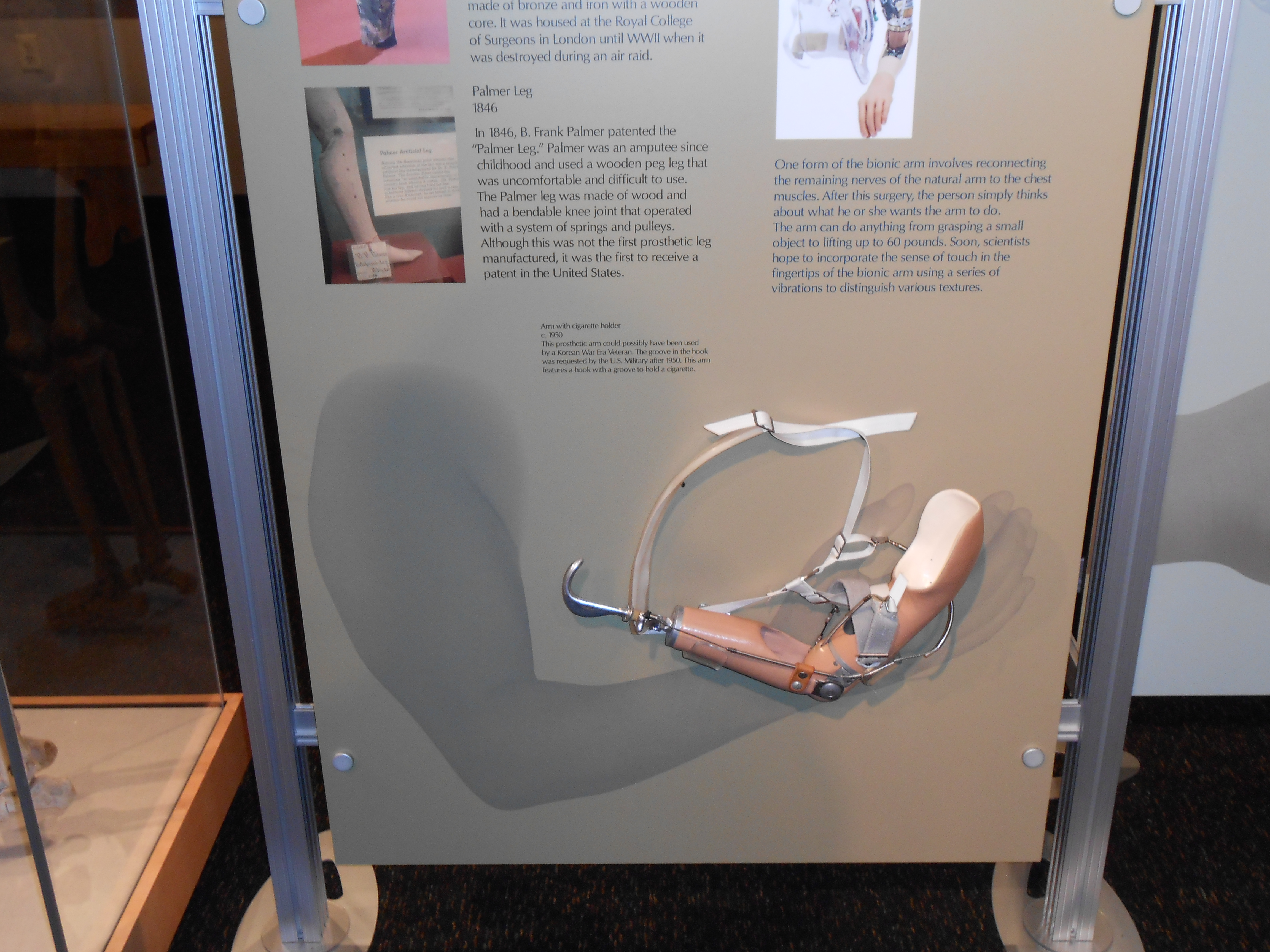
Yesterday, I visited The Museum of disABILITY History, located at 3826 Main Street, Buffalo, New York. I finally got to meet David Mack-Hardiman, Director of Training, People Inc., who gave me a tour of the museum, and Douglas V. Farley, Museum Director. I was very impressed with all the displays! This museum has so much to offer including Educational Resources, Activities, Traveling Exhibits, Cafe, and Museum Store. Please visit the museum if you have the chance!

Monument For The Forgotten

Monument For The Forgotten

My favorite exhibit, “The Monument For The Forgotten” was the vision of David Mack-Hardiman, created by Brian NeslineFaces of Buffalo, “featuring thousands of individual grave markers woven into a mosaic tapestry image of a large stone monument.” I need to acknowledge the selfless work that David and People Inc. have done over the past few years. David and his team go into these unmarked cemeteries, clear the brush away, mow the lawns, and raise and clean each marker. Some graves are flat, numbered markers while others, as in the case of a few New York State Custodial Institutions, have the names inscribed. This back-breaking work is done by volunteers! God Bless Them!

Monument For The Forgotten 2

Monument For The Forgotten 2

Mission: The Museum of disABILITY History advances the understanding, acceptance, and independence of people with disabilities. The Museum’s exhibits, collections, archives and educational programs create awareness and a platform for dialogue and discovery.

Vision: The Museum seeks with, and on behalf of, individuals with developmental and other disabilities, a higher level of societal awareness and understanding, and a change in attitudes, perceptions and actions that will result in people with disabilities having the greatest possible participation in their communities.”

Museum Of disABILITY History

Museum Of disABILITY History

“Established in 1998 by Dr. James M. Boles, president and CEO of People Inc. (Western New York’s leading non-profit human services agency) the Museum of disABILITY History has steadily expanded over the years and, in late 2010, moved to a brand new location (pictured above). The Museum of disABILITY History is dedicated to advancing the understanding, acceptance and independence of people with disabilities. The Museum’s exhibits, collections, archives and educational programs create awareness and a platform for dialogue and discovery. The Museum of disABILITY History is a project of People Inc. and is chartered by the New York State Department of Education Board of Regents. People Inc. exists so that individuals with disabling conditions or other special needs have the supports they need to participate and succeed in an accepting society. As noted throughout the site, this project has been developed with the generous support of People Inc. and the B. Thomas Golisano Foundation. We are truly thankful for their participation in this worthwhile effort.”

M 01

M 01

M 02

M 02

M 03

M 03

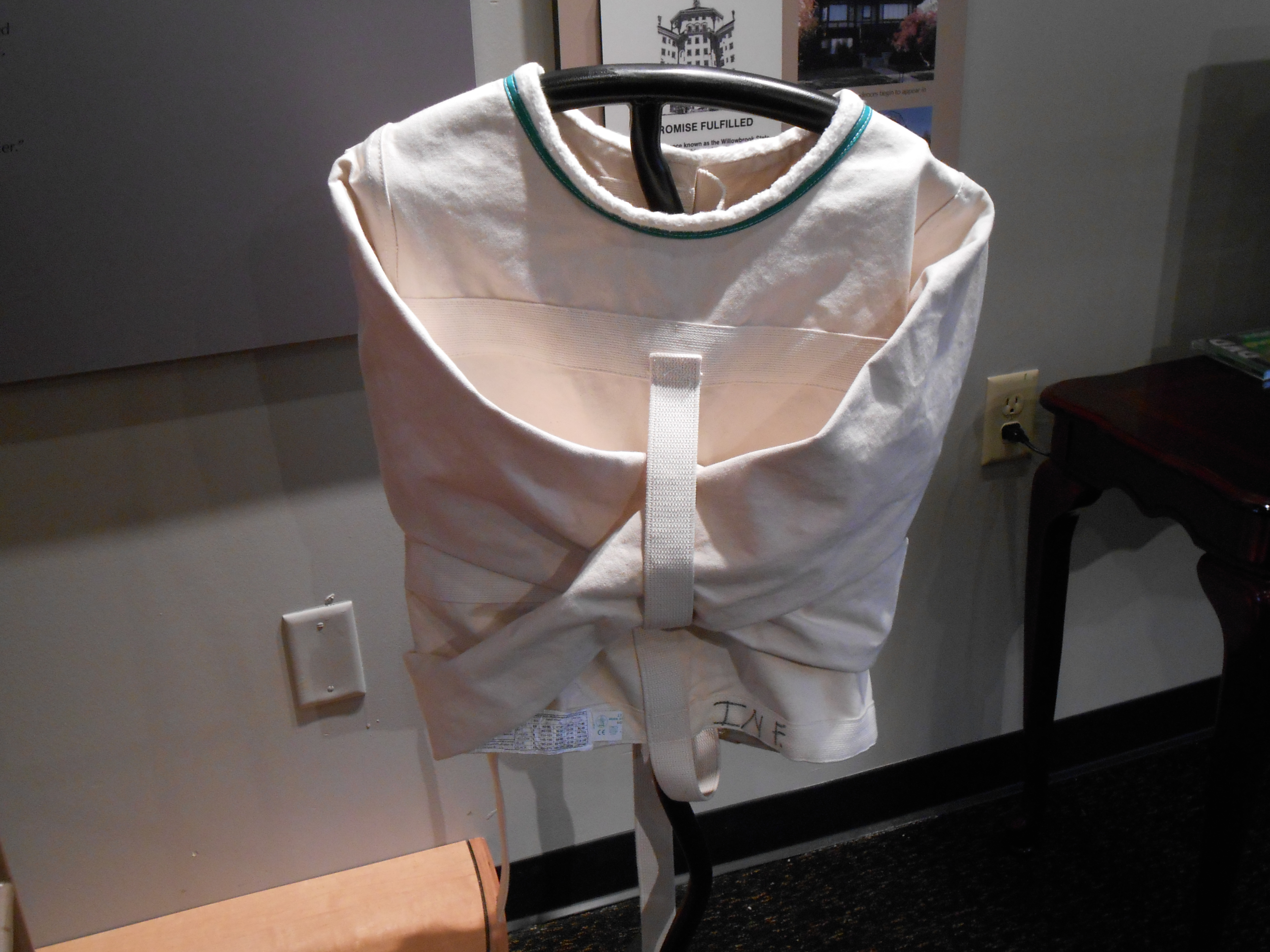
M 04-Straight Jacket

M 04-Straight Jacket

M 05

M 05

M 06

M 06

M 07

M 07

M 08

M 08

M 09

M 09

M 10

M 10

M 11

M 11

Lin and David Mack-Hardiman

Lin and David Mack-Hardiman

1872 Scientific Charity Movement & Charity Organization Societies

On the surface, many of the key people who were involved in the Scientific Charity Movement during the late nineteenth century appear to be caring individuals who wanted nothing more than to lift the poor out of poverty with education and employment so that they could support themselves without government assistance. These charities did not receive state aid but depended on donations mainly from wealthy Americans. There is no doubt that these societies helped the plight of poor children, many of whom were under the age of 10 and working under terrible conditions in order to help out their families. But when it came to the defective, dependent, and delinquent classes, which was the label used to describe the insane, feeble-minded, blind, crippled, maimed, deaf and dumb, epileptic, criminal types, prostitutes, drug addicts, and alcoholics, the sincerity of their intentions to purely provide care to these individuals was overshadowed by the underlying goal of Eugenics.

@Columbia University 1

@Columbia University 1

Photo: Columbia University – Social Forces Visualized: Photography and Scientific Charity, 1900-1920.

They didn’t want to see these poor, unfortunate souls suffering in squalor on the streets and in the poor houses but their ultimate objective of eradicating poverty and the financial drain that it caused on society resulted in the building of more asylums for the sole purpose of removing the defective classes from society so that they could not procreate. The Charity Organization Societies wanted to isolate the defective class in asylums in order to stop them from “breeding,” Alienists wanted to study and experiment on them, Medical Students wanted their dead bodies, Pathologists wanted their brains, Anthropologists wanted their bones, and the general public was just happy that someone was taking care of the problem. With the passage of the Social Security Act of 1935, the Poor Houses were abolished. Insane Asylums thrived and many remained in operation for over one hundred years. For more information, click on the RED links below.

@Columbia University 2

@Columbia University 2

Photo: Columbia University – Social Forces Visualized: Photography and Scientific Charity, 1900-1920.

Scientific charity built on Americans’ notion of self-reliance, limited government, and economic freedom. Proponents of scientific charity shared the poorhouse advocates’ goals of cutting relief expenses and reducing the number of able-bodied who were receiving assistance, as well as the moral reformers’ goal of uplifting people from poverty through discipline and religious education via private charity. In this model, individuals responded to charity and the government stayed out of the economic sphere. Individuals were seen as rational actors who freely made decisions based on their own self-interest and who were responsible for how they fared economically. Scientific charity fit well with the post–Civil War concept of social Darwinism, which held that humans were in competition and the strong survived and thrived while the weak did not. Not surprisingly, Charity Organization Societies were generally opposed to unions.

Two of the leading advocates for Charity Organization Societies were Josephine Lowell and S. Humphrey Gurteen. Lowell, who was from a radical abolitionist family, believed that idleness was a major cause of poverty, and she advocated giving those who requested relief a labor test (such as breaking stones or chopping wood) before they received private charity. During her life, she developed several principles to guide her social reform work. One of her key principles was that “charity must tend to develop the moral nature of those it helps.” Lowell opposed both local government relief and almsgiving (individual giving directly to the poor) since she felt this practice did not morally uplift the people and created dependency. She felt that charity agents and visitors could provide a personal relationship conducive to helping needy individuals instead of treating them as “cases.”  Lowell thought “that each case must be dealt with radically and a permanent means of helping it to be found, and that the best way to help people is to help them to help themselves.”

Gurteen provided many practical ideas to implement organized Charity Organization Societies. Gurteen’s plan was to have various groups already providing services to the poor coordinate their efforts. There would be a central office that served as a charity clearinghouse where “friendly visitors” (COS agents) involved in investigating the poor would meet to compare notes to determine who was worthy of relief and who was an imposter. This collaboration would result in a complete registry of every person in the city who was receiving public or private assistance. The goal of this organized approach was to stop providing relief to the undeserving poor but continue to provide the deserving poor with the assistance to solve their own problems. Gurteen believed that COS would end outdoor relief, stop pauperism, and reduce poverty to its lowest possible level.”  SOURCE: Excerpted from “Social Solutions to Poverty” Scott Myers-Lipton, Pages 68-69 © Paradigm Publishers 2006.

@Columbia University 3

@Columbia University 3

Photo: Columbia University – Social Forces Visualized: Photography and Scientific Charity, 1900-1920.

Social Darwinism: “Theory that persons, groups, and “races” are subject to the same laws of natural selection as Charles Darwin had proposed for plants and animals in nature. Social Darwinists, such as Herbert Spencer and Walter Bagehot in England and William Graham Sumner in the U.S., held that the life of humans in society was a struggle for existence ruled by “survival of the fittest,” in Spencer‘s words. Wealth was said to be a sign of natural superiority, its absence a sign of unfitness. The theory was used from the late 19th century to support laissez-faire capitalism and political conservatism. Social Darwinism declined as scientific knowledge expanded.”

Breaker Boys by Lewis W. Hine

Breaker Boys by Lewis W. Hine

“An illustration of these times and the rise of a professional beggar class was described in 1880 by Reverend Oscar C. McCulloch, Pastor of Plymouth Church, Indianapolis at the seventh annual meeting of the National Conference of Charities and Corrections. His presentation entitled “Associated Charities” detailed the need to organize charities:

“…Every worker among the poor in our cities finds himself saying, “Who is sufficient for these things?” Let him conscientiously attempt to dispense charity wisely in any one instance, and he is made sensible of the organization of pauperism, and of the complex problem of poverty; of suffering beyond his reach, and of setting tides of evil beyond his control. My own introduction to this work was in this wise: In a small room I found an old blind woman, her son, his wife and two children, his sister with one child. There was no chair, table or stool, a little ” monkey stove,” but no fire; no plates, or kettles, or knife, fork or spoon. Such utter poverty horrified me. I soon had coal, provisions and clothing there. Chance led me into the office of our township trustee, where the historical records of all applicants for public aid are registered. Here I found that I had touched one knot of a large family known as “American Gypsies.” Three generations have been, and are, receiving public aid, numbering 125 persons; 65 per cent. were illegitimate; 57 per cent of the children died before the age of five. Distinctions of relationship were ignored. In the case above cited, the child of the sister was by her own brother. Since then I have found that family underrunning our society like devil-grass. In the diagram which I hold before you, the extent of it is traced to over 400 individuals. They are found on the street begging, at the houses soliciting cold victuals. Their names appear on the criminal records of the city court, the county jail, the house of refuge, the reformatory, the State prison and the county poor asylum. I give this as an illustration of the organization of pauperism, which takes it beyond the control of the individual and of the single society, making necessary an organization of charitable forces if the evil is ever to be controlled….”

COS leaders wanted to reform charity by including a paid agent’s investigation of the case’s “worthiness” before distributing aid. They believed that unregulated and unsupervised relief caused rather than cured poverty. The paid agent, usually a male, made an investigation and carried out the decisions of the volunteer committee concerning each applicant, including maintaining records. A volunteer or “friendly visitor” was recruited to offer advice and supervise the family’s progress. COS visitors sought to uplift the family and taught the values of hard work and thrift to individuals and families. The COS set up centralized records and administrative services and emphasized objective investigations and professional training. There was a strong scientific emphasis as the COS visitors organized their activities and learned principles of practice and techniques of intervention from one another. COS views dominated private charity philosophy until the 1930s and influenced the face of social welfare as it evolved during the Progressive Era.
SOURCE: The Social Welfare History Project – Charity Organization Societies: 1877-1893 by John E. Hansan, Ph.D.

The Social Welfare History Project – Progressive Era by John E. Hansan, Ph.D.

The Social Welfare History Project – Theodore Roosevelt.

The Social Welfare History Project – Josephine Shaw Lowell.

Unsentimental Reformer: The Life Of Josephine Shaw Lowell by Joan Waugh, 1997.

In Memoriam: Josephine Shaw Lowell, The Charity Organization Society Of The City Of New York, 1906.

Almost Worthy: The Poor, Paupers, and the Science of Charity in America, 1877-1917 by Brent Ruswick, 2012. (Info on Reverend Oscar C. McCulloch).

Reverend Stephen Humphreys Gurteen – The Charities Review, Volume 8, March-February 1898-99, Page 364.

Eugenics, Past and Future by Russ Douthat, June 9, 2012, New York Times.

Columbia University – Social Forces Visualized: Photography and Scientific Charity, 1900-1920.