“The raving maniac, the young child, the infirm old man, and the seducer’s victim, were crowded in a building whose remembrance must seem painful.”
– W. H. McIntosh, History of Monroe County, New York
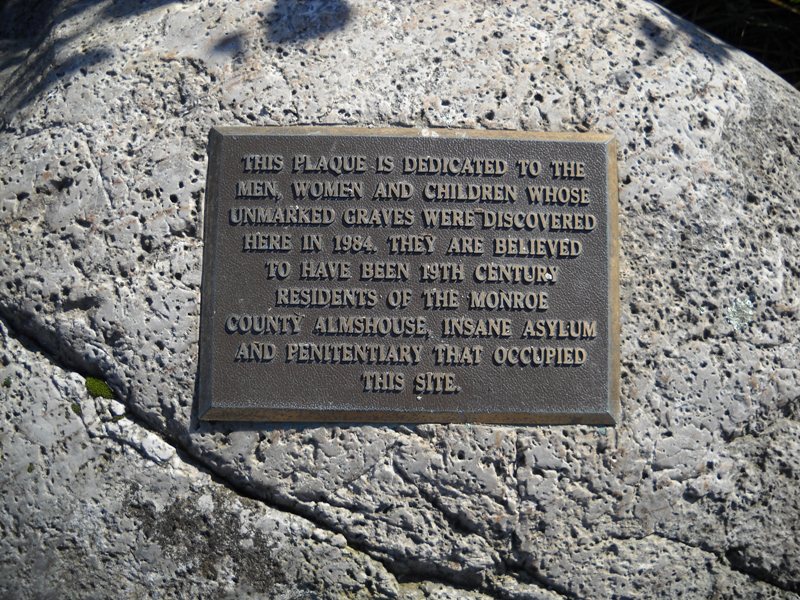
To the west of the entrance of the Vietnam Veterans Memorial of Greater Rochester in Highland Park (1440 South Avenue, Rochester, NY) stand three cream colored wooden arbors with benches, a lovely brick patio, and a small garden. This site, now known as The Remember Garden, marks the old burial ground that was used to bury paupers and criminals in unmarked, anonymous graves during the nineteenth century. In July 1984, approximately 900 human remains were discovered in this unmarked cemetery which was located behind the old Penitentiary. The bodies are believed to be the inmates who lived and died at the Work House (Penitentiary), Alms House, and the Insane Asylum between 1826 and 1863. 284 to 305 remains were re-interred in Mount Hope Cemetery in 1985. The memorial that marks the location of the cemetery in Highland Park was dedicated in May 2009, and the memorial to mark the re-interred remains at Mount Hope Cemetery may be dedicated in the spring of 2012. See 1872 “Bone Yard” The Remember Garden.

Remember Garden, Highland Park
It is indeed unfortunate that thousands of poor “sane” men, women, and children, who lived and died in the county poor houses and other charitable institutions of our country, were buried in anonymous, unmarked graves; but their final resting places can be marked with engraved headstones. The same rule does not apply for those who were labeled as “insane” which also includes people who were diagnosed with epilepsy. It is virtually impossible for family researchers to obtain the medical records of their ancestors who were incarcerated at these long closed insane asylums because of the federal HIPAA Law which states, “The Office for Civil Rights enforces the HIPAA Privacy Rule, which protects the privacy of individually identifiable health information; the HIPAA Security Rule, which sets national standards for the security of electronic protected health information; and the confidentiality provisions of the Patient Safety Rule, which protect identifiable information being used to analyze patient safety events and improve patient safety.” This rule has also been applied to burial ledgers and death records of former NYS Hospitals and Custodial Institutions. Everyone has been forced to sign HIPAA documents at their doctor’s office. Most people interpret this law as one that applies to the living, not the dead. An individual’s right to privacy ends at death but the right of patient confidentiality apparently lasts forever. What is even more confusing is that a few states have interpreted this federal law differently than New York State. SEE NEW HIPAA UPDATE!
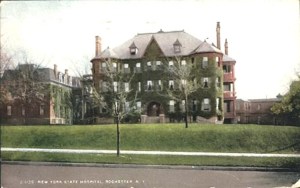
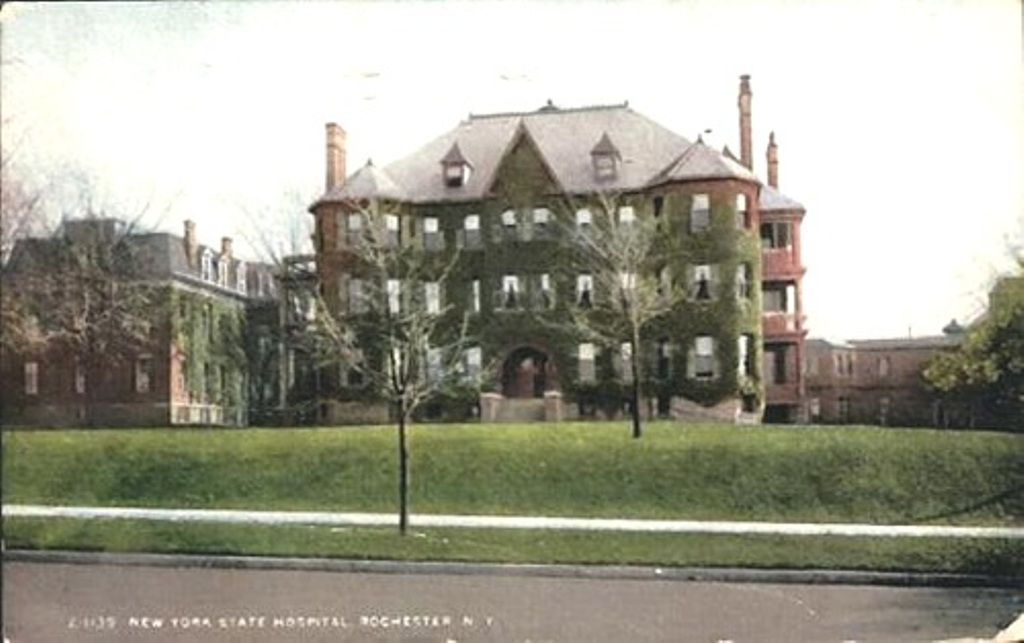
Monroe County Poor House & Rochester State Hospital
Washington, Oregon, Massachusetts, and Minnesota have allowed the release of the names of former psychiatric patients buried in anonymous, unmarked graves to the public. In some cases, these states have provided funds for cemetery restoration and engraved headstones. One would presume that if other states have released the names of patients, then New York State should be allowed to do the same. To deny our ancestors this simple remembrance, for all eternity, on the grounds that they were unfortunately and unnecessarily labeled as mentally ill, is unconscionable. The people of the state and the country have a right to know where their ancestors are buried; and the patients should have the right to be remembered with dignity.
Bill S2514 has been introduced to the New York State Legislature by Senator Joseph E. Robach. Let’s keep our fingers crossed that this bill becomes a law.
So, what does Willard State Hospital have to do with Rochester State Hospital? (The main building of the Willard State Hospital was demolished in 1984/85. Some of the buildings currently belong to the NYS Prison System / Willard Drug Treatment Facility).
The Willard Act of 1865 was “An Act to authorize the establishment of a State asylum for the chronic insane, and for the better care of the insane poor, to be known as The Willard Asylum for the Insane.” This law introduced a new policy that “was to relieve the county of their care and devolve it upon the State through the ‘Willard,’ and the State Lunatic Asylum at Utica.” Willard opened its doors on October 13, 1869. From the beginning New York and Kings Counties were exempt from this law; Monroe County quickly followed. “An Act In Relation To The Chronic Pauper Insane” was passed on April 25, 1871. The board of State Commissioners of Public Charities was authorized to hear and determine all applications by the county superintendents of the poor of the counties of New York State. On written application the several counties had to prove to the Legislature that “the buildings and means employed to take care of the chronic pauper insane of such county are sufficient and proper for the time being for such purpose.” Monroe County was exempted from sending their pauper chronic insane to the Willard Asylum about the year 1872.
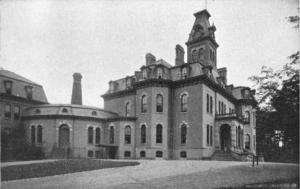
Willard State Hospital, Main Building, circa 1898.
The Willard Asylum was unique because it was created to end the poor house system of caring for the insane. From 1869 to 1890, an inmate once committed to the facility, was prohibited from being returned to the county poor house unless the county was exempted, or the county did not want that particular patient returned. Willard provided a permanent home for the pauper chronic insane or “incurables” of the state. The term chronic refers to an individual who suffered from insanity for more than one year. Counties that were not exempt from the law were responsible for transporting their pauper chronic insane to Willard and paying the cost of the patients’ care, maintenance, and clothing. Willard was located in the towns of Ovid and Romulus, Seneca County, New York, on the shores of Seneca Lake and is roughly 80 miles from Rochester.
According to The Proceedings of the Board of Supervisors of the County of Monroe, 1871, the only patient who was sent to The Willard Asylum for the Insane by the County of Monroe was Francis J. O’Brien, at the yearly cost of $129.00. The U.S. Federal Census of 1870, which is the first census of the Willard Asylum, shows that Mr. O’Brien was 29 at his last birthday; male; white; born in the state of Michigan; insane. In 1880, he is listed as: 40 years old; married; occupation, physician; born in the state of Michigan; insane; living in the North wing of the main asylum building. The 1880 U.S. Federal Census Schedules of Defective, Dependent, and Delinquent Classes lists him as: residence when at home, Rochester, Monroe; form of disease, Chronic Mania; duration of present attack, 13 years; total number of attacks, 1; age at which first attack occurred, 27; what has been the total length of time spent by him (or her) during life in such asylums, 11 years. In 1900, he is listed as 60 years old; inmate, white; male; married; born in Michigan. His name does not appear on the 1910 Federal Census. Mr. O’Brien died between 1900 and 1910 and spent at least 31 years of his life locked up at Willard as did thousands of New Yorker’s during the last two centuries. We will never know how or when he died, or where he was buried unless current law changes.
The State Care Act passed in 1890. It was “An Act to promote the care and curative treatment of the pauper and indigent insane in the counties of this state, except New York, Kings and Monroe counties, and to permit said excepted counties or either of them, in accordance with the action of their respective local authorities, to avail themselves or any one or more of them, of the provisions of this act.” The State Commission in Lunacy was given the power to divide the State into hospital districts and dropped the distinction between acute and chronic asylums. This law also renamed state insane asylums to state hospitals. Willard was no longer an asylum for the chronic insane only and was renamed Willard State Hospital which served the counties of Allegany, Cayuga, Genesee, Ontario, Orleans, Schuyler, Seneca, Steuben, Tompkins, Wayne and Yates. The Monroe County Insane Asylum was renamed Rochester State Hospital and served the counties of Monroe and Livingston. On July 1, 1891, Monroe County came into the state system and the asylum was purchased by the state. The New York State poor house system of caring for the insane ceased to exist October 1, 1893, when the State Care system went into effect.
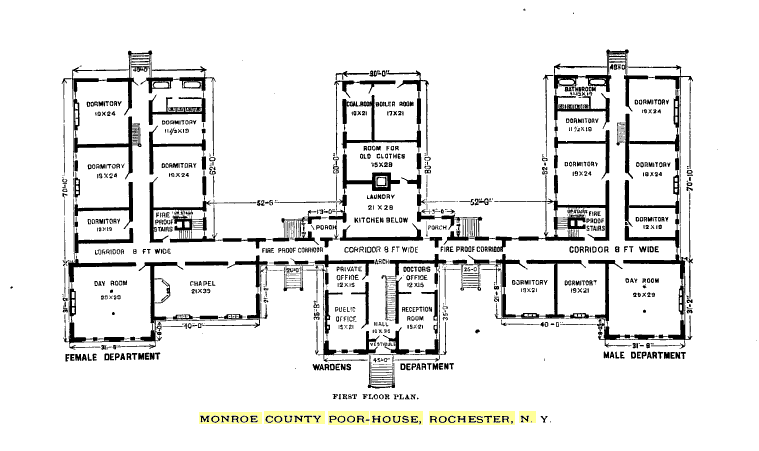
The commonalities of the Willard Asylum for the Insane and The Monroe County Alms House, were they both shared the same architect; Mr. John Rochester Thomas, born on June 18, 1848, at Rochester, New York. According to W. H. McIntosh in his book History of Monroe County, New York: “John R. Thomas, one of our most enterprising young architects, commenced the practice of his profession here in the year 1866, and now ranks with the leading architects of the country. Mr. Thomas has during the past ten years accomplished a very large amount of work. He introduced the Mansard roof, which was first applied to private dwellings. Mr. Thomas has made a specialty of the study of Gothic art, believing it will be the architecture of the future in this country. He has also designed largely for private dwellings in the city and adjoining country, among which is the residence of H. A. De Land, of Fairport, one of the most elegant and costly private residences in western New York. He also designed Rochester Theological Seminary buildings, Sibley Hall, on the University grounds, the Opera House, the Monroe County almshouse, the University of Virginia, at Charlottesville,Virginia, and the New York State Reformatory buildings, at Elmira. In the year 1874, Mr. Thomas received a very honorable appointment from Governor Dix as one of the State architects, and was assigned at once to the charge of the Reformatory at Elmira, which position he now holds.” (1) The choice of Dr. John B. Chapin, first Superintendent of The Willard Asylum for the Insane, choosing Mr. Thomas as the architect of The Willard Asylum for the Insane caused a great deal of controversy in New York State because at the time he was not yet a state architect. The “Mansard” or French roof is prominent in many of Mr. Thomas’s architectural designs.
The differences between Willard and Rochester State Hospitals, was that Willard had its own twenty-five acre cemetery located about a mile down the road from the facility which contains the remains of 5,776 patients buried in anonymous, unmarked graves. The Rochester State Hospital used Mount Hope Cemetery to bury its inmates. I spoke to a very knowledgeable gentleman from the Rochester Office of Mental Health who stated that the address of the Rochester State Hospital was 1600 South Avenue. He said the facility was torn down in the 1960s to make way for the Al Sigl Center. The address of the Al Sigl Center was given a new address by the U.S. Postal Service: 1000 Elmwood Avenue (corner of South Avenue). In the past, I have searched the Mount Hope Cemetery Records looking for family members and had often seen “1600 South Avenue” given as the residence for many people. I always wondered what it was and on occasion I had Googled the address but received no hits. Now I know why, the address no longer exists.
I have transcribed the earliest records: Names: Monroe County Poorhouse, Asylum, Penitentiary, Other Charities 1838 to 1860. If you believe that your ancestor was an inmate who lived and died at The Monroe County Insane Asylum / Rochester State Hospital you can search for them at the Rochester – Mt. Hope Cemetery Records online. Here is a brief description of what you will see if you decide to search the records for yourself: Under the heading “Residence,” a street name will be given with no specific address; or it will list the place where the person died such as: Insane Asylum, Asylum, County House, Jail, etc. (Be aware that there was an Asylum Street in the City of Rochester that as far as I know, had no connection with the Monroe County Insane Asylum). About 1891, you will start to see the words “Rochester State Hospital” under “Residence.” At some point in the 1900s, instead of listing the place of death as Rochester State Hospital the address has been given instead as “1600 South Avenue.” In some instances, the family of the deceased claimed the body and buried them in the family plot. In the case of pauper and indigent insane, the hospital buried them in unmarked, anonymous graves at Mount Hope Cemetery. Some unclaimed bodies were donated by state hospitals to state medical colleges for the advancement of medical science in which case no grave will be found.
At the very least, the location of these graves should be marked in Mount Hope Cemetery with a memorial indicating the final resting place of the patients of The Monroe County Insane Asylum and Rochester State Hospital. Providing individual, engraved markers would be ideal but without the actual death records this will not be possible. The Rochester State Hospital burial records do exist and should be released to the public, along with all former state hospital burial ledgers in a unified, digital, database in order that descendants and caring citizens can find their ancestors and mark the graves of these forgotten souls if they wish to do so. Hopefully, a new bill introduced into the New York State Legislature by Senator Joseph E. Robach will allow the release of the names of these people who have remained anonymous for over one hundred years. I would like to thank Senator Robach and his staff for writing and sponsoring the bill.
As a life-long Rochester area resident, I am proud to live in a community that has provided so many genealogical resources. I am truly grateful for The Friends of Mount Hope Cemetery who have taken the time and effort to assist me on more than one occasion. A few years ago, volunteer Frank Gillespie, who recently passed away in January 2012, helped me locate my great-grandparents’ grave by providing a map and directions. Marilyn Nolte, President of The Friends of Mount Hope Cemetery, has located the section where many of the Rochester State Hospital patients are buried, and she patiently answered numerous questions regarding the older sections of the cemetery, unmarked graves, and the responsibilities of plot owners. I thank them for their dedication, knowledge, and help.
(1) SOURCE: McIntosh, W. H., History of Monroe County, New York; With Illustrations Descriptive Of Its Scenery, Palatial Residences, Public Buildings, Fine Blocks, and Important Manufactories, From Original Sketches By Artists Of The Highest Ability.Philadelphia: Everts, Ensign & Everts, 716 Filbert Street, 1877, Page 142.



 The Inmates of Willard 1870 to 1900 / A Genealogy Resource