Unknown's avatar

About lsstuhler

Linda Stuhler is a Genealogy Geek from Rochester, New York, who loves to find out the facts. She has been researching her family tree for over twenty years and has accumulated an abundance of information on various subjects that she enjoys sharing on her blog at: https://inmatesofwillard.com/. She was responsible for the creation of the New York State Senate Bill S840, initiated in August 2011, which allows for the release of the names, dates of birth and death, of former patients who were buried in anonymous graves in New York State Custodial Institutions. The bill was changed from the original draft to S840A and does not work the way it was intended. It became a law on August 18, 2016, but it did not include provisions for a searchable database available to the public as New York State attorneys and the Office of Mental Health believed that if they did so, they would be sued. She is the author of "THE INMATES OF WILLARD 1870 TO 1900, A GENEALOGY RESOURCE."

Giving Names To Numbers – Central Louisiana State Hospital Cemetery

Giving Names to Numbers.

Central Louisiana State Hospital Cemetery Project

Central Louisiana State Hospital Cemetery Project

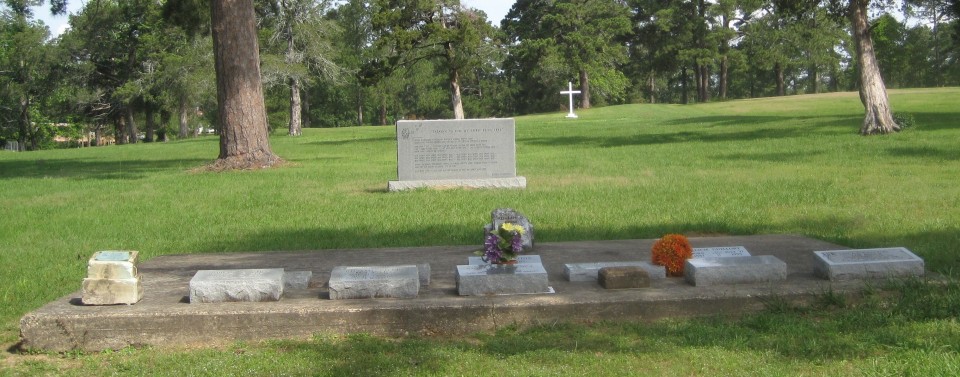
Here is another example of a group, Committee for the Preservation and Enhancement of Central Louisiana State Hospital Cemetery, that wants to memorialize the people who lived and died at CLSH and were buried in anonymous, numbered graves. Because of the HIPAA Law, they are not allowed to release any of the names, but are allowed to put them on a memorial. If a family member wants to know if their loved one is buried there, they can only confirm or deny. They are prohibited in stating that these people were patients.

Mission

To bring back the dignity of the almost 3000 souls buried on the Central Louisiana State Hospital Grounds.

Company Overview

A group of people brought together by Mr. Ray Moreau who are dedicated to preserving the cemetery on the grounds of Central Louisiana State Hospital.

Description

The committee’s goal is to place a memorial with the names of each of the almost 3000 souls bured at the Central Louisiana State Hospital Cemetery, to have the cemetery recognized as a dedicated cemetery and establish a perpetual fund for the ongoing care of the cemetery in the future.

General Information

Donations to preserve the Central Louisiana State Hospital Cemetery can be sent to:

The Extra Mile
PO Box 3178
Pineville, LA  71361-3178
Call 318-484-6575 for more information.

Facebook

The Iron Coffin – Eastern State Hospital Cemetery

Phil Tkacz, President of the Eastern State Hospital Cemetery Preservation Project in Lexington, Fayette County, Kentucky, is confronting the same problems with the federal HIPAA Law that many other concerned groups in the United States are dealing with concerning identification of deceased patients of former State Hospitals (Insane Asylums) and Custodial Institutions. What I find incredible is that many states will now be able to access LIVING INDIVIDUAL’S medical records (profiling) in order to comply with the new gun control legislation but the identities of patients who have been dead for over a century cannot be revealed because they lived with a mental illness, epilepsy, or developmental disability. When these folks were buried in the nineteenth century, the states and counties would not provide the money for headstones and instead marked their graves with numbers. In many cases, the cemeteries have been lost with the passage of time or we discover that the cemeteries and the graves themselves were never marked or recorded. The states spent huge amounts of tax payer dollars supporting and caring for these people while they were alive. In the nineteenth century, government agencies actually had budgets. It would have been considered an extravagance for the states and counties to also provide engraved headstones as this dependent group of human beings were considered to be the dregs of society. My question is, why is this particular group of people still being punished for illnesses over which they had no control? When will someone who knows what they are talking about at the Department of Health and Human Services come forward and explain why these people cannot be honored or remembered with dignity? And, why is this group of people being given more privacy protection than the living? Why?

ESH 1

ESH 1

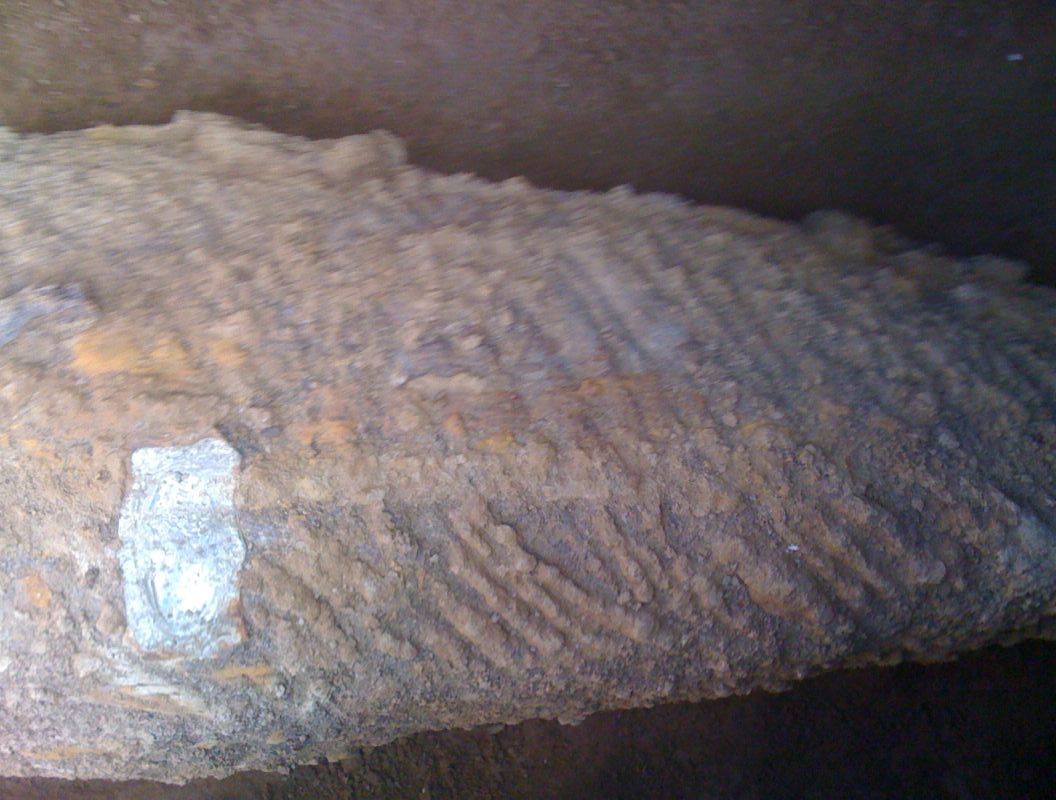
Phil’s note along with photographs, concerns an iron coffin believed to be from the 1840s that is engraved with a name. The name cannot be revealed because of the HIPAA Law. Why would a family take the time to engrave their loved one’s coffin if they didn’t want anyone to know who that person was? What about the unfortunate individuals who were buried in thin, wooden coffins or just tossed in the dirt wrapped in a shroud? Why can’t we know who they were? Why can’t we have access to their medical records? THEY ARE DEAD AND HAVE BEEN DEAD FOR OVER A CENTURY. The federal government has no problem releasing our medical records, sending them over the internet, and allowing physicians to take home flash drives containing patient information that can be easily accessed or lost. So, what’s the problem? As citizens, we don’t know who is looking into our medical histories or why. This whole issue is ridiculous and the HIPAA Law is a joke! HHS is solely responsible for this fiasco and the stigma that they are perpetuating because no one knows how to interpret the damn law!

ESH 2

ESH 2

“In 2008 the state announced it would convert the Eastern State Hospital into a community college, BCTCS. At the same time, ESH would move to a new facility. Our group began meeting with all involved in order to discuss what would be done when graves were to be found on the hospital property as construction progressed. University of Kentucky Archeology attempted to do a survey of as many areas as possible to find possible graves, but found none. In January of 2011, I received a call from the state, they said 30-50 graves had been found in an area close to the entrance off Newtown Road & University of Kentucky was going to start exhuming the remains soon. Work progressed slowly due to weather, but was finished by late April 2011.

We met with the state, University of Kentucky Archeology, and others, to discuss what they had found later in 2011. The summary was, the actual number was about 170 remains of former patients had been found and that there were more in the same area but there wasn’t enough money to continue into that area. It was decided by them, that they would exhume those remains when construction got to that area. The timeline for re-burial was about 1 year and we would be kept up to date when necessary.

Fast forward to January 2012. I was told by a reliable source that there was an Iron coffin found the year before and there were photos. Also the coffin has a plaque on it with a name, unfortunately the last name is unreadable in the photo. I contacted the person we had been talking to for updates and asked why this was never mentioned to us. We were told that they kept it from the media to “preserve the dignity of the person in the coffin and to protect their privacy.” Why our group was not told was never explained though. Even the University of Kentucky said they could not release the name.

Attempts were made to have the name released but to this day we are told that the name is protected by HIPAA. A request was made to have a headstone erected over the grave where this coffin will be re-interred later this year and were told, again, that it wouldn’t be legal under HIPAA. We are still trying to find a way to have the name released, our main argument is that A) Patient privacy does not apply, and B) Common sense would tell you that having the name put on the coffin was done in case this happened and it was later exhumed.”

ESH 3

ESH 3

Captain Morris J. Gilbert – Steward

Captain Morris J. Gilbert was the Steward of The Willard Asylum for the Insane from 1873 until his death in 1901. According to Dr. Robert E. Doran, Jr., author of History Of The Willard Asylum For The Insane And The Willard State Hospital, “he was totally responsible for all purchasing as well as overseeing the farm and maintenance work.” “Report after report by different Superintendents and various Boards of Trustees or Managers speak very highly of his ability and integrity.” Willard and all New York State Asylums employed a steward. These institutions would not have been able to function without the steward running the day to day operations of the farm, garden, various workshops and overall maintenance of the buildings and property. The asylums were like villages that tried to be as self-sustaining as possible. Employees lived on the asylum property and were supplied with room and board in addition to very low wages. I have featured an excerpt from Dr. Doran’s wonderful, insightful, detailed work that sheds a great deal of light on the inner workings of how Willard operated. I have also included a few excerpts and photographs from various sources about Captain Gilbert and his extensive job duties as the steward.

Captain Morris J. Gilbert - Wayne E. Morrison, Sr. 1978

Captain Morris J. Gilbert – Wayne E. Morrison, Sr. 1978

“I wish to say that I am particularly pleased to report one small matter, but one worthy of some attention, and that is, that during the past year we were able to get the Lehigh Valley railroad to change the name of the station formerly known as ‘Willard’ by naming it ‘Gilbert,’ after Captain Gilbert, who has been for so many years connected with the hospital. The name of the station at the hospital proper is also changed from ‘Asylum’ to ‘Willard.’ This change obviates a very annoying complication that has previously come from the wrong ideas that people got who wanted to come to the hospital from a distance, because of the peculiar name of these stations. Generally outsiders expected that the station known as ‘Willard’ was right at the hospital, and many of them would go there, not knowing it was over a mile away from the hospital, while the name ‘Asylum’ clinging to the locality years after the name of the institution itself had been changed to hospital, was something that we had long wished to have changed. The railroad has finally made the substitution in the name as described, and now those coming to Willard arrive at a little station that the railroad people built upon the grounds, only a short distance from the hospital, to which a cement walk leads directly.” –William Austin Macy, Medical Superintendent, 1900. (1)

According to The New York Times, published: October 24, 1901: “MORRIS J. GILBERT, for the past thirty-five years Superintendent of the State Hospital for the Insane at Willard, Seneca Lake, N.Y., died on Tuesday at Willard, after a long illness. Mr. Gilbert was sixty-nine years old, and is survived by his widow, two sons, and one daughter. One of the sons is the Rev. William Morris Gilbert, rector of St. Paul’s Church, Yonkers.” (2) NOTE: Mr. Gilbert was the Steward not the Superintendent. He held that position for 28 years.

Residence Of Cap't Morris J. Gilbert, Asylum Steward - Wayne E. Morrison, Sr. 1978

Residence Of Cap’t Morris J. Gilbert, Asylum Steward – Wayne E. Morrison, Sr. 1978

Farms and Industries: For a great many years, the Institution tried to be as near self-supporting as possible. The first report of the Trustees dated February 18, 1868, states that the sum of $1,000 had been received from the State Controller. Of this, $916.66 had been expended in preparing the ground, procuring the seed and sewing sixty acres of wheat. They hoped for a good crop. By the time the Asylum opened, there were 475 acres under cultivation. A Steward had been appointed and a Matron. The former was an ancient title for one who managed a feudal estate. His duties at Willard were many and important. For about the first fifty years, he did all the purchasing, supervised the farm and garden operations, the upkeep of the buildings and grounds, the distribution of supplies, and the overseeing of the various industries. The Matron was in charge of housekeeping, the sewing room, and, in the early days, the care of the sick. As early as 1870, 3,429 pieces of clothing were made, and, up until 1912 when the position was abolished, she was in charge of the kitchens and dining rooms.

The farm and gardens were never able to completely supply the needs of the Institution but they made a very large contribution. The garden extended from east of the Maples to the Hermitage with berry bushes and strawberries where the golf course was later laid out. The land was not particularly good but was gradually improved. When Captain Morris Gilbert was appointed Steward in 1873, he asked for more land as there was not enough for hay and pastures. Four years later, 258 acres were acquired at $105 an acre. Beside the farm and gardens, there were other uses for the land. The bricks for the early buildings were made on the grounds at a yard located at the site of the reservoir. Lime was made and stone quarried. It so happened that there was an outcropping of Tully limestone in Simpson’s Creek ravine. The stone was used for lime, foundations and later as crushed stone for the roads. At first, only the main road was of this material. Secondary roads were of shale which outcropped above and below the limestone. It was many years before all roads were made hard. At one time, a roadroller was borrowed from the Binghamton State Hospital, but this didn’t work out as both Institutions needed it at the same time. A steam roadroller was acquired which served several uses. It powered the rock crusher which stood in the ravine south of the reservoir. There was a little brick house near it where dynamite was kept for blasting. The roadroller also powered the threshing machine and a portable sawmill. For years, fallen timber and diseased trees were sawed, the lumber being used for various repairs and construction. Enough black walnut stock was built up to swap it for pine and maple boards. The slabs from the mill were made into bushel crates for potatoes and other vegetables. The sawdust was used in the icehouses and sometimes in the pigpens.

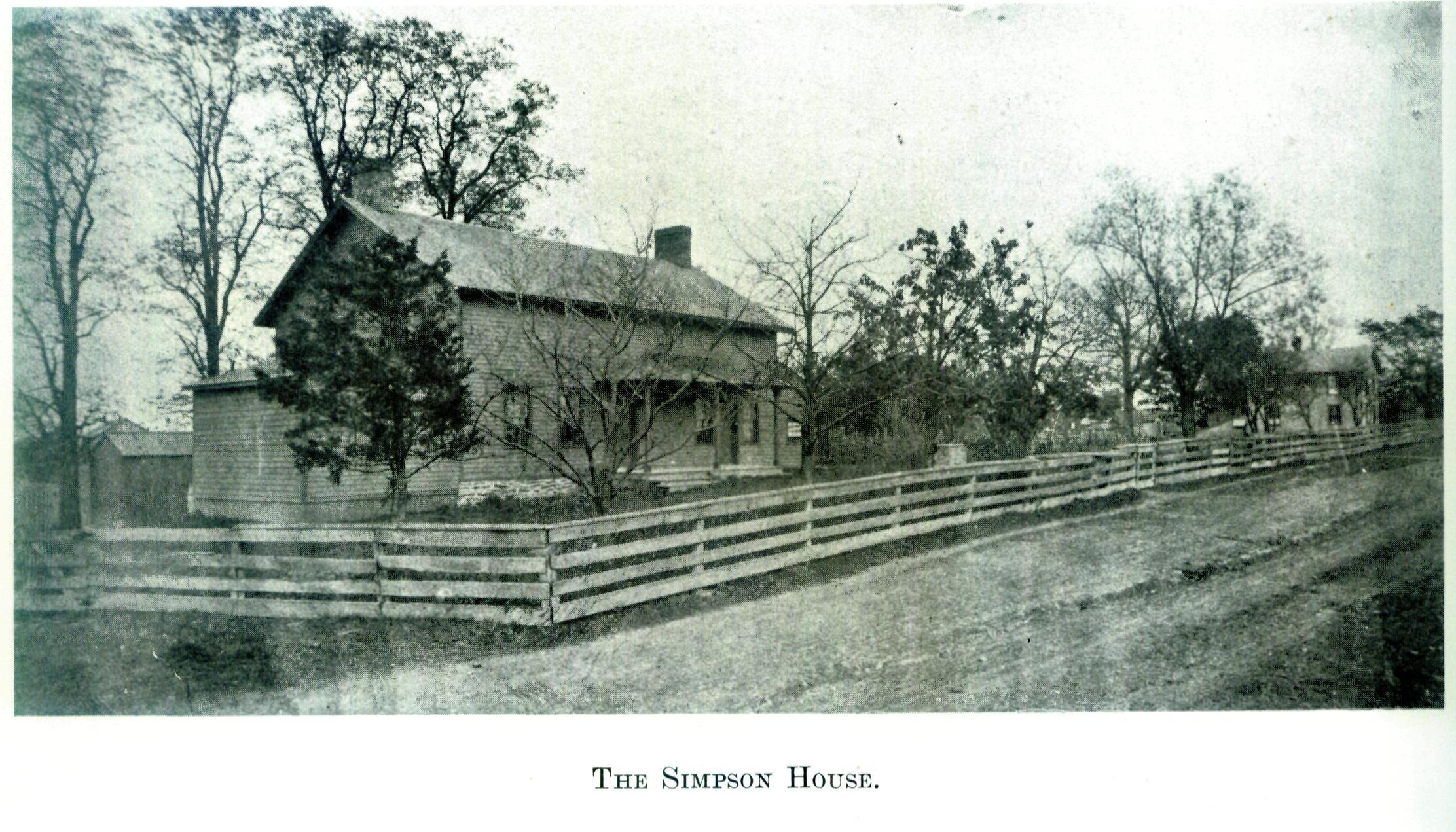
The Simpson House - Wayne E. Morrison, Sr. 1978

The Simpson House – Wayne E. Morrison, Sr. 1978

Ice was supplied from the upper reservoir and pond. This was drawn in wagons and sleds to the icehouses. There was one just west of the present Elliot Hall which was also used for cold storage. Another later became the tinsmith shop, below and south of Hadley Hall. There were icehouses in the vicinity of the barns, and we hear of new ones being built of hollow concrete blocks. In 1917, there were four of these icehouses. Ice was harvested long after the plant for artificial ice was in use. There were a couple of poor years, but in the winter of 1919 the ice was 30-34 inches thick and 1,200 tons was cut. Needless to say, this ice could only be used for cooling in refrigerators or cold rooms and not for consumption.
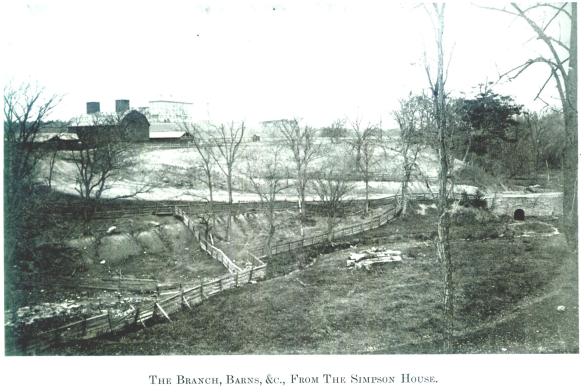
The Branch, Barns, &c., From The Simpson House - Wayne E. Morrison, Sr. 1978

The Branch, Barns, &c., From The Simpson House – Wayne E. Morrison, Sr. 1978

The piggery was an important resource. As early as 1870, 4,400 pounds of pork was produced. Ten years later, 50,750 pounds at 6¢ a pound was worth $3,045. This was not without its drawback. The piggery and slaughterhouse was located near where the County Road crosses the creek and not far from Sunnycroft. It was also near the Simpson’s house to the south. Between the pigs, the slaughterhouse, the tallow rendering plant and the fact that sewage was being dumped into the creek, the Simpson’s were unhappy. In 1884, the farm of 135 acres along the south side of the creek with three dwelling houses was bought for $10,298.40. Appropriately enough, this sum had been accumulated by the sale of hides, bones, tallow and rags. In 1893, request was made to move the piggery and slaughterhouse; the lake farm was suggested as a site, but this was impractical because no railroad track was available to take the garbage there. Four years later, the pigs were moved east of the railroad cut, far enough away not to be a nuisance. While swine seemed to be freer of disease than cattle, there was a serious outbreak of swine flu or hog cholera in 1915 when 200 pigs were lost. Pork continued to be an important product. In 1960, 91,221 pounds was reported as worth $27,366.30. The next year the farm came to an end.

The dairy herd was the backbone of the farm. Starting with 1,800 quarts of milk 4 in 1870, we find over ten times that much ten years later. In 1873, the entire here had to be slaughtered because of tuberculosis and in 1883 50% were killed. It was during this decade that it was proved that bovine tuberculosis could infect human beings. The cows that formed the herd had been bought locally from various farms. It was now decided to breed their own stock from hopefully healthy animals. This seemed to work well for twenty years or more, but in 1908 sixty cows reacted to the tuberculin test. The cows were Holstein but not thoroughbreds. In 1915, the thoroughbred herd was started. All was not well as five years later out of 134 cows, 124 were positive, and out of 91 heifers, 30 were positive. The managers felt that part of this was due to improper supervision which was probably true during the war years. They asked an appropriation of $20,000 to build a new herd. By 1925, milking machines were being introduced. The pasteurizing plant had been installed previously. In 1937, the New York State Department of Agriculture and Markets gave the following figures for milk produced: The average production in the years from 1923 to 1935 was 8,334 pounds per cow. In the year 1936, it jumped up to 10,733. By 1940, the value of milk produced was $44,579. It was a good thing that it was high and that the farm as a whole was extending itself to the utmost. The next five years were war years with rationing and food shortages. Thanks very largely to the farm, the patients were well cared for. In 1945, the milk production was 727,571 quarts and the next year the average per cow was 12,000 pounds per year. Dr. Keil was proud of the herd and states that the State average was 6,000 pounds per year. Four years later he reports that there were 275 cows, that 15 of them gave better than 15,000 pounds a year and that one gave 18,950 pounds a year.

There was much sadness when the Department of Mental Hygiene, on order it is understood from the Governor, announced late in 1960 the closing down of the farm. The Board of Visitors unanimously opposed the idea and so did almost everyone else. For over 90 years the herd fully supplied the Institutional needs for milk. This was not true of butter and cheese. The audit of 1886 shows that butter was bought from dozens of people in small amounts. To a lesser extent, this was true of cheese.

Much of the work at the farm was to support the dairy herd. There was good pasture in season. The cows grazed in fields each side of the road running to Grandview above the County Road. Much corn was raised for ensilage, and we read from time to time of the need for more silos. Mangel-wurtzel was raised by the thousands of bushels. Alfalfa was introduced early in the century and was considered a wonder crop. The wheat raised was sent by rail to a mill and the flour returned was used in the bakery and bran fed to the stock.

Considerable beef was produced. For instance, in 1890 there was 4,714 pounds of dressed beef, and in 1934 there was 28,510 pounds. Hay and oats were raised for the horses of which at the turn of the century there were 27 plus 9 colts and one mule. There were also 24 sheep, 11 lambs; 60 turkeys, 7 geese, 30 ducks, and 260 foul completed the bird census. Sometimes there were peafowl, and for a long time there was a span of oxen. Up until 1926, there were driving horses which were called “administration horses.” They numbered a dozen or more, but in that year the automobiles took over. Farm horses hung on much longer. A Holt caterpillar tractor was bought in 1915. Mr. Warren, the Steward, was very pleased with it, stating that it could do the work of from eight to ten teams. Two years later, he again tells of it and states that, even with gasoline at the very high price of 25¢ a gallon, it was an economy.

On going over the annual reports of the Steward, one learns of the good weather and the bad, of the droughts, floods, hailstorms and tempests that occur. The latter two were particularly hard on the orchards of which there were about 120 acres. From the very start, apples had been a good crop and supplied the cider and all the vinegar for the hospital. Grapes became a big crop, large enough to give all the patients grapes everyday during the season. Some years, the grapes were exchanged on the market for oranges so that the patients could have them at Christmas time. Concords, Niagaras, Delawares and Catawbas were grown, mostly east of Edgemere or around Vinelands. The orchards also were in this general vicinity, but there were fruit trees on the lake farm back of Buttonwood.

The poultry was concentrated near Vinelands to the south, but there were some at Hillside. In 1937, there were 2,324 pounds of dressed chicken and 1,503 dozen eggs. In 194?, the egg output was reported at an all time high of 8,136 dozen.

The garden produced all the vegetables with the exception of onions and potatoes, the soil not being suitable for the former and not too good for the latter. Even so, there were years when there was a respectable potato crop. For instance, 3,850 bushels were produced in 1933.

In the early years of the century, there was a canning plant in the old warehouse located on the steamboat dock. The reports often mentioning canning and evaporating as important activities. In the 1917 report, it is broken down into categories: Canned apples 1,043 gallons, plums 914 gallons, pears 2,329 gallons, peaches 1,962 gallons and tomatoes 1,584 gallons. The evaporating apparatus was in the old pump house near the State dock. That year, 225 pounds of raspberries were dried and the dried weight of sweet corn was 1,935 pounds. This was put up in empty sugar and cracker barrels.

The garden grew everything from asparagus to vegetable oysters of which there were over six tons in 1931. The demands of the Institution at that time were for over 3,000 people.

The farm and garden always made a profit – sometimes more, sometimes less – depending on the weather and the amount of supervisory help available. As most of the work was done by the patients, good supervision was necessary.

Willard not only raised food, but also manufactured articles for the care and maintenance of the patients. There were a number of shops where a large part of the work was done by the patients, to their great benefit. A look at the figures from year to year is most instructive. The shoe shop at first spent most of its energy repairing shoes and making and repairing harness. This shop was also responsible for making and repairing mattresses. In 1895, the bulk of the articles made were mattresses, hair pill and harness, with boots, shoes and slippers repaired in quantity. By 1912, after shoemaking machinery had been acquired, 2,579 pairs of boots and shoes were made. In 1932, the shoe and mattress shop made 4,682 articles and repaired 3,286. Twenty years later, the shop wasn’t making as many shoes but it was still very busy. Seventy years ago, there were canaries in cages on many of the wards. For some reason, the shoe shop had many cages of them. Perhaps, they took the place of piped-in music. The shop was located on the second floor of the storehouse on the east side. The mattress shop was adjoining.
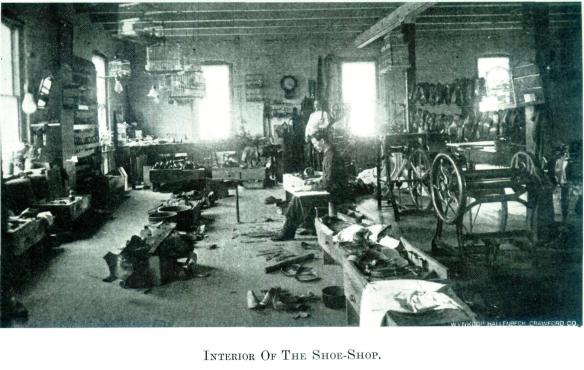
Interior Of The Shoe-Shop - Wayne E. Morrison, Sr. 1978

Interior Of The Shoe-Shop – Wayne E. Morrison, Sr. 1978

The sewing room was probably the first industry. It turned out articles by the thousands, as did the tailor shop which was adjoining. In 1885, the sewing room turned out over 20,000 articles and the tailor shop 5,841. Besides this, there were almost 9,000 sheets, towels and pillow covers made. In 1893, over 4,000 wrappers or aprons were made and 4,000 dresses, and almost as many skirts. For some reason, there were over 3,000 collars made, which seems like a strange item. The tailor shop in the same year made about 1,500 coats and over 2,000 pants, and 1,500 vests which must have been in the style at the time. In 1926, they were still going strong, making nightgowns by the thousands, 2,500 chemises; in other words, they were making practically all the clothes for the patients. It was a time when male employees, nurses and attendants, wore blue uniforms made from Metropolitan Police blue cloth. These were made in the tailor shop and sold at cost. In 1953, the sewing room made over 50,000 articles and repaired 10,000 the tailor shop made about 11,500.

Another busy industry was the broom shop which made brooms by the thousands as well as brushes, baskets, crates, doormats and floor polishers. Chairs were caned and furniture repaired. Floor polishers were an important item as the floors all over the hospital were kept polished to the “nth” degree. An attendant would spread wax on the floor by scraping a block of paraffin with a metal comb. The patients would shove the polishers back and forth by the hour. At the Hermitage, the day room was so large that a polisher about four feet square was pulled back and forth by ropes. It was weighted down by a patient sitting in a chair on top of it.

The Basket, Mat & Brush Shop - Wayne E. Morrison, Sr. 1978

The Basket, Mat & Brush Shop – Wayne E. Morrison, Sr. 1978

The tin shop was another busy place; probably not as many patients were employed here as in other shops. The number of different articles made here is astonishing. Some years, over 75 different categories are listed – everything from bird cages to a two foot ventilator with hood for the Nautilus boathouse, boxes, basins, boilers, cups, chamber pots, cans, dippers, measures, pails, pots, pans, strainers, trays, etc. They also made yards and yards of eaves troughs and conductor pipe.

Taking a typical year, we might look at the value of articles made by patients. In 1955, the value was $50,427.28; in the same year the value of farm and garden produce used for food was $173,303.70.

Until very recently, the bakeries at Willard made all the bread for the Institution. During the late 1940’s, a new type of bread was developed at Willard in conjunction with nutritional experts from Cornell. This came to be called Willard Bread. It was a rich protein type of bread to which soy bean flour was added and also vitamins.

Of the Stewards who served Willard, three stand out for their length of service and ability. Captain Morris Gilbert was in office from 1873 until his death in 1901. During that time he was totally responsible for all purchasing as well as overseeing the farm and maintenance work. Report after report by different Superintendents and various Boards of Trustees or Managers speak very highly of his ability and integrity. When he died, Dr. Macy had to take a man from Civil Service who had had no experience with a farm. After a short term, he resigned, frankly stating that he didn’t have what it took. Mr. Frank Warne was appointed in 1902, serving with great ability until his retirement in 1934. His annual reports are of considerable interest in recording the various trials and triumphs of the farm. Mr. Samuel Peltz was appointed in January, 1936, and served until his untimely end September, 1954; he was highly regarded and well liked. It was fitting that the new storehouse building was named in his memory. These three men served a total of 75 years.” (3)

1900 Report of Steward (4) Transcribed by L.S. Stuhler

SOURCES:

(1) Thirty Second Annual Report of the Board of Managers of the Willard State Hospital to the State Commission in Lunacy for the Year 1900, Chapter 20 Report of the Board of Managers of the Willard State Hospital.

(2) The New York Times, Published: October 24, 1901. Copyright@TheNewYorkTimes

(3) History Of The Willard Asylum For The Insane And The Willard State Hospital by Robert E. Doran, M.D., 1978, Pages 36 – 42. About Dr. Robert E. Doran, Jr. in his own words: “INTRODUCTION: The author of this little history of Willard lived there as a little boy when my father was First Assistant physician. Later, I made frequent visits to the place and became consulting surgeon there in 1934. My contacts with the Institution cover about two-thirds of its existence. I wish to express my thanks to Dr. Anthony Mustille who has been supportive of this history and made available the services of Mrs. Maurita Lind who has been most helpful in furnishing me with reports, articles, laws and other material. Mr. J.F. McCauley, Deputy Director for Administration, furnished me with a resume of the regulations pertaining to patient employment. Miss Helen B. Vincent, Principal of the School of Nursing, has given me information about it and its impending disestablishment.”

(4) Reprinted from Thirty Second Annual Report of the Board of Managers of the Willard State Hospital to the State Commission in Lunacy for the Year 1900, Chapter 20 Report of the Board of Managers of the Willard State Hospital, Pages 297-306, 308, 309, 310, 311, 312.

(5) Photographs – Morrison, Wayne E., Pictorial Album of The Willard Asylum 1869 – 1886, 1978.

The Branch – Wayne E. Morrison, Sr. – Pictorial Album of The Willard Asylum 1869 – 1886

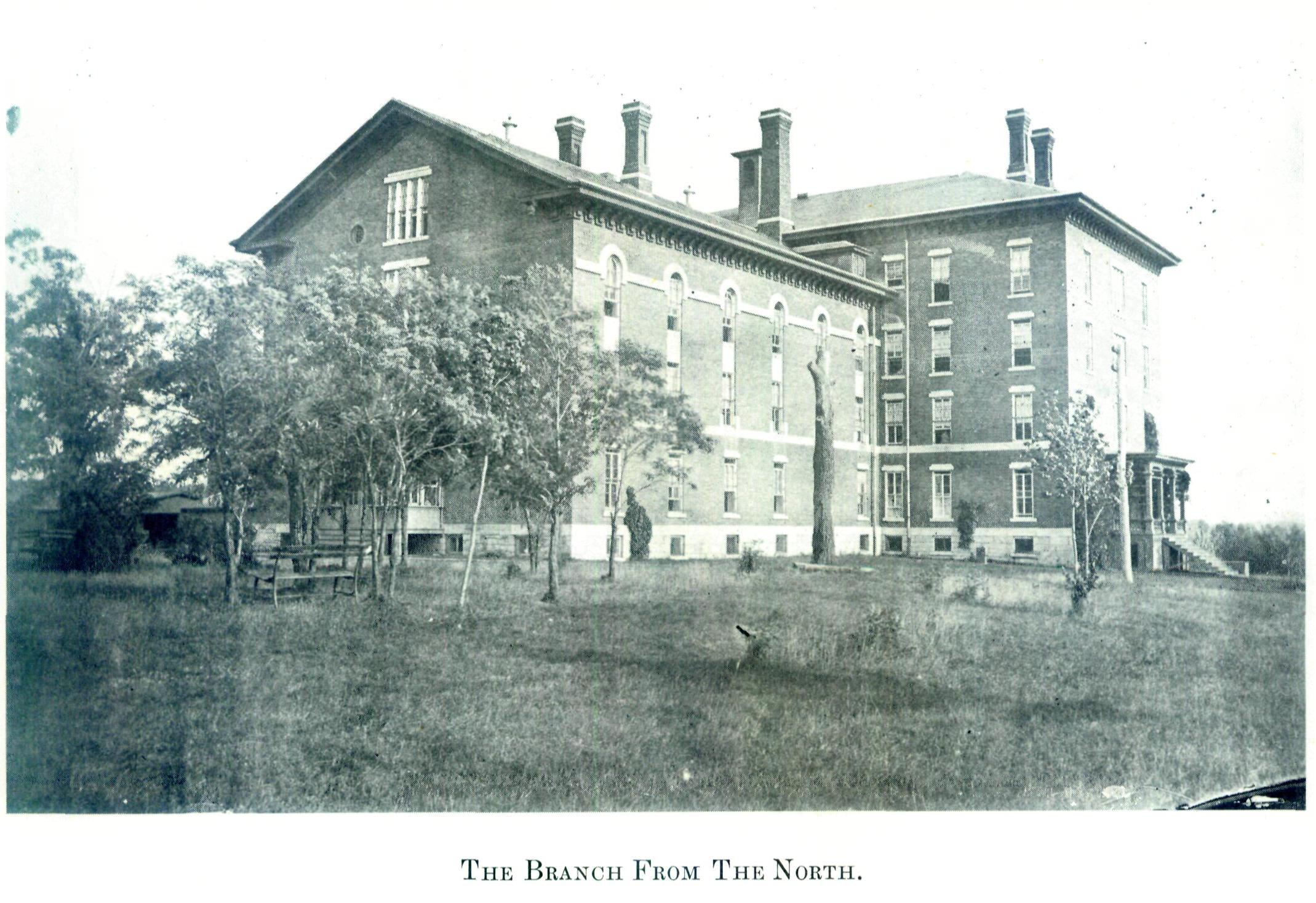
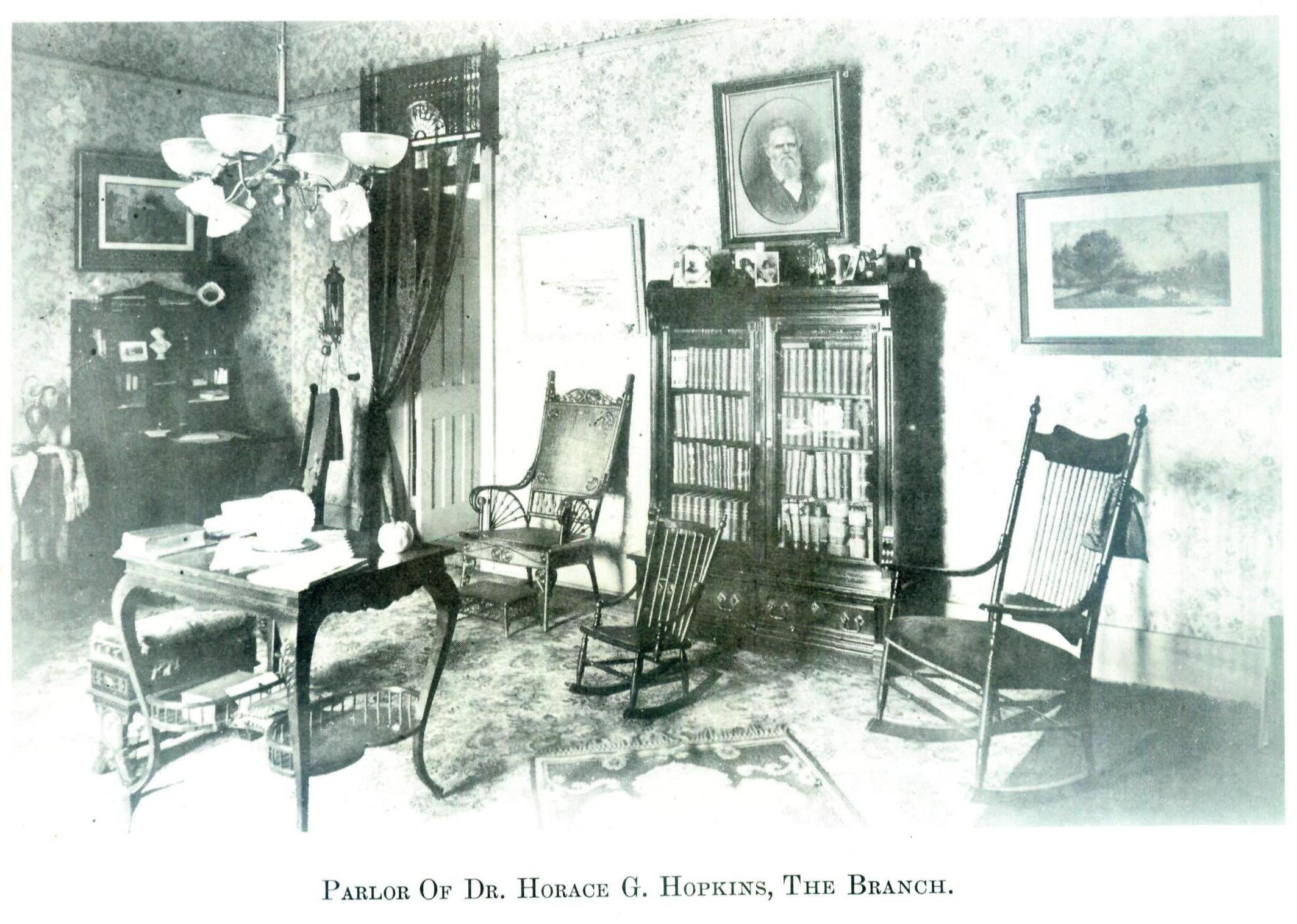
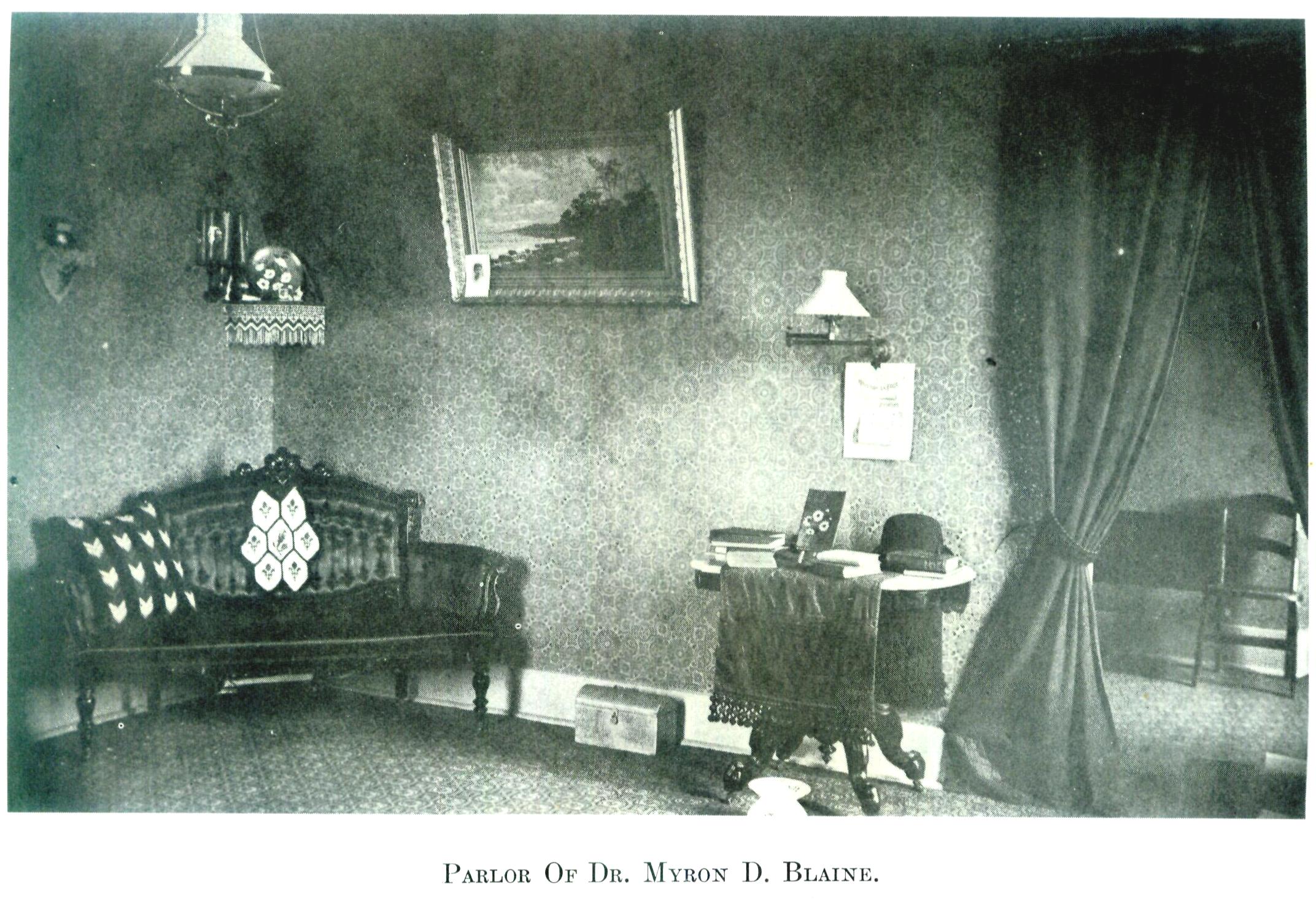
More beautiful photographs from the book Pictorial Album Of The Willard Asylum 1869 to 1886 by Wayne E. Morrison, Sr. These photographs feature “The Branch” which was later re-named “Grand View” in 1904.

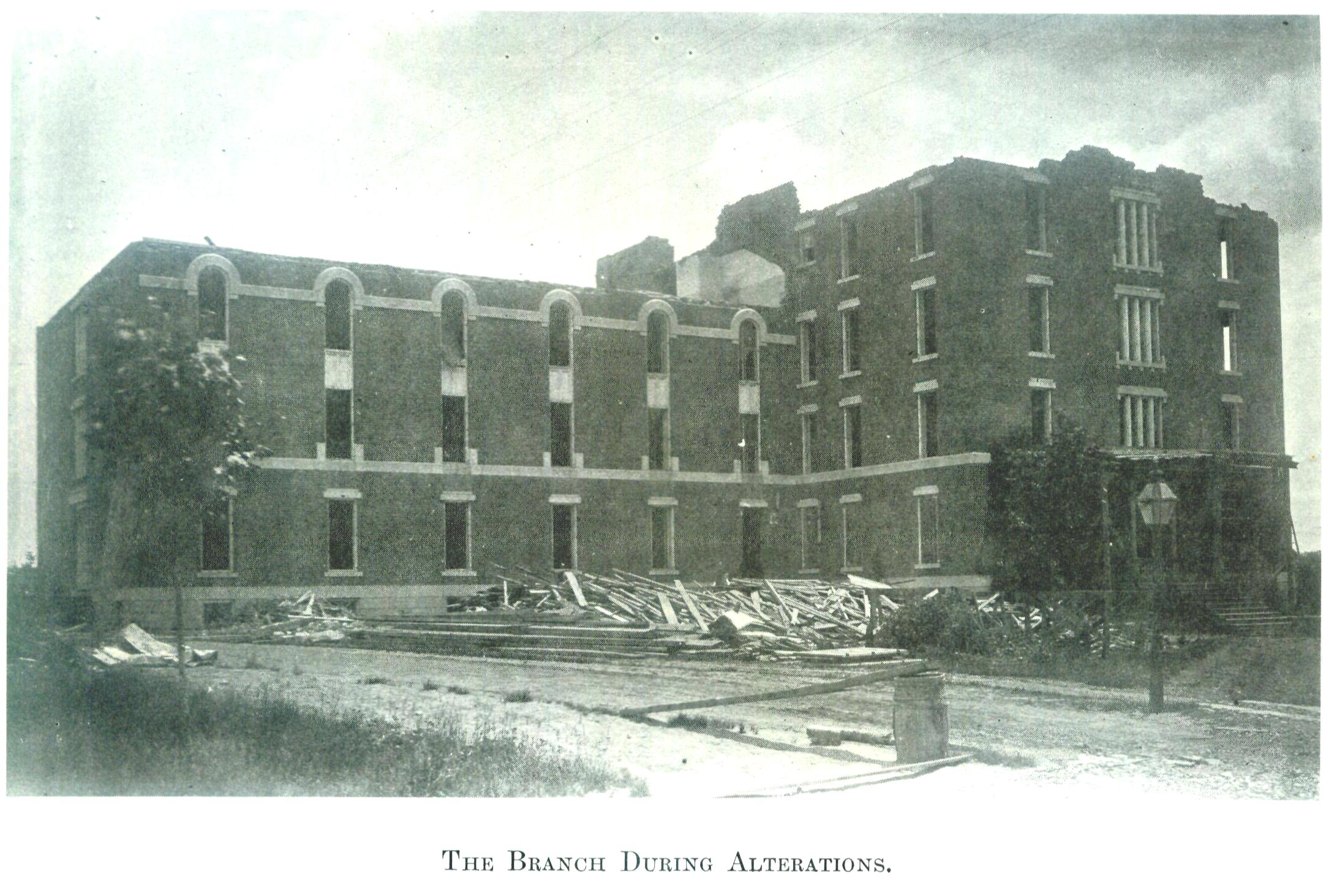
The Branch, constructed in 1859, was the original site of the first state agricultural college in the United States founded by Ezra Cornell. It was in operation from 1860 to 1861. The Civil War began, the young men went off to war, and the building fell into disrepair. In 1865, New York State purchased the building and land to be the site of The Willard Asylum for the CHRONIC Insane. The first of its kind in the country. Mr. Cornell went on to found Cornell University. The Branch housed about 225 “mild, quiet” female inmates. In 1886, the top two floors were removed and it was made into the “female” infirmary, housing those who could not take care of themselves, the sick and old, and those who could not use the “toilet” facilities. The Branch was not the main hospital building.

24-The Branch From The West-Wayne E. Morrison, Sr. 1978

24-The Branch From The West-Wayne E. Morrison, Sr. 1978

25-The Branch During Alterations-Wayne E. Morrison, Sr. 1978

25-The Branch During Alterations-Wayne E. Morrison, Sr. 1978

26-Excavating For The Addition To The Branch-Wayne E. Morrison, Sr. 1978

26-Excavating For The Addition To The Branch-Wayne E. Morrison, Sr. 1978

31-Physician, Apothecary & Attendants, The Branch-Wayne E. Morrison, Sr. 1978

31-Physician, Apothecary & Attendants, The Branch-Wayne E. Morrison, Sr. 1978

32-The Branch From The East-Wayne E. Morrison, Sr. 1978

32-The Branch From The East-Wayne E. Morrison, Sr. 1978

33-The Branch From The North-Wayne E. Morrison, Sr. 1978

33-The Branch From The North-Wayne E. Morrison, Sr. 1978

34-A Hall In The Branch-Wayne E. Morrison, Sr. 1978

34-A Hall In The Branch-Wayne E. Morrison, Sr. 1978

35-A View From The Branch-Wayne E. Morrison, Sr. 1978

35-A View From The Branch-Wayne E. Morrison, Sr. 1978

36-Horace G. Hopkins, M.D. & Anne Maycock Hopkins-Wayne E. Morrison, Sr. 1978

36-Horace G. Hopkins, M.D. & Anne Maycock Hopkins-Wayne E. Morrison, Sr. 1978

37-Parlor Of Dr. Horace G. Hopkins, The Branch-Wayne E. Morrison, Sr. 1978

37-Parlor Of Dr. Horace G. Hopkins, The Branch-Wayne E. Morrison, Sr. 1978

38-A Hall In The Branch-Wayne E. Morrison, Sr. 1978

38-A Hall In The Branch-Wayne E. Morrison, Sr. 1978

39-Physician's Bed-Room, The Branch-Wayne E. Morrison, Sr. 1978

39-Physician’s Bed-Room, The Branch-Wayne E. Morrison, Sr. 1978

40-The Branch, &c., From The South-Wayne E. Morrison, Sr. 1978

40-The Branch, &c., From The South-Wayne E. Morrison, Sr. 1978

42-The Branch During Alterations-Wayne E. Morrison, Sr. 1978

42-The Branch During Alterations-Wayne E. Morrison, Sr. 1978

43-Third Floor Hall Of The Branch During Alterations-Wayne E. Morrison, Sr. 197

43-Third Floor Hall Of The Branch During Alterations-Wayne E. Morrison, Sr. 1978

44-The Branch During Alterations 2-Wayne E. Morrison, Sr. 1978

44-The Branch During Alterations 2-Wayne E. Morrison, Sr. 1978

45-The Branch Following Alterations-Wayne E. Morrison, Sr. 1978

45-The Branch Following Alterations-Wayne E. Morrison, Sr. 1978

46-Parlor Of Dr. Myron D. Blaine-Wayne E. Morrison, Sr. 1978

46-Parlor Of Dr. Myron D. Blaine-Wayne E. Morrison, Sr. 1978

47-Rooms Of Dr. Horace G. Hopkins, The Branch-Wayne E. Morrison, Sr. 1978

47-Rooms Of Dr. Horace G. Hopkins, The Branch-Wayne E. Morrison, Sr. 1978

S2514-2013 – NY Senate Open Legislation – Relates to patients interred at state mental health hospital cemeteries – New York State Senate

S2514-2013 – NY Senate Open Legislation – Relates to patients interred at state mental health hospital cemeteries – New York State Senate.

NEW HIPAA UPDATE March 2013!

Well, the bill has a new number but it’s not dead! Yay! Special thanks to Senator Joseph Robach and Tim Ragazzo!

On March 1, 2013, Tim Ragazzo, Director of Operations & Legislation from Senator Joe Robach‘s office, called me to let me know that the bill was re-introduced (with a new number), to the NYS Senate and has been referred to the finance committee. This is great news because it means the bill is not dead! Now it has to pass in the Assembly. Hopefully, the bill will become law before it expires at the end of 2014.
-L.S. Stuhler at lsstuhler@gmail.com

Willard Cemetery Disk by Roger Luther at nysAsylum.com

Willard Cemetery Disk by Roger Luther at nysAsylum.com

NAMES INSTEAD OF NUMBERS!

Willard Cemetery 2 by Roger Luther at nysAsylum.com

Willard Cemetery 2 by Roger Luther at nysAsylum.com

For more information about these long-closed New York State Hospitals, check out the “Interesting Articles & Documents” page.

LIST OF STATE HOSPITALS

By 1901, there were thirteen state hospitals for the insane in the State of New York. All these hospitals buried their dead in anonymous, unmarked graves. Some had their own cemetery like Willard State Hospital; others used city and county cemeteries like Rochester State Hospital. Most of these state hospital cemeteries are unmarked, unkempt, and forgotten. None of the thousands of former psychiatric patients’ names have been released to the public. Considering that in 1870, the first patient was buried in the Willard Cemetery, which in the year 2012 covers a span of five or six generations, these people have waited long enough to be remembered. When you release the names, you remove the stigma. The following is a list of most of these long-closed state hospitals; there are more.

1. Utica State Hospital – Counties of Fulton, Hamilton, Herkimer, Montgomery, Oneida, Saratoga, Schenectady and Warren.

2. Hudson River State Hospital – Counties of Albany, Columbia, Dutchess, Greene, Putnam, Richmond, Rensselaer, Washington and Westchester.

3. Middletown State Hospital – Counties of Orange, Rockland, Sullivan and Ulster.

4. Buffalo State Hospital – Counties of Erie and Niagara.

5. Willard State Hospital – Counties of Allegany, Cayuga, Genesee, Ontario, Orleans, Schuyler, Seneca, Steuben, Tompkins, Wayne and Yates.

6. Binghamton State Hospital – Counties of Broome, Chemung, Chenango, Cortland, Delaware, Madison, Otsego, Schoharie and Tioga.

7. St. Lawrence State Hospital – Counties of Clinton, Essex, Franklin, Jefferson, Lewis, Onondaga,Oswego and St. Lawrence.

8. Rochester State Hospital – Counties of Monroe and Livingston.

9, 10. Long Island State Hospital – (Kings Park and Flatbush, Brooklyn) – Counties of Kings, Queens, Nassau and Suffolk.

11, 12. Manhattan State Hospital – (Manhattan and Central Islip) – Counties of New York and Richmond.

13. Gowanda State Homoeopathic Hospital (Collin’s Farm) – Counties of Cattaraugus, Chautauqua and Wyoming.

Additional State Hospitals:

14. Pilgrim State Hospital – Brentwood, Suffolk County, New York

15. Mohansic State Hospital – Yorktown, Westchester County, New York

State Hospitals for the Criminally Insane:

16, 17. Mattaewan and Dannemora State Hospitals


1880 Sickness – U.S. Federal Census – IPUMS USA

IPUMS USA stands for: Integrated Public Use Microdata Series (Census Microdata For Social And Economic Research). I found this invaluable website in 2009 when I was transcribing the names of the Willard Asylum patients from the U.S. Federal Censuses. This particular page lists the common diseases found in the United States in 1880 and was re-printed from the IPUMS USA website. I hope you will take the time to check it out for yourself. It is a wonderful resource!

IPUMS-USA is a project dedicated to collecting and distributing
United States census data. Its goals are to:

  • Collect and preserve data and documentation
  • Harmonize data
  • Disseminate the data absolutely free!

1880 Sickness on Day of Enumeration Codes

The SICKNESS variable captures the self-reported health condition which kept the individual from working on the day of enumeration. The first two digits designate the general category of illness, while the second two designate the specific illness within the category. The 1880 Census contained five other questions reporting those considered insane, idiotic, maimed, blind or deaf. These five extra categories are included in SICKNESS to capture the extra detail which was sometimes provided in these separate variables. The general categories are as follows:

Sickness Terminology

The terminology relating to sicknesses found in the census manuscripts presented a mixture of precision and vagueness. At the time the 1880 census was taken, bacteriology was a recent development. Nonetheless, many illnesses were readily identifiable through physical symptoms. Measles, for example, seem to have offered little difficulty in lay diagnostics, nor did malaria (referred to as malaria, ague, remittent fever, intermittent fever, or bilious fever) or typhoid fever (typhoid, gastric fever or enteric fever).

Other seemingly precise diagnoses were not as well defined as one might imagine. Chronic nephritis was still commonly used to describe that which caused general or localized edema. “Chronic nephritis” includes, therefore, not only those cases so specified, but also “dropsy,” “Bright’s disease,” and “gout,” besides the spelling variations relating specifically to the kidney. Rheumatism and paralysis were still used as symptomatic descriptions of conditions rather than as clinical diagnoses. The designation of “rheumatism” appears to have included any condition which prohibited free movement, such as rheumatoid arthritis, coxalgia (scrofula, or tuberculosis of the joints) and syphilis, while “paralysis” included conditions which preclude movement or the control of movement, such as traumatic injury, stroke, metabolic disorders or syphilis.

Use of the Sickness Variable

Since the intent of the sickness question was to ascertain whether individuals were prevented from carrying out their normal activities due to sickness or disability, the response rates underreport illness in the population in two ways.

First, sickness among children will be underrepresented since most children did not have jobs or obligations outside the home. The Census Office did even not include those under the age of 15 when they tabulated the sickness data. Sickness rates for young children produced from the IPUMS 1880 sample are extraordinarily low and should be treated with caution.

The second underreporting of sickness is due to the failure to include those illnesses which limit as well as those that prevent regular activities, as was done for later censuses. A difference, therefore, in morbidity rates between race categories does not necessarily indicate an absolute difference in the prevalence or incidence of disease. It could instead indicate a difference in the perception of illness, tolerance thereof, or the ability or necessity to keep on with one’s activities in spite of it.

Users should also keep in mind the limitations inherent in self-diagnosis as well as possible biases related to nineteenth-century medical terminology and the general understanding of diseases. It may be impossible, for example, to determine the true incidence of pulmonary tuberculosis in a given population because of the potential for misdiagnosis between tuberculosis and various diseases of the respiratory system, such as bronchitis.

Sickness on Day of Enumeration

01 Infectious Disease

01 01 Typhoid Fever
01 02 Typhus Fever
01 03 Malaria
01 04 Smallpox
01 05 Measles
01 06 Scarlet Fever
01 07 Whooping Cough
01 08 Diphtheria
01 09 Cholera
01 10 Dysentery
01 11 Erysipelas
01 12 Chicken Pox
01 13 Mumps
01 14 Rheumatic Fever
01 15 Fevers (not elsewhere classified)
01 16 Meningitis

02 Chronic Disease

02 01 Rickets
02 02 Tumors (not elsewhere classified)
02 03 Rheumatism
02 04 Scurvy
02 05 Diabetes
02 06 Anaemia
02 07 Alcoholism
02 08 Hydrocephalis

03 Tuberculosis

03 01 Pulmonary Tuberculosis
03 02 Potts Disease
03 03 White Swelling
03 04 Tuberculosis, other organs
03 05 Disseminated Tuberculosis

04 Venereal Disease

04 00 Venereal Disease (not elsewhere classified)
04 01 Syphilis
04 02 Gonorrhea

05 Cancer

05 01 Cancer of Stomach, Liver
05 02 Cancer of Breast
05 03 Cancer of Skin
05 04 Cancer (not elsewhere classified)

06 Diseases of the Nervous System

06 01 Migraine, Headache
06 02 Fainting, Vertigo
06 03 Locomotor Ataxia
06 04 Cerebral Hemorrhage
06 05 Paralysis
06 06 Convulsions
06 07 Chorea
06 08 Epilepsy
06 09 Neuralgia, Neuritis
06 10 Other Nervous System Disorder
06 11 Eye Disease
06 12 Ear Disease

07 Diseases of the Circulatory System

07 01 Pericarditis
07 02 Organic Heart Disease
07 04 Functional Disorders of the Heart
07 05 Disease of Arteries
07 06 Disease of Veins
07 07 Lymphatic System
07 09 Hemorrhages

08 Diseases of the Respiratory System

08 01 Influenza, Cold
08 02 Acute Bronchitis
08 03 Chronic Bronchitis
08 04 Pneumonia
08 05 Pleurisy
08 06 Pulmonary Congestion
08 07 Asthma
08 08 Other Respiratory

09 Diseases of the Digestive System

09 01 Throat
09 02 Ulcers
09 03 Dyspepsia
09 04 Other Stomach
09 05 Diarrhea, Enteritis
09 06 Colic
09 07 Hernias, Obstruction
09 08 Other Intestinal
09 09 Atrophy of Liver
09 10 Other Liver
09 11 Disease of Spleen

10 Diseases of the Genito-Urinary Tract

10 01 Chronic Nephritis
10 02 Other Kidney
10 03 Urinary Tract Calculi
10 04 Disease of Bladder
10 05 Disease of Urethra
10 08 Inflammation, Prostate Gland
10 11 Strangury

11 Conditions of the Puerperal State

11 01 Pregnancy
11 02 Childbirth
11 03 Puerperal Septicemia
11 04 Illness After Childbirth
11 05 Other Puerperal
11 06 Miscarriage

12 Illnesses Unique to Women

12 01 Menstruation
12 02 Menopause
12 03 Uterine Ailment
12 04 Other Female

13 Diseases of the Skin and Adnexa

13 01 Furuncle
13 02 Acute Abcess
13 03 Hemorrhoids
13 04 Other Skin Disease

14 Diseases of the Skeletal System

14 01 Leg, Ankle, Foot
14 02 Hip
14 03 Back or Spine
14 04 Dental
14 05 Necrosis

15 Congenital Malformation

15 01 Congenital Malformation
15 02 Merasmus
15 03 Other Congenital Conditions

16 Diseases and Debility of Old Age

16 01 Feebleness
16 02 Senility

17 General Debility

17 01 Chronic Illness (not elsewhere classified)
17 02 Poisoned

18 Ill-Defined Sicknesses

18 01 Unspecified Illness
18 02 Incomplete Information
18 03 Miscellaneous

21 Mental Disease, Insanity

21 00 Melancholy
21 01 Mania
21 02 Hysteria
21 03 Nerves
21 04 Dementia
21 05 Insane (not elsewhere classified)

22 Mental Retardation, Idiocy

22 00 Idiotic

23 Traumatic Injury, Maimed

23 00 Maimed
23 01 Burns
23 02 Gunshot Wounds
23 03 Accidents
23 04 Injury to Leg, Ankle
23 05 Injury to Hip
23 06 Injury to Arm, Hand
23 07 Injury, Ribcage
23 08 Injury to Back, Spine
23 09 Amp or Missing Limbs
23 10 Other
23 11 Other Fractures
23 12 One Eye

24 Vision Impairment, Blind

24 00 Blind

25 Aural Impairment, Deaf

25 00 Deaf

26 00 Dumb

98 00 Illegible

99 00 Not applicable

99 99 Missing”

The Changing Face of What is Normal – Jon Crispin – Exploratorium

Congratulations, Jon Crispin! This wonderful exhibit of Jon’s photography of former patient suitcases found in the attic of Willard State Hospital will be displayed at the Exploratorium in San Francisco beginning April 17, 2013.
(Please click on the RED links).

Book Photo 5.20.2013 by Jon Crispin

Book Photo 5.20.2013 by Jon Crispin

I am very proud that The Exploratorium is selling my book! Thank you!

The Changing Face Of What Is Normal, The Exploratorium.

The Changing Face of What is Normal.

Slate.com-Jon Crispin-Suitcases From The Willard Asylum.

NPR Interview with Jon Crispin.

COLLECTORS WEEKLY -Abandoned Suitcases Reveal Private Lives Of Insane Asylum Patients.

What Is The DSM?

According to The American Psychiatric Association, “The Diagnostic and Statistical Manual of Mental Disorders (DSM) is the standard classification of mental disorders used by mental health professionals in the United States. It is intended to be applicable in a wide array of contexts and used by clinicians and researchers of many different orientations (e.g., biological, psychodynamic, cognitive, behavioral, interpersonal, family/systems).”

DSM5

DSM5

I had never heard of The DSM before I began researching the Willard Asylum. I had read many old documents about immigrants who were not allowed to disembark the ship because they were thought to be insane. It made me wonder, how were these people behaving that the authorities and physicians, with their six second examinations, determined that they were insane? I wanted to know, what does it mean to be insane? What is insanity? This is when I first learned about The DSM.

The old adage, “What you don’t know can’t hurt you,” isn’t true. This book affects everyone who lives in the United States. It reminds me of the Dependent, Defective, and Delinquent Census of 1880 (Men, Women), when neighbors were asked by census enumerators if their fellow neighbors were insane. The increase in the “defective classes” rose 155 percent between 1870 and 1880. In 1880, there were 6 general forms of insanity. According to The DSM, there are 13 or more categories divided into over 300 disorders. One hundred-fifty years ago we had asylums to lock people away from society and thankfully, those institutions no longer exist. Today, we have television and internet commercials, medical websites, and The DSM telling us we are ill. We are “abnormal.” We self-diagnose without a physician or psychiatrist. We walk in their offices asking for medication, wanting a magic pill, and telling them our diagnoses. It’s all there at our fingertips, all we have to do is look up what ails us and if we have two or three symptoms, then we must be sick. Are we all mentally ill? Should everyone be medicated? Will we re-build the insane asylums of the nineteenth century? How will this end?

The following is an excerpt from DSM 5 In Distress by Allen Frances, M.D., Psychology Today, December 2012: “Except for autism, all the DSM 5 changes loosen diagnosis and threaten to turn our current diagnostic inflation into diagnostic hyperinflation. Painful experience with previous DSM’s teaches that if anything in the diagnostic system can be misused and turned into a fad, it will be. Many millions of people with normal grief, gluttony, distractibility, worries, reactions to stress, the temper tantrums of childhood, the forgetting of old age, and ‘behavioral addictions’ will soon be mislabeled as psychiatrically sick and given inappropriate treatment.”

(Allen Frances, M.D., was chair of the DSM-IV Task Force and of the department of psychiatry at Duke University School of Medicine, Durham, NC. He is currently professor emeritus at Duke.)

January 2013 HIPAA Privacy Regulations: General Rules for Uses and Disclosures of Protected Health Information: Deceased Individuals – § 164.502f

“HHS Regulations as Amended January 2013
General Rules for Uses and Disclosures of Protected Health Information: Deceased Individuals – § 164.502(f)

Standard: deceased individuals. A covered entity must comply with the requirements of this subpart with respect to the protected health information of a deceased individual for a period of 50 years following the death of the individual.

HHS Description and Commentary From the January 2013 Amendments
General Rules for Uses and Disclosures of Protected Health Information: Deceased Individuals.


Section 164.502(f) requires covered entities to protect the privacy of a decedent’s protected health information generally in the same manner and to the same extent that is required for the protected health information of living individuals. Thus, if an authorization is required for a particular use or disclosure of protected health information, a covered entity may use or disclose a decedent’s protected health information in that situation only if the covered entity obtains an authorization from the decedent’s personal representative. The personal representative for a decedent is the executor, administrator, or other person who has authority under applicable law to act on behalf of the decedent or the decedent’s estate. The Department heard a number of concerns since the publication of the Privacy Rule that it can be difficult to locate a personal representative to authorize the use or disclosure of the decedent’s protected health information, particularly after an estate is closed. Furthermore, archivists, biographers, and historians had expressed frustration regarding the lack of access to ancient or old records of historical value held by covered entities, even when there are likely few surviving individuals concerned with the privacy of such information. Archives and libraries may hold medical records, as well as correspondence files, physician diaries and casebooks, and photograph collections containing fragments of identifiable health information, that are centuries old. Currently, to the extent such information is maintained by a covered entity, it is subject to the Privacy Rule. Accordingly, we proposed to amend § 164.502(f) to require a covered entity to comply with the requirements of the Privacy Rule with regard to the protected health information of a deceased individual for a period of 50 years following the date of death.

Proposed Rule

We also proposed to modify the definition of “protected health information” at § 160.103 to make clear that the individually identifiable health information of a person who has been deceased for more than 50 years is not protected health information under the Privacy Rule. We proposed 50 years to balance the privacy interests of living relatives or other affected individuals with a relationship to the decedent, with the difficulty of obtaining authorizations from personal representatives as time passes. A 50-year period of protection had also been suggested at a National Committee for Vital and Health Statistics (the public advisory committee which advises the Secretary on the implementation of the Administrative Simplification provisions of HIPAA, among other issues) meeting, at which committee members heard testimony from archivists regarding the problems associated with applying the Privacy Rule to very old records. See http://ncvhs.hhs.gov/050111mn.htm. We requested public comment on the appropriateness of this time period.”

READ THE ENTIRE ARTICLE AT:

Bricker & Eckler LLP: HIPAA Privacy Regulations: General Rules for Uses and Disclosures of Protected Health Information: Deceased Individuals – § 164.502f

Post-Mortem Photography

In the twenty-first century taking photographs of the dead is considered morbid and appalling. Viewing a dead loved one lying in a nursing home bed or casket is one of those memories that don’t need to be backed up by a photograph. Personally, I have tried to erase those memories from my brain but during the Victorian Era, taking a photograph of the dearly departed was a common practice. The image was meant to be a loving keepsake to memorialize the dead, and in many cases the post-mortem photograph was the only image the family ever had of their loved one. Many photographs feature a dead child in the arms of its mother or father. Some try to show the loved one as if they were still alive, sitting upright in a chair, dressed in their Sunday best, while others show the family member lying on a sofa or bed as if they were only sleeping. Although this ritual seems creepy to us now, 150 years ago, posing the dead for one last beautiful photograph was done with love, dignity, and respect.

The Thanatos Archive

The Thanatos Archive

The Thanatos Archive

Photography was a new technology in the nineteenth century. Two pioneers in the development of photography were Louis Daguerre in 1837 (Daguerreotype), and George Eastman who founded the Eastman Dry Plate Company in 1880. In 1888, Mr. Eastman introduced to the general public the Kodak Camera with the slogan, “you press the button, we do the rest.” On January 19, 2012, Eastman Kodak Company filed for bankruptcy. The photographic giant was replaced with new technology and so we enter the Digital Age. The point is: technology changes our rituals, the way we view ourselves and the world, and the way we live and die.

The history of how we mourn our dead has changed from century to century. The overwhelming grief is still the same but the time allotted to grieve has changed. During the Victorian Era, a widow was expected to wear black for two and a half years after the death of her husband. Today, that same widow would be allowed three days off from work and within a month, she would be expected to “move on” and “get over it.”

What is always interesting to me is how we treat the weakest and most vulnerable among us. I suppose if we don’t have any respect for a certain segment of the population while they are living, we certainly don’t care how they are treated and disposed of after death. What follows are two examples of how the “abnormal” were treated after death in 1897 and 1913. The first article involves the advancement of medical science from PATHOLOGICAL INSTITUTE OF THE NEW YORK STATE HOSPITALS 1897 for the Insane, later renamed the New York State Psychiatric Institute, (Dr. Ira Van Gieson) in 1929; the second highlights indifference at Gowanda State Hospital. Below these are more interesting links including two articles from the United Kingdom in 2006 and 2010 that discuss how “normal” deceased hospital patients were treated.

“There are several things of particular value, but above all it is the brains of the abnormal classes that we want, for one of the future duties of the anthropologist is to determine whether or not, and how, the brains of the insane, the criminal, etc., differ structurally from the normal. We want all the brains, at least all those left after the requirements of pathological research have been satisfied, without discrimination or limit in numbers. Next after the brain, come the anomalies of the various other organs…Many of the patients who die in State hospitals are friendless or paupers, and have to be buried at a comparatively large expense to the State. Such a burial, the Secretary of the Commission in Lunacy kindly informs me, averages in each case about $12. The body is usually given to an undertaker and he disposes of it according to his best convenience. In some instances a medical college secures the cadaver, instead of an undertaker. The fact is, that after such a body is removed from the hospital it is never any more heard of.” (1)

GOWANDA STATE HOSPITAL – The Gowanda Committee visited the hospital August 27, 1913, and made a thorough inspection…The two greatest needs of the hospital at the present time are a new morgue and an addition to the bakery. The place now used for the care of bodies pending burial is a basement room lighted by artificial light, small, and without interior equipment. What autopsies are performed by the medical staff have to be made in this inconvenient place. Whenever several deaths occur within a short interval, it is often necessary to pile them up around the room and friends and relatives are often shocked to find their dead in this unsuitable place. This hospital had forty-two deaths last year. The scientific work at the hospital, as well as the consideration of friends and relatives of patients, demand the construction of a proper place for the care of bodies of patients.” (2)

1. Contributions From The Pathological Institute Of The New York State Hospitals, Ira Van Gieson, Director, Volumes I & II, 1896-1897, Collated for the Pathological Institute by Amalie Busck, Librarian, State Hospitals Press, Utica, N.Y., 1898, Pages 1-18.

2. State of New York State Hospital Commission, Twenty-Fifth Annual Report, October 1, 1912 to September 30, 1913, Transmitted to the Legislature January 29, 1914, Albany: J.B. Lyon Company, Printers, 1914, Page 471.

If we no longer treat the dead with dignity, what hope is there for the living? Daily Mail, UK, June 2006.

Dead body was left on bed next to me for eight hours: Patient tells of horror on packed ward. Mail Online, UK, March 2010.

Columbia University Medical Center – Columbia Psychiatry