BIG SURPRISE!!
State complication alters Willard ceremony – Finger Lakes Times: News.
When I first started this blog, I did it in order to help other people find their forgotten ancestors. I persuaded my State Senator, Joe Robach, to draft legislation in 2011 that would allow for the release of patient names, dates of death, and location of graves to the public, which he introduced to the New York State Legislature. It first appeared on March 23, 2012 as S6805-2011. On January 8, 2014, it was reintroduced as S2514-2013.
There are at least 17 former New York State Hospitals / Insane Asylums that have been renamed, closed, demolished, or turned into New York State Prisons. The cemeteries located on former NYS Hospitals are filled with anonymous, unmarked graves. Willard alone has close to 6,000. Some of these former State Hospitals, such as Buffalo and Rochester, used city or county cemeteries and they are filled with the nameless as well. How many? I do not know. How long will it take to give these people the dignity in death that they deserve? When will they be allowed to rest in peace? When will they be remembered as fellow human beings who were on the same earthly path as everyone else before their lives and their freedom were taken from them? What else do I have to do to get the attention of the Governor and Assembly members to release the names of former patients who lived and died in these warehouses? The Department of Health and Human Services declared last March that patient medical records may be released to the public after 50 years of a patient’s death. Now we have to ask for another bill to be drafted and introduced to the Senate again in order to allow New York State to release medical records. After seven years on this journey, I am tired and just don’t have the desire to fight anymore.
Before I began my research on Willard and the other New York State Hospitals and Custodial Institutions, I considered myself to be normal, whatever that means. All kinds of interesting things happened to me and I wondered, why? I lost my job, went through menopause, osteoarthritis, and a neurological problem that I have always had, had become progressively worse. Depression is one of those “Mental Illnesses” that I never thought of as a “Mental Illness.” I thought that depression was a normal human emotion that one experiences when subjected to trauma or pain in any of its various forms. I would not have believed that I was “Mentally Ill,” until my neurologist, who I no longer go to, informed me that I have delusional thinking and I’m paranoid because I believe that I can no longer protect myself if I needed too like being able to run from a dangerous situation. This came from a 30 something year old man in perfect health who stands over 6 feet tall. I’m 57 years old, stand 5 feet 2 inches tall, and have Familial or Essential Tremors in my head and my right hand. My thinking is based on facts, not delusions. I thought that doctors were above this archaic type of thinking but I was wrong. Many men, even doctors, still don’t get it.
The reason why I am relating my story is that I am sure that had I lived one hundred years ago with these same progressive diseases, I would have been locked up! I would not have believed that a doctor would ever say such things to me and I can only imagine what must have happened to my great-grandmother, Maggie, who died at Willard State Hospital 86 years ago. If you wonder why people do not seek help, my little story is why they don’t. Am I labeled? I don’t know. It is frightening when you realize that you’re not feeling like your normal self, and seek help, and this is what a doctor says to you. Maybe we all need to be a little more aware of who is crazy and who is normal and realize that the people buried in those anonymous, unmarked graves were human beings like me, and you, just trying to make their way in life. Please write or call your New York State Senator so that this bill will become a law. Thank you!
Here is another wonderful genealogy resource for those who are looking for loved ones who lived and died at St. Lawrence State Hospital in Ogdensburg, New York. Please take a moment to visit their website.
St. Lawrence State Hospital Preservation Society – Our Mission
“The historical structures of the St. Lawrence State Hospital are worth being memorialized, not dismantled, though their destruction is most likely inevitable. They stand now with windows broken, paint peeling, and frames crumbling. The St. Lawrence State Hospital Preservation Society’s mission is to collect, preserve, interpret, store, and disseminate anything historically related or relevant to the hospital, whether it be New York State Assembly documents, plans and drawings, reports, or personal accounts. Countless hours already have been spent gathering much of this information, which is, in turn, available to you here, on the Society’s official website. And countless more hours are still to be spent before this work is complete. It has been a long and often difficult process, and it has only just begun. We’re hoping that as more people become interested in this research and take up the challenge to help preserve it, information that we might never have expected will come to light, furthering this cause.”
TREASURES OF THE TIER by Roger Luther is a column about Historic Locations in New York’s Southern Tier. Roger has also created nysAsylum a website that has countless photographs and historical information on Binghamton, Buffalo, Utica, and Willard State Hospitals.
The discovery of these rare, historical photographic dry plates tells us a few things. One, photographs do indeed exist of patients who lived and died at Binghamton State Hospital over one hundred years ago. It also tells us that the New York State Office of Mental Health never took the time to save and preserve these important artifacts and didn’t give a hoot about them until the finding was brought to their attention. As usual, now they are very concerned. I believe the burial ledger was also found among the piles of dirt, dust, and pigeon poop. It will be interesting to see if the OMH will let these photographs be released and viewed by the public, or if they will come up with some lame excuse as to why we are not allowed to view them. Thank You, Roger Luther and the volunteers of the Broome County Historical Society and the Greater Binghamton Health Center, for meticulously scanning, restoring, and preserving these historical artifacts!
The following article “Windows Into The Past-Thousands of Glass Photo Negatives Discovered in Binghamton’s Historic Asylum” by Roger Luther is reprinted with permission. Please click on the RED link below to view more photographs. Sorry friends, there are no photographs of patients.
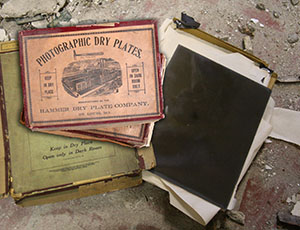
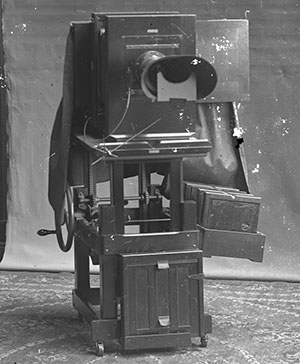
“Sarah was led from her ward to a nearby building. Entering a small room she sat motionless in a chair facing a large strange-looking wooden contraption. In a flash, her photograph was taken. The man behind the camera told her to turn her head to the right and then… another flash. While Sarah was led away, the photographer removed a large wooden frame from the camera and inserted another for his next subject.
Later in his darkroom, a 5×7-inch glass plate was carefully removed from its wooden frame and washed in chemical baths revealing two black & white negative images of Sarah’s face and profile. The photographer then scribed Sarah’s name and a number on the back of the glass plate and placed it in a box with several others.
That was one hundred years ago, and according to the U.S. Census of 1900, at that time Sarah was listed along with 1,388 others as a patient at Binghamton State Hospital.
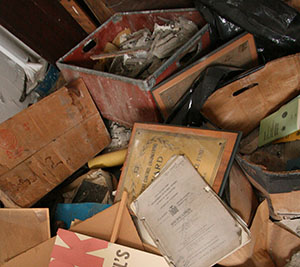
A century after her photograph was taken, preparations were being made to rehabilitate the long-vacant Main Building, known as the Castle, on the campus of the former Binghamton State Hospital. A small team of volunteers representing the Broome County Historical Society and the Greater Binghamton Health Center, took on the task of removing items of historical significance from the building, then relocating them to a controlled environment and cataloguing each of the artifacts. Early in the process an amazing discovery was made. A door at the back of the old asylum chapel opened into a small room piled high with various items and debris. Photographs, books, documents, and a variety of other items were mixed with pieces of fallen ceiling plaster, decomposed pigeon parts, and a thick mixture of dirt and dust.
Like excavating an archeological site, layer by layer the material was carefully removed. At one point a small stack of dusty glass plates was uncovered, each measuring 5×7 inches. Holding one of the plates up to a window, a negative image on the glass could be seen. These glass plates were in fact hundred-year-old photographic negatives. Soon, more plates were uncovered in a broken cardboard box, and the dig continued. At the bottom of the pile several more boxes were found. Ultimately, hundreds of glass plates were discovered scattered throughout the room, some broken, some cracked, and most covered with a layer of dirt and plaster dust. Finally a path was cleared to the back of the room where a tall wooden cabinet stood. The cabinet door was pried open and there it was… the mother lode. Over the next several days over 5,000 glass dry-plate photo negatives were removed from the room.
After relocating the glass plates to a controlled environment, a plan was established to carefully clean the plates and then package them in protective acid-free archival material. The next step would be to digitally scan and catalogue each image – an ongoing effort that continues to this day.
Taken over an approximate 25-year period during the early 1900’s, the photos show life at the StateHospital as it was in the earliest years. Subject matter includes hospital staff, buildings, farms, medical charts, and events – but by far, most of the photos are of patients.
As stated in the 1892 Annual Report of the Trustees of Binghamton State Hospital, “it is very desirable to preserve with the records of cases treated in the hospital, photographs of the individual patients.” The report goes on to say that “the modern dry-plate methods of photography are so simple that they are easily managed… the sum we should require to purchase the apparatus necessary would be $300.” Soon after that a camera was procured, and in 1894 one of the nurses at the hospital, Fred W. Ernie, took on the task as photographer along with his other responsibilities.
The trustees could not have known how significant their decision would prove to be. Thanks to their foresight, images were recorded representing thousands of lives-once-lived. Images, that according to Mark Stephany, Director of the Greater Binghamton Health Center, “restore a level of dignity to people long forgotten.”
Today, the images would be invaluable as a resource for historians and those researching family history, however, issues regarding possible public access cannot be addressed until the restoration and scanning effort has been completed. As stated by Darby Penney, co-author of The Lives They Left Behind: Suitcases from a State Hospital Attic, “the discovery, rescue and conservation of this collection of 5,000 images from Binghamton State Hospital is an incredible feat of preservation and an invaluable contribution to the historical record.”
What happened to Sarah? Nearly 30 years after her listing on the 1900 census, while still a patient at the StateHospital she died and was buried in the hospital cemetery, her grave marked only by a number. But her story does not end there. Construction of an interstate highway in 1961 cut directly through the cemetery forcing the relocation of 1,504 of its nearly 4,000 graves to a nearby field. According to records released by the Department of Transportation at the time, Sarah’s grave was among those moved. Today the relocated cemetery appears as a large empty field, its numbered stone grave markers having long ago settled below ground.
Sarah’s existence, like many of the others on that census list, was one of obscurity. But unknowingly, she and the other patients left their mark for posterity. Like a century-old Facebook, the discovery of this 100-year old time capsule has brought their images to light – and as these faces from the past are being restored and preserved, so to is the dignity of people long forgotten.”
BINGHAMTON STATE HOSPITAL-Main Building-Removal of Artifacts.

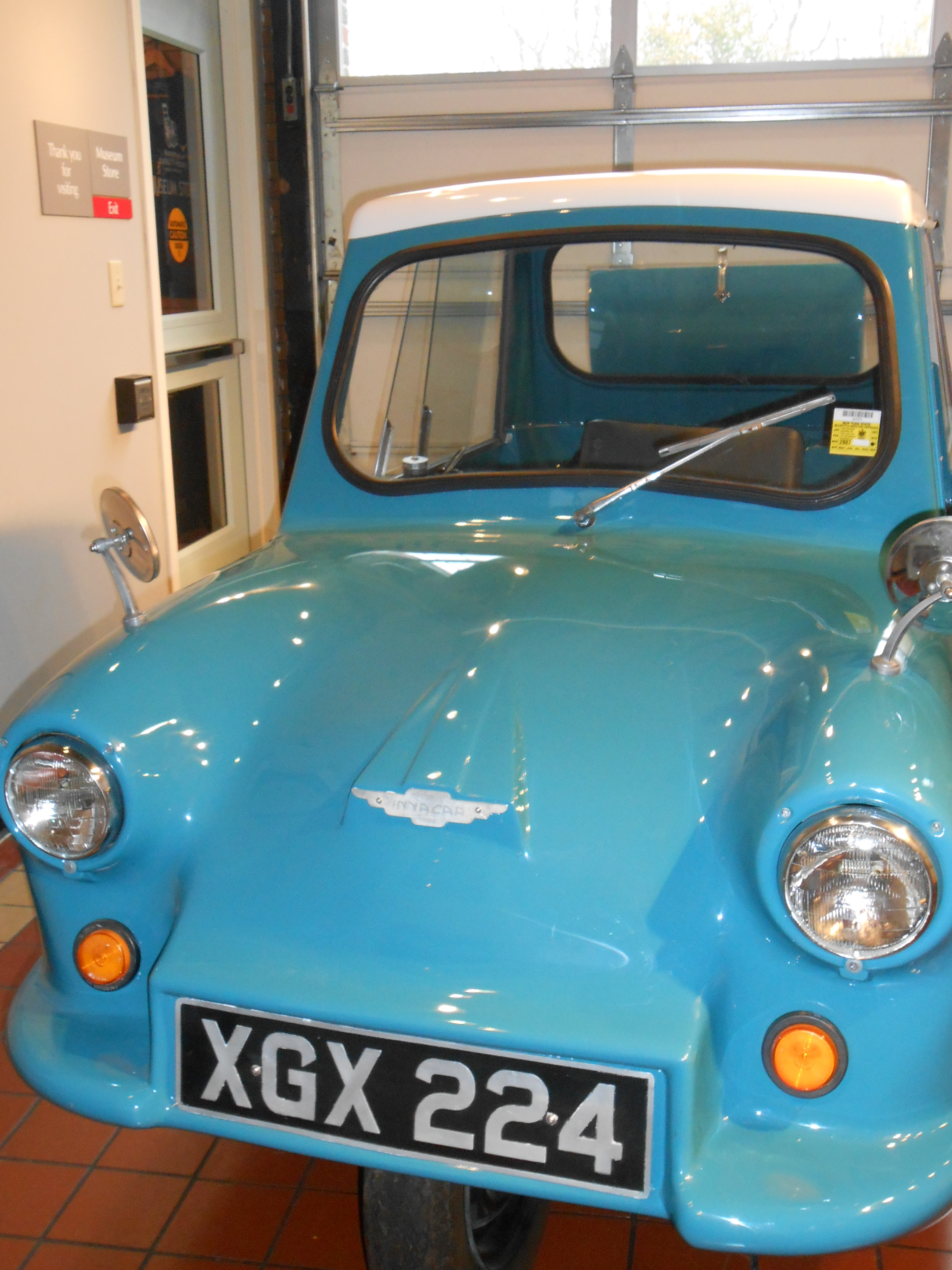
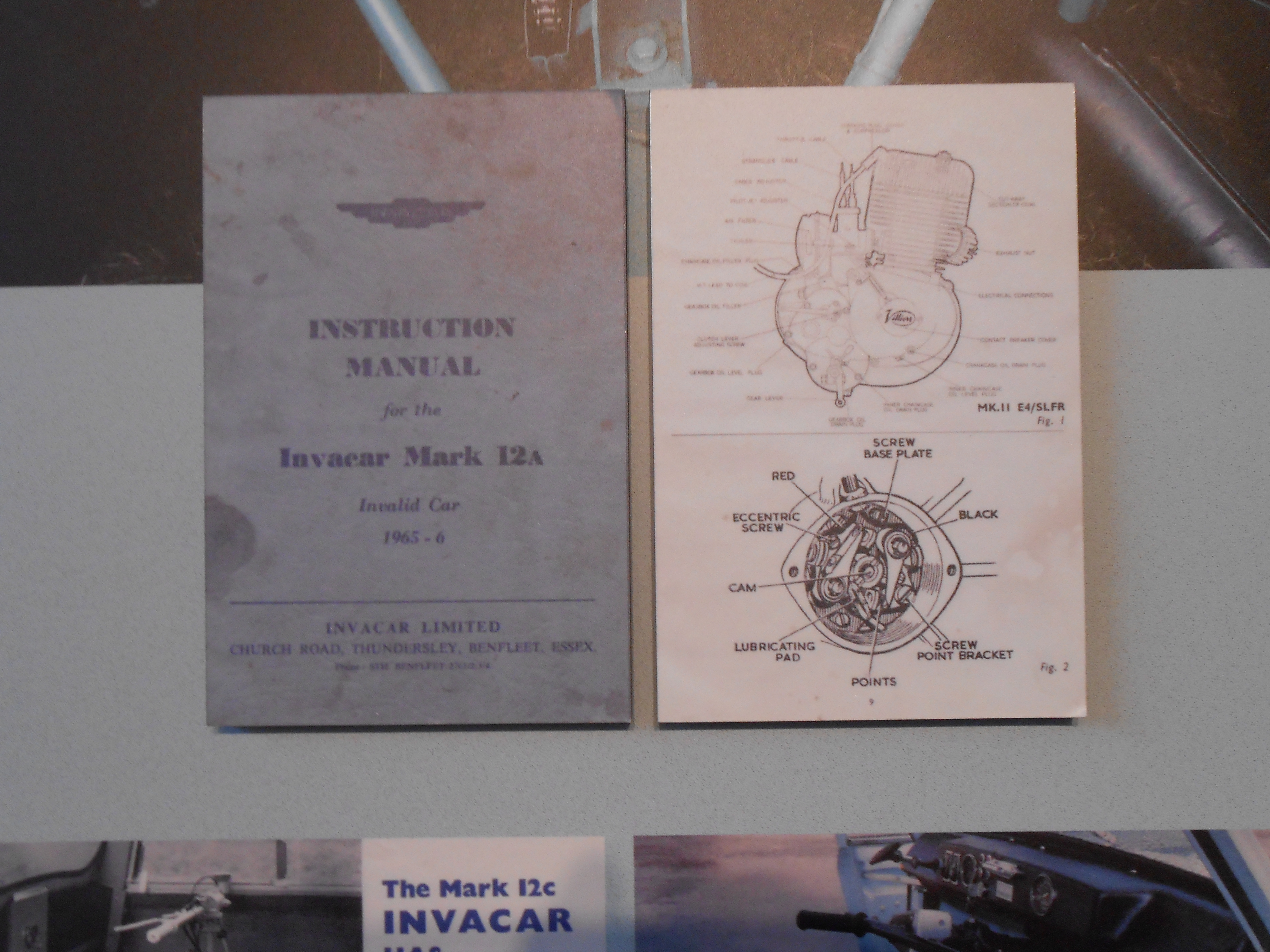
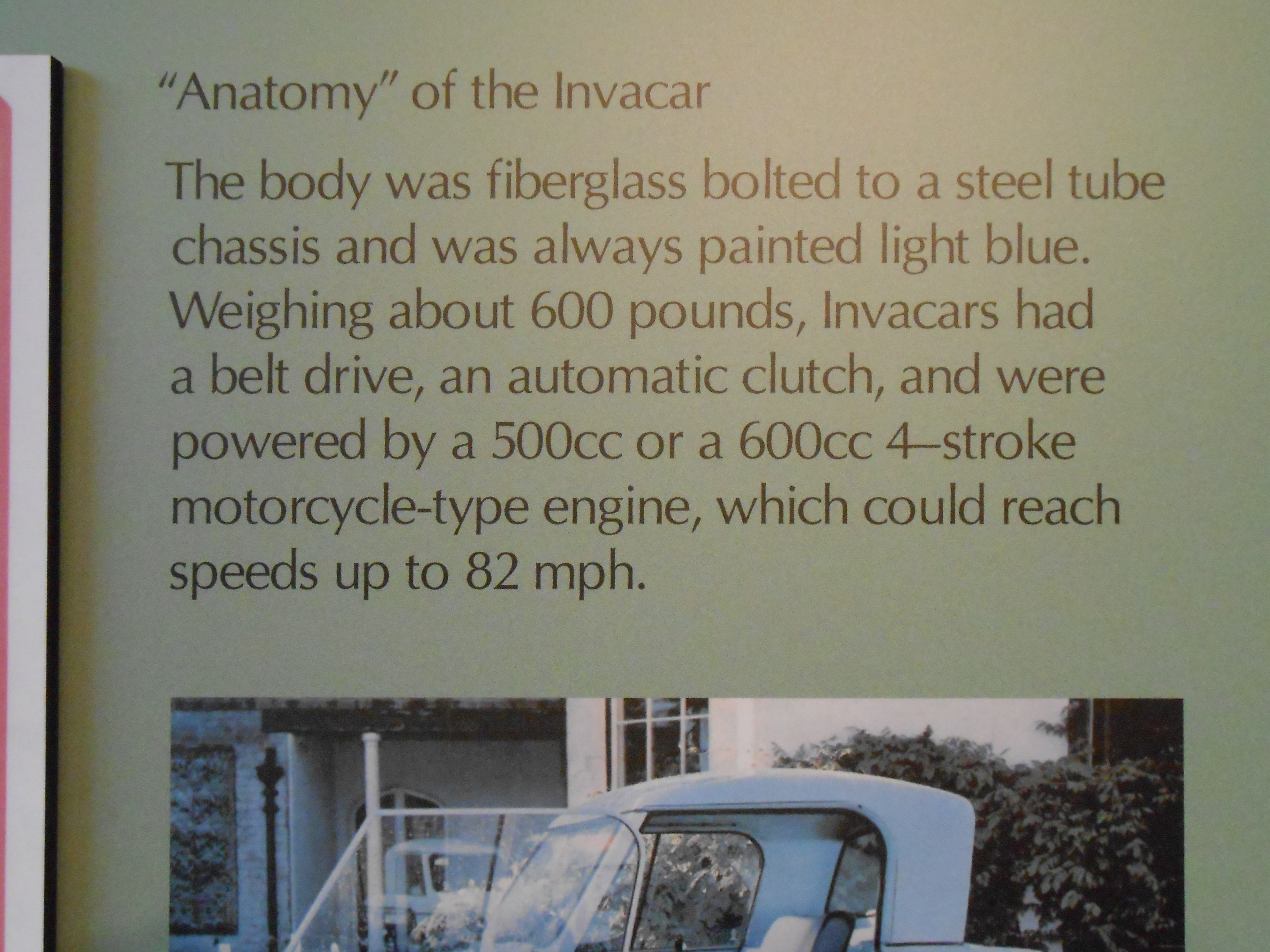
This is part 2 of my visit to The Museum of disABILITY History. I was so intrigued by The INVACAR that I had to learn more about it. I had never heard of or seen one before. According to Elvis Payne at 3-wheelers.com, “The Invacar Ltd (UK) was established in 1948 by Oscar Greeves after having built a 3-wheeler for his paralyzed cousin, Derry Preston-Cobb. As a result of the many casualties from the second World War Greeves realised the need for such transport to be widely available. After contacting the government they agreed to pay for the vehicles to be made of which sold in great numbers.”
The Museum of disABILITY History may be one of a handful of places in the U.S. where you will ever be able to see The INVACAR. This museum is full of wonderful treasures, so please visit if you have a chance! For more information, please click on the RED links below.
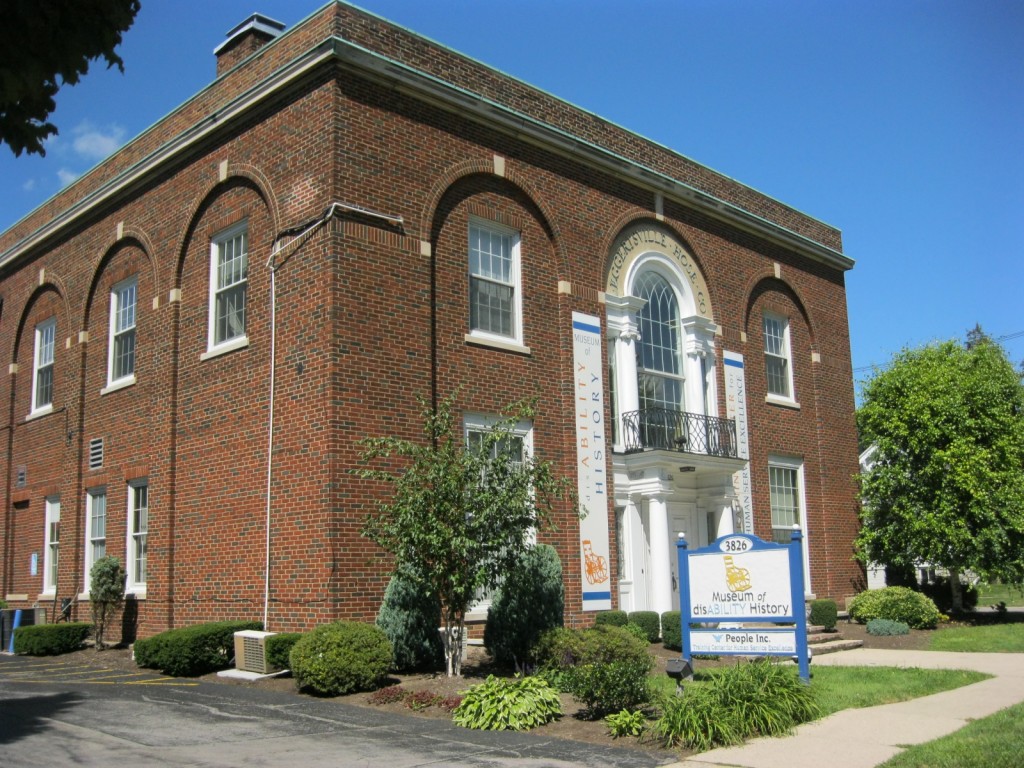
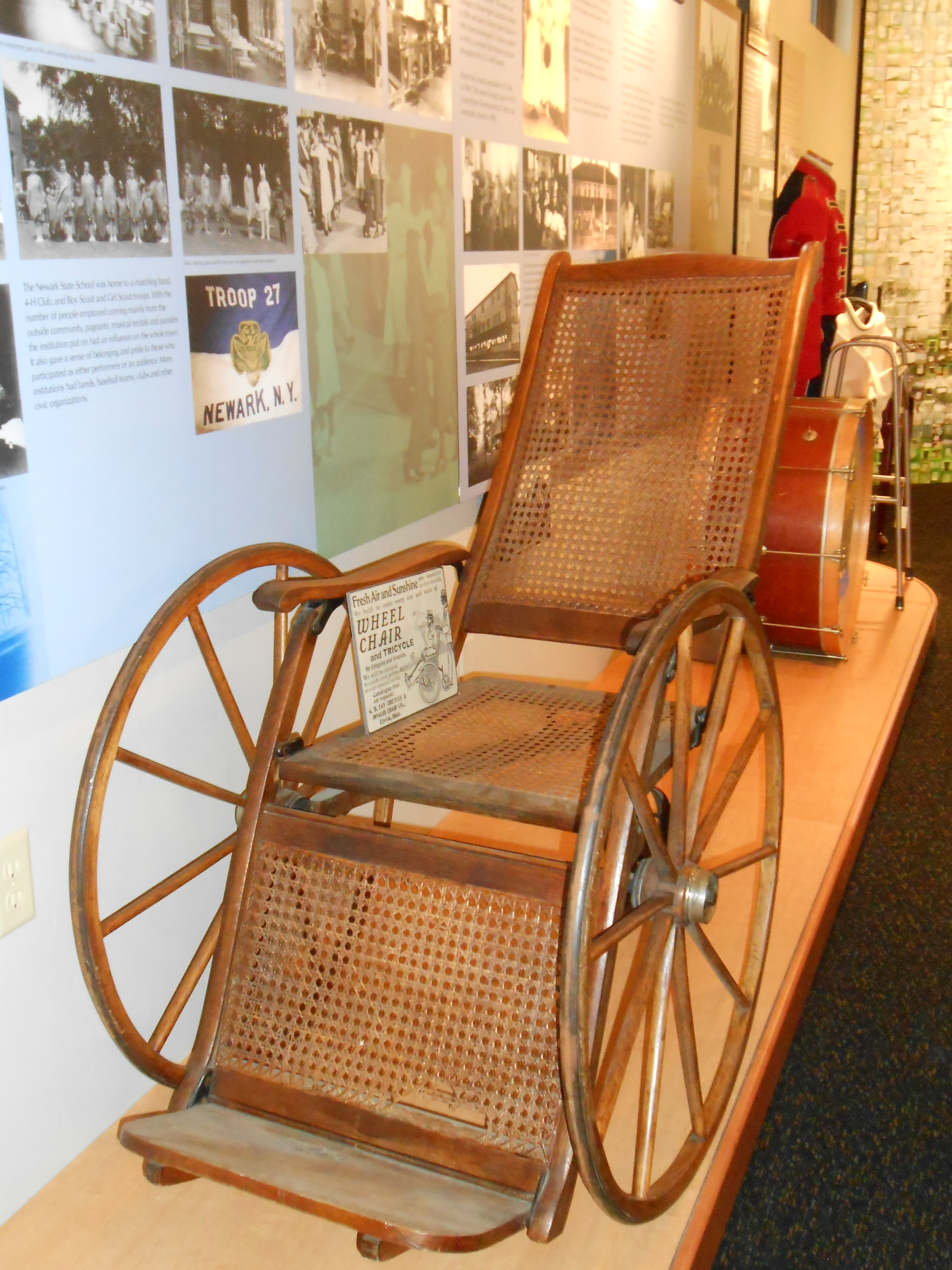
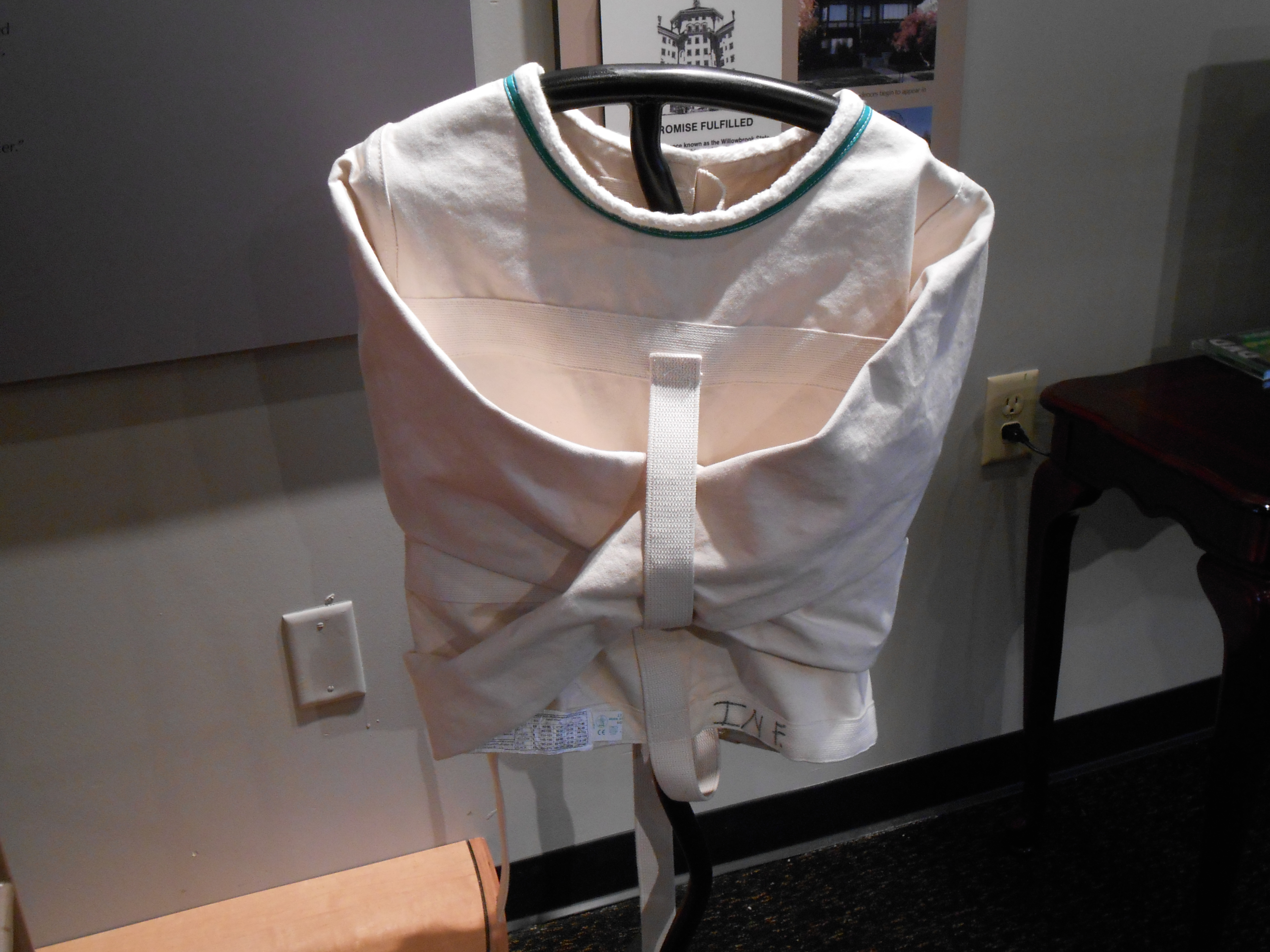
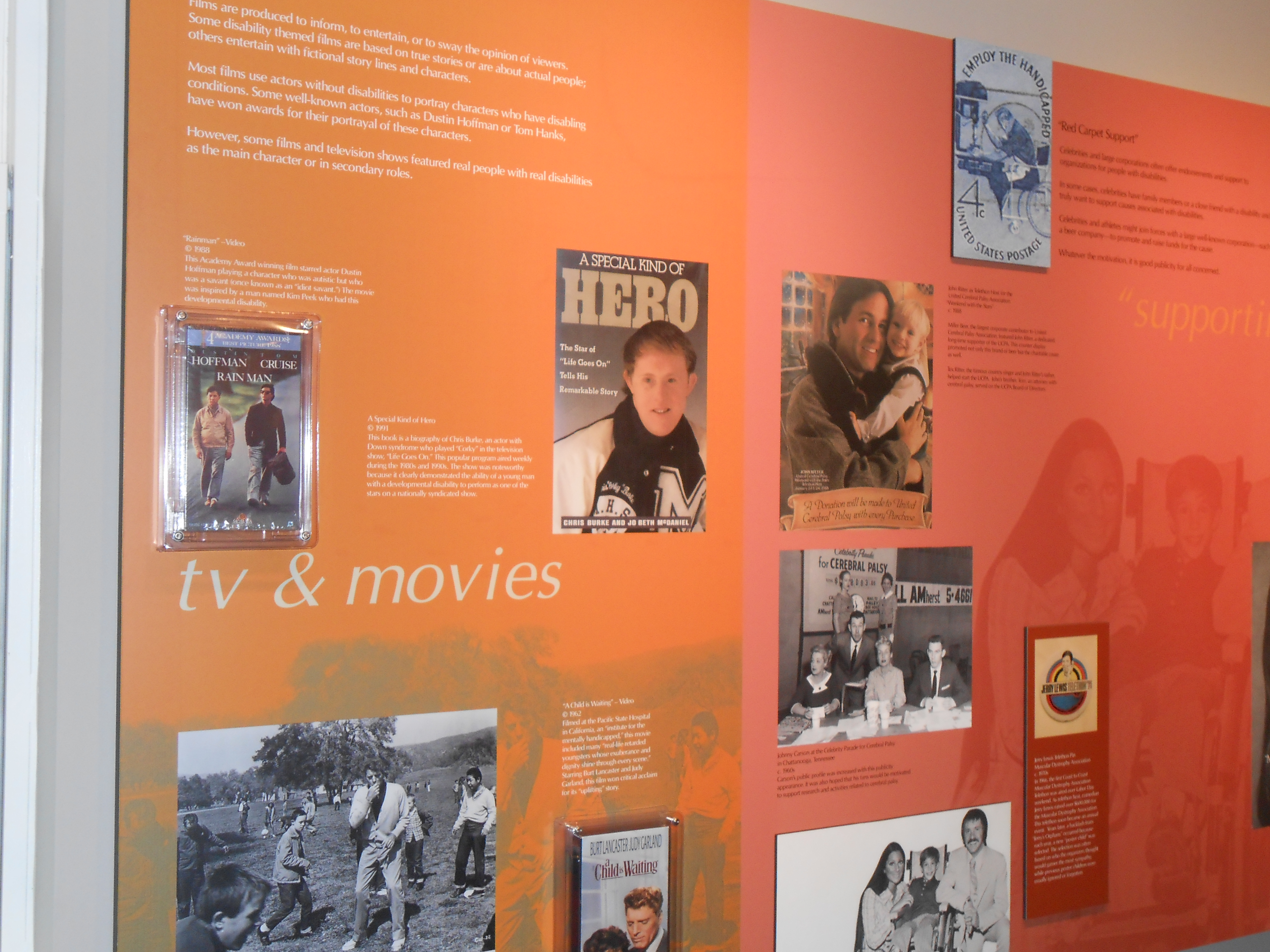
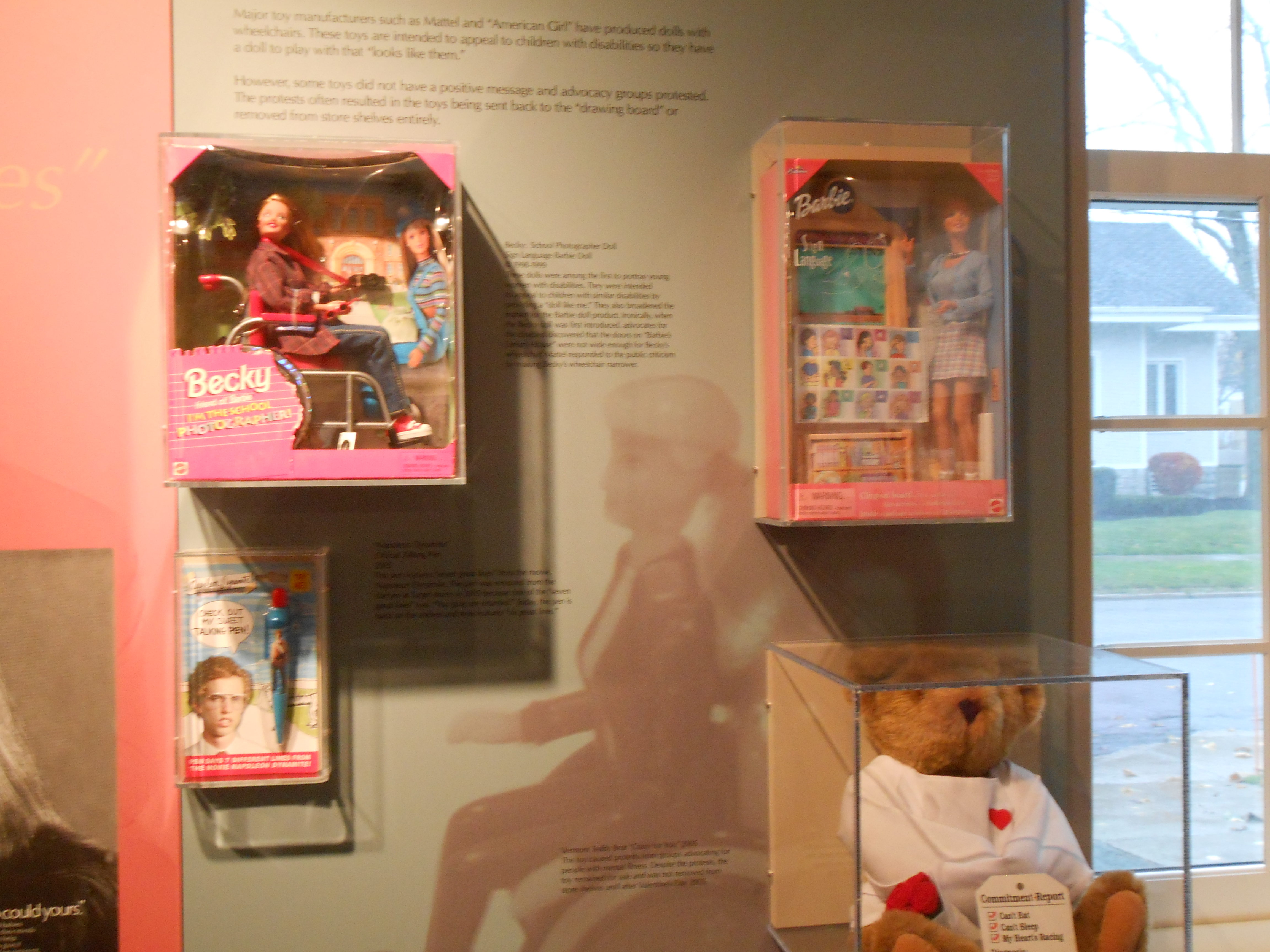
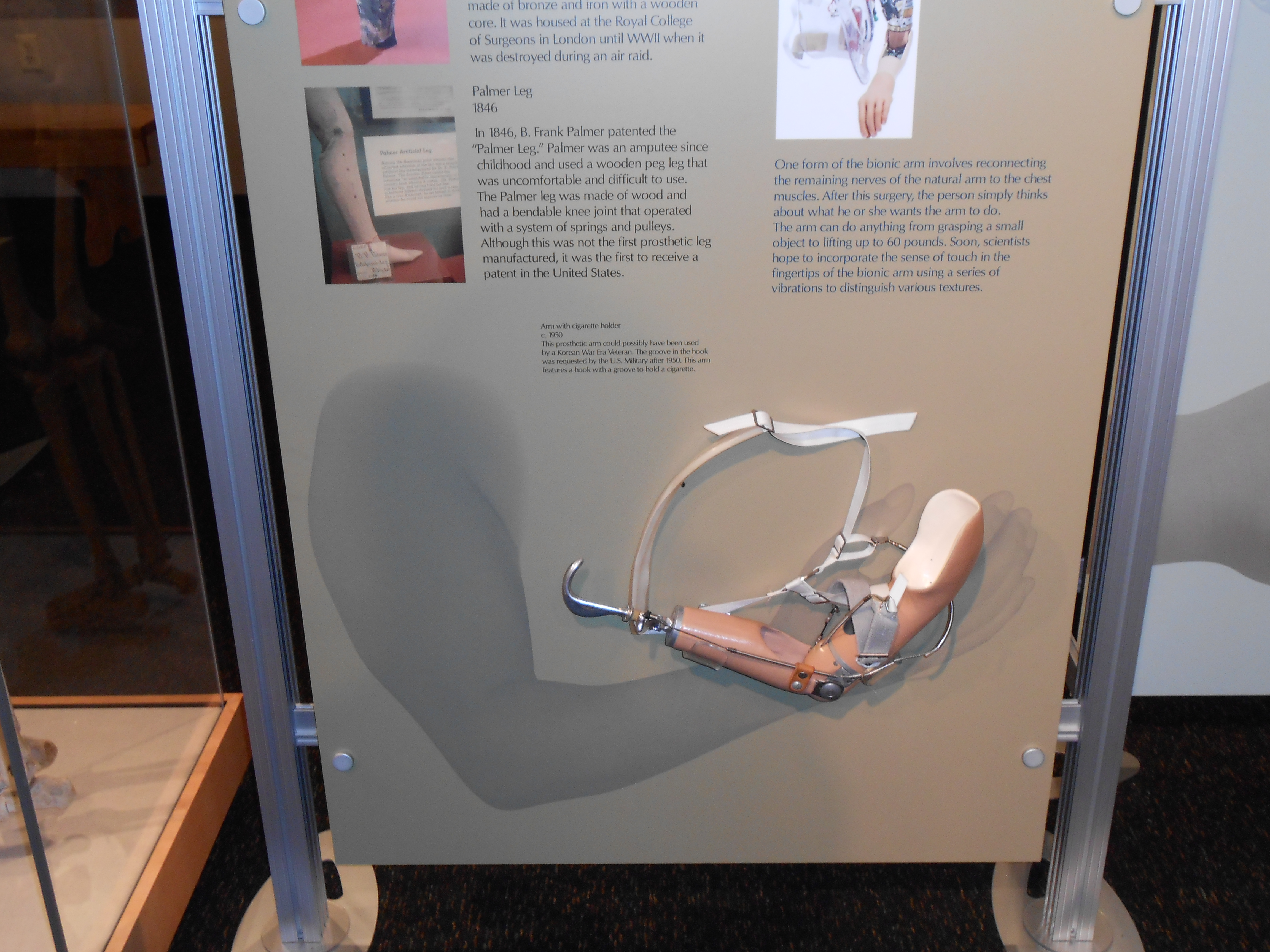
Yesterday, I visited The Museum of disABILITY History, located at 3826 Main Street, Buffalo, New York. I finally got to meet David Mack-Hardiman, Director of Training, People Inc., who gave me a tour of the museum, and Douglas V. Farley, Museum Director. I was very impressed with all the displays! This museum has so much to offer including Educational Resources, Activities, Traveling Exhibits, Cafe, and Museum Store. Please visit the museum if you have the chance!
My favorite exhibit, “The Monument For The Forgotten” was the vision of David Mack-Hardiman, created by Brian Nesline, Faces of Buffalo, “featuring thousands of individual grave markers woven into a mosaic tapestry image of a large stone monument.” I need to acknowledge the selfless work that David and People Inc. have done over the past few years. David and his team go into these unmarked cemeteries, clear the brush away, mow the lawns, and raise and clean each marker. Some graves are flat, numbered markers while others, as in the case of a few New York State Custodial Institutions, have the names inscribed. This back-breaking work is done by volunteers! God Bless Them!
“Mission: The Museum of disABILITY History advances the understanding, acceptance, and independence of people with disabilities. The Museum’s exhibits, collections, archives and educational programs create awareness and a platform for dialogue and discovery.
Vision: The Museum seeks with, and on behalf of, individuals with developmental and other disabilities, a higher level of societal awareness and understanding, and a change in attitudes, perceptions and actions that will result in people with disabilities having the greatest possible participation in their communities.”
“Established in 1998 by Dr. James M. Boles, president and CEO of People Inc. (Western New York’s leading non-profit human services agency) the Museum of disABILITY History has steadily expanded over the years and, in late 2010, moved to a brand new location (pictured above). The Museum of disABILITY History is dedicated to advancing the understanding, acceptance and independence of people with disabilities. The Museum’s exhibits, collections, archives and educational programs create awareness and a platform for dialogue and discovery. The Museum of disABILITY History is a project of People Inc. and is chartered by the New York State Department of Education Board of Regents. People Inc. exists so that individuals with disabling conditions or other special needs have the supports they need to participate and succeed in an accepting society. As noted throughout the site, this project has been developed with the generous support of People Inc. and the B. Thomas Golisano Foundation. We are truly thankful for their participation in this worthwhile effort.”
After my post yesterday, 1893 State Hospital Cadavers, a reader asked, “How long did this go on?” I didn’t know but I felt that it didn’t go on for very long. I was thinking about 20 years or so. Another reader stated that it is still the law in New York State and she included a link to the statute. She was right and I was very wrong! After reading the law I was amazed at how little it has changed since 1893. The reason I thought that this practice didn’t go on for very long is because of the thousands of anonymous graves in every state of this country. Even today cemeteries have special lots that are reserved for the poor and for bodies that no one has claimed. According to this law, one would think that any body that wasn’t claimed within the 48 hour time period would be given to a medical university but that doesn’t seem to be the case. Willard State Hospital Cemetery, which was used for 130 years, has close to 6,000 unmarked, anonymous graves. This cemetery is the final resting place of the patients that no one claimed. That’s only 1 New York State Hospital out of 17. I’m sure that somewhere there is a list of those deceased patients whose bodies were given in the name of medical science. That information would certainly be in the patient’s medical records which as of this date, are unavailable to the public. If anyone can explain this law further, please feel free to do so. If you would like to learn more about this subject, please click on the RED links below.
N.Y. PBH. LAW § 4211 : NY Code – Section 4211:
Cadavers; Unclaimed; Delivery to Schools for Study.
“1. Except as hereinafter provided, and subject to the conditions specified in this article, the director or person in charge of any hospital, institution, morgue or other place for bodies of deceased persons not interred or otherwise finally disposed of, and every funeral director, undertaker or other person having in his or her lawful possession, any body of a deceased person for keeping or burial, shall deliver every body of a deceased person in his or her possession, charge, custody or control not placed therein by any person, agency or organization for keeping, burial or other lawful disposition to:
(a) any medical college, school or institute including chiropractic colleges registered by the regents of the university of the state of New York as maintaining a proper standard;
(b) any university within the state authorized by law to confer degrees of doctor of medicine or doctor of dental surgery;
(c) any other college or school incorporated under the laws of the state of New York for the purpose of teaching medicine, anatomy or surgery to those on whom the degree of doctor of medicine has been conferred;
(d) any university within the state of New York having a medical preparatory or medical postgraduate course of instruction; or
(e) any college, school or institute maintaining a mortuary science program that has either been approved by the department or holds a certificate of accreditation from an accrediting organization recognized by the department pursuant to article thirty-four of this chapter, provided, however, that such bodies remain unclaimed by any of the aforementioned institutions. Any college, school or institute maintaining a mortuary science program may only claim and utilize such bodies for anatomical and embalming instruction purposes.
2. The professors and teachers in every university, college, school or institute hereinbefore specified may receive the body of a deceased person delivered or released to the university, college, school or institute, as herein provided, for the purposes of medical, anatomical and surgical science, anatomic embalming, and study.
3. No body of a deceased person shall be delivered or released to or received by, any university, college or school or institute.
(a) if, within forty-eight hours after death it is desired for interment or other lawful disposition by relatives and in the counties of Oneida, Onondaga, Oswego, Madison and Cortland, by relatives or friends, or,
(b) if prior to his or her death, the person shall have expressed a desire that his or her body be interred or otherwise lawfully disposed of, is carrying an identification card upon his or her person indicating his or her opposition to the dissection or autopsy of his or her body, or,
(c) if the deceased person is known to have a relative whose place of residence is known or can be ascertained after reasonable and diligent inquiry.
4. (a) A body of a deceased person shall not be delivered or released to, or received by a university, college, school or institute, if within twenty-four hours after notice of death by the person having lawful possession, charge, custody or control to the next of kin, or in the counties of Oneida, Onondaga, Oswego, Madison and Cortland to the next of kin, or friend of the deceased person such next of kin or friend shall claim such body for interment or other lawful disposition.
(b) Unless a relative or friend of the deceased person shall claim the body of the deceased person within forty-eight hours after death, or within twenty-four hours after receipt of notice of death as provided in paragraph (a) of this subdivision, the next of kin, relatives or friends, as the case may be, shall be deemed to have assented to delivery or release to, and receipt by the university, college, school or institute, of such dead body.”
SOURCE: FindLaw for Legal Professionals-Cadavers; Unclaimed; Delivery to Schools; Procedure.
FindLaw for Legal Professionals-NY Code-Article 42: CADAVERS.
FindLaw for Legal Professionals-Cadavers; Delivery to Relatives or Friends.
FindLaw for Legal Professionals-Cadavers; Autopsy by Order of Hospital Authorities.
Here is the link to Jon Crispin’s beautiful new website, Willard Suitcases.

Jon Crispin Suitcase 6 – http://joncrispin.wordpress.com/

Jon Crispin Suitcase 2 – http://joncrispin.wordpress.com/
I am not an expert on Psychiatric Drugs, SSRIs, Mental Illness, Gun Violence or Mass Murders, but after reading the articles presented below, I feel compelled to share them with you. After the horrible, senseless tragedy at the U.S. Navy Yard in Washington, D.C., the media and politicians alike were very quick to tell us that gun laws need to be stricter with better background checks, and that they need to be red flagging people who have “mental issues.” But no one ever mentions, in what appears to be a fact in a considerable amount of cases, that people who have “snapped” and have committed these terrible acts of violence, murder, and mass murder, were actually on prescription drugs prescribed to them by their physician at the time that they committed these crimes. Everyone knows that the Mental Health Care System in the United States is broken but I’m not sure that everyone is aware of the huge influence that the Pharmaceutical Companies have on our health care providers. I am not stating that prescription drugs are bad or that they don’t help people in need. I am presenting the following articles as a possible alternative answer as to what is happening in the U.S., and as food for thought.
60 Minutes: Stop The Lies! by Dorothy Dundas.
Did Antidepressant Play a Role in Navy Yard Massacre? by John Horgan.
SSRI Stories – Antidepressant Nightmares.
The New Epidemic Sweeping Across America (and it’s Not a Disease) by Dr. Joseph Mercola.
FDA Approved Prescription Drugs Kill Hundreds of Thousands of People Annually by Matt Hall.
This is another great project that concerns unmarked, anonymous graves. For some time now, I have heard the same talking points from the New York State Office of Mental Health about how the release of patient names of those who have been dead for over a hundred years may be offensive to some families, especially those “who live in small towns.” This is the dumbest statement I have ever heard considering that close to half of all the inmates who were incarcerated in insane asylums during the nineteenth century were newly arrived immigrants. Hopefully bill S2514-2013 will be become a law soon and will include provisions for a searchable database similar to those at The Hart Island Project. Maybe the Inmates of Willard, and the former patients of all New York State Hospitals and Custodial Institutions will finally be next.
“A nonprofit charitable organization assisting families across the globe to relocate a diverse, international community of people who disappeared in the greater New York area…The City Cemetery occupies 101 acres in the Long Island Sound on the eastern edge of New York City. It is the largest tax funded cemetery in the world. Prison labor is used to perform the daily mass burials that number over 850,000. Citizens must contact the prison system to visit Hart Island. There is no map of the burials and no one is permitted to visit a specific grave. The Department of Correction restricts visitation to every third Thursday of the month and only to visit a gazebo near the ferry dock. Records at this location consist of intact mass graves since 1980. Many older records were destroyed in a fire on Hart Island in 1977. Some surviving records are available on microfilm at the Municipal Archives. The mission of the Hart Island Project is to make the largest cemetery in the United States visible and accessible so that no one is omitted from history. On September 27, 2012, The Hart Island Project testified before the New York City Council concerning updating the administrative code for operations on Hart Island.”
PLEASE CHECK OUT The Hart Island Project.
Digging Hart Island, New York’s 850,000-Corpse Potter’s Field.
Piercing the Mystery of Potter’s Field by Francis X. Clines.
I always wondered where the patients of the New York City Asylums / Manhattan State Hospital were buried. I now believe that they were buried on Hart Island.