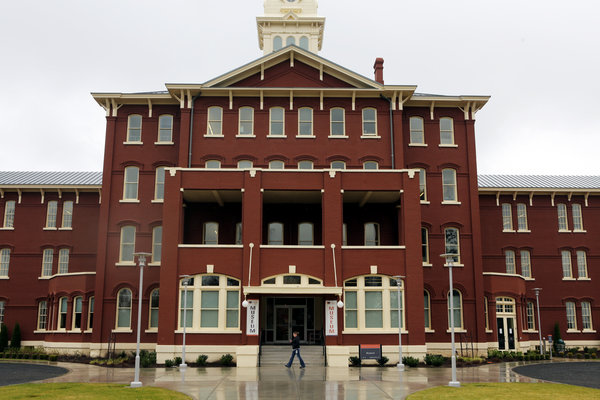
Oregon State Hospital – Cremains

Honoring the Past – List of Unclaimed Cremains

Mental Health – Portland, Oregon

Maisel Library Of Dust

Maisel Library Of Dust

Oregon State Hospital-New York Times

Oregon State Hospital-New York Times

Once a ‘Cuckoo’s Nest,’ Now a Museum – Oregon State Hospital features a museum that pays tribute to the movie “One Flew Over the Cuckoo’s Nest” and explores mental health treatments of the past.

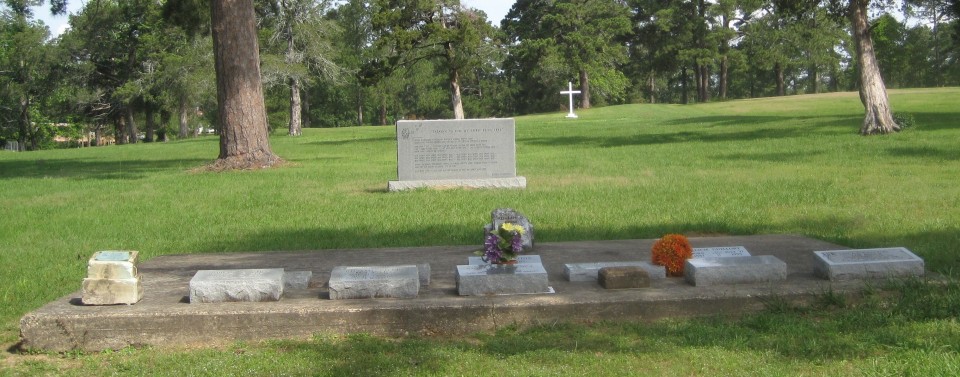
Giving Names To Numbers – Central Louisiana State Hospital Cemetery

Giving Names to Numbers.

Central Louisiana State Hospital Cemetery Project

Central Louisiana State Hospital Cemetery Project

Here is another example of a group, Committee for the Preservation and Enhancement of Central Louisiana State Hospital Cemetery, that wants to memorialize the people who lived and died at CLSH and were buried in anonymous, numbered graves. Because of the HIPAA Law, they are not allowed to release any of the names, but are allowed to put them on a memorial. If a family member wants to know if their loved one is buried there, they can only confirm or deny. They are prohibited in stating that these people were patients.

Mission

To bring back the dignity of the almost 3000 souls buried on the Central Louisiana State Hospital Grounds.

Company Overview

A group of people brought together by Mr. Ray Moreau who are dedicated to preserving the cemetery on the grounds of Central Louisiana State Hospital.

Description

The committee’s goal is to place a memorial with the names of each of the almost 3000 souls bured at the Central Louisiana State Hospital Cemetery, to have the cemetery recognized as a dedicated cemetery and establish a perpetual fund for the ongoing care of the cemetery in the future.

General Information

Donations to preserve the Central Louisiana State Hospital Cemetery can be sent to:

The Extra Mile
PO Box 3178
Pineville, LA  71361-3178
Call 318-484-6575 for more information.

Facebook

The Iron Coffin – Eastern State Hospital Cemetery

Phil Tkacz, President of the Eastern State Hospital Cemetery Preservation Project in Lexington, Fayette County, Kentucky, is confronting the same problems with the federal HIPAA Law that many other concerned groups in the United States are dealing with concerning identification of deceased patients of former State Hospitals (Insane Asylums) and Custodial Institutions. What I find incredible is that many states will now be able to access LIVING INDIVIDUAL’S medical records (profiling) in order to comply with the new gun control legislation but the identities of patients who have been dead for over a century cannot be revealed because they lived with a mental illness, epilepsy, or developmental disability. When these folks were buried in the nineteenth century, the states and counties would not provide the money for headstones and instead marked their graves with numbers. In many cases, the cemeteries have been lost with the passage of time or we discover that the cemeteries and the graves themselves were never marked or recorded. The states spent huge amounts of tax payer dollars supporting and caring for these people while they were alive. In the nineteenth century, government agencies actually had budgets. It would have been considered an extravagance for the states and counties to also provide engraved headstones as this dependent group of human beings were considered to be the dregs of society. My question is, why is this particular group of people still being punished for illnesses over which they had no control? When will someone who knows what they are talking about at the Department of Health and Human Services come forward and explain why these people cannot be honored or remembered with dignity? And, why is this group of people being given more privacy protection than the living? Why?

ESH 1

ESH 1

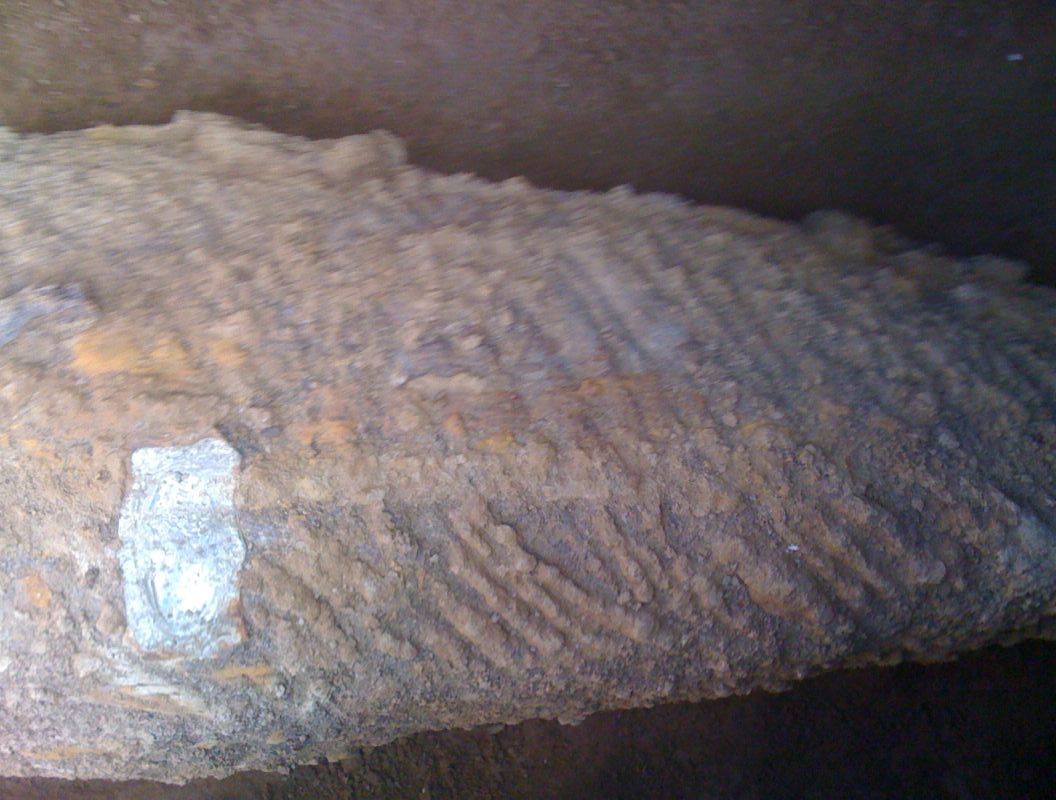
Phil’s note along with photographs, concerns an iron coffin believed to be from the 1840s that is engraved with a name. The name cannot be revealed because of the HIPAA Law. Why would a family take the time to engrave their loved one’s coffin if they didn’t want anyone to know who that person was? What about the unfortunate individuals who were buried in thin, wooden coffins or just tossed in the dirt wrapped in a shroud? Why can’t we know who they were? Why can’t we have access to their medical records? THEY ARE DEAD AND HAVE BEEN DEAD FOR OVER A CENTURY. The federal government has no problem releasing our medical records, sending them over the internet, and allowing physicians to take home flash drives containing patient information that can be easily accessed or lost. So, what’s the problem? As citizens, we don’t know who is looking into our medical histories or why. This whole issue is ridiculous and the HIPAA Law is a joke! HHS is solely responsible for this fiasco and the stigma that they are perpetuating because no one knows how to interpret the damn law!

ESH 2

ESH 2

“In 2008 the state announced it would convert the Eastern State Hospital into a community college, BCTCS. At the same time, ESH would move to a new facility. Our group began meeting with all involved in order to discuss what would be done when graves were to be found on the hospital property as construction progressed. University of Kentucky Archeology attempted to do a survey of as many areas as possible to find possible graves, but found none. In January of 2011, I received a call from the state, they said 30-50 graves had been found in an area close to the entrance off Newtown Road & University of Kentucky was going to start exhuming the remains soon. Work progressed slowly due to weather, but was finished by late April 2011.

We met with the state, University of Kentucky Archeology, and others, to discuss what they had found later in 2011. The summary was, the actual number was about 170 remains of former patients had been found and that there were more in the same area but there wasn’t enough money to continue into that area. It was decided by them, that they would exhume those remains when construction got to that area. The timeline for re-burial was about 1 year and we would be kept up to date when necessary.

Fast forward to January 2012. I was told by a reliable source that there was an Iron coffin found the year before and there were photos. Also the coffin has a plaque on it with a name, unfortunately the last name is unreadable in the photo. I contacted the person we had been talking to for updates and asked why this was never mentioned to us. We were told that they kept it from the media to “preserve the dignity of the person in the coffin and to protect their privacy.” Why our group was not told was never explained though. Even the University of Kentucky said they could not release the name.

Attempts were made to have the name released but to this day we are told that the name is protected by HIPAA. A request was made to have a headstone erected over the grave where this coffin will be re-interred later this year and were told, again, that it wouldn’t be legal under HIPAA. We are still trying to find a way to have the name released, our main argument is that A) Patient privacy does not apply, and B) Common sense would tell you that having the name put on the coffin was done in case this happened and it was later exhumed.”

ESH 3

ESH 3

S2514-2013 – NY Senate Open Legislation – Relates to patients interred at state mental health hospital cemeteries – New York State Senate

S2514-2013 – NY Senate Open Legislation – Relates to patients interred at state mental health hospital cemeteries – New York State Senate.

NEW HIPAA UPDATE March 2013!

Well, the bill has a new number but it’s not dead! Yay! Special thanks to Senator Joseph Robach and Tim Ragazzo!

On March 1, 2013, Tim Ragazzo, Director of Operations & Legislation from Senator Joe Robach‘s office, called me to let me know that the bill was re-introduced (with a new number), to the NYS Senate and has been referred to the finance committee. This is great news because it means the bill is not dead! Now it has to pass in the Assembly. Hopefully, the bill will become law before it expires at the end of 2014.
-L.S. Stuhler at lsstuhler@gmail.com

Willard Cemetery Disk by Roger Luther at nysAsylum.com

Willard Cemetery Disk by Roger Luther at nysAsylum.com

NAMES INSTEAD OF NUMBERS!

Willard Cemetery 2 by Roger Luther at nysAsylum.com

Willard Cemetery 2 by Roger Luther at nysAsylum.com

For more information about these long-closed New York State Hospitals, check out the “Interesting Articles & Documents” page.

LIST OF STATE HOSPITALS

By 1901, there were thirteen state hospitals for the insane in the State of New York. All these hospitals buried their dead in anonymous, unmarked graves. Some had their own cemetery like Willard State Hospital; others used city and county cemeteries like Rochester State Hospital. Most of these state hospital cemeteries are unmarked, unkempt, and forgotten. None of the thousands of former psychiatric patients’ names have been released to the public. Considering that in 1870, the first patient was buried in the Willard Cemetery, which in the year 2012 covers a span of five or six generations, these people have waited long enough to be remembered. When you release the names, you remove the stigma. The following is a list of most of these long-closed state hospitals; there are more.

1. Utica State Hospital – Counties of Fulton, Hamilton, Herkimer, Montgomery, Oneida, Saratoga, Schenectady and Warren.

2. Hudson River State Hospital – Counties of Albany, Columbia, Dutchess, Greene, Putnam, Richmond, Rensselaer, Washington and Westchester.

3. Middletown State Hospital – Counties of Orange, Rockland, Sullivan and Ulster.

4. Buffalo State Hospital – Counties of Erie and Niagara.

5. Willard State Hospital – Counties of Allegany, Cayuga, Genesee, Ontario, Orleans, Schuyler, Seneca, Steuben, Tompkins, Wayne and Yates.

6. Binghamton State Hospital – Counties of Broome, Chemung, Chenango, Cortland, Delaware, Madison, Otsego, Schoharie and Tioga.

7. St. Lawrence State Hospital – Counties of Clinton, Essex, Franklin, Jefferson, Lewis, Onondaga,Oswego and St. Lawrence.

8. Rochester State Hospital – Counties of Monroe and Livingston.

9, 10. Long Island State Hospital – (Kings Park and Flatbush, Brooklyn) – Counties of Kings, Queens, Nassau and Suffolk.

11, 12. Manhattan State Hospital – (Manhattan and Central Islip) – Counties of New York and Richmond.

13. Gowanda State Homoeopathic Hospital (Collin’s Farm) – Counties of Cattaraugus, Chautauqua and Wyoming.

Additional State Hospitals:

14. Pilgrim State Hospital – Brentwood, Suffolk County, New York

15. Mohansic State Hospital – Yorktown, Westchester County, New York

State Hospitals for the Criminally Insane:

16, 17. Mattaewan and Dannemora State Hospitals


The Changing Face of What is Normal – Jon Crispin – Exploratorium

Congratulations, Jon Crispin! This wonderful exhibit of Jon’s photography of former patient suitcases found in the attic of Willard State Hospital will be displayed at the Exploratorium in San Francisco beginning April 17, 2013.
(Please click on the RED links).

Book Photo 5.20.2013 by Jon Crispin

Book Photo 5.20.2013 by Jon Crispin

I am very proud that The Exploratorium is selling my book! Thank you!

The Changing Face Of What Is Normal, The Exploratorium.

The Changing Face of What is Normal.

Slate.com-Jon Crispin-Suitcases From The Willard Asylum.

NPR Interview with Jon Crispin.

COLLECTORS WEEKLY -Abandoned Suitcases Reveal Private Lives Of Insane Asylum Patients.

What Is The DSM?

According to The American Psychiatric Association, “The Diagnostic and Statistical Manual of Mental Disorders (DSM) is the standard classification of mental disorders used by mental health professionals in the United States. It is intended to be applicable in a wide array of contexts and used by clinicians and researchers of many different orientations (e.g., biological, psychodynamic, cognitive, behavioral, interpersonal, family/systems).”

DSM5

DSM5

I had never heard of The DSM before I began researching the Willard Asylum. I had read many old documents about immigrants who were not allowed to disembark the ship because they were thought to be insane. It made me wonder, how were these people behaving that the authorities and physicians, with their six second examinations, determined that they were insane? I wanted to know, what does it mean to be insane? What is insanity? This is when I first learned about The DSM.

The old adage, “What you don’t know can’t hurt you,” isn’t true. This book affects everyone who lives in the United States. It reminds me of the Dependent, Defective, and Delinquent Census of 1880 (Men, Women), when neighbors were asked by census enumerators if their fellow neighbors were insane. The increase in the “defective classes” rose 155 percent between 1870 and 1880. In 1880, there were 6 general forms of insanity. According to The DSM, there are 13 or more categories divided into over 300 disorders. One hundred-fifty years ago we had asylums to lock people away from society and thankfully, those institutions no longer exist. Today, we have television and internet commercials, medical websites, and The DSM telling us we are ill. We are “abnormal.” We self-diagnose without a physician or psychiatrist. We walk in their offices asking for medication, wanting a magic pill, and telling them our diagnoses. It’s all there at our fingertips, all we have to do is look up what ails us and if we have two or three symptoms, then we must be sick. Are we all mentally ill? Should everyone be medicated? Will we re-build the insane asylums of the nineteenth century? How will this end?

The following is an excerpt from DSM 5 In Distress by Allen Frances, M.D., Psychology Today, December 2012: “Except for autism, all the DSM 5 changes loosen diagnosis and threaten to turn our current diagnostic inflation into diagnostic hyperinflation. Painful experience with previous DSM’s teaches that if anything in the diagnostic system can be misused and turned into a fad, it will be. Many millions of people with normal grief, gluttony, distractibility, worries, reactions to stress, the temper tantrums of childhood, the forgetting of old age, and ‘behavioral addictions’ will soon be mislabeled as psychiatrically sick and given inappropriate treatment.”

(Allen Frances, M.D., was chair of the DSM-IV Task Force and of the department of psychiatry at Duke University School of Medicine, Durham, NC. He is currently professor emeritus at Duke.)

January 2013 HIPAA Privacy Regulations: General Rules for Uses and Disclosures of Protected Health Information: Deceased Individuals – § 164.502f

“HHS Regulations as Amended January 2013
General Rules for Uses and Disclosures of Protected Health Information: Deceased Individuals – § 164.502(f)

Standard: deceased individuals. A covered entity must comply with the requirements of this subpart with respect to the protected health information of a deceased individual for a period of 50 years following the death of the individual.

HHS Description and Commentary From the January 2013 Amendments
General Rules for Uses and Disclosures of Protected Health Information: Deceased Individuals.


Section 164.502(f) requires covered entities to protect the privacy of a decedent’s protected health information generally in the same manner and to the same extent that is required for the protected health information of living individuals. Thus, if an authorization is required for a particular use or disclosure of protected health information, a covered entity may use or disclose a decedent’s protected health information in that situation only if the covered entity obtains an authorization from the decedent’s personal representative. The personal representative for a decedent is the executor, administrator, or other person who has authority under applicable law to act on behalf of the decedent or the decedent’s estate. The Department heard a number of concerns since the publication of the Privacy Rule that it can be difficult to locate a personal representative to authorize the use or disclosure of the decedent’s protected health information, particularly after an estate is closed. Furthermore, archivists, biographers, and historians had expressed frustration regarding the lack of access to ancient or old records of historical value held by covered entities, even when there are likely few surviving individuals concerned with the privacy of such information. Archives and libraries may hold medical records, as well as correspondence files, physician diaries and casebooks, and photograph collections containing fragments of identifiable health information, that are centuries old. Currently, to the extent such information is maintained by a covered entity, it is subject to the Privacy Rule. Accordingly, we proposed to amend § 164.502(f) to require a covered entity to comply with the requirements of the Privacy Rule with regard to the protected health information of a deceased individual for a period of 50 years following the date of death.

Proposed Rule

We also proposed to modify the definition of “protected health information” at § 160.103 to make clear that the individually identifiable health information of a person who has been deceased for more than 50 years is not protected health information under the Privacy Rule. We proposed 50 years to balance the privacy interests of living relatives or other affected individuals with a relationship to the decedent, with the difficulty of obtaining authorizations from personal representatives as time passes. A 50-year period of protection had also been suggested at a National Committee for Vital and Health Statistics (the public advisory committee which advises the Secretary on the implementation of the Administrative Simplification provisions of HIPAA, among other issues) meeting, at which committee members heard testimony from archivists regarding the problems associated with applying the Privacy Rule to very old records. See http://ncvhs.hhs.gov/050111mn.htm. We requested public comment on the appropriateness of this time period.”

READ THE ENTIRE ARTICLE AT:

Bricker & Eckler LLP: HIPAA Privacy Regulations: General Rules for Uses and Disclosures of Protected Health Information: Deceased Individuals – § 164.502f

2012 In Review

The WordPress.com stats helper monkeys prepared a 2012 annual report for this blog. January 4, 2013.

Here’s an excerpt:

4,329 films were submitted to the 2012 Cannes Film Festival. This blog had 28,000 views in 2012. If each view were a film, this blog would power 6 Film Festivals

Click here to see the complete report.

Washington State – Grave Concerns Association Model of Memorialization

For the past few years I have tried to get the attention of state and federal lawmakers to pass a law in New York State that would provide for the release of patient names; dates of birth and death; and location of graves, of people who were committed to State Hospitals and Custodial Institutions during the nineteenth and early twentieth centuries who were buried in unmarked or numbered, anonymous graves, whether they be in formerly state, county, or city owned cemeteries. (See My Story) I also asked for a searchable, digital database, available to the public to be included in the bill. On August 22, 2011, I finally got the opportunity to meet with Kate Munzinger, Senator Joseph Robach’s Chief of Staff. Ms. Munzinger took the time to listen to what I was asking for.

Grave Concerns Association

Grave Concerns Association

The reason why I’m blogging about this issue again is because the bill in New York State has not yet become a law. There are caring people in several states who are pushing to get a similar law passed but state and federal representatives will not give them the time of day or they won’t even consider passing such a law because of the misinterpretation of the federal HIPAA Law. I want to help those people in other states by sharing with them what was shared with me. If not for Laurel Lemke, Chair of Grave Concerns Association, I don’t think I would have received the attention of Senator Robach. In 2004, Ms. Lemke and others, had fought for this cause, and managed to amend law 6678 in the State of Washington that allowed for the release of patient names for the purpose of memorialization. She emailed me the bill which I in turn gave to Kate Munzinger, Chief of Staff; Tim Ragazzo, Director of Operations & Legislation; and Senator Joseph Robach. A bill was drafted and introduced to the New York State Legislature in March 2012. The title of the bill is: “An act to amend the mental hygiene law, in relation to patients interred at state mental health hospital cemeteries.”

Western State Hospital, Pierce County, Washington, has 3,218 patients who are no longer anonymous. Grave Concerns Association has raised funds and replaced 1,200 names since 2004. The forgotten have been remembered with dignity. With community fund raising efforts and countless volunteers, inscribed headstones that identify the patient’s name, date of birth and death, have been placed at the graves; and a searchable, digital database has been uploaded to the internet. In contrast, New York State, with 22 or more former state custodial institutions combined has upwards of 11,000 or more people buried in anonymous graves who through no fault of their own have been erased from history. Willard State Hospital alone has close to 6,000 patients buried in anonymous graves.

Sherry Storms, Stacie Larson and Laurel Lemke, Grave Concerns Association, John Lucas, countless volunteers, and the State of Washington deserve to be recognized for their ground breaking, painstaking work, and above all, their model should be copied in every state in the union. The New York State bill is important and necessary in order to restore the dignity and personhood of the thousands of people who were incarcerated and died at former New York State Insane Asylums (later renamed State Hospitals), and State Custodial Institutions (for Feeble-Minded and Epileptic persons). When the bodies of the inmates were not claimed by family members, they were buried in anonymous, unmarked graves. Many of these unclaimed bodies went to medical colleges and pathology labs for the furtherance of medical science. These people deserve to be remembered, and we need to remember what happened to them so that we do not repeat the mistakes of our ancestors.

It is my hope that the State of New York, and all states, will pass similar legislation and follow the Washington State – Grave Concerns Model. They have done a great service for the community and the nation by naming the forgotten; setting up an exemplary, searchable, digital database; and trying their best to remove the stigma of mental illness.

WASHINGTON:
Grave Concerns Association
Volunteer Carla Wutz, descendent of Michael Wutz, updates the data base on the Grave Concerns website.

Grave Concerns Cemetery Database – Version 1.0 – Western State Hospital Historic PatientCemetery
http://www.wshgraveconcerns.org/search-the-database.html

Washington State Archives – Digital Archives

Kings Park: Stories from an American Mental Institution – A Review

Lucy - Kings Park Movie

Lucy – Kings Park Movie

I had the honor of viewing Kings Park: Stories from an American Mental Institution by Lucy Winer in my own home. I watched it twice because there was so much to take in and process. This documentary is about a woman who after more than thirty years returns to Kings Park Hospital where she was committed to the violent ward at the age of seventeen for trying to commit suicide. Lucy had spent two years in a private institution and six months at Kings Park. The young Lucy knew that she needed help and she hoped that she would finally receive it. The adult Lucy was on a mission to confront that seventeen year old girl who was always just under the surface in her memory. Her goal was to unlock the reasons why that young girl was sent there, what caused her depression, and what caused her to leave that part of herself in the past.

I didn’t know what to expect when I turned on the DVD. I think I was expecting an angry woman who viewed herself as a victim as a result of living in a state mental hospital for six months. Not that anyone could blame her but that’s not Lucy. What I saw was an intelligent, honest, compassionate, non-judgmental woman with a calming demeanor who spoke softly and articulately about her past. She interviewed several people and let them say what they wanted and needed to say. She presented a balanced insight into what it was like living in a mental hospital in the year 1967. Her emotions were real and her reactions were sincere. Lucy Winer will forever be endeared to me because of her inner strength, bravery, and persistence in finding the answers that she had long been searching for. The movie is thought-provoking, moving, informative, and disturbing.

There are so many issues that go undetected by the general public because no one talks about them. In law, a defendant cannot claim ignorance, but in life we do it everyday. Not that we intend to ignore everything that is happening around us but because we are a nation of exhausted people; working 40 to 50 hours a week, taking care of our own families, trying to pay the bills, being taxed to death for everything not knowing where our money is going, and getting up the next morning and doing it all over again. Mental Illness and the way we treat people with problems are important issues that must be discussed because it touches us all in so many ways. It could happen to members of your own family: your daughter, son, husband, wife, partner, mother, father, and it could happen to you. What would you have done if faced with the same set of circumstances that Lucy was given? Would you have been courageous enough, and smart enough to survive?

If you are interested in purchasing Kings Park: Stories from an American Mental Institution, you can sign up for their Mailing List and/or like them on Facebook.

Kings Park Movie