1899 A Hospital Quarantined. Diphtheria Breaks Out at the Willard State Institution.

A Hospital Quarantined.
Diphtheria Breaks Out at the Willard State Institution.

Geneva, N.Y., July 5. – The Willard State Hospital, situated at Willard, N.Y., twenty miles south of Geneva, is more or less rigidly quarantined as a result of an epidemic of diphtheria, with which both patients and employes alike are afflicted. The authorities of the hospital state that, although it is a mild type of the disease, they deem it necessary to put the buildings and all those connected with the institution under quarantine.

Antitoxin has been freely used, and the authorities of the hospital now believe that they have the infection under control. No fatal cases have as yet been reported. Visitors are not allowed to visit patients, and will not be until conditions are considerably improved. It cannot be learned how many cases of the disease there are at the hospital. The cause of the breaking out of the disease cannot be accounted for as far as can be learned. The hospital is managed by a Board of Trustees of which ex-Senator S.H. Hammond of this city is the President.

SOURCE: The New York Times. Published: July 6, 1899, Copyright @ The New York Times

1886 An Insane Physician. Driven Crazy By The Loss Of His Books And Instruments.

An Insane Physician.
Driven Crazy By The Loss Of His Books And Instruments.

Elmira, N.Y., Jan 6. – Dr. Henry S. Dimock, for several years a physician at Grove Springs, a fashionable Summer resort on Keuka Lake, who for some time has been the medical adviser at Crystal Springs, and who will be remembered by many people of New-York, as well as those of Western cities, has become violently insane, and this evening was taken to Willard Asylum. On the 20th of last month he lost all his books and instruments by the burning of the hotel at Crystal Springs, and the loss so preyed on his mind that last Sunday night he stole a horse and carriage from Benson Smith, of Crystal Springs, and drove the animal to Penn Yan. He told the people that he was a Pinkerton detective and was after the man who set the hotel on fire. He insisted on making a clothier open his store and sell him a suit of clothes, and after putting them on refused to pay for them or take them off. He was persuaded to disrobe, however, and then ran through the streets. He is 53 years old, and has a wife. His condition is thought to be beyond recovery.

SOURCE: The New York Times. Published: January 7, 1886, Copyright @ The New York Times

1914 Destroy Bad Food Of State Asylums

DESTROY BAD FOOD OF STATE ASYLUMS
Shocking Conditions Found by Federal Inspectors in a Sweeping Inquiry.
FIRE PERIL IN FLATBUSH
Condition “Bordering on Savagery” at Binghamton
Milk from Tubercular Cows at Poughkeepsie.
Special to The New York Times.

ALBANY, May 8. – For eighteen months, according to information received to-day by Commissioner John H. Delaney of the Department of Efficiency and Economy, the insane patients of the Hudson River State Hospital at Poughkeepsie were supplied with milk from tubercular cows belonging to the institution and purchased with the State’s money. Mr. Delaney learned that in that period twenty-three gravely afflicted milch cows of the hospital’s own herd were condemned.

An investigation at once will be made by Commissioner Delaney to ascertain whether the animals were suffering from tuberculosis when they were purchased or whether the disease developed among them after they became the property of the institution.

The State Hospital Commission, which is responsible for the management of the State Hospitals for the Insane, has as yet made no official answer to the accusations contained in the reports of Inspectors of the Department of Efficiency and Economy. It was learned to-day, however, that when an inspection of the food supply at the various institutions was made some weeks ago by experts from the Bureau of Animal Industry of the United States Department of Agriculture, the Hospital Commission started to make some inquiries about conditions at the fourteen institutions under its supervision.

According to information obtained to-day complaints were received from several institutions regarding the quality of the beef after the commission contracted for a three months’ supply of Argentine beef. Inspector Phillips then urged the commission to have an inquiry made by two Federal Inspectors, and his advice was followed.

The reports of these inspectors have been in the hands of the State Hospital Commission since early in April, but have not been made pubic. The inspectors reported deplorable conditions at nearly every institution they visited.

At the Utica State Hospital the Federal inspectors were compelled to order the destruction of a large quantity of lard used in the making of bread because it was rancid. The bakery at the institution, they said, was “unclean beyond belief.” The floor and walls they found “in a vile state.” Conditions, they said, were “a grave menace to employes and inmates of the institution.”

They found 500 pounds of pork and seven carcasses of mutton which were unfit for food. After discovering that forty dozen of eggs out of a total supply of seventy-five dozen were decayed, they were informed by the kitchen employes that it had been the practice to feed the patients with such eggs.

At the Buffalo State Hospital the Inspectors ordered the destruction of meat unfit for human consumption; at Central Islip they condemned eggs and 200 pounds of beef; at Willard a barrel of fat, intended, it was asserted, for cooking purposes, was condemned.

Similar conditions were reported at the Binghamton State Hospital. A condition described as “bordering on savagery” was found by the Federal Inspectors in the storeroom of the Mohansic State Hospital at Yorktown Heights. At the Rochester State Hospital the inspectors ordered the entire supply of eggs on hand, 320 dozen, destroyed as unfit for food. A supply of bacon and beef in the storeroom, the inspectors said, should not be used for food. Employees at the Middletown State Hospital told the inspectors most of the eggs used for the patients at the institution were decayed.

Commissioner Delaney said to-day that reports from investigators of this department who have been inquiring into conditions at the Long Island State Hospital in Flatbush show “dreadful” conditions at that institution. The investigation of the Efficiency and Economy Department thus far has been confined to the mechanical equipment of the hospital, but Federal Inspectors have made inquiries regarding the food.

The Federal Inspectors report that many of the eggs at this institution are classified in the trade as “rots” and “spots” and “weak and cloudy” eggs. Employes said that the grade of eggs furnished to the institution was extremely poor. The Federal Inspectors found 200 pounds of moldy bacon and two tubs of rancid lard.

An engineer employed by the Department of Efficiency and Economy found the floors and ceilings of the institution in a bad and dangerous condition. The menace to the inmates in case of fire, the engineer said, was very grave, owing to a defective fire alarm system and improperly marked stairways and exits. The sanitary conditions of the institution the expert called “a mockery” of conditions that should obtain.

SOURCE: The New York Times, Published: May 9, 1914, Copyright @ The New York Times

Mental Illness & Ignorance

I am the first to admit that I didn’t have a clue about what mental illness really is, and I have never claimed to be an expert on this issue, because I am not. When I discovered that my great-grandmother was sent to Willard State Hospital at the end of her life, it made my stomach flip and I felt overwhelming sadness. I remember reading her obituary over and over again to see if I had read it correctly. I even asked myself, could there be another state hospital at Willard that wasn’t a mental institution? Did she really die there? Why was she sent there? What was her diagnoses? Before I lose your attention, let me explain who was sent to Willard so that you will no longer be uneducated, unaware, or uninformed. Anyone who was not considered “normal” was sent to Willard including the elderly with Dementia and Alzheimer’s Disease. Remember, there really were no nursing homes until the 1950s. Others were Hearing Impaired, had Developmental Disabilities, were Trauma Victims including Victims of Domestic Violence and Rape (back then they called it “Seducer’s Victim”), had PTSD (Soldier’s Heart & Shell Shock), Menopausal Women, Depression, Anxiety Disorders, Brain Injuries, Stroke Victims, Epilepsy, Neurological Disorders, Psychiatric Disorders, and some were locked up because of their sexual orientation, personal beliefs, and religious beliefs.

You have to ask yourself, why are we so ignorant on this issue? Why are we receiving the great majority of mental health information from television commercials put out by the pharmaceutical companies and Dr. Phil? God Bless Him! Why is the jail at Riker’s Island being used as the largest mental health facility in the country? This is how we used to treat the mentally ill 150 years ago. When we pay our taxes which is a huge burden on the people of New York State, we assume that the people appointed to these high paying positions are actually doing their jobs and taking care of the people they are supposed to be advocating for; those who need the most help. Obviously, this is not the case and this abuse of the public trust needs to end.

Are burial records available to the public? Yes, but you would have to sit in the town clerk’s office and pull out each record that applies to that county’s particular state hospital or custodial institution. If you post their names online, you run the risk of being charged $10,000 for each violation, or each person. It would be much easier to record this information from each institution’s burial ledgers. Is it ridiculous that the Office of Mental Health classified burial records from state facilities as medical records? Yes. Were they really protecting the identities of former patients? No. In every correspondence that I received, it was made crystal clear that this was done to protect the families because some may find it offensive. Not only has the OMH insulted families and descendants of these people who were buried in anonymous graves, they have contributed to the stigma. They need to step out of the way, focus on the living, and hand over the burial ledgers to cemetery groups and responsible volunteers who will get the job done at NO cost to the state. Our ancestors and our families have nothing to be ashamed of! That would be like being ashamed of heart disease or diabetes. Putting names on a memorial, headstone, or list, should not be offensive to anyone, unless, of course, you are ignorant.

“I Got A Name” by Jim Croce
Abused and Used – New York Times
CLICK HERE TO VIEW THE VIDEO They’re Buried Where? by Seth Voorhees

The list of these former New York State Hospitals includes but is not limited to: BinghamtonBuffaloCentral IslipDannemoraEdgewoodGowandaHudson RiverKings ParkLong IslandManhattanMatteawanMiddletownMohansicPilgrimRochesterSt. LawrenceSyracuseUtica, and Willard. The Feeble-Minded and Epileptic Custodial Institutions of New York includes but is not limited to: Craig Colony for EpilepticsLetchworth Village for Epileptics & Developmentally DisabledNewark State School for Developmentally Disabled WomenRome State School for Developmentally Disabled Adults & Children, and Syracuse State School for Developmentally Disabled Children. There may be more.

A Day at Willard Cemetery 5.18.2013

On Saturday, May 18, 2013, I visited the Willard Cemetery for a second time. This was the day of the annual Willard Tour that benefits a day care center on the old Willard property. Hundreds of people attended the tour and a good crowd gathered at the cemetery. Quite a bit has changed since my first visit on May 14, 2011, when the grass was up to my knees and no one was there but me, my husband, and two of our friends. It was a very sad place. The Willard Cemetery Memorial Project was formed by Colleen Kelly Spellecy in 2011. She has done a fabulous job organizing the group, having a sign installed at the entrance, raising awareness about the project, getting the cemetery lawn mowed, and collecting donations. I was happy to see so many concerned people at the cemetery.

Now there is hope, not only for the Willard Cemetery but for all state hospital and custodial institution cemeteries across the State of New York. A bill was introduced to the NYS Legislature in March 2012 and was re-introduced on January 18, 2013 as S2514-2013. If this bill becomes law, then the names of our forgotten ancestors will be released. They will finally be honored and remembered with dignity. This bill specifically addresses the “burial records” issue. Although HIPAA has stepped out of the way to allow individual states to release “medical records” 50 years after a patient has died, I am not sure if this issue was specifically addressed in this bill. Let’s take one step at a time and be grateful for what is in the works right now! Anyone who has ever dealt with the New York State Office of Mental Health in trying to obtain any type of information on an ancestor, whether it concerns asking where they are buried or obtaining a medical record, knows how arrogant and non-responsive they are unless you have a Ph.D. after your name. This needs to change.

Another fact that people don’t realize is that the great majority, if not all, of these historical cemeteries are “inactive” which means no one else will be buried there. I hope that ALL names are released including more recent burials. For example, when Willard closed in 1995, a gentleman was transferred to another facility. When he died in 2000, he asked to be buried in the Willard Cemetery because this was his home. Who will be here in 2050 to add this man’s name to a headstone or memorial? Who allowed these cemeteries to become forgotten?

Who was sent to Willard? Anyone who was not considered “normal” including the elderly with Dementia and Alzheimer’s Disease. Remember, there really were no nursing homes until the 1950s. Others were Hearing Impaired, had Developmental Disabilities, were Trauma Victims including Victims of Domestic Violence and Rape (back then they called it “Seducer’s Victim”), had PTSD (Soldier’s Heart & Shell Shock), Menopausal Women, Depression, Anxiety Disorders, Brain Injuries, Stroke Victims, Epilepsy, Neurological Disorders, Psychiatric Disorders, and some were locked up because of their sexual orientation, personal beliefs, and religious beliefs. These people, their families, and descendants, have nothing to be ashamed of. That would be like being ashamed of heart disease or diabetes. Putting names on a memorial, headstone, or list, should not be offensive to anyone.

Also attending the tour on this day was Seth Voorhees, Senior Reporter for the Time Warner Cable news channel YNN that serves Rochester and the Finger Lakes. Mr. Voorhees was genuinely interested in my mission to get this law passed in New York and offered me the opportunity of an interview. Although I am not a public speaker, I jumped at the chance to get the word out to a larger audience. I can’t thank him enough for all the time he spent putting this video report together. This piece aired on YNN, Saturday, May 25, 2013. I also need to thank Senator Joseph E. Robach for drafting and introducing the bill to the New York State Legislature. I hope this piece will raise awareness about the anonymous graves issue as this was never about patient confidentiality, it’s about respect.

CLICK HERE TO VIEW THE VIDEO They’re Buried Where? by Seth Voorhees.
Not Forgotten by Colleen Spellecy.

The list of these former New York State Hospitals includes but is not limited to: BinghamtonBuffaloCentral IslipDannemoraEdgewoodGowandaHudson RiverKings ParkLong IslandManhattanMatteawanMiddletownMohansicPilgrimRochesterSt. LawrenceSyracuseUtica, and Willard.

The Feeble-Minded and Epileptic Custodial Institutions of New York includes but is not limited to: Craig Colony for EpilepticsLetchworth Village for Epileptics & Developmentally DisabledNewark State School for Developmentally Disabled WomenRome State School for Developmentally Disabled Adults & Children, and Syracuse State School for Developmentally Disabled Children. There may be more.

Seth Voorhees & Lin Stuhler 5.18.2013

Seth Voorhees & Lin Stuhler 5.18.2013

Roger Luther from nysAsylum.com & Lin Stuhler 5.18.2013

Roger Luther from nysAsylum.com & Lin Stuhler 5.18.2013

Colleen Spellecy, Craig Williams, Lin Stuhler 5.18.2013

Colleen Spellecy, Craig Williams, Lin Stuhler 5.18.2013

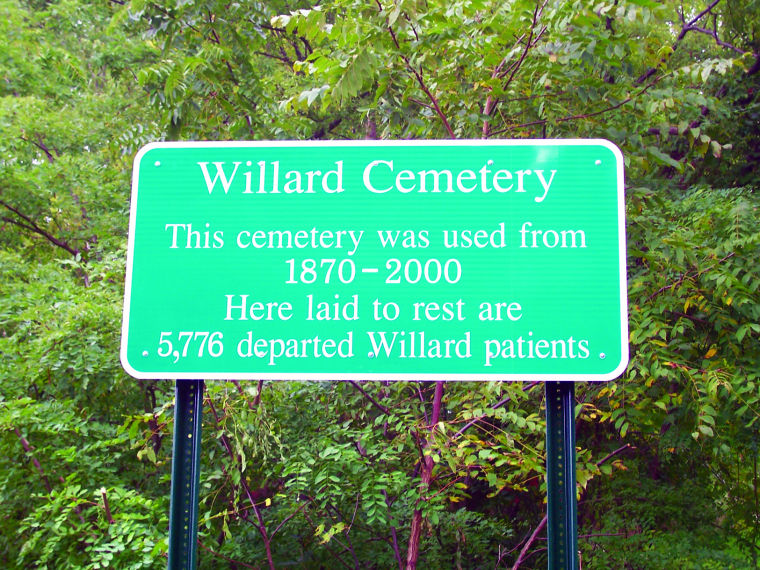
Willard Cemetery Sign 5.18.2013

Willard Cemetery Sign 5.18.2013

Willard Cemetery Memorial Project 5.18.2013

Willard Cemetery Memorial Project 5.18.2013

Willard Cemetery 5.18.2013

Willard Cemetery 5.18.2013

Old Metal Marker 5.18.2013

Old Metal Marker 5.18.2013

Willard Cemetery 5.18.2013

Willard Cemetery 5.18.2013

This photo is of the Civil War Veterans Section of the cemetery. They were provided with clearly inscribed headstones from the government. Colleen discovered that a few of them were not “inmates” of Willard but were residents of the town. I wonder how many other United States Veterans who served their country with honor but ended up at Willard are buried here among the 5,776 in anonymous graves?

Notes & Insights from Craig Williams – Willard Cemetery

Here are some wonderful notes, used with permission, from Craig Williams, Curator of History at the New York State Museum at Albany, concerning the burial ledgers of the Willard State Hospital Cemetery, and Ovid Union Cemetery. Mr. Williams is an expert on the history of the Willard Asylum and has always been more than willing to share his vast knowledge on the subject. He has provided me with maps, old photographs, answered my numerous questions, and filled in the gaps with insight that only comes from years of experience. I would like to take this opportunity to recognize and thank Mr. Williams for all the help he has given to me!

NYS Museum Albany album b 154-2 Old Cemetery

NYS Museum Albany album b 154-2 Old Cemetery

“As you know, those records are now among the sealed materials…. sad, since back when they were at Willard, the staff were only to willing to help locate “lost” relatives by using those records… Often overlooked is the section of the Union Cemetery dedicated to Willard. I have a memory of being told that there were over two hundred burials there. I’ve always meant to check with the Cemetery to learn if they have a log of burials. In the inside cover of Willard’s first burial ledger, there is the handwritten note stating – “January 17th, 1876 – Trustees of Union Cemetery at Ovid, N.Y. made deed of lot 161 to Willard Asylum for the Insane. Deed deposited with J. B. Thomas, Treasurer, Consideration, $25. // Ganett W. Freligh, Pred’d’t // John C. Meddick, Treas.” The Willard burials that I know of at Union are along the east center edge, by the main road. The few formally marked (you can see many more depressions) date from the 1980s plus or minus. Could that location be Lot 161? Is there another section at Union where there are older Willard burials? There must have been a period in the 1980s when people were being buried at both cemeteries. I wonder how that was decided?”

“One of the things I noted in the burial ledgers were the fair number of people later removed by family or for other reasons (move to a Catholic cemetery, for instance), maybe a couple dozen over the hundred plus years? The Stock memo says 5,757 burials and there were several burials after that date. The last “regular” burial was on November 18, 1991 (not counting the 2000 burial). As you know, at the very end, there were two burials of lab specimens (including one fetus). From the four manuscript ledgers, I get 5,249 burials (not counting the two above) in the main (“Protestant”) section. The Soldiers Cemetery account shows 106 burials. A few of those (half dozen) may have been counted among the 5,249, being reinterred when that section was set up in April 1885. The last burial there seems to have been done on December 10, 1926. The Jewish cemetery (old and new), first used in January 1932, appears to have 202 burials. The old portion is where the monument now stands. The new is in the far northeast section of the cemetery. Catholic (old and new), first used in January 1959, seems to have 327 (including the 2000 burial of M). Added together, I get 5,884. I did not deduct the burials that were later removed…”

“That first burial ledger has a number of interesting clues. It lists the first burial as being done on 5 January 1870, not long after the Asylum’s opening. This cemetery was (I think) immediately north of the Branch (Grandview)… maybe in what is now parking lot or closer (under?) the current building?… By December 1873 there was already some confusion over the number of burials (85 by that time). In March 1875 a 71-year-old woman was buried, with a place of birth being listed as “Africa.” I note that since in some Upstate cemeteries separate sections were made for African-Americans…never the case at Willard.

The first burial at the new cemetery (on “Risings Hill”) was on July 3, 1875. She is listed as burial 123. On October 16, 1875, the ledger notes that “This day, John Hanlon (Sexton), finished transferring bodies from the old “Cemetery” to the new, on “Risings Hill.” He reports he had removed 119 bodies, and that bodies corresponding to Nos. 7, 27, 64 and 70 had been disinterred. // Alexander Nellis, Jr., Assistant Physician.” That comment on “disinterred” doesn’t actually match the records. They were all placed in “Form 1” (Row 1?)…The July 3rd burial is the first one in Form 2 (Row 2?). Those rows were just north of Mocha’s shed. An implication of the removal to the new cemetery is that the old one had grave markers. Apparently, some things were overlooked. In the third cemetery ledger, in November 1898, there is the note of “Bones taken from new Branch” were put at the west end of Form 2. In 1897 and 1898 there was substantial regrading around the Branch. That work probably exposed the overlooked burial(s?).

The annual report for 1874 discusses the reasoning for the new cemetery. “Experience has demonstrated, that the present location of the cemetery is a bad one, though the most appropriate one on the asylum farm. It is inconvenient because of its distance (remember, the Asylum was still just Chapin Hall), from the nature of the soil, and it also interferes with the enlargement of the upper reservoir, which is indispensably necessary. We therefore desire to change the location. Twenty-five acres of land can be purchased a short distance north…”

“Obviously, the cemetery in the 19th-century only took up a small portion of the hill, the rest was probably used for farm purposes. The first engravings of that north edge of the Asylum land show what might be a bridge going across the ravine, the original entrance not being the current one. The Stock memo states “the current entrance was cut in and established because new more modern day vehicles could not cross the small culvert bridge. The story goes that the village mayor wanted the fire truck to be able to go in a parade down Main Street of Willard and enter the cemetery for ceremonies at the old Civil War cemetery site but could not because the bridge was too narrow. The new entrance was established. While doing this, some landscaping was required and the sharp embankment needed to be made more gradual. In that process, some heavy equipment was used and they proceeded to taper the hillside but had to stop when they began to strike some old grave sites.” The old entrance shows on the facility maps.

Just a couple other items from my notes from the cemetery ledgers. A note was made to the entry for a July 5, 1886, that a glass bottle with a person’s name was placed in the burial alongside the one whose name was so enclosed…. confusing, but implying that such identification practices happened early on. There are at least three references to infants being buried. One was from September 1896 and mentions a “Form A” location at the west end of Form (Row?) 1. Alongside a November 1880 burial entry is the note that the daughter was present at the burial of her mother. In the last ledger, especially from the 1940s on, there are frequent references to amputated limbs being buried in unrelated graves.”

Willard Tour – May 18, 2013

CLICK HERE TO VIEW THE VIDEO They’re Buried Where? by Seth Voorhees

If anyone is interested, a tour of the historic buildings at the former Willard State Hospital and the cemetery will be on Saturday, May, 18, 2013. For more information, please click on the link. Seneca Daily News

Willard Drug Treatment Campus – 7116 County Road 132 – Willard, NY 14588. The cemetery is down the road on the right heading toward Seneca Lake.

Captain Morris J. Gilbert – Steward

Captain Morris J. Gilbert was the Steward of The Willard Asylum for the Insane from 1873 until his death in 1901. According to Dr. Robert E. Doran, Jr., author of History Of The Willard Asylum For The Insane And The Willard State Hospital, “he was totally responsible for all purchasing as well as overseeing the farm and maintenance work.” “Report after report by different Superintendents and various Boards of Trustees or Managers speak very highly of his ability and integrity.” Willard and all New York State Asylums employed a steward. These institutions would not have been able to function without the steward running the day to day operations of the farm, garden, various workshops and overall maintenance of the buildings and property. The asylums were like villages that tried to be as self-sustaining as possible. Employees lived on the asylum property and were supplied with room and board in addition to very low wages. I have featured an excerpt from Dr. Doran’s wonderful, insightful, detailed work that sheds a great deal of light on the inner workings of how Willard operated. I have also included a few excerpts and photographs from various sources about Captain Gilbert and his extensive job duties as the steward.

Captain Morris J. Gilbert - Wayne E. Morrison, Sr. 1978

Captain Morris J. Gilbert – Wayne E. Morrison, Sr. 1978

“I wish to say that I am particularly pleased to report one small matter, but one worthy of some attention, and that is, that during the past year we were able to get the Lehigh Valley railroad to change the name of the station formerly known as ‘Willard’ by naming it ‘Gilbert,’ after Captain Gilbert, who has been for so many years connected with the hospital. The name of the station at the hospital proper is also changed from ‘Asylum’ to ‘Willard.’ This change obviates a very annoying complication that has previously come from the wrong ideas that people got who wanted to come to the hospital from a distance, because of the peculiar name of these stations. Generally outsiders expected that the station known as ‘Willard’ was right at the hospital, and many of them would go there, not knowing it was over a mile away from the hospital, while the name ‘Asylum’ clinging to the locality years after the name of the institution itself had been changed to hospital, was something that we had long wished to have changed. The railroad has finally made the substitution in the name as described, and now those coming to Willard arrive at a little station that the railroad people built upon the grounds, only a short distance from the hospital, to which a cement walk leads directly.” –William Austin Macy, Medical Superintendent, 1900. (1)

According to The New York Times, published: October 24, 1901: “MORRIS J. GILBERT, for the past thirty-five years Superintendent of the State Hospital for the Insane at Willard, Seneca Lake, N.Y., died on Tuesday at Willard, after a long illness. Mr. Gilbert was sixty-nine years old, and is survived by his widow, two sons, and one daughter. One of the sons is the Rev. William Morris Gilbert, rector of St. Paul’s Church, Yonkers.” (2) NOTE: Mr. Gilbert was the Steward not the Superintendent. He held that position for 28 years.

Residence Of Cap't Morris J. Gilbert, Asylum Steward - Wayne E. Morrison, Sr. 1978

Residence Of Cap’t Morris J. Gilbert, Asylum Steward – Wayne E. Morrison, Sr. 1978

Farms and Industries: For a great many years, the Institution tried to be as near self-supporting as possible. The first report of the Trustees dated February 18, 1868, states that the sum of $1,000 had been received from the State Controller. Of this, $916.66 had been expended in preparing the ground, procuring the seed and sewing sixty acres of wheat. They hoped for a good crop. By the time the Asylum opened, there were 475 acres under cultivation. A Steward had been appointed and a Matron. The former was an ancient title for one who managed a feudal estate. His duties at Willard were many and important. For about the first fifty years, he did all the purchasing, supervised the farm and garden operations, the upkeep of the buildings and grounds, the distribution of supplies, and the overseeing of the various industries. The Matron was in charge of housekeeping, the sewing room, and, in the early days, the care of the sick. As early as 1870, 3,429 pieces of clothing were made, and, up until 1912 when the position was abolished, she was in charge of the kitchens and dining rooms.

The farm and gardens were never able to completely supply the needs of the Institution but they made a very large contribution. The garden extended from east of the Maples to the Hermitage with berry bushes and strawberries where the golf course was later laid out. The land was not particularly good but was gradually improved. When Captain Morris Gilbert was appointed Steward in 1873, he asked for more land as there was not enough for hay and pastures. Four years later, 258 acres were acquired at $105 an acre. Beside the farm and gardens, there were other uses for the land. The bricks for the early buildings were made on the grounds at a yard located at the site of the reservoir. Lime was made and stone quarried. It so happened that there was an outcropping of Tully limestone in Simpson’s Creek ravine. The stone was used for lime, foundations and later as crushed stone for the roads. At first, only the main road was of this material. Secondary roads were of shale which outcropped above and below the limestone. It was many years before all roads were made hard. At one time, a roadroller was borrowed from the Binghamton State Hospital, but this didn’t work out as both Institutions needed it at the same time. A steam roadroller was acquired which served several uses. It powered the rock crusher which stood in the ravine south of the reservoir. There was a little brick house near it where dynamite was kept for blasting. The roadroller also powered the threshing machine and a portable sawmill. For years, fallen timber and diseased trees were sawed, the lumber being used for various repairs and construction. Enough black walnut stock was built up to swap it for pine and maple boards. The slabs from the mill were made into bushel crates for potatoes and other vegetables. The sawdust was used in the icehouses and sometimes in the pigpens.

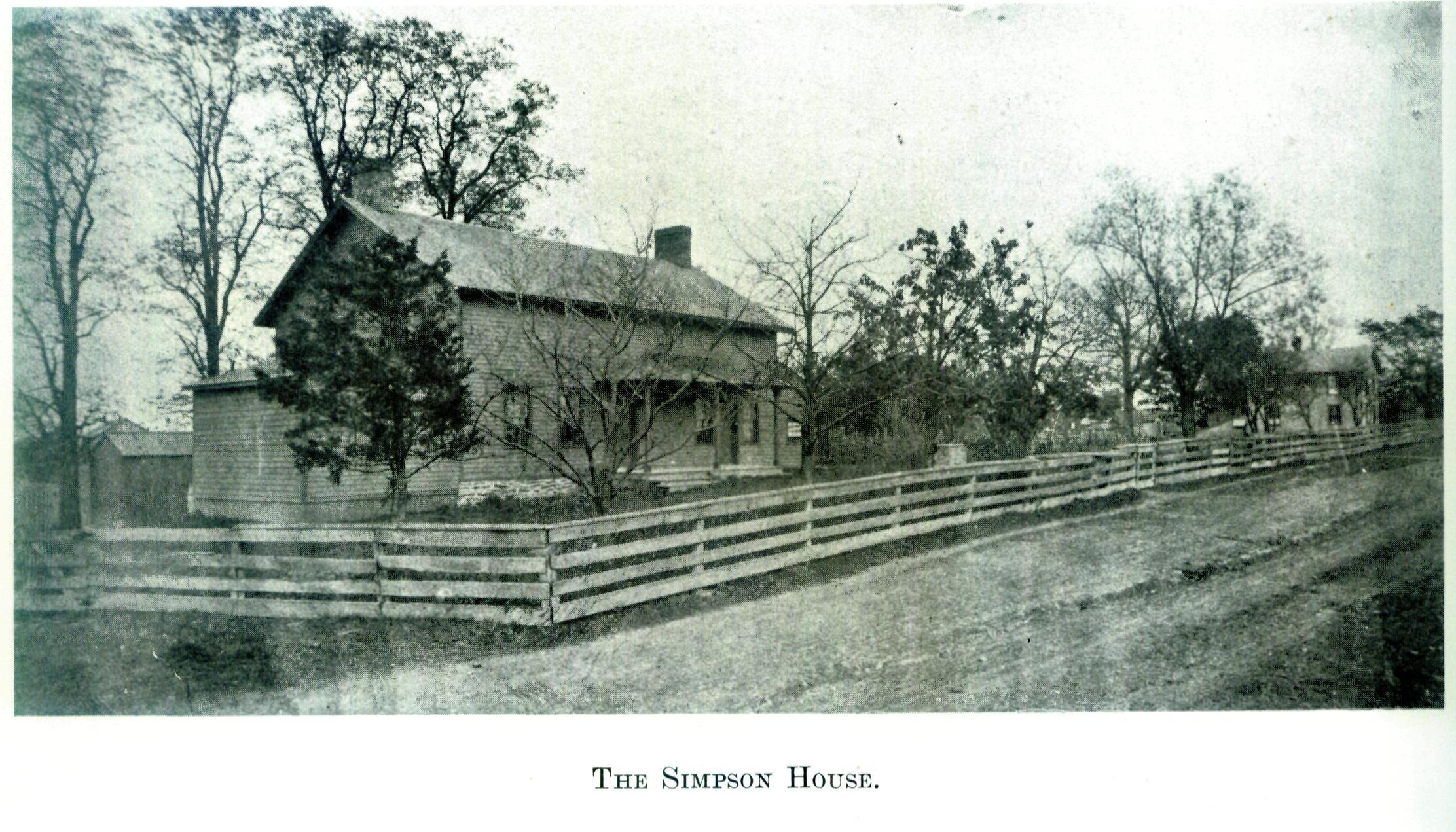
The Simpson House - Wayne E. Morrison, Sr. 1978

The Simpson House – Wayne E. Morrison, Sr. 1978

Ice was supplied from the upper reservoir and pond. This was drawn in wagons and sleds to the icehouses. There was one just west of the present Elliot Hall which was also used for cold storage. Another later became the tinsmith shop, below and south of Hadley Hall. There were icehouses in the vicinity of the barns, and we hear of new ones being built of hollow concrete blocks. In 1917, there were four of these icehouses. Ice was harvested long after the plant for artificial ice was in use. There were a couple of poor years, but in the winter of 1919 the ice was 30-34 inches thick and 1,200 tons was cut. Needless to say, this ice could only be used for cooling in refrigerators or cold rooms and not for consumption.

The Branch, Barns, &c., From The Simpson House - Wayne E. Morrison, Sr. 1978

The Branch, Barns, &c., From The Simpson House – Wayne E. Morrison, Sr. 1978

The piggery was an important resource. As early as 1870, 4,400 pounds of pork was produced. Ten years later, 50,750 pounds at 6¢ a pound was worth $3,045. This was not without its drawback. The piggery and slaughterhouse was located near where the County Road crosses the creek and not far from Sunnycroft. It was also near the Simpson’s house to the south. Between the pigs, the slaughterhouse, the tallow rendering plant and the fact that sewage was being dumped into the creek, the Simpson’s were unhappy. In 1884, the farm of 135 acres along the south side of the creek with three dwelling houses was bought for $10,298.40. Appropriately enough, this sum had been accumulated by the sale of hides, bones, tallow and rags. In 1893, request was made to move the piggery and slaughterhouse; the lake farm was suggested as a site, but this was impractical because no railroad track was available to take the garbage there. Four years later, the pigs were moved east of the railroad cut, far enough away not to be a nuisance. While swine seemed to be freer of disease than cattle, there was a serious outbreak of swine flu or hog cholera in 1915 when 200 pigs were lost. Pork continued to be an important product. In 1960, 91,221 pounds was reported as worth $27,366.30. The next year the farm came to an end.

The dairy herd was the backbone of the farm. Starting with 1,800 quarts of milk 4 in 1870, we find over ten times that much ten years later. In 1873, the entire here had to be slaughtered because of tuberculosis and in 1883 50% were killed. It was during this decade that it was proved that bovine tuberculosis could infect human beings. The cows that formed the herd had been bought locally from various farms. It was now decided to breed their own stock from hopefully healthy animals. This seemed to work well for twenty years or more, but in 1908 sixty cows reacted to the tuberculin test. The cows were Holstein but not thoroughbreds. In 1915, the thoroughbred herd was started. All was not well as five years later out of 134 cows, 124 were positive, and out of 91 heifers, 30 were positive. The managers felt that part of this was due to improper supervision which was probably true during the war years. They asked an appropriation of $20,000 to build a new herd. By 1925, milking machines were being introduced. The pasteurizing plant had been installed previously. In 1937, the New York State Department of Agriculture and Markets gave the following figures for milk produced: The average production in the years from 1923 to 1935 was 8,334 pounds per cow. In the year 1936, it jumped up to 10,733. By 1940, the value of milk produced was $44,579. It was a good thing that it was high and that the farm as a whole was extending itself to the utmost. The next five years were war years with rationing and food shortages. Thanks very largely to the farm, the patients were well cared for. In 1945, the milk production was 727,571 quarts and the next year the average per cow was 12,000 pounds per year. Dr. Keil was proud of the herd and states that the State average was 6,000 pounds per year. Four years later he reports that there were 275 cows, that 15 of them gave better than 15,000 pounds a year and that one gave 18,950 pounds a year.

There was much sadness when the Department of Mental Hygiene, on order it is understood from the Governor, announced late in 1960 the closing down of the farm. The Board of Visitors unanimously opposed the idea and so did almost everyone else. For over 90 years the herd fully supplied the Institutional needs for milk. This was not true of butter and cheese. The audit of 1886 shows that butter was bought from dozens of people in small amounts. To a lesser extent, this was true of cheese.

Much of the work at the farm was to support the dairy herd. There was good pasture in season. The cows grazed in fields each side of the road running to Grandview above the County Road. Much corn was raised for ensilage, and we read from time to time of the need for more silos. Mangel-wurtzel was raised by the thousands of bushels. Alfalfa was introduced early in the century and was considered a wonder crop. The wheat raised was sent by rail to a mill and the flour returned was used in the bakery and bran fed to the stock.

Considerable beef was produced. For instance, in 1890 there was 4,714 pounds of dressed beef, and in 1934 there was 28,510 pounds. Hay and oats were raised for the horses of which at the turn of the century there were 27 plus 9 colts and one mule. There were also 24 sheep, 11 lambs; 60 turkeys, 7 geese, 30 ducks, and 260 foul completed the bird census. Sometimes there were peafowl, and for a long time there was a span of oxen. Up until 1926, there were driving horses which were called “administration horses.” They numbered a dozen or more, but in that year the automobiles took over. Farm horses hung on much longer. A Holt caterpillar tractor was bought in 1915. Mr. Warren, the Steward, was very pleased with it, stating that it could do the work of from eight to ten teams. Two years later, he again tells of it and states that, even with gasoline at the very high price of 25¢ a gallon, it was an economy.

On going over the annual reports of the Steward, one learns of the good weather and the bad, of the droughts, floods, hailstorms and tempests that occur. The latter two were particularly hard on the orchards of which there were about 120 acres. From the very start, apples had been a good crop and supplied the cider and all the vinegar for the hospital. Grapes became a big crop, large enough to give all the patients grapes everyday during the season. Some years, the grapes were exchanged on the market for oranges so that the patients could have them at Christmas time. Concords, Niagaras, Delawares and Catawbas were grown, mostly east of Edgemere or around Vinelands. The orchards also were in this general vicinity, but there were fruit trees on the lake farm back of Buttonwood.

The poultry was concentrated near Vinelands to the south, but there were some at Hillside. In 1937, there were 2,324 pounds of dressed chicken and 1,503 dozen eggs. In 194?, the egg output was reported at an all time high of 8,136 dozen.

The garden produced all the vegetables with the exception of onions and potatoes, the soil not being suitable for the former and not too good for the latter. Even so, there were years when there was a respectable potato crop. For instance, 3,850 bushels were produced in 1933.

In the early years of the century, there was a canning plant in the old warehouse located on the steamboat dock. The reports often mentioning canning and evaporating as important activities. In the 1917 report, it is broken down into categories: Canned apples 1,043 gallons, plums 914 gallons, pears 2,329 gallons, peaches 1,962 gallons and tomatoes 1,584 gallons. The evaporating apparatus was in the old pump house near the State dock. That year, 225 pounds of raspberries were dried and the dried weight of sweet corn was 1,935 pounds. This was put up in empty sugar and cracker barrels.

The garden grew everything from asparagus to vegetable oysters of which there were over six tons in 1931. The demands of the Institution at that time were for over 3,000 people.

The farm and garden always made a profit – sometimes more, sometimes less – depending on the weather and the amount of supervisory help available. As most of the work was done by the patients, good supervision was necessary.

Willard not only raised food, but also manufactured articles for the care and maintenance of the patients. There were a number of shops where a large part of the work was done by the patients, to their great benefit. A look at the figures from year to year is most instructive. The shoe shop at first spent most of its energy repairing shoes and making and repairing harness. This shop was also responsible for making and repairing mattresses. In 1895, the bulk of the articles made were mattresses, hair pill and harness, with boots, shoes and slippers repaired in quantity. By 1912, after shoemaking machinery had been acquired, 2,579 pairs of boots and shoes were made. In 1932, the shoe and mattress shop made 4,682 articles and repaired 3,286. Twenty years later, the shop wasn’t making as many shoes but it was still very busy. Seventy years ago, there were canaries in cages on many of the wards. For some reason, the shoe shop had many cages of them. Perhaps, they took the place of piped-in music. The shop was located on the second floor of the storehouse on the east side. The mattress shop was adjoining.

Interior Of The Shoe-Shop - Wayne E. Morrison, Sr. 1978

Interior Of The Shoe-Shop – Wayne E. Morrison, Sr. 1978

The sewing room was probably the first industry. It turned out articles by the thousands, as did the tailor shop which was adjoining. In 1885, the sewing room turned out over 20,000 articles and the tailor shop 5,841. Besides this, there were almost 9,000 sheets, towels and pillow covers made. In 1893, over 4,000 wrappers or aprons were made and 4,000 dresses, and almost as many skirts. For some reason, there were over 3,000 collars made, which seems like a strange item. The tailor shop in the same year made about 1,500 coats and over 2,000 pants, and 1,500 vests which must have been in the style at the time. In 1926, they were still going strong, making nightgowns by the thousands, 2,500 chemises; in other words, they were making practically all the clothes for the patients. It was a time when male employees, nurses and attendants, wore blue uniforms made from Metropolitan Police blue cloth. These were made in the tailor shop and sold at cost. In 1953, the sewing room made over 50,000 articles and repaired 10,000 the tailor shop made about 11,500.

Another busy industry was the broom shop which made brooms by the thousands as well as brushes, baskets, crates, doormats and floor polishers. Chairs were caned and furniture repaired. Floor polishers were an important item as the floors all over the hospital were kept polished to the “nth” degree. An attendant would spread wax on the floor by scraping a block of paraffin with a metal comb. The patients would shove the polishers back and forth by the hour. At the Hermitage, the day room was so large that a polisher about four feet square was pulled back and forth by ropes. It was weighted down by a patient sitting in a chair on top of it.

The Basket, Mat & Brush Shop - Wayne E. Morrison, Sr. 1978

The Basket, Mat & Brush Shop – Wayne E. Morrison, Sr. 1978

The tin shop was another busy place; probably not as many patients were employed here as in other shops. The number of different articles made here is astonishing. Some years, over 75 different categories are listed – everything from bird cages to a two foot ventilator with hood for the Nautilus boathouse, boxes, basins, boilers, cups, chamber pots, cans, dippers, measures, pails, pots, pans, strainers, trays, etc. They also made yards and yards of eaves troughs and conductor pipe.

Taking a typical year, we might look at the value of articles made by patients. In 1955, the value was $50,427.28; in the same year the value of farm and garden produce used for food was $173,303.70.

Until very recently, the bakeries at Willard made all the bread for the Institution. During the late 1940’s, a new type of bread was developed at Willard in conjunction with nutritional experts from Cornell. This came to be called Willard Bread. It was a rich protein type of bread to which soy bean flour was added and also vitamins.

Of the Stewards who served Willard, three stand out for their length of service and ability. Captain Morris Gilbert was in office from 1873 until his death in 1901. During that time he was totally responsible for all purchasing as well as overseeing the farm and maintenance work. Report after report by different Superintendents and various Boards of Trustees or Managers speak very highly of his ability and integrity. When he died, Dr. Macy had to take a man from Civil Service who had had no experience with a farm. After a short term, he resigned, frankly stating that he didn’t have what it took. Mr. Frank Warne was appointed in 1902, serving with great ability until his retirement in 1934. His annual reports are of considerable interest in recording the various trials and triumphs of the farm. Mr. Samuel Peltz was appointed in January, 1936, and served until his untimely end September, 1954; he was highly regarded and well liked. It was fitting that the new storehouse building was named in his memory. These three men served a total of 75 years.” (3)

1900 Report of Steward (4) Transcribed by L.S. Stuhler

SOURCES:

(1) Thirty Second Annual Report of the Board of Managers of the Willard State Hospital to the State Commission in Lunacy for the Year 1900, Chapter 20 Report of the Board of Managers of the Willard State Hospital.

(2) The New York Times, Published: October 24, 1901. Copyright@TheNewYorkTimes

(3) History Of The Willard Asylum For The Insane And The Willard State Hospital by Robert E. Doran, M.D., 1978, Pages 36 – 42. About Dr. Robert E. Doran, Jr. in his own words: “INTRODUCTION: The author of this little history of Willard lived there as a little boy when my father was First Assistant physician. Later, I made frequent visits to the place and became consulting surgeon there in 1934. My contacts with the Institution cover about two-thirds of its existence. I wish to express my thanks to Dr. Anthony Mustille who has been supportive of this history and made available the services of Mrs. Maurita Lind who has been most helpful in furnishing me with reports, articles, laws and other material. Mr. J.F. McCauley, Deputy Director for Administration, furnished me with a resume of the regulations pertaining to patient employment. Miss Helen B. Vincent, Principal of the School of Nursing, has given me information about it and its impending disestablishment.”

(4) Reprinted from Thirty Second Annual Report of the Board of Managers of the Willard State Hospital to the State Commission in Lunacy for the Year 1900, Chapter 20 Report of the Board of Managers of the Willard State Hospital, Pages 297-306, 308, 309, 310, 311, 312.

(5) Photographs – Morrison, Wayne E., Pictorial Album of The Willard Asylum 1869 – 1886, 1978.

The Branch – Wayne E. Morrison, Sr. – Pictorial Album of The Willard Asylum 1869 – 1886

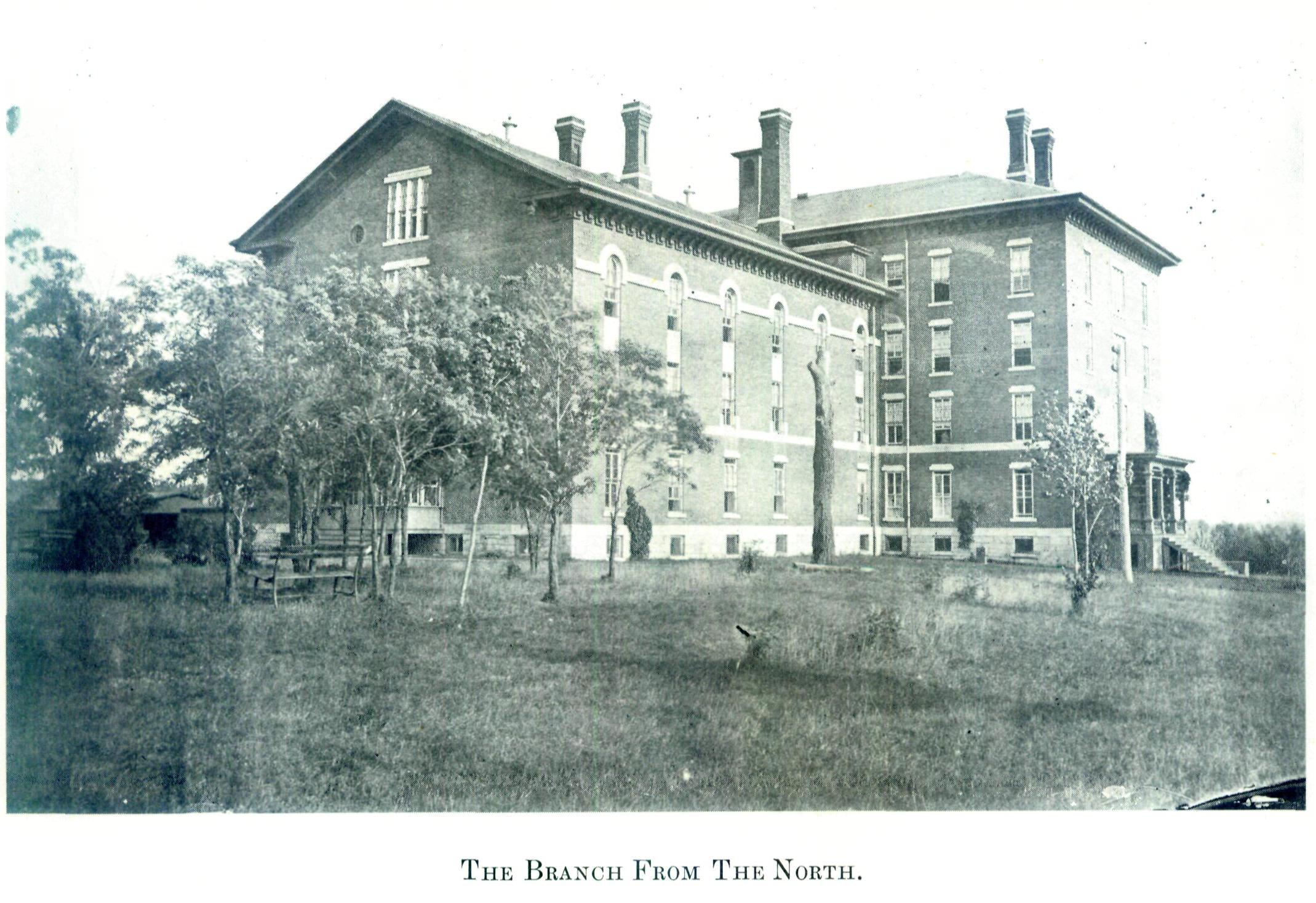
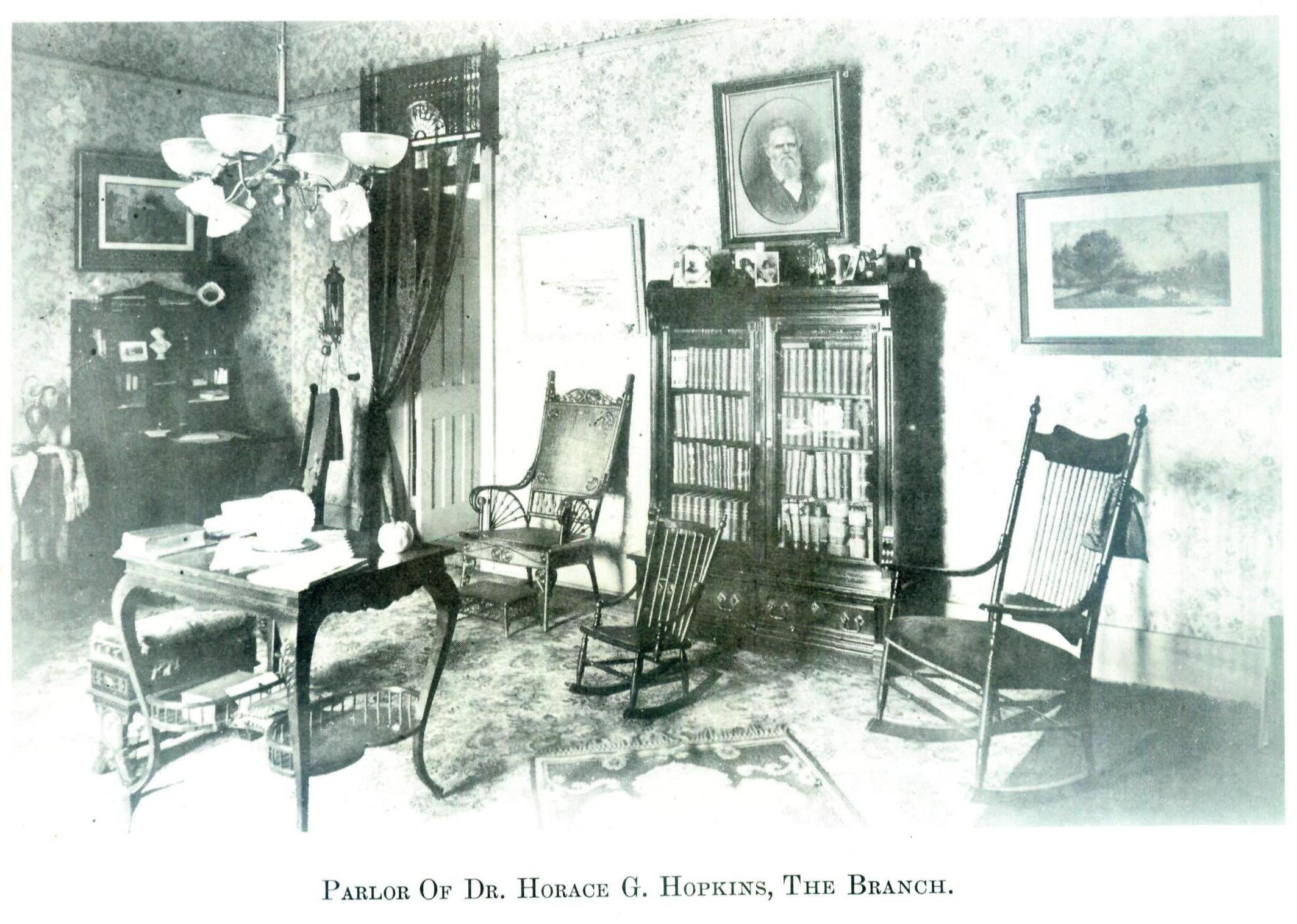
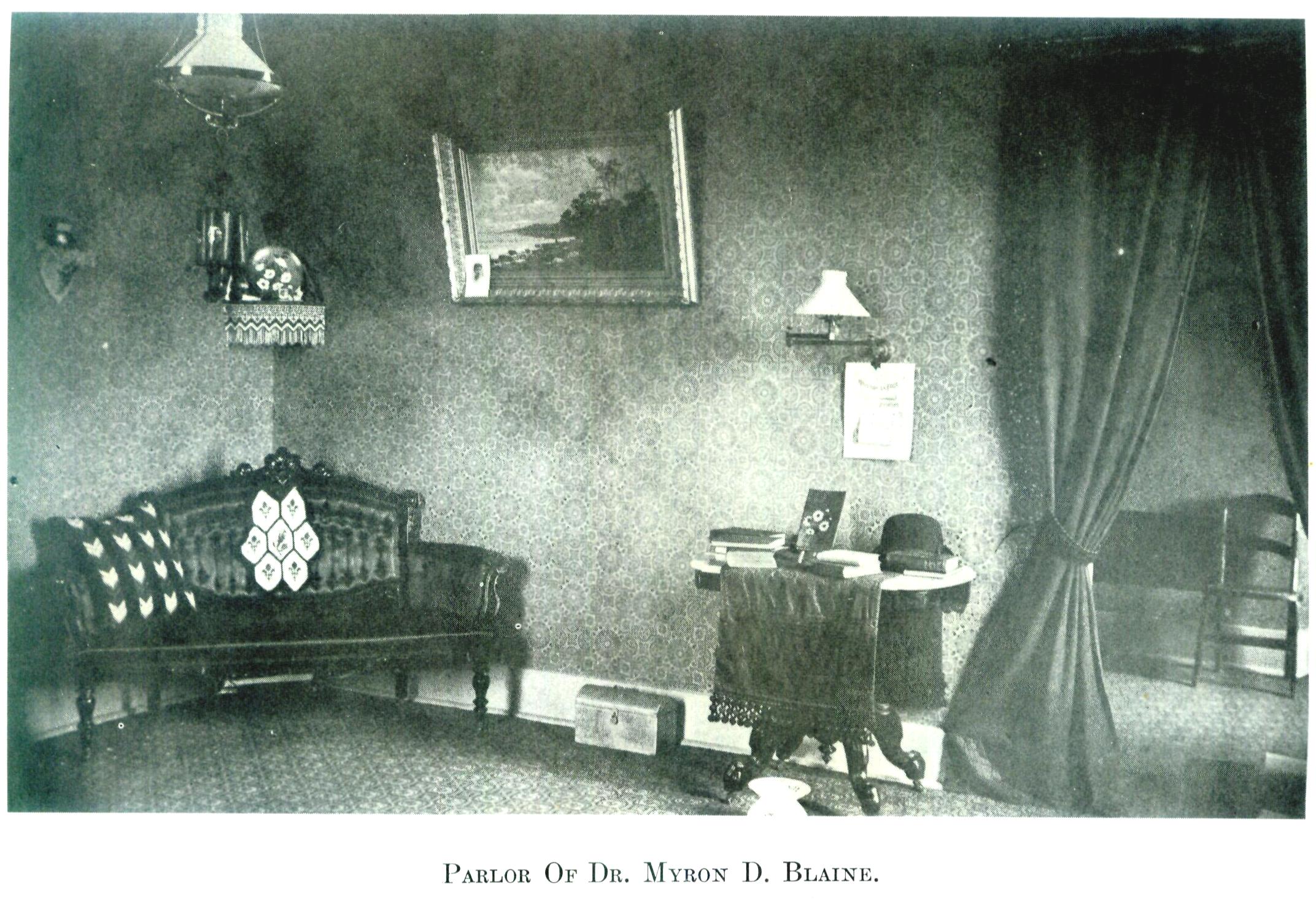
More beautiful photographs from the book Pictorial Album Of The Willard Asylum 1869 to 1886 by Wayne E. Morrison, Sr. These photographs feature “The Branch” which was later re-named “Grand View” in 1904.

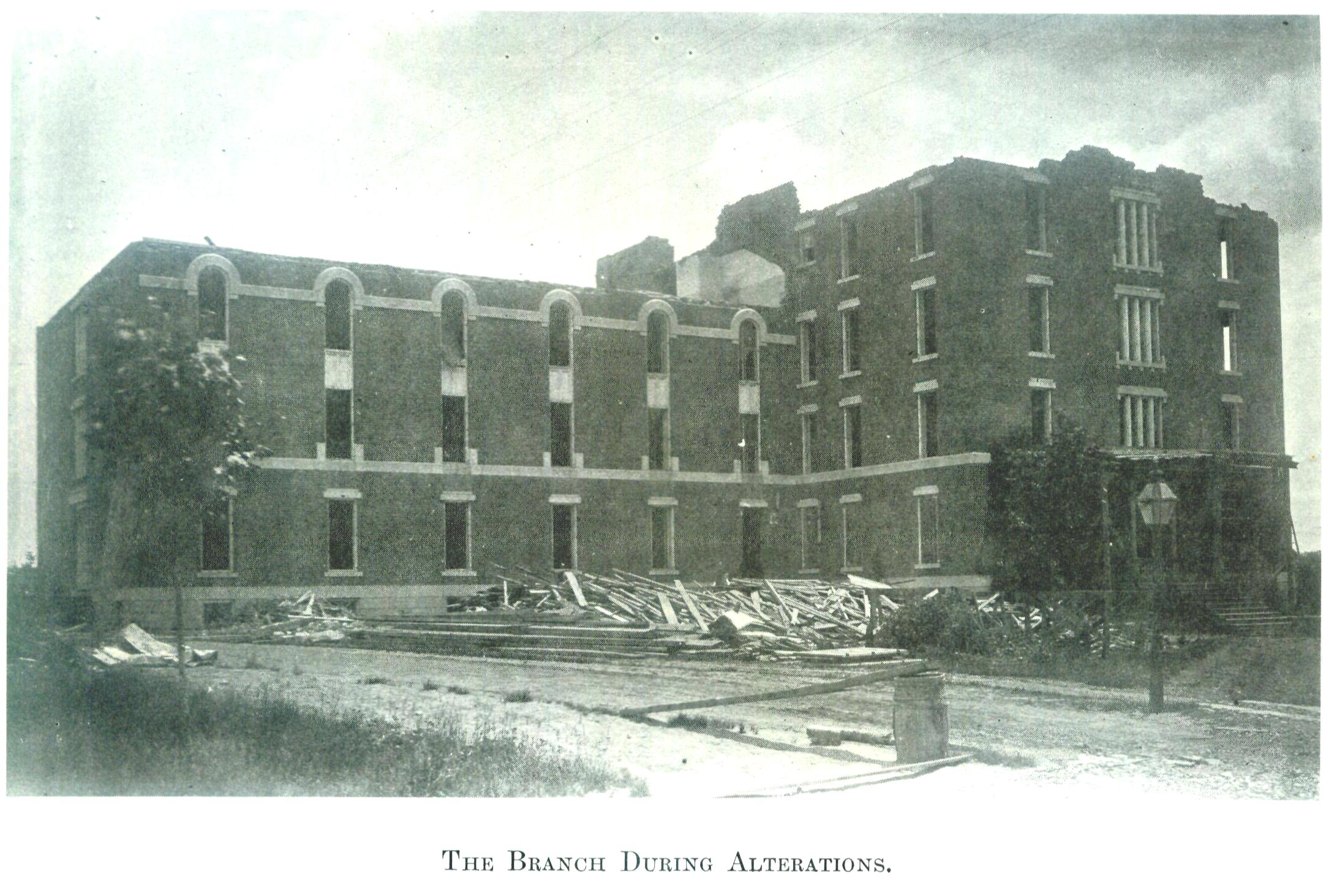
The Branch, constructed in 1859, was the original site of the first state agricultural college in the United States founded by Ezra Cornell. It was in operation from 1860 to 1861. The Civil War began, the young men went off to war, and the building fell into disrepair. In 1865, New York State purchased the building and land to be the site of The Willard Asylum for the CHRONIC Insane. The first of its kind in the country. Mr. Cornell went on to found Cornell University. The Branch housed about 225 “mild, quiet” female inmates. In 1886, the top two floors were removed and it was made into the “female” infirmary, housing those who could not take care of themselves, the sick and old, and those who could not use the “toilet” facilities. The Branch was not the main hospital building.

24-The Branch From The West-Wayne E. Morrison, Sr. 1978

24-The Branch From The West-Wayne E. Morrison, Sr. 1978

25-The Branch During Alterations-Wayne E. Morrison, Sr. 1978

25-The Branch During Alterations-Wayne E. Morrison, Sr. 1978

26-Excavating For The Addition To The Branch-Wayne E. Morrison, Sr. 1978

26-Excavating For The Addition To The Branch-Wayne E. Morrison, Sr. 1978

31-Physician, Apothecary & Attendants, The Branch-Wayne E. Morrison, Sr. 1978

31-Physician, Apothecary & Attendants, The Branch-Wayne E. Morrison, Sr. 1978

32-The Branch From The East-Wayne E. Morrison, Sr. 1978

32-The Branch From The East-Wayne E. Morrison, Sr. 1978

33-The Branch From The North-Wayne E. Morrison, Sr. 1978

33-The Branch From The North-Wayne E. Morrison, Sr. 1978

34-A Hall In The Branch-Wayne E. Morrison, Sr. 1978

34-A Hall In The Branch-Wayne E. Morrison, Sr. 1978

35-A View From The Branch-Wayne E. Morrison, Sr. 1978

35-A View From The Branch-Wayne E. Morrison, Sr. 1978

36-Horace G. Hopkins, M.D. & Anne Maycock Hopkins-Wayne E. Morrison, Sr. 1978

36-Horace G. Hopkins, M.D. & Anne Maycock Hopkins-Wayne E. Morrison, Sr. 1978

37-Parlor Of Dr. Horace G. Hopkins, The Branch-Wayne E. Morrison, Sr. 1978

37-Parlor Of Dr. Horace G. Hopkins, The Branch-Wayne E. Morrison, Sr. 1978

38-A Hall In The Branch-Wayne E. Morrison, Sr. 1978

38-A Hall In The Branch-Wayne E. Morrison, Sr. 1978

39-Physician's Bed-Room, The Branch-Wayne E. Morrison, Sr. 1978

39-Physician’s Bed-Room, The Branch-Wayne E. Morrison, Sr. 1978

40-The Branch, &c., From The South-Wayne E. Morrison, Sr. 1978

40-The Branch, &c., From The South-Wayne E. Morrison, Sr. 1978

42-The Branch During Alterations-Wayne E. Morrison, Sr. 1978

42-The Branch During Alterations-Wayne E. Morrison, Sr. 1978

43-Third Floor Hall Of The Branch During Alterations-Wayne E. Morrison, Sr. 197

43-Third Floor Hall Of The Branch During Alterations-Wayne E. Morrison, Sr. 1978

44-The Branch During Alterations 2-Wayne E. Morrison, Sr. 1978

44-The Branch During Alterations 2-Wayne E. Morrison, Sr. 1978

45-The Branch Following Alterations-Wayne E. Morrison, Sr. 1978

45-The Branch Following Alterations-Wayne E. Morrison, Sr. 1978

46-Parlor Of Dr. Myron D. Blaine-Wayne E. Morrison, Sr. 1978

46-Parlor Of Dr. Myron D. Blaine-Wayne E. Morrison, Sr. 1978

47-Rooms Of Dr. Horace G. Hopkins, The Branch-Wayne E. Morrison, Sr. 1978

47-Rooms Of Dr. Horace G. Hopkins, The Branch-Wayne E. Morrison, Sr. 1978

S2514-2013 – NY Senate Open Legislation – Relates to patients interred at state mental health hospital cemeteries – New York State Senate

S2514-2013 – NY Senate Open Legislation – Relates to patients interred at state mental health hospital cemeteries – New York State Senate.

NEW HIPAA UPDATE March 2013!

Well, the bill has a new number but it’s not dead! Yay! Special thanks to Senator Joseph Robach and Tim Ragazzo!

On March 1, 2013, Tim Ragazzo, Director of Operations & Legislation from Senator Joe Robach‘s office, called me to let me know that the bill was re-introduced (with a new number), to the NYS Senate and has been referred to the finance committee. This is great news because it means the bill is not dead! Now it has to pass in the Assembly. Hopefully, the bill will become law before it expires at the end of 2014.
-L.S. Stuhler at lsstuhler@gmail.com

Willard Cemetery Disk by Roger Luther at nysAsylum.com

Willard Cemetery Disk by Roger Luther at nysAsylum.com

NAMES INSTEAD OF NUMBERS!

Willard Cemetery 2 by Roger Luther at nysAsylum.com

Willard Cemetery 2 by Roger Luther at nysAsylum.com

For more information about these long-closed New York State Hospitals, check out the “Interesting Articles & Documents” page.

LIST OF STATE HOSPITALS

By 1901, there were thirteen state hospitals for the insane in the State of New York. All these hospitals buried their dead in anonymous, unmarked graves. Some had their own cemetery like Willard State Hospital; others used city and county cemeteries like Rochester State Hospital. Most of these state hospital cemeteries are unmarked, unkempt, and forgotten. None of the thousands of former psychiatric patients’ names have been released to the public. Considering that in 1870, the first patient was buried in the Willard Cemetery, which in the year 2012 covers a span of five or six generations, these people have waited long enough to be remembered. When you release the names, you remove the stigma. The following is a list of most of these long-closed state hospitals; there are more.

1. Utica State Hospital – Counties of Fulton, Hamilton, Herkimer, Montgomery, Oneida, Saratoga, Schenectady and Warren.

2. Hudson River State Hospital – Counties of Albany, Columbia, Dutchess, Greene, Putnam, Richmond, Rensselaer, Washington and Westchester.

3. Middletown State Hospital – Counties of Orange, Rockland, Sullivan and Ulster.

4. Buffalo State Hospital – Counties of Erie and Niagara.

5. Willard State Hospital – Counties of Allegany, Cayuga, Genesee, Ontario, Orleans, Schuyler, Seneca, Steuben, Tompkins, Wayne and Yates.

6. Binghamton State Hospital – Counties of Broome, Chemung, Chenango, Cortland, Delaware, Madison, Otsego, Schoharie and Tioga.

7. St. Lawrence State Hospital – Counties of Clinton, Essex, Franklin, Jefferson, Lewis, Onondaga,Oswego and St. Lawrence.

8. Rochester State Hospital – Counties of Monroe and Livingston.

9, 10. Long Island State Hospital – (Kings Park and Flatbush, Brooklyn) – Counties of Kings, Queens, Nassau and Suffolk.

11, 12. Manhattan State Hospital – (Manhattan and Central Islip) – Counties of New York and Richmond.

13. Gowanda State Homoeopathic Hospital (Collin’s Farm) – Counties of Cattaraugus, Chautauqua and Wyoming.

Additional State Hospitals:

14. Pilgrim State Hospital – Brentwood, Suffolk County, New York

15. Mohansic State Hospital – Yorktown, Westchester County, New York

State Hospitals for the Criminally Insane:

16, 17. Mattaewan and Dannemora State Hospitals