Unknown's avatar

About lsstuhler

Linda Stuhler is a Genealogy Geek from Rochester, New York, who loves to find out the facts. She has been researching her family tree for over twenty years and has accumulated an abundance of information on various subjects that she enjoys sharing on her blog at: https://inmatesofwillard.com/. She was responsible for the creation of the New York State Senate Bill S840, initiated in August 2011, which allows for the release of the names, dates of birth and death, of former patients who were buried in anonymous graves in New York State Custodial Institutions. The bill was changed from the original draft to S840A and does not work the way it was intended. It became a law on August 18, 2016, but it did not include provisions for a searchable database available to the public as New York State attorneys and the Office of Mental Health believed that if they did so, they would be sued. She is the author of "THE INMATES OF WILLARD 1870 TO 1900, A GENEALOGY RESOURCE."

THANK YOU!!

This is from my friend, Ryan Thibodeau, who with a few others, are trying to change the New York State law on Mental Health concerning people who were institutionalized in the 19th and 20th centuries. I know, it’s ridiculous that we even have to do this but that’s New York State and the Office of Mental Health. This HIPAA Law should not even apply to people dead for fifty years and that is according to Federal Law that was passed in 2013. Keep your fingers crossed and pray. I don’t know who else would ever pick up this task after this giant effort. Thank you to all of you who sent your story in! I’m closing the application.

Sincerely, Lin Stuhler

“Good evening, all,

My name is Ryan Thibodeau, and I’m part of the group that is trying to change the state’s mental hygiene laws to make old records of institutionalized people more accessible to families like yours. Many thanks for completing the Google form and for your willingness to share your ancestor’s story. We really appreciate it!

I forwarded the information you entered into the Google form to the journalist several weeks ago and she has indicated that she is pursuing an article on this important topic. I don’t know anything about the timing of the article’s publication, its content, who she’ll be contacting, and when she’ll reach out. That’s out of my hands and up to her discretion.

The group is looking forward to continuing pursuit of our bill in the New York State legislature when the new session opens on January 7. As we ramp up our effort, it’s likely that I’ll write again and ask especially the New York State residents among you to write letters in support of our bill and contact your State legislators to urge their support. Stay tuned!

Once again, thank you so very much for your assistance! I’ll be in touch again soon.

All the best, Ryan”
Ryan Thibodeau, Ph.D.
Professor of Psychology
Licensed (Clinical) Psychologist, New York State
Board Member, NAMI Rochester

THANK YOU!

This is from my friend, Ryan Thibodeau, who with a few others, are trying to change the New York State law on Mental Health concerning people who were institutionalized in the 19th and 20th centuries. I know, it’s ridiculous that we even have to do this but that’s New York State and the Office of Mental Health. This HIPAA Law should not even apply to people dead for fifty years and that is according to Federal Law that was passed in 2013. Keep your fingers crossed and pray. I don’t know who else would ever pick up this task after this giant effort. Thank you to all of you who sent your story in! I’m closing the application.

Sincerely, Lin Stuhler

“Good evening, all,

“My name is Ryan Thibodeau, and I’m part of the group that is trying to change the state’s mental hygiene laws to make old records of institutionalized people more accessible to families like yours. Many thanks for completing the Google form and for your willingness to share your ancestor’s story. We really appreciate it!

I forwarded the information you entered into the Google form to the journalist several weeks ago and she has indicated that she is pursuing an article on this important topic. I don’t know anything about the timing of the article’s publication, its content, who she’ll be contacting, and when she’ll reach out. That’s out of my hands and up to her discretion.

The group is looking forward to continuing pursuit of our bill in the New York State legislature when the new session opens on January 7. As we ramp up our effort, it’s likely that I’ll write again and ask especially the New York State residents among you to write letters in support of our bill and contact your State legislators to urge their support. Stay tuned!

Once again, thank you so very much for your assistance! I’ll be in touch again soon.

All the best, Ryan”
Ryan Thibodeau, Ph.D.
Professor of Psychology
Licensed (Clinical) Psychologist, New York State
Board Member, NAMI Rochester

THANK YOU FOR YOUR PARTICIPATION! THIS IS NOW CLOSED. 12.7.2025
*****

Increasing Access to Records of Institutionalized People in New York State
WE NEED YOUR HELP!

Beginning in the 19th century, New York State has operated a large number of institutions designed to serve individuals with psychiatric disorders (for example, “insane asylums,” “state hospitals,” “psychiatric centers”), developmental disabilities (for example, “state schools,” “developmental centers”) and other disabilities (for example, an “epileptic colony,” “an inebriate asylum”). 

Are you a descendant of a person who was institutionalized in one of these places in New York State?

Is your knowledge of your ancestor or the circumstances surrounding their institutionalization limited? Would you like to learn more about them?

Have you tried but failed to get New York State – the Office of Mental Health (OMH), the Office for People with Developmental Disabilities (OPWDD), or facilities they operated – to release records of your ancestor’s institutionalization?

A group in New York State is trying to change the state’s mental hygiene laws to make old records of institutionalized people more accessible to families. As part of this effort, the group has connected with a journalist who may be interested in writing an article about this topic. If you would be willing to share your story with the journalist to be featured in a possible article, please complete the brief form below. Your information will then be forwarded to the journalist. Your help is greatly appreciated!

Classic Rock – The End of an Era

To me, Classic Rock is the music from the British Invasion in February 1964 with the introduction of The Beatles on The Ed Sullivan Show, forward until 1979. Everyone knows that without The Beatles, none of the bands below would exist. I’m not including The Rolling Stones, The Who, or Led Zeppelin, in the list because everyone knows their songs. I wanted to highlight other great bands that you’ve never heard of or maybe you have forgotten them. In February 1964 I was 7, so I grew up listening to all these great bands on the radio. Drugs and alcohol played a big part in this music and it destroyed the lives of many outstanding musicians of this era. Terry Kath, of the band Chicago, comes to mind. He was a fabulous guitarist, vocalist, and composer whose life ended with an accidental, self-inflicted gunshot to the head in 1978. He was one week short of his thirty-second birthday. (Chicago’s Terry Kath: A wild life and a violent death | Louder)

Another influential vocalist, guitarist, and composer whose life was also tragically cut short by booze and drugs was Steve Marriott of Small Faces and Humble Pie. I thought that “Itchykoo Park” was a beautiful park somewhere that was “all to beautiful.” It was 1967, I was eleven. I didn’t know what the song was really about. It was the music they played on AM radio, and I liked it. Mr. Marriott had a great rock voice, and he inspired many who came after him. Some musicians at the time stated that they wanted to be him or be like him. In 1991, he died a horrific death in his own house at age forty-four. Authorities believe that he had been drinking heavily, lit a cigarette, fell asleep, and his house went up in flames. A firefighter said that they found Mr. Marriott on the floor next to the bed. He died without a will. I’m bringing him up because I read an article that said his third wife was going to release some of his unrecorded songs with the help of AI (Steve Marriott’s Children Fight to Stop AI-Generated Songs). His four children don’t want their stepmother to do this but she alone inherited his estate, so his children really don’t have any rights to their father’s estate. As far as AI is concerned, I’m sure that no artist would want their voice, music, or likeness to be used without their personal permission. I’m sure that Mr. Marriott could not have foreseen this. Welcome to the twenty-first century!

I included “The Beatles – Now And Then” because it used AI in a loving way to memorialize John Lennon and George Harrison. It memorializes all of them really. To me, especially the last frames of the music video where the fab four bow and the lights go out, John, Paul, George and Ringo, are saying thank you and good-bye to all of us who loved them. This IS the end of an era. It makes me tear up because I miss those young, beautiful faces so much! And I miss the music that defined my generation. Besides sex, booze, and drugs, we also had “Make Love, Not War.” There is no denying that the Baby Boomer generation is coming to an end but no one can deny that our music was legendary and hopefully will live on for future generations to enjoy!

The Beatles – Now And Then (Official Music Video)
The Beatles – Now And Then (Official Music Video) – YouTube

The Small Faces – Itchykoo Park 1967 (Steve Marriott)
The Small Faces – Itchykoo Park (1967) – YouTube

The Small Faces – Tin Soldier 1967 (Steve Marriott)
The Small Faces – Tin Soldier (1967)

Chicago – 25 or 6 to 4 – 7/21/1970 – Tanglewood (Terry Kath)
Chicago – 25 or 6 to 4 – 7/21/1970 – Tanglewood (Official)

Vanilla Fudge – You Keep Me Hangin’ On 1967
Vanilla Fudge – You Keep Me Hangin’ On (1967)

The Zombies – She’s Not There 1965
The Zombies – She’s Not There

Supertramp – Dreamer [Official Music Video] 1974
Supertramp – Dreamer [Official Music Video]

Blue Cheer – Summertime Blues (1968)

Steely Dan – Dirty Work 1972
Dirty Work

The Young Rascals “Good Lovin'” on The Ed Sullivan Show

Elvin Bishop – Fooled around and fell in love (1975)

Spirit – I Got A Line On You 1969
Spirit – I Got A Line On You 1969 – YouTube

Frankenstein . Edgar Winters Group . 1973

The Jimi Hendrix Experience – Foxy Lady (Miami Pop 1968)
The Jimi Hendrix Experience – Foxey Lady (Miami Pop 1968)

The Animals – We Gotta Get Out Of This Place (1965) HD/widescreen
The Animals – We Gotta Get Out Of This Place (1965) HD/widescreen ♫♥

The Yardbirds – For Your Love (1965) (Full version)

The Kinks – You Really Got Me – “The Beat Room” Show (1964)

NEW * Sunny Afternoon – The Kinks {Stereo} 1966
NEW * Sunny Afternoon – The Kinks {Stereo} 1966 – YouTube

The Troggs – Wild Thing

Steppenwolf – Magic Carpet Ride (Version 1969)

Deep Purple – Highway Star 1972 Video HQ

YesSongs #7: YES – Roundabout
YesSongs #7: YES – Roundabout – YouTube

Raspberries – Go All The Way 1972
Raspberries – Go All The Way

Emerson, Lake, & Palmer – From The Beginning

Joe Cocker – She Came In Through The Bathroom Window (Live)
Joe Cocker – She Came In Through The Bathroom Window (Live) – YouTube

Spencer Davis Group – I’m a Man

Alice Cooper – School’s Out (1972) HD 0815007

Boston – More Than a Feeling (Official HD Video)

Kansas – Carry on Wayward Son (Official Video)

David Bowie – Space Oddity (Official Video)

Electric Light Orchestra – Mr. Blue Sky (Official Video)
Electric Light Orchestra – Mr. Blue Sky (Official Video) – YouTube

Paul Revere and The Raiders – Kicks

The Standells – Dirty Water

Dave Clark Five – Glad All Over (original video 1963)

Let Music Heal Your Soul

As a Baby Boomer (the oldest would be 79, the youngest would be 61), I feel very fortunate to have grown up listening to what I think is the best music ever! From Classic Rock to beautiful ballads. Sadly, so many musicians of my era have already passed on. I don’t ever recall hearing any of the music that I listened to talk about hate and destruction. I don’t know where all the hate is coming from in our country but it needs to stop. Turn off social media and the news for a week and see how much better you feel. I’m sharing a few love songs from my era for you to enjoy. Some are very passionate, some are happy, some are sad, some are about letting love slip away, being alone, and some are about losing a loved one but never saying goodbye. Our souls are affected by everything around us, the good and the bad. Choose good, empathy, compassion, and love! Let the music heal your soul. Your soul is depending on it!

Alfred Lord Tennyson:
”Tis better to have loved and lost than never to have loved at all.”

Boz Scaggs – We’re All Alone
Boz Scaggs – WE’RE ALL ALONE (Live)

Earth, Wind and Fire – After The Love Is Gone
Earth, Wind & Fire – After The Love Has Gone (Live)

The Easybeats – Friday On My Mind (French TV, 1967) 1080p HD

The Turtles – Happy Together – 1967

Foreigner (Lou Gramm) – I Want To Know What Love Is
Foreigner – ‘I Want To Know What Love Is’ [Official Music Video]

Gerry & The Pacemakers “Don’t Let The Sun Catch You Crying”
Gerry & The Pacemakers “Don’t Let The Sun Catch You Crying” on The Ed Sullivan Show – YouTube

“I Go To Pieces” – Peter & Gordon
I Go to Pieces – Peter & Gordon – YouTube

Chad & Jeremy – “A Summer Song”
Chad & Jeremy “A Summer Song”

David Gates – If
DAVID GATES (1975) – The Musical Time Machine (If”)

10cc – I’m Not In Love (1975)

Gilbert O’Sullivan – Alone Again (original version)

Janis Ian – At Seventeen

Perry Como – It’s Impossible
Perry Como “It’s Impossible”

Chicago – Make Me Smile
Chicago – Make Me Smile (1970)

Three Dog Night – One
Three Dog Night “One”

Phil Collins – Somewhere

Elton John – Your Song
Elton John – Your Song (Top Of The Pops 1971)

Billy Joel – Just The Way You Are
Billy Joel – Just The Way You Are (from Old Grey Whistle Test)

Bee Gees & Celine Dion Bee Gees
Bee Gees – Immortality (Live in Las Vegas, 1997 – One Night Only)

The Beach Boys (Brian Wilson) Don’t Worry Baby
Don’t Worry Baby – YouTube

The Beach Boys (Brian Wilson) – God Only Knows 1966
God Only Knows (Remastered 1996)

Righteous Brothers — Unchained Melody (Live, 1965) (Picture and Sound Restored)
Righteous Brothers – Unchained Melody [Live – Best Quality] (1965) – YouTube

I’m Through With Love – Eric Carmen
Eric Carmen – I’m Through With Love – YouTube

Harry Nilsson – Without You
Harry Nilsson – Without You (Audio) – YouTube

The Beatles – Here, There and Everywhere
The Beatles – Here, There and Everywhere – YouTube

I had forgotten how much I enjoyed The Raspberries as a teenager. I still enjoy listening to their music. They have never gotten the credit they deserve and now Eric Carmen is gone. It’s just sad!

The Raspberries – Let’s Pretend
Let’s Pretend – The Raspberries | The Midnight Special

The Raspberries – Don’t Want To Say Goodbye
Raspberries – Don’t Want To Say Goodbye (1972) (very rare)

The Raspberries – Overnight Sensation (Hit Record)
Raspberries – Overnight Sensation (Hit Record) ( Original Footage 1974 Rebroadcast 192 TV ) – YouTube

The Raspberries – Tonight
Raspberries – Tonight (live)

The Raspberries – I Wanna Be With You
I Wanna Be with You – The Raspberries | The Midnight Special

The Raspberries – I Can Remember
I Can Remember – Raspberries Live – Eric Carmen, 1973

A Tribute to the late Eric Carmen from a Fan

I heard “Go All The Way” on the oldies station last week in the car and it took me back to when I first heard the song many years ago. I was sixteen and I remember thinking, WOW! Who is that singing and who wrote those lyrics? I was blown away with that voice! Of course, now we all know that it was Eric Carmen. I decided to google him to see how his life was going since I hadn’t heard anything about him in years. I was hoping to read that he was living a happy life. I was surprised to learn that he had passed away last March. I don’t know how I missed that, so I searched some more and read various articles, some of which made me feel terrible for him. I saw a few recent photos and videos of him and was shocked to see that he didn’t look like that handsome young man with those pensive brown eyes and long, curly, brown hair that I loved. I understand that he was a gentleman of 74 but I did not recognize him.

I haven’t written anything in a while but his death compelled me to write a few sentences as a tribute, a thank you, and a good-bye to someone I had never met but who made such a lasting impression on me. I will never forget his voice, ever. It is embedded in my brain as one of the sweetest, perfect voices I have ever heard. Watching him sitting at his piano singing, “Never Going To Fall In Love Again” made me want to give him a big hug. I’m sure a lot of women my age who watched it live on tv would agree. Watching the old videos on YouTube made me want to cry. What a terrible loss! Some artists write stupid lyrics that mean nothing. I believe that he felt the words he was singing, that he actually experienced them. That is why I will always be a fan. One of my other favorites is, “All By Myself.” How can one man possess so much talent, and how hard must it have been for him to suppress it?

Another reason I decided to write something about him was because, according to The Rolling Stone (Eric Carmen Was a Power-Pop Legend. Then He Vanished), he struggled with depression, and alcohol and cocaine abuse. As someone who has experienced depression (not the alcohol and cocaine), I know how debilitating it can be. I often wonder if it’s genetics, personal trauma or both? I don’t know because I’m not a doctor, but something deep inside us just can’t handle certain things that have happened in our lives and no matter how much anyone tries to help and cheer us up, that underlying thing that is ruining our life just won’t let go. It’s always there even if you’ve worked through it, it’s right there in the front of your brain and it’s difficult to turn off. It’s easy for someone to tell you to just get over it especially if they’ve never experienced depression themselves. You never get over it, but you can work through it and turn your life around. Sometimes we intentionally hurt ourselves and unintentionally hurt the people we love the most. When the pain becomes too much to bear, some turn to alcohol or drugs. Both are terrible addictions that change our personalities for the worst and push our loved ones away. It appears that he did work through it all, hopefully with someone who really knew and loved him so I’m grateful knowing that.

I am a little depressed about his death and so very sad knowing that he’s gone and knowing what he must have gone through. From reaching the top and then falling to the bottom breaks my heart. It is also upsetting that a certain video from 18 years ago is still up for “educational purposes.” Why? Some people get great joy from kicking another person when they’re down. I feel bad for Eric Carmen and his wife, Amy, for the rotten things that were said about them. The article above makes them both sound like nut jobs. Eric’s son sounds like a real self-centered, entitled, brat with all the horrible things he said about the two of them. You can’t defend yourself when you’re dead.

I guess when you grow up listening to an artist that you really enjoyed, you feel like you know them, even though you really don’t. There is also the personal aspect of realizing that that part of your life, your youth, is gone, and you can never get it back. I don’t know how Mr. Carmen died and it doesn’t matter. I just hope that this man who so beautifully sang about wanting real love and happiness in his life, finally found it. I choose to remember him as that sexy, gorgeous, gifted, young guy with that distinctive, beautiful, perfect voice, soulful brown eyes and that long, brown, curly hair. No, I never knew him personally but to me, he will always be that shy, sensitive, sweet, kind, soft spoken guy who created great music that will stand the test of time. To his wife and family, I’m so very sorry for your loss. Rest In Peace Eric Carmen and Thank You!

Go All The Way

Eric Carmen and the Raspberries – Go All the Way (live)

Never Going To Fall In Love Again

Eric Carmen “Never Gonna Fall In Love Again” Live American Bandstand (1/31/76)

All By Myself

Eric Carmen – All By MySelf (HQ)

Willard Cemetery at FIND A GRAVE

New York State Hospitals at FIND A GRAVE

As I find more, I will add them to this list.

Willard State Hospital Cemetery: Willard Asylum Cemetery in Willard, New York – Find a Grave Cemetery

Gowanda State Hospital Cemetery: Gowanda State Hospital Cemetery in Collins, New York – Find a Grave Cemetery

Binghamton State Hospital Cemetery: Binghamton State Hospital Cemetery in Binghamton, New York – Find a Grave Cemetery

Central Islip State Hospital (No Names-Only Numbered Graves): Central Islip State Hospital Grounds Cemetery in Central Islip, New York – Find a Grave Cemetery

Something That Needs To Be Said 1.5.2020

I feel the need to say something now that Senator Joseph Robach will not be seeking re-election as a state senator for my district. I believe he sincerely tried to pass a law that would have allowed the people of New York State to know when, where, and how their ancestors died and where they are buried. He is a good man and will be sorely missed! Sadly, the final law that was passed blocked all of us from knowing these facts. The law only helped The NYS Office of Mental Health to continue to keep the records and photographs of deceased patients away from public view. So why did this happen?

Anonymous Grave-Willard State Hospital Cemetery

CLICK HERE TO VIEW THE VIDEO They’re Buried Where? by Seth Voorhees.

In my opinion, the staff person who originally wrote the bill never read any of the information that I had emailed to him thus creating a bill with multiple holes in it. Even though I kept telling him over the course of six years, while patiently waiting for the bill to pass, that this wasn’t what was wanted or needed, he kept saying, “Don’t worry, it is easier to correct and change it once it is passed.” Well, that’s total bullshit! Another problem was a young millennial lawyer who knew NOTHING about this issue, never read my book or blog, and refused to listen to what I had to say and insisted on speaking over me very loudly on the phone, which made me cry, I might add, was concerned that “…New York State could be sued.” He had NO concern for the poor souls who 150 years ago, were buried in anonymous graves in unmarked cemeteries, one of which is now a youth baseball field. So much for sacred ground or respect for the dead. I foolishly thought that these staffers were supposed to be working on behalf of the people of New York State not for the Office of Mental Health. I was wrong!

Then comes the matter of John Allen, the man who was in charge of public relations for the OMH. He was the guy that you had to go to in order to get any information about former DESEASED patients. I spoke to him once. He skirted around the issue the way all bureaucrats do. I was not impressed. Thank God that I never met the man in person to shake his hand. Eww! I have no idea what has happened in his criminal case.

Case on ex-state supervisor’s alleged diaper fetish reaching an end.

Former State Employee Pleads Guilty to Endangering the Welfare of a Child

According to one source, Mr. Allen had some 300 volunteers with taxpayer funded Ancestry.com accounts, looking up information on deceased patients from Willard State Hospital, trying to find their descendants, etc. That must have cost taxpayers quite a bit of money! I know that my Ancestry account costs one hundred dollars for six months of access and that’s half off because I’ve been a member! HOW STUPID IS NEW YORK STATE?!?! If they would have adopted and followed Federal Law, none of this would be happening as it ALLOWS FOR ANY MEDICAL INFORMATION TO BE RELEASED 50 YEARS AFTER A PATIENT’S DEATH. In my great-grandmother’s case, she’s been dead for 92 years. According to multiple sources on my blog, some of these good people with kind intentions have done the research and don’t know what to do with it because no one from the OMH has gotten in touch with them. Mr. Allen was in charge of this ridiculous plan. Does anyone wonder why I’m tired of banging my head against the wall? It’s because of unnecessary crap like this! Thank you to the volunteers who in good faith were trying to help these anonymous souls.

By adopting Federal Law which was passed in 2013, and including my suggestion as to how the law should read and what it should include, the NYS Office of Mental Health lost a golden opportunity to inform the public what mental illness is and where it lives. We are human, we are flawed, we are all wired differently. No one asks for Depression. No one wants to suffer with Anxiety. No one wants to cut themselves or have Trauma in their lives. No one asks to be born with Autism. No one wants to suffer with Dementia or Alzheimer’s. No woman wants to experience complications from Menopause. And for the millennial lawyer who thinks he knows everything about everything, half of all the women put in the Willard Asylum in 1880 were sent there because of menopause. It could have been YOUR great-great-grandmother! As you stated to me on the phone, “…the state could be sued.” When you stop and think that all I was asking for was WHO ARE THEY AND WHERE ARE THEY BURIED, and then to find out a few years later that a federal law had been passed to release their medical records, let me restate, TO RELEASE THEIR MEDICAL RECORDS, I thought for sure that the NYS Office of Mental Health would comply. I was wrong. I tried.

I cannot bang my head against the wall any longer. If someone else out there would like to pick up the torch and run with it, be my guest. I have written over 200 well researched blog posts over the past nine or ten years which you are welcome to use as long as you give me credit. I have written a book which I self-published with my own money to bring this issue to the public. (Thank you all for making me a hundred-aire!) I cannot do anymore and now that the good senator won’t be running for office again, I wouldn’t know who to speak with, and quite frankly, I just can’t deal with all the run arounds, the writing of letters, the waiting, and the denials coming from the OMH. They know what’s going on. Hundreds of years ago people with mental illness were thrown into filthy prisons, workhouses, and poor houses. Then in the 1800s New York State put them into asylums/state hospitals to try to help them, then in the 1970s they threw them out into the streets where they remain. The jails are FULL of people who are in need of help. They don’t care! Good Luck To You, My Friends! Sincerely, Lin Stuhler

The Inmates of Willard 1870 to 1900: A Genealogy Resource

The following passage was and is my proposal for a New York State law which probably will never be brought up again and will never pass. Rest In Peace Anonymous Souls!

“This bill is important and necessary in order to restore the dignity and personhood of the thousands of people who were incarcerated and died at former New York State Insane Asylums, (later renamed State Hospitals), Feeble-Minded and Epileptic Custodial Institutions. When the bodies of the inmates were not claimed by family members, they were buried in anonymous, unmarked graves, or, their bodies and brains were given to medical colleges for research. These forgotten souls deserve to have their names remembered and available to the public by means of a searchable internet database. Some of these deceased patients were undoubtedly United States Veterans who served during the Civil War, WWI, WWII, Korea, and Viet Nam, who suffered from PTSD and Shell Shock. Their graves deserve to be marked with the American Flag and honored like any other veteran’s grave.

The list of these former New York State Hospitals includes but is not limited to: Binghamton, Buffalo, Central Islip, Creedmoor, Dannemora, Edgewood, Gowanda, Hudson River, Kings Park, Long Island, Manhattan, Marcy, Matteawan, Middletown, Mohansic, Pilgrim, Rochester, St. Lawrence, Syracuse, Utica, and Willard.

The Feeble-Minded (Intellectual Disabilities) and Epileptic Custodial Institutions of New York includes but is not limited to: Craig Colony for Epileptics, Letchworth Village for Epileptics & Intellectually Disabled, Newark State School for Intellectually Disabled Women, Rome State School for Intellectually Disabled Adults & Children, and Syracuse State School for Intellectually Disabled Children. There may be more.

There is no good reason why these long deceased souls need to be punished and stigmatized in death for an illness or intellectual disability that they lived with in life. The great majority of these former state hospitals closed in favor of smaller group home settings or changed their names to Psychiatric Centers in the early 1970s. This in turn led to many patients being thrown onto the streets to live in cardboard boxes, or thrown into jail with no psychiatric services, just as they did 150 years ago. I do not understand why anyone would need to have their name withheld from any cemetery list until 50 years had passed after their death. This requirement in the bill only serves to feed the stigma.”

1886 Hayt’s Corner’s, Ovid & Willard Rail-Road

By 1917, the “Willard” train stopped at every building on the 1,000 acre complex. The beautiful photographs below, from the year 1886, are from the book Pictorial Album of The Willard Asylum 1869 – 1886 by Wayne E. Morrison. (Originally posted January 9, 2013).
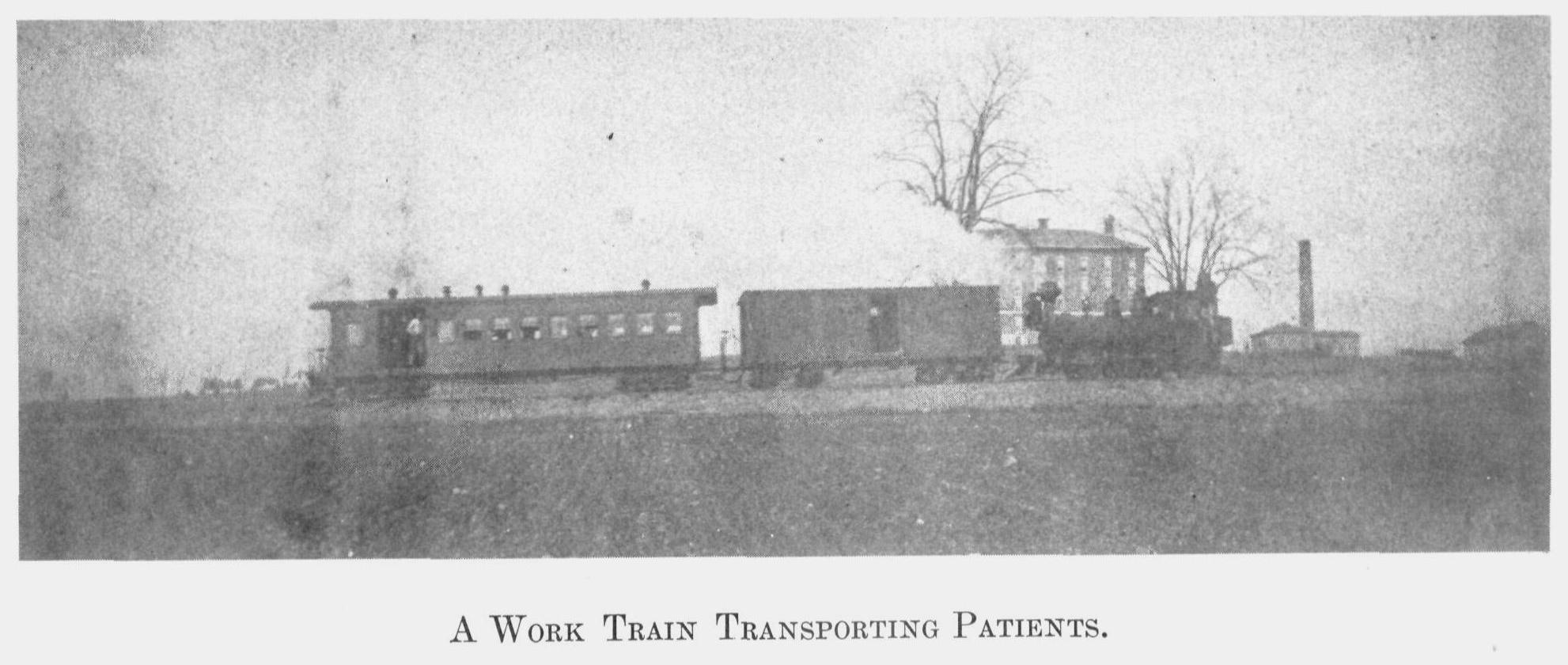
1 A Work Train Transporting Patients

1 A Work Train Transporting Patients

Hayt’s Corners, Ovid & Willard Railroad
On September 15, 1882, this railroad was chartered to run from the Hayt’s Corners Station of the Geneva, Ithaca & Sayre Railroad, an affiliate of the Lehigh Valley, to Ovid, seat of Seneca County (2 miles), and Willard, site of the Willard State Hospital (5 miles). The promoters, led by George W. Jones, lacked funds to complete the line, and arranged for it to be leased to the GI&S for 99 years. This was to bring it into the LehighValley system from its opening in May 1883. The line was dual gauge from the outset, laid with 3’-0” rail for conformity with some trackage built on the hospital grounds in 1877-78 to switch coal to hospital facilities from steamboats or barges on Seneca Lake.”
(SOURCE: Hilton, George Woodman, American Narrow Gauge Railroads, Stanford University Press, 1990, page 454).

2 Another View Of The Above

2 Another View Of The Above

“…An efficient auxiliary in the management of the asylum was the rail-road from Seneca Lake to the Branch, serving also the Main Building and Detached Buildings No. 1 and 3, constructed and brought into regular use in 1878. A steam locomotive and six freight and coal cars are upon the tracks, performing in a very satisfactory manner the work for which the line was constructed, and an actual saving of expense to an establishment so large and extended. With side tracks and turn-outs, it is over two miles in length, and cost including construction and equipment about $19,000. A brick engine-house for use and shelter of the locomotive was erected at the same time.”
(SOURCE: Morrison, Wayne E., Pictorial Album of The Willard Asylum 1869 – 1886, 1978).
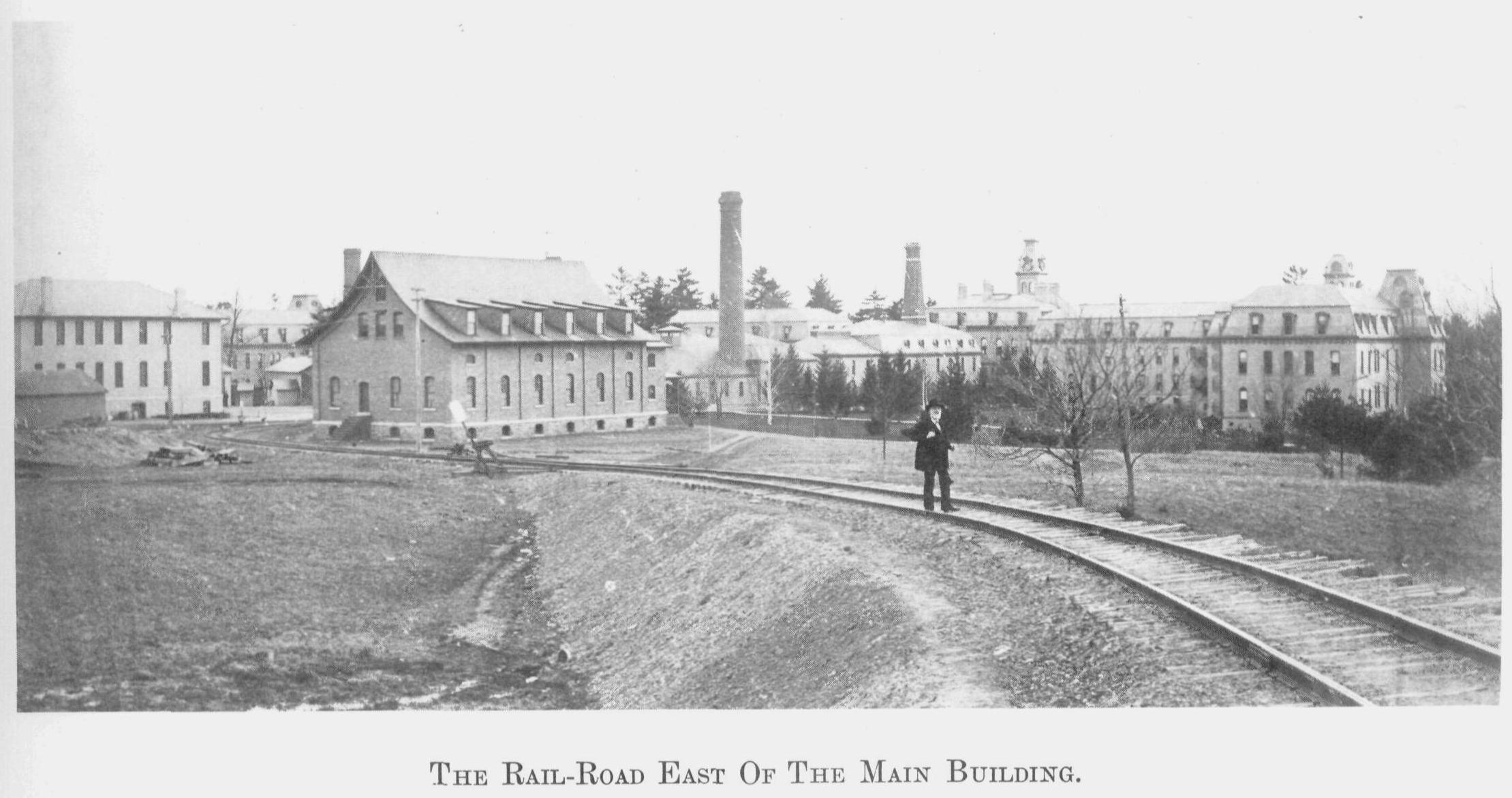
3 The Rail-Road East Of The Main Building

3 The Rail-Road East Of The Main Building

“REPORT OF THE RAILROAD COMMISSIONERS.
HAYTS CORNERS. OVID AND WILLARD. Lessor.
Lessee – LehighValley Railway.
(Date of charter, September 15, 1882.)
The Hayts Corners, Ovid and Willard railroad was organized in 1882, and articles of association filed in the Secretary of State’s office September 15, 1882. The right of way was purchased by subscription; the grading was done by the able-bodied inmates of the Willard Insane Asylum, pursuant to an act, chapter 362, Laws of 1882. The roadbed was then leased to the Geneva, Ithaca and Sayre Railroad Company, said road to iron, fence and operate said road. Said company have conformed to the requirements of the lease and are now operating the road.
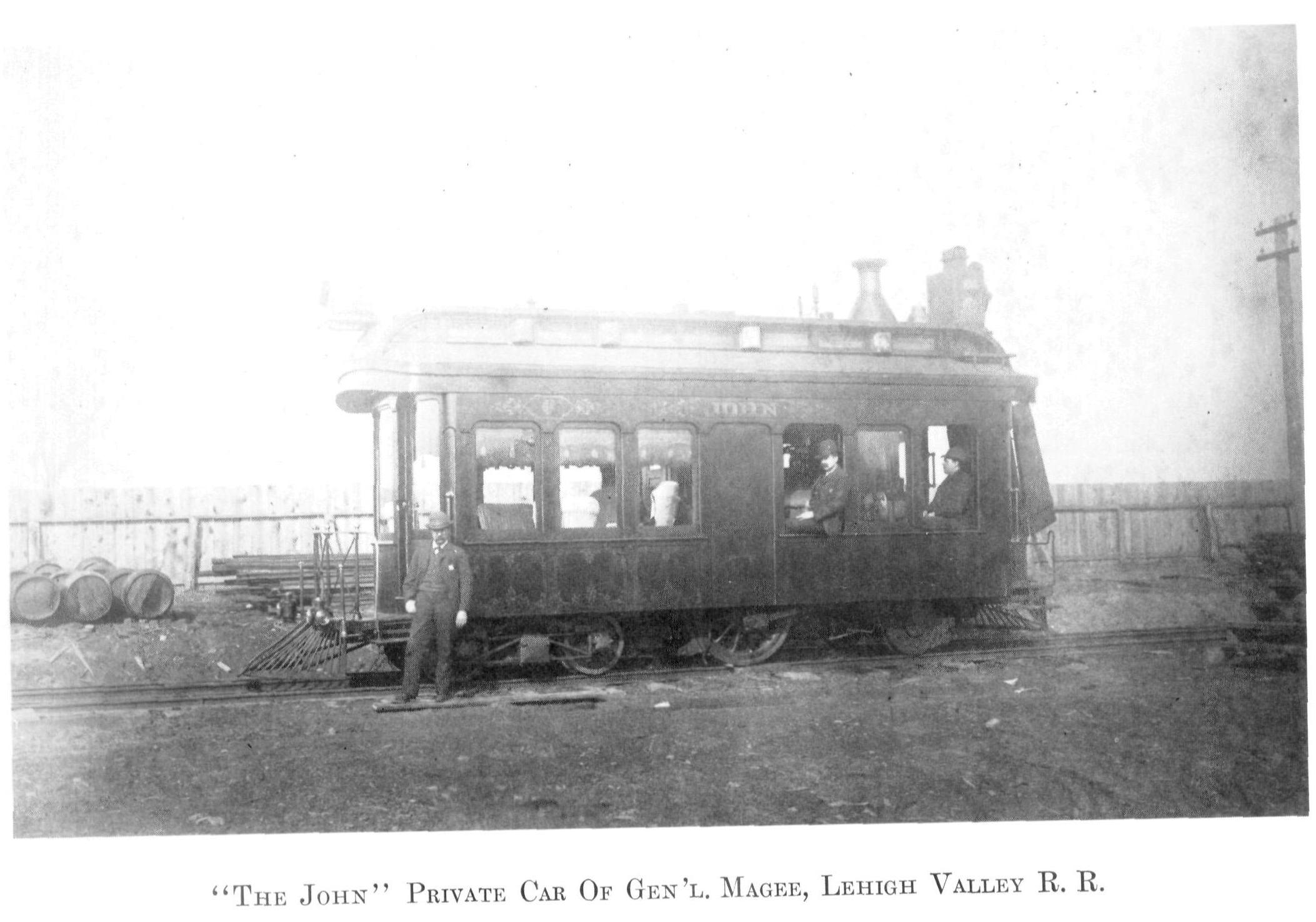
4 The John, Private Car Of Gen'L. Magee, Lehigh Valley R.R.

4 The John, Private Car Of Gen’L. Magee, Lehigh Valley R.R.

Capital Stock.
Authorized by law or charter – (Common) Number of Shares 400; Par Value $40,000
Issued for actual cash and now outstanding – (Common) Number of Shares 41; Par Value $4,100
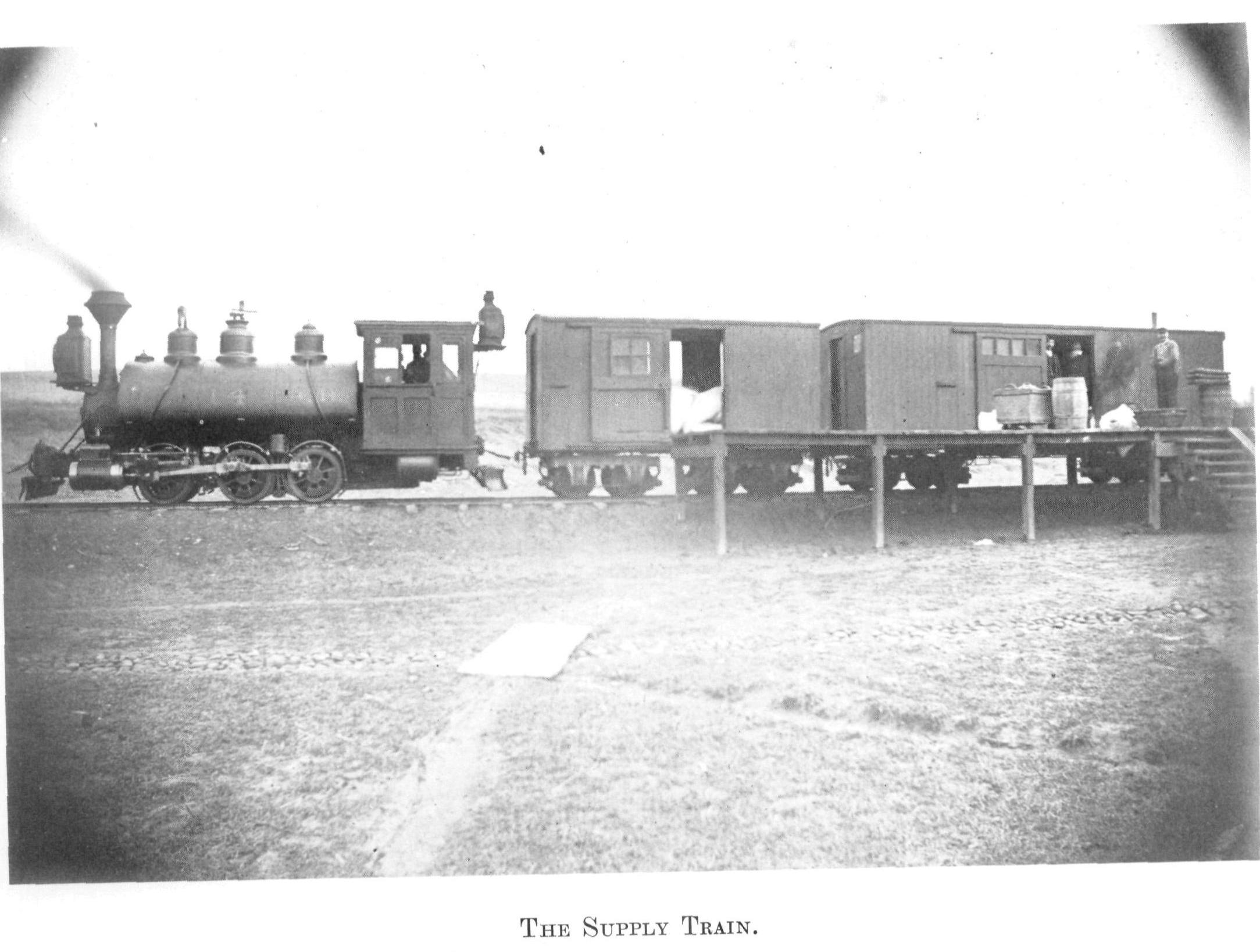
5 The Supply Train

5 The Supply Train

Cost of Road.
Land and land damages – Total cost up to June 30, 1892 – $2,278.52
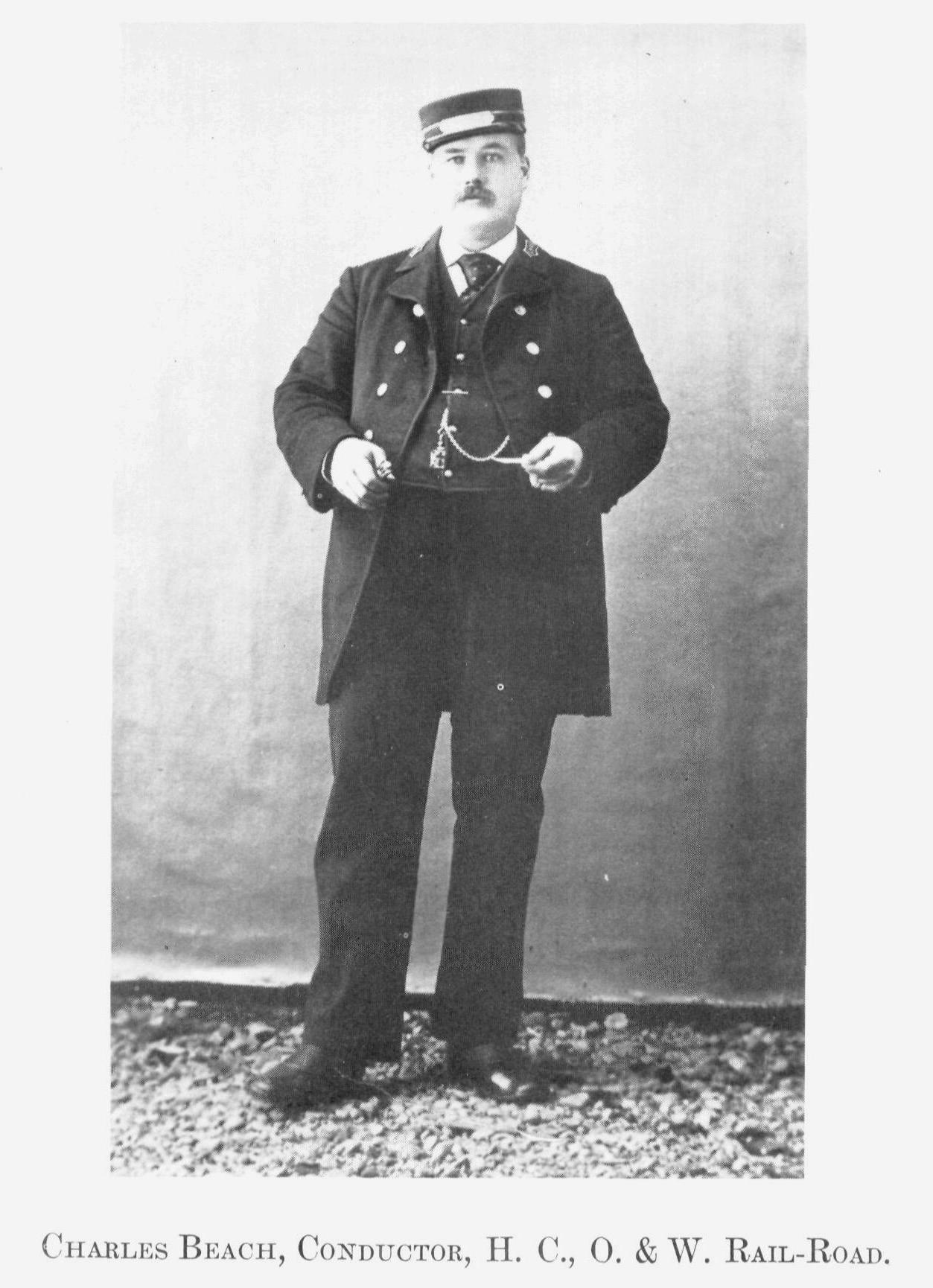
6 Charles Beach, Conductor, H.C., O. & W. Rail-Road

6 Charles Beach, Conductor, H.C., O. & W. Rail-Road

Officers of the Company.
Name. Title. Official Address.
James B. Thomas, President, Ovid, N. Y.
William Jones, Treasurer, Ovid, N. Y.
John F. Covert, Secretary, Ovid, N. Y.
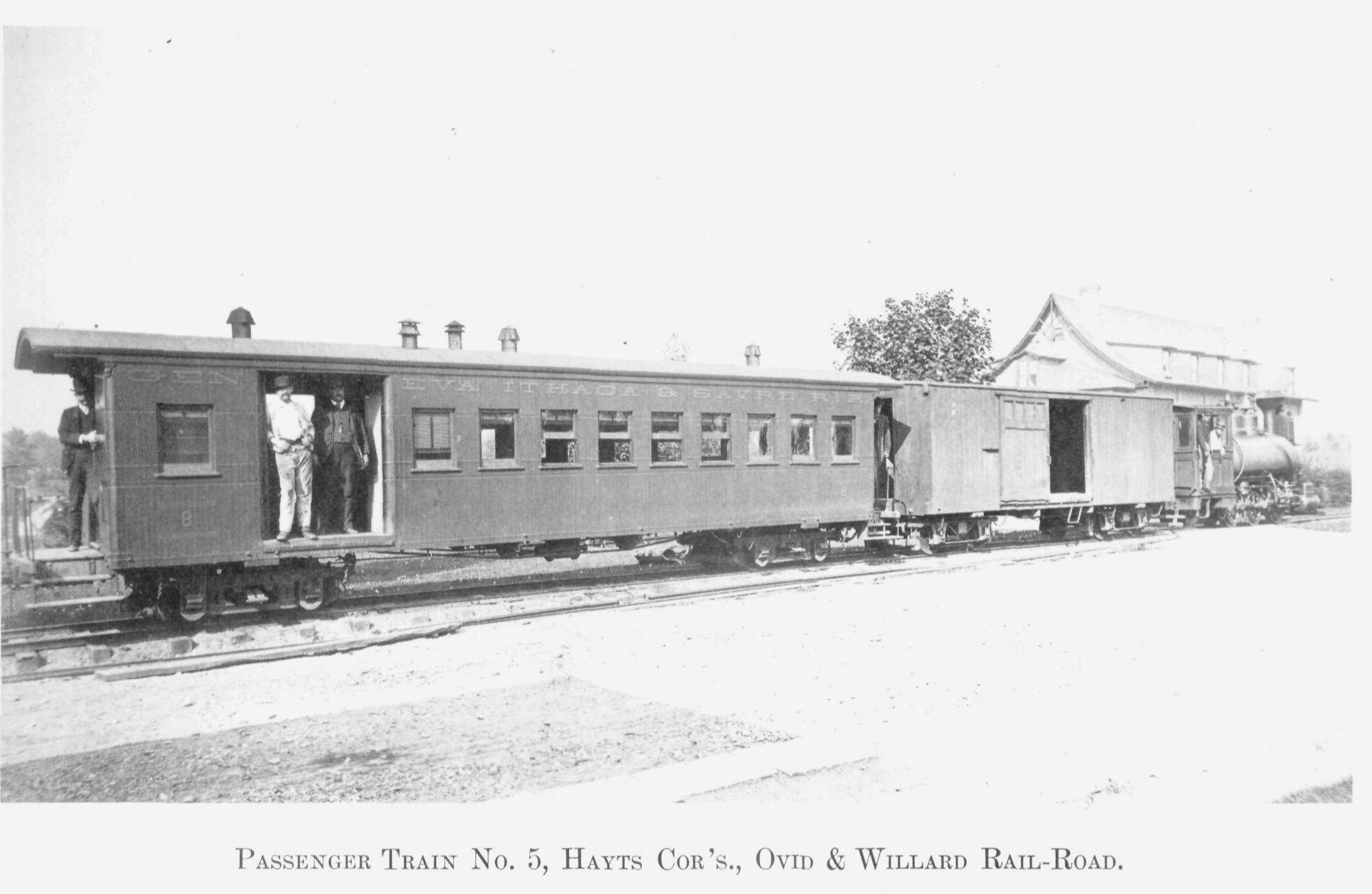
7 Passenger Train No. 5, Hayts Cor's., Ovid & Willard Rail-Road

7 Passenger Train No. 5, Hayts Cor’s., Ovid & Willard Rail-Road

Directors of the Company.
Name. Residence.
George W. Jacacks, Geneva, N. Y.
James B. Thomas, Ovid, N. Y.
William Jones, Ovid, N. Y.
William C. Hazleton, Ovid, N. Y.
Charles V. Sutton, Ovid, N. Y.
John Denniston, Ovid, N. Y.
Alden Horton, Ovid, N. Y.
John K. Covert Ovid, N. Y.
Silas M. Kinne, Ovid, N. Y.
Herman D. Eastman, Lodi, N. Y.
Abram B. Johnson, Hayts Corners, N. Y.
John B. Chapin, Philadelphia, Pa.
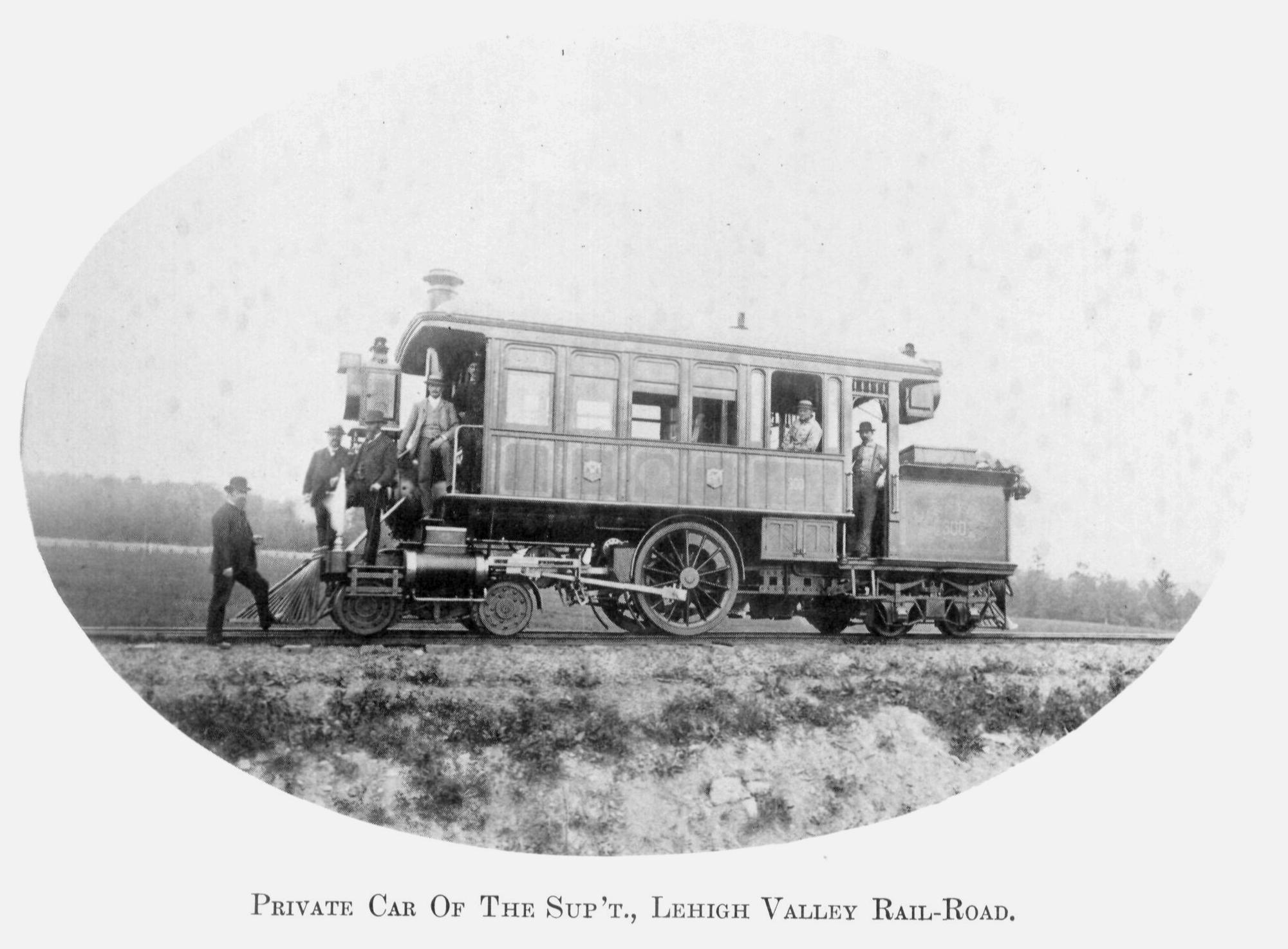
8 Private Car Of The Sup't., Lehigh Valley Rail-Road

8 Private Car Of The Sup’t., Lehigh Valley Rail-Road

Title of company, Hayts Corners, Ovid and Willard Railroad Company.
General offices at Ovid, N. Y.
Date of close of fiscal year, September 22.
For information concerning this report, address James B. Thomas, President.”

(SOURCE: Tenth Annual Report Of The Board Of Railroad Commissioners Of The State Of New York, For The Fiscal Year Ending June 30, 1892. Transmitted to the Legislature January 9, 1893. Commissioners: Samuel A. Beardsley, Michael Rickard, Alfred C. Chapin, Volume II, Albany: James B. Lyon, State Printer, 1893, Page 278).

9 The Hayts Cor's., Ovid & Willard Train

9 The Hayts Cor’s., Ovid & Willard Train
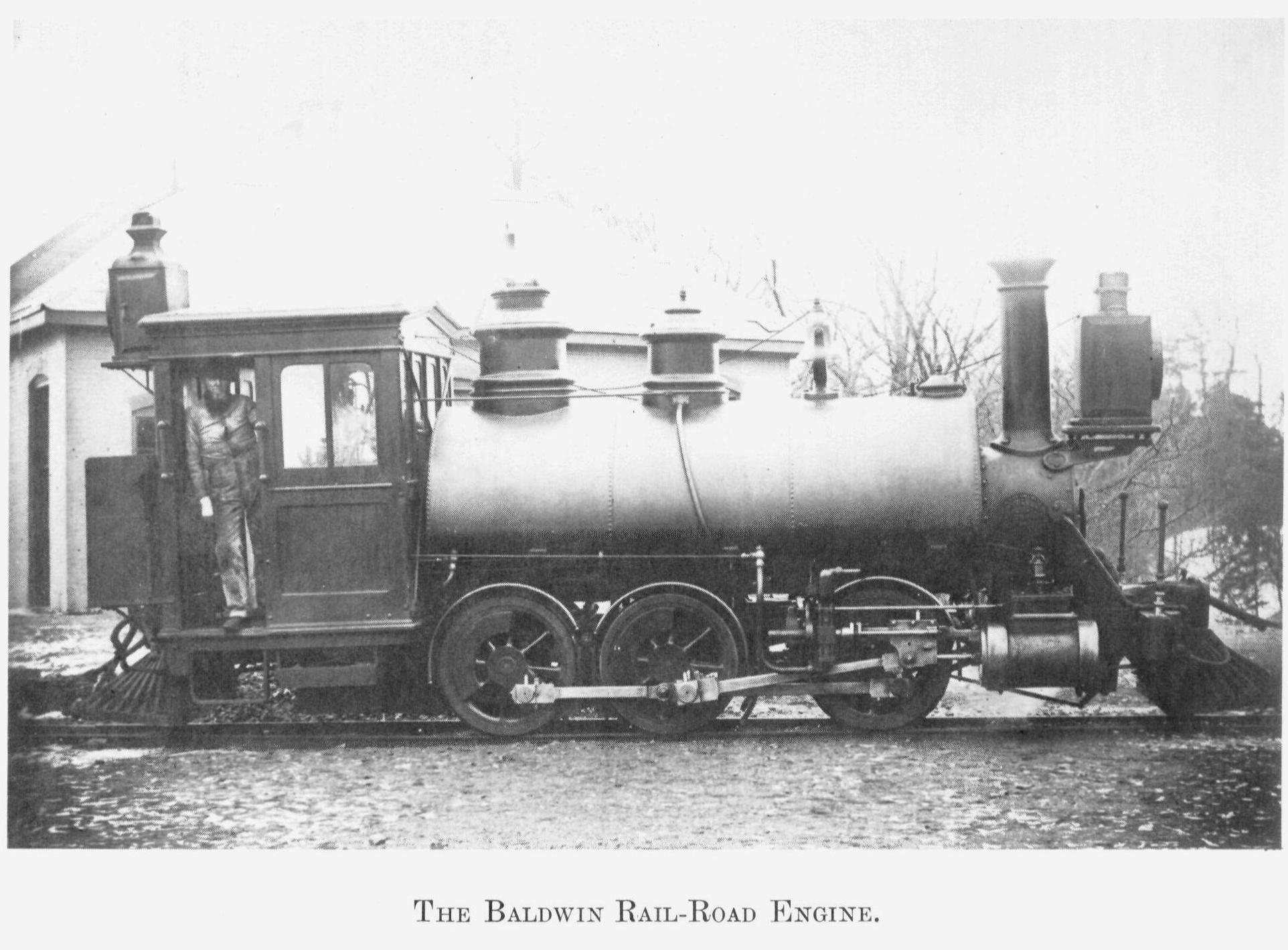
10 The Baldwin Rail-Road Engine

10 The Baldwin Rail-Road Engine

10 The Baldwin Rail-Road Engine

11 Engine-House, Barn & Coal Tressle.

12 At Work On The Embankment

12 At Work On The Embankment

13 Workmen Broadening The Embankment

13 Workmen Broadening The Embankment

The Social Welfare History Project 12.10.2014

This was a previously posted page that I have decided to turn into a post. The only thing that makes me sad is that Dr. Hansan removed much of my commentary before he “reprinted” my research. Keep in mind that historical research takes hours and hours of reading and transcribing. It was not an easy task but well worth the effort. ALL of these blog posts can be found on this blog in their original form.

“I am very proud and honored that John E. Hansan, Ph.D., creator of THE SOCIAL WELFARE HISTORY PROJECT website, has chosen to share 24 articles from my blog, THE INMATES OF WILLARD. I don’t normally blow my own horn, but what the hell, I’m thrilled that my research has been shared on this educational website. Thank You, Dr. Hansan! (Page Created 12.10.2014)

The Social History Welfare History Project

The Social Welfare History Project

The Social Welfare History Project – Contributor Bio – Linda S. Stuhler 11.11.2013.
Middletown State Homeopathic Hospital: New York – 1891 1.20.2014.
Our New York State Charities: 1873 1.18.2013.
The Willard Asylum for the Insane: Steward’s Report 1900 1.18.2014.
New York State Charities Aid Association: 1873 1.6.2014.
Colony For Epileptics: 1914 12.3.2013.
New York State Care System For The Insane Completed: 1896 1.18.2014.
Deportation of the Insane Aliens: 1907 1.14.2014.
Schuyler, Louisa Lee 1.3.2014.
Syracuse State Institution For Feeble-Minded Children: 1916 12.3.2013.
Care of the Filthy Cases of Insane: 1885 11.23.2013.
State Care of the Insane: New York 1901 11.22.2013.
Hammond, Dr. William A. 11.21.2013.
New York State’s County Poor Houses: 1864 11.20.2013.
The Care Of The Insane In New York (1736 – 1912) 11.18.2013.
After Care for the Insane: New York State 1906 11.22.2013.
Chapin, John B., M.D., LL.D. 11.21.2013.
Hoyt, Dr. Charles S. 11.21.2013.
A Brief History of Government Charity in New York (1603 – 1900) 11.18.2013.
The Eugenic Value of Birth Control Propaganda 11.18.2013.
Willard, Sylvester D. 11.12.2013.
Kirkbride, Thomas Story 11.11.2013.
Scientific Charity Movement and Charity Organization Societies 11.10.2013.
Brigham, Amariah 11.12.2013.
Poor House Conditions: Albany County, New York – 1864 11.11.2013.”

A Brief History of Charity in New York 1603 to 1900

A Brief History of Charity in New York State as it relates to the creation of
Public Work Houses, County Poor Houses, Insane Asylums, Orphan Asylums,
Houses of Refuge for Juvenile Delinquents, Care of Aged, Decrepit and Mentally Enfeebled Persons who are Not Insane, Indigent Children, etc. Many appropriations for The Willard Insane Asylum are included as well.
Researched by Linda S. Stuhler – October 21, 2011

I have reprinted some outlines and a few passages from Documents of The Senate of the State of New York, One Hundred and Twenty Seventh Session, 1904, (compiled by Edward H. Leggett, Esq. of the Attorney General’s office and his assistant, Mr. Wellington D. Ives, Chief Clerk in the office of the Board of Charities), that shows the history of charity for the poor in New York State from 1603 to 1900.

Coldbath Fields Treadmill - Wikipedia

Coldbath Fields Treadmill – Wikipedia

The Dutch Colony of New Netherland from 1603 to 1664

“Comparatively little of importance has been found with relation to the administration of charity under the Dutch in the colony of New Netherland. Not, however, that ordinances and customs did not exist, following those of the mother country, but the records are fragmentary and give a partial view only of the charitable work of the colony. Possibly many of the missing records were part of the documents of the Dutch West India Company, which it is said, were sold at public auction in 1821, and could not be found when Mr. John Romeyn Brodhead, the agent of this State, made his investigation in 1841-43 of the archives of the Hague in search of material relating to the History of New Netherland. The following chronological references to Dutch ordinances and documents relating to the relief of the poor are taken from various works relating to the history of the early colonial settlements in this State, to which credit is given in each case:

1630–1635 – Poor people not permitted to participate in the exemptions, privileges and freedoms granted to the patroons.

1649 – Poor supported by collections in the churches, fines and voluntary offerings-No hospitals or asylums for children or for old men.

1650 – No asylums for children or the aged in New Netherland.

1651 – In order not to subject the poor to inconvenience, particular inhabitants requesting it may be privileged to lay in small beer free of excise with liberty to retail the same at a reasonable advance by small measure. (“Laws and Ordinances of New Netherland.” P. 122. O’Callaghan.)

1652 – The Director-General grants site for almshouse at Beaverwyck (Albany.) (“Annals of Albany,” Vol. VII, pp. 232, 233. Munsell)

1653 – Burgomasters were ex officio the chief rulers of the city; the principal church wardens, guardians of the poor and of widows and orphans. They held in trust all city property and managed the same. (“History of New Netherland.” Vol. 2, p. 211. O’Callaghan.)

Schepens (city magistrates) provided for the burial of friendless strangers. (“History of New Netherland.” Vol. 2, p. 212. O’Callaghan.)

1654 – Dependent children sent from the almshouse at Amsterdam to New Netherland.

The Director General and Council resolve to hire a house in New Amsterdam, and lodge there the children sent over by the poormasters from Holland. (“Documents Relating to the History of the Early Colonial Settlements.” Vol. XIV, p. 296. Fernow.)

1655 – More dependent children sent from the almshouse at Amsterdam, in Holland, to New Netherland.

Goats found south of the “fresh water” to be seized and sold for the benefit of the poor. (“Laws and Ordinances of New Netherland.” P. 201. O’ Callaghan.)

One-third of penalty for firing guns or planting May poles on New Years and May days to go to support of the poor. (“Laws and Ordinances of New Nether land.” P. 205. O’ Callaghan.)

1656 – One-third of certain penalties to be applied to support of the poor. (“Laws and Ordinances of New Netherland.” P. 263. O’Callaghan.)

1658 – Children from almshouse in Holland arrived and being in demand, were all bound and others requested to be sent over. In New Netherland, men of large families when they die ‘do not leave a stiver behind. The public must provide the coffin, pay all the debts and feed or maintain those who survive.” (“Documents Relative to the Colonial History of the State of New York.” Vol. II, p. 52. O’Callaghan.)

1661 – First law enacted in New Netherland providing for the support of the poor. (Passed 22 October 1661).” (Senate Pages 3-9).”

THE ENGLISH COLONY OF NEW YORK 1664 TO 1776

The earliest English laws governing the administration of affairs, charitable and otherwise, in the Colony of New York are known as the “Duke of York’s Laws.” These laws were “Establisht by the Authority of his Majesties Letters patents, granted to his Royall Highnes James Duke of Yorke and Albany: Bearing Date the 12th Day of March in the sixteenth year of ye Raigne of our Sovereign Lord King Charles the Second. Digested into one Volume for the publicke use of the Territoryes in America under the Government of his Royall Highnesse. Collected out of the Several Laws now in force in his Majesties American Colonyes and Plantations.

Published March the 1st Anno Domini 1664 at a General meeting at Hemsted upon Longe Island by virtue of a Commission from his Royall Highnesse James Duke of Yorke and Albany given to Colonell Richard Nicolls Deputy Governor, bearing date the Second day of Aprill 1664.

These and other Colonial laws of New York from the year 1664 to the Revolution were republished by the State of New York in 1894, and the volume and page references herein given relate to the volumes and pages of such republication.

1664 – Bond slavery of Christians forbidden, but not to prejudice indenture nor taking as apprentice. Eight overseers to provide for church and poor. Certain penalties to be applied to support of poor.

1665 – Disbursements for the poor and the support of the poorhouse at Albany. Distracted persons to be provided for by contributions from each town in the riding. Persons holding in trust property of orphans to render inventory annually Disbursements for the poor and the support of the poorhouse at Albany.

1671 – Deacons of the Reformed Christian church complain to the Mayor’s court of the administration of charity by the deacons of the Lutheran church.

1678 – “Noe beggars but all poore cared ffor.” (From Answers of inquiries of New York Rec’d from Sr Edm. Andros on the 16th of Apr 1678.” “Documentary History of New York.” Vol. I, page 62. O’Callaghan.)

1683 – Provides for care of poor, and prevention and discouragement of vagabondage.

1684 – Persons holding in trust property of orphans, to render inventory annually to court of sessions. Provides penalty for stealing by apprentices.

1687 – Towns and counties maintain their own poor and no vagabonds or beggars allowed in the Province of New York.

1691 – Public workhouses directed to be provided by Governor Fletcher.

“You are to endeavor with the assistance of our Councill to provide for the raising and building of Publique Work Houses in convenient Places for the employing of Poor and Indigent People.” (Instructions to Governor Benjamin Fletcher of the Province of New York from Lord Nottingham by Her Majesty’s command, March 17, 1691. “Documents Relative to the Colonial History of New York,” Vol. III, page 824.)

1695 – Annual appointment of five overseers of the poor and public works in New York city and defining their duties relative to the support of the poor.

1697 – Public workhouses directed to be provided by Governor Bellomont.

“You are to endeavor with the Assistance of the Councill to provide for the raising and building of public workhouses in convenient places for the employing of poor and indigent people.” (Instructions to Governor Richard Bellomont of the Province of New York from His Majesty by James Vernon, August 31, 1697. “Documents Relative to the Colonial History of the State of New York.” Vol. IV., page 290.)

1699 – No such thing as a beggar in New York.

“A Bill to enforce the building of publick workhouses (which is another instruction from his Majesty) to imploy the poor and also vagabonds I offered to the Assembly, but they smiled at it, because indeed there is no such as a beggar in this town or country: and I believe there is not a richer populace any where in the King’s dominions than is in this Town.” (From the Earl of Bellomont to the Lords Commissioners for Trade and Plantations, April the 27th 1699.

“Documents Relating to the Colonial History of the State of New York.” Vol. IV, page 511. O’Callaghan.)

1701 – Repeals former statutes and provides that each town or parish shall care for its own poor. Justices of the peace to audit accounts.

1702 – Provides for the care of the poor in New York city, and limits annual amount to be raised for such purpose to 300 (pounds).

Act for the better maintenance of the poor in New York.

Making provision for the execution of poor felons and the burial of the poor.

1703 – Explaining previous laws relating to the poor and vagabonds. “An Act for the better Explaining and more Effectual putting in Execucon An Act of General Assembly made in the third yeare of the Reign of their late Majties King Wm. and Queen Mary Entituled An Act for defraying of the Publick and necessary Charge thro’out this Province and for mainteining the Poor and preventing Vagabonds.

1708 – Surplus of penalties collected in suppressing immorality given to the overseers of the poor for support of the poor.

1719 – Certain part of penalties collected by pound keepers to be applied to support of the poor.

1721 – Vagrant and idle persons to be apprehended, brought before a justice of the peace or mayor, and returned to their lawful settlements.

Providing for the equitable assessment of taxes for the support of the minister and the poor in New York, Queens, Richmond and Westchester counties.

1729 – Moiety of certain penalties to he paid to overseers to be applied to the support of the poor.

1732 – An act for the speedy punishing and releasing of vagrant and idle persons. Moiety of certain penalties to be applied to the support of the poor.

1737 – An act to restrain tavern keepers from selling liquors to servants and apprentices. Moiety of penalty for peddling without a license to go to support of the poor.

Moiety of sales and fines on impounded swine to be applied to support of the poor.

1740 – Moiety of fines collected under act to prevent abuses in the repacking of beef and pork to be applied to support of the minister and the poor in New York city.

Providing for support and burials of the poor in county at the expense of the county.” (Senate 11- 30)

Fast forward to 1771:

1771 – “The Society of the Hospital in the City of New York in America.”

“This Society was incorporated June 13, 1771 by a charter granted by King George the Third. This was the result of a subscription set on foot for the purpose of erecting a public hospital in the City of New York, and the King in view of the beneficial tendency of such an institution ‘calculated for relieving the diseases of the indigent.’ granted the charter.” (Senate 37)

1772 – The Society of the Hospital of the City of New York in America to receive an annual appropriation of 800 (pounds) to be paid from excise duties laid on strong liquors retailed in New York city. Hospital to receive and treat all sick poor persons who are residents of any county within the colony, without compensation. (Senate 37)

1773 – An Act for the Settlement and Relief of the Poor (Passed March 8, 1773). (Senate 39)”

THE STATE OF NEW YORK 1776 TO 1900

“The first Legislature of the State of New York met at Kingston on September 10, 1777, and the first statute was enacted February 6, 1778. Of the great majority of the laws which have been enacted in this State affecting the administration of charity and the care of the poor, it is possible to give a brief abstract only, referring the student of these questions to the laws themselves for fuller information should such be desired. To facilitate reference, however, especially of those to whom the laws of the State may not be accessible, a few of the more important statutes, such as the general poor laws, are printed in full.

1778 – Appointing Commissioners in Tryon, Saratoga, Albany and Charlotte counties to collect and distribute charitable donations among distressed inhabitants on frontiers of eastern and western districts of State who, during late campaign, were obliged to abandon their homes by devastation of the enemy.

Appointing a Commissioner to superintend the poor removed from New York into Dutchess county, and appropriating 600 (pounds) from State treasury to each of the Commissioners for superintending poor removed into Dutchess, Westchester and Ulster counties.

Providing for the election of overseers of the poor at the annual town meetings in August. Directing Justices of the Peace to furnish the necessaries of life to the families of soldiers in Continental service at moderate prices balance to be paid by State.

Appropriations to commissioners over poor removed from New York city-in Dutchess county 1200 (pounds), and in Ulster county 600 (pounds).” (Senate 49-50)”

Fast Forward to 1784:

1784 – An Act for the Settlement and Relief of the Poor. Chapter 35 Laws of 1784. (Senate 52)

1788 – Overseers of poor to bind out poor children as apprentices and servants; proceedings where persons refuse to be bound; emigration of poor regulated-contracts of service. (Senate 70 & 71)

An Act for the Better Settlement and Relief of the Poor. Chapter 62 of the Laws of 1788. (Senate 78)

An Act for Dividing the Counties of This State Into Towns. Chapter 64 of the Laws of 1788.

“All counties divided into towns. Poor in town of Goshen, Warwick and Minisink, Orange county, and in Cortlandt, Yorktown, Stephentown, Greenburgh and Mt. Pleasant, Westchester county. In every town in the State two overseers of the poor to be elected. Overseers of poor in Albany and Hudson. Oaths of office of overseers. One-half of penalty for refusal of certain town officers elected to qualify to go to poor fund. Powers of town meetings.” (Senate 95) (57)

1824 – An Act to Incorporate The Society for the Reformation of Juvenile Delinquents in the City of New York. Chapter 126 Laws of 1824. (Senate 236)

An Act To Provide For The Establishment Of County Poorhouses. Chapter 331, Laws of 1824, Passed 27th November 1824.”

The American Revolutionary War began in July 1776 and ended in October 1781. There was a flurry of activity of charity for the poor during and after the American Revolution. Once America became the United States, with its own sovereign government, New York became a state on July 26, 1788.

After the Civil War and by 1870, there were hundreds of charities partially funded with appropriations from the state. I have included a synopsis from Documents of The Senate of the State of New York, from 1865 to 1900, of anything having to do with Willard, state institutions, the pauper insane and the poor in general. There were hundreds of entries that I could not possibly include. (L.S.Stuhler)

New York State Timeline

1865 – Authorizing establishment of Willard State Asylum for the insane paupers. $75,000 appropriation therefor. (Senate 1865, Chapter 342, page 556)

1867 – Annual Supply Bill. $14,300 for Willard Insane Asylum. (Senate 1867, Chapter 481, page 582)

1870 – Appropriating $49,250 to pay present indebtedness of the Willard Asylum for the Insane. (Senate 1870, Chapter 380, page 636)

$118,000 for Willard Asylum, for extension or completion of wing, building for idiots, dock, fuel and salaries; $25,000 for furniture and maintenance of Willard Asylum. (Senate 1870, Chapter 492, page 641)

Making appropriations for certain public and charitable institutions: For orphan asylums, homes for the friendless and other charitable institutions of like character for their maintenance, $150,000 to be divided among the counties for the several state charities. (Senate 1870, Chapter 704, page 642).

1871 – In relation to the chronic pauper insane. Act authorizing Board of State Commissioners of Public Charities to hear and determine applications made to them by county superintendents of poor of the several counties of this State, and said board may file determination relieving counties from sending pauper insane to Willard Asylum. Said board may revoke such determination and must file same in office of county clerk making such application and notice thereof must be given to poor superintendents. Commissioners may direct removal of chronic pauper insane to Willard Insane Asylum. (Senate 1871, Chapter 713, page 658)

Supply Bill. $170,500 for Willard Asylum. (Senate 1871, Chapter 715, page 658) Appropriation Act. $28,000 for Willard Asylum. (Senate 1871, Chapter 715, page 659)

Amending section 11 of chapter 474, Laws of 1870, establishing a Homeopathic Asylum for the Insane at Middletown, NY. (Senate 1871, Chapter 237, page 652).

1872 – Appropriation Act. $9,000 for salaries for Willard Insane Asylum. (Senate 1872, Chapter 541, page 681)

Section 9 of chapter 342 Laws of 1865 relating to price for board at Willard Asylum amended. (Senate 1872, Chapter 541, page 681)

Supply Bill. $131,000 for Willard Asylum for the Insane. (Senate 1872, Chapter 733, page 683)

Act to establish and maintain an institution for the relief of indigent and disabled soldiers and sailors of New York State. “The New York Soldiers’ Home” incorporated. (Senate 1872, Chapter 873, Laws of 1872, page 686)

1873 – Authorizing the trustees of Willard Asylum for the Insane to appoint a fourth assistant physician. (Senate, Chapter 443, page 694)

Act further defining the powers and duties of the Board of State Commissioners of Public Charities and to change the name of the Board to “The State Board of Charities.” Chapter 571, Laws of 1873. (Senate 695)

Appropriation Act. $10,500 for Willard Asylum for the Insane (Senate, Chapter 643, page 701) Supply Bill. $60,000 for Willard Asylum for the Insane (Senate, Chapter 700, page 702) Legalizing the adoption of minor children by adult persons. (Senate, Chapter 830, page 703)

Concurrent resolution directing the Board of State Commissioners of Public Charities to examine into the causes of the increase of crime, pauperism and insanity and report statistics to the next Legislature, passed May 29, 1873. (Senate 704)

1874 – Supply Bill. $140,000 for Willard Asylum for the Insane. (Senate, Chapter 323, page 706)

Appropriation Act. $250 for support of Susan Green, an insane Indian, at Willard Asylum. (Senate, Chapter 398, page 708)

Act to revise and consolidate the State Statutes, relating to the care and custody of the Insane, the management of the asylums for their treatment and keeping, and the duties of the State Commissioner in Lunacy. (Senate, Chapter 446, page 709)

Amending act providing for the support and care of State paupers, chapter 661, Laws of 1873. State Board of Charities authorized to contract with authorities of not more than 15 counties or cities in State for the reception of State paupers in poor houses of such counties or cities, and to make rules and regulations for their care and discipline. Said board may transfer paupers from one almshouse to another as it shall deem advisable. Passed June 7, 1873. (Senate 709)

1875 – Annual Appropriations Act. $11,000 for Willard Insane Asylum. (Senate, Chapter 373, page 721)

Annual Supply Bill. $56,000 for Willard Insane Asylum. (Senate 1875, Chapter 634, page 727)

Act providing for a better system of records of the inmates of poorhouses and almshouses. Copies to be sent to State Board of Charities. (Senate, Chapter 140, page 713)

An Act to Provide for the Better Care of Pauper and Destitute Children. Chapter 173, Laws of 1875. Section 1. On and after January first, eighteen hundred and seventy-six, it shall not be lawful for    any justice of the peace, police justice or other magistrate to commit any child, over three and    under sixteen years of age, as vagrant, truant or disorderly, to any county poor-house of this State, or for any county superintendent or overseer of the poor, or other officer, to send any such child as a pauper to any such poor-house for support and care, unless such child be an unteachable idiot, an epileptic or paralytic, or be otherwise defective, diseased or deformed, so as to render it unfit for family care; but such justice of the peace, police justice or other magistrate, and also such county superintendent or overseer of the poor, or other officer, shall commit or send such child or children not above exempted to some orphan asylum or other charitable or reformatory institution, as now provided for by law. (Senate 714)

An Act to Authorize the Establishment of a Female Department to the Western House of Refuge for Juvenile Delinquents. Seventy-five thousand dollars appropriated. Chapter 228, Laws of 1875. (Senate 716)

An Act to Authorize the Various Associations and Societies Incorporated Under the Laws of the State of New York, For the Purposes of Taking Care Of and Protecting Destitute Infant Minor Children, To Bind Out by Indenture Destitute Children Who Are In Their Care and Keeping, Chapter 522, Laws of 1875. (Senate 724)

1876 – Annual Appropriations Act. $10,500 for Willard Insane Asylum (Senate, Chapter 192, page 730)

Supply Bill. $100,500 for Willard Insane Asylum. (Senate, Chapter 193, page 730)

Act to prevent and punish wrongs to children. Occupation of children in theatrical and certain other employments made a misdemeanor. (Senate, Chapter 122, page 728)

An Act providing for the Removal from office by Governor of any County Superintendent of the Poor charged with misconduct. Offender to be given a copy of charge against him and opportunity to defend himself. The Governor to direct testimony or examination. Chapter 133, Laws of 1876. (Senate 729)

1877 – Annual Appropriations Act. $12,000 for Willard Insane Asylum. (Senate, Chapter 123, page 738)

Supply Bill. $100,378 for Willard Insane Asylum. (Senate, Chapter 276, page 740)

Act for the protection of children and to prevent and punish certain wrongs to children. Minors under 14 years not to be allowed in drinking or concert saloons, etc. Begging by children prohibited. (Senate, Chapter 428, page 742)

Concurrent Resolution. Relating to the Soldiers Home for the State of New York. Official returns of 35 of the 60 counties of State show that there are 641 veteran soldiers and sailors in the county poor-houses of the State. A farm of 240 acres in vicinity of Bath, Steuben county having been purchased for home for disabled soldiers and sailors and private subscription raised for erecting buildings thereon…$100,000. (Senate 744)

1878 – Appropriations Act. $12,350 for Willard Insane Asylum. (Senate, Chapter 29, page 744) Supply Bill. $53,000 for Willard Insane Asylum (all laws authorizing appointment of Building Superintendent and fixing salary of Building Superintendent of Willard Asylum, repealed) (Senate, Chapter 252, page 748)

Act providing for the support, treatment and care of pauper, destitute and delinquent children under sixteen years of age. Not to be committed to poor houses but to be placed in families or orphan asylums. Powers of State Board of Charities in connection therewith defined. Chapter 404 Laws of 1878. (Senate 1878, page 750)

1879 – Appropriations Act. $12,100 for Willard Insane Asylum. (Senate, Chapter 148, page 755) Supply Bill. $100,000 for Willard Insane Asylum. (Senate, Chapter 272, page 758)”

In 1880, New York State started cracking down on insane alien paupers. Expenses for Willard were growing along with the pauper insane population which, by law, required the state to provide additional institutions to be built in order to provide for their care and support. By 1883, there were at least 27 state institutions, including Willard, supported by tax payer funds. New charitable institutions sprang up all over New York State for the care of the insane, idiots and feeble-minded, deaf and dumb, blind, sick and crippled soldiers, orphans, indigent children, juvenile delinquents, abandoned women, etc. This number did not include the poor houses or the prisons in all the various counties that also required tax payer funds. (L.S.Stuhler)

1880 – Appropriations Act. $12,100 for Willard Insane Asylum. (Senate, Chapter 141, page 763)

CODE OF CIVIL PROCEDURE, Chapter 178.

Section 1590. “Partition by guardian of infant, committee of lunatic, etc.” Section 1591. “Contents of petition.”

Section 1592. “Court may authorize partition of infants and lunatics’ interest in lands.” Section 1593. “Effect of releases by such guardian or committee.”

Section 1638. “An infant or incompetent person cannot bring an action to compel determination of a claim to real property.”

Section 1647. “An action against a widow to determine her dower interest cannot be brought against an infant or incompetent.”

Section 1743. “An action may be brought to have a marriage contract declared void when one of the parties was an idiot or lunatic, or when one or both had not attained the age of legal consent.” Section 1744. “An action to annul marriage contract may he maintained by infant or by its parent or guardian.”

Section 1746. “Such action may be commenced by any relative of an idiot.” Section 1747. “When such action to be commenced where party was a lunatic.”

Section 1749. “A child of a marriage annulled on ground of idiocy or lunacy of one of its parents is a legitimate child of the other parent of sound mind.”

Section 1755. “How next friend of infant or lunatic allowed to sue.”

Section 1926. “Actions by overseers and superintendents of the poor to recover penalties and damages and enforce liabilities or duties under contract made with them.”

Section 1927. “Actions against overseers and superintendents of the poor.”

Sections 2320 to 2344. “Proceedings for appointment of a committee of a lunatic, idiot or habitual drunkard.”

Section 2324. “Duties of overseers and superintendents of the poor to apply for appointment of such committee when incompetent has property which may be endangered and no relative has applied.”

Sections 2345 to 2364. “Proceedings for disposition of real estate of an infant, lunatic, idiot or habitual drunkard.”

Section 2382. “Effect of lunacy in arbitration proceedings.”

Sections 2530 and 2531. “Proceedings for appointment of special guardians of infants and incompetents in Surrogates Courts.”(Senate, Chapter 178, pps. 763-766)

Supply Bill. $3,000 for the removal of infirm alien paupers to the countries whence they came and authorizing State Board of Charities to remove alien paupers. “Chapter 272, Laws 1879, amended as follows: Hereafter no pauper who has not resided within the State for at least one year next prior to application for his or her admission into any State asylum for the idiotic, blind, insane or deaf and dumb, shall be admitted as an inmate therein.” (Senate 772)

1881 – Appropriations Act. $12,100 for Willard Insane Asylum. (Senate, Chapter 185, page 775)

“In relation to the officers and medical staff of Willard Insane Asylum, and to provide for the appointment of a committee for the discharge of patients in said asylum.” (Senate, Chapter 190, p 776)

An Act To Confer Upon The State Charities Aid Association the Power to Visit, Inspect and Examine any of the State Charitable Institutions, County Poor-Houses and Town Poor-Houses and City Alms-Houses Within the State. Chapter 323, Laws of 1881. (Senate, Chapter 323, page 778)

“Act for the inspection of alien emigrants and their effects by the commissioners of emigration to ascertain who among them are paupers or otherwise liable to become public charges, and to retransport such emigrants.” (Senate, Chapter 427, page 780)

CODE OF CRIMINAL PROCEDURE, Chapter 442.

Section 239. “A grand juror may be challenged if a minor or insane.” Section 375. “A trial juror may be challenged if a minor or insane.”

Sections 658 to 662. “Inquiry into insanity of the defendant before trial or after conviction. If found insane, defendant to be sent to State lunatic asylum at expense of county from which he was sent, but the county may recover such expenses from his estate or from a relative, town, city or county, bound to provide for him.” (Senate, Chapter 442, page 781)

Supply Bill. $10,000 for Willard Insane Asylum. (Senate, Chapter 475, page 783)

“Amending chapter 460, Laws of 1879, to amend chapter 123, Laws 1854, promoting medical science. Governors and managers of hospitals may deliver bodies of deceased persons to professors of medical colleges for dissection in certain cases, if bodies are unclaimed, etc.” (Senate, Chapter 550, page 784)

“Amending chapter 482, Laws 1875, conferring on board of supervisors further powers of local legislation and administration. Supervisors authorized to purchase real estate for establishments for care of paupers, idiots, paupers incurably insane and other indigent persons, for whose support the county is responsible, and issue bonds for payment therefore.” (Senate, Chapter 573 page 784)

THE PENAL CODE, Chapter 676

Section 20. “An act done by an idiot, imbecile, lunatic or insane, is not a crime. A person cannot be tried or punished for a crime while in a state of idiocy, imbecility, insanity or lunacy, so as to be incapable of understanding the proceeding or making his defense.” (785)

Section 21. “But a person is not excused from criminal liability on such ground except upon proof that at time of committing the act, he did not know the nature and quality of the act or that he was doing wrong.” (785)

Section 377. “Unlawful confinement or unkind treatment or neglect of duty towards any idiot, lunatic or person under confinement a misdemeanor.” (788)

Section 445. “Maintaining private insane asylums without a license a misdemeanor.” (788)

1882 – Annual Appropriations Act. $11,850 for Willard Insane Asylum. (Senate, Chapter 270, page 792)

“Supply bill. The officers of each State hospital, asylum, charitable or reformatory institution and the State Commissioner in Lunacy, the State Board of Charities and the State Board of Health shall render to the Comptroller, annually, a detailed, itemized account of all their several receipts and expenditures.” (794)

Annual Appropriations Act. $13,800 for Willard Insane Asylum. (Senate, Chapter 362, page 794)

Section 2042. “Commissioners of emigration to inspect all foreign immigrants, to ascertain and arrest habitual criminals, paupers, incompetents or imbeciles or destitute deaf, dumb, blind or infirm or orphans or persons having infectious or contagious diseases.” (Senate, Chapter 410, page 807) Section 2064. “All lunatic, idiotic, deaf, dumb, blind, maimed, infirm or sick indigent persons over sixty years, who are passengers on vessels arriving at port of New York, shall be cared for at expense of captains, owners or agents of the vessels under penalty of $500 until delivered to commissioners of emigration.” (Senate, Chapter 410, page 807, 808)

1883 – “Amending chapter 446, Laws of 1874, revising and consolidating the statutes of the State relating to the care and custody of the insane, the management of the asylums for their treatment and safekeeping and the duties of the State Commissioner in Lunacy.” (Senate, Chapter 193, page 810)

Annual Appropriations Act. $11,850 for Willard Insane Asylum. (Senate, Chapter 243, page 810)

ARTICLE I. “Persons exempt from military duty. Section 6. Idiots, lunatics, paupers, vagabonds, habitual drunkards and persons convicted of infamous crimes.” (Senate, 813)

“Amending chapter 550, Laws of 1881, to amend chapter 460, Laws of 1879, which amends chapter 123, Laws of 1854, to promote medical science. It shall be lawful for officers of public hospitals and almshouses to deliver dead bodies to medical colleges for dissection under certain conditions herein named. Relatives however may claim bodies.” (Senate, Chapter 443, page 814)

Supply Bill. $6,000 for Willard Insane Asylum. $2,000 for the removal of infirm alien paupers. (Senate, Chapter 491, page 814)

1884 – Authorizing the trustees of Willard Insane Asylum to purchase a farm of 134 acres at a price not exceeding $75 per acre. (Senate 1884, Chapter 27, page 816)

Annual Appropriations Act. $13,500 for Willard Insane Asylum. (Senate, Chapter 550, page 827) Supply Bill. $3,000 for Willard Insane Asylum. (Senate, Chapter 550, page 827)

$2,000 for the removal of infirm alien paupers. (Senate, Chapter 551, page 827)

“Concurrent resolution passed May 14, 1884, relating to the business and financial management of all the State charitable institutions. Attorney-General, Comptroller and President of State Board of Charities to devise plan for reorganization of business and financial management of all State charitable institutions and for a central purchasing agency and to report to next legislature.” (Senate, Chapter 551, page 828)

1885 – “Act making an appropriation of $11,746 for certain extraordinary repairs and improvements at Willard Asylum for the Insane.” (Senate, Chapter 99, page 830)

“Act in relation to the discharge of patients from the Willard Insane Asylum on their recovery.” (Senate, Chapter 178, page 832)

Annual Appropriations Act. $13,500 for Willard Insane Asylum. (Senate, Chapter 240, page 833) Section 210. “The board of estimate and apportionment is authorized to appropriate from time to time all moneys derived from fines and penalties, and all license fees provided for in this act, to such benevolent, charitable or insane institutions as may seem deserving by said board.” (Senate, Chapter 249, page 833)

Supply Bill. “The proper officers of each State hospital, asylum, charitable or reformatory institution, the State Commissioner in Lunacy, the State Board of Charities and the State Board of Health must render to the comptroller quarterly a detailed and itemized account of all receipts of expenditures with sub vouchers.” (Senate, Chapter 525, page 838)

1886 – “Amending chapter 446, title 5, Laws 1874, to revise and consolidate the statutes of the State, relating to the care and custody of the insane, the management of the asylums and the duties of State Commissioner in Lunacy.” (Senate, Chapter 27, page 839)

Appropriation of $35,200 for completion of two buildings on grounds of Binghamton Asylum for Chronic Insane, provided to be erected by chapter 525, Laws 1885. (Senate 841)

Authorizing the trustees of Binghamton Asylum for the Chronic Insane to appoint additional assistant physician. (Senate, Chapter 215, page 841)

Authorizing the appointment of commissioners to locate an asylum for the insane in Northern New York. (Senate, Chapter 238, page 841)

Providing additional accommodations for the insane at the Hudson River State Hospital and to provide for the construction thereof. (Senate, Chapter 318, page 842)

Supply Bill. $77,000 for Willard Asylum. (Senate, Chapter 330, page 843)

Annual Appropriations Act. $13,500 for Willard Insane Asylum. (Senate, Chapter 413, page 845)

Name of the Western House of Refuge for Juvenile Delinquents or the House of Refuge for Juvenile Delinquents in Western New York changed to “The State Industrial School,” and relating to discipline and instruction therein and commitments thereto and making an appropriation therefor of $10,000. (Senate, Chapter 539, page 846)

Act for the better preservation of the health of children in institutions. (Senate, Chapter 633, page 848)

1887 – Annual Appropriations Act. $14,700 for Willard Insane Asylum. (Senate, Chapter 195, page 852)

1888 – Annual Appropriations Act. $14,700 for Willard Insane Asylum. (Senate, Chapter 269, page 863)

Annual Supply Bill. $43,375 for the Willard Insane Asylum. $5,000 for the removal of in firm alien paupers. (Senate, Chapter 270, page 863)

1889 – “An act to establish and organize the “State Commission in Lunacy,” and to define its duties.

$15,000 appropriated to carry out the provisions of this act.” (Senate, Chapter 283, page 873)

“Empowering the trustees of Willard Insane Asylum to grant a right of way to the Geneva and Van Ettenville Railroad Company through the lands of the State appurtenant to said asylum and under the charge and management of said trustees.” (Senate, Chapter 439, page 876,877)

Annual Appropriations Act. $14,700 for Willard Insane Asylum. (Senate, Chapter 569, page 877)

Annual Supply Bill. $30,000 for the Willard Insane Asylum. $5,000 for the removal of in firm alien paupers. (Senate, Chapter 570, page 877)

1890 – Annual Appropriations Act. $14,700 for Willard Insane Asylum. (Senate, Chapter 84, page 880)

Changing the name of several State asylums for the insane. “The State Lunatic Asylum” to “The Utica State Hospital;” “The Willard Asylum for the Insane” to “The Willard State Hospital;” “The Hudson River State Hospital for the Insane” to “The Hudson River State Hospital;” “The Buffalo State Asylum for the Insane” to “The Buffalo State Hospital;” “The State Homoeopathic Asylum for the Insane at Middletown” to “The Middletown State Homoeopathic Hospital;” “The

Binghamton Asylum for the Insane” to “The Binghamton State Hospital;” and “The St. Lawrence Asylum for the Insane” to “The St. Lawrence State Hospital”

(Senate 1890, Chapter 132, page 882)

An Act to Provide for the Employment of a Woman Physician in the State Asylums and Hospitals. Chapter 243, Laws of 1890. “The People of the State of New York, represented in Senate and Assembly, do enact as follows:

Section 1. It shall be the duty of the superintendent or chief medical officer of each state asylum or hospital for the care and treatment of the insane, except the State Asylum for Insane Criminals, to appoint a competent resident woman physician, who is a graduate of some legally incorporated medical college to perform such medical duties in and about the care and treatment of the women insane, as such superintendent or chief medical officer shall direct.

Section 2. Each resident woman physician, so appointed, shall be in addition to the number of resident physicians and officers of the said state asylums or hospitals now employed, and shall receive as compensation an annual sum of twelve hundred dollars.

Section 3. This act shall take effect the first day of July, eighteen hundred and ninety.” (Senate, Chapter 243, page 884)

Amending, revising and consolidating certain acts relating to the State Commission in Lunacy and the care and custody of the insane and the management of asylums for their treatment and safe- keeping, as provided in chapter 446, Laws of 1874, and chapter 283, Laws of 1889, and repealing sections 9, 10 and 11 of chapter 342, Laws of 1865, and chapter 713, Laws of 1871. (Senate,

Chapter 273, page 884)

Annual Supply Bill. $25,000 for the Willard Insane Asylum. $5,000 for the removal of infirm alien paupers. (Senate, Chapter 295, page 885)

1891 – Act to change the name of The Asylum for Idiots to the “Syracuse State Institution for Feeble-Minded Children.” (Senate, Chapter 51, page 889)

Making an appropriation of $454,850 for the purpose of carrying into effect the provisions of chapter 126, Laws of 1890, relating to the State care of insane. Said sum to be apportioned by the board for the establishment of State insane asylum districts and for other purposes, in such a manner as to provide accommodations in the following hospitals for not less than the number of patients named: At the Utica State Hospital, 150 patients. At the Hudson River State Hospital, 200 patients. At the Middletown State Homoeopathic Hospital, 200 patients. At the Buffalo State Hospital, 150 patients. At the Binghamton State Hospital, 127 patients. (Senate, Chapter 91, page 890)

Annual Appropriations Act. $16,900 for the Willard State Hospital. (Senate 892)

An Act to Prohibit, Except on Conviction for Felony, the Commitment of Children Under Twelve Years of Age to the State Industrial School at Rochester or the House of Refuge on Randall’s Island. Chapter 216, Laws of 1891. (Senate 893)

Annual Supply Bill. $5,000 for the removal of infirm alien paupers. $37,700 for Willard State Hospital. (Senate 894)

1892 – Annual Appropriations Act. $16,900 for the Willard State Hospital. (Senate 902)

Providing for the appointment of a committee to locate an institution for epileptics in New York State. The commissioners of the State Board of Charities are directed to select a suitable site for said institution; $1.500 appropriated for the expenses of the commission. (Senate, Chapter 503, page 905)

1893 – Appropriating $104,621 for the purchase by the State of certain lands heretofore purchased by Oneida county, for the purpose of being used as a county asylum for the insane in city of Rome. (Senate, Chapter 43, page 914)

Amending chapter 278, Laws of 1881, authorizing such girls and women as are vagrants or convicted of misdemeanors as a first offense, to be sent to the Shelter for Homeless Women in the city of Syracuse, and to change the name of such corporation to The Shelter for Unprotected Girls. (Senate, Chapter 53, page 915)

Establishing the “Matteawan State Hospital.” (Senate, Chapter 81, page 915)

Appropriating $50,000 for the purchase by the State of certain lands heretofore purchased by Erie county in town of Collins, for the purpose of being used for a county asylum for the insane. (Senate, Chapter 91, page 915)

Appropriating money for the care, medical treatment, clothing, support and transportation to State hospitals of the insane poor, under provisions of chapter 126, Laws 1890. (Senate, Chapter 214, page 917)

Act relative to committees of the property of lunatics, idiots or habitual drunkards and to provide for the presentation, proof and payment of claims against the estates of such persons, and accountings of such committees. (Senate, Chapter 697, page 929)

Annual Supply Bill. $5,000 for the removal of infirm alien paupers. $31, 350 for Willard State Hospital. (Senate 930)

1894 – Amending section 3 of chapter 438, Laws of 1884, to revise and consolidate the statutes of the State relating to the custody and care of indigent pauper children by orphan asylums and other charitable institutions. Institutions to keep record of children. (Senate, Chapter 54, page 932) Annual Supply Bill. $5,000 for the removal of infirm alien paupers. $20,434 for Willard State Hospital. (Senate 937)

Establishing the “Craig Colony” for epileptics and making an appropriation of $140,000 therefor, to be placed under the supervision of the State Board of Charities. (Senate, Chapter 363, page 938)

Amending chapter 348 of Laws of 1893, establishing an institution for the care and custody of unteachable idiots known as the “Rome State Custodial Asylum.” (Senate, Chapter 382, page 938)

Appropriating money for the support of the insane under the provisions of chapters 126, Laws of 1890, and 214, Laws of 1893. A State tax of thirty-three one-hundredths of a mill to be imposed, beginning on October 1, 1894, on each dollar of real and personal property of the State, which is in aggregate a sum of 1,385,000, to pay the expenses of State hospitals, the Oneida State Custodial Asylum and the State Commission in Lunacy. (Senate, Chapter 383, page 938)

Providing for the compulsory education of children. (Senate, Chapter 671, page 944)

Establishing the “Collins Farm State Homeopathic Hospital for the Insane.” (Senate, Chapter 707, page 945)

1895 – To continue the “Thomas Asylum for Orphan and Destitute Indian Children” on the Cattaraugus reservation, and to provide for its management and maintenance. (Senate, Chapter 38, page 948)

Providing for the discharge of insane patients from State Hospitals, and to amend section 24, chapter 446, Laws 1874. (Senate, Chapter 172, page 948)

Act to protect human life by the erection of fire escapes on the outside of hospital buildings over two stories high and not fireproof. (Senate, Chapter 381, page 950)

Legitimatizing children whose parents marry after the birth of such children. (Senate, Chapter 531, page 953)

Act to protect public institutions of the State and the inmates of said buildings against destruction by fire. Stand pipes, hose, fire extinguishers and fire escapes to be provided. Use of lights and inflammable substances regulated. (Senate, Chapter 535, page 953)

A State tax of one mill on each dollar of real and personal property of the State shall be imposed for the fiscal year beginning on October 1, 1895, for the State Commission in Lunacy, for the maintenance of State hospitals, including salaries of those employed,… for the purchase of supplies and general maintenance of patients, etc. (Senate, Chapter 693, page 959)

1896 – Act to revise and consolidate the laws relating to the State Board of Charities; powers and duties defined. (Senate, Chapter 771, page 962)

Supply Bill. $1,000 for Willard State Hospital. (Senate 966)

Converting the New York City Insane Asylum into a State Hospital to be known as the “Manhattan State Hospital.” (Senate, Chapter 2, page 968)

An Act in Relation to the Poor, Constituting Chapter 27 of the General Laws (The Poor Law), Chapter 225, Laws of 1896. (Senate, page 973)

Authorizing the sale of ale and beer upon the premises of the New York State Soldiers and Sailors’ Home of Bath, N.Y., and providing for the expenditure of the net proceeds therefrom. (Senate, Chapter 960, page 1063)

An Act to Provide for the Care of Aged, Decrepit and Mentally Enfeebled Persons who are Not Insane, Chapter 914, Laws of 1896. (Senate, page 1065)

Supplemental Supply Bill for Willard State Hospital, $1,000 for the clergymen. (Senate, page 1067)

1897 – Appropriating $4,500,000, a sum raised by State tax, for the support of the insane under the provisions of chapter 545, of Laws of 1896. (Senate, Chapter 460, page 1092)

1898 – The Military Code, constituting chapter 16 of the general laws: Section 1. Officers and assistants of hospitals, idiots, lunatics, paupers, vagabonds, habitual drunkards and persons convicted of infamous crimes to be exempt from military duty. (Senate, Chapter 212, page 1101)

Supplemental Supply Bill for Willard State Hospital, $1,000 for the clergymen. (Senate, page 1107)

1899 – Amending the State charities law relating to licensing and regulation of dispensaries by the Board of Charities, Chapter 368, Laws of 1899. (Senate, page 1116)

Incorporating the “Salvation Army in the United States,” to establish and maintain, subject to the written approval of the State Board of Charities, when established in New York State, hospitals for the sick and convalescent, and homes for children, the aged and fallen women. (Senate, Chapter 468, page 1120)

Supply Bill. $1,000 to Willard State Hospital. (Senate, Page 1121)

Amending chapter 182, Laws 1898, relative to government of cities of the second class. Section 227. Health physician to attend indigent sick who are certified as such and a proper charge upon the city by the poor officers. (Senate, Chapter 581, page 1123)

1900 – Making an appropriation of $1,000,000 for buildings, repairs and improvements at the state hospitals for the insane. (Senate, Chapter 364, Page 1130)

An Act to Establish the New York State Hospital for the Care of Crippled and Deformed Children, Chapter 369, Laws of 1900. (Senate, page 1130)

Supply Bill. $1,000 for the Willard State Hospital. (Senate, page 1143)” (57)

As late as 1912, poor children in orphan asylums were still being bound out as apprentices, clerks and servants, as long as the child had been “absolutely surrendered.” Boys were bound until age twenty-one and girls were bound until age eighteen. (L.S.Stuhler)

“Every such child shall, when practicable, be bound out or apprenticed to persons of the same religious faith as the parents of such child. The indenture shall in such case be signed:
1. In the corporate name of such institution by the officer or officers thereof authorized by the directors to sign the corporate name to such instrument, and shall be sealed with the corporate seal;
2. By the master or employer.
Such indenture may also be signed by the child if over twelve years of age.” (58)

SOURCE: 57. Reprinted from Documents of The Senate of the State of New York, One Hundred and Twenty Seventh Session, 1904, Vol. XIV. No. 22, Part 4, Annual Report of the State Board of Charities for the Year 1903, In Three Volumes with Statistical Appendix to Volume One bound separately. Volume Three Charity Legislation in New York 1609 to 1900. Transmitted to the Legislature February 1, 1904. <http://books.google.com/>

SOURCE: 58. Reprinted from Documents of The Assembly of the State of New York, One Hundred and Thirty Sixth Session, 1913, Volume XXVII., No. 48, Part 1, Commissioner of Labor 1912, page 309. <http://books.google.com/