Unknown's avatar

About lsstuhler

Linda Stuhler is a Genealogy Geek from Rochester, New York, who loves to find out the facts. She has been researching her family tree for over twenty years and has accumulated an abundance of information on various subjects that she enjoys sharing on her blog at: https://inmatesofwillard.com/. She was responsible for the creation of the New York State Senate Bill S840, initiated in August 2011, which allows for the release of the names, dates of birth and death, of former patients who were buried in anonymous graves in New York State Custodial Institutions. The bill was changed from the original draft to S840A and does not work the way it was intended. It became a law on August 18, 2016, but it did not include provisions for a searchable database available to the public as New York State attorneys and the Office of Mental Health believed that if they did so, they would be sued. She is the author of "THE INMATES OF WILLARD 1870 TO 1900, A GENEALOGY RESOURCE."

Wayne E. Morrison, Sr. – Pictorial Album of The Willard Asylum 1869 – 1886

On November 9, 2012, I received a beautiful gift from Doug and Jane Anderson at Port City Paranormal. They purchased the book Pictorial Album of The Willard Asylum 1869 – 1886 by Wayne E. Morrison, Sr., and sent it to me because they knew how much I would appreciate and enjoy such a rare piece of history. I cannot thank Doug and Jane enough for being so kind and thoughtful! I hope that one day I will be able to meet them!

Wayne E. Morrison in his printing shop 2009.

Wayne E. Morrison in his printing shop 2009.

According to The Ithaca Journal, published on April 10, 2012: “Ovid: Wayne E. Morrison, Sr., 79 of Ovid, died Friday, April 6, 2012 at his home. He was born in Fairport (NY) a son of the late Earl B. and Grace Yorks Morrison. Mr. Morrison was a printer and publisher for 65 years and was the owner and operator of W.E. Morrison & Co. in Ovid. He was a member of the Fairport and Galen Historical Societies, a former member of the Clyde Fire Dept. and was a past Member of the Ovid Baptist Church. …There was a quote that Mr. Morrison loved that was made by Marianne Nichols. ‘Wayne doesn’t live in the past but the past lives in him.’”

1 - Pictorial Album Of The Willard Asylum 1869 - 1886.

1 – Pictorial Album Of The Willard Asylum 1869 – 1886.

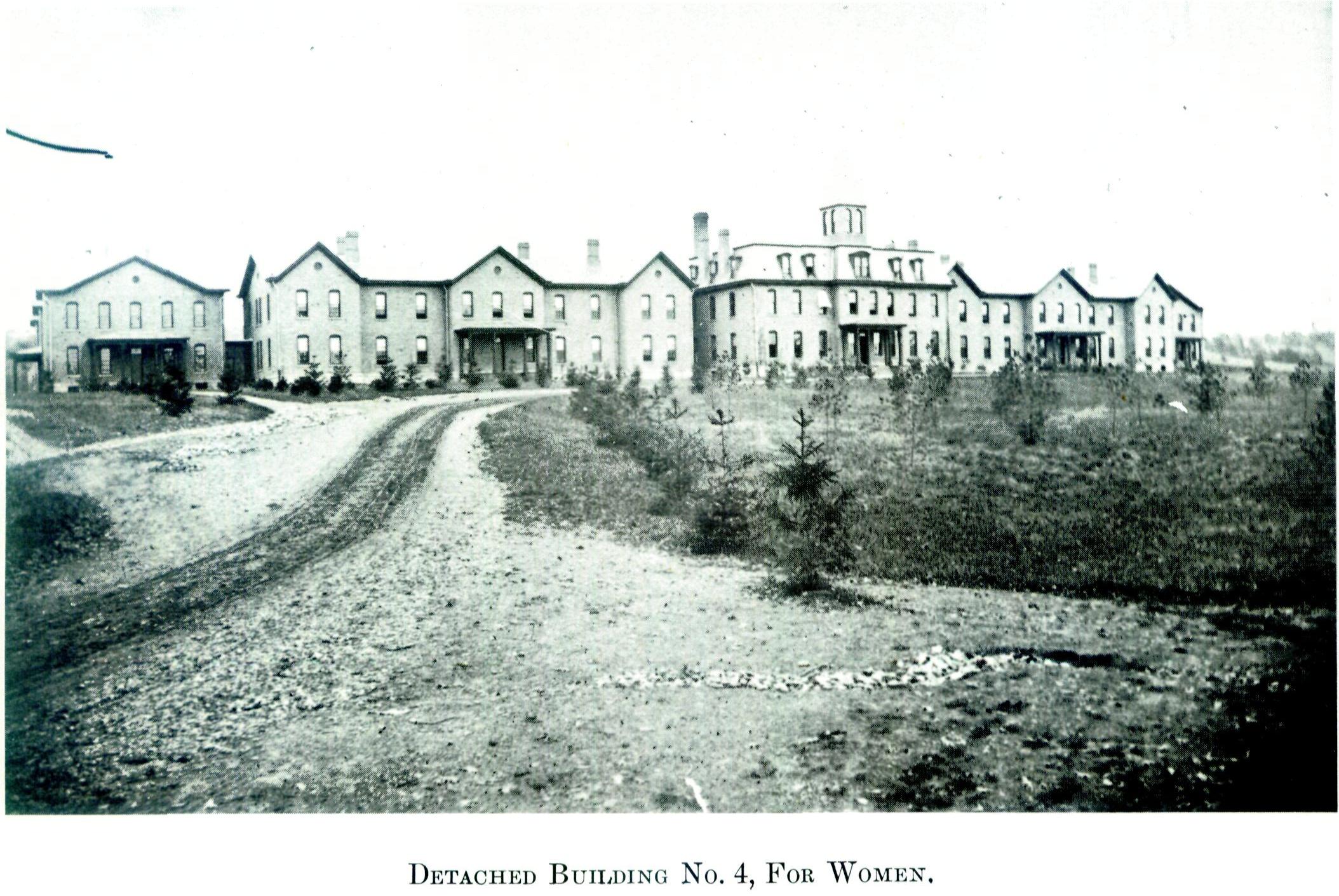
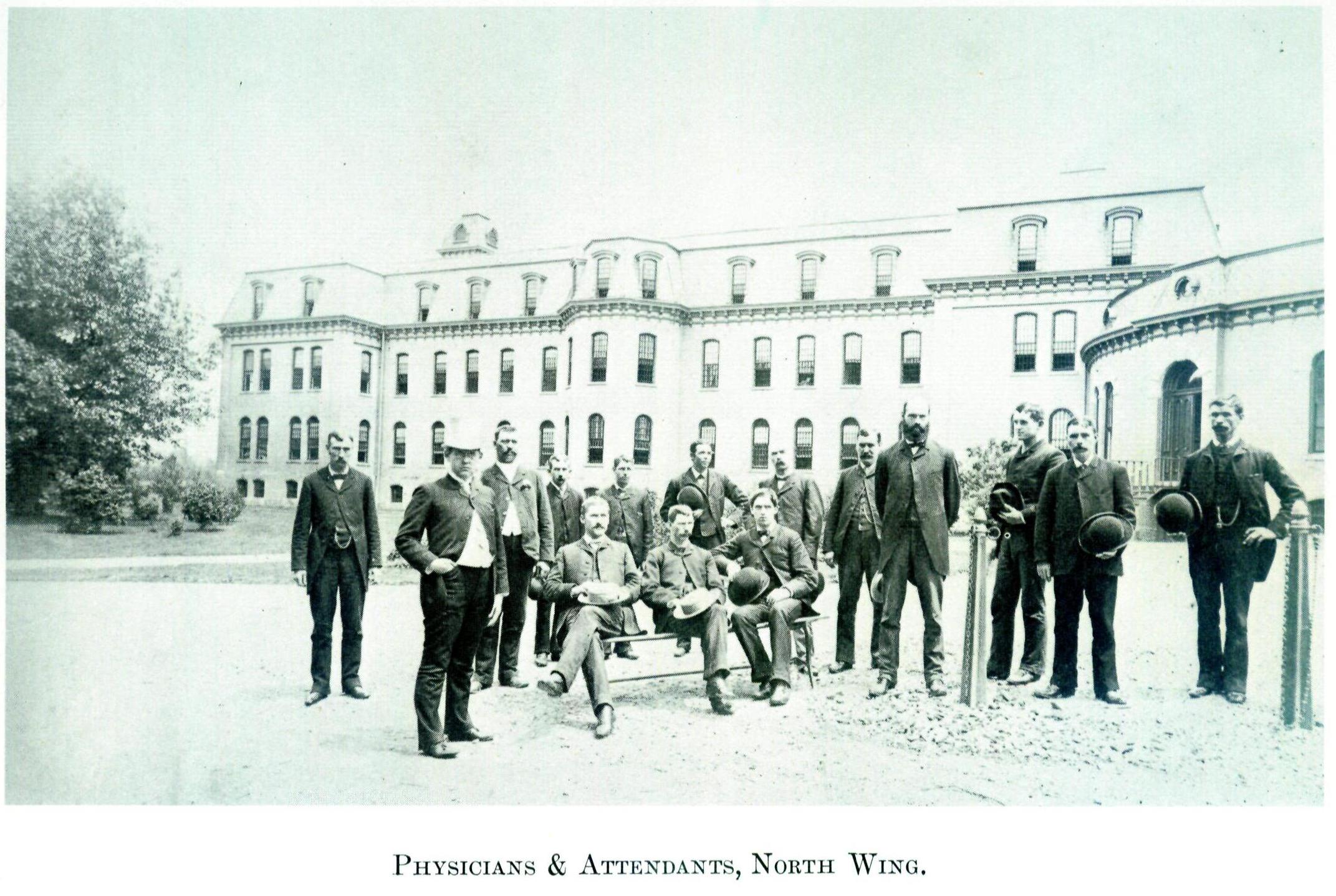
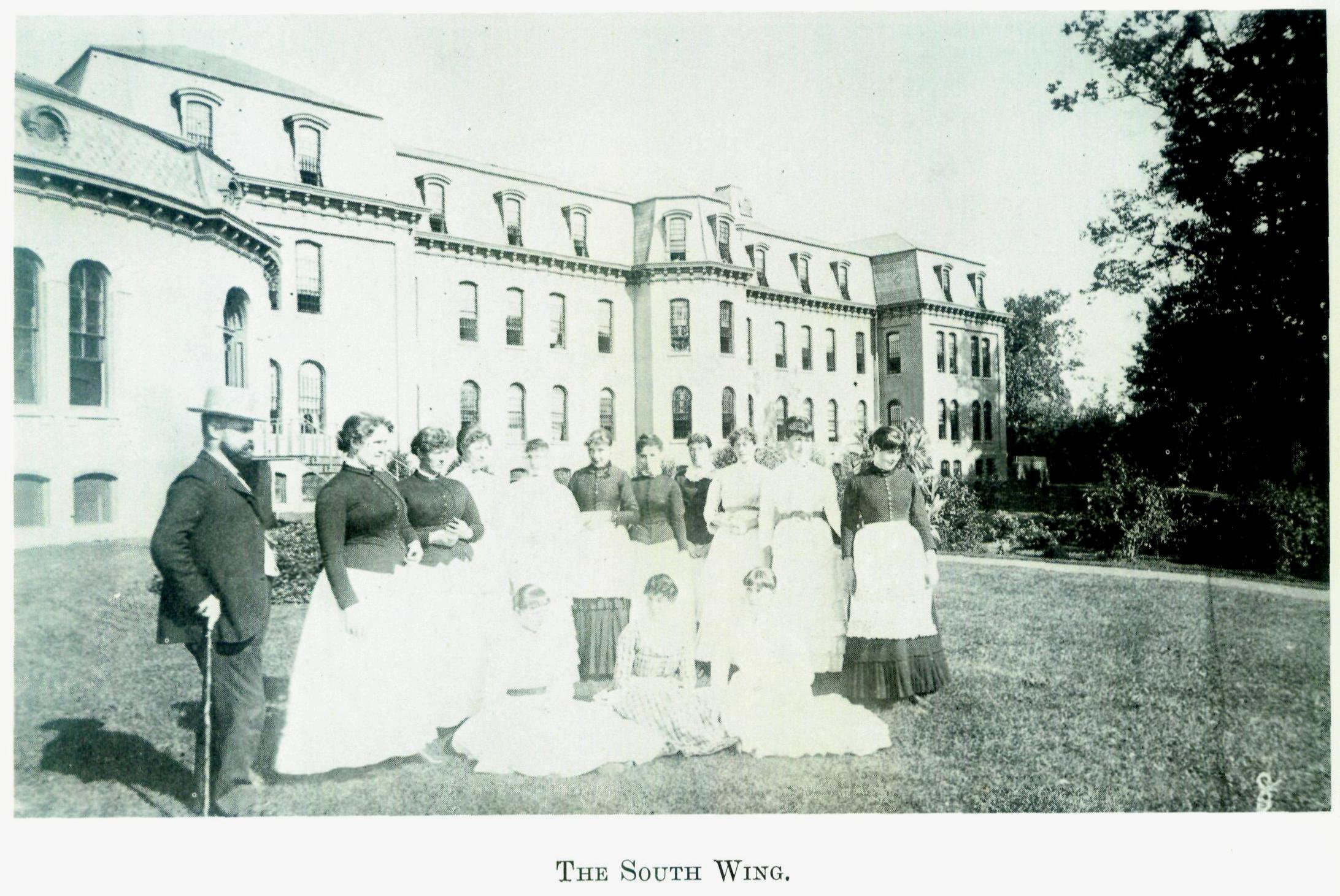
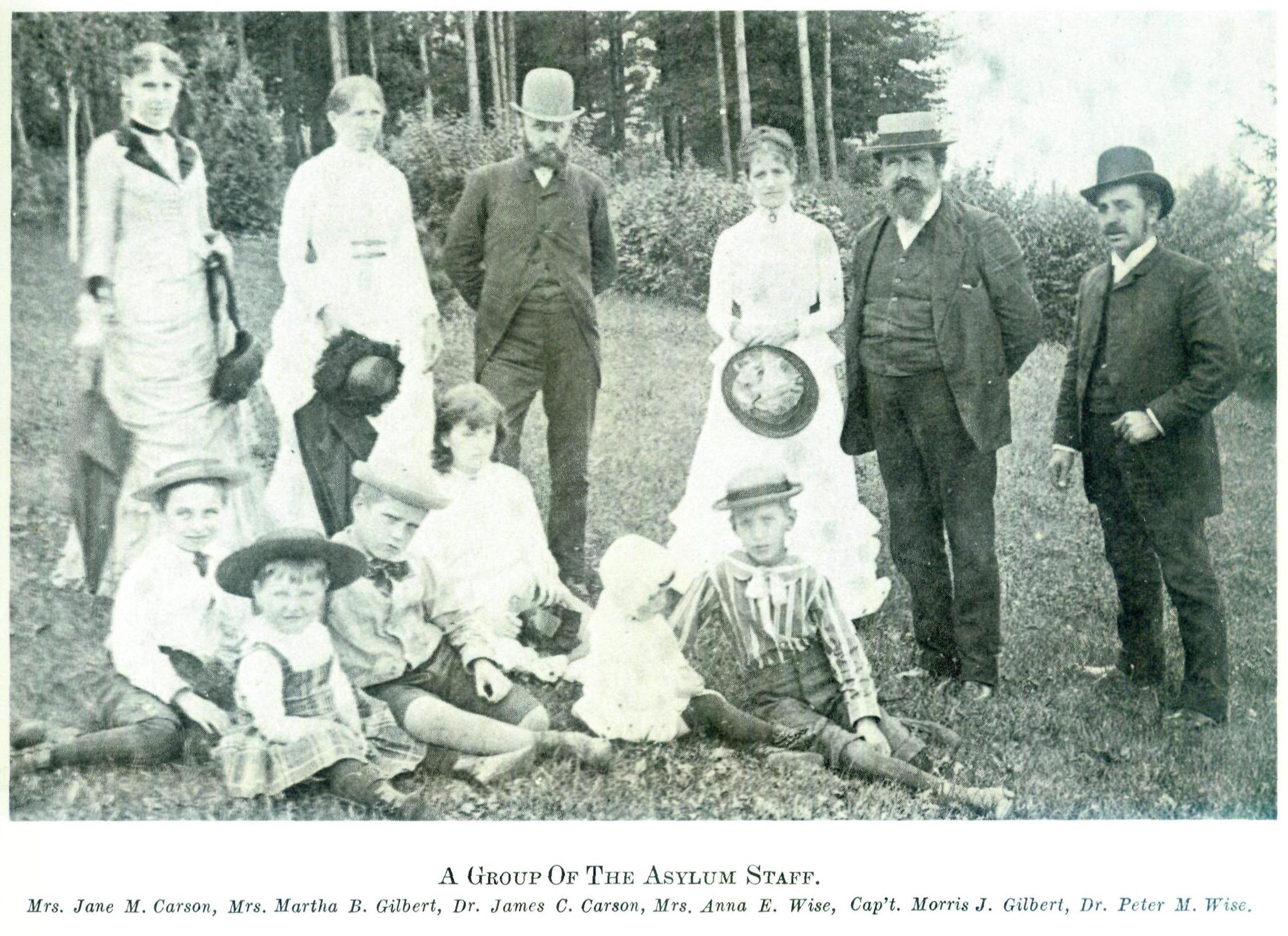
Mr. Morrison’s book is not numbered but is filled with 119 beautiful, historical photographs of The Willard Asylum (Willard State Hospital), the people who worked there, and historical information. He also recorded who took these wonderful photographs. I would like to share with you a few photographs from the first pages of his book. What follows are Mr. Morrison’s words:

“Year after year since 1869, the Willard Asylum has proved an incalculable blessing to thousands of the unfortunate of humanity in the State of New York – a refuge for the chronic insane and upon lands partially in the Towns of Ovid and Romulus, Seneca County, it was the first such institution established in the nation and has been the exemplar from which other states have formed like asylums.

01-The Main Building-Wayne E. Morrison, Sr. 1978

01-The Main Building-Wayne E. Morrison, Sr. 1978

The early photographs of Willard Asylum, published for the first time, are the work of Nelson S. Hopkins, whose brother, Dr. Horace G. Hopkins, was a Resident Officer of the Asylum at the time. The preponderance of his pictures were made in 1886, however some were taken a year earlier, and a few as late as 1892. Some are also credited to Anne Maycock Hopkins, the wife of Dr. Hopkins. They have been preserved by Dr. Robert E. Doran of Geneva, who has in his possession the Hopkins collection in its entirety – more than three hundred fine old pictures.

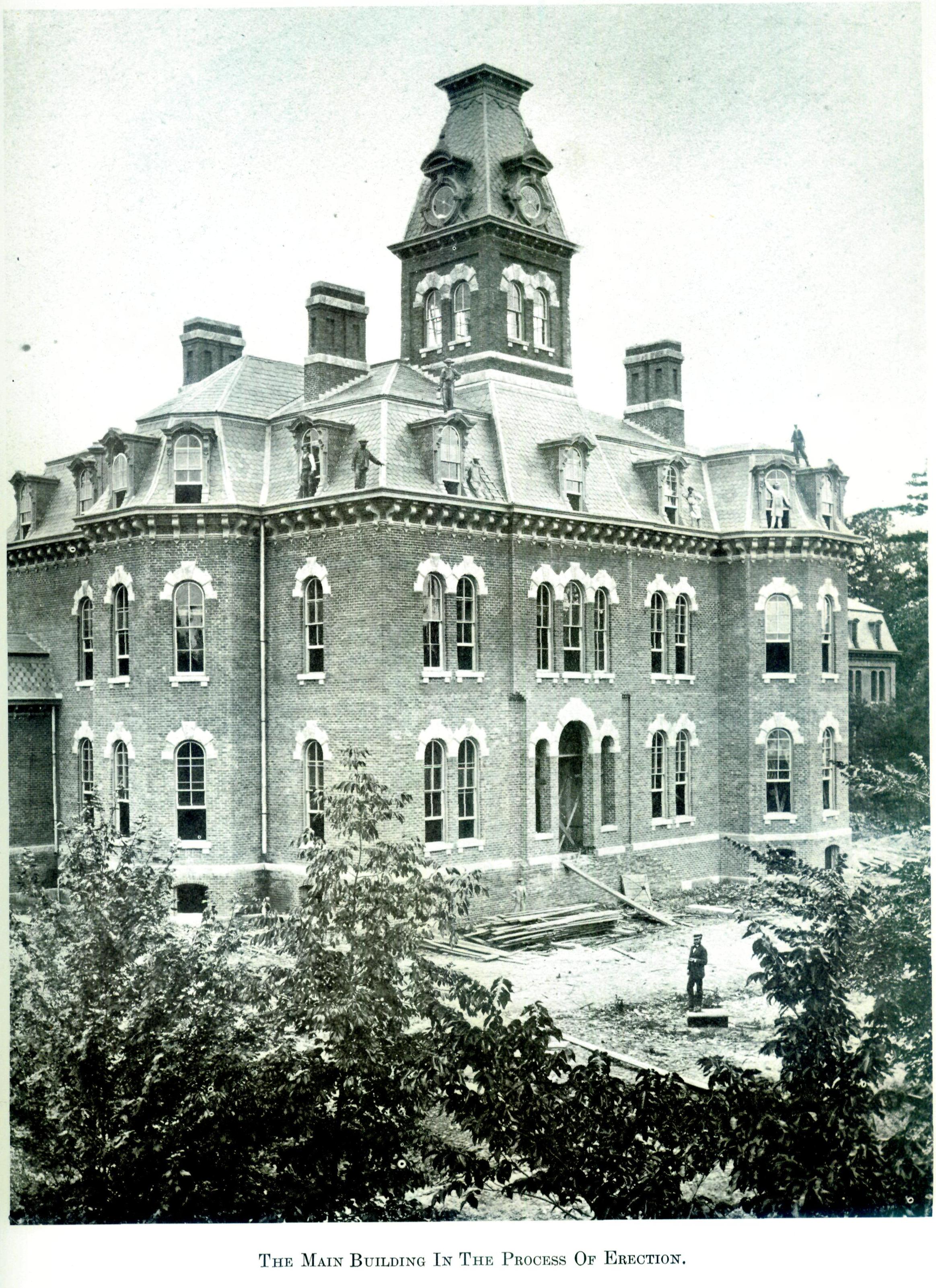
Excepted are the two views in 1869 on the main building in the process of erection taken by Mr. C.V.D. Cornell, photographers, of Waterloo. The front view was loaned by the Willard Asylum Museum, and the rear view by Michael F. Perry, of Ovid. – W.E. Morrison & Co., Ovid, N.Y.”
(Copyright 1978 Wayne E. Morrison, Sr.)

02-The Asylum Medical Staff-Wayne E. Morrison, Sr. 1978

02-The Asylum Medical Staff-Wayne E. Morrison, Sr. 1978

03-The Asylum Officials-Wayne E. Morrison, Sr. 1978

03-The Asylum Officials-Wayne E. Morrison, Sr. 1978

04-The Main Building In The Process Of Erection-Wayne E. Morrison, Sr. 1978

04-The Main Building In The Process Of Erection-Wayne E. Morrison, Sr. 1978

05-The North Wing In Process Of Erection-Wayne E. Morrison, Sr. 1978

05-The North Wing In Process Of Erection-Wayne E. Morrison, Sr. 1978

06-Rear Of The Main Building In Process Of Erection-Wayne E. Morrison, Sr. 1978

06-Rear Of The Main Building In Process Of Erection-Wayne E. Morrison, Sr. 1978

07-The Main Building From The North-West-Wayne E. Morrison, Sr. 1978

07-The Main Building From The North-West-Wayne E. Morrison, Sr. 1978

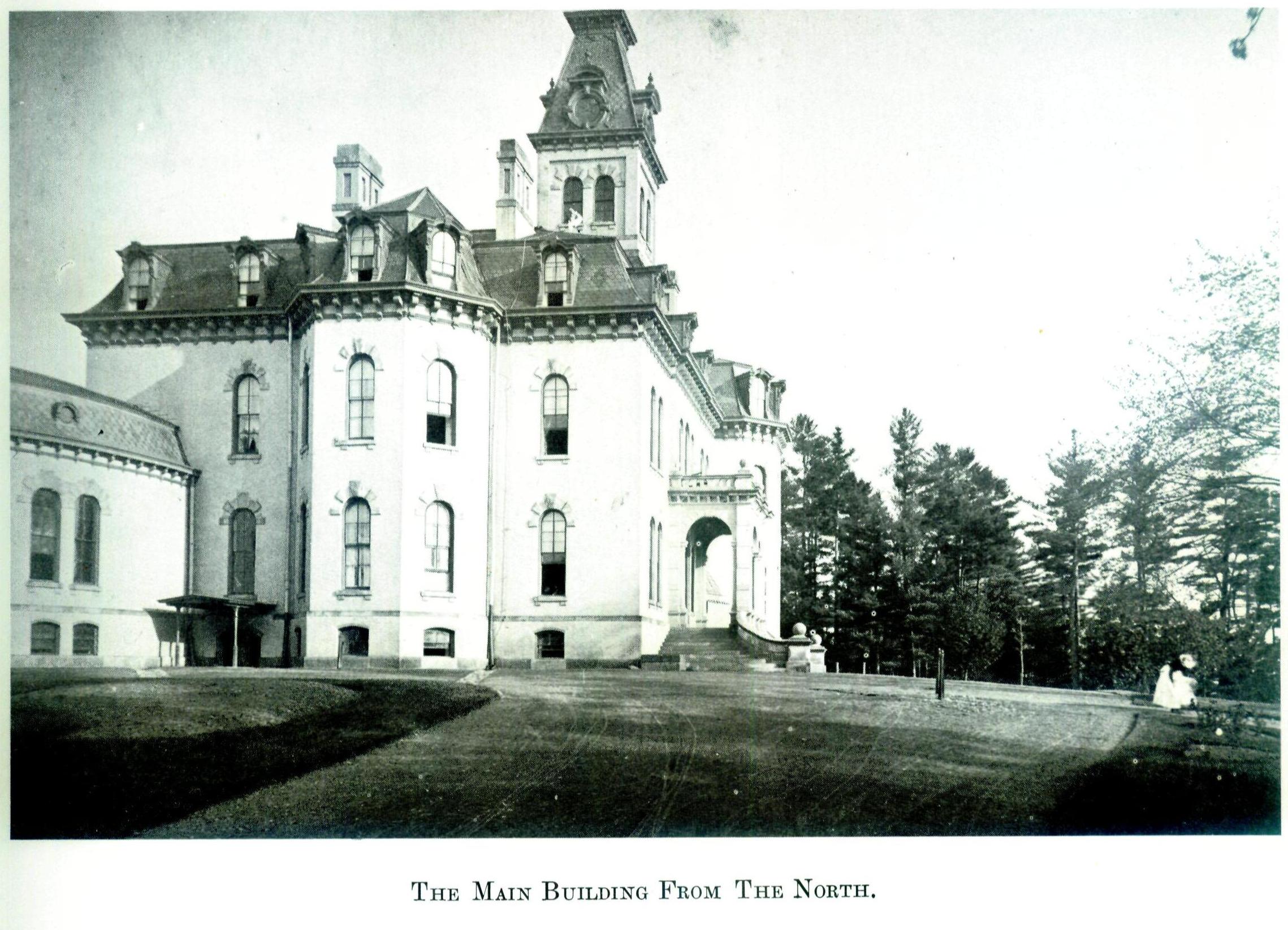
08-The Main Building From The North-Wayne E. Morrison, Sr. 1978

08-The Main Building From The North-Wayne E. Morrison, Sr. 1978

09-The Medical Office-Main Buildiing-Wayne E. Morrison, Sr. 1978

09-The Medical Office-Main Buildiing-Wayne E. Morrison, Sr. 1978

10-The Main Building From The North-Wayne E. Morrison, Sr. 1978

10-The Main Building From The North-Wayne E. Morrison, Sr. 1978

11Group Of Attendants, Detached Building No. 1-Wayne E. Morrison, Sr. 1978

11Group Of Attendants, Detached Building No. 1-Wayne E. Morrison, Sr. 1978

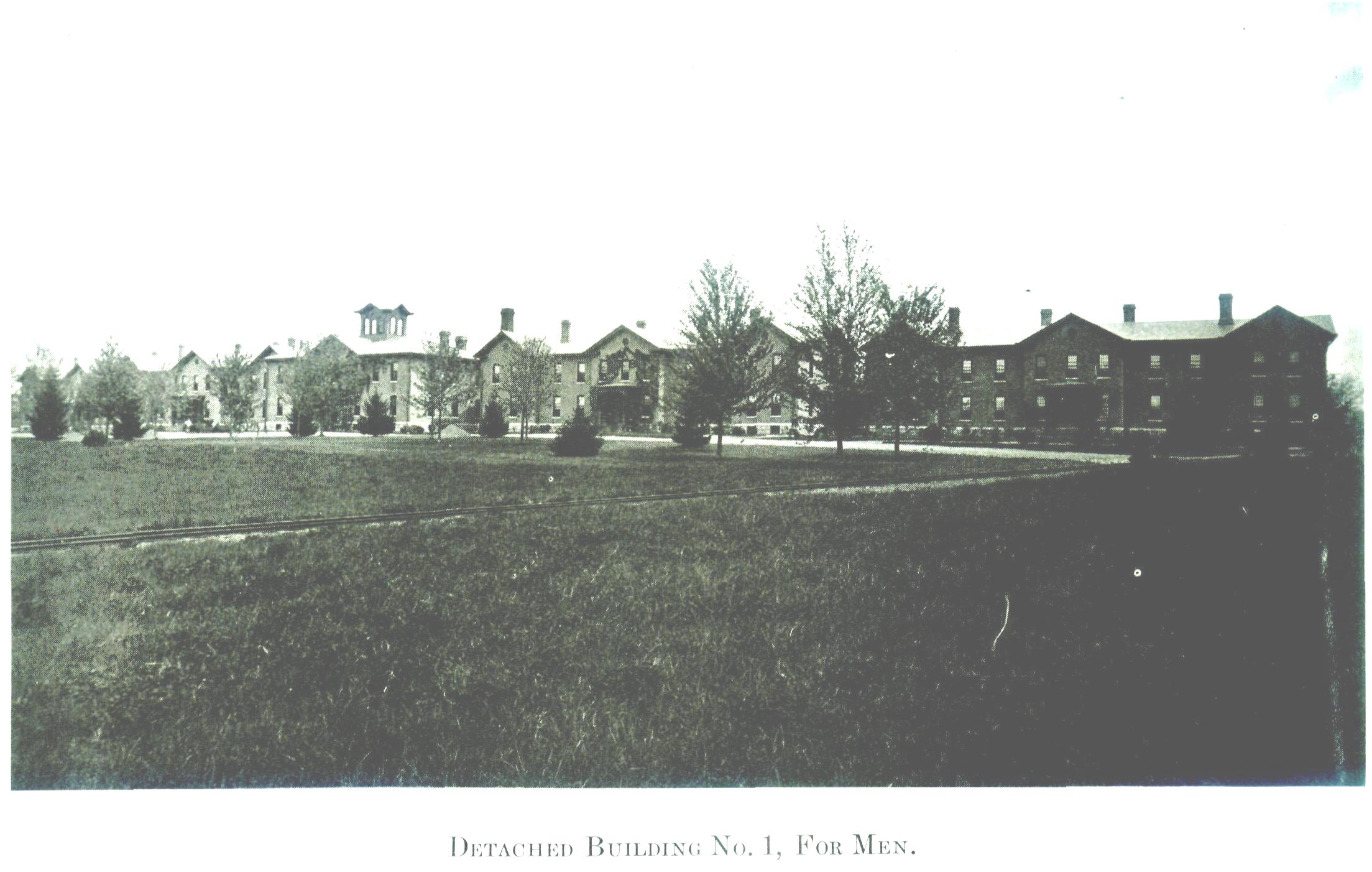
12 Detached Building No. 1, For Men-Wayne E. Morrison, Sr. 1978

12 Detached Building No. 1, For Men-Wayne E. Morrison, Sr. 1978

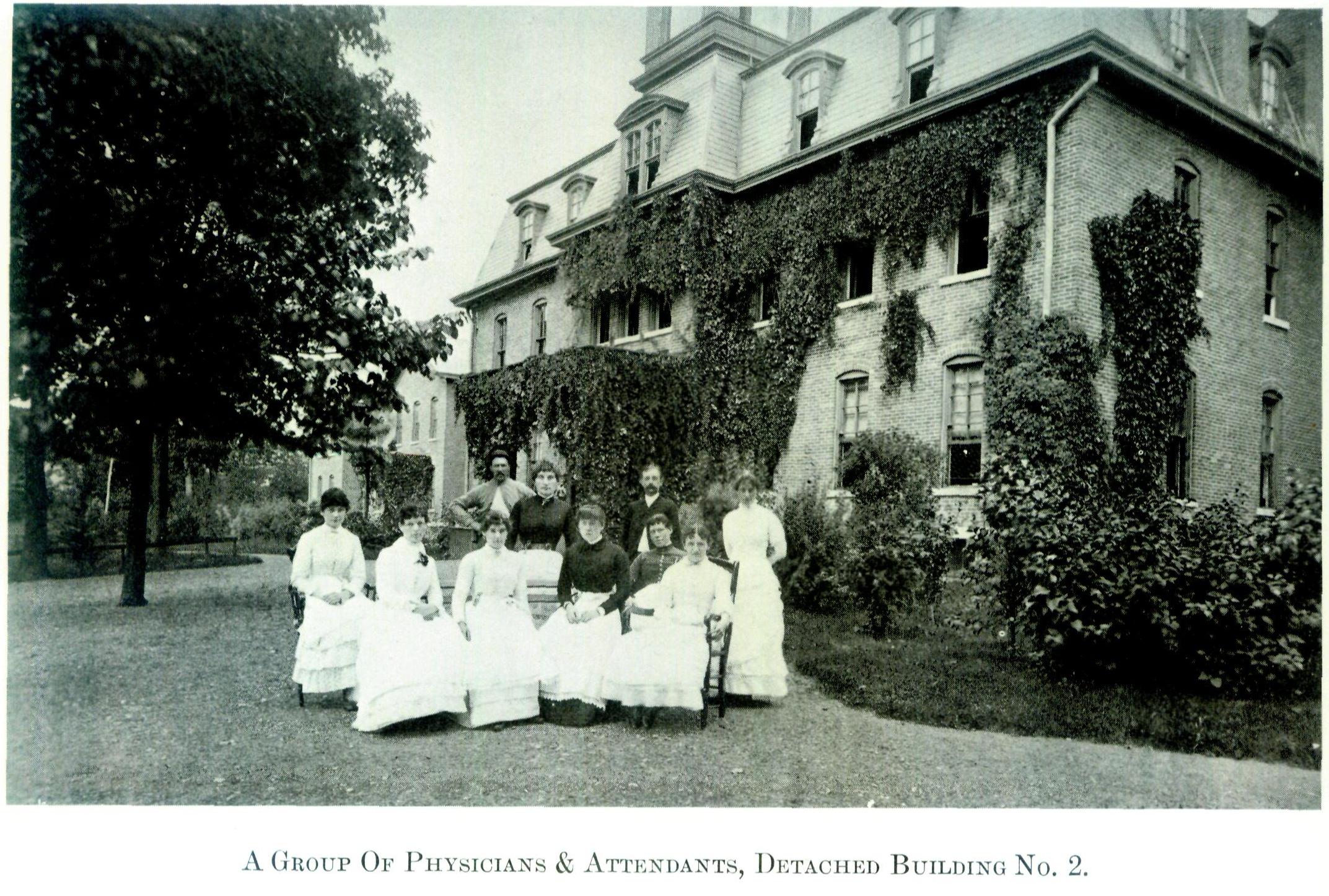
13-A Group Of Physicians & Attendants, Detached Building No. 2-Wayne E. Morrison, Sr. 1978

13-A Group Of Physicians & Attendants, Detached Building No. 2-Wayne E. Morrison, Sr. 1978

14-Detached Building No. 2, For Women-Wayne E. Morrison, Sr. 1978

14-Detached Building No. 2, For Women-Wayne E. Morrison, Sr. 1978

15-Physicians & Attendants, Detached Building No. 3-Wayne E. Morrison, Sr. 1978

15-Physicians & Attendants, Detached Building No. 3-Wayne E. Morrison, Sr. 1978

16-Detached Building No. 3, For Men-Wayne E. Morrison, Sr. 1978

16-Detached Building No. 3, For Men-Wayne E. Morrison, Sr. 1978

17-Supervisor-In-Chief, Attendants & Employees, Detached Building No. 4-Wayne E. Morrison, Sr. 1978

17-Supervisor-In-Chief, Attendants & Employees, Detached Building No. 4-Wayne E. Morrison, Sr. 1978

18-Detached Building No. 4, For Women-Wayne E. Morrison, Sr. 1978

18-Detached Building No. 4, For Women-Wayne E. Morrison, Sr. 1978

19-Physicians & Attendants, North Wing-Wayne E. Morrison, Sr. 1978

19-Physicians & Attendants, North Wing-Wayne E. Morrison, Sr. 1978

20-The North Wing-Wayne E. Morrison, Sr. 1978

20-The North Wing-Wayne E. Morrison, Sr. 1978

21-The South Wing-Wayne E. Morrison, Sr. 1978

21-The South Wing-Wayne E. Morrison, Sr. 1978

22-Physician & Attendants, South Wing-Wayne E. Morrison, Sr. 1978

22-Physician & Attendants, South Wing-Wayne E. Morrison, Sr. 1978

23-The W.B. Dunning Leaving Willard Landing-Wayne E. Morrison, Sr. 1978

23-The W.B. Dunning Leaving Willard Landing-Wayne E. Morrison, Sr. 1978

27-A View At Willard Landing-Wayne E. Morrison, Sr. 1978

27-A View At Willard Landing-Wayne E. Morrison, Sr. 1978

28-A Group Of The Asylum Staff-Wayne E. Morrison, Sr. 1978

28-A Group Of The Asylum Staff-Wayne E. Morrison, Sr. 1978

29-The Onondaga At Willard Landing-Wayne E. Morrison, Sr. 1978

29-The Onondaga At Willard Landing-Wayne E. Morrison, Sr. 1978

30-Cap't & Mrs. Anson Wheeler-Wayne E. Morrison, Sr. 1978

30-Cap’t & Mrs. Anson Wheeler-Wayne E. Morrison, Sr. 1978

2012 In Review

The WordPress.com stats helper monkeys prepared a 2012 annual report for this blog. January 4, 2013.

Here’s an excerpt:

4,329 films were submitted to the 2012 Cannes Film Festival. This blog had 28,000 views in 2012. If each view were a film, this blog would power 6 Film Festivals

Click here to see the complete report.

1922 Eugenics – New York State

Thirty New York State Institutions were subject to the 1912 statute. One man and forty-one women were sterilized. It is interesting to read the opinions of the superintendents of the custodial institutions from which sterilization was tested or performed: Auburn State Prison; Rome Custodial Asylum for the Feeble-Minded (test case of Frank Osborn challenged the New York statute); Buffalo and Gowanda State Hospitals. To read the opinions in their entirety, click on the RED link below.

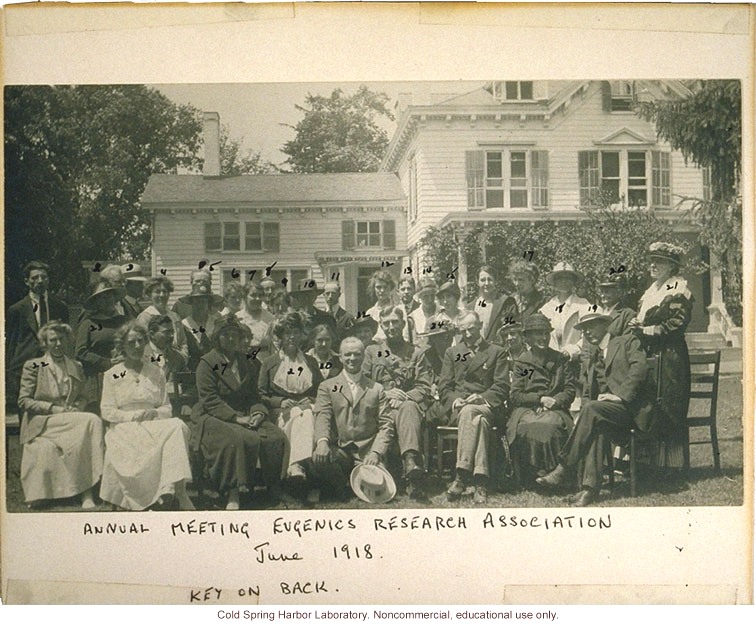
Eugenics Record Office, Annual Meeting of the Eugenics Research Association, 1918 (Laughlin in front, Stewart House in background) http://www.eugenicsarchive.org/html/eugenics/index2.html?tag=1664

Eugenics Record Office, Annual Meeting of the Eugenics Research Association, 1918 (Laughlin in front, Stewart House in background) http://www.eugenicsarchive.org/html/eugenics/index2.html?tag=1664

NAMES: 1. Alexander Weinstein, 2. Dr. Howard J. Banker, 3. Robert W. Kegner, 4. Sarah Oates, 5. Dr. Oscar Riddle, 6. Ella Newman, 7. Mrs. H.H. Laughlin, 8. George MacArthur, 9. Ruth Gardiner, 10. Laura Garrett (Mrs. Clafflin), 11. Leslie E. Peckhem, 12. Edna Rosselot, 13. Dr. Arthur M. Banta, 14. No Name, 15. Emilee Viccari, 16. Mathilda Koch, 17. Louise A. Nelson, 18. Nua A. Minns, 19. Dr. B. Onuf, 20. Annie Henchman, 21. Dr. Wilhelmina E. Key, 22. Mrs. Howard J. Banker, 23. Mrs. Helen Martin Pitcher, 24. Julia F. Goodrich, 25. Dr. Arthur H. Harris, 26. Ethel Thayer, 27. Mrs. W.B. Browning, 28. Caroline E. Conway, 29. Alfie M. Newbuk, 30. Marion Collins, 31. Dr. Harry H. Laughlin, 32. Mrs. Estella Hughes, 33. Dr. Rene Sand, 34. Mrs. W.L.F. Brown, 35. Frederick Hoffman, 36. Mary Kitchell, 37. Mrs. Charles B. Davenport. 

New York “The statute dates from 1912. Present status (January 1, 1922): Repealed 1920, after having been declared unconstitutional by the lower courts in 1918. Thirty (30) state institutions were subject to the act before its repeal; they performed eugenical sterilizing operations as follows:

1. State Prison, Auburn – 1 Vasectomy
2. Clinton State Prison, Dannemora
3. Sing Sing Prison, Ossining
4. Great Meadow Prison, Comstock
5. Farm for Boys, Valatie
6. Reformatory, Elmira
7. Eastern New York Reformatory, Napanoch
8. Agricultural and Industrial School, Industry
9. Training School for Girls, Hudson
10. Western House of Refuge for Women, Albion
11. Reformatory for Women, Bedford Hills
12. Institution for Feeble-Minded Children, Syracuse
13. Newark State School, Newark
14. Custodial Asylum, Rome – Frank Osborn Test Case for New York Statute
15. Craig Colony for Epileptics, Sonyea
16. Letchworth Village, Thiells
17. Matteawan State Hospital, Beacon
18. State Hospital, Utica
19. State Hospital, Willard
20. Hudson River State Hospital, Poughkeepsie
21. State Hospital, Middletown
22. State Hospital, Buffalo – 12 Salpingectomies
23. State Hospital, Binghamton
24. St. Lawrence State Hospital, Ogdensburg
25. State Hospital, Rochester
26. Gowanda State Hospital, Collins – 29: 24 Salpingectomies; 5 Ovariotomies
27. State Hospital, Kings Park
28. State Hospital, Central Islip
29. Long Island State Hospital, Brooklyn
30. Manhattan State Hospital, Ward’s Island, N.Y.
Total to January 1, 1921: (42) 1 Vasectomy; 36 Salpingectomies; 5 Ovariotomies

(Institutions 3, 4, 5, 8, 17, 18, 19, 24, 25 and 29 did not supply historical comment.) 3. Sing Sing Prison, Ossining; 4. Great Meadow Prison, Comstock; 5. Farm for Boys, Valatie; 8. Agricultural and Industrial School, Industry; 17. Matteawan State Hospital, Beacon; 18. State Hospital, Utica; 19. State Hospital, Willard; 24. St. Lawrence State Hospital, Ogdensburg; 25. State Hospital, Rochester; 29. Long Island State Hospital, Brooklyn.

Auburn State Prison, Auburn, (a) Dr. Frank L. Heacox, Physician.
“The State Commission made a special study of a few cases, but no recommendations were made as to the cases investigated. One operation of double vasectomy was performed on one patient at his own and his family’s request. The patient was a youth twenty years of age, who was suffering from tubercular testicles.” Dr. Heacox stated that, in his opinion, the medical value of the statute was very little, but that eugenically it was invaluable. March, 1918. (b) “Our one case of eugenical sterilization was a voluntary one.” January, 1921.

Custodial Asylum, Rome. Dr. Charles Bernstein, Superintendent, from whose institution the test case for the New York statute arose, reported that there had been no operations under the law in his institution; that he could not in the ordinary course of professional practice perform any operation under this law that would be forbidden or illegal without it; that, in his opinion, “there was no medical value in the statute; and that, instead of being of eugenical value, the statute was a eugenical hindrance.” January, 1918.

Buffalo State Hospital (a) Dr. Arthur W. Hurd, Superintendent, in answer to inquiries, reported that he was doubtful whether the law, as it stood before tested in the courts, was applicable to inmates of the hospitals for the insane. He stated also that in reference to the medical value to the institution: “That it may be of a great deal of value in selected cases, as child-bearing, for instance, brings on recurrent attacks of insanity. Eugenically the statute is of much value in preventing the propagation of defectives. * * * Since 1912 six sterilizations have been done in this institution on women to produce sterility on account of the mental condition, which made it unwise that the patients should have any more children, and in two instances where the mental condition was in unmarried insane women and was accompanied by immoral tendencies. In each one of the cases we obtained the written consent of the relatives, which was filed in the case before such an operation was undertaken. We have always felt that indiscriminate sterilization among the insane was not indicated, but believe very strongly in it, and think it is of very great value in decreasing the number of people who would be born with a bad heredity, and also in saving the strength of women, for instance: If continued child-bearing would weaken the system, and in that way increase the tendency to mental breakdown.” February, 1918. (b) F. W. Parsons, Superintendent. “There have not been any untoward mental or physical effects resulting from our cases of salpingectomy, as the menstruation has continued uninterrupted. Before operating we obtain and file the written consent of husband, parent or guardian. Several defectives of bad moral tendencies were sterilized before they were allowed to go on parole, also a number of insane women with good intelligence and who had repeated attacks of insanity during pregnancy or the puerperium. The sterilization act is not in force in New York State. The hospital assumes the responsibility.” January, 1921.

Gowanda State Hospital, Collins. Dr. C. A. Potter, Superintendent. (a) In answer to inquiry concerning the medical and eugenical values of the statute, Dr. Potter replied: “If properly amended, the law would be of very great value in preventing recurrence of attacks of insanity, one of our cases has proven this conclusively. If enforced, after amendment, its eugenical value would be greater than any law of recent years which applies to institutions.” February, 1918. (b) “We note that several of our patients who have been sterilized have had no mental breakdown since the operation and have been able to fill their places in the household since they have not been exposed to pregnancy. Those cases which became insane on account of child-bearing or have a bad heredity but who could remain outside if not exposed to frequent child-bearing, are selected for sterilization and written consent is obtained from the husband or legal guardian, or nearest relative, the whole process and reasons therefor having been thoroughly explained. The public should be shown that insane, epileptics, feeble-minded and criminals have no right to procreate, from an economic standpoint as well as from the point of eugenics. The insane, feeble-minded, epileptics and criminals of child-bearing age should be sterilized.” January, 1921.”

1922 Eugenics Enforcement, Information and Opinions.

Eugenics Archive.

SOURCE: Reprinted from Eugenical Sterilization in the United States, Harry Hamilton Laughlin, D.Sc., Assistant Director of the Eugenics Record Office, Carnegie Institution of Washington, Cold Spring Harbor, Long Island, New York, and Eugenics Associate of the Psychopathic Laboratory of the Municipal Court of Chicago. Published by Psychopathic Laboratory of the Municipal Court of Chicago, December, 1922, Pages 81, 82, 84-87.

Washington State – Grave Concerns Association Model of Memorialization

For the past few years I have tried to get the attention of state and federal lawmakers to pass a law in New York State that would provide for the release of patient names; dates of birth and death; and location of graves, of people who were committed to State Hospitals and Custodial Institutions during the nineteenth and early twentieth centuries who were buried in unmarked or numbered, anonymous graves, whether they be in formerly state, county, or city owned cemeteries. (See My Story) I also asked for a searchable, digital database, available to the public to be included in the bill. On August 22, 2011, I finally got the opportunity to meet with Kate Munzinger, Senator Joseph Robach’s Chief of Staff. Ms. Munzinger took the time to listen to what I was asking for.

Grave Concerns Association

Grave Concerns Association

The reason why I’m blogging about this issue again is because the bill in New York State has not yet become a law. There are caring people in several states who are pushing to get a similar law passed but state and federal representatives will not give them the time of day or they won’t even consider passing such a law because of the misinterpretation of the federal HIPAA Law. I want to help those people in other states by sharing with them what was shared with me. If not for Laurel Lemke, Chair of Grave Concerns Association, I don’t think I would have received the attention of Senator Robach. In 2004, Ms. Lemke and others, had fought for this cause, and managed to amend law 6678 in the State of Washington that allowed for the release of patient names for the purpose of memorialization. She emailed me the bill which I in turn gave to Kate Munzinger, Chief of Staff; Tim Ragazzo, Director of Operations & Legislation; and Senator Joseph Robach. A bill was drafted and introduced to the New York State Legislature in March 2012. The title of the bill is: “An act to amend the mental hygiene law, in relation to patients interred at state mental health hospital cemeteries.”

Western State Hospital, Pierce County, Washington, has 3,218 patients who are no longer anonymous. Grave Concerns Association has raised funds and replaced 1,200 names since 2004. The forgotten have been remembered with dignity. With community fund raising efforts and countless volunteers, inscribed headstones that identify the patient’s name, date of birth and death, have been placed at the graves; and a searchable, digital database has been uploaded to the internet. In contrast, New York State, with 22 or more former state custodial institutions combined has upwards of 11,000 or more people buried in anonymous graves who through no fault of their own have been erased from history. Willard State Hospital alone has close to 6,000 patients buried in anonymous graves.

Sherry Storms, Stacie Larson and Laurel Lemke, Grave Concerns Association, John Lucas, countless volunteers, and the State of Washington deserve to be recognized for their ground breaking, painstaking work, and above all, their model should be copied in every state in the union. The New York State bill is important and necessary in order to restore the dignity and personhood of the thousands of people who were incarcerated and died at former New York State Insane Asylums (later renamed State Hospitals), and State Custodial Institutions (for Feeble-Minded and Epileptic persons). When the bodies of the inmates were not claimed by family members, they were buried in anonymous, unmarked graves. Many of these unclaimed bodies went to medical colleges and pathology labs for the furtherance of medical science. These people deserve to be remembered, and we need to remember what happened to them so that we do not repeat the mistakes of our ancestors.

It is my hope that the State of New York, and all states, will pass similar legislation and follow the Washington State – Grave Concerns Model. They have done a great service for the community and the nation by naming the forgotten; setting up an exemplary, searchable, digital database; and trying their best to remove the stigma of mental illness.

WASHINGTON:
Grave Concerns Association
Volunteer Carla Wutz, descendent of Michael Wutz, updates the data base on the Grave Concerns website.

Grave Concerns Cemetery Database – Version 1.0 – Western State Hospital Historic PatientCemetery
http://www.wshgraveconcerns.org/search-the-database.html

Washington State Archives – Digital Archives

1912-1920 Eugenics in New York State

This is the story of Frank Osborn, a twenty-two year old man who was chosen to be sterilized by the Board of Examiners of Feeble-Minded (including idiots, imbeciles and morons), Epileptics and Other Defectives in the State of New York in 1915. Frank had committed no crime. He was feeble-minded, which in today’s terms would mean he was developmentally disabled. Frank had the intelligence of an eight year old and had been an inmate at the Rome State Custodial Asylum, Rome, New York, since 1907. Previous to that time, he had been an inmate at the Rochester Industrial School at Rochester, New York. Frank must have born about 1893. I do not know when or where he died, or where he was buried.

The whole point of Eugenics was to stop the defective population (insane, feeble-minded, criminal), from procreating. Frank Osborn was not sterilized because the New York State statute was ruled unconstitutional. What I find disgustingly amazing is the attitude of doctors, lawmakers, and men in general toward women. On page 19 of the testimony given by Dr. Charles Bernstein (The Trial of FRANK OSBORN 9.17.1915), clearly states that a seventeen year old woman had been gang raped but because she was feeble-minded and had been sterilized, the incident was not handled by authorities. “The fact that she was sterile made the authorities feel that it was not a matter for them.” 

To read more about Eugenics in New York State, please click on:
EUGENICS – New York State Timeline 1912-1920

Definitions:
1.Salpingectomy – surgical excision of a fallopian tube.

2. Ovariotomies – surgical incision of an ovary. (Not sure if this procedure is the same as Oophorectomy – the surgical removal of an ovary, called also ovariectomy.)

3. Vasectomy – surgical division or resection of all or part of the vas deferens usually to induce sterility.
(SOURCE: Definitions by Dictionary and Thesaurus – Merriam-Webster Online: http://www.merriam-webster.com/).

4. Eugenics – is the applied science of the bio-social movement which advocates the use of practices aimed at improving the genetic composition of a population, usually a human population. It is a social philosophy which advocates for the improvement of human hereditary traits through the promotion of higher reproduction of more desired people and traits, and the reduction of reproduction of less desired people and traits.

5. Dysgenics (also known as Cacogenics) – is the study of factors producing the accumulation and perpetuation of defective or disadvantageous genes and traits in offspring of a particular population or species. Dysgenic mutations have been studied in animals such as the mouse and the fruit fly. The term dysgenics was first used as an antonym of eugenics – the social philosophy of improving human hereditary qualities by social programs and government intervention.

6. Defendant -is any party required to answer a plaintiff’s complaint in a civil lawsuit, or any party that has been formally charged or accused of violating a criminal statute. (Respondent is the parallel term used in a proceeding which is commenced by petition).

7. Respondent -is a person who is called upon to issue a response to a communication made by another. In legal usage, this specifically refers to the defendant in a legal proceeding commenced by a petition, or to an appellee, or the opposing party, in an appeal of a decision by an initial fact-finder.

8. Plaintiff – also known as a claimant or complainant, is the term used in some jurisdictions for the party who initiates a lawsuit (also known as an action) before a court. In other words, someone who tries to sue. By doing so, the plaintiff seeks a legal remedy, and if successful, the court will issue judgment in favor of the plaintiff and make the appropriate court order (e.g., an order for damages).

9. Appeal – is a process for requesting a formal change to an official decision. The decision maker to whom the appeal is made may be a court, a board, a tribunal or even a single official. Generally, only the party aggrieved below has standing to appeal.
(SOURCE: Definitions by Wikipedia: http://en.wikipedia.org/wiki/Main_Page)

1907 Eugenics

The mid-nineteenth century was the dawn of scientific thought and research concerning evolution and the human condition. Three men made an influential mark in history with their provocative theories which are still debated today. These men were: Charles Darwin, “natural selection;” Herbert Spencer, “survival of the fittest;” and Sir Francis Galton, “nature versus nurture.” Galton invented the term “eugenics.” Eugenics is the science of selective breeding in order to manipulate the gene pool and improve the human race. In other words, only certain members of society should be allowed to procreate. One of the goals of the Eugenics Movement was to rid the United States of the dregs of society: the defective, dependent, and delinquent classes by means of forced sterilization.

15 states enacted Eugenics legislation in America: Indiana, Washington, California, Connecticut, Nevada, Iowa, New Jersey, New York, North Dakota, Michigan, Kansas, Wisconsin, Nebraska, Oregon, and South Dakota. Eugenics began on March 9, 1907, with Indiana being the first state to enact a law, and ended on December 13, 1921, with Oregon proving the law unconstitutional. But that wasn’t the end. Wisconsin’s law was still active on January 1, 1922. From 1913 to January 1, 1921, the state of Wisconsin performed 76 forced sterilizations on inmates at the Home for Feeble-Minded at Chippewa Falls: 15 males (Vasectomy); and 61 females (Salpingectomy).

New York State passed a Eugenics Law on April 16, 1912, Chapter 445; Declared Unconstitutional by the Supreme Court of Albany County, March 5, 1918, and by Appellate Division July 1, 1918; and Repealed by the State Legislature, May 10, 1920. Forty-two operations were performed in the State of New York “while the statute was in force, but none of them was performed under this statute; all were performed by special arrangement with the patients and their families under the laws and customs governing ordinary surgical operations.” An agreement was made between the inmate who was targeted for sterilization and the inmate’s family, for permission to perform the needed operation that would make the life of their loved one more comfortable, leaving them to lead a productive, “normal” life. One vasectomy (1) was performed at the Auburn State Prison; twelve salpingectomies (2) at the Buffalo State Hospital; and twenty-four salpingectomies (2) and five ovariotomies (3) by the Gowanda State Hospital at Collins. Buffalo State Hospital opened in December 1880 and Gowanda State Homeopathic Hospital (Collins Farm) opened on August 9, 1898. Both were for the care of the mentally ill and were located in Erie County, New York.

These are the people mentioned in the book as being considered for sterilization and/or involved in litigation. According to my research, none of them were sterilized, with the possible exception of Peter Feilen.

Washington:
Peter Feilen, convicted rapist, inmate; ordered vasectomy, Washington State Penitentiary Walla Walla.

William Henry Harrison, inmate; ordered vasectomy, Washington State Penitentiary Walla Walla.

John Hill, inmate (stole hams for his family); ordered vasectomy, Yakima County, Washington.

Chris McCauley, alias Harry Taylor, inmate; ordered vasectomy, State Reformatory, Monroe, Washington. Formerly at Washington State Penitentiary Walla Walla.

New Jersey:
Alice Smith, epileptic: ordered salpingectomy; State Village for Epileptics at Skillman.

Iowa:
Rudolph Davis, twice convicted of felony; ordered vasectomy; Penitentiary at Fort Madison.

New York:
Frank Osborn, feeble-minded; ordered vasectomy; Rome State Custodial Asylum.

Nevada:
Pearley C. Mickle or Mickie, convict; ordered vasectomy, Elko County.

Michigan:
Nora Reynolds, inmate; ordered sterilization, Michigan Home and Training School at Lapeer.

Oregon:
Jacob Cline, convict; ordered sterilization, Oregon State Penitentiary.

ALL of this information was taken from the book Eugenical Sterilization in the Untied States by Harry Hamilton Laughlin.

Fountain Of The Ages by Charles Haag

Fountain Of The Ages by Charles Haag

Keep The Life Stream Pure

Introduction
Dr. Harry H. Laughlin
, Eugenics Associate of the Psychopathic Laboratory of the Municipal Court of Chicago, and Eugenics Director of Carnegie Institution of Washington, Cold Springs Harbor, N. Y., has rendered the nation a signal service in the preparation of this work, “Eugenical Sterilization in the United States.”

Since the rediscovery of Mendel’s Law of Heredity and the recent advances made by the biologists and psychopathologists in respect to the causes of mental and physical defects in the human race, with the consequent revelation of the great role played by heredity as a producing cause, the science of eugenics has become of vital importance.

“Eugenics,” says Professor Irving Fisher, “stands against the forces which work for racial deterioration, and for improvement and vigor, intelligence and moral fiber of the human race. It represents the highest form of patriotism and humanitarianism, while at the same time it offers immediate advantages to ourselves and to our children. By eugenic measures, for instance, our burden of taxes can be reduced by decreasing the number of degenerates, delinquents and defectives supported in public institutions; such measures will also increase safeguards against crimes committed against our persons or our property.”

America, in particular, needs to protect herself against indiscriminate immigration, criminal degenerates, and race suicide.

The success of democracy depends upon the quality of its individual elements. If in these elements the racial values are high, government will be equal to all the economic, educational, religious and scientific demands of the times. If, on the contrary, there is a constant and progressive racial degeneracy, it is only a question of time when popular self-government will be impossible, and will be succeeded by chaos, and finally a dictatorship.

Dr. Laughlin is well qualified for the work he has undertaken. For twelve years he has been in immediate charge of the Eugenics Record Office (founded in 1910 by Mrs. E. H. Harriman and since 1918 a part of the Carnegie Institution of Washington), located at Cold Spring Harbor, Long Island, New York. There he is engaged in organizing and conducting eugenical investigations. He is, also, Expert Eugenics Agent of the Committee on Immigration and Naturalization of the House of Representatives of Washington, D. C., and recently organized the exhibits of the Second International Congress of Eugenics in New York City.

As a product of scientific research the book will have permanent value. The importance and usefulness of the work is not to be gauged by the extent of its circulation. Enough copies will be published to reach the leaders of the medical, legal and clerical professions, the press and members of legislative bodies.

The Municipal Court of Chicago, which has for years made an intensive study of crime prevention, punishment and suppression, feels privileged to be able to make another notable contribution in this field.

The courts have special functions to perform in the suppression of crime. The first of these is to enforce the laws impartially and justly. Incidental to this duty much original information comes to the judges of our courts, and it has been the policy of the Municipal Court to make public such incidental information, as the relationship between degeneracy and crime and their relationship to heredity, through the reports of its Psychopathic Laboratory. In the performance of this duty the Municipal Court of Chicago has pointed out the need of the permanent segregation of incorrigible defectives, which serves three purposes: First, the protection of society from the individual offender; second, the protection of the individual from himself, and, third, the restriction of propagation of the defective type due to heredity. The alternative to segregation is to continue to do what we have been doing, that is, incarcerate the offender for a time, more or less brief, and then permit him freedom to repeat his offense, and to propagate his kind.

Segregation is necessary, even though sterilization were invoked. Sterilization protects future generations, while segregation safeguards the present as well. The segregation of incorrigible defectives on farm colonies as a measure of crime prevention is urgently needed in the State of Illinois. However, in a number of states, fifteen up to the present time, experiments have been made with sterilization. The two theories of segregation and sterilization are not antagonistic, but both may be invoked.

With the intention of covering every phase of crime prevention, the Municipal Court of Chicago publishes this work as an important contribution to that cause.

We desire to make acknowledgment to the sculptor, Charles Haag, for the use of his “Fountain of the Ages,” to illustrate the significance of heredity and the continuity of the blood stream. Harry Olson, Chief Justice.

Preface
This volume is intended primarily for practical use. It is designed to be of particular service to four classes of persons: First, to law-makers who have to decide upon matters of policy to be worked out in legislation regulating eugenical sterilization; second, to judges of the courts, upon whom, in most of the states having sterilization statutes, devolves the duty of deciding upon the constitutionality of new statutes, and of determining cacogenic individuals and of ordering their sexual sterilization; third, to administrative officers who represent the state in locating, and in eugenically analyzing persons alleged to be cacogenic, and who are responsible for carrying out the orders of the courts; and fourth, to individual citizens who, in the exercise of their civic rights and duties, desire to take the initiative in reporting for official determination and action, specific cases of obvious family degeneracy.

The work is designed also as an historical record of the several types of activities which characterized the early days of modern eugenical sterilization, and of the later working out, through legislation, litigation, experimental administration and scientific research, of a conservative state policy in reference to eugenical sterilization as an aid in protecting the country’s family stocks from deterioration.

The facts here reported have been secured, and the analyses and principles here given have been worked out during the past ten years. The present study was begun by the author in 1911, as secretary of a committee appointed by the Eugenics Section of the American Breeders’ Association “to Study and to Report on the Best Practical Means for Cutting Off the Defective Germ-Plasm in the American Population.” Of this committee, Mr. Bleecker Van Wagenen was chairman. He reported a summary of the first year’s work to the First International Congress of Eugenics in London in 1912. In February, 1914, under the authorship of the secretary, it issued bulletins 10-a and 10-b of the Eugenics Record Office, entitled respectively, “The Scope of the Committee’s Work,” and “The Legal, Legislative and Administrative Aspects of Sterilization.”

The statistics reported in this work are brought down to January 1, 1921, and the legal records to January 1, 1922. Great care has been taken to insure completeness and accuracy of record and fact throughout the study, and an attempt has been made to cover the whole field of policy, legality and practice.

Thanks are due for hearty co-operation in securing the facts needed for this work, to the superintendents of the custodial institutions in which eugenical sterilizing operations have been performed, to state officials who willingly supplied copies of official records, to judges of the courts of law before whom seven sterilization statutes have been tested, to the attorneys-at-law who have generously given legal advice and opinions, to many physicians who have been consulted in reference to the medical aspect of the problem, to the scientific field investigators of the Eugenics Record Office, to surgeons who have furnished case-records of persons sexually sterilized, and to authors and publishers of the several text-books on anatomy and surgery who have kindly permitted quotations in reference to the technique of given sterilizing operations.

Besides these many persons who have so generously aided the investigations, special obligations are due to Dr. Charles B. Davenport, Director of the Eugenics Record Office, for many constructive suggestions and for constant encouragement throughout the investigations, and to Hon. Harry Olson, Chief Justice of the Municipal Court of Chicago, for kindly writing the foreword, for rendering an opinion on the legal aspects of sterilization, which appears as Section 1 of Chapter IX, and for publishing the whole of these studies under the auspices of the Psychopathic Laboratory of his court.

Harry Hamilton Laughlin. Cold Spring Harbor, Long Island, N. Y., January 1, 1922.”

(SOURCE: Laughlin, Harry Hamilton, Eugenical Sterilization in the Untied States, Psychopathic Laboratory of the Municipal Court of Chicago, 1922, Pages v-viii).

Definitions:
1. Salpingectomy
– surgical excision of a fallopian tube.

2. Ovariotomies – surgical incision of an ovary. (Not sure if this procedure is the same as Oophorectomy – the surgical removal of an ovary, called also ovariectomy.)

3. Vasectomy – surgical division or resection of all or part of the vas deferens usually to induce sterility.
(SOURCE: Definitions by Dictionary and Thesaurus – Merriam-Webster Online: http://www.merriam-webster.com/).

4. Eugenics – is the applied science of the bio-social movement which advocates the use of practices aimed at improving the genetic composition of a population, usually a human population. It is a social philosophy which advocates for the improvement of human hereditary traits through the promotion of higher reproduction of more desired people and traits, and the reduction of reproduction of less desired people and traits.

5. Dysgenics (also known as Cacogenics) – is the study of factors producing the accumulation and perpetuation of defective or disadvantageous genes and traits in offspring of a particular population or species. Dysgenic mutations have been studied in animals such as the mouse and the fruit fly. The term dysgenics was first used as an antonym of eugenics – the social philosophy of improving human hereditary qualities by social programs and government intervention.
(SOURCE: Definitions by Wikipedia: http://en.wikipedia.org/wiki/Main_Page)

1912-1920 Eugenics in New York State.

1920 Margaret Sanger & Eugenics.

1922 Eugenics – New York State.

1907-1909 New York State Feeble-Minded & Epileptic Institutions (Rome)

Besides having state insane asylums for the mentally ill, New York State had other institutions for the “care and treatment of its mental defectives.” The medical records and places of anonymous burials of these people, many of whom were children, are unavailable to the public. They are: The Syracuse State Institution for Feeble-Minded Children, (New York Times – Syracuse Asylum), Syracuse, Onondaga County, NY, established in 1851; The New York State Custodial Asylum for Feeble-Minded Women, first opened in 1878 as a branch of the Syracuse State Institution for Feeble-Minded Children, but made an independent institution and located at Newark, Wayne County, NY in 1885; Craig Colony for Epileptics, Sonyea, Livingston County, NY, established in 1892; The Rome State Custodial Asylum, Rome, Oneida County, NY, opened May 1, 1894; Letchworth Village, for the care of feeble-minded and epileptic persons, Thiells, Rockland County, NY, established 1911.

The following excerpts and pictures were reprinted from The Annual Report Of The Board Of Managers Of The Rome State Custodial Asylum for the years 1907, 1908, and 1909.
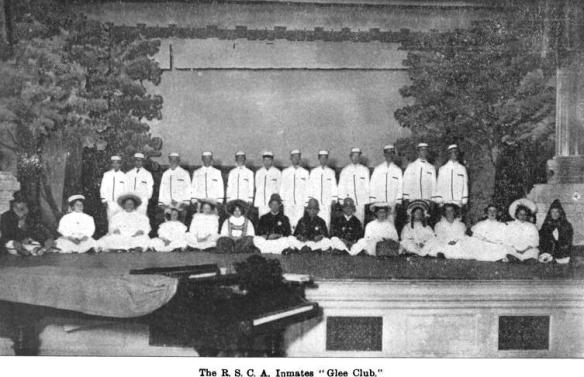
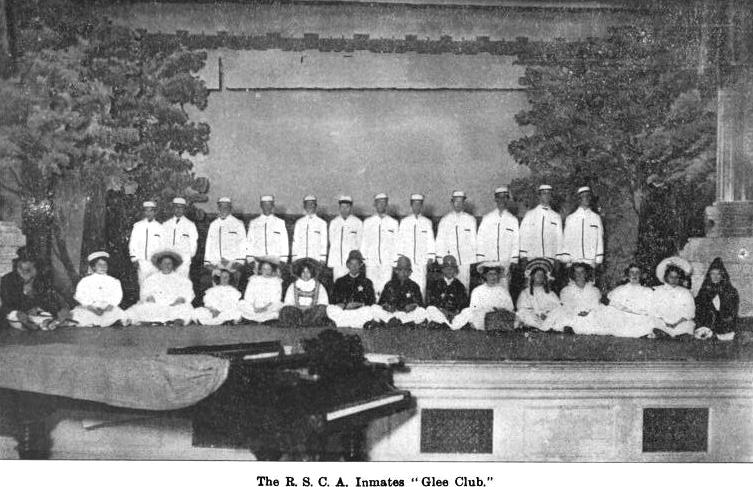
1907 RSCA Inmates Glee Club

1907 RSCA Inmates Glee Club

1907
FUTURE POLICY.
“We again recommend, as did we last year in our annual report, that arrangements be perfected as soon as possible for separating the sexes and removing all the females from this institution, leaving this a colony purely for males, and that we continue to develop our system of farm colonies for the brighter male inmates to the extent of establishing at least ten such farm colonies with 1,000 acres of land. With such extension of farm lands, we are very sure that we would be in a position to produce all the vegetables required for the maintenance of the asylum as well as all the milk and butter required for the institution.

We continue to feel the necessity, more than ever before, for a separate building for the care of the criminal class of feeble-minded, in which such criminal class may be separated from our general population and be taught trades, and receive the benefit which such continuous occupation will afford them, as well as the institution be benefited through the products of their labor in the manufacture of boots, shoes, clothing, brooms, mats, etc.” (26)

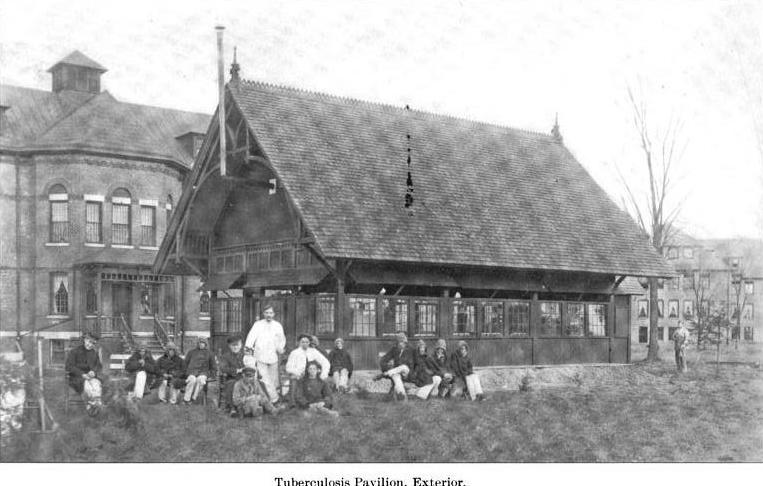
1907 TB Pavilion Exterior

1907 TB Pavilion Exterior

ADMISSIONS.
“The number of admissions during the year, 261, is the largest number by more than 100 that has ever been admitted in any one year’s history of the institution.

The opening of the new ward building J for male inmates, on April 1, 1907, made possible the admission of this large number of cases during the year. Of the number admitted 233 were males and 28 females. It is interesting to note that of the total admissions nearly one-half were under 21 years of age and that 68 were between 16 and 21 years of age, 100 were between the ages of 5 and 16, and 5 below the age of 3. Here again is evidenced the fact that the cases are coming to us at younger ages than heretofore, and this is very desirable as it is during this younger age that most can be done for the feeble-minded, especially the custodial class, toward training them in habits of cleanliness, industry, domestic work, etc.

Of the number admitted during the past year an especially large percentage has been of the more feeble class, as paralytics, with quite a number of cases of tuberculosis, as a result of which we have had more tuberculosis in the institution during the past year than at any time in the previous history of the institution.

Of the admissions this year, 71 came from Greater New York, 61 from county homes, 60 from Syracuse school, 11 from orphan asylums, 9 from reform schools, and 48 direct from their homes.

This tendency of the reform schools indicated above, to transfer their defectives direct to this asylum, again makes it necessary for us to regard the need at this institution for a separate department for the care of the criminal class of feeble-minded separate from our general population. The importance of this can only be fully appreciated through constant daily association with the care of the custodial class of feeble-minded when associated with the criminal classes.

1907 TB Pavilion Interior

1907 TB Pavilion Interior

APPLICATIONS FOR ADMISSION.
We continue to receive, almost every day, applications for the admission of additional cases, and while we stated last year we had 500 applications on file, and during the past year we have admitted 261 cases, still the number of applications on file, for suitable cases for care and treatment here, is over 400, this 400 not including the more than 100 applications which we have received for the admission of epileptics, insane feeble-minded, etc.

However, in this connection, we are of the opinion that were all females to be removed from this asylum, thus creating accommodations here for an additional 300 male inmates in the buildings now occupied by female inmates, and were we to continue our plans for farm colonies for the brighter class of boys to the extent of about 20 per cent, of our population, we will be in a position to accommodate all the applications which we receive for male inmates and thus, when the repairs are completed which are under way at the present time, and the additional repairs contemplated as per our requests for next year of the Legislature, no additional buildings will be required in connection with the main asylum group of buildings for the care of additional cases, with the exception of the separate building of the criminal class as previously referred to.

DISCHARGES AND TRANSFERS.
There were seven males and three females discharged during the year. Of this number four boys were discharged because they were sufficiently improved that they could earn their living and care for themselves outside. Two other boys were discharged to the custody of their families, their parents feeling that they were sufficiently improved that they could be of assistance at home and were practically in a normal condition, and the remaining male was a paralytic and was taken home by his family for home care. Of the females, two were transferred to Newark Custodial Asylum and the other girl was discharged as having been sufficiently improved to be able to properly care for herself and earn her own living.

It continues to be our policy to refuse to discharge all females except as above noted, that is, that no feeble-minded female shall be returned to her family or allowed her freedom after having once been committed to our custody, except that the courts order same, as we believe it should be the policy of the State, after having these cases once committed to its care and custody, that they should retain them, for the protection of society in general and for the economic interests of the State, as well as for the protection of the individual, it having been our experience that when these cases are taken out they are sure to drift into immorality and crime and in the course of a short time application is made to us for their return to the institution, the individual having not only lost all benefit which he had derived from the care, training and treatment here, but also was in much worse condition, both physically and mentally, than when taken away from the institution.

DEATHS.
The death rate during the year was about 4 ½ per cent., there having been 46 deaths, of which number 34 were males and 12 females. The number of deaths from tuberculosis during the year was 10 males and 2 females, this being about the same number as during the preceding year and being about the same percentage of deaths from tuberculosis as the average for the preceding twelve years, that is, about one-third of the deaths is due directly to tuberculosis.

We have had during the year several isolated cases of typhoid fever. However, only one of these cases died and there has been no evidence of the condition spreading or becoming general in nature. The State Board of Health was called upon to assist us in ferreting out the source of infection if possible. However, as the cases were very isolated, no two occurring in one department of the institution and the cases were all confined to inmates, there seemed to be no one source of infection, and as our water supply, milk supply and food supply was free from infection no special importance was placed upon the fact that an occasional one or two isolated cases of typhoid existed in the institution.” (29-32)

ROME STATE CUSTODIAL ASYLUM TRAINING SCHOOL FOR ATTENDANTS FOR MEN AND WOMEN.
“For training attendants in the physical care of the feeble-minded and the physically infirm, and also in the manual, mental, moral and industrial training of the feeble-minded.

The Rome Custodial Asylum is entirely owned and maintained by the State of New York for the care and treatment of feeble-minded and idiotic persons, the following classes being cared for: All of both sexes below the age of seven; all of both sexes between the ages of seven and fourteen who are physically infirm (the ablebodied feeble-minded children who can use language between the ages of seven and fourteen are sent to the Syracuse School for feeble-minded), and cases past the age of fourteen, both sexes, with no further age limit.

The asylum, with its population of 750 (soon to be 1,000) cases, cares for many children, many physically infirm, as cripples, paralytics and bedridden cases, many of the feeble-minded juvenile delinquent class and many adults, among which are a considerable number of the State reformatory classes.

The course of training shall cover two years, of fifty-two weeks each. The first shall be devoted to the training of attendants in all that pertains to the physical care of the physically infirm and mentally enfeebled, and the second year shall be devoted to the training of attendants in the physical, mental, moral and industrial training of the feeble-minded.

For entrance to the school, the applicant shall be twenty-one years of age, and come recommended by two responsible persons who have known the applicant for at least two years, in addition to which the applicant shall file an application, the statements in which are to be sworn to as follows: . . .” (61)

This job paid $20.00 per month for males; $16.00 for females. The hours were: 6:15 AM to 6:00 PM and 6:15 AM to 7:30 PM, on alternating days with one hour off duty every afternoon.

SOURCE: Thirteenth Annual Report Of The Board Of Managers Of The Rome State Custodial Asylum At Rome, N.Y., For The Year Ending September 30, 1907, Adopted At Annual Meeting December 2, 1907, Transmitted To The Legislature February 12, 1908, Albany, J.B. Lyon Company, State Printers, 1908, Pages 26, 29-32, 61.
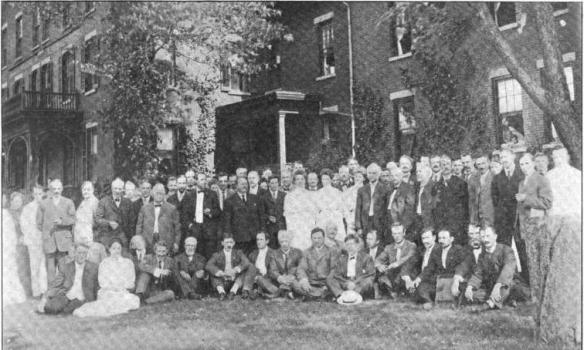
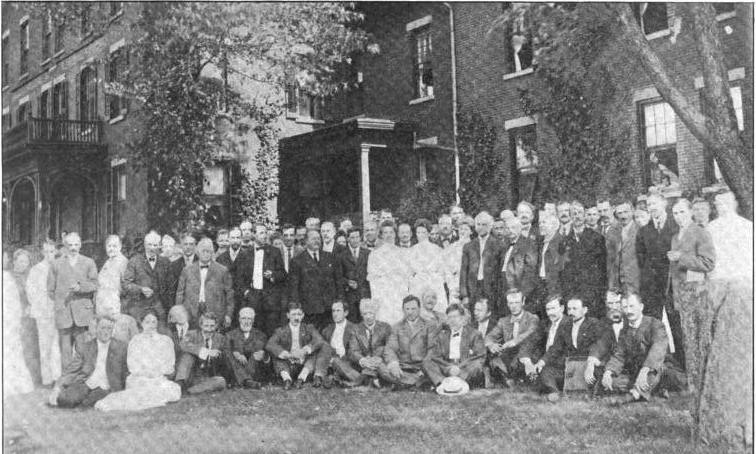
1908 The American Association for the Study of the Feeble-Minded. In Session at the Asylum June 22 – 25, 1908

1908 The American Association for the Study of the Feeble-Minded. In Session at the Asylum June 22 – 25, 1908

1908-2 Employees Building

1908-2 Employees Building

1908-3 Bailey Farm Colony
1908-3 Bailey Farm Colony

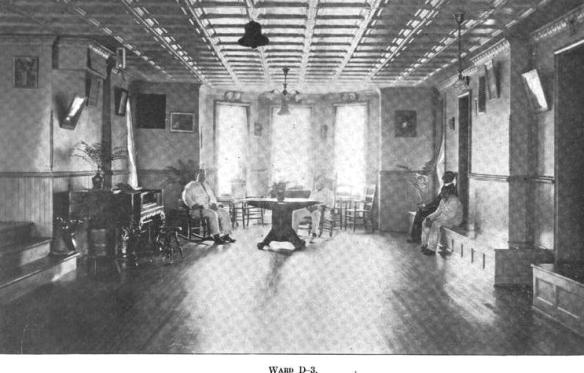
1908-4 Ward D-3
1908-4 Ward D-3

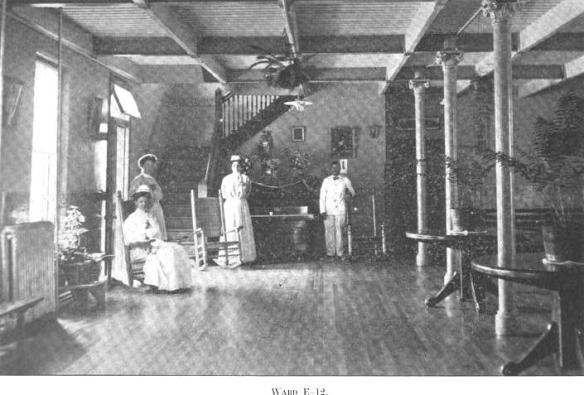
1908-5 Ward E-12

1908-5 Ward E-12

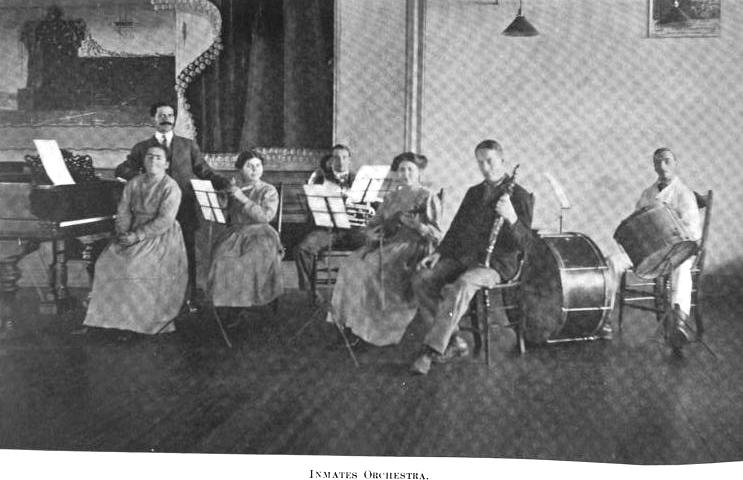
1908-6 Inmates Orchestra

1908-6 Inmates Orchestra

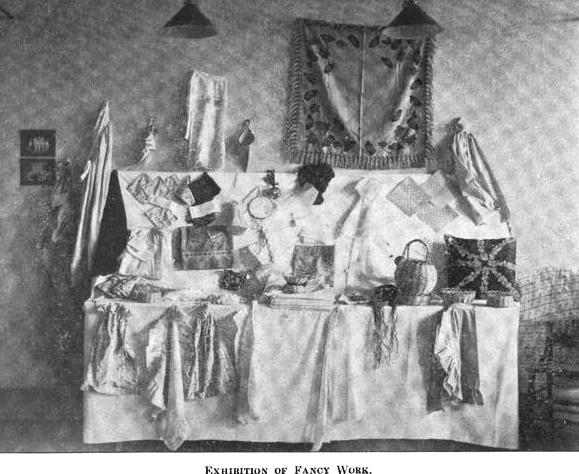
1908-7 Exhibition Of Fancy Work

1908-7 Exhibition Of Fancy Work

1909
SEPARATION OF SEXES.
“The separation of the sexes is one of the greatest, if not the greatest, move that can be made in the direction of economy in management of this asylum, both from the standpoint of a reduced per capita cost of maintenance as well as the betterment of the service. Such separation will allow the inmates the whole freedom of the buildings and grounds, and thus they will require much less supervision when at work or at play to keep them from encroaching on the grounds occupied by the opposite sex, (no fence or partition can prevent the passing of notes or conversation which leads to secret meetings and planned escapes).
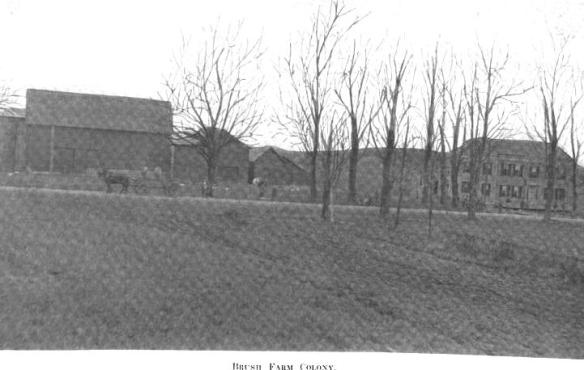
1909-8 Brush Farm Colony

1909-8 Brush Farm Colony

Such freedom for the inmates allows of their greater usefulness in doing errands, also in being left to work alone at tasks which they can well do with no supervision. And, too, this freedom from constant supervision, thus throwing the inmate on his own resources and calling into play his own judgment, better qualifies him for the next task, as I have had many opportunities of observing (notwithstanding the overdrawn observation frequently stated that the feeble-minded have no judgment. True, they apparently have none when they are never allowed to use it, and they will continue to show none so long as some supervisor continues to constantly judge for them).

1909-9 Bailey Farm Colony

1909-9 Bailey Farm Colony

Some one may suggest that the damage to property and morals resulting from lack of constant supervision will more than offset any saving that may result in salaries, but to this I say we seldom see a feeble-minded boy when given a suitable task become destructive or meddlesome, even if he is not closely supervised, and I daily see boys at the farm colonies left in the fields to plow, harrow, plant, hoe, etc., with the farmer only occasionally calling around to direct and supervise, and it is seldom indeed that such boys do damage or injury.
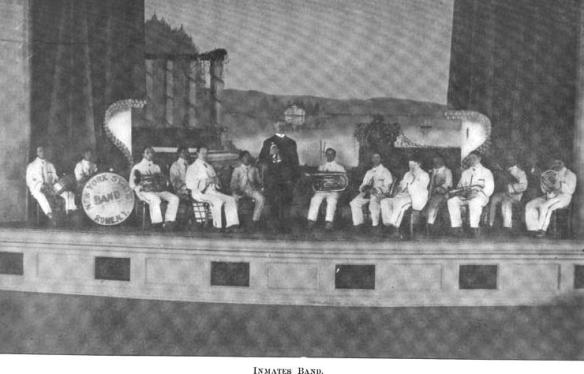
1909-10 Inmates Band

1909-10 Inmates Band

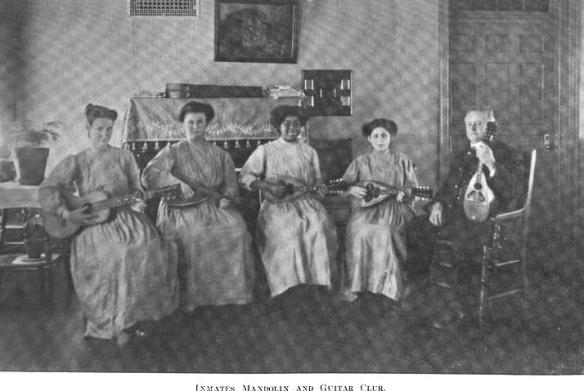
Amusements and entertainments have been continued during the year as usual, and all this is made possible through the liberal response received to our annual holiday appeal to relatives and friends of inmates. Such funds have allowed us to place pianos on all the wards and to furnish a liberal supply of music for the band and orchestra as well as an occasional new musical instrument, as mandolins, guitars, horns, violins, etc., for the use of the patients, and I take this opportunity of thanking in behalf of the inmates all who have thus showed their especial interest in the asylum and its work.
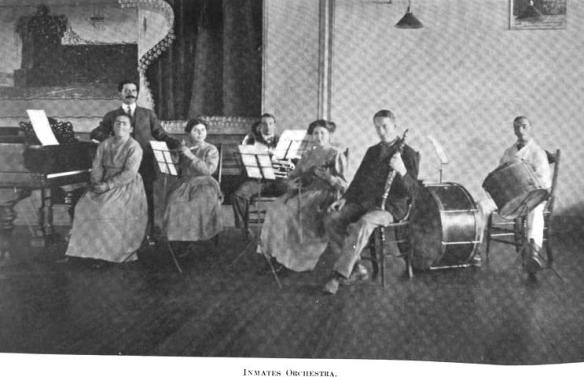
1909-11 Inmates Orchestra

1909-11 Inmates Orchestra

I wish to again express my appreciation of the loyal support accorded me by my associate officers and employees, and to most sincerely thank the members of the Board for their continued interest and devotion to the uplift of humanity as exemplified in the work of this asylum.

Respectfully,
CHARLES BERNSTEIN, Superintendent.” (26-28)

SOURCE: Fifteenth Annual Report Of The Board Of Managers Of The Rome State Custodial Asylum At Rome, N.Y., For The Year Ending September 30, 1909, Adopted At Annual Meeting December 6, 1909, Transmitted To The Legislature January 12, 1910, Albany, J.B. Lyon Company, State Printers, 1910, Pages 26-28.
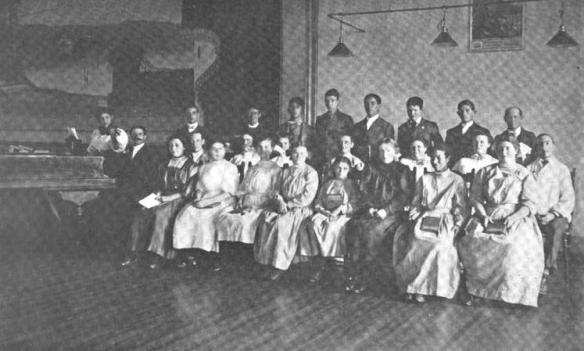
 

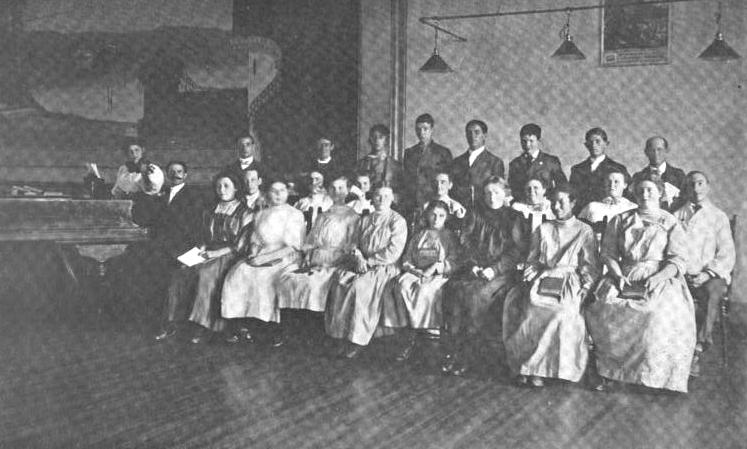
1909-12 Inmates Choir
1909-12 Inmates Choir

1909-13 Inmates Mandolin and Guitar Club

1909-13 Inmates Mandolin and Guitar Club

1909-14 Boys Kindergarten

1909-14 Boys Kindergarten

1909-15 Physical Training

1909-15 Physical Training

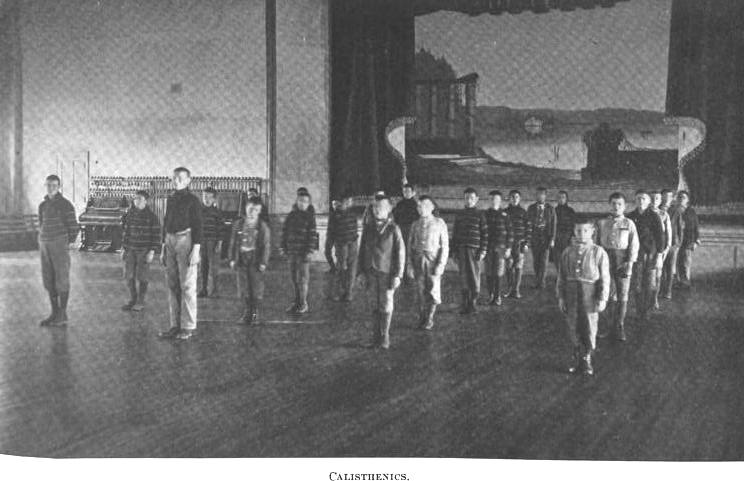
1909-16 Calisthenics

1909-16 Calisthenics

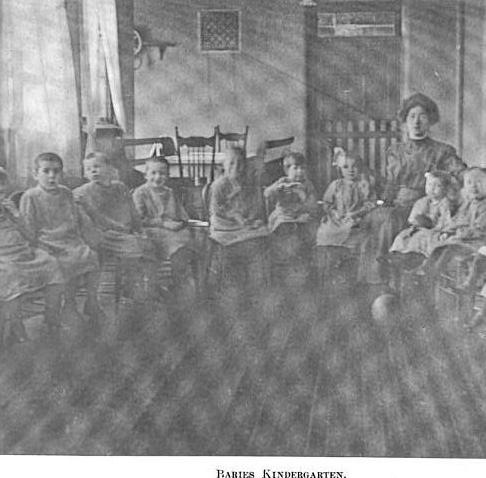
1909-17 Babies Kindergarten

1909-17 Babies Kindergarten

1909-18 Primary School Work

1909-18 Primary School Work

1909-19 Grammar School Work
1909-19 Grammar School Work

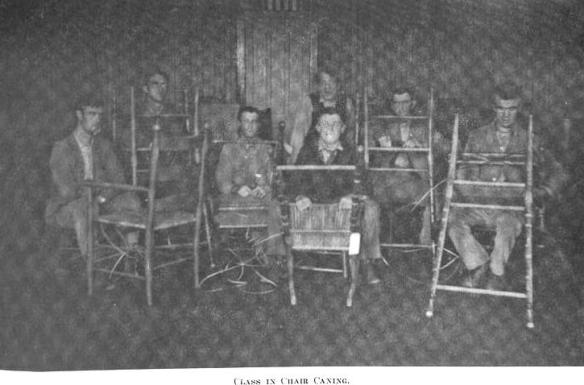
1909-20 Class In Chair Caning

1909-20 Class In Chair Caning

1909-21 Primary Sewing

1909-21 Primary Sewing

1909-22 Primary Sewing

1909-22 Primary Sewing

1909-23 Sewing Class
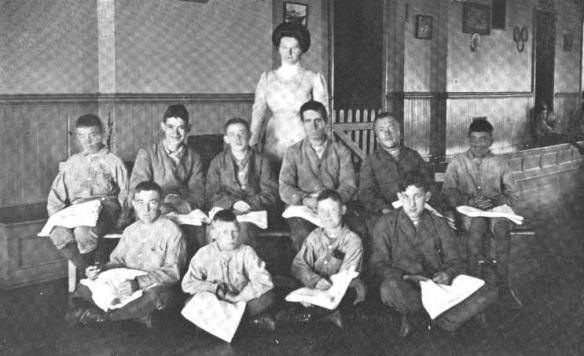
1909-23 Sewing Class

1909-24 Sewing Class

1909-24 Sewing Class

1909-25 Class In Ironing

1909-25 Class In Ironing

Photographs:
SOURCE: Thirteenth Annual Report Of The Board Of Managers Of The Rome State Custodial Asylum At Rome, N.Y., For The Year Ending September 30, 1907, Adopted At Annual Meeting December 2, 1907, Transmitted To The Legislature February 12, 1908, Albany, J.B. Lyon Company, State Printers, 1908.

SOURCE: Fourteenth Annual Report Of The Board Of Managers Of The Rome State Custodial Asylum At Rome, N.Y., For The Year Ending September 30, 1908, Adopted At Annual Meeting December 7, 1908, Transmitted To The Legislature March 2, 1909, Albany, J.B. Lyon Company, State Printers, 1909.

SOURCE: Fifteenth Annual Report Of The Board Of Managers Of The Rome State Custodial Asylum At Rome, N.Y., For The Year Ending September 30, 1909, Adopted At Annual Meeting December 6, 1909, Transmitted To The Legislature January 12, 1910, Albany, J.B. Lyon Company, State Printers, 1910.

Museum Of disABILITY great resource!

Percy Crosby, FDR & Skippy Peanut Butter

A friend told me a disturbing story about a man named Percy Crosby who was committed to Kings Park State Hospital in January, 1949. I had never heard of Mr. Crosby but his story was intriguing. If everything that I have been able to discover in just a matter of days turns out to be true, then a heinous crime was committed against Mr. Crosby. The story is quite complicated and involves a number of people and government agencies. This is what I found.

Abandoned America TM – Matthew Christopher’s Autopsy of the American Dream

Percy Crosby was born on December 8, 1891, in Brooklyn, New York. He was an accomplished author and artist who spent the last sixteen years of his life locked up in Kings Park State Hospital, and died there on his 73rd birthday on December 8, 1964. According to Joan Crosby Tibbetts, daughter of Percy Crosby: “During his career as a celebrity American artist and author, Percy Crosby crusaded against corruption and stood up to the likes of Al Capone and his henchmen when American citizens were too frightened to speak out. He used his Irish humor and gift of satire to lampoon politicians, President Roosevelt, the Ku Klux Klan, and fought for civil liberties, child labor laws, rights of veterans, and freedom of the press. Although he made a profound impression with millions of Americans, primarily through Skippy, the loveable and mischievous cartoon character who became a household word, Percy Crosby was unable to prevent retaliation by those who coveted control of Skippy for their commercial gain, and wanted him silenced. Percy Crosby was falsely imprisoned in a New York mental hospital (KING’S PARK), for the last 16 years of his life, following years of harassment by the IRS. He referred to this period of his life as a “political witch hunt.” During this time, Crosby’s famous Skippy trademark and its valuable goodwill was pirated by a bankrupt peanut butter company, which later merged with a Fortune 500 company, making a fortune in illicit sales under the Skippy brand name.” (1)

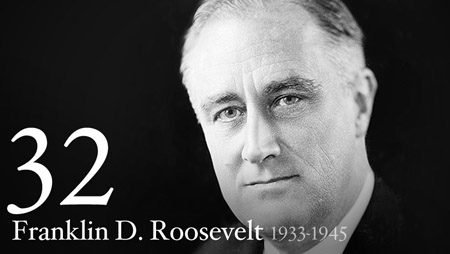
Franklin D. Roosevelt

Franklin D. Roosevelt

Franklin Delano Roosevelt, nicknamed FDR, was the 32nd President of the United States who served from March 4, 1933, to April 12, 1945. He was born on January 30, 1882 in Hyde Park, New York, and died on April 12, 1945, in Warm Springs, Georgia. FDR won the presidency in November of 1932. In 1936, he was re-elected for a second term; 1940 third term; 1944 fourth term. The Twenty-Second Amendment of the United States Constitution was passed by The Congress on March 21, 1947, and was ratified on February 27, 1951. It set a two term limit (4 years per term, 8 years total), for the office of President of the United States.

So, what does FDR have to do with Percy Crosby?

According to political commentator, David Martin, in his December 10, 2006, piece entitled, Roosevelt’s Revenge: “In 1937 Crosby drew a political cartoon, entitled “Paying the Price”, showing the slain figure of Justice lying on the ground with a giant boot on her chest, captioned “One Man Rule”. Crosby sent copies of the cartoon to the Supreme Court and all members of Congress, which depicted Roosevelt’s attempt to “pack the Supreme Court” after its unanimous decision against the NRA. Roosevelt was reputedly furious, and already sensitive to public outrage at his “court packing” plan. The IRS claimed Skippy, Inc. was incorporated by Percy Crosby to evade taxes and filed liens for $47,000, which was published nationally and reported during congressional hearings on tax evasion. Crosby fought back with prominent newspaper ads denying liability, and Lord, Day & Lord filed protest briefs, to no avail. He was forced to discontinue his publications under “The Freedom Press”, which he founded in 1932, and had to sell valuable real estate at distress prices to pay the IRS debt and penalty fines. In 1939 his wife filed for divorce and took custody of the four young Crosby children. The bitter divorce proceedings were publicized to portray the creator of Skippy as selfish and cruel. The children never saw their father again.” (2)

Most of us have heard the famous quote, “It is better to let 100 guilty men go free than to imprison one innocent man.” As we have seen over and over again, this adage only applies to criminal law cases but was never applied to those unfortunate people who were unjustly labeled as mentally ill and incarcerated in state mental hospitals. You decide.

SOURCES:
1. The Life And Times Of Percy Crosby

2. Roosevelt’s Revenge by David Martin 12.10.2006

ADDITIONAL RESOURCES:

Skippy.com

David Martin (DCDave)

The “SKIPPY” Mystery by Collin Nash

Internet Archive – Would Communism Work Out in America? by Percy Crosby

Abandoned America TM – Matthew Christopher’s Autopsy of the American Dream

Franklin Delano Roosevelt Presidential Library and Museum

Dictatorship: The Road Not Taken

Whitehouse.gov – Franklin D. Roosevelt

SKIPPY Peanut Butter at peanutbutter.com

Bloomberg Business Week

1860 Susan B. Anthony

As I am always searching for historical articles concerning anything having to do with the nineteenth century perspective on mental illness, insane asylums, the patients, and any one who may have been involved, I was very pleased to find this particular passage from Eighty Years And More: Reminiscences 1815-1897 by Elizabeth Cady Stanton (1815-1902), involving Susan Brownell Anthony. After reading it, I wanted to know the specifics of the story, and I had to find out who the characters were. Being a life-long resident of Rochester, New York, I am proud to say that Miss Anthony was also a resident of this fine city from 1866 to 1906. She is one of America’s most famous, beloved, and inspirational women because of her strength, dedication, and undying tenacity for the cause of women’s rights. Miss Anthony was born on February 15, 1820 in Adams, Massachusetts, and died on March 13, 1906 in Rochester, New York. Her most famous quote is, “Failure is Impossible.”

Susan B. Anthony

Susan B. Anthony

Elizabeth Cady Stanton

Elizabeth Cady Stanton

“While all this was going on publicly, an equally trying experience was progressing, day by day, behind the scenes. Miss Anthony had been instrumental in helping a much abused mother, with her child, to escape from a husband who had immured her in an insane asylum. The wife belonged to one of the first families of New York, her brother being a United States senator, and the husband, also, a man of position; a large circle of friends and acquaintances was interested in the result. Though she was incarcerated in an insane asylum for eighteen months, yet members of her own family again and again testified that she was not insane. Miss Anthony, knowing that she was not, and believing fully that the unhappy mother was the victim of a conspiracy, would not reveal her hiding place.

Knowing the confidence Miss Anthony felt in the wisdom of Mr. Garrison and Mr. Phillips, they were implored to use their influence with her to give up the fugitives. Letters and telegrams, persuasions, arguments, and warnings from Mr. Garrison, Mr. Phillips, and the Senator on the one side, and from Lydia Mott, Mrs. Elizabeth F. Ellet, and Abby Hopper Gibbons, on the other, poured in upon her, day after day; but Miss Anthony remained immovable, although she knew that she was defying and violating the law and might be arrested any moment on the platform. We had known so many aggravated cases of this kind that, in daily counsel, we resolved that this woman should not be recaptured if it were possible to prevent it.

To us it looked as imperative a duty to shield a sane mother, who had been torn from a family of little children and doomed to the companionship of lunatics, and to aid her in fleeing to a place of safety, as to help a fugitive from slavery to Canada. In both cases an unjust law was violated; in both cases the supposed owners of the victims were defied; hence, in point of law and morals, the act was the same in both cases. The result proved the wisdom of Miss Anthony’s decision, as all with whom Mrs. P. came in contact for years afterward, expressed the opinion that she was, and always had been, perfectly sane. Could the dark secrets of insane asylums be brought to light we should be shocked to know the great number of rebellious wives, sisters, and daughters who are thus sacrificed to false customs and barbarous laws made by men for women.” (1)

The following article is reprinted from The Model Editions Partnership Historical Editions in the Digital Age, The Papers of Elizabeth Cady Stanton and Susan B. Anthony, Copyright 1997. Rutgers University Press. All rights reserved.

Phoebe Harris Phelps, wife of Charles Abner Phelps of Boston and the sister of prominent New York lawyers and politicians, approached SBA in Albany in December 1860 for help in her flight from her husband. On Christmas day SBA accompanied Phoebe Phelps and one daughter to New York City, where Abby Hopper Gibbons and the writer Elizabeth Ellet concealed the fugitives until they moved on to Philadelphia. Charles Phelps (1820-1902), who graduated from Union College in 1841 and Harvard Medical School in 1844, practiced medicine with his father. A successful political career began with election to the Massachusetts legislature in 1855. Meanwhile, his wife, who worked at the Albany Female Academy before her marriage, raised their three children and published several children’s books on religious themes. By her account, Charles Phelps became abusive and unfaithful before 1858, and when she confronted him, he committed her to the McLean Lunatic Asylum. After seventeen months of confinement, she got away to Albany. In one version she escaped; in another she was released to her brother’s home, and the flight to New York occurred after several months of disputes over visits with the children. In Philadelphia Phoebe Phelps supported herself by writing and sewing until, after ten months of safety, agents of her husband seized their daughter and returned her to Boston. Phoebe Phelps followed and with help from friends found a safe place from which to file for divorce. She published one more religious book in 1865. When Charles Phelps died in 1902, his obituary named his wife but said nothing more about her. Their daughters, both single, lived in Boston. SBA kept clippings about the case in her scrapbooks and identified the principals.” (2)

The following article is reprinted from Mothers on Trial: The Battle for Children and Custody by Phyllis Chesler.

“In 1860, the year Elizabeth Packard was psychiatrically imprisoned, Susan B. Anthony was visiting her friend Lydia Mott in Albany, New York. A disheveled and sobbing woman was admitted to the parlor. She was Mrs. Phelps, the wife of a Massachusetts state senator and a sister of a U.S. Senator. ‘Please won’t you help me? No one else will. I am a wife and mother. When I finally confronted my husband with proof of his adulteries, he beat me and had me put away in an Insane Asylum. My brother had me freed, but could not obtain permission for me to see my children. Yesterday, after a year, I was allowed to visit one child. I fled the state with her immediately. And now I am a fugitive.’

Anthony agreed to help Mrs. Phelps. She escorted her to New York City and obtained refuge for her there. State Senator Phelps threatened to have Anthony arrested during one of her public lectures. He also enlisted Anthony’s two most cherished abolitionist comrades, Garrison and Phillips, in his campaign against her.

Anthony’s comrades strongly believed that her action endangered the ‘women’s right’s movement and the anti-slavery cause.’ Anthony disagreed with them. She said, ‘Don’t you break the law every time you help a slave to Canada? Well the law which gives the father sole ownership of the children is just as wicked and I’ll break it just as quickly. You would die before you would deliver a slave to his master and I will die before I will give up the child to its father.’

Phelps hounded Anthony for more than a year. She remained firm. Finally, he hired detectives to locate his missing child. One Sunday morning, on her way to church, the young Miss Phelps was kidnapped on the street and ‘legally’ returned to her father.” (3)

Chapter XIII – Reforms and Mobs (Includes the origin of the word “bloomer”): Elizabeth Cady Stanton – Susan Brownell Anthony

Susan B. Anthony Grave, Mt. Hope Cemetery, taken by L.S. Stuhler 7.8.2001

Susan B. Anthony Grave, Mt. Hope Cemetery, taken by L.S. Stuhler 7.8.2001

SOURCES:
(1) Eighty Years And More: Reminiscences 1815-1897 by Elizabeth Cady Stanton (1815-1902) New York: T. Fisher Unwin, 1898, Chapter XIII. Reforms and Mobs.)

(2) The Papers of Elizabeth Cady Stanton and Susan B. Anthony, ed. Ann D. Gordon, et al. (Columbia, S.C.: Model Editions Partnership, 1999). Electronic version based on The Papers of Elizabeth Cady Stanton and Susan B. Anthony (New Brunswick, N.J.: Rutgers University Press, 1997) Vol. 1, pp. 196-461. On the Web at http://mep.blackmesatech.com/mep/ [Accessed 21 July 2012] Copyright 1997. Rutgers University Press. All rights reserved.

(3) Chesler, Phyllis, Mothers on Trial: The Battle for Children and Custody, Second Edition, Chicago Review Press, 2011, pages 7-8.

Susan Brownell Anthony Obituary – New York Times

National Susan B. Anthony Museum & House, 17 Madison Street, Rochester, NY 14608

Possible Grave of Phoebe Harris Phelps – Find A Grave

Ira Harris – Find A Grave
Ira Harris may be the brother of Phoebe Harris Phelps. Mr. Harris served as the Senator from New York from March 4, 1861 to March 4, 1867.

Corinthian Hall, Rochester, New York

Other articles concerning Dr. and Mrs. Phelps state that when Mrs. Phelps confronted Dr. Phelps about his adultery, he threw her down the stairs and beat her. When she threatened to tell authorities, he locked her up in an insane asylum and would not allow her to see her children. She remained in the asylum for eighteen months. Mrs. Phelps brother, the Senator from New York, freed her but could not get permission for her to see or have custody of her children. She was finally allowed to see one child, a daughter. Dr. Phelps was a member of the Massachusetts House of Representatives in 1856, and served as a State Senator in 1858. -L.S.Stuhler

1855 Samuel Joseph May

I need to explain who Samuel J. May was because he was mentioned in a previous post about Miss Phebe B. Davis who wrote the pamphlet, Two Years and Three Months in the New York State Lunatic Asylum at Utica: Together with the Outlines of Twenty Years’ Peregrinations in Syracuse. Miss Davis believed that “Priest May” had a hand in having her committed to the State Lunatic Asylum at Utica sometime between 1848 and 1853. Davis stated, “I have given simply the outlines of what took me to the Lunatic asylum. S. J. May, the great woman’s rights man of Syracuse, pretended that he thought it would be a great benefit to my health; yet he knew all the time that I could take care of myself, if I had any thing to do it with, – and that is more than his women-folks can do, though they are rational, I suppose – for they will not cook their own food after it is given them, while I was obliged to work for what little I did have and then do my own cooking besides. But however, as I could not make a comfortable living by sewing, I thought it best to go, and the more readily, as I had heard so much said in commendation of the institution and of the kind treatment the patients received there. Still, notwithstanding all these good hear-says, as soon as I thought of going there, a feeling of suspicion crept into my mind, which I could not eradicate and did not, that all was not right in that Asylum, and this impression proved to be too true – it was not imaginary, but real.”

Samuel May will also be mentioned in my next post in which Susan B. Anthony helps a mother, with her child, escape from an abusive husband who had her committed to an insane asylum for eighteen months. This story is taken from the book Eighty Years And More: Reminiscences 1815-1897, Chapter XIII, Reforms and Mobs, by Elizabeth Cady Stanton.

Samuel J. May

Samuel J. May

Samuel Joseph May was born in the Boston area of Massachusetts on September 12, 1797, to Colonel Joseph and Dorothy (née Sewell) May. In 1825, he married Lucretia Flagge Coffin and had five children. He was a minister and an influential reformer during the nineteenth century who advocated for women’s rights, better education for children, and the abolition of slavery. He died July 1, 1871, in Syracuse, New York. Abigail “Abba” Alcott (née May) was the sister of Samuel May. Abigail and Amos Bronson Alcott were the parents of Louisa May Alcott who was an American novelist best known as the author of the novel Little Women which was based on her childhood and home life.

According to the Dictionary of Unitarian & Universalist Biography website: “Samuel Joseph May (September 12, 1797 – July 1, 1871), a Unitarian minister, was one of the greatest social and educational reformers of the nineteenth century. He advocated and organized on behalf of freedom and civil rights for blacks, emancipation and voting rights for women, and just rights for workers. Because he was many decades ahead of mainstream acceptance of the policies he fought for, he was often at odds with his ministerial colleagues, church members, and the public at large.”

“In 1845 May began his longest ministry, at the Church of the Messiah in Syracuse, New York. There, he came to understand the plight of women as similar to that of blacks. In his seminal address, the Rights and Condition of Women, 1846, he asked why ‘half of the people have a right to govern the whole.’ He became a familiar figure in the women’s rights movement, speaking at conventions and accepting committee roles, working closely with Elizabeth Cady Stanton and Susan B. Anthony. ‘Humanity is dual, and yet when perfected it is one,’ said May at the 1850 Woman’s Rights Convention in Worcester, Massachusetts. ‘A perfect character in either man or woman is a compound of the virtues of each.’”

“On the eve of the Civil War the atmosphere in Syracuse became ever more incendiary. In January 1861, when a major antislavery rally was to be held, May and Susan B. Anthony were threatened with violence by an angry crowd that stormed the building. The rally was cancelled, and the mob paraded through the streets of Syracuse with effigies of May and Anthony, finally burning them in the center of town.”

“As war approached, May reluctantly recognized that human rights could no longer be pursued without violent means. He ended by supporting the war, urging the government to prosecute it quickly, and pressing Lincoln to free the slaves. During the war, May did charitable work on behalf of soldiers and prisoners. After the war he campaigned for the rights of workers and championed welfare for the poor, rights for women, and the redistribution of wealth through a graduated income tax. Into his last years he maintained his support of black and female suffrage.”
SOURCE: All material copyright Unitarian Universalist History and Heritage Society (UUHHS) 1999-2013 From the biography of  Samuel Joseph May, written by Dennis Landis, in the Dictionary of Unitarian and Universalist Biography, an on-line resource of the Unitarian Universalist History & Heritage Society. Dictionary of Unitarian & Universalist Biography, All material copyright Unitarian Universalist Historical Society (UUHS) 1999-2012.