Willard Cemetery at FIND A GRAVE

New York State Hospitals at FIND A GRAVE

As I find more, I will add them to this list.

Willard State Hospital Cemetery: Willard Asylum Cemetery in Willard, New York – Find a Grave Cemetery

Gowanda State Hospital Cemetery: Gowanda State Hospital Cemetery in Collins, New York – Find a Grave Cemetery

Binghamton State Hospital Cemetery: Binghamton State Hospital Cemetery in Binghamton, New York – Find a Grave Cemetery

Central Islip State Hospital (No Names-Only Numbered Graves): Central Islip State Hospital Grounds Cemetery in Central Islip, New York – Find a Grave Cemetery

Good Bye!

I started this blog on July 10, 2011, thinking that maybe 5 people would actually read it and find the posts interesting. Five years later, I have created 12 pages, written 211 posts including countless PDF files, published 739 comments, and received 352,795 views. I self-published The Inmates of Willard 1870 to 1900: A Genealogy Resource, on December 17, 2011, with my own money, to further the cause of restoring dignity to the forgotten people who lived and died at New York State Hospitals (Insane Asylums), who had been buried on New York State property in anonymous, unmarked cemeteries and graves for over a century. New York State Senate Bill S840A-2015 became a law on August 18, 2016, but it did not include provisions for a searchable database available to the public as New York State lawmakers and the Office of Mental Health believed that if they did so, they would be sued. Their belief is that putting a name on a memorial or a headstone in public is different than publishing the names on a specific public website (as if no genealogy geek in the future will photograph the graves along with the names and publish them on the internet). This makes no sense to me. I believe that the New York State Office of Mental Health did not want to disclose the names of deceased patients because the burial ledgers may have been carelessly lost or destroyed. They would also have to explain why these cemeteries had never been marked in over 150 years, why they fell into such a state of neglect and disrepair in the first place, and why Kings Park State Hospital Cemetery is being used as a youth baseball field. The following states took a different approach and put searchable databases on the internet available to the public: Kansas; Minnesota; Nebraska; Ohio; TexasMaryland; Florida; Washington; and even Binghamton State Hospital of New York has a searchable list on line.

Monument For The Forgotten-Museum of disABILITY History, Buffalo, NY.

Monument For The Forgotten-Museum of disABILITY History, Buffalo, NY.

The reason why New York State Hospitals / Insane Asylums, Feeble-Minded and Epileptic Custodial Institutions are so important to the world is because there were 26 of them, possibly more. These institutions housed many newly arrived immigrants during the mid 19th and early 20th centuries from all over the world, especially Western Europe. I’m sure that there are plenty of people who would like to know the final resting place of their long, lost ancestor. It just doesn’t seem fair to me that this one stigmatized group of people are being denied the one and only thing that we really have to be remembered by; our name. Even though I initiated the original bill in August 2011 and it was introduced to the New York State Senate by Senator Joseph E. Robach in March 2012, I was never allowed to write it. This is the bill that I would have written:

“This bill is important and necessary in order to restore the dignity and personhood of the thousands of people who were incarcerated and died at former New York State Insane Asylums, (later renamed State Hospitals), Feeble-Minded and Epileptic Custodial Institutions. When the bodies of the inmates were not claimed by family members, they were buried in anonymous, unmarked graves, or, their bodies and brains were given to medical colleges for research. These forgotten souls deserve to have their names remembered and available to the public by means of a searchable internet database. Some of these deceased patients were undoubtedly United States Veterans who served during the Civil War, WWI, WWII, Korea, and Viet Nam, who suffered from PTSD and Shell Shock. Their graves deserve to be marked with the American Flag and honored like any other veteran’s grave.

The list of these former New York State Hospitals includes but is not limited to: Binghamton, Buffalo, Central Islip, CreedmoorDannemora, EdgewoodGowanda, Hudson River, Kings Park, Long Island, Manhattan, Marcy, Matteawan, Middletown, Mohansic, Pilgrim, Rochester, St. Lawrence, SyracuseUtica, and Willard

The Feeble-Minded (Intellectual Disabilities) and Epileptic Custodial Institutions of New York includes but is not limited to: Craig Colony for Epileptics, Letchworth Village for Epileptics & Intellectually Disabled, Newark State School for Intellectually Disabled Women, Rome State School for Intellectually Disabled Adults & Children, and Syracuse State School for Intellectually Disabled Children. There may be more.

There is no good reason why these long deceased souls need to be punished and stigmatized in death for an illness or intellectual disability that they lived with in life. The great majority of these former state hospitals closed in favor of smaller group home settings or changed their names to Psychiatric Centers in the early 1970s. This in turn led to many patients being thrown onto the streets to live in cardboard boxes, or thrown into jail with no psychiatric services, just as they did 150 years ago. I do not understand why anyone would need to have their name withheld from any cemetery list until 50 years had passed after their death. This requirement in the bill only serves to feed the stigma.”

Well, the bill that I wanted didn’t come to pass. I will keep this blog up and running for the purpose of historical research and I might post something now and then but there is nothing left for me to blog about, and I will not continue to bang my head against the wall trying to convince New York State lawmakers and the New York State Office of Mental Health to change their position. So, I will say, Good Bye! A few years ago, I donated $100.00 dollars to the Willard Cemetery Memorial Project and I cannot afford to give any more. If you are so inclined, please donate to the cause or start a cemetery organization of your own. The saddest part of this law is that by the time this organization raises enough money to mark 5,776 graves, I will be too old to care, and I am not aware of any other cemetery organizations for the other 25 New York State institutions. Thank you for all of your support over these past five years! May God Bless You and Your Loved Ones!!

Sincerely, Linda S. Stuhler

QUESTIONS & CONCERNS: CONTACT JOHN ALLEN, Director, Office of Mental Health, Office of Consumer Affairs, Central Office Staff, 44 Holland Avenue, Albany, New York 12229, Phone: (518) 473-6579, Fax: (518) 474-8998.

Photo by Roger Luther at www.nysAsylum.com

Photo by Roger Luther at http://www.nysAsylum.com

1893 Yates County Poor House

Yates County Poor-house was visited by Commissioner Craig without notice, in company with the keeper, Mr. Charles S. Cook, and the matron, Mrs. Charles S. Cook, July 22, 1893.

Population.
The census of the day shows, inmates, 30; of which 23 were men and 7 were women; 4 males and 2 females were idiots or feeble-minded; 2 women were epileptics; none were insane; none were children between 2 and 16 years old.

Buildings.
The buildings remain substantially the same; but new bath-tubs have been put in; though they are not used, for the reason stated, that, being on the second floor, there is no way of supplying warm water for them in the summer weather, when steam is not turned on to heat the house, except by carrying hot water up two flights of stairs. The dormitories for men and those for women are divided into single rooms. This arrangement ensures classification or separation of the decent poor from the vicious pauper while in their respective rooms.

Administration.
The new bath-tubs not being used for the reason already stated, the women use pails for bathing, and the men bathe in the old movable bath-tub in the detached building known as “the hospital.” In this hospital are two men ill and nearly helpless, who have no care except such as may be given by a pauper inmate, who evidently, is not very efficient, or perfectly trustworthy; and save also such as the keeper’s supervision and occasional presence may insure. One of these sick men has palsy with dementia and occasional delusions. The other sick man has paralysis of his left side, and has to be lifted from and to his bed; but appears intelligent and uncomplaining. The situation, considerably removed from the main building, the dirty floors, the foul smells, and the general atmosphere of the place, aroused a feeling of profound pity for the uncomplaining sufferer. There is not intended any reflection on the keeper, who seemed disposed to do the duty devolving upon him personally, though, perhaps, unaware of the necessity of a better assistant in the hospital. The criticism is on the system which preceded the office of the present keeper. In correspondence with the superintendent of the poor, he writes, that “the building should be called a building for old men, as we do not take sick persons always to that room, but generally leave them in the main building; but the people have got in the habit of calling it a hospital.”

In one of the rooms of the main building was an inmate suffering with ulcers of the foot of a serious nature, who was attended by a pauper inmate. His request that Dr. Wm. Oliver, of Penn Yan, might, rather than the visiting physician, give him professional attendance, had been granted, showing evidence of the humane consideration of the wishes of the patients. One woman inmate, stricken with apoplexy and dying, by name Angeline Merritt, is remembered as giving evidence on former visits, of being an efficient and faithful helper, though an invalid. There are not wanting cases in poor-houses of which this is an instance, showing not only self respect, but due regard for others, and disposition to become useful on the part of the unfortunate, but worthy poor.

There is no dietary established as yet by the new keeper; but the diet includes fresh beef twice a week. Dr. McGovern, the physician, visits once each week, and whenever called.

The rooms in the main building, their contents and inmates were clean and in good condition, except remnants of bedbugs, against which a well conducted fight was in progress. The general administration under the new keeper and matron, who took office last April, appears to be relatively good, and likely to improve under their manifest purpose to do right.

Cost.
The annual salary of the keeper and matron is $500; the physician receives two dollars per visit; being about $160 last year, exclusive of medicines. The weekly cost per capita is one dollar and nineteen cents.

Recommendations.
Among other suggestions implied in the foregoing criticisms, it is recommended that the detached building, known as “the hospital,” so long as it may be used as such, for any cases, be put in cleaner and better condition, and under the care of a resident assistant, other than a pauper.”

SOURCE: Annual Report of the State Board of Charities for the Year 1893, Transmitted to the Legislature February 1, 1894, Albany: James B. Lyon, State Printer, 1894, Pages 497-499. 

1893 Monroe County Poor House

Monroe County Poor-house was inspected without notice, by Commissioner Craig, in company with Mr. David M. Hough, chairman of sub-committee of county visitors, and accompanied by Mr. C.V. Lodge, the warden, July 24, 1893. An official visit with the same company was made in the preceding winter.

Population.
The number of inmates in Monroe County Alms-house, July 24, 1893, was 266; of which men were 174, and women were 92; infants under 2 years old were 2; epileptics were, men, 5, and women, 2, total 7; idiots were, males, 3, females, 1, total, 4; blind were, men, 2, women, 1, total, 3; of insane there were none, and of children between 2 and 16 years of age there were none. Number of State paupers, males, 5, total, 5, as follows:
No. 316. Jacob Zimmerlee.
No. 1803. John Hoyt.
No. 1827. Michael Welch.
No. 1837. Frank Aubry.
No. 1836. John Murphy.

Buildings.
In 1892 an addition was built to the east wing of the male department, 50 x 60 feet, and four stories high, with slate roof, to correspond with the old part. A lavatory, 15 x 18 feet, and four stories high, was also built on the north side at the junction of the new and old parts, and connected with the main building by a cross corridor. The addition is built of brick and finished on the inside, on the brick, with two coats of paint and a coat of spar varnish-no plaster. The floors are hard maple and the ceilings corrugated steel, except the fourth story. It is heated by steam, with Bundy radiators, having flues from the bottom, through the wall to the outside air.

Ventilation is secured through ventilating flues in chimneys, with steam coil in the top, to insure circulation. The fourth story has a ceiling of Georgia pine and trussed roof, leaving a clear floor, 50 x 53 feet, eighteen feet hjgh. This room is used as a hospital ward, and can accommodate thirty patients. The first, second and third floors have a few rooms for employes, but are mainly used as dormitories, and have a capacity of about 100.

The floors in the lavatory are iron beams with brick arches and white vitrified tile. The second and fourth stories are each fitted with a white indurated fibre bath-tub, a spray bath, two large iron sinks, a urinal, with slate back and sides, and two washout closets. The first and third stories are fitted just the same as above, except that they have no bath-tub. Total cost, $15,000. The present season a grain barn has been built, adjoining the horse barn, with stables in the basement for cattle, at cost of $3,400.

Diet.
The bread and other articles of food were examined, and found good, on the day of inspection and the day of preceding visit. The land cultivated is said to supply all the vegetables except potatoes. The milk of eleven to fifteen cows is used by the inmates. The dietary, with comments of the warden, is copied verbatim from his written statement, as follows, to wit: Winter diet-table for Monroe County Alms-house, 1892-3:

Sunday.
Breakfast – Rice, syrup, bread, coffee or tea.
Dinner – Meat, potatoes, pickled beets, bread, ginger cake, coffee or tea.
Supper – None.

Monday.
Breakfast – Corn meal mush, syrup, bread, coffee or tea.
Dinner – Meat, potatoes, turnips, bread, coffee or tea.
Supper – Oatmeal or soup, syrup, bread, tea.

Tuesday.
Breakfast – Rice, syrup, bread, coffee or tea.
Dinner – Meat and potatoes, bodied cabbage, bread, coffee or tea.
Supper – Corn meal mush, or soup, syrup, bread, tea.

Wednesday.
Breakfast – Oat meal, syrup, bread, coffee or tea.
Dinner – Meat and potatoes, onions, bread, coffee or tea.
Supper – Oat meal, syrup, bread, coffee or tea.

Thursday.
Breakfast – Rice, bread, syrup, coffee or tea.
Dinner – Meat and potatoes, boiled cabbage, bread, coffee or tea.
Supper – Corn meal mush, or soup, syrup, bread, tea,

Friday.
Breakfast – Rice, syrup, bread, coffee or tea.
Dinner – Codfish and potatoes, pickled carrots or onions, bread, coffee or tea.
Supper – Oat meal, syrup, bread, tea.

Saturday.
Breakfast – Corn meal mush, syrup, bread, coffee or tea.
Dinner – Meat and potatoes, turnips, bread, coffee or tea.
Supper – Oat meal or soup, syrup, bread, tea.

By “coffee or tea,” is meant that both coffee and tea are provided, and the inmates have their option. The meat provided is beef. Some is salted, but mostly fresh. Three times a week soup is substituted for oat meal or corn meal, but not always on the days marked on this table. The hospital ward is provided with the same diet as given in the diet table, and in addition stewed dried fruit twice a week, butter for supper for all; and buttered toast and bread three times per day with milk or milk punch as the physician may order. From sixty to seventy quarts of milk per day are used on that ward, and from three to four dozen eggs. In the summer time one day in the week pork and beans are subtituted for beef.

For vegetables in summer, potatoes are used every day, and turnips, green peas, tomatoes, string beans and cabbage as the gardens may be able to supply. Cherries were given to every inmate when ripe on the trees. Once a week this summer a dry stew with baked dressing and once a week a dumpling stew is given. With the above variation the summer diet would be the same as in’ winter. Three hundred and eighty pounds first class turkey were provided for Thanksgiving dinner.

Administration.
There are two paid chaplains, viz., Rev. J. Ross Lynch, Protestant; and Rev. John P. Stewart, Roman Catholic. Each chaplain holds Sunday services, and ministers to the inmates as they may severally need. There is one visiting physician, viz., Frederick Remington, M.D., of Rochester, who visits the poor-house each day. There is also a resident assistant physician, or interne, who receives fifteen dollars per month. On inquiry the inmates of the hospital and the infirm in other wards, without exception, stated that the principal physician, Dr. Remington, visited them respectively each day, or so often as needed and desired. No complaints were made by inmates in these or other respects.

The beds and dormitories were generally clean and in good order on the day of inspection. Ladies who accompanied the inspectors remarked that some of the bedspreads and bedding had gone too long without washing; but none of the sheets or beds examined, including those of filthy persons, appeared to be soiled. Samples were examined in every ward and dormitory.

The statements of ordinary inmates, as well as of assistants, confirmed the advices from the warden, that one of the two sheets on each bed is changed every week in ordinary cases, and in addition, so often as the needs or habits of infirm inmates make necessary or proper, in some cases several times a day; and that each inmate is bathed once a week in clean water. The closets and bath-tubs were clean and generally in good order. Some of the closets with plumbing, however, are not so good as those in the new hospital for men.

The inmates of the hospital for men seem comfortable under the administration of the paid attendant, verifying the opinion of the board that the sick and infirm should be cared for by competent and faithful persons other than pauper inmates. The general conclusion from the foregoing and all the facts observed on the said inspection and former visit, is that the administration of the Monroe County Poor-house is excellent.

Cost.
Warden’s salary, per year, $1,000; matron’s salary, per year, $360; physician’s salary, per year, $1,000; assistant physician’s salary, per year, $180; chaplain’s salary (Roman Catholic), $150; chaplain’s salary (Protestant), $150. Last year’s cost of medicines, in addition to salaries of physicians, $809.99. Weekly cost per capita for year, one dollar and thirty-five cents.”

SOURCE: Annual Report of the State Board of Charities for the Year 1893, Transmitted to the Legislature February 1, 1894, Albany: James B. Lyon, State Printer, 1894, Pages 500-504. 

1893 Seneca County Poor House

Seneca County Poor-house was visited by Commissioner Craig, without notice, July 18, 1893.

The commissioner called with a carriage on several of the visitors of the State Charities Aid Association, who are residents of Waterloo, to request them to accompany him, on his inspection; but found them out of town or engaged and unable to go with him. The keeper of the poor-house, Mr. Reuben E. Saeger, was absent, at Seneca Falls, and was not expected to return until evening. Many of the men were in the harvest field or absent from the house. All the inmates present were inspected, with dormitories, kitchen and adjacent buildings, in company with the matron, the wife of the keeper.

Population.
The keeper has reported the census on the twenty-fourth day of July, six days after the visit, as follows:

Inmates, 45; consisting of, men, 37; women, 8; idiots, 3; epileptics, none; insane, none; children between 2 and 16 years of age, none; children under two years old, none. State paupers. 11, viz.:
Record No. 269, A. A. Stevens.
Record No. 271, Patrick Boyle.
Record No. 287, Wm. O’Herron.
Record No. 352, Fred Taylor.
Record No. 362, James O’Donnell.
Record No. 375, John McCarthy.
Record No. 393, Hayward Wilcox.
Record No. 403, Joseph Hansen.
Record No. 435, Timothy Casey.
Record No. 452, John W. Henderson.
Record No. 453, Michael Hayes.

Buildings and Appliances.
The improvements which were recommended at the last preceding visit of the commissioner with the secretary of the State board, have not been made. The recommendations, among other things, were that the old one-story wood building should be abandoned as untenantable; that a proper bath-room and tub should be supplied; and that the women should be assigned to a separate yard and excluded from the men’s yard. In order to make room in the main building for the inmates of the untenantable building, it was suggested that there should be built for the keeper and his family a cottage, which would be less expensive than a new detached building for inmates. The committee appointed by the board of supervisors reported adversely on the suggestion for a separate cottage, and ignored the principal recommendations.

The only stationary bath-tub for the men is in a dark closet, built in the room used as the hospital for men. Pails or hand-tubs in one of the detached buildings are used in preference to the stationary tub.

The women have no hospital. An inmate of one of the rooms opening into a common ward, an aged woman, appeared to be near dying. In the same room were two other inmates, one of whom, though suffering with rheumatism, was the acting attendant of the dying woman.

The men’s hospital is the room in which is partitioned off the dark closet containing the stationary bath-tub already mentioned. In this room was a man, said to be afflicted with heart disease, who appeared to be suffering pain; and on a bed another man appeared to be paralyzed or helpless, and was said to be demented; and another pauper inmate who appeared to be acting attendant on these sick men.

In the dormitories the beds and bedding were not tidy. The beds were not filthy, and the sheets were not soiled, in the sense in which the term is specifically used, but the old quilts and beds and bedding were not in good condition.

Diet.
The bread, both old and new, was found to be under done, and in this respect unfit for the human stomach, especially where, as in poor-houses, it forms a large part of the diet. The dietary for the week preceding August 7, 1893, has been furnished by the keeper, as follows:

Sunday.
Breakfast – Fried shoulder, potatoes, bread and coffee.
Dinner (2.30 p. m.) – Boiled beef, soup. potatoes, bread, tea.

Monday.
Breakfast – Beef stew, potatoes, bread, coffee.
Dinner – Fried shoulder, potatoes, bread, tea.
Supper – Coffee, bread, cake.

Tuesday.
Breakfast – Fried shoulder, potatoes, bread, coffee.
Dinner – Boiled corned beef, potatoes, bread, tea.
Supper – Coffee, bread, rice.

Wednesday.
Breakfast – Fried shoulder, potatoes, bread, coffee.
Dinner – Boiled shoulder (warm), potatoes, bread, tea.
Supper – Coffee, bread, cake.

Thursday.
Breakfast – Fried pork, potatoes, bread, coffee.
Dinner – Pork and beans (warm), bread, tea.
Supper – Coffee, bread, cake.

Friday.
Breakfast – Fish, potatoes, bread, coffee.
Dinner – Codfish (boiled), potatoes, bread, tea.
Supper – Coffee, bread, rice.

Saturday.
Breakfast – Fried shoulder, potatoes, bread, coffee.
Dinner – Boiled beef, soup, potatoes, bread, tea.
Supper – Coffee, bread, cake.

“We have milk instead of coffee for supper at times, as we have it.”

The visiting physician, Dr. McNamara, resides at Seneca Falls, four miles distant, and visits once a week. It did not appear that special visits had been made to the sick persons already mentioned. There are no stated services of a religious character. The pastor of the Presbyterian church and the rector of the Episcopal church make occasional visits, and the Roman Catholic priest responds to calls from members of his church. The foregoing statements respecting bath-tub, want of bathroom for men, untenantable building and absence of proper precautions for separation of sexes relate to question of humane care.

Economical Elements of Administration.
There is a farm of 124 acres, of which about 100 acres are under cultivation, the residue not being arable on account of limestone too near the surface to admit the plow, but used as pasture lot. The annual salaries are as follows: Keeper, $500; matron, none; physician, $200; the annual cost of medicines, $175, not being included in physician’s salary. The weekly cost of keeping inmates per capita is one dollar and forty cents.

Recommendations.
I. It is advised that the secretary recommend the superintendent of the poor and the supervisors that the improvements formerly recommended and specified in the foregoing, be made.
II. It is recommended that the contract for boarding State paupers in Seneca County Poor-house, and the designation of the said poor-house as a State alms-house, be made dependent on provisions for a proper bath-room, with tub for men, and proper measures for the separation of the sexes and the decent housing of the inmates.”

SOURCE: Annual Report of the State Board of Charities for the Year 1893, Transmitted to the Legislature February 1, 1894, Albany: James B. Lyon, State Printer, 1894, Pages 486-489. 

2013 The Hart Island Project

This is another great project that concerns unmarked, anonymous graves. For some time now, I have heard the same talking points from the New York State Office of Mental Health about how the release of patient names of those who have been dead for over a hundred years may be offensive to some families, especially those “who live in small towns.” This is the dumbest statement I have ever heard considering that close to half of all the inmates who were incarcerated in insane asylums during the nineteenth century were newly arrived immigrants. Hopefully bill S2514-2013 will be become a law soon and will include provisions for a searchable database similar to those at The Hart Island Project. Maybe the Inmates of Willard, and the former patients of all New York State Hospitals and Custodial Institutions will finally be next

“A nonprofit charitable organization assisting families across the globe to relocate a diverse, international community of people who disappeared in the greater New York areaThe City Cemetery occupies 101 acres in the Long Island Sound on the eastern edge of New York City. It is the largest tax funded cemetery in the world. Prison labor is used to perform the daily mass burials that number over 850,000. Citizens must contact the prison system to visit Hart Island. There is no map of the burials and no one is permitted to visit a specific grave. The Department of Correction restricts visitation to every third Thursday of the month and only to visit a gazebo near the ferry dock. Records at this location consist of intact mass graves since 1980. Many older records were destroyed in a fire on Hart Island in 1977. Some surviving records are available on microfilm at the Municipal Archives. The mission of the Hart Island Project is to make the largest cemetery in the United States visible and accessible so that no one is omitted from history. On September 27, 2012, The Hart Island Project testified before the New York City Council concerning updating the administrative code for operations on Hart Island.”

PLEASE CHECK OUT The Hart Island Project.
Digging Hart Island, New York’s 850,000-Corpse Potter’s Field.
Piercing the Mystery of Potter’s Field by Francis X. Clines.

I always wondered where the patients of the New York City Asylums / Manhattan State Hospital were buried. I now believe that they were buried on Hart Island. 

A Day at Willard Cemetery 5.18.2013

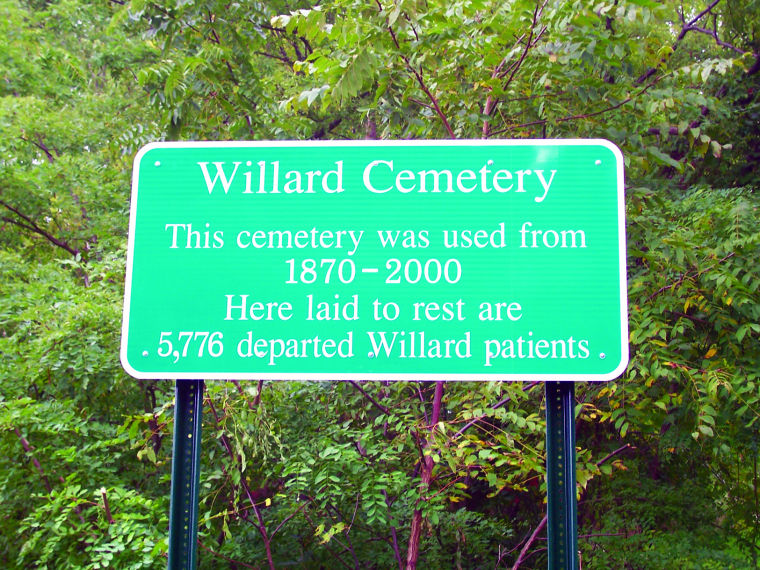
On Saturday, May 18, 2013, I visited the Willard Cemetery for a second time. This was the day of the annual Willard Tour that benefits a day care center on the old Willard property. Hundreds of people attended the tour and a good crowd gathered at the cemetery. Quite a bit has changed since my first visit on May 14, 2011, when the grass was up to my knees and no one was there but me, my husband, and two of our friends. It was a very sad place. The Willard Cemetery Memorial Project was formed by Colleen Kelly Spellecy in 2011. She has done a fabulous job organizing the group, having a sign installed at the entrance, raising awareness about the project, getting the cemetery lawn mowed, and collecting donations. I was happy to see so many concerned people at the cemetery.

Now there is hope, not only for the Willard Cemetery but for all state hospital and custodial institution cemeteries across the State of New York. A bill was introduced to the NYS Legislature in March 2012 and was re-introduced on January 18, 2013 as S2514-2013. If this bill becomes law, then the names of our forgotten ancestors will be released. They will finally be honored and remembered with dignity. This bill specifically addresses the “burial records” issue. Although HIPAA has stepped out of the way to allow individual states to release “medical records” 50 years after a patient has died, I am not sure if this issue was specifically addressed in this bill. Let’s take one step at a time and be grateful for what is in the works right now! Anyone who has ever dealt with the New York State Office of Mental Health in trying to obtain any type of information on an ancestor, whether it concerns asking where they are buried or obtaining a medical record, knows how arrogant and non-responsive they are unless you have a Ph.D. after your name. This needs to change.

Another fact that people don’t realize is that the great majority, if not all, of these historical cemeteries are “inactive” which means no one else will be buried there. I hope that ALL names are released including more recent burials. For example, when Willard closed in 1995, a gentleman was transferred to another facility. When he died in 2000, he asked to be buried in the Willard Cemetery because this was his home. Who will be here in 2050 to add this man’s name to a headstone or memorial? Who allowed these cemeteries to become forgotten?

Who was sent to Willard? Anyone who was not considered “normal” including the elderly with Dementia and Alzheimer’s Disease. Remember, there really were no nursing homes until the 1950s. Others were Hearing Impaired, had Developmental Disabilities, were Trauma Victims including Victims of Domestic Violence and Rape (back then they called it “Seducer’s Victim”), had PTSD (Soldier’s Heart & Shell Shock), Menopausal Women, Depression, Anxiety Disorders, Brain Injuries, Stroke Victims, Epilepsy, Neurological Disorders, Psychiatric Disorders, and some were locked up because of their sexual orientation, personal beliefs, and religious beliefs. These people, their families, and descendants, have nothing to be ashamed of. That would be like being ashamed of heart disease or diabetes. Putting names on a memorial, headstone, or list, should not be offensive to anyone.

Also attending the tour on this day was Seth Voorhees, Senior Reporter for the Time Warner Cable news channel YNN that serves Rochester and the Finger Lakes. Mr. Voorhees was genuinely interested in my mission to get this law passed in New York and offered me the opportunity of an interview. Although I am not a public speaker, I jumped at the chance to get the word out to a larger audience. I can’t thank him enough for all the time he spent putting this video report together. This piece aired on YNN, Saturday, May 25, 2013. I also need to thank Senator Joseph E. Robach for drafting and introducing the bill to the New York State Legislature. I hope this piece will raise awareness about the anonymous graves issue as this was never about patient confidentiality, it’s about respect.

CLICK HERE TO VIEW THE VIDEO They’re Buried Where? by Seth Voorhees.
Not Forgotten by Colleen Spellecy.

The list of these former New York State Hospitals includes but is not limited to: BinghamtonBuffaloCentral IslipDannemoraEdgewoodGowandaHudson RiverKings ParkLong IslandManhattanMatteawanMiddletownMohansicPilgrimRochesterSt. LawrenceSyracuseUtica, and Willard.

The Feeble-Minded and Epileptic Custodial Institutions of New York includes but is not limited to: Craig Colony for EpilepticsLetchworth Village for Epileptics & Developmentally DisabledNewark State School for Developmentally Disabled WomenRome State School for Developmentally Disabled Adults & Children, and Syracuse State School for Developmentally Disabled Children. There may be more.

Seth Voorhees & Lin Stuhler 5.18.2013

Seth Voorhees & Lin Stuhler 5.18.2013

Roger Luther from nysAsylum.com & Lin Stuhler 5.18.2013

Roger Luther from nysAsylum.com & Lin Stuhler 5.18.2013

Colleen Spellecy, Craig Williams, Lin Stuhler 5.18.2013

Colleen Spellecy, Craig Williams, Lin Stuhler 5.18.2013

Willard Cemetery Sign 5.18.2013

Willard Cemetery Sign 5.18.2013

Willard Cemetery Memorial Project 5.18.2013

Willard Cemetery Memorial Project 5.18.2013

Willard Cemetery 5.18.2013

Willard Cemetery 5.18.2013

Old Metal Marker 5.18.2013

Old Metal Marker 5.18.2013

Willard Cemetery 5.18.2013

Willard Cemetery 5.18.2013

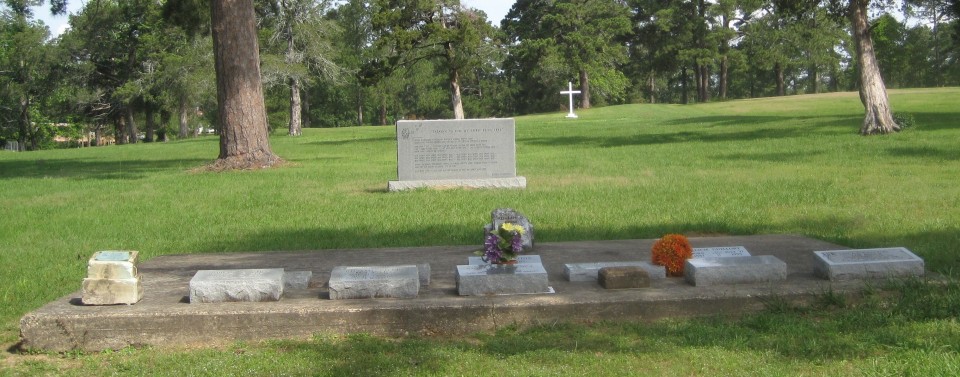
This photo is of the Civil War Veterans Section of the cemetery. They were provided with clearly inscribed headstones from the government. Colleen discovered that a few of them were not “inmates” of Willard but were residents of the town. I wonder how many other United States Veterans who served their country with honor but ended up at Willard are buried here among the 5,776 in anonymous graves?

“Breakthrough For Medical Genealogy” by Judy G. Russell – HIPAA 2013

Great article by Judy G. Russell, re-posted with permission. I have contacted the New York State Office of Mental Health asking their position on this new ruling. Hopefully, they will respond soon.

Breakthrough For Medical Genealogy

Posted on April 8, 2013 by Judy G. Russell One For Our Side

There’s been a major breakthrough in records access for those of us with family medical issues that we research in part through our genealogy.

Quietly, without much fanfare, the federal Department of Health and Human Services (HHS) has finally come around to understanding that closing medical records forever, even after the death of the person treated, isn’t the way to go.

It adopted a new set of rules earlier this year, effective just two weeks ago, that opens medical records 50 years after the patient’s death.

The change — first proposed nearly three years ago1 — came in an omnibus Final Rule adoption governing a vast array of issues under the federal Health Insurance Portability and Accountability Act (HIPAA) designed primarily to update personal privacy rules in light of technological changes in medical recordkeeping.2 The rule was adopted in January and became effective on March 26th.

As far back as 2003, archivists had complained to HHS about the old rule, under which personal health information was to be protected forever and only disclosed even after the patient’s death only if the legal representative of the estate authorized it.

In 2005, Stephen E. Novak of Columbia University had quoted from those earlier complaints in an HHS conference, explaining that “certain historical, biographical and genealogical works where the identity of the individual is the whole point could not be written, such as the Pulitzer Prize-winning A Midwife’s Tale, based on the late 18th and early 19th century diary of Maine midwife Martha Ballard.”3

Nancy McCall of the Johns Hopkins Medical Institutions told that same conference that “a number of state archives have acquired the records of defunct hospitals in their states and do not know whether they are covered entities. This is especially important for mental hospitals and TB hospitals that have closed.”4

All of those participating pleaded for clarity — and for access.

The new rule is, finally, the HHS response.

In its rulemaking, HHS recognized the problems inherent in “the lack of access to ancient or old records of historical value held by covered entities, even when there are likely few surviving individuals concerned with the privacy of such information. Archives and libraries may hold medical records, as well as correspondence files, physician diaries and casebooks, and photograph collections containing fragments of identifiable health information, that are centuries old. Currently, to the extent such information is maintained by a covered entity, it is subject to the Privacy Rule.”5

It noted that the “majority of public comment on this proposal was in favor of limiting the period of protection for decedent health information to 50 years past the date of death. Some of these commenters specifically cited the potential benefits to research. A few commenters stated that the 50-year period was too long and should be shortened to, for example, 25 years.”6

Based on its review and the public comments, HHS concluded:

We believe 50 years is an appropriate period of protection for decedent health information, taking into account the remaining privacy interests of living individuals after the span of approximately two generations have passed, and the difficulty of obtaining authorizations from a personal representative of a decedent as the same amount of time passes. For the same reason, we decline to shorten the period of protection as suggested by some commenters or to adopt a 100-year period of protection for decedent information.7

So, as of the 26th of March, HIPAA’s definition of “protected health information” expressly excludes information regarding “a person who has been deceased for more than 50 years,”8 and covered entities need only comply with HIPAA “with respect to the protected health information of a deceased individual for a period of 50 years following the death of the individual.”9

Now the fact that the federal government isn’t standing in the way doesn’t mean that all of us with family health issues can rush out and expect to be given immediate access to those old health records that may tell us so much about things we face today. The feds have never been the only player in the privacy game — state laws may also restrict access to health information.

But it’s a major breakthrough to have the federal government finally move out of the way of access to records of critical importance.


SOURCES

Tip of the hat to Ron Tschippert for alerting The Legal Genealogist to the rule adoption!

  1. Notice of proposed rulemaking, 75 Fed. Reg. 40868, 40874 (14 Jul 2010). 
  2. See “Modifications to the HIPAA Privacy, Security, Enforcement, and Breach Notification Rules Under the Health Information Technology for Economic and Clinical Health Act and the Genetic Information Nondiscrimination Act; Other Modifications to the HIPAA Rules,” 78 Fed. Reg. 5565 (25 Jan 2013), PDF version, U.S. Government Printing Office (http://www.gpo.gov/fdsys/ : accessed 7 Apr 2013). 
  3. Minutes, 11-12 January 2005, Subcommittee on Privacy and Confidentiality, National Committee on Vital and Health Statistics, HHS.gov (http://ncvhs.hhs.gov/ : accessed 7 Apr 2013). 
  4. Ibid. 
  5. “Modifications to the HIPAA … Rules,” 78 Fed. Reg. 5613-5614. 
  6. Ibid., 78 Fed. Reg. 5614. 
  7. Ibid. 
  8. 45 CFR §160.103. 
  9. 45 CFR §164.502(f). 

Giving Names To Numbers – Central Louisiana State Hospital Cemetery

Giving Names to Numbers.

Central Louisiana State Hospital Cemetery Project

Central Louisiana State Hospital Cemetery Project

Here is another example of a group, Committee for the Preservation and Enhancement of Central Louisiana State Hospital Cemetery, that wants to memorialize the people who lived and died at CLSH and were buried in anonymous, numbered graves. Because of the HIPAA Law, they are not allowed to release any of the names, but are allowed to put them on a memorial. If a family member wants to know if their loved one is buried there, they can only confirm or deny. They are prohibited in stating that these people were patients.

Mission

To bring back the dignity of the almost 3000 souls buried on the Central Louisiana State Hospital Grounds.

Company Overview

A group of people brought together by Mr. Ray Moreau who are dedicated to preserving the cemetery on the grounds of Central Louisiana State Hospital.

Description

The committee’s goal is to place a memorial with the names of each of the almost 3000 souls bured at the Central Louisiana State Hospital Cemetery, to have the cemetery recognized as a dedicated cemetery and establish a perpetual fund for the ongoing care of the cemetery in the future.

General Information

Donations to preserve the Central Louisiana State Hospital Cemetery can be sent to:

The Extra Mile
PO Box 3178
Pineville, LA  71361-3178
Call 318-484-6575 for more information.

Facebook

The Iron Coffin – Eastern State Hospital Cemetery

Phil Tkacz, President of the Eastern State Hospital Cemetery Preservation Project in Lexington, Fayette County, Kentucky, is confronting the same problems with the federal HIPAA Law that many other concerned groups in the United States are dealing with concerning identification of deceased patients of former State Hospitals (Insane Asylums) and Custodial Institutions. What I find incredible is that many states will now be able to access LIVING INDIVIDUAL’S medical records (profiling) in order to comply with the new gun control legislation but the identities of patients who have been dead for over a century cannot be revealed because they lived with a mental illness, epilepsy, or developmental disability. When these folks were buried in the nineteenth century, the states and counties would not provide the money for headstones and instead marked their graves with numbers. In many cases, the cemeteries have been lost with the passage of time or we discover that the cemeteries and the graves themselves were never marked or recorded. The states spent huge amounts of tax payer dollars supporting and caring for these people while they were alive. In the nineteenth century, government agencies actually had budgets. It would have been considered an extravagance for the states and counties to also provide engraved headstones as this dependent group of human beings were considered to be the dregs of society. My question is, why is this particular group of people still being punished for illnesses over which they had no control? When will someone who knows what they are talking about at the Department of Health and Human Services come forward and explain why these people cannot be honored or remembered with dignity? And, why is this group of people being given more privacy protection than the living? Why?

ESH 1

ESH 1

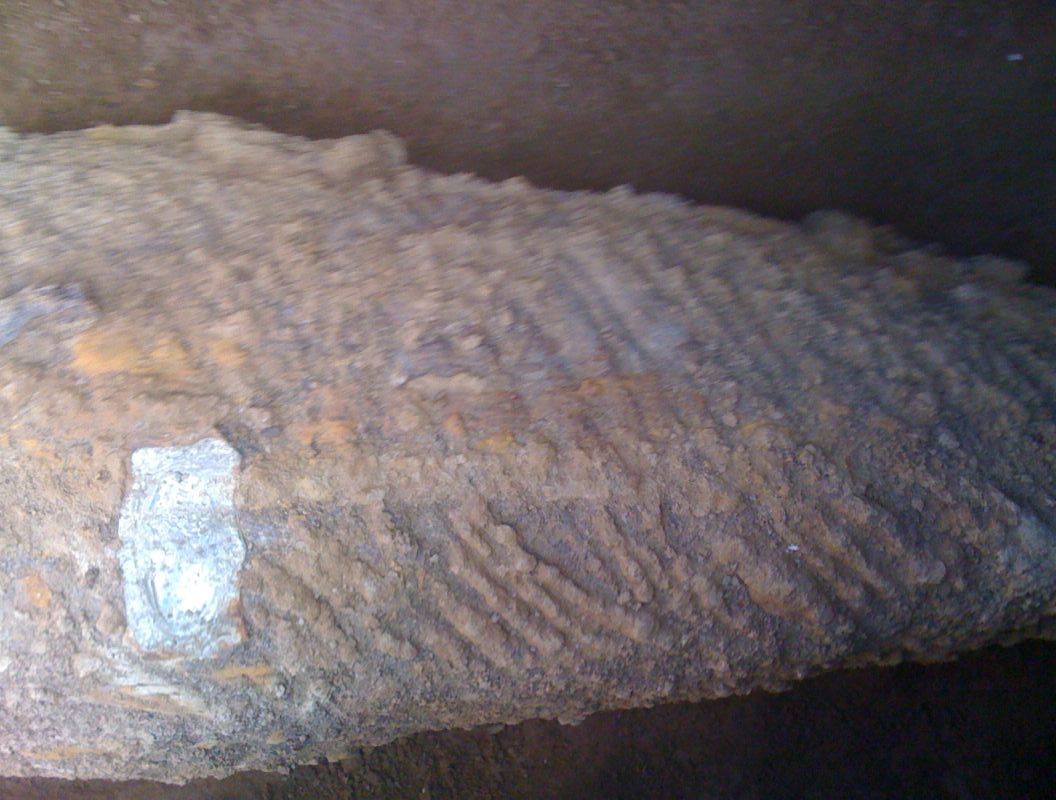
Phil’s note along with photographs, concerns an iron coffin believed to be from the 1840s that is engraved with a name. The name cannot be revealed because of the HIPAA Law. Why would a family take the time to engrave their loved one’s coffin if they didn’t want anyone to know who that person was? What about the unfortunate individuals who were buried in thin, wooden coffins or just tossed in the dirt wrapped in a shroud? Why can’t we know who they were? Why can’t we have access to their medical records? THEY ARE DEAD AND HAVE BEEN DEAD FOR OVER A CENTURY. The federal government has no problem releasing our medical records, sending them over the internet, and allowing physicians to take home flash drives containing patient information that can be easily accessed or lost. So, what’s the problem? As citizens, we don’t know who is looking into our medical histories or why. This whole issue is ridiculous and the HIPAA Law is a joke! HHS is solely responsible for this fiasco and the stigma that they are perpetuating because no one knows how to interpret the damn law!

ESH 2

ESH 2

“In 2008 the state announced it would convert the Eastern State Hospital into a community college, BCTCS. At the same time, ESH would move to a new facility. Our group began meeting with all involved in order to discuss what would be done when graves were to be found on the hospital property as construction progressed. University of Kentucky Archeology attempted to do a survey of as many areas as possible to find possible graves, but found none. In January of 2011, I received a call from the state, they said 30-50 graves had been found in an area close to the entrance off Newtown Road & University of Kentucky was going to start exhuming the remains soon. Work progressed slowly due to weather, but was finished by late April 2011.

We met with the state, University of Kentucky Archeology, and others, to discuss what they had found later in 2011. The summary was, the actual number was about 170 remains of former patients had been found and that there were more in the same area but there wasn’t enough money to continue into that area. It was decided by them, that they would exhume those remains when construction got to that area. The timeline for re-burial was about 1 year and we would be kept up to date when necessary.

Fast forward to January 2012. I was told by a reliable source that there was an Iron coffin found the year before and there were photos. Also the coffin has a plaque on it with a name, unfortunately the last name is unreadable in the photo. I contacted the person we had been talking to for updates and asked why this was never mentioned to us. We were told that they kept it from the media to “preserve the dignity of the person in the coffin and to protect their privacy.” Why our group was not told was never explained though. Even the University of Kentucky said they could not release the name.

Attempts were made to have the name released but to this day we are told that the name is protected by HIPAA. A request was made to have a headstone erected over the grave where this coffin will be re-interred later this year and were told, again, that it wouldn’t be legal under HIPAA. We are still trying to find a way to have the name released, our main argument is that A) Patient privacy does not apply, and B) Common sense would tell you that having the name put on the coffin was done in case this happened and it was later exhumed.”

ESH 3

ESH 3