2010 DSM-IV & HIPAA

1880 Forms of Insanity

In 1880, there were six general categories of insanity: Mania, Melancholia, Paresis (General Paralysis), Dementia, Epilepsy, and Dipsomania. Puerperal Mania was not included with these six but is listed for one woman in the 1880 Defective, Dependent & Delinquent U.S. Federal Census of The Willard Asylum for the Insane under the heading “Form of Disease.”

 DSM-IV

In the year 2010, The Diagnostic and Statistical Manual of Mental Disorders, Fourth Edition (DSM-IV), lists seventeen Criteria for Mental Disorders as opposed to the six general forms of diseases that were presented in 1880. DSM-IV Complete Criteria for Mental Disorders are: Adjustment, Anxiety, Child, Cognitive, Dissociative, Eating, Factitious, Impulse, Mental GMC (Disorder due to Medical Condition), Mood, Other, Personality, Psychotic, Sexual, Sleep, Somatoform and Substance.
(SOURCE: from the website of Dr. James Morrison at http://www.neurosurvival.ca/ClinicalAssistant/scales/dsm_IV/dsm_index.html)

 The HIPAA Law

Health Information Privacy
The Office for Civil Rights enforces the HIPAA Privacy Rule, which protects the privacy of individually identifiable health information; the HIPAA Security Rule, which sets national standards for the security of electronic protected health information; and the confidentiality provisions of the Patient Safety Rule, which protect identifiable information being used to analyze patient safety events and improve patient safety.

Understanding Health Information Privacy
The HIPAA Privacy Rule provides federal protections for personal health information held by covered entities and gives patients an array of rights with respect to that information. At the same time, the Privacy Rule is balanced so that it permits the disclosure of personal health information needed for patient care and other important purposes. The Security Rule specifies a series of administrative, physical, and technical safeguards for covered entities to use to assure the confidentiality, integrity, and availability of electronic protected health information.

For Covered Entities
The Privacy and Security Rules apply only to covered entities. Individuals, organizations, and agencies that meet the definition of a covered entity under HIPAA must comply with the Rules’ requirements to protect the privacy and security of health information and must provide individuals with certain rights with respect to their health information. If an entity is not a covered entity, it does not have to comply with the Privacy Rule or the Security Rule.

A Covered Entity is one of the following:
A Health Care Provider
This includes providers such as: Doctors, Clinics, Psychologists, Dentists, Chiropractors, Nursing Homes, Pharmacies…but only if they transmit any information in an electronic form in connection with a transaction for which HHS has adopted a standard.

A Health Plan
This includes: Health insurance companies, HMOs, Company health plans, Government programs that pay for health care, such as Medicare, Medicaid, and the military and veterans health care programs.

A Health Care Clearinghouse
This includes entities that process nonstandard health information they receive from another entity into a standard (i.e., standard electronic format or data content), or vice versa.”

 HEALTH INSURANCE PORTABILITY AND ACCOUNTABILITY ACT OF 1996
Public Law 104-191, 104th Congress

An Act
“To amend the Internal Revenue Code of 1986 to improve portability and continuity of health insurance coverage in the group and individual markets, to combat waste, fraud, and abuse in health insurance and health care delivery, to promote the use of medical savings accounts, to improve access to long-term care services and coverage, to simplify the administration of health insurance, and for other purposes.

(4) HEALTH INFORMATION

(B) Relates to the past, present or future physical or mental health or condition of an individual, the provision of health care to an individual, or the past, present, or future payment for the provision of health care to an individual.

(6) INDIVIDUALLY IDENTIFIABLE HEALTH INFORMATION

(B) Relates to the past, present or future physical or mental health or condition of an individual, the provision of health care to an individual, or the past, present, or future payment for the provision of health care to an individual, and —

(i) identifies the individual; or

(ii) with respect to which there is a reasonable basis to believe that the information can be used to identify the individual.

 WRONGFUL DISCLOSURE OF INDIVIDUALLY IDENTIFIABLE HEALTH INFORMATION

SEC. 1177.

(a) OFFENSE. – A person who knowingly and in violation of this part –

(1) uses or causes to be used a unique health identifier;

(2) obtains individually identifiable health information relating to an individual; or

(3) discloses individually identifiable health information to another person, shall be punished as provided in subsection (b).

(b) PENALTIES. – A person described in subsection (a) shall –

(1) be fined not more than $50,000, imprisoned not more than one year, or both;

(2) if the offense is committed under false pretenses, be fined not more than $100,000, imprisoned not more than 5 years, or both; and

(3) if the offense is committed with intent to sell, transfer, or use individually health identifiable information for commercial advantage, personal gain, or malicious harm, be fined not more than $250,000, imprisoned not more than 10 years, or both.”

(SOURCE: http://www.hhs.gov/ocr/privacy/)

My Story by L.S. Stuhler – July 23, 2012

Featured

I include here my story about trying to obtain my great-grandmother’s medical records and photographs from the Willard State Hospital, along with asking for the release to the public of former patient names; dates of birth and death; and location of graves, in order that these forgotten people, of which there are thousands, may be honored and remembered with dignity. It all began on February 24, 2001, when I found my great-grandmother’s obituary: According to the “PennYan Democrat” newspaper dated August 17, 1928: “PUTNAM, At the State Hospital in Willard, Monday, August 13, 1928, Mrs. Margaret Putnam, aged 76 years. She is survived by one son, Jarvis Putnam, of PennYan. The funeral was held from the Thayer Funeral Home Wednesday afternoon, Rev. W.A. Hendricks officiating. Burial in Lake View cemetery.” 

It took a long time for me to figure out where I should be looking in order to obtain information about my great-grandmother. In 2001, I was unable to find anything on the internet pertaining to this issue which is the main reason I created this blog (July 10, 2011) and wrote the book The Inmates of Willard 1870 to 1900, A Genealogy Resource (December 17, 2011). In 2007, I came across an article about a new book written by Darby Penney, MLS, and Peter Stastney, M.D., entitled The Lives They Left Behind Suitcases From A State Hospital Attic. Wondering if my great-grandmother’s suitcase was among the 400 discovered in an attic of the Willard State Hospital, I contacted Ms. Penney. Unfortunately, it was not among the surviving suitcases. Ms. Penney’s book revealed the practice of burying “mental patients” in anonymous graves. I must admit that I had never heard of this practice before and thought it was extremely cruel. What amazed me most was that no one (that I knew of) had ever tried to rectify this sad, dehumanizing situation. What needs to be acknowledged is none of these well documented facts about the thousands of people buried in anonymous graves at Willard, and all former NYS Hospitals and Custodial Institutions, would ever have come to light without the tireless efforts of Ms. Penney, Dr. Stastney, and Mr. Craig Williams, Curator of History at the New York State Museum at Albany. I also need to thank Laurel Lemke, from the Grave Concerns Association, for sending me the law that she helped to pass in the State of Washington in 2004. Without her help in emailing me the bill, I never would have gotten the attention of Kate Munzinger, Senator Joseph Robach’s Chief of Staff. I met with Ms. Munzinger on August 22, 2011. Senator Robach introduced the bill to the New York State Senate in March 2012.

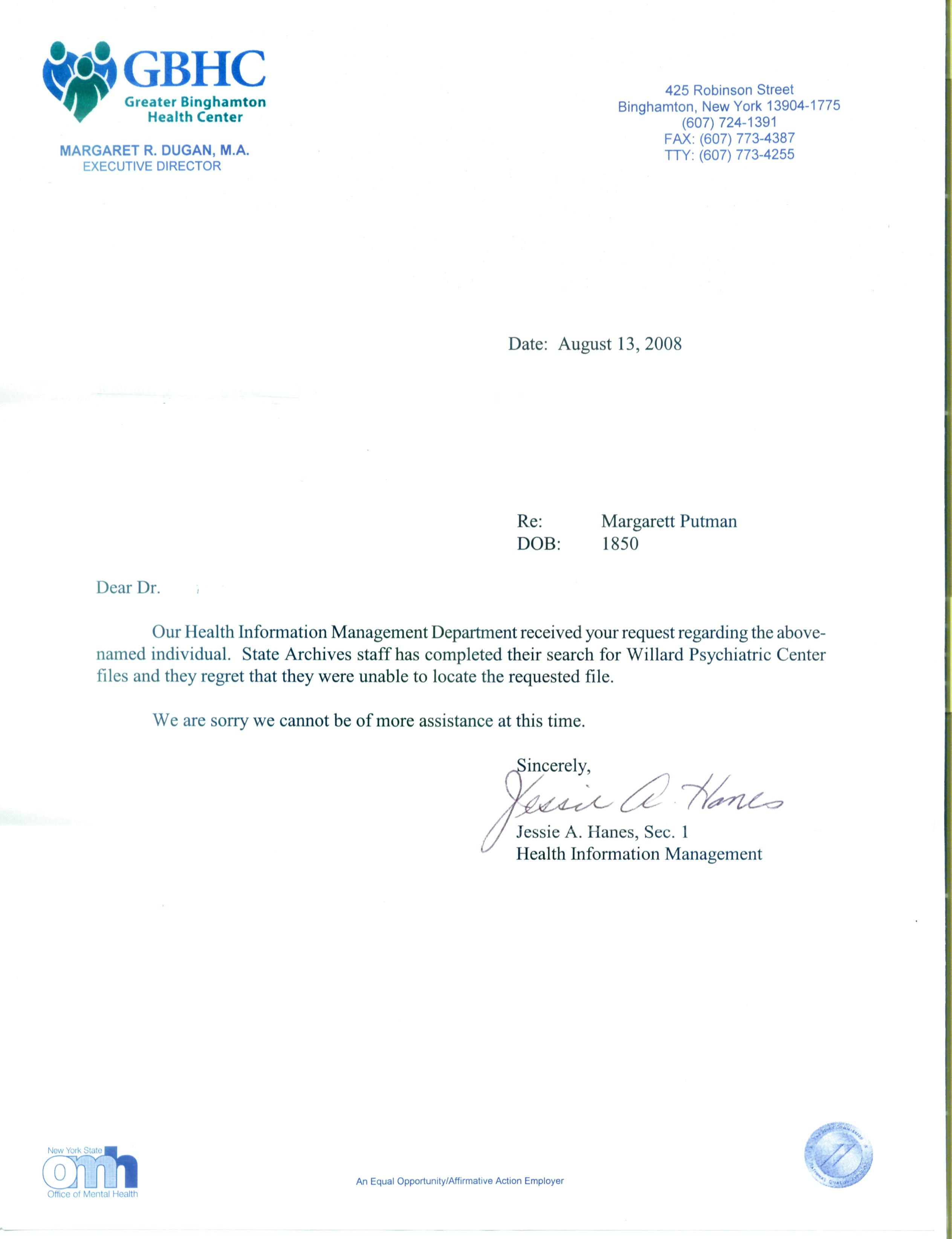
The following response letters, beginning in early 2008, are from everyone that I have contacted over the years. I have not included emails. Unless a modification is made to the present HIPAA Law and New York State Mental Hygiene Laws (See New HIPAA Update and S2514-2013), I and so many others like me, who want to know why our ancestor was committed to a state hospital, will never know the answer. My first response letter is dated April 16, 2008, in response to the original paperwork that my physician and I had sent in early September of 2007 (seven month wait). On August 13, 2008, I was denied a copy of my great-grandmother’s medical records and photographs from the Greater Binghamton Health Center. This three sentence response letter is the explanation given to me after waiting four months, taking the time and effort to speak with them on the phone, obtaining and filling out their required paper work with the help of my physician, and sending in the forms.

1- GBHC 04.16.2008

1- GBHC 04.16.2008

2 - GBHC 08.13.2008

2 – GBHC 08.13.2008

Besides writing a letter to former New York State Governor Patterson and present Governor Cuomo, both U.S. Senators from New York: Schumer and Gillibrand, State Senators, Congressmen, The Department of Correctional Services, The Commission on Quality of Care and Advocacy for Persons with Disabilities, The Office of Mental Health Counsel, and the State of New York Department of State Committee on Open Government (FOIL), I also wrote a letter to the doctor in charge of the Office of Mental Health Institutional Review Board asking permission to view, record, and publish the burial ledgers – names; dates of birth and death; and location of graves) located and stored at the NYS Archives. After waiting seven months for a response, I was told in an official letter, that my proposed study was not approved due to concerns about violating patient confidentiality. I was also told that I could take the New York State Office of Mental Health to court in order to get the names of former patients and the medical records of my great-grandmother, but seriously, who has the time and the money to go through all of that? Privacy ends at death but apparently patient confidentiality lasts forever.

I went through proper channels to obtain Maggie’s medical records and photographs. I filled out the paperwork, had my doctor and a witness sign the paperwork, and my doctor sent it in. I waited four months for a response and finally my doctor received a letter. I asked for the medical records and any photographs of my great-grandmother. When I received the response from the Greater Binghamton Health Center in August 2008, it stated the staff was unable to locate the requested file. Had I received my great-grandmother’s medical records, I would have been satisfied. Besides being genuinely interested in learning more about Willard, I created this blog for family genealogists like me, frustrated trying to find out if and when their ancestor was a Willard inmate, receiving the runaround obtaining their ancestor’s medical records and photos, and determining whether their ancestor is buried in the Willard Cemetery. The final answer came from the Commissioner of the NYS Office of Mental Health in responding to my inquiry by e-mail on October 25, 2010, which basically stated that publicly identifying former patients may be offensive to some families because of the stigma and repercussions that may follow, for example, in some small towns. I must say that I took offense to his statement because I live in a small town. What exactly was he trying to imply? It appears that we have not moved any further in our tolerance or understanding of people with problems and of people who live in small towns. I must say that my favorite letter is from the Commissioner, dated June 3, 2011, in which he reminds me “that the penalties for violations are very stiff – civil penalties under federal law can carry up to $10,000 per violation.”

Willard’s inmates who in life were incarcerated, forgotten, warehoused, and controlled by the state are once again controlled and intentionally forgotten in death by New York State, the New York State Office of Mental Health, or both. Perhaps they are interpreting the scope of the HIPAA Law incorrectly. The only logical assumption is the protection provided by these laws is not for long dead souls since U.S. Federal Censuses already reveal many of their names; it is for the protection of the descendants.

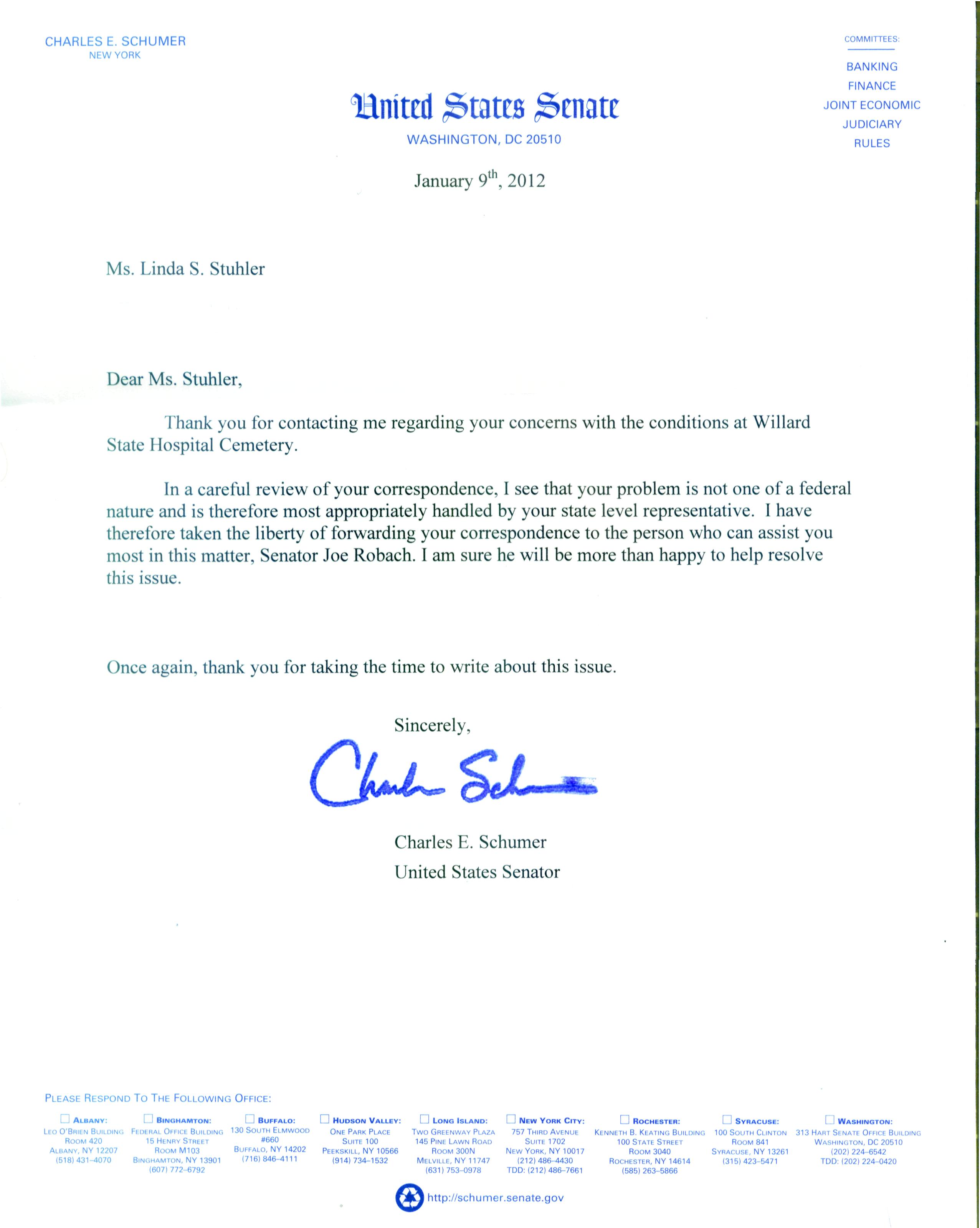
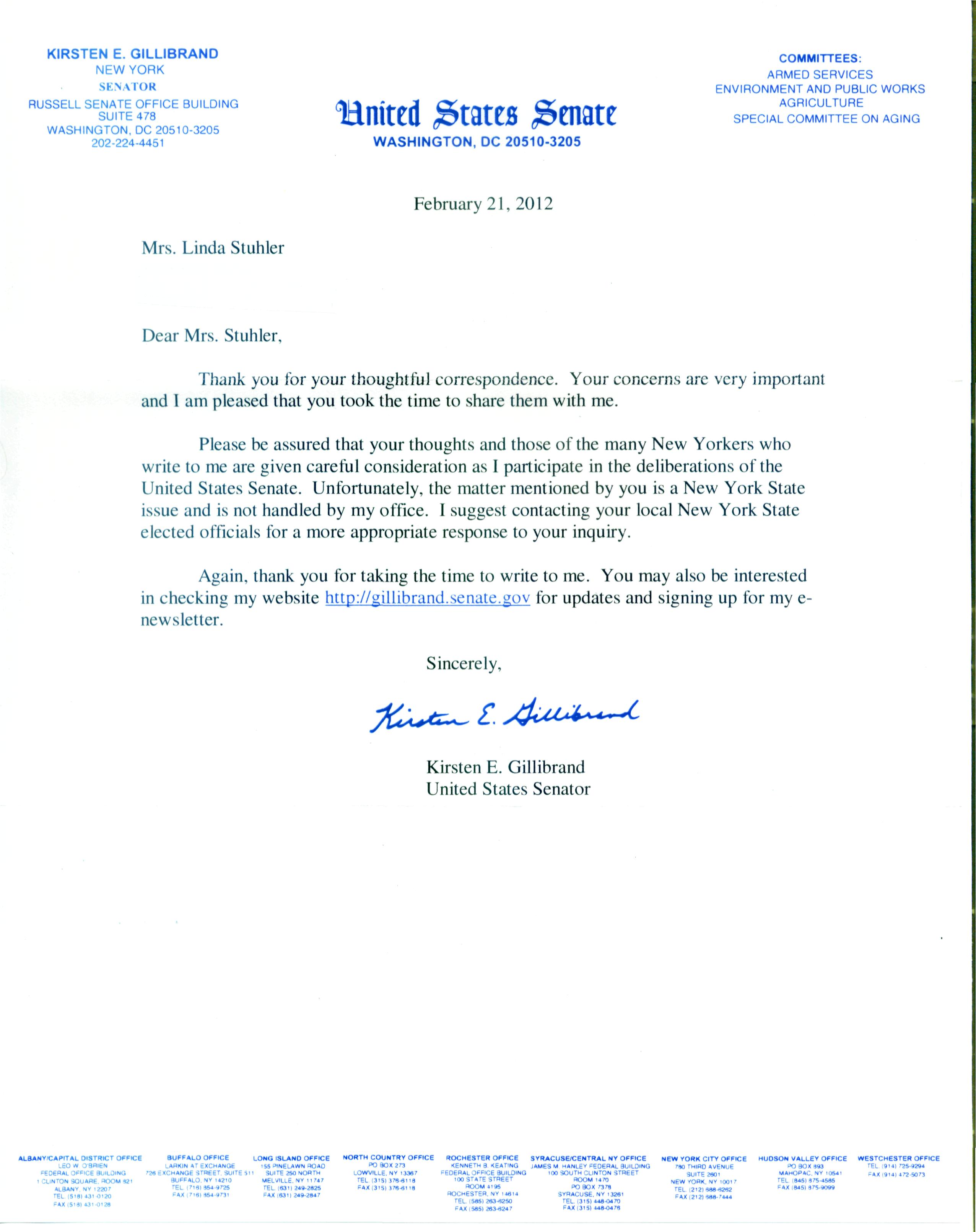
The responses from the Senators are interesting because they state that there is nothing they can do about the situation at Willard. They mention nothing about modifying the HIPAA Law which was one of the questions that I asked them to respond to. My understanding is that they are the only ones who can change or modify this federal law in order that descendants or anyone for that matter, would be allowed to have a copy of these historical medical records. When you’re dead, you’re dead. Who cares if someone looks at 80 year old medical records? The following letters were received by me from Senator Charles E. Schumer, dated January 9, 2012; and from Senator Kirsten E. Gillibrand, dated February 21, 2012. Perhaps this whole ridiculous situation of trying to uncover the identities and opening medical records of people who have been dead for one hundred years lies with the unique interpretation of the federal HIPAA Law by each individual state office of mental health.

Response Letter Senator Schumer 1.9.2012

Response Letter Senator Schumer 1.9.2012

Response Letter Senator Gillibrand 2.21.2012

Response Letter Senator Gillibrand 2.21.2012

14 - OMH 06.03.2011

14 – OMH 06.03.2011

13 - GBHC 09.07.2010

13 – GBHC 09.07.2010

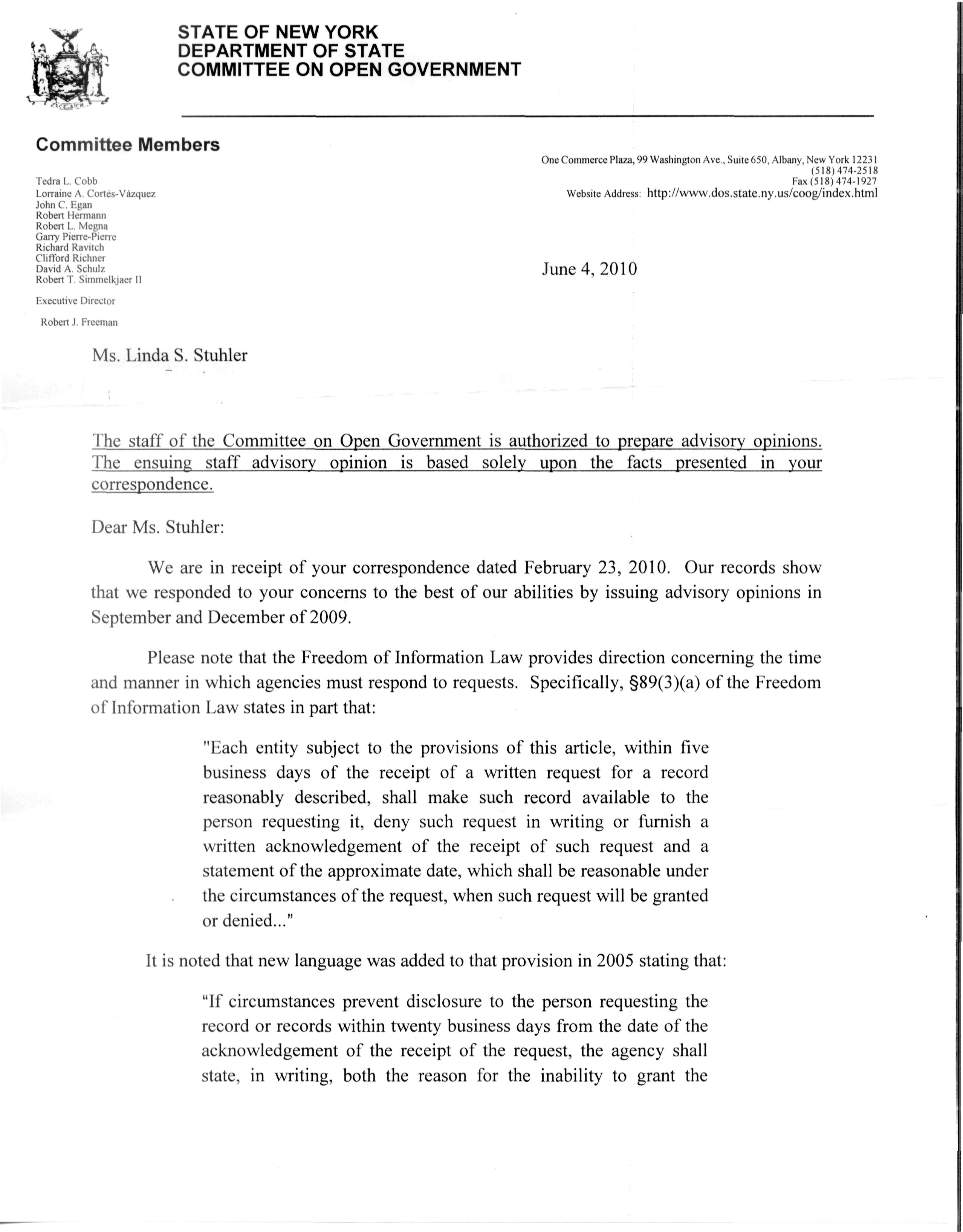
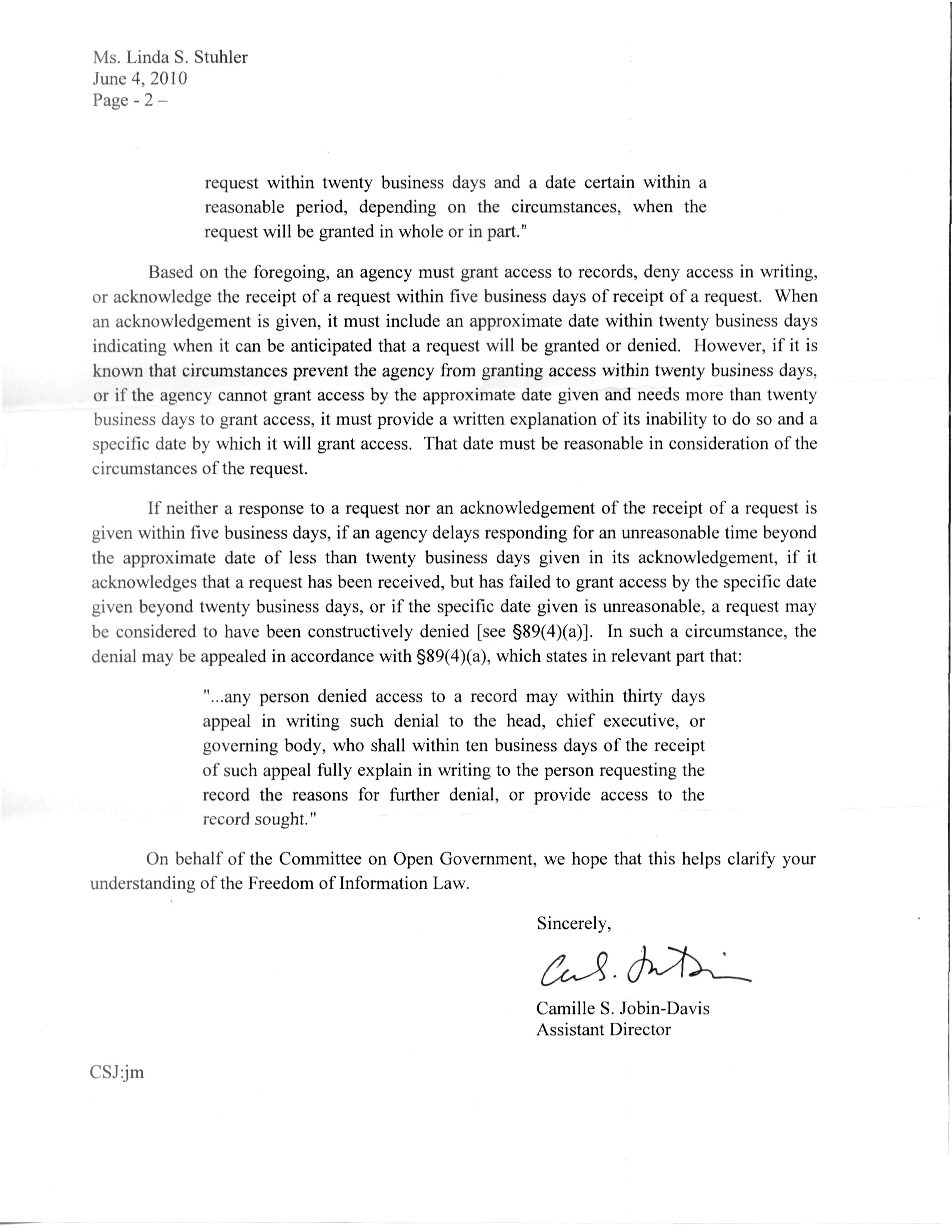
11 - FOIL 06.04.2010-1

11 – FOIL 06.04.2010-1

12 - FOIL 06.04.2010-2

12 – FOIL 06.04.2010-2

10 - Correctional Services 01.15.2010

10 – Correctional Services 01.15.2010

7 - FOIL 12.10.2009-1

7 – FOIL 12.10.2009-1

8 - FOIL 12.10.2009-2

8 – FOIL 12.10.2009-2

9 - FOIL 12.10.2009-3

9 – FOIL 12.10.2009-3

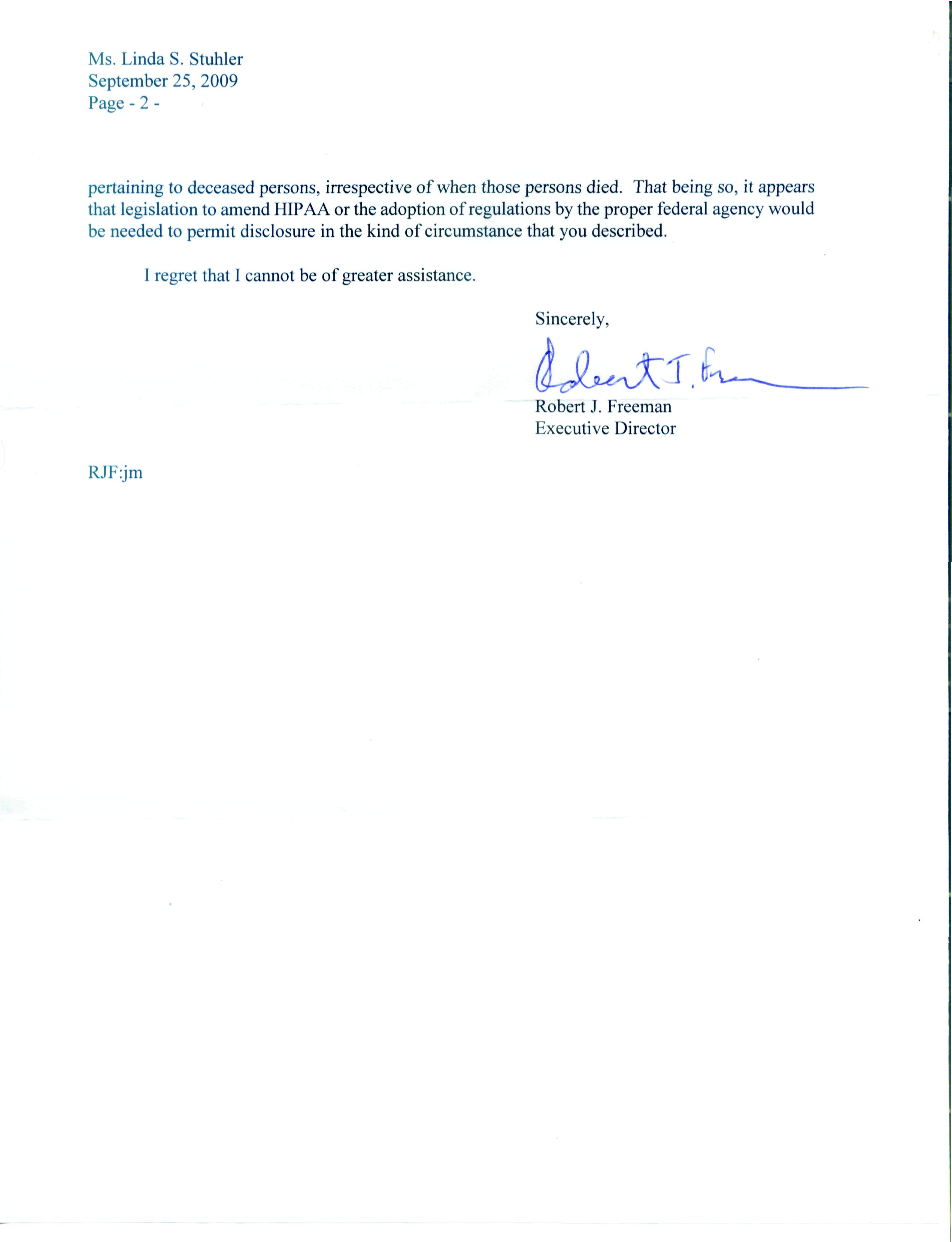
5 - FOIL 09.25.2009-1

5 – FOIL 09.25.2009-1

6 - FOIL 09.25.2009-2

6 – FOIL 09.25.2009-2

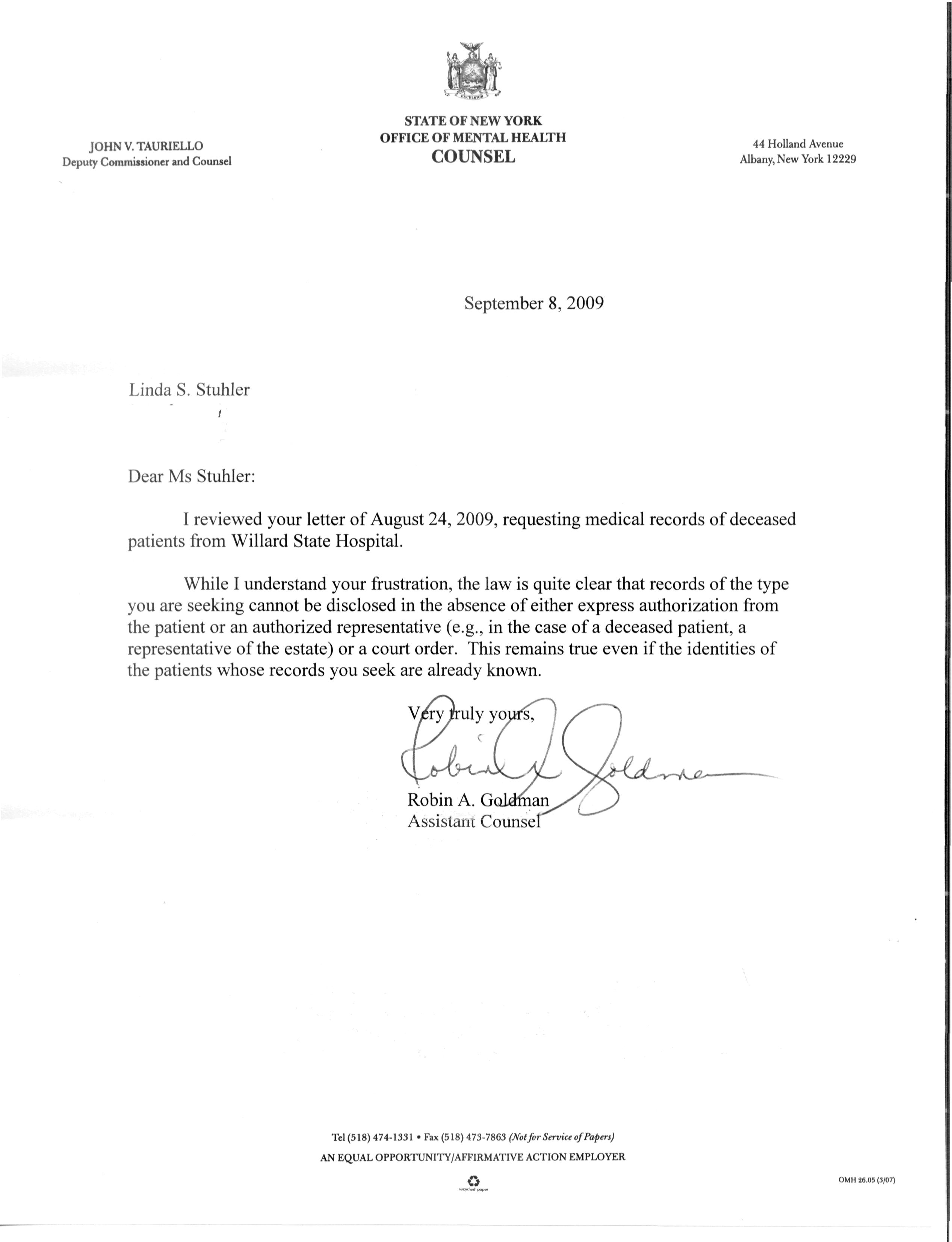
4 - OMH Counsel 09.08.2009

4 – OMH Counsel 09.08.2009

3 - Quality Care Advocacy 09.01.2009

3 – Quality Care Advocacy 09.01.2009

KINGS PARK-STORIES FROM AN AMERICAN MENTAL INSTITUTION – A Groundbreaking New Documentary – Lucy Winer

Kings Park Movie

Kings Park Movie

On June 21, 1967, at the age of 17, Lucy Winer was committed to the female violent ward of Kings Park State Hospital following a series of failed suicide attempts. Over 30 years later, now a veteran documentary filmmaker, Lucy returns to Kings Park for the first time since her discharge. Her journey back sparks a decade-long effort to face her past and learn the story of the now abandoned institution that once held her captive. Her meetings with other former patients, their families, and the hospital staff reveal the painful legacy of our state hospital system and the crisis left by its demise.

For More Information Click On The Links:

Kings Park Movie

Kings Park Movie on Facebook

Kings Park Movie Trailer

Life In A Mental Hospital by Lucy Winer

Demolition of Kings Park – CBS News

Kings Park: Stories from an American Mental Institution – A Review

S6805-2011 – S2514-2013 – NY Senate Open Legislation – Relates to patients interred at state mental health hospital cemeteries – New York State Senate

NEW! UPDATED BILL: S2514-2013 – NY Senate Open Legislation – Relates to patients interred at state mental health hospital cemeteries – New York State Senate.

S6805-2011 – NY Senate Open Legislation – Relates to patients interred at state mental health hospital cemeteries – New York State Senate.

A10636-2011 – NY Assembly Open Legislation – Relates to patients interred at state mental health hospital cemeteries – New York State Assembly.

Imagine not being remembered in death because in life you were diagnosed with diabetes, heart disease or cancer. Most people would find this kind of treatment cruel and inhumane but it exists to this day for people who were diagnosed with a mental illness or developmental disability during the nineteenth and early twentieth centuries. This bill is important and necessary in order to restore the dignity and personhood of the thousands of people who were incarcerated and died at former New York State Insane Asylums and Custodial Institutions. When the bodies of the inmates were not claimed by family members, they were buried in anonymous, unmarked graves. They deserve to have their names remembered and available to the public in a searchable database.

The list of these former New York State Hospitals includes but is not limited to: BinghamtonBuffaloCentral IslipCreedmoorDannemoraEdgewoodGowandaHudson RiverKings ParkLong IslandManhattanMatteawanMiddletownMohansicPilgrimRochesterSt. LawrenceSyracuseUtica, and Willard

The Feeble-Minded (Intellectual Disabilities) and Epileptic Custodial Institutions of New York includes but is not limited to: Craig Colony for EpilepticsLetchworth Village for Epileptics & Intellectually DisabledNewark State School for Intellectually Disabled WomenRome State School for Intellectually Disabled Adults & Children, and Syracuse State School for Intellectually Disabled Children. There may be more.

There is no good reason why these long deceased souls need to be punished and stigmatized in death for an illness or disability that they lived with in life. The great majority of these former state hospitals closed in favor of smaller group home settings or changed their names to Psychiatric Centers about 1974. The cemeteries that belonged to these institutions are inactive. I do not understand why anyone would need to have their name withheld from any list until 50 years had passed after their death. This requirement in the bill only serves to feed the stigma. Let’s hope that even with this flaw, it becomes law.

Photo by Roger Luther at www.nysAsylum.com

Photo by Roger Luther at http://www.nysAsylum.com

The Willard Cemetery - Veterans

Veteran’s Graves 5.14.2011

Willard Cemetery 1 - 5.14.2011

Willard Cemetery 5.14.2011

Sally Green’s Anonymous Burial, Rochester, NY

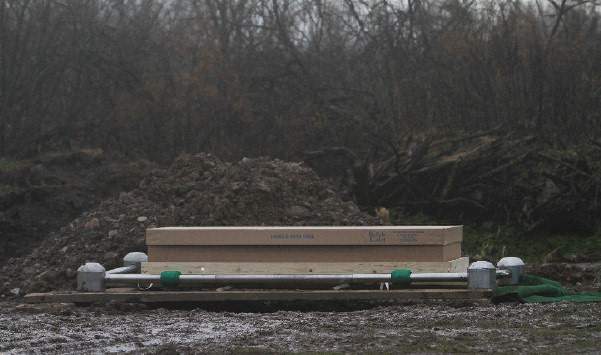
I am writing this post in response to the story in the Rochester, NY, Democrat and Chronicle, of the anonymous burial of Sally Green, a woman who lived with a mental illness and somehow slipped through the cracks never receiving the help or care that she needed. What is most disturbing to me is the fact that her family was not notified of her death until she had been dead and buried for three weeks in a cardboard coffin (with or without a vault), in an anonymous, unmarked grave. In my opinion, the reason why this poor woman was buried in an anonymous grave wasn’t because her family didn’t care about her; it was due to the fact that she had mental health issues. The big questions in my mind are: why didn’t anyone take the time to locate her family, and who else is buried in this anonymous section of this public cemetery?

Sally Green Coffin - Tina Yee Photographer

Sally Green Coffin – Tina Yee Photographer

During the nineteenth and twentieth centuries, state “insane” asylums and hospitals, including the former Monroe County Insane Asylum later renamed Rochester State Hospital, buried thousands of patients in anonymous, unmarked graves. I was not aware that this practice was still in use. Who knows if the families of these patients were ever told what became of them. Most people are not aware that in the state of New York the unmarked, anonymous graves of the “mentally ill” located in former NYS Hospital cemeteries and public cemeteries such as Mount Hope Cemetery (Rochester, NY), cannot be marked with an engraved headstone and their names cannot be made public because of the interpretation of federal HIPAA Law by the NYS Office of Mental Health. To deny our ancestors and the recently deceased this simple remembrance, for all eternity, on the grounds that they were diagnosed with a mental illness, and, therefore, by law, they are not permitted to be remembered, is unconscionable.

Everyone should be remembered with dignity. I wonder if the public will be given an explanation as to why no one took the time to find out if Sally Anne had a family? These actions are dehumanizing, insulting and simply unacceptable.

Family Never Told Of Sally Green’s Death, Burial – Democrat & Chronicle 2.18.2012.
“Trudging through the wet grass in Oatka Cemetery, mud and rainwater creeping up the sides of her jeans as tears dripped down her face, Cynthia Green finally cried out. “This is so stupid! I’m just trying to find my sister!” On Jan. 19, Sally Green died at Strong Memorial Hospital, and in an apparent series of missteps and miscommunications, no one told her son Derrick or any of her eight living siblings that she had died until long after she was buried. Family members finally learned of her passing last week, and, seeking answers, they say they were repeatedly spurned by officials, none of whom were willing to claim responsibility for the mishap. When they finally visited the small section of Oatka Cemetery reserved for indigent burials — home to about 300 others that the county has had buried there over the past six years — they searched for her resting place for more than half an hour. Sally Green’s was one of the many unmarked graves, so the family eventually had to ask for assistance from the cemetery caretaker, who pointed them to the right spot: a flat pile of mud unmarked by anything other than a small yellow rock. They said a prayer as they gathered around the burial site, where beneath their feet, the body of their mother and sister lay in a coffin that was little more than a glorified cardboard box marked “Handle with care.” “Can you imagine someone in your family getting buried without notifying you, and then you find out a month later?” said Derrick Green. “All of this is just crazy. Mentally, I’m so drained right now. I just don’t want this to happen to no one else.”

A Troubled Life
Afflicted with a mental illness, Sally Green had been drifting for the past several years, said her sister Cynthia Green. She was in and out of homeless shelters, and a drinking problem led to numerous hospitalizations. She was found on the morning of Jan. 19 in a room at the Cadillac Hotel, where she’d been staying for the previous two weeks, and was pronounced dead at Strong at 10:07 p.m. She was 57. But family members say that no one at the hospital called them, nor did anyone at the Monroe County Public Administrator’s Office, which is tasked with tracking down surviving family members and preparing funeral arrangements if no family is located. In the case of Sally Green, this shouldn’t have been difficult. Her son, as well as six of her eight living siblings, lives in the Rochester area. She has numerous cousins in Rochester as well, four of whom work for the Rochester Police Department. Additionally, she always carried identification and an address book with her, but officials never showed up at the Cadillac Hotel to search her belongings, said Tina Spence, the hotel’s front desk clerk. “They could have easily found where I was at,” said Derrick Green, 42, of Rochester. The family now wants the county to pay to have the body exhumed so they can conduct their own funeral and bury Sally Green next to her mother, Cora Green. “My mom is not resting well right now,” said Derrick Green. “This way, at least we could say goodbye to her in the right kind of way.” They’d also like a better explanation as to the cause of her death. To date, the family has no insight into how she died other than a three-word description on the death certificate: “acute myocardial infarction” — or a heart attack, in common terms. On Friday, officials at Strong Memorial Hospital called the family and set up a meeting to explain the cause of her death further, said Derrick Green. Social workers at the hospital attempted to locate relatives on the day Sally Green was admitted but were unable to find any, said Teri D’Agostino, spokesperson for Strong Memorial Hospital. When Green died, the hospital turned the case over to the public administrator, Frank Iacovangelo, said D’Agostino. Iacovangelo’s firm, Gallo & Iacovangelo, did not return a call seeking comment. Monroe County also did not return a call seeking comment.

Fourth Of 10 Siblings
Born to Miles and Cora Green, Sally Green was the fourth of 10 siblings. As a youth, she would often wait until her mother fell asleep clutching her baby sister Cynthia before sneaking over and bringing the baby into her own bed to hold. She grew to be a caring girl with a sarcastic sense of humor and a penchant for taking baths — sometimes more than once a day, said her sister Linda Cloud. She had Derrick when she was 15 years old, but several years later, she began showing signs of mental illness. Unable to care for her son, she gave him up for adoption, but he returned to the family and reunited with his mother when he was 16, family members said. Later in her life, with her mental illness compounded by alcohol abuse, she often found herself staying at the House of Mercy, a homeless shelter in Rochester. There, she became affectionately known as the “lipstick bandit,” because she would often spread lipstick beyond the reaches of her lips and up the sides of her cheeks, said Cynthia Green. In recent months, she lived with her son and called him regularly when he wasn’t home. “I used to be like ‘Why are you calling me so much?'” said Derrick Green. “But thinking of it now, I think she wanted to be around me because she knew her days were coming to an end.” She moved into the Cadillac Hotel on Jan. 5, and her son was helping her find an apartment of her own, he said. Though she stayed there for only two weeks prior to her death, she endeared herself to the staff, thanks to her bright orange hat and affinity for burnt popcorn. On Jan. 29, two days after her burial, a one-line obituary ran in the Democrat and Chronicle, but several more days would pass before family members learned of her death. She is predeceased by her brother Gary, and survived by her son Derrick; her brother Miles; her sisters Gloria, Cora, Joyce, Cynthia, Clara Ingram, Mildred Gibson and Linda Cloud; and many other relatives. Derrick Green said he’s had trouble eating, sleeping, and working since his mother died. “I only have one mother,” he said, “and I want someone to be liable for what they have done.” SDOBBIN@DemocratandChronicle.com & Twitter: @Sean_Dobbin

Monroe County Public Administrator Reveals New Protocol For Finding Next Of Kin, Changes Made In Response To Sally Green Case – David Andreatta – Democrat & Chronicle 4.26.2012
“The circumstances that led to Sally Green being buried in a pauper’s grave unbeknownst to her family were “unusual and exceptional,” the Monroe County public administrator, who authorized the burial, wrote to the Monroe County Legislature in a letter dated this week. The public administrator, Frank Iacovangelo, wrote in response to legislators who questioned his protocol for locating next of kin following Democrat and Chronicle reports of Green’s burial and subsequent exhumation from Oatka Cemetery in Scottsville. Iacovangelo paid to have Green reburied at Mt. Hope Cemetery. A private lawyer under contract with the county, Iacovangelo wrote that the incident prompted a “thorough review” of his office’s protocol and “resulted in an enhancement of office procedures to prevent any recurrence of burial without family notification and approval.” The letter, dated April 23 and to which new procedures were appended, marked the first time he has publicly revealed the extent of the changes and said the Green situation was unique. “Up until (Green’s burial in) February of this year, I have never had a situation arise where I was unable to find a relative willing to act (on behalf of the deceased) when such a person actually existed,” the letter read. The matter of Green, who had drifted in and out of homelessness and was estranged from her family when she died in January, turned a spotlight on taxpayer-funded indigent burials and the function of the public administrator, who is charged with handling the estates of the poor and people who die without a will or executor. Much of the new protocol reads like a list of common sense steps one might take to track down relatives of people disconnected from society.” DANDREAT@DemocratandChronicle.com
http://twitter.com/dandreattaDandC


Anonymous Graves In New York

It is indeed unfortunate that thousands of poor “sane” men, women, and children who lived and died in the county poor houses and other charitable institutions of our country were buried in unmarked, anonymous graves, but their final resting places can be marked with an engraved headstone. The same rule does not apply for those who were labeled “insane.” It is frustrating for family researchers who are interested in obtaining information about their ancestors who were incarcerated at one of these long closed insane asylums because of the federal HIPAA Law which states, The Office for Civil Rights enforces the HIPAA Privacy Rule, which protects the privacy of individually identifiable health information; the HIPAA Security Rule, which sets national standards for the security of electronic protected health information; and the confidentiality provisions of the Patient Safety Rule, which protect identifiable information being used to analyze patient safety events and improve patient safety.” Everyone has been forced to sign HIPAA documents at their doctor’s office. Most people interpret this law as one that applies to living individuals, not to people who have been dead for over one hundred years. What is even more confusing is that a few states have interpreted the law differently than New York State. NEW HIPAA Update 2013.

The Inmates of Willard, as well as all former inmates of New York State Hospitals, deserve a cemetery that is clearly marked with a dignified, cemetery appropriate sign. It should be well maintained and treated with respect like any other cemetery as a place where descendants and friends gather to pay respects, lay flowers, or meditate in silence. Some states have released the names of former patients buried in anonymous graves at these long-closed, state owned mental institutions, and they have allowed engraved headstones to be placed on the graves. In some cases, these states have provided funding for the headstones. It is my hope that the names of the patients buried in anonymous graves in cemeteries owned or formerly owned by the State of New York will be made available to the public in a unified, searchable, digital database. If these current laws are not modified, these people will forever remain forgotten and anonymous. After 143 years, the time has come to accept the mistakes of the past and turn a wrong into a right by releasing the names of the people buried at the Willard State Hospital Cemetery and all people buried anonymously in state mental institution cemeteries across America. They have waited long enough.

Thousands of people were incarcerated in state insane asylums during the nineteenth and early twentieth centuries. Anonymous burials are common for state mental institutions across New York State and the country. People genuinely do care and are interested in the way their ancestors were treated, how they died, and where they were buried.

Hopefully bill S2514-2013 will soon become a law and will include provisions for a searchable database available to the public. Interested people need to contact their New York State Senators and Assembly Persons to let them know that this bill needs to become a law so that these forgotten, anonymous souls will finally be remembered. 

The list of these former New York State Hospitals includes but is not limited to: BinghamtonBuffaloCentral IslipCreedmoorDannemoraEdgewoodGowandaHudson RiverKings ParkLong IslandManhattanMatteawanMiddletownMohansicPilgrimRochesterSt. LawrenceSyracuseUtica, and Willard

The Feeble-Minded (Intellectual Disabilities) and Epileptic Custodial Institutions of New York includes but is not limited to: Craig Colony for EpilepticsLetchworth Village for Epileptics & Intellectually DisabledNewark State School for Intellectually Disabled WomenRome State School for Intellectually Disabled Adults & Children, and Syracuse State School for Intellectually Disabled Children. There may be more.