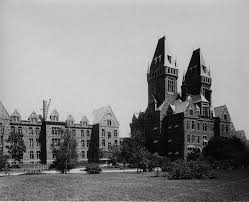
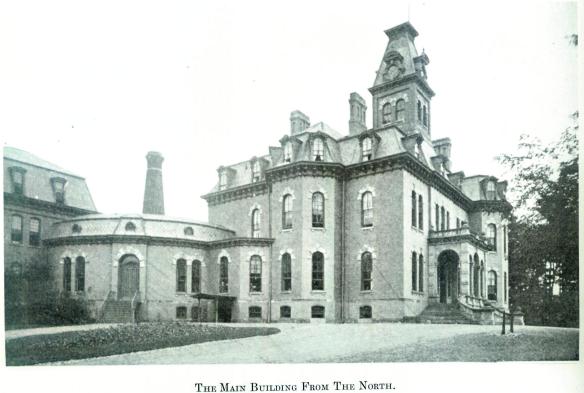
Long Island State Hospital & Cemetery

After 1893 Long Island State Hospital (Flatbush) served the counties of Kings, Queens, Nassau, and Suffolk.

1916 Long Island State Hospital.
1851 Kings County Lunatic Asylum, Flatbush, New York.
1893 Shocking Desecration Charged, Flatbush Insane Asylum.
Creedmoor.
New York City Map.

I’m still trying to figure out all the different “lunatic asylums” of New York City. From the beginning, New York and Kings Counties were exempted from The Willard Act. In 1893, the State of New York purchased these properties and brought them into the State Care System, the State Care Act being passed in 1890, and under the control of The State Commission in LunacyOn July 1, 1895, the Kings County Lunatic Asylum at Flatbush AND Kings Park (re-named in 1891, formerly St. Johnland) became the Long Island State Hospital. From everything that I have read, the New York City area asylums and poor houses of the 1800s were the worst in the state, mainly because they were so over crowded.

NEW YORK CITY:
New York City is composed of five boroughs: Manhattan (New York County), The Bronx (Bronx County), Brooklyn (Kings County), Queens (Queens County), Staten Island (Richmond County). LONG ISLAND contains four counties: Kings, Queens, Nassau, and Suffolk. Apparently in today’s vernacular, “Long Island” refers to the suburban counties of Nassau and Suffolk only, in order to differentiate them from New York City even though all four counties are located on Long Island. MANHATTAN is a separate island.

BROOKLYN:
Brooklyn
was an independent city until January 1, 1898, when, according to the Charter of Greater New York, Brooklyn was consolidated with the other boroughs to form the modern City of New York. Brooklyn has had the same boundaries as Kings County since 1896.

CLICK HERE TO VIEW THE VIDEO They’re Buried Where? by Seth Voorhees

THE BAD NEWS: Thousands Remain Nameless! 6.15.2015.

THE GOOD NEWS: One Man Is Remembered! 6.14.2015.

Kings Park State Hospital & Cemetery

On January 1, 1891, the farm colony at St. Johnland was renamed, Kings Park. On July 1, 1895, the Kings County Lunatic Asylum at Flatbush and Kings Park became the Long Island State Hospital. After 1895, Kings Park State Hospital served the counties of Kings, Queens, Nassau, and Suffolk.

1916 Kings Park State Hospital.
1851 Kings County Lunatic Asylum at Flatbush, New York.
The Lost Kirkbrides: Brooklyn State Hospital.
Erasing the Past at the Ghost Hospital – New York Times.
Kings Park Psychiatric Center – OPACITY
KINGS PARK-STORIES FROM AN AMERICAN MENTAL INSTITUTION – A Groundbreaking New Documentary – Lucy Winer.
Kings Park Psychiatric Center’s Building 93 – AbandonedNYC – Will Ellis.

VARIOUS ARTICLES ABOUT KINGS PARK STATE HOSPITAL:
“Besides the regularly organized institutions, there are two asylums for the insane poor, which, as they are separate from the other almshouse departments, and receive a pretty large number of patients, claim attention in this place. During the last fifteen years, the insane in the Almshouse of King’s County, New York, the county which embraces the city of Brooklyn within its limits, have occupied a building erected especially for their accommodation, disconnected from the other edifices of the establishment, and at some distance from them. It is at Flatbush, and is called the King’s County Lunatic Asylum. The report for the fiscal year ending with the 31st of July, 1854, is signed by Dr. E. S. Blanchard, the resident physician.

Patients in the asylum at the beginning of the year: Men 74; Women 113; Total 187.
Admitted in the course of the year: Men 59; Women 78; Total 137.
Whole number in the course of the year: Men 133; Women 191; Total 324.
Discharged cured: Men 41; Women 81; Total 122.
Died: Men 14; Women 10; Total 24.
Remaining, July 31, 1854: Men 78; Women 100; Total 178.

Died of peritonitis, 4; phthisis, 3; cholera, 3; empyema, 3; diarrhoea, 3; exhaustion, 2; marasmus, 2: epilepsy,2; “typhoids,” 1; softening of the cerebellum, 1. But two patients in the course of the year were subjected to mechanical restraint. One of these had the suicidal propensity, the other was labouring under violent mania. Of the 178 patients remaining in the asylum at the close of the year, 134 were foreigners. It appears that some pay-patients are received, the expenses of 16 of those who were in the asylum during the year having been defrayed by their friends.

At the time this report was written, a new edifice, to be occupied by the insane, was in progress. It “is erected on the county farm, on a beautiful site, and commands many delightful views of the surrounding country. When finished, it will compare favourably with any other institution of a similar nature in the world. It is 250 feet in its extreme length, 84 feet in its extreme breadth, and the height to the top of the dome is 86 feet. The halls and dormitories present a light and airy appearance. The rooms are 7 by 11 feet. The height of the ceilings ranges from 14 to 10 feet. Each room is lighted by a large window, on the outside of which there is a light iron guard frame. The whole building will be heated by steam,” the radiating pipes being in an air-chamber in the cellar. “The entire structure is of brick, trimmed with stone. This establishment was opened on the 1st of November, 1855, under the medical care of Dr. Robert B. Baiseley. Although it was intended for but about 150 patients, yet, ever since it was opened, the actual number present has been as high as from 190 to 200.”
SOURCE: The American Journal of the Medical Sciences, Edited by Isaac Hays, M.D., Volume XXXIII, Philadelphia: Blanchard & Lea, 1857, Pages 164-165.

Kings county and New York county provide for their insane under special statutes. The former county provides for 800 or 1000 insane and the latter for over 1,700. On Ward’s island is situated the State Emigrant Insane Asylum which provides for the insane emigrants for the term of five years from the time of their landing in this country. This asylum furnishes accommodations for about 200 patients. The annual expense per patient in this institution is $150. The per capita cost of building $1,138 and the total annual cost, $22,500. There are upward of 500 patients in private asylums so that the insane population of New York state is probably not far from 7,000 or 8,000 at the present time. . .

The annual expense per patient in the two New York county institutions is in the New York City Asylum for the insane $92.89, and for the New York Lunatic Asylum on Blackwell’s island $73.84. The annual expense per patient in the Kings County Lunatic Asylum, situated at Flatbush, L. I., is $120. The total annual cost for these three county institutions for the insane is as follows: New York City Asylum for the insane, Ward’s island, $53,504 ; New York Lunatic Asylum, Blackwell’s island, $89,420 ; Kings County Lunatic Asylum, Flatbush, $92,400. . .”
SOURCE: Proceedings of the Conference Of Charities, Held In Connection With The General Meeting of the American Social Science Association, Detroit, May 1875, Tolman & White Printers, Boston, Mass., October 1875, Page 56.

“In 1885, the decision was made to purchase eight hundred seventy-three acres of farmland out on a rural stretch of north central Long Island in order to build a farming colony that would act as an annex for the hospital. Three temporary wooden structures were built on that land, until proper facilities could be later erected. These structures were located in the small village of St. Johnland, a part of Smithtown, which is located in Suffolk County, New York. The three temporary structures were used to house the first fifty-five patients of this new hospital annex.”

“In 1891, the town of St. Johnland changed its name to Kings Park. Many believe the name derived from the Kings County connection with the hospital, but that is not the case. The name actually came from the Long Island Railroad Station located on Indian Head Road, which had only changed its name when the St. Johnland Society complained about the railroad using its name without permission. The railroad station was renamed Kings Park Station and the town changed its name soon afterwards for the same reasons. By 1895, the asylum was taken over by the state, after complaints of corruption became rampant. It wasn’t until the year 1900 when it also took on a new name, as it became known as the Long Island State Hospital at Kings Park. Only five years later the name of the hospital was changed, again. This time it was named Kings Park State Hospital, which is the name it would maintain for many years to come, until the mid-1970s when it would eventually become the Kings Park Psychiatric Center.”
SOURCE: No Hope For The Hopeless At Kings Park by Jason Medina, Tribal Publications, Inc., Yonkers, New York, 2013, Pages 334-335.

CLICK HERE TO VIEW THE VIDEO They’re Buried Where? by Seth Voorhees

THE BAD NEWS: Thousands Remain Nameless! 6.15.2015.

THE GOOD NEWS: One Man Is Remembered! 6.14.2015.

Hudson River State Hospital & Cemetery

Hudson River State Hospital served the counties of Albany, Columbia, Dutchess, Greene, Putnam, Richmond, Rensselaer, Washington, and Westchester.

1916 Hudson River State Hospital

CLICK HERE TO VIEW THE VIDEO They’re Buried Where? by Seth Voorhees

THE BAD NEWS: Thousands Remain Nameless! 6.15.2015.

THE GOOD NEWS: One Man Is Remembered! 6.14.2015.

Gowanda State Hospital & Cemetery

Gowanda State Hospital served the counties of Cattaraugus, Chautauqua, and Wyoming.
1916 Gowanda State Homeopathic Hospital.
UPDATE: Cemetery Restoration – People Inc. & The Museum of disABILITY History. Restoration of Institutional Cemeteries – David Mack-Hardiman.

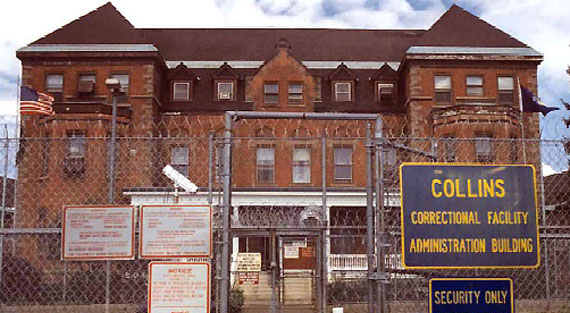
Gowanda State Hospital - Collins Correctional Facility

Gowanda State Hospital – Collins Correctional Facility

GOWANDA STATE HOSPITAL – The Gowanda Committee visited the hospital August 27, 1913, and made a thorough inspection…The two greatest needs of the hospital at the present time are a new morgue and an addition to the bakery. The place now used for the care of bodies pending burial is a basement room lighted by artificial light, small, and without interior equipment. What autopsies are performed by the medical staff have to be made in this inconvenient place. Whenever several deaths occur within a short interval, it is often necessary to pile them up around the room and friends and relatives are often shocked to find their dead in this unsuitable place. This hospital had forty-two deaths last year. The scientific work at the hospital, as well as the consideration of friends and relatives of patients, demand the construction of a proper place for the care of bodies of patients.”

SOURCE: State of New York State Hospital Commission, Twenty-Fifth Annual Report, October 1, 1912 to September 30, 1913, Transmitted to the Legislature January 29, 1914, Albany: J.B. Lyon Company, Printers, 1914, Page 471.

CLICK HERE TO VIEW THE VIDEO They’re Buried Where? by Seth Voorhees

THE BAD NEWS: Thousands Remain Nameless! 6.15.2015.

THE GOOD NEWS: One Man Is Remembered! 6.14.2015.

Central Islip State Hospital & Cemetery

Central Islip State Hospital served the counties of New York and Richmond.

1916 Central Islip State Hospital.
Central Islip State Hospital – OPACITY.
The Central Islip Cemetery Restoration Project.

“On February 28, 1896, by act of the Legislature, the New York City asylums for the insane were transferred to state care, under the name of the Manhattan State Hospitals, with three divisions, namely: Manhattan State Hospital East (male department), Manhattan State Hospital West (female department), on Ward’s Island; and Manhattan State Hospital at Central Islip for both sexes. At that date there were 30 buildings at Central Islip. In 1912, not including a group of four in process of construction, there are 118.”

CLICK HERE TO VIEW THE VIDEO They’re Buried Where? by Seth Voorhees

THE BAD NEWS: Thousands Remain Nameless! 6.15.2015.

THE GOOD NEWS: One Man Is Remembered! 6.14.2015.

Buffalo State Hospital & Cemetery

Buffalo State Hospital served the counties of Erie and Niagara.

1916 Buffalo State Hospital
Buffalo State Hospital – OPACITY.
Roger Luther – New York State Asylum for the Insane – H.H.Richardson Complex.
The Buffalonian – The H.H. Richardson Complex (Buffalo Psychiatric Center).
The Richardson Olmsted Complex.
Risen from the Dead: Buffalo’s Richardson Olmsted Complex – New York States of Mind.
Olmsted In Buffalo – New York State Asylum for the Insane (Richardson-Olmsted Complex).

Buffalo State Hospital

Buffalo State Hospital

I’m not sure if Buffalo State Hospital had a cemetery, they may have used a public cemetery. If I had to guess, I would think deceased patients of the facility were buried at Forest Lawn Cemetery.

THE BLACK ROCK BURYING GROUND. – When the lands comprising the South Village of Black Rock were surveyed in 1804 or 1805, there were two blocks, Nos. 41 and 42, appropriated by the state for burial purposes. These, however, were found to be too low, and hence not suitable; many, therefore carried their dead even to the “Franklin Square” ground; and when Black Rock village was incorporated, Col. William A. Bird, in behalf of the corporation, procured the exchange of those two lots for one situated on higher ground; being lot No. 88 on North street, since known as the Black Rock Burying Ground. This lot was bounded by Jersey, Pennsylvania, and Fourteenth streets, and the mile strip or what is now “The Avenue.”

When the “Guide Board Road” (now North street) was worked through, this lot was cut in twain, and a small triangle was left on the south side, in the old limits of Buffalo City. This small lot, by an arrangement with the Black Rock authorities, was used as a Potter’s field for the unfortunates who died at the Poor-house; this building being a little to the west of it, next to the church of the Holy Angels, and now used for the Parish School. In this little spot of ground have been doubtless laid without a pitying eye to weep over their wreck, or a friendly hand to raise a tablet to their memory, as noble persons as have ever existed; but poverty and misfortune blighted their prospects, and they became dependents on the bounty of their fellow-creatures.

Many a time have I pondered over the unmarked hillocks here and thought what tales could be revealed were the history of the unknown and unnoted dead under my feet made up into a living record. But they were not permitted to rest in peace. The City of Buffalo a few years since fenced in the lot, and desecrated the spot by using it as a public pound. Could no other vacant place be found, that even a pauper might not be allowed to rest here without having his last hold on earth made the stamping place for vagrant cattle?

The main lot was used for years by the inhabitants of Black Rock; but burials having been discontinued for some time, the land was conveyed to that noble institution the Charity Foundation of the Episcopal Church. As in the Franklin Square and North Street Public Cemeteries there were no private lots here, but places were assigned by the authorities.

When the Forest Lawn Cemetery was established, in 1850, many families bought lots and removed their dead from this ground. Since then, in grading Rogers street many graves were dug up, and the bones collected and removed to Forest Lawn. And within the last few years, in grading “The Circle” which takes in most of this old burying ground, many more have been dug out and deposited there. More still remain which should be properly taken care of. Although I ever disapprove of the practice of our city rulers in disturbing and removing the bones from our old burying grounds, yet in this case it seems to be a matter of public necessity; and as part have been removed they may as well all be.”
SOURCE: 1879 Buffalo Cemeteries – William Hodge – Pages 8 & 9.

CLICK HERE TO VIEW THE VIDEO They’re Buried Where? by Seth Voorhees

THE BAD NEWS: Thousands Remain Nameless! 6.15.2015.

THE GOOD NEWS: One Man Is Remembered! 6.14.2015.

Binghamton State Hospital & Cemetery

Binghamton Asylum for the Chronic Insane was the second New York State Asylum for the “Chronic Insane” ONLY that opened on October 19, 1881; Willard was the first opening on October 13, 1869. In 1890, ALL NYS Insane Asylums became “state hospitals” and accepted both chronic and acute patients. Binghamton State Hospital served the counties of Broome, Chemung, Chenango, Cortland, Delaware, Madison, Otsego, Schoharie, and Tioga. 

1916 Binghamton State Hospital
Binghamton State Hospital History – nysAsylum – Roger Luther
Binghamton State Hospital – You Tube
Binghamton Asylum Cemetery Records – 1,500 Patient Names.
2014 Roger Luther – Glass Photo Negatives Discovered in Binghamton’s Historic Asylum – 2.18.2014.

Roger Luther has done a fabulous job with photographing many of the abandoned New York State hospitals and cemeteries. Please visit his website at: nysAsylum.com.

Binghamton Cemetery by Roger Luther

Binghamton Cemetery by Roger Luther

Chap. 280. AN ACT to abolish the New York State Inebriate Asylum, and to establish the Binghamton Asylum for the Chronic Insane, and to provide for the management thereof. Passed May 13, 1879; three-fifths being present.

The People of the State of New York, represented in Senate and Assembly, do enact as follows:

Section 1. The institution heretofore established, and now known as the New York State Inebriate Asylum, at Binghamton, is hereby abolished; and all the property and privileges belonging to this State, and now managed and administered by the managers of said inebriate asylum, are hereby transferred and intrusted to the care and management of the Binghamton Asylum for the Chronic Insane, which is hereby established. The governor, by and with the advice and consent of the senate, shall appoint nine citizens of this State as a board of trustees of such asylum for the insane, who shall be divided into three equal classes – the first class to hold office for two years; the second class four years, and the third class six years, from and after the passage of this act, and until their successors are appointed and enter upon the discharge of their duties. The governor is hereby authorized, by and with the advice and consent of the senate, to fill all vacancies hereafter occurring in said board of trustees, either by reason of the expiration of the term of service, or for any other cause.

§ 2. Immediately after the passage of this act, the managers of said inebriate asylum shall begin their preparation to close up the affairs of begin to the same, and shall give free access and opportunity to the agents, mechanics and laborers to be employed by the trustees of said asylum for the chronic insane, to enter upon said property for the purpose of preparing the same for the uses of such insane asylum; and upon the expiration of thirty days from and after the passage of this act, the said managers, their officers, agents, employes and servants, shall vacate such property, and leave the same to the possession, control, and management of the trustees appointed under the first section of this act.”…

SOURCE: Laws of the State of New York, Passed at the One Hundred and Second Session of the Legislature, Begun January Seventh, and Ended May Twenty-Second, 1879, In the City of Albany, Albany: A. Bleecker Banks, Publisher, 1879, Page 368.

Binghamton Cemetery 2 by Roger Luther

Binghamton Cemetery 2 by Roger Luther

CLICK HERE TO VIEW THE VIDEO They’re Buried Where? by Seth Voorhees

THE BAD NEWS: Thousands Remain Nameless! 6.15.2015.

THE GOOD NEWS: One Man Is Remembered! 6.14.2015.

Willard State Hospital & Cemetery

Between 1869 and 1890, Willard Asylum for the “Chronic” Insane served the entire State of New York with the exception of New York, Kings, and Monroe Counties. After 1890, Willard State Hospital served the counties of Allegany, Cayuga, Genesee, Ontario, Orleans, Schuyler, Seneca, Steuben, Tompkins, Wayne, and Yates.


https://inmatesofwillard.com/2022/12/14/willard-cemetery-at-find-a-grave/

1916 Willard State Hospital.
The Branch – Wayne E. Morrison, Sr. – Pictorial Album of The Willard Asylum 1869–1886 – 3.7.2013.
Wayne E. Morrison, Sr. – Pictorial Album of The Willard Asylum 1869–1886 – 1.10.2013.
1886 Hayt’s Corner’s, Ovid & Willard Rail-Road – 1.9.2013.
Captain Morris J. Gilbert, Steward – 3.16.2013.
1917 Willard Maps – 7.25.2012.
The Willard and Rochester State Hospital Connection – 4.18.2012.
1900 Willard State Hospital Steward’s Report.
Obituary 1865 Dr. S.D. Willard.
Obituary 1918 Dr. J.B. Chapin.
Photographs Willard State Hospital circa 1898.
Photographs of Willard State Hospital by Roger Luther.
THE BAD NEWS: Thousands Remain Nameless! 6.15.2015.
THE GOOD NEWS: One Man Is Remembered! 6.14.2015.
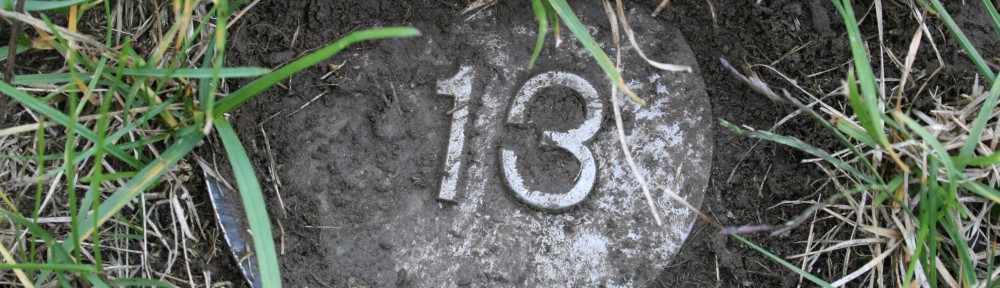
10-The Main Building From The North-Wayne E. Morrison, Sr. 1978

10-The Main Building From The North-Wayne E. Morrison, Sr. 1978

Willard Cemetery Memorial Project

Notes & Insights from Craig Williams – Willard Cemetery

Here are some wonderful notes, used with permission, from Craig Williams, Curator of History at the New York State Museum at Albany, concerning the burial ledgers of the Willard State Hospital Cemetery, and Ovid Union Cemetery. Mr. Williams is an expert on the history of the Willard Asylum and has always been more than willing to share his vast knowledge on the subject. He has provided me with maps, old photographs, answered my numerous questions, and filled in the gaps with insight that only comes from years of experience. I would like to take this opportunity to recognize and thank Mr. Williams for all the help he has given to me!

NYS Museum Albany album b 154-2 Old Cemetery

NYS Museum Albany album b 154-2 Old Cemetery

“As you know, those records are now among the sealed materials…. sad, since back when they were at Willard, the staff were only to willing to help locate “lost” relatives by using those records… Often overlooked is the section of the Union Cemetery dedicated to Willard. I have a memory of being told that there were over two hundred burials there. I’ve always meant to check with the Cemetery to learn if they have a log of burials. In the inside cover of Willard’s first burial ledger, there is the handwritten note stating – “January 17th, 1876 – Trustees of Union Cemetery at Ovid, N.Y. made deed of lot 161 to Willard Asylum for the Insane. Deed deposited with J. B. Thomas, Treasurer, Consideration, $25. // Ganett W. Freligh, Pred’d’t // John C. Meddick, Treas.” The Willard burials that I know of at Union are along the east center edge, by the main road. The few formally marked (you can see many more depressions) date from the 1980s plus or minus. Could that location be Lot 161? Is there another section at Union where there are older Willard burials? There must have been a period in the 1980s when people were being buried at both cemeteries. I wonder how that was decided?”

“One of the things I noted in the burial ledgers were the fair number of people later removed by family or for other reasons (move to a Catholic cemetery, for instance), maybe a couple dozen over the hundred plus years? The Stock memo says 5,757 burials and there were several burials after that date. The last “regular” burial was on November 18, 1991 (not counting the 2000 burial). As you know, at the very end, there were two burials of lab specimens (including one fetus). From the four manuscript ledgers, I get 5,249 burials (not counting the two above) in the main (“Protestant”) section. The Soldiers Cemetery account shows 106 burials. A few of those (half dozen) may have been counted among the 5,249, being reinterred when that section was set up in April 1885. The last burial there seems to have been done on December 10, 1926. The Jewish cemetery (old and new), first used in January 1932, appears to have 202 burials. The old portion is where the monument now stands. The new is in the far northeast section of the cemetery. Catholic (old and new), first used in January 1959, seems to have 327 (including the 2000 burial of M). Added together, I get 5,884. I did not deduct the burials that were later removed…”

“That first burial ledger has a number of interesting clues. It lists the first burial as being done on 5 January 1870, not long after the Asylum’s opening. This cemetery was (I think) immediately north of the Branch (Grandview)… maybe in what is now parking lot or closer (under?) the current building?… By December 1873 there was already some confusion over the number of burials (85 by that time). In March 1875 a 71-year-old woman was buried, with a place of birth being listed as “Africa.” I note that since in some Upstate cemeteries separate sections were made for African-Americans…never the case at Willard.

The first burial at the new cemetery (on “Risings Hill”) was on July 3, 1875. She is listed as burial 123. On October 16, 1875, the ledger notes that “This day, John Hanlon (Sexton), finished transferring bodies from the old “Cemetery” to the new, on “Risings Hill.” He reports he had removed 119 bodies, and that bodies corresponding to Nos. 7, 27, 64 and 70 had been disinterred. // Alexander Nellis, Jr., Assistant Physician.” That comment on “disinterred” doesn’t actually match the records. They were all placed in “Form 1” (Row 1?)…The July 3rd burial is the first one in Form 2 (Row 2?). Those rows were just north of Mocha’s shed. An implication of the removal to the new cemetery is that the old one had grave markers. Apparently, some things were overlooked. In the third cemetery ledger, in November 1898, there is the note of “Bones taken from new Branch” were put at the west end of Form 2. In 1897 and 1898 there was substantial regrading around the Branch. That work probably exposed the overlooked burial(s?).

The annual report for 1874 discusses the reasoning for the new cemetery. “Experience has demonstrated, that the present location of the cemetery is a bad one, though the most appropriate one on the asylum farm. It is inconvenient because of its distance (remember, the Asylum was still just Chapin Hall), from the nature of the soil, and it also interferes with the enlargement of the upper reservoir, which is indispensably necessary. We therefore desire to change the location. Twenty-five acres of land can be purchased a short distance north…”

“Obviously, the cemetery in the 19th-century only took up a small portion of the hill, the rest was probably used for farm purposes. The first engravings of that north edge of the Asylum land show what might be a bridge going across the ravine, the original entrance not being the current one. The Stock memo states “the current entrance was cut in and established because new more modern day vehicles could not cross the small culvert bridge. The story goes that the village mayor wanted the fire truck to be able to go in a parade down Main Street of Willard and enter the cemetery for ceremonies at the old Civil War cemetery site but could not because the bridge was too narrow. The new entrance was established. While doing this, some landscaping was required and the sharp embankment needed to be made more gradual. In that process, some heavy equipment was used and they proceeded to taper the hillside but had to stop when they began to strike some old grave sites.” The old entrance shows on the facility maps.

Just a couple other items from my notes from the cemetery ledgers. A note was made to the entry for a July 5, 1886, that a glass bottle with a person’s name was placed in the burial alongside the one whose name was so enclosed…. confusing, but implying that such identification practices happened early on. There are at least three references to infants being buried. One was from September 1896 and mentions a “Form A” location at the west end of Form (Row?) 1. Alongside a November 1880 burial entry is the note that the daughter was present at the burial of her mother. In the last ledger, especially from the 1940s on, there are frequent references to amputated limbs being buried in unrelated graves.”

Willard Tour – May 18, 2013

CLICK HERE TO VIEW THE VIDEO They’re Buried Where? by Seth Voorhees

If anyone is interested, a tour of the historic buildings at the former Willard State Hospital and the cemetery will be on Saturday, May, 18, 2013. For more information, please click on the link. Seneca Daily News

Willard Drug Treatment Campus – 7116 County Road 132 – Willard, NY 14588. The cemetery is down the road on the right heading toward Seneca Lake.