From The Finger Lakes Times:
http://www.fltimes.com/news/article_153b3b7a-6103-11e4-84a7-1718a22168cc.html

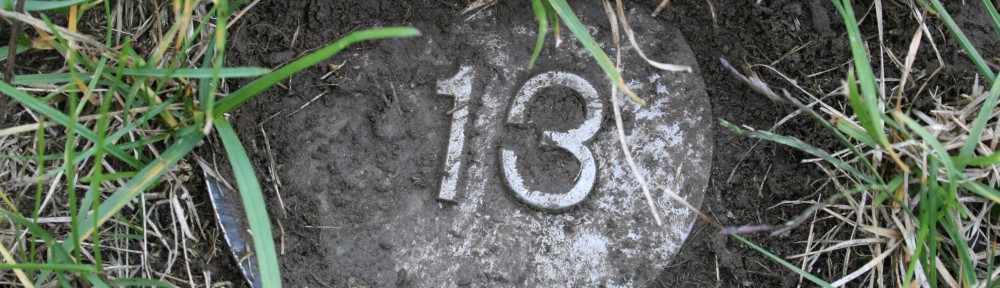
Willard Cemetery Tour – Dave L. Shaw photo – Finger Lakes Times
From The Finger Lakes Times:
http://www.fltimes.com/news/article_153b3b7a-6103-11e4-84a7-1718a22168cc.html
Willard Cemetery Tour – Dave L. Shaw photo – Finger Lakes Times
This is a very simple request. Please click the link below and sign this petition that will allow the Willard Cemetery Memorial Project to honor and remember with dignity former patient and resident grave digger, Lawrence Mocha, with a plaque at the Willard State Hospital Cemetery. Thank You!
CHANGE.ORG-PETITION TO ALLOW MEMORIAL PLAQUE FOR LAWRENCE MOCHA.
Support New York State Senate Bill S2514 that will allow the release of the names, dates of birth and death, and location of graves of former patients buried in anonymous, unmarked graves in long-closed NYS Hospital and Custodial Institution Cemeteries! There are THOUSANDS of forgotten souls who deserve to be remembered with DIGNITY! This bill introduced by Senator Joe Robach has been before the NYS Legislature for over three years. It is time for this bill to become law! http://www.youtube.com/watch?v=gtaQX8uQdmY

Willard Cemetery Memorial Project 5.18.2013
Saturday, May 17, 2014
WILLARD DRUG TREATMENT CAMPUS
7116 County Route 132
P.O. Box 303
Willard, NY 14588-0303

Willard Cemetery 2 – 5.18.2013
When I first started this blog, I did it in order to help other people find their forgotten ancestors. I persuaded my State Senator, Joe Robach, to draft legislation in 2011 that would allow for the release of patient names, dates of death, and location of graves to the public, which he introduced to the New York State Legislature. It first appeared on March 23, 2012 as S6805-2011. On January 8, 2014, it was reintroduced as S2514-2013.
There are at least 17 former New York State Hospitals / Insane Asylums that have been renamed, closed, demolished, or turned into New York State Prisons. The cemeteries located on former NYS Hospitals are filled with anonymous, unmarked graves. Willard alone has close to 6,000. Some of these former State Hospitals, such as Buffalo and Rochester, used city or county cemeteries and they are filled with the nameless as well. How many? I do not know. How long will it take to give these people the dignity in death that they deserve? When will they be allowed to rest in peace? When will they be remembered as fellow human beings who were on the same earthly path as everyone else before their lives and their freedom were taken from them? What else do I have to do to get the attention of the Governor and Assembly members to release the names of former patients who lived and died in these warehouses? The Department of Health and Human Services declared last March that patient medical records may be released to the public after 50 years of a patient’s death. Now we have to ask for another bill to be drafted and introduced to the Senate again in order to allow New York State to release medical records. After seven years on this journey, I am tired and just don’t have the desire to fight anymore.
Before I began my research on Willard and the other New York State Hospitals and Custodial Institutions, I considered myself to be normal, whatever that means. All kinds of interesting things happened to me and I wondered, why? I lost my job, went through menopause, osteoarthritis, and a neurological problem that I have always had, had become progressively worse. Depression is one of those “Mental Illnesses” that I never thought of as a “Mental Illness.” I thought that depression was a normal human emotion that one experiences when subjected to trauma or pain in any of its various forms. I would not have believed that I was “Mentally Ill,” until my neurologist, who I no longer go to, informed me that I have delusional thinking and I’m paranoid because I believe that I can no longer protect myself if I needed too like being able to run from a dangerous situation. This came from a 30 something year old man in perfect health who stands over 6 feet tall. I’m 57 years old, stand 5 feet 2 inches tall, and have Familial or Essential Tremors in my head and my right hand. My thinking is based on facts, not delusions. I thought that doctors were above this archaic type of thinking but I was wrong. Many men, even doctors, still don’t get it.
The reason why I am relating my story is that I am sure that had I lived one hundred years ago with these same progressive diseases, I would have been locked up! I would not have believed that a doctor would ever say such things to me and I can only imagine what must have happened to my great-grandmother, Maggie, who died at Willard State Hospital 86 years ago. If you wonder why people do not seek help, my little story is why they don’t. Am I labeled? I don’t know. It is frightening when you realize that you’re not feeling like your normal self, and seek help, and this is what a doctor says to you. Maybe we all need to be a little more aware of who is crazy and who is normal and realize that the people buried in those anonymous, unmarked graves were human beings like me, and you, just trying to make their way in life. Please write or call your New York State Senator so that this bill will become a law. Thank you!
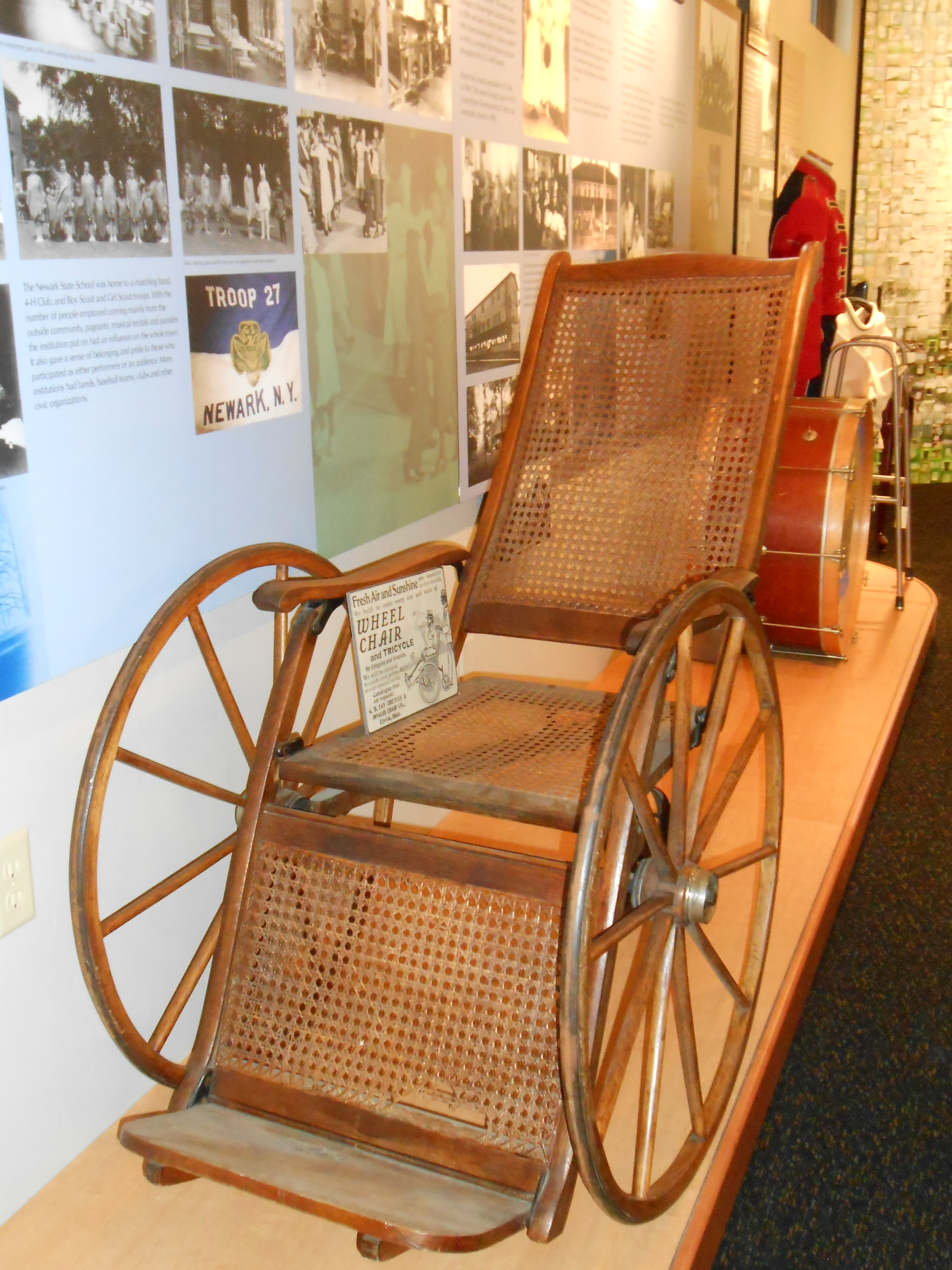
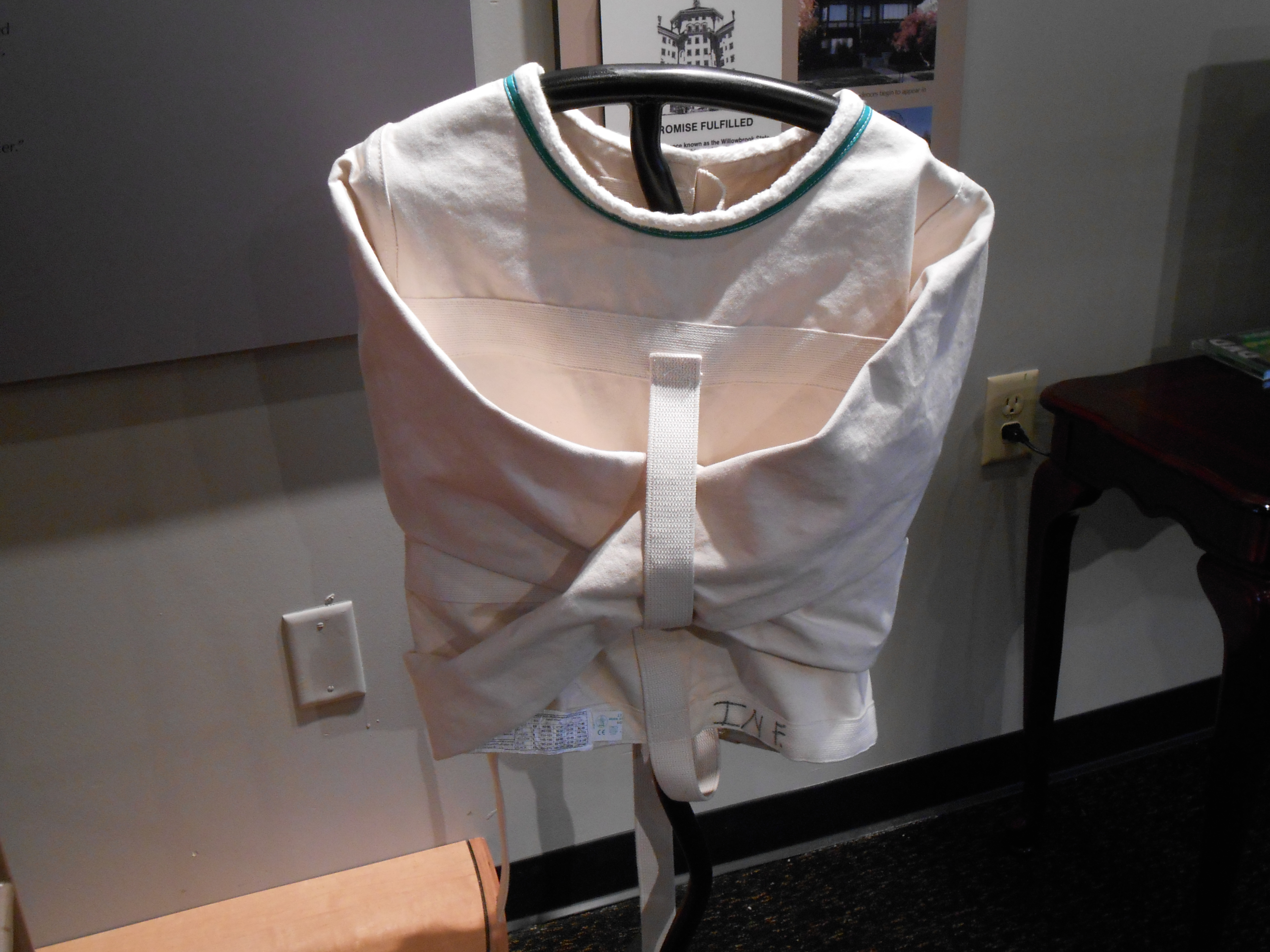
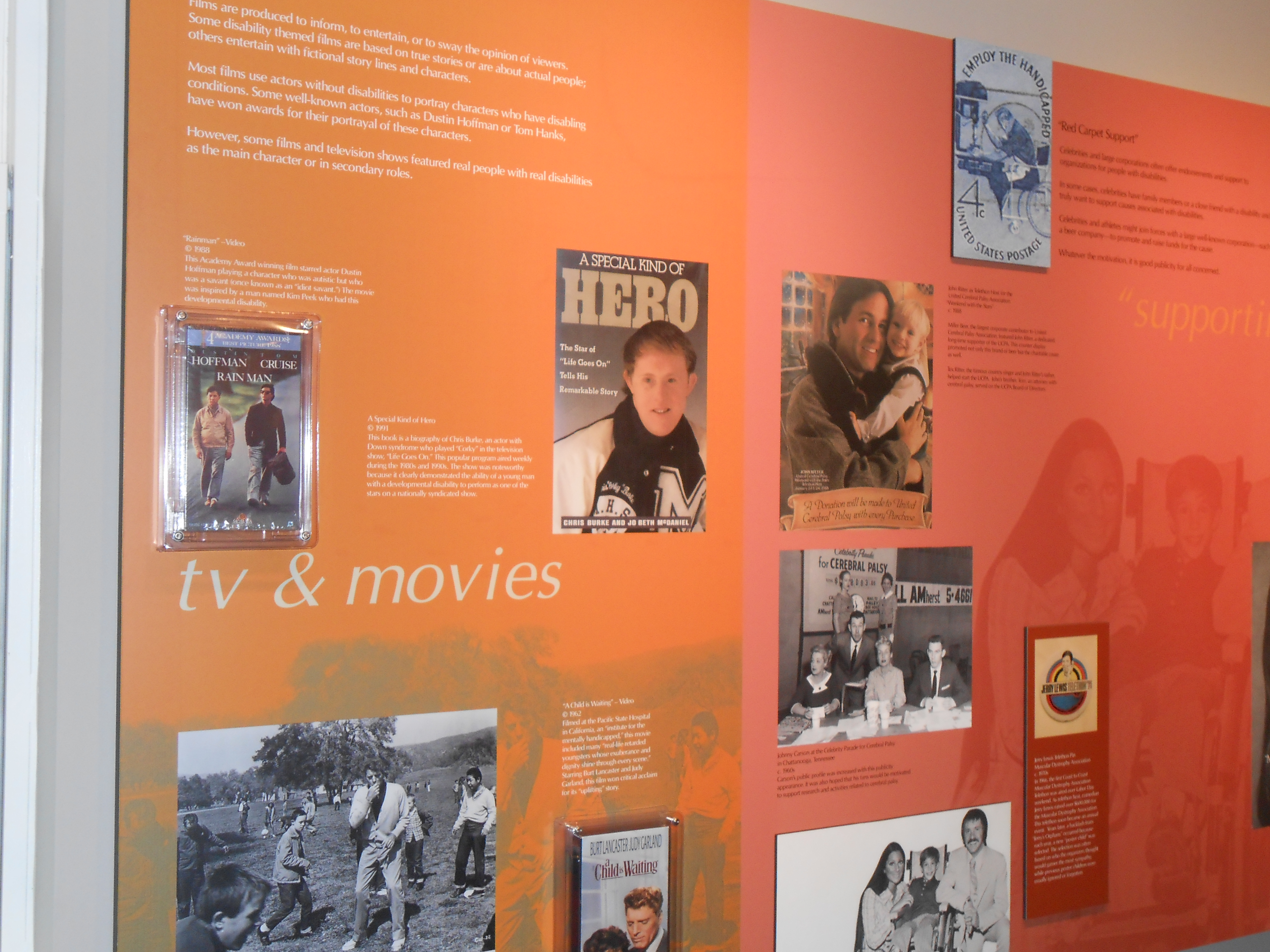
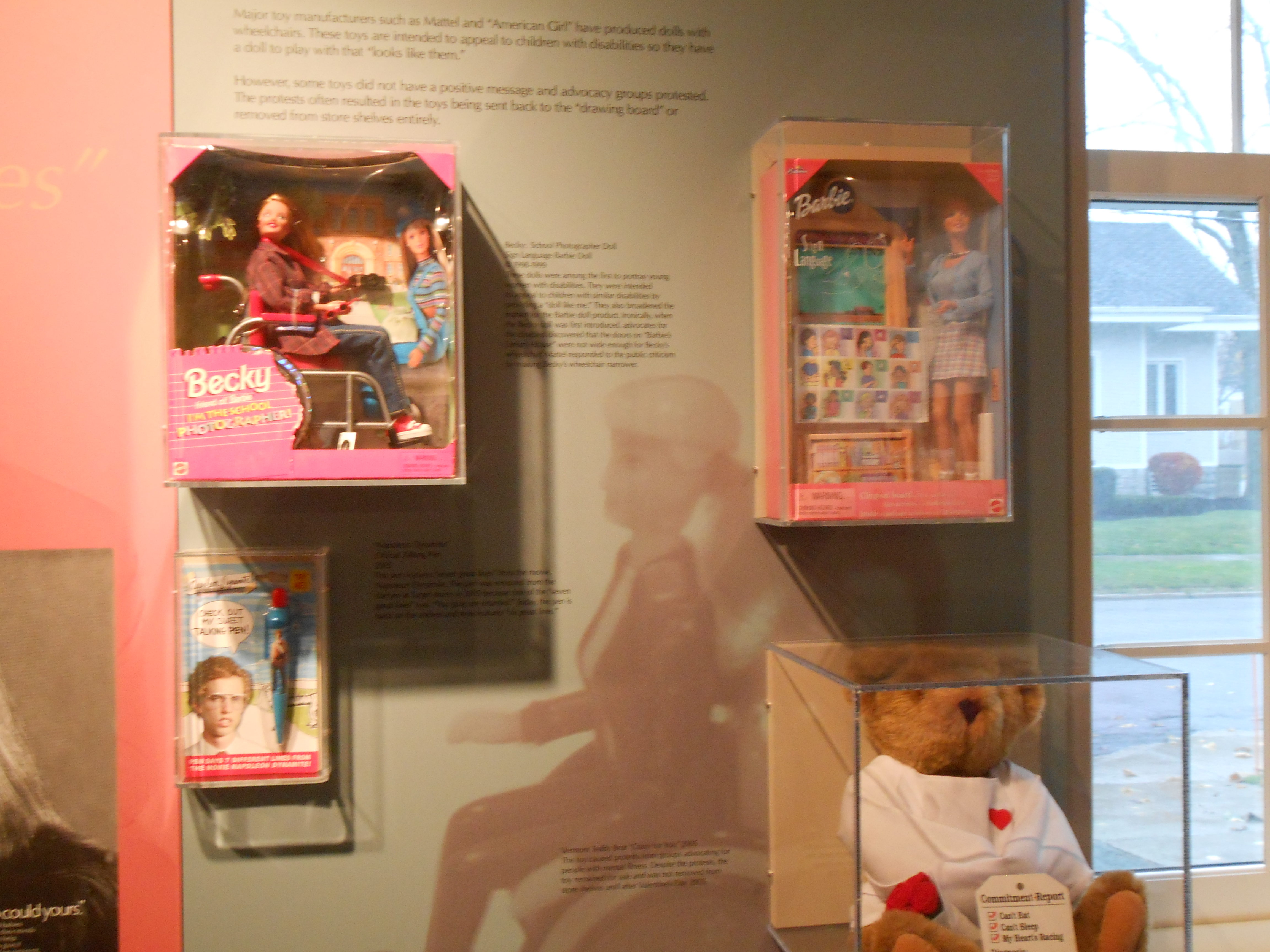
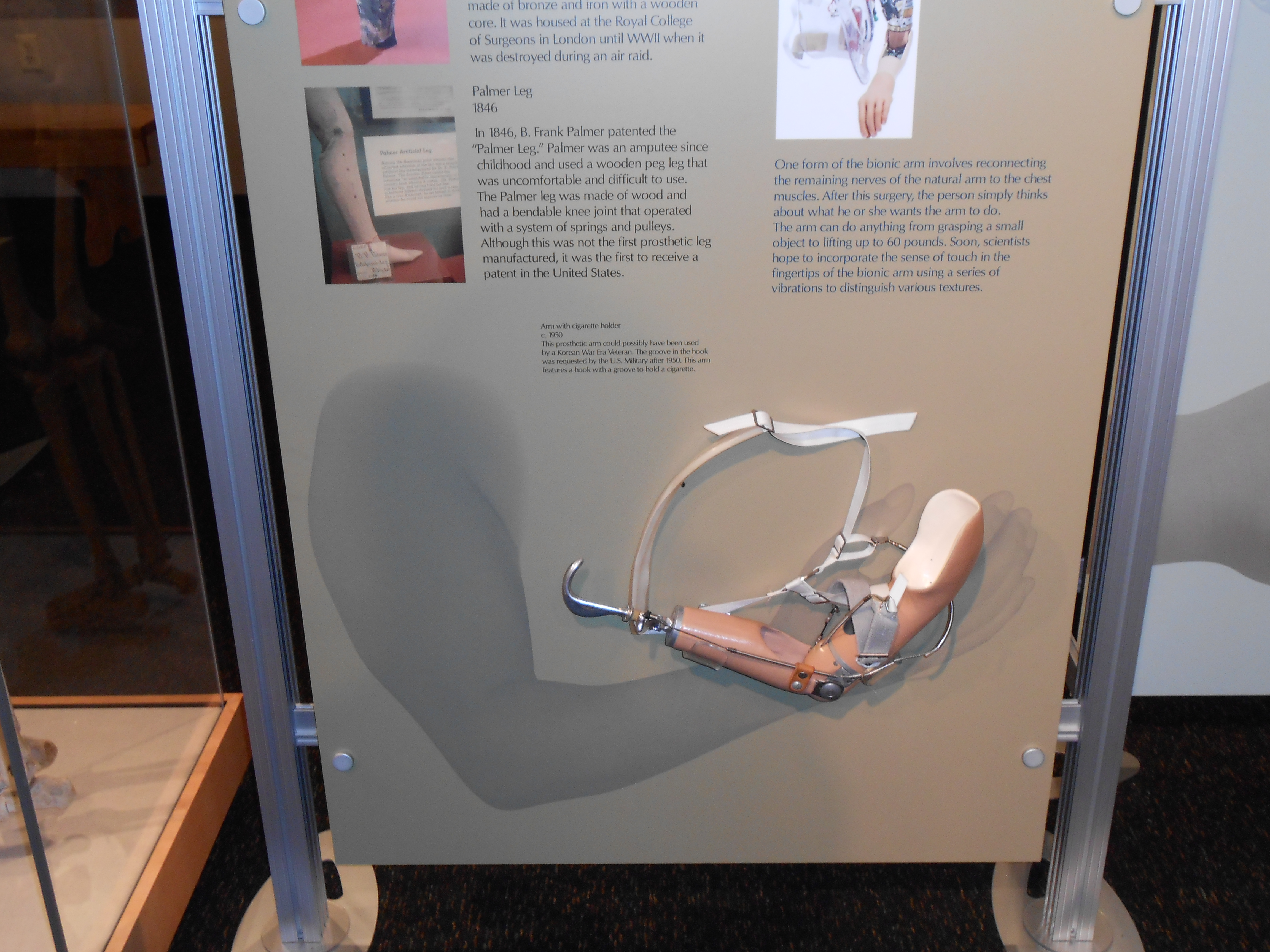
Yesterday, I visited The Museum of disABILITY History, located at 3826 Main Street, Buffalo, New York. I finally got to meet David Mack-Hardiman, Director of Training, People Inc., who gave me a tour of the museum, and Douglas V. Farley, Museum Director. I was very impressed with all the displays! This museum has so much to offer including Educational Resources, Activities, Traveling Exhibits, Cafe, and Museum Store. Please visit the museum if you have the chance!

Monument For The Forgotten
My favorite exhibit, “The Monument For The Forgotten” was the vision of David Mack-Hardiman, created by Brian Nesline, Faces of Buffalo, “featuring thousands of individual grave markers woven into a mosaic tapestry image of a large stone monument.” I need to acknowledge the selfless work that David and People Inc. have done over the past few years. David and his team go into these unmarked cemeteries, clear the brush away, mow the lawns, and raise and clean each marker. Some graves are flat, numbered markers while others, as in the case of a few New York State Custodial Institutions, have the names inscribed. This back-breaking work is done by volunteers! God Bless Them!

Monument For The Forgotten 2
“Mission: The Museum of disABILITY History advances the understanding, acceptance, and independence of people with disabilities. The Museum’s exhibits, collections, archives and educational programs create awareness and a platform for dialogue and discovery.
Vision: The Museum seeks with, and on behalf of, individuals with developmental and other disabilities, a higher level of societal awareness and understanding, and a change in attitudes, perceptions and actions that will result in people with disabilities having the greatest possible participation in their communities.”
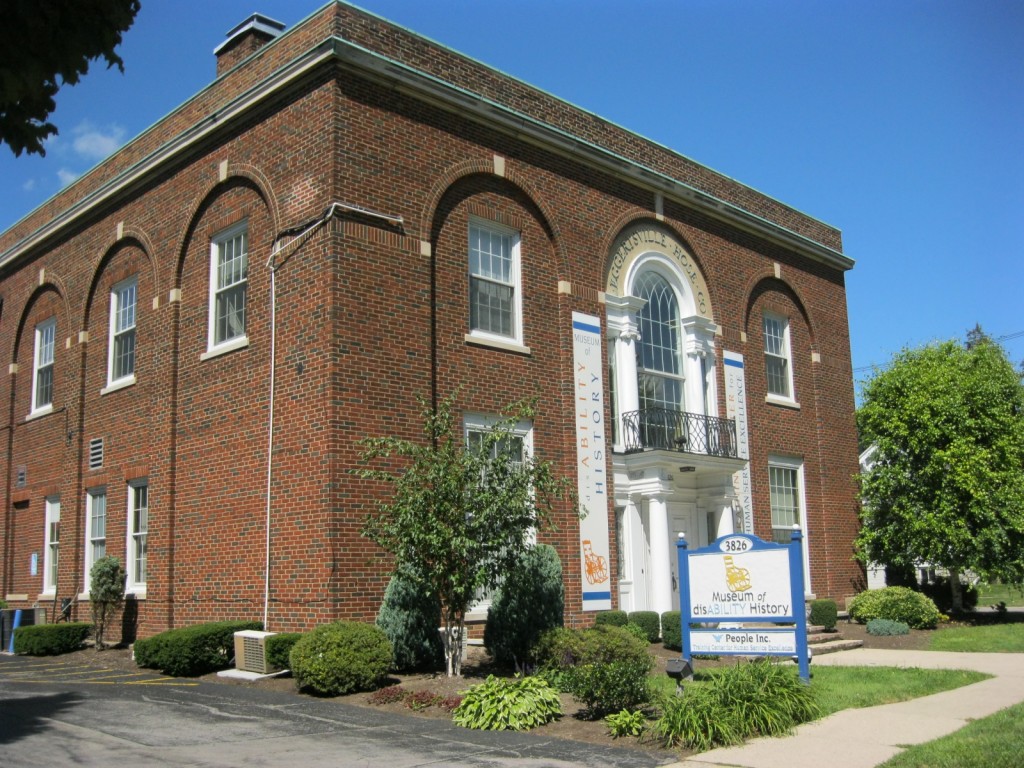
Museum Of disABILITY History
“Established in 1998 by Dr. James M. Boles, president and CEO of People Inc. (Western New York’s leading non-profit human services agency) the Museum of disABILITY History has steadily expanded over the years and, in late 2010, moved to a brand new location (pictured above). The Museum of disABILITY History is dedicated to advancing the understanding, acceptance and independence of people with disabilities. The Museum’s exhibits, collections, archives and educational programs create awareness and a platform for dialogue and discovery. The Museum of disABILITY History is a project of People Inc. and is chartered by the New York State Department of Education Board of Regents. People Inc. exists so that individuals with disabling conditions or other special needs have the supports they need to participate and succeed in an accepting society. As noted throughout the site, this project has been developed with the generous support of People Inc. and the B. Thomas Golisano Foundation. We are truly thankful for their participation in this worthwhile effort.”

M 01
M 02

M 03
M 04-Straight Jacket

M 05
M 06

M 07
M 08

M 09
M 10

M 11

Lin and David Mack-Hardiman
After my post yesterday, 1893 State Hospital Cadavers, a reader asked, “How long did this go on?” I didn’t know but I felt that it didn’t go on for very long. I was thinking about 20 years or so. Another reader stated that it is still the law in New York State and she included a link to the statute. She was right and I was very wrong! After reading the law I was amazed at how little it has changed since 1893. The reason I thought that this practice didn’t go on for very long is because of the thousands of anonymous graves in every state of this country. Even today cemeteries have special lots that are reserved for the poor and for bodies that no one has claimed. According to this law, one would think that any body that wasn’t claimed within the 48 hour time period would be given to a medical university but that doesn’t seem to be the case. Willard State Hospital Cemetery, which was used for 130 years, has close to 6,000 unmarked, anonymous graves. This cemetery is the final resting place of the patients that no one claimed. That’s only 1 New York State Hospital out of 17. I’m sure that somewhere there is a list of those deceased patients whose bodies were given in the name of medical science. That information would certainly be in the patient’s medical records which as of this date, are unavailable to the public. If anyone can explain this law further, please feel free to do so. If you would like to learn more about this subject, please click on the RED links below.
N.Y. PBH. LAW § 4211 : NY Code – Section 4211:
Cadavers; Unclaimed; Delivery to Schools for Study.
“1. Except as hereinafter provided, and subject to the conditions specified in this article, the director or person in charge of any hospital, institution, morgue or other place for bodies of deceased persons not interred or otherwise finally disposed of, and every funeral director, undertaker or other person having in his or her lawful possession, any body of a deceased person for keeping or burial, shall deliver every body of a deceased person in his or her possession, charge, custody or control not placed therein by any person, agency or organization for keeping, burial or other lawful disposition to:
(a) any medical college, school or institute including chiropractic colleges registered by the regents of the university of the state of New York as maintaining a proper standard;
(b) any university within the state authorized by law to confer degrees of doctor of medicine or doctor of dental surgery;
(c) any other college or school incorporated under the laws of the state of New York for the purpose of teaching medicine, anatomy or surgery to those on whom the degree of doctor of medicine has been conferred;
(d) any university within the state of New York having a medical preparatory or medical postgraduate course of instruction; or
(e) any college, school or institute maintaining a mortuary science program that has either been approved by the department or holds a certificate of accreditation from an accrediting organization recognized by the department pursuant to article thirty-four of this chapter, provided, however, that such bodies remain unclaimed by any of the aforementioned institutions. Any college, school or institute maintaining a mortuary science program may only claim and utilize such bodies for anatomical and embalming instruction purposes.
2. The professors and teachers in every university, college, school or institute hereinbefore specified may receive the body of a deceased person delivered or released to the university, college, school or institute, as herein provided, for the purposes of medical, anatomical and surgical science, anatomic embalming, and study.
3. No body of a deceased person shall be delivered or released to or received by, any university, college or school or institute.
(a) if, within forty-eight hours after death it is desired for interment or other lawful disposition by relatives and in the counties of Oneida, Onondaga, Oswego, Madison and Cortland, by relatives or friends, or,
(b) if prior to his or her death, the person shall have expressed a desire that his or her body be interred or otherwise lawfully disposed of, is carrying an identification card upon his or her person indicating his or her opposition to the dissection or autopsy of his or her body, or,
(c) if the deceased person is known to have a relative whose place of residence is known or can be ascertained after reasonable and diligent inquiry.
4. (a) A body of a deceased person shall not be delivered or released to, or received by a university, college, school or institute, if within twenty-four hours after notice of death by the person having lawful possession, charge, custody or control to the next of kin, or in the counties of Oneida, Onondaga, Oswego, Madison and Cortland to the next of kin, or friend of the deceased person such next of kin or friend shall claim such body for interment or other lawful disposition.
(b) Unless a relative or friend of the deceased person shall claim the body of the deceased person within forty-eight hours after death, or within twenty-four hours after receipt of notice of death as provided in paragraph (a) of this subdivision, the next of kin, relatives or friends, as the case may be, shall be deemed to have assented to delivery or release to, and receipt by the university, college, school or institute, of such dead body.”
SOURCE: FindLaw for Legal Professionals-Cadavers; Unclaimed; Delivery to Schools; Procedure.
FindLaw for Legal Professionals-NY Code-Article 42: CADAVERS.
FindLaw for Legal Professionals-Cadavers; Delivery to Relatives or Friends.
FindLaw for Legal Professionals-Cadavers; Autopsy by Order of Hospital Authorities.
This is another great project that concerns unmarked, anonymous graves. For some time now, I have heard the same talking points from the New York State Office of Mental Health about how the release of patient names of those who have been dead for over a hundred years may be offensive to some families, especially those “who live in small towns.” This is the dumbest statement I have ever heard considering that close to half of all the inmates who were incarcerated in insane asylums during the nineteenth century were newly arrived immigrants. Hopefully bill S2514-2013 will be become a law soon and will include provisions for a searchable database similar to those at The Hart Island Project. Maybe the Inmates of Willard, and the former patients of all New York State Hospitals and Custodial Institutions will finally be next.
“A nonprofit charitable organization assisting families across the globe to relocate a diverse, international community of people who disappeared in the greater New York area…The City Cemetery occupies 101 acres in the Long Island Sound on the eastern edge of New York City. It is the largest tax funded cemetery in the world. Prison labor is used to perform the daily mass burials that number over 850,000. Citizens must contact the prison system to visit Hart Island. There is no map of the burials and no one is permitted to visit a specific grave. The Department of Correction restricts visitation to every third Thursday of the month and only to visit a gazebo near the ferry dock. Records at this location consist of intact mass graves since 1980. Many older records were destroyed in a fire on Hart Island in 1977. Some surviving records are available on microfilm at the Municipal Archives. The mission of the Hart Island Project is to make the largest cemetery in the United States visible and accessible so that no one is omitted from history. On September 27, 2012, The Hart Island Project testified before the New York City Council concerning updating the administrative code for operations on Hart Island.”
PLEASE CHECK OUT The Hart Island Project.
Digging Hart Island, New York’s 850,000-Corpse Potter’s Field.
Piercing the Mystery of Potter’s Field by Francis X. Clines.
I always wondered where the patients of the New York City Asylums / Manhattan State Hospital were buried. I now believe that they were buried on Hart Island.
Rochester State Hospital, formerly Monroe County Insane Asylum
Rochester, Monroe County, New York
1600 South Avenue
The history of the Rochester State Hospital is a little confusing because the lines blur between the Alms House and the Insane Asylum which would later be known as the Rochester State Hospital. Four structures stood on the same tract of land, facing South Avenue, between Elmwood and Highland Avenues, in the Town of Brighton. None of these structures remain. The original Monroe County Poor House or Alms House was built in 1826. The Work House was built in 1853 at the cost of $22,707.60 and contained ninety-two cells for men, women, and occasionally children. In 1865 and again in 1868, fires broke out and the buildings were replaced. In 1869, new brick buildings were constructed. At some point the Work House was renamed, the Penitentiary. Before county “Insane Asylums” the “insane” were kept in jails and county poor houses, separated from the other inmates and usually in chains or handcuffs. The first buildings of the Monroe County Insane Asylum were opened in the spring of 1857. It is at this point that the lines become blurred because the official year of the opening of the asylum is 1863.
According to W.H. McIntosh: In 1856, “there were thirty-seven insane confined in thirteen cells [in the alms house]. These cells were low, unventilated, and unwholesome, and in dimensions but four and a half by seven feet. In this small space were crowded as many as four persons, some of whom, wild and raving, were chained and handcuffed. There was no out-yard, and no guards to stoves to prevent self-inflicted injury. It was resolved to erect a permanent and convenient building especially for the insane. It was constructed at a cost of somewhat over three thousand dollars, during 1856 and 1857.” (1) The Monroe County Insane Asylum opened in the spring of 1857 to accommodate forty-eight people and was under the supervision of Colonel J.P. Wiggins and wife. An additional wing to house the superintendent and employees was completed in October 1859 at a cost of $26,791.57. Because of the lack of room, several patients still remained in the Poor House. In 1870, an additional wing was constructed to accommodate twenty-five more patients. In 1871, the number of inmates rose to one hundred. In 1872 an entirely new, main building was constructed with forty-one rooms at the cost of $18,000, and with various improvements close to $50,000. Dr. M.L. Lord was the warden and physician beginning in 1868.
According to the 1872 Proceedings of the Board of Supervisors of the County of Monroe: “Your Committee in tracing back the history of Monroe County Insane Asylum to 1863, when, by an act of the Legislature, it was made a separate institution from the County Alms House, find that the whole number of inmates supported at that institution during the year was sixty-three. The number of inmates now in that institution have increased to 137, and has more than doubled during the last nine years…” (3, page 18).
The Alms House – In 1860, a building, “was set apart for the infirm old men.” (1) George E. McGonigal was the Superintendent, and Dr. Azel Backus was the physician. On February 28, 1872, a building committee was appointed for a new almshouse to be built at the cost of $59,600. “The almshouse was located midway between the insane asylum and the penitentiary, and fifty feet south. The architect employed was J.R. Thomas. The entire cost of the work was $72,948.44.” (1) In late 1872, the new Monroe County Alms House was completed and opened. It was built in front of the old and at some point thereafter, the original poor house was torn down.
The Insane Asylum – The State of New York purchased the land and the buildings of the Monroe County Insane Asylum for $50,000 bringing it into the State Care system. On July 1, 1891, it was renamed, Rochester State Hospital. Dr. Eugene H. Howard was the first Superintendent and served in that position for several years. (2) The Rochester State Hospital was torn down in the 1960s to make way for The Al Sigl Center. Rochester State Hospital faced South Avenue, the address was 1600 South Avenue. The Al Sigl Center faces Elmwood Avenue, the address is 1000 Elmwood Avenue.
So it appears that in 1857 a separate building was constructed for the sole purpose of becoming the Monroe County Insane Asylum. In 1863, by an act of the New York State Legislature, the asylum was officially separated from the alms house. In late 1872, the NEW Alms House was opened. In that same year, an entirely NEW main building was constructed for the Insane Asylum complete with a Mansard Roof. If you look at the sketch of these three buildings (W.H. McIntosh’s book of 1877), you can see that all three are separate but they stand side by side, three in a row: Far left, Penitentiary; Center, Alms House; Far right, Insane Asylum.

Work House, County Infirmary, Insane Asylum 1877
There is an interesting map that was drawn in 1984 during an excavation of Highland Park that shows the footprints of the original wood frame and brick buildings. At this time, the remains of approximately 900 people were discovered. (4) In April 2013, while researching the history of the poor house and the asylum, I came across the “Chaplain’s Report” from 1872 which stated that the unmarked cemetery, “familiarly known as the ‘bone yard,” was “an enclosed lot of the public farm in the rear of the penitentiary.” (3) This cemetery was located behind the old Penitentiary and was used to bury the inmates of the Penitentiary, Alms House, and Insane Asylum from 1826 until January 8, 1873 when the County Board of Supervisors directed the Superintendents of the Penitentiary and of the County Poor, “to discontinue the burial of paupers or criminals in the old burying ground attached to the penitentiary, and to have the remains of all such interred in Mount Hope cemetery.” (3) The county board of supervisors of 1872 were well aware that this cemetery existed but apparently, it was never recorded. Perhaps the document concerning this cemetery hasn’t been discovered yet. The Remember Garden in Highland Park marks the location of this long forgotten cemetery.

Map of Penitentiary, Poorhouse, Asylum
305 bodies were interred at Mount Hope Cemetery in 1985. The remaining bodies (approximately 600) (4) were left in the ground at Highland Park. The picture below shows a man preparing the ground for the monument that was or will be placed in memory of these original inmates. There is NO monument in Mount Hope Cemetery for the inmates of The Monroe County Insane Asylum / Rochester State Hospital, most of whom were buried in anonymous, unmarked graves in Section Y. If bill S2514-2013, which was introduced to the New York State Legislature by Senator Joseph Robach, becomes a law, then these people will no longer be anonymous.

Mount Hope Cemetery 11.2011
“Work is now underway to install a monument in memory of the 305 Rochester poor house remains now interred in Mount Hope Cemetery. From the picture you can determine that the monument is in Section Y at the far west end. Note the Civil War plot, the Fireman’s monument and the Steam Gauge and Lantern Co. monument in the background. In July, 1984 when terracing land for a Highland Park addition, a bulldozer unearthed some human remains near the SE corner of Highland and South Ave. Investigation proved these burials were very old. It is believed they are from the Rochester poor house. The burials were not marked and the people were interred in the most simple wooden coffins. These remains underwent an examination prior to their reburial in Mount Hope Cemetery.” 11/2011
I have transcribed the earliest records: Names: Monroe County Poorhouse, Asylum, Penitentiary, Other Charities 1838 to 1860. If you believe that your ancestor was an inmate who lived and died at The Monroe County Insane Asylum / Rochester State Hospital you can search for them at the Rochester – Mt. Hope Cemetery Records online. Here is a brief description of what you will see if you decide to search the records for yourself: Under the heading “Residence,” a street name will be given with no specific address; or it will list the place where the person died such as: Insane Asylum, Asylum, County House, Jail, etc. (Be aware that there was an Asylum Street in the City of Rochester that as far as I know, had no connection with the Monroe County Insane Asylum). About 1891, you will start to see the words “Rochester State Hospital” under “Residence.” At some point in the 1900s, instead of listing the place of death as Rochester State Hospital the address has been given instead as “1600 South Avenue.” In some instances, the family of the deceased claimed the body and buried them in the family plot. In the case of pauper and indigent insane, the hospital buried them in unmarked, anonymous graves at Mount Hope Cemetery. Some unclaimed bodies were donated by state hospitals to state medical colleges for the advancement of medical science in which case no grave will be found.
SOURCES:
Friends of Mt. Hope Cemetery – The Friends of Mount Hope Cemetery are a wonderful group of knowledgeable volunteers who will help you locate your loved one and provide you with all the information you need to locate the grave.
Facebook – Friends of Mt. Hope
USGenWeb Monroe County, NY – Mt. Hope Cemetery Tombstone Transcriptions
Records of the Rochester State Hospital
Photographs of Memorial to Residents of Almshouse, Insane Asylum & Penitentiary by L.S. Stuhler
History of Mount Hope Cemetery – McIntosh 1877
1872 “Bone Yard” – The Remember Garden – Rochester, NY by L.S. Stuhler
The Willard and Rochester State Hospital Connection by L.S. Stuhler
CLICK HERE TO VIEW THE VIDEO They’re Buried Where? by Seth Voorhees
The Inmates Of Willard 1870 to 1900 A Genealogy Resource by L.S. Stuhler
Creedmoor State Hospital, Long Island, New York
The Lost World Of Creedmoor Hospital – New York Times.
Fear And Brutality In A Creedmoor Ward – New York Times.
Inside Creedmoor State Hospital’s Building 25 – AbandonedNYC.
Creedmoor Psychiatric Center – Wikipedia.
“REPORT OF THE BOARD OF MANAGERS, October 30, 1912.
To the State Hospital Commission, Albany, N. Y.:
Gentlemen. – We respectfully present the annual report of the Board of Managers of the Long Island State Hospital for the year ending September 30, 1912. The operations of the hospital during the year have been described in sufficient detail in the report of the Superintendent, which we adopt and present as part of our own…..The beginnings of the development of the Creedmoor property have been made with some success and a promise of much larger achievement. The report of the Superintendent gives details. Plans for an institution with a capacity of over 2,000 have been presented to the Board by the State Architect, discussed at length and finally adopted. It is earnestly hoped that definite action to carry them out may be made possible by legislative appropriation. The necessity for such provision is apparent to all who have given even slight study to the problem of the metropolitan insane. We are gratified that the need of thorough rehabilitation of the present hospital has been recognized by the Commission to the extent that the report of the Superintendent shows; and that in addition, appropriations are being considered for further alterations in the buildings and the erection of several new ones.
Respectfully submitted, A. E. ORR, President, Board of Managers of the Long Island State Hospital.
CREEDMOOR – The land and premises situated at Creedmoor in the town of Queens, thirteen miles distant from the main hospital, acquired by legislative act of 1908, have continued subject to the control of the Commission and the board of managers of the Long Island State Hospital. This property originally comprised 192 (200) acres, but at a time when it was decided to sell this land and acquire a new site, nearly seven acres for roadway purposes were sold to the Long Island Motor Parkway, Incorporated, for $18,942. This money was reappropriated by the Legislature for the alteration of the existing buildings and for new construction generally. The roadway passes through the grounds diagonally in a northeasterly direction, and for the most part through the wooded, upland portion of the premises. It is below grade and properly protected by a fence and an overhead crossing. The parkway would not seriously interfere with the erection of new buildings for hospital purposes in the level area southeast therefrom, and some preliminary steps have been taken and are still under way to plan for such buildings, since the difficulty of acquiring a new site on Long Island is fully recognized by the Commission and the Managers. In April, 1912, the Governor signed, among other items in the Omnibus Bill, an appropriation of $50,000 for the commencement of the erection of buildings, including a railroad switch, power house and farm cottages.
As soon as a suitable block plan for a hospital is approved, the expenditure of moneys already appropriated will be made, since it is necessary to first decide upon a general hospital scheme before the installation of a railway, system of sewage disposal and other initial steps can be properly gotten under way. In the meantime, however, the property has been put to use to the extent of colonizing it with thirty-two patients. This was done early in the summer. The patients have been located in one of the twelve regimental buildings, and the necessary money to put this building in order was taken from the special legislative appropriation as a result of the sale of the strip of land. Patients have been employed daily at farm work, and the area of farm land under cultivation has been somewhat over forty acres. Care has been observed in the selection of the patients who have resided at Creedmoor, and no complaint has resulted from their presence in the neighborhood. There is no reason why the colony system cannot be enlarged. There are sufficient buildings to accommodate two hundred or more patients conveniently. On the following page is shown a view of the building at Creedmoor which is occupied by patients.”
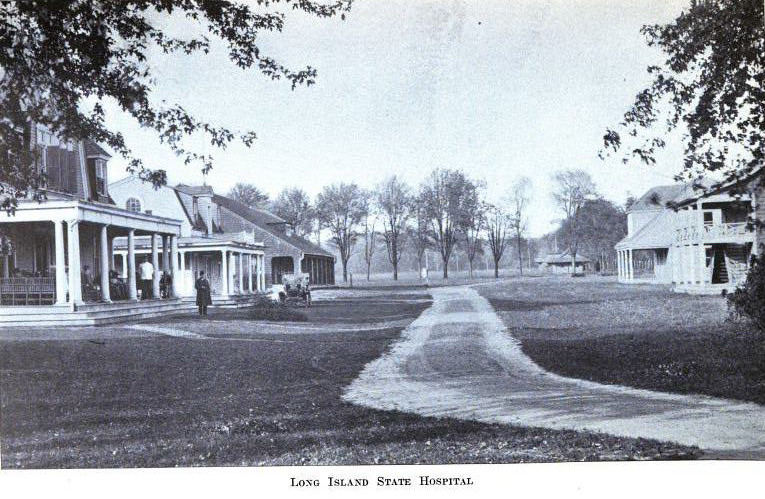
Long Island State Hospital – Creedmoor
“Creedmoor. A tract of land in east central Queens, one mile (1.6 kilometers) north of Queens Village and centered on Braddock Avenue and old Rocky Hill Road (now Braddock Avenue), named for the family that farmed there. The name is used only locally and does not refer to any village or settlement, past or present. Conrad Poppenhusen of College Point ran a railroad through the area parallel to Braddock Avenue in 1871 and donated some of the surplus land to the National Rifle Association for use by the National Guard, which opened firing ranges in 1873. The growth of Queens Village from the 1890s and the hazards connected with the firing ranges led to the eviction of the National Guard in 1908. In 1910 the tract became the site of a large state mental hospital.”
“Creedmoor Psychiatric Center. State mental hospital on Winchester Boulevard near Queens Village, built on land originally owned by the Creed family. It opened in 1912 as a “farm colony” for the Brooklyn Psychiatric Center in facilities formerly used as barracks for the National Guard. With the construction of new buildings in 1926, 1929, and 1933 Creedmoor became a separate state hospital. Although its nominal capacity was 3,300 patients, there were 6,000 patients by the 1940s, and overcrowding was exacerbated by staff shortages and limited funds. During these years various new treatments for mental illness were introduced at Creedmoor, including hydrotherapy, insulin therapy, electroshock therapy, and in a few cases lobotomy. A more important innovation was the introduction of antidepressant and tranquilizing drugs, which became widely used in the state mental health system in 1955. At Creedmoor the new drugs meant quieter wards, fewer injuries to staff members and patients, and a dramatic increase in the number of patients who could manage daily life in the community. As a result the number of inpatients at the hospital declined to 1,100 by 1991, while outpatient services and residential placements were expanded in keeping with the new policy of deinstitutionalization. When it became clear during the late 1980s that many of the homeless in New York City had urgent psychiatric needs, Creedmoor established a special impatient program of psychiatric rehabilitation intended specifically for the homeless. The Living Museum, presenting art by patients, was founded by Bolek Greczynski in 1984 in the hospital. In 2001 the city sold part of the mental hospital to residential developers and used another portion to develop three schools and athletic fields.”
SOURCE: The Encyclopedia of New York City: Second Edition, Kenneth T. Jackson, Lisa Keller, Nancy Flood, Yale University Press, 2010.
Brooklyn State Hospital, Brooklyn.
The institution is very greatly overcrowded, but it is hoped to obtain relief at an early date. There is under construction, and to be soon completed, a reception hospital and a building for the care of the chronic type of patients. The reception hospital will accommodate about 150 patients, while the building for the chronic type will accommodate 450.
Foundations for a new store house and cold storage building have been laid. A large number of repairs have been accomplished during the last year. The domes of the main building have been renewed and painted. A large quantity of flooring has been laid and a number of the wards have been repainted.
A number of cottages at Creedmoor are being remodelled and made ready for occupancy, and it is expected shortly to house at least 150 patients at this branch.
This hospital has been visited during the year by the State Finance Committee, the State Hospital Development Commission and the State Hospital Commission, and it is the concensus of opinion that the present old building should be razed and new ones built. There is planned a new and modern psychopathic hospital that will accommodate the needs of this portion of Greater New York.
When plans have been consummated, this site will accommodate about 2,100 patients, while at Creedmoor plans are in contemplation for about 2,500 patients.
The medical service is very active at this institution. At least 51 per cent of the cases admitted are of the feeble and exhausted type, or of the very acute maniacal type, and are brought in on stretchers. Those who are physically able are sent to Kings Park. The admissions here during the year were 626. Beginning July 1st, we organized a school for male patients and a male instructor was appointed. It is hoped to obtain very beneficial results from the re-education of certain cases.
In August, 1916, a social worker was appointed who has been of great benefit to the institution and to the paroled patients. She visits all patients who are paroled, attends the clinics, inspects environmental conditions, obtains positions for recovered patients, and assists in obtaining proper histories for the physicians. Three outdoor clinics are held weekly, one at the Brooklyn State Hospital, one at the Williamsburg Hospital on Saturdays; and one at the Long Island College Hospital on Fridays. These clinics are of great value, as it is through them that information is spread that is of great use to the general public. The present census is 925; the certified capacity is 637, and 70 patients are on parole.
At the east of the institution there is an old potters’ field which has been used for years for the burial of the poor of Kings County. This land was turned over to the state two years ago, and it is now proposed to construct buildings on this area. Therefore the Charities Department of the City of New York was requested to remove the bodies buried there by that department during the last two years, and several hundred bodies were taken away during the summer.
SOURCE: The American Journal of Insanity, Volume 74, 1917, Pages 353-354.
BROOKLYN (Brooklyn State Hospital)
An investigation of the sanitary conditions of the Brooklyn State Hospital at Brooklyn was made by Mr. C. A. Howland, assistant engineer in this Department on August 15, 1919. Previous examinations of the sanitary condition of this institution were made by this Department in 1915, (see page 906 of the 36th Annual Eeport) and in 1917 (see page 642 of the 38th Annual Report).
Location: The main institution is situated in the borough of Brooklyn, New York City, while Creedmoor Farm is located north of the village of Creedmoor close to the eastern boundary of Queens borough.
Site of institution: The hospital is situated in Brooklyn on Clarkson avenue just east of the Kings County Hospital. Although the grounds of the institution in Brooklyn are somewhat flat they are apparently well drained. At Creedmoor the farm land, much of which is under cultivation, is also flat but appears to be well drained.
Area of grounds: 25 acres in Brooklyn; 195 acres at Creedmoor; total, 220 acres.
Number of occupied buildings: 14 (2 practically complete but not occupied, one in course of construction).
Capacity: 343 men, 457 women, 305 employees; total, 1,105.
Present population: 441 men, 603 women, 206 employees; total, 1,252.
Class of inmates: All classes of insane except the criminal insane.
Water supply: The water supply for the main institution in Brooklyn is obtained from the Flatbush Water Company while the water supply for the Creedmoor farm is obtained from the Jamaica Water Supply Company.
Milk supply: The milk for the main institution in Brooklyn, which amounts to about 400 quarts of fluid milk, grade B, pasteurized, and 40 quarts condensed milk, are purchased per day from the Delancy Milk and Cream Company of Brooklyn. At Creedmoor farm the milk supply is obtained from a herd of five cows. The cow barn in which the milking is done is an old wooden structure which was not in a satisfactory sanitary condition at the time of the inspection.
Sewerage and sewage disposal: The sewage and storm water of the institution in Brooklyn is discharged through combined tile and brick sewers ranging in size from 6 to 18 inches into the sewerage system of the city of Brooklyn. At Creedmoor the sewage is at present discharged into two large cesspools located about 300 feet northwest of the building. A sewage disposal plant which will treat the sewage from the hospital to be ultimately constructed at Creedmoor is in the course of construction. This disposal plant will consist of Imhoff tanks, siphon chamber and sand filters, of which the inlet chamber, Imhoff tank and siphon chamber have been completed.
Refuse disposal: The garbage of the institution is fed to pigs at the Creedmoor farm. The garbage not suitable for feeding is disposed of in the institution incinerator. At the time of the inspection it was found that the piggery was not in a satisfactory condition and the engineer was informed that a new piggery is to be constructed. It was found that the barrels in which the garbage is stored at the institution were in some cases without covers. Rubbish, such as broken crockery, etc., is removed by the city street cleaning department. Waste paper is baled and sold and similar disposal is made of the rags. Combustible refuse is collected twice daily and burned in an incinerator of the Morse-Boulger Destructor type.
As a result of this examination the following recommendations were made in regard to the improvement of certain insanitary conditions found at the institution.
Recommendations:
1. That the garbage receptacles be kept covered at all times.
2. That a modern piggery of proper design and construction be built as soon as possible.
3. That every precaution be taken in the handling of the milk at the Creedmoor farm in order to prevent the communication of disease by this means and that a plant for the pasteurization of the milk be installed as soon as practicable.
4. That the sewage disposal plant for Creedmoor be completed according to the plans approved by this Department and be put in operation as soon as possible.
SOURCE: State of New York, Fortieth Annual Report of the State Department of Health for the Year Ending December 31, 1919, Volume II, Report of Division of Sanitary Engineering, Albany: J.B.Lyon Company, Printers, 1920, Pages 421-422.
I’m not sure if Creedmoor State Hospital had a cemetery, they may have used a public cemetery.
CLICK HERE TO VIEW THE VIDEO They’re Buried Where? by Seth Voorhees
 The Inmates of Willard 1870 to 1900 / A Genealogy Resource