S6805-2011 – S2514-2013 – NY Senate Open Legislation – Relates to patients interred at state mental health hospital cemeteries – New York State Senate

NEW! UPDATED BILL: S2514-2013 – NY Senate Open Legislation – Relates to patients interred at state mental health hospital cemeteries – New York State Senate.

S6805-2011 – NY Senate Open Legislation – Relates to patients interred at state mental health hospital cemeteries – New York State Senate.

A10636-2011 – NY Assembly Open Legislation – Relates to patients interred at state mental health hospital cemeteries – New York State Assembly.

Imagine not being remembered in death because in life you were diagnosed with diabetes, heart disease or cancer. Most people would find this kind of treatment cruel and inhumane but it exists to this day for people who were diagnosed with a mental illness or developmental disability during the nineteenth and early twentieth centuries. This bill is important and necessary in order to restore the dignity and personhood of the thousands of people who were incarcerated and died at former New York State Insane Asylums and Custodial Institutions. When the bodies of the inmates were not claimed by family members, they were buried in anonymous, unmarked graves. They deserve to have their names remembered and available to the public in a searchable database.

The list of these former New York State Hospitals includes but is not limited to: BinghamtonBuffaloCentral IslipCreedmoorDannemoraEdgewoodGowandaHudson RiverKings ParkLong IslandManhattanMatteawanMiddletownMohansicPilgrimRochesterSt. LawrenceSyracuseUtica, and Willard

The Feeble-Minded (Intellectual Disabilities) and Epileptic Custodial Institutions of New York includes but is not limited to: Craig Colony for EpilepticsLetchworth Village for Epileptics & Intellectually DisabledNewark State School for Intellectually Disabled WomenRome State School for Intellectually Disabled Adults & Children, and Syracuse State School for Intellectually Disabled Children. There may be more.

There is no good reason why these long deceased souls need to be punished and stigmatized in death for an illness or disability that they lived with in life. The great majority of these former state hospitals closed in favor of smaller group home settings or changed their names to Psychiatric Centers about 1974. The cemeteries that belonged to these institutions are inactive. I do not understand why anyone would need to have their name withheld from any list until 50 years had passed after their death. This requirement in the bill only serves to feed the stigma. Let’s hope that even with this flaw, it becomes law.

Photo by Roger Luther at www.nysAsylum.com

Photo by Roger Luther at http://www.nysAsylum.com

The Willard Cemetery - Veterans

Veteran’s Graves 5.14.2011

Willard Cemetery 1 - 5.14.2011

Willard Cemetery 5.14.2011

Sally Green’s Anonymous Burial, Rochester, NY

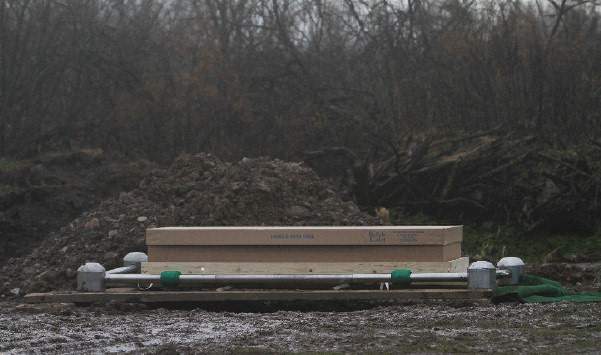
I am writing this post in response to the story in the Rochester, NY, Democrat and Chronicle, of the anonymous burial of Sally Green, a woman who lived with a mental illness and somehow slipped through the cracks never receiving the help or care that she needed. What is most disturbing to me is the fact that her family was not notified of her death until she had been dead and buried for three weeks in a cardboard coffin (with or without a vault), in an anonymous, unmarked grave. In my opinion, the reason why this poor woman was buried in an anonymous grave wasn’t because her family didn’t care about her; it was due to the fact that she had mental health issues. The big questions in my mind are: why didn’t anyone take the time to locate her family, and who else is buried in this anonymous section of this public cemetery?

Sally Green Coffin - Tina Yee Photographer

Sally Green Coffin – Tina Yee Photographer

During the nineteenth and twentieth centuries, state “insane” asylums and hospitals, including the former Monroe County Insane Asylum later renamed Rochester State Hospital, buried thousands of patients in anonymous, unmarked graves. I was not aware that this practice was still in use. Who knows if the families of these patients were ever told what became of them. Most people are not aware that in the state of New York the unmarked, anonymous graves of the “mentally ill” located in former NYS Hospital cemeteries and public cemeteries such as Mount Hope Cemetery (Rochester, NY), cannot be marked with an engraved headstone and their names cannot be made public because of the interpretation of federal HIPAA Law by the NYS Office of Mental Health. To deny our ancestors and the recently deceased this simple remembrance, for all eternity, on the grounds that they were diagnosed with a mental illness, and, therefore, by law, they are not permitted to be remembered, is unconscionable.

Everyone should be remembered with dignity. I wonder if the public will be given an explanation as to why no one took the time to find out if Sally Anne had a family? These actions are dehumanizing, insulting and simply unacceptable.

Family Never Told Of Sally Green’s Death, Burial – Democrat & Chronicle 2.18.2012.
“Trudging through the wet grass in Oatka Cemetery, mud and rainwater creeping up the sides of her jeans as tears dripped down her face, Cynthia Green finally cried out. “This is so stupid! I’m just trying to find my sister!” On Jan. 19, Sally Green died at Strong Memorial Hospital, and in an apparent series of missteps and miscommunications, no one told her son Derrick or any of her eight living siblings that she had died until long after she was buried. Family members finally learned of her passing last week, and, seeking answers, they say they were repeatedly spurned by officials, none of whom were willing to claim responsibility for the mishap. When they finally visited the small section of Oatka Cemetery reserved for indigent burials — home to about 300 others that the county has had buried there over the past six years — they searched for her resting place for more than half an hour. Sally Green’s was one of the many unmarked graves, so the family eventually had to ask for assistance from the cemetery caretaker, who pointed them to the right spot: a flat pile of mud unmarked by anything other than a small yellow rock. They said a prayer as they gathered around the burial site, where beneath their feet, the body of their mother and sister lay in a coffin that was little more than a glorified cardboard box marked “Handle with care.” “Can you imagine someone in your family getting buried without notifying you, and then you find out a month later?” said Derrick Green. “All of this is just crazy. Mentally, I’m so drained right now. I just don’t want this to happen to no one else.”

A Troubled Life
Afflicted with a mental illness, Sally Green had been drifting for the past several years, said her sister Cynthia Green. She was in and out of homeless shelters, and a drinking problem led to numerous hospitalizations. She was found on the morning of Jan. 19 in a room at the Cadillac Hotel, where she’d been staying for the previous two weeks, and was pronounced dead at Strong at 10:07 p.m. She was 57. But family members say that no one at the hospital called them, nor did anyone at the Monroe County Public Administrator’s Office, which is tasked with tracking down surviving family members and preparing funeral arrangements if no family is located. In the case of Sally Green, this shouldn’t have been difficult. Her son, as well as six of her eight living siblings, lives in the Rochester area. She has numerous cousins in Rochester as well, four of whom work for the Rochester Police Department. Additionally, she always carried identification and an address book with her, but officials never showed up at the Cadillac Hotel to search her belongings, said Tina Spence, the hotel’s front desk clerk. “They could have easily found where I was at,” said Derrick Green, 42, of Rochester. The family now wants the county to pay to have the body exhumed so they can conduct their own funeral and bury Sally Green next to her mother, Cora Green. “My mom is not resting well right now,” said Derrick Green. “This way, at least we could say goodbye to her in the right kind of way.” They’d also like a better explanation as to the cause of her death. To date, the family has no insight into how she died other than a three-word description on the death certificate: “acute myocardial infarction” — or a heart attack, in common terms. On Friday, officials at Strong Memorial Hospital called the family and set up a meeting to explain the cause of her death further, said Derrick Green. Social workers at the hospital attempted to locate relatives on the day Sally Green was admitted but were unable to find any, said Teri D’Agostino, spokesperson for Strong Memorial Hospital. When Green died, the hospital turned the case over to the public administrator, Frank Iacovangelo, said D’Agostino. Iacovangelo’s firm, Gallo & Iacovangelo, did not return a call seeking comment. Monroe County also did not return a call seeking comment.

Fourth Of 10 Siblings
Born to Miles and Cora Green, Sally Green was the fourth of 10 siblings. As a youth, she would often wait until her mother fell asleep clutching her baby sister Cynthia before sneaking over and bringing the baby into her own bed to hold. She grew to be a caring girl with a sarcastic sense of humor and a penchant for taking baths — sometimes more than once a day, said her sister Linda Cloud. She had Derrick when she was 15 years old, but several years later, she began showing signs of mental illness. Unable to care for her son, she gave him up for adoption, but he returned to the family and reunited with his mother when he was 16, family members said. Later in her life, with her mental illness compounded by alcohol abuse, she often found herself staying at the House of Mercy, a homeless shelter in Rochester. There, she became affectionately known as the “lipstick bandit,” because she would often spread lipstick beyond the reaches of her lips and up the sides of her cheeks, said Cynthia Green. In recent months, she lived with her son and called him regularly when he wasn’t home. “I used to be like ‘Why are you calling me so much?'” said Derrick Green. “But thinking of it now, I think she wanted to be around me because she knew her days were coming to an end.” She moved into the Cadillac Hotel on Jan. 5, and her son was helping her find an apartment of her own, he said. Though she stayed there for only two weeks prior to her death, she endeared herself to the staff, thanks to her bright orange hat and affinity for burnt popcorn. On Jan. 29, two days after her burial, a one-line obituary ran in the Democrat and Chronicle, but several more days would pass before family members learned of her death. She is predeceased by her brother Gary, and survived by her son Derrick; her brother Miles; her sisters Gloria, Cora, Joyce, Cynthia, Clara Ingram, Mildred Gibson and Linda Cloud; and many other relatives. Derrick Green said he’s had trouble eating, sleeping, and working since his mother died. “I only have one mother,” he said, “and I want someone to be liable for what they have done.” SDOBBIN@DemocratandChronicle.com & Twitter: @Sean_Dobbin

Monroe County Public Administrator Reveals New Protocol For Finding Next Of Kin, Changes Made In Response To Sally Green Case – David Andreatta – Democrat & Chronicle 4.26.2012
“The circumstances that led to Sally Green being buried in a pauper’s grave unbeknownst to her family were “unusual and exceptional,” the Monroe County public administrator, who authorized the burial, wrote to the Monroe County Legislature in a letter dated this week. The public administrator, Frank Iacovangelo, wrote in response to legislators who questioned his protocol for locating next of kin following Democrat and Chronicle reports of Green’s burial and subsequent exhumation from Oatka Cemetery in Scottsville. Iacovangelo paid to have Green reburied at Mt. Hope Cemetery. A private lawyer under contract with the county, Iacovangelo wrote that the incident prompted a “thorough review” of his office’s protocol and “resulted in an enhancement of office procedures to prevent any recurrence of burial without family notification and approval.” The letter, dated April 23 and to which new procedures were appended, marked the first time he has publicly revealed the extent of the changes and said the Green situation was unique. “Up until (Green’s burial in) February of this year, I have never had a situation arise where I was unable to find a relative willing to act (on behalf of the deceased) when such a person actually existed,” the letter read. The matter of Green, who had drifted in and out of homelessness and was estranged from her family when she died in January, turned a spotlight on taxpayer-funded indigent burials and the function of the public administrator, who is charged with handling the estates of the poor and people who die without a will or executor. Much of the new protocol reads like a list of common sense steps one might take to track down relatives of people disconnected from society.” DANDREAT@DemocratandChronicle.com
http://twitter.com/dandreattaDandC

 

1901 New York State Hospitals

1901 LIST OF STATE HOSPITALS

By 1901, there were thirteen state hospitals for the insane in the State of New York. All these hospitals buried their dead in anonymous, unmarked graves. Some had their own cemetery like Willard State Hospital; others used city and county cemeteries like Rochester State Hospital. Most of these state hospital cemeteries are unmarked, unkempt, and forgotten. None of the thousands of former psychiatric patients’ names have been released to the public. Considering that in 1870, the first patient was buried in the Willard Cemetery, which in the year 2012 covers a span of five or six generations, these people have waited long enough to be remembered. When you release the names, you remove the stigma. The following is a list of most of these long-closed state hospitals; there are more.

1. Utica State Hospital – Counties of Fulton, Hamilton, Herkimer, Montgomery, Oneida, Saratoga, Schenectady and Warren.

2. Hudson River State Hospital – Counties of Albany, Columbia, Dutchess, Greene, Putnam, Richmond, Rensselaer, Washington and Westchester.

3. Middletown State Hospital – Counties of Orange, Rockland, Sullivan and Ulster.

4. Buffalo State Hospital – Counties of Erie and Niagara.

5. Willard State Hospital – Counties of Allegany, Cayuga, Genesee, Ontario, Orleans, Schuyler, Seneca, Steuben, Tompkins, Wayne and Yates.

6. Binghamton State Hospital – Counties of Broome, Chemung, Chenango, Cortland, Delaware, Madison, Otsego, Schoharie and Tioga.

7. St. Lawrence State Hospital – Counties of Clinton, Essex, Franklin, Jefferson, Lewis, Onondaga,Oswego and St. Lawrence.

8. Rochester State Hospital – Counties of Monroe and Livingston.

9, 10. Long Island State Hospital – (Kings Park and Flatbush, Brooklyn) – Counties of Kings, Queens, Nassau and Suffolk.

11, 12. Manhattan State Hospital – (Manhattan and Central Islip) – Counties of New York and Richmond.

13. Gowanda State Homoeopathic Hospital (Collin’s Farm) – Counties of Cattaraugus, Chautauqua and Wyoming.

Additional State Hospitals:

14. Pilgrim State Hospital – Brentwood, Suffolk County, New York

15. Mohansic State Hospital – Yorktown, Westchester County, New York

State Hospitals for the Criminally Insane:

16, 17. Mattaewan and Dannemora State Hospitals


Paranormal State – The Ghosts of Willard Asylum

Paranormal State – The Asylum – Parts 1 & 2

I saw this episode of Paranormal State starring Ryan Buell, on A & E a few months ago, and since I am interested in the history of The Willard Asylum for the Insane (Willard State Hospital), I wanted to share it with you. Yes, I do believe that every person has a soul, and I do believe in the possibility that some souls may be stuck here on earth in a place where they don’t want to be, for whatever reason.

I wanted to share this episode because it shows a panoramic view of the Willard Cemetery which is a disturbing 25 acres of anonymous, unmarked graves; only the veteran’s graves are marked. The video also shows the original State Agricultural College Building which was turned into “The Branch,” and later renamed “The Grandview,” which held over 200 mild, insane, female patients (the basement of this building is shown quite a bit with its rounded, brick arches).

Willard was unique because it was built for the “pauper chronic insane” population of New York State and opened on October 13, 1869 (not 1866). Willard’s main building or “Chapin House,” named after Dr. John B. Chapin, the first physician superintendent of Willard, no longer stands as it was demolished around 1984/85. The group of red buildings with boarded up windows is one of four “cottage style” buildings that made Willard different from other state hospitals because they could segregate patients (over 200 patients in each group of 5 buildings), and expand the hospital in an economic (cheap) way to serve the needs of the state.

This cemetery has been blessed numerous times but the people who are buried there still remain anonymous.

Part One

Part Two

To learn more about The Willard Asylum for the Insane, buy my book:

The Inmates of Willard 1870 to 1900, A Genealogy Resource

The Inmates Of Willard 1870 to 1900 / A Genealogy Resource

The Inmates Of Willard 1870 to 1900 / A Genealogy Resource

Anonymous Graves In New York

It is indeed unfortunate that thousands of poor “sane” men, women, and children who lived and died in the county poor houses and other charitable institutions of our country were buried in unmarked, anonymous graves, but their final resting places can be marked with an engraved headstone. The same rule does not apply for those who were labeled “insane.” It is frustrating for family researchers who are interested in obtaining information about their ancestors who were incarcerated at one of these long closed insane asylums because of the federal HIPAA Law which states, The Office for Civil Rights enforces the HIPAA Privacy Rule, which protects the privacy of individually identifiable health information; the HIPAA Security Rule, which sets national standards for the security of electronic protected health information; and the confidentiality provisions of the Patient Safety Rule, which protect identifiable information being used to analyze patient safety events and improve patient safety.” Everyone has been forced to sign HIPAA documents at their doctor’s office. Most people interpret this law as one that applies to living individuals, not to people who have been dead for over one hundred years. What is even more confusing is that a few states have interpreted the law differently than New York State. NEW HIPAA Update 2013.

The Inmates of Willard, as well as all former inmates of New York State Hospitals, deserve a cemetery that is clearly marked with a dignified, cemetery appropriate sign. It should be well maintained and treated with respect like any other cemetery as a place where descendants and friends gather to pay respects, lay flowers, or meditate in silence. Some states have released the names of former patients buried in anonymous graves at these long-closed, state owned mental institutions, and they have allowed engraved headstones to be placed on the graves. In some cases, these states have provided funding for the headstones. It is my hope that the names of the patients buried in anonymous graves in cemeteries owned or formerly owned by the State of New York will be made available to the public in a unified, searchable, digital database. If these current laws are not modified, these people will forever remain forgotten and anonymous. After 143 years, the time has come to accept the mistakes of the past and turn a wrong into a right by releasing the names of the people buried at the Willard State Hospital Cemetery and all people buried anonymously in state mental institution cemeteries across America. They have waited long enough.

Thousands of people were incarcerated in state insane asylums during the nineteenth and early twentieth centuries. Anonymous burials are common for state mental institutions across New York State and the country. People genuinely do care and are interested in the way their ancestors were treated, how they died, and where they were buried.

Hopefully bill S2514-2013 will soon become a law and will include provisions for a searchable database available to the public. Interested people need to contact their New York State Senators and Assembly Persons to let them know that this bill needs to become a law so that these forgotten, anonymous souls will finally be remembered. 

The list of these former New York State Hospitals includes but is not limited to: BinghamtonBuffaloCentral IslipCreedmoorDannemoraEdgewoodGowandaHudson RiverKings ParkLong IslandManhattanMatteawanMiddletownMohansicPilgrimRochesterSt. LawrenceSyracuseUtica, and Willard

The Feeble-Minded (Intellectual Disabilities) and Epileptic Custodial Institutions of New York includes but is not limited to: Craig Colony for EpilepticsLetchworth Village for Epileptics & Intellectually DisabledNewark State School for Intellectually Disabled WomenRome State School for Intellectually Disabled Adults & Children, and Syracuse State School for Intellectually Disabled Children. There may be more.