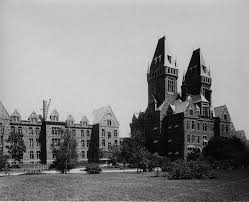
Kings Park State Hospital & Cemetery

On January 1, 1891, the farm colony at St. Johnland was renamed, Kings Park. On July 1, 1895, the Kings County Lunatic Asylum at Flatbush and Kings Park became the Long Island State Hospital. After 1895, Kings Park State Hospital served the counties of Kings, Queens, Nassau, and Suffolk.

1916 Kings Park State Hospital.
1851 Kings County Lunatic Asylum at Flatbush, New York.
The Lost Kirkbrides: Brooklyn State Hospital.
Erasing the Past at the Ghost Hospital – New York Times.
Kings Park Psychiatric Center – OPACITY
KINGS PARK-STORIES FROM AN AMERICAN MENTAL INSTITUTION – A Groundbreaking New Documentary – Lucy Winer.
Kings Park Psychiatric Center’s Building 93 – AbandonedNYC – Will Ellis.

VARIOUS ARTICLES ABOUT KINGS PARK STATE HOSPITAL:
“Besides the regularly organized institutions, there are two asylums for the insane poor, which, as they are separate from the other almshouse departments, and receive a pretty large number of patients, claim attention in this place. During the last fifteen years, the insane in the Almshouse of King’s County, New York, the county which embraces the city of Brooklyn within its limits, have occupied a building erected especially for their accommodation, disconnected from the other edifices of the establishment, and at some distance from them. It is at Flatbush, and is called the King’s County Lunatic Asylum. The report for the fiscal year ending with the 31st of July, 1854, is signed by Dr. E. S. Blanchard, the resident physician.

Patients in the asylum at the beginning of the year: Men 74; Women 113; Total 187.
Admitted in the course of the year: Men 59; Women 78; Total 137.
Whole number in the course of the year: Men 133; Women 191; Total 324.
Discharged cured: Men 41; Women 81; Total 122.
Died: Men 14; Women 10; Total 24.
Remaining, July 31, 1854: Men 78; Women 100; Total 178.

Died of peritonitis, 4; phthisis, 3; cholera, 3; empyema, 3; diarrhoea, 3; exhaustion, 2; marasmus, 2: epilepsy,2; “typhoids,” 1; softening of the cerebellum, 1. But two patients in the course of the year were subjected to mechanical restraint. One of these had the suicidal propensity, the other was labouring under violent mania. Of the 178 patients remaining in the asylum at the close of the year, 134 were foreigners. It appears that some pay-patients are received, the expenses of 16 of those who were in the asylum during the year having been defrayed by their friends.

At the time this report was written, a new edifice, to be occupied by the insane, was in progress. It “is erected on the county farm, on a beautiful site, and commands many delightful views of the surrounding country. When finished, it will compare favourably with any other institution of a similar nature in the world. It is 250 feet in its extreme length, 84 feet in its extreme breadth, and the height to the top of the dome is 86 feet. The halls and dormitories present a light and airy appearance. The rooms are 7 by 11 feet. The height of the ceilings ranges from 14 to 10 feet. Each room is lighted by a large window, on the outside of which there is a light iron guard frame. The whole building will be heated by steam,” the radiating pipes being in an air-chamber in the cellar. “The entire structure is of brick, trimmed with stone. This establishment was opened on the 1st of November, 1855, under the medical care of Dr. Robert B. Baiseley. Although it was intended for but about 150 patients, yet, ever since it was opened, the actual number present has been as high as from 190 to 200.”
SOURCE: The American Journal of the Medical Sciences, Edited by Isaac Hays, M.D., Volume XXXIII, Philadelphia: Blanchard & Lea, 1857, Pages 164-165.

Kings county and New York county provide for their insane under special statutes. The former county provides for 800 or 1000 insane and the latter for over 1,700. On Ward’s island is situated the State Emigrant Insane Asylum which provides for the insane emigrants for the term of five years from the time of their landing in this country. This asylum furnishes accommodations for about 200 patients. The annual expense per patient in this institution is $150. The per capita cost of building $1,138 and the total annual cost, $22,500. There are upward of 500 patients in private asylums so that the insane population of New York state is probably not far from 7,000 or 8,000 at the present time. . .

The annual expense per patient in the two New York county institutions is in the New York City Asylum for the insane $92.89, and for the New York Lunatic Asylum on Blackwell’s island $73.84. The annual expense per patient in the Kings County Lunatic Asylum, situated at Flatbush, L. I., is $120. The total annual cost for these three county institutions for the insane is as follows: New York City Asylum for the insane, Ward’s island, $53,504 ; New York Lunatic Asylum, Blackwell’s island, $89,420 ; Kings County Lunatic Asylum, Flatbush, $92,400. . .”
SOURCE: Proceedings of the Conference Of Charities, Held In Connection With The General Meeting of the American Social Science Association, Detroit, May 1875, Tolman & White Printers, Boston, Mass., October 1875, Page 56.

“In 1885, the decision was made to purchase eight hundred seventy-three acres of farmland out on a rural stretch of north central Long Island in order to build a farming colony that would act as an annex for the hospital. Three temporary wooden structures were built on that land, until proper facilities could be later erected. These structures were located in the small village of St. Johnland, a part of Smithtown, which is located in Suffolk County, New York. The three temporary structures were used to house the first fifty-five patients of this new hospital annex.”

“In 1891, the town of St. Johnland changed its name to Kings Park. Many believe the name derived from the Kings County connection with the hospital, but that is not the case. The name actually came from the Long Island Railroad Station located on Indian Head Road, which had only changed its name when the St. Johnland Society complained about the railroad using its name without permission. The railroad station was renamed Kings Park Station and the town changed its name soon afterwards for the same reasons. By 1895, the asylum was taken over by the state, after complaints of corruption became rampant. It wasn’t until the year 1900 when it also took on a new name, as it became known as the Long Island State Hospital at Kings Park. Only five years later the name of the hospital was changed, again. This time it was named Kings Park State Hospital, which is the name it would maintain for many years to come, until the mid-1970s when it would eventually become the Kings Park Psychiatric Center.”
SOURCE: No Hope For The Hopeless At Kings Park by Jason Medina, Tribal Publications, Inc., Yonkers, New York, 2013, Pages 334-335.

CLICK HERE TO VIEW THE VIDEO They’re Buried Where? by Seth Voorhees

THE BAD NEWS: Thousands Remain Nameless! 6.15.2015.

THE GOOD NEWS: One Man Is Remembered! 6.14.2015.

Buffalo State Hospital & Cemetery

Buffalo State Hospital served the counties of Erie and Niagara.

1916 Buffalo State Hospital
Buffalo State Hospital – OPACITY.
Roger Luther – New York State Asylum for the Insane – H.H.Richardson Complex.
The Buffalonian – The H.H. Richardson Complex (Buffalo Psychiatric Center).
The Richardson Olmsted Complex.
Risen from the Dead: Buffalo’s Richardson Olmsted Complex – New York States of Mind.
Olmsted In Buffalo – New York State Asylum for the Insane (Richardson-Olmsted Complex).

Buffalo State Hospital

Buffalo State Hospital

I’m not sure if Buffalo State Hospital had a cemetery, they may have used a public cemetery. If I had to guess, I would think deceased patients of the facility were buried at Forest Lawn Cemetery.

THE BLACK ROCK BURYING GROUND. – When the lands comprising the South Village of Black Rock were surveyed in 1804 or 1805, there were two blocks, Nos. 41 and 42, appropriated by the state for burial purposes. These, however, were found to be too low, and hence not suitable; many, therefore carried their dead even to the “Franklin Square” ground; and when Black Rock village was incorporated, Col. William A. Bird, in behalf of the corporation, procured the exchange of those two lots for one situated on higher ground; being lot No. 88 on North street, since known as the Black Rock Burying Ground. This lot was bounded by Jersey, Pennsylvania, and Fourteenth streets, and the mile strip or what is now “The Avenue.”

When the “Guide Board Road” (now North street) was worked through, this lot was cut in twain, and a small triangle was left on the south side, in the old limits of Buffalo City. This small lot, by an arrangement with the Black Rock authorities, was used as a Potter’s field for the unfortunates who died at the Poor-house; this building being a little to the west of it, next to the church of the Holy Angels, and now used for the Parish School. In this little spot of ground have been doubtless laid without a pitying eye to weep over their wreck, or a friendly hand to raise a tablet to their memory, as noble persons as have ever existed; but poverty and misfortune blighted their prospects, and they became dependents on the bounty of their fellow-creatures.

Many a time have I pondered over the unmarked hillocks here and thought what tales could be revealed were the history of the unknown and unnoted dead under my feet made up into a living record. But they were not permitted to rest in peace. The City of Buffalo a few years since fenced in the lot, and desecrated the spot by using it as a public pound. Could no other vacant place be found, that even a pauper might not be allowed to rest here without having his last hold on earth made the stamping place for vagrant cattle?

The main lot was used for years by the inhabitants of Black Rock; but burials having been discontinued for some time, the land was conveyed to that noble institution the Charity Foundation of the Episcopal Church. As in the Franklin Square and North Street Public Cemeteries there were no private lots here, but places were assigned by the authorities.

When the Forest Lawn Cemetery was established, in 1850, many families bought lots and removed their dead from this ground. Since then, in grading Rogers street many graves were dug up, and the bones collected and removed to Forest Lawn. And within the last few years, in grading “The Circle” which takes in most of this old burying ground, many more have been dug out and deposited there. More still remain which should be properly taken care of. Although I ever disapprove of the practice of our city rulers in disturbing and removing the bones from our old burying grounds, yet in this case it seems to be a matter of public necessity; and as part have been removed they may as well all be.”
SOURCE: 1879 Buffalo Cemeteries – William Hodge – Pages 8 & 9.

CLICK HERE TO VIEW THE VIDEO They’re Buried Where? by Seth Voorhees

THE BAD NEWS: Thousands Remain Nameless! 6.15.2015.

THE GOOD NEWS: One Man Is Remembered! 6.14.2015.

Binghamton State Hospital & Cemetery

Binghamton Asylum for the Chronic Insane was the second New York State Asylum for the “Chronic Insane” ONLY that opened on October 19, 1881; Willard was the first opening on October 13, 1869. In 1890, ALL NYS Insane Asylums became “state hospitals” and accepted both chronic and acute patients. Binghamton State Hospital served the counties of Broome, Chemung, Chenango, Cortland, Delaware, Madison, Otsego, Schoharie, and Tioga. 

1916 Binghamton State Hospital
Binghamton State Hospital History – nysAsylum – Roger Luther
Binghamton State Hospital – You Tube
Binghamton Asylum Cemetery Records – 1,500 Patient Names.
2014 Roger Luther – Glass Photo Negatives Discovered in Binghamton’s Historic Asylum – 2.18.2014.

Roger Luther has done a fabulous job with photographing many of the abandoned New York State hospitals and cemeteries. Please visit his website at: nysAsylum.com.

Binghamton Cemetery by Roger Luther

Binghamton Cemetery by Roger Luther

Chap. 280. AN ACT to abolish the New York State Inebriate Asylum, and to establish the Binghamton Asylum for the Chronic Insane, and to provide for the management thereof. Passed May 13, 1879; three-fifths being present.

The People of the State of New York, represented in Senate and Assembly, do enact as follows:

Section 1. The institution heretofore established, and now known as the New York State Inebriate Asylum, at Binghamton, is hereby abolished; and all the property and privileges belonging to this State, and now managed and administered by the managers of said inebriate asylum, are hereby transferred and intrusted to the care and management of the Binghamton Asylum for the Chronic Insane, which is hereby established. The governor, by and with the advice and consent of the senate, shall appoint nine citizens of this State as a board of trustees of such asylum for the insane, who shall be divided into three equal classes – the first class to hold office for two years; the second class four years, and the third class six years, from and after the passage of this act, and until their successors are appointed and enter upon the discharge of their duties. The governor is hereby authorized, by and with the advice and consent of the senate, to fill all vacancies hereafter occurring in said board of trustees, either by reason of the expiration of the term of service, or for any other cause.

§ 2. Immediately after the passage of this act, the managers of said inebriate asylum shall begin their preparation to close up the affairs of begin to the same, and shall give free access and opportunity to the agents, mechanics and laborers to be employed by the trustees of said asylum for the chronic insane, to enter upon said property for the purpose of preparing the same for the uses of such insane asylum; and upon the expiration of thirty days from and after the passage of this act, the said managers, their officers, agents, employes and servants, shall vacate such property, and leave the same to the possession, control, and management of the trustees appointed under the first section of this act.”…

SOURCE: Laws of the State of New York, Passed at the One Hundred and Second Session of the Legislature, Begun January Seventh, and Ended May Twenty-Second, 1879, In the City of Albany, Albany: A. Bleecker Banks, Publisher, 1879, Page 368.

Binghamton Cemetery 2 by Roger Luther

Binghamton Cemetery 2 by Roger Luther

CLICK HERE TO VIEW THE VIDEO They’re Buried Where? by Seth Voorhees

THE BAD NEWS: Thousands Remain Nameless! 6.15.2015.

THE GOOD NEWS: One Man Is Remembered! 6.14.2015.

Willard State Hospital & Cemetery

Between 1869 and 1890, Willard Asylum for the “Chronic” Insane served the entire State of New York with the exception of New York, Kings, and Monroe Counties. After 1890, Willard State Hospital served the counties of Allegany, Cayuga, Genesee, Ontario, Orleans, Schuyler, Seneca, Steuben, Tompkins, Wayne, and Yates.


https://inmatesofwillard.com/2022/12/14/willard-cemetery-at-find-a-grave/

1916 Willard State Hospital.
The Branch – Wayne E. Morrison, Sr. – Pictorial Album of The Willard Asylum 1869–1886 – 3.7.2013.
Wayne E. Morrison, Sr. – Pictorial Album of The Willard Asylum 1869–1886 – 1.10.2013.
1886 Hayt’s Corner’s, Ovid & Willard Rail-Road – 1.9.2013.
Captain Morris J. Gilbert, Steward – 3.16.2013.
1917 Willard Maps – 7.25.2012.
The Willard and Rochester State Hospital Connection – 4.18.2012.
1900 Willard State Hospital Steward’s Report.
Obituary 1865 Dr. S.D. Willard.
Obituary 1918 Dr. J.B. Chapin.
Photographs Willard State Hospital circa 1898.
Photographs of Willard State Hospital by Roger Luther.
THE BAD NEWS: Thousands Remain Nameless! 6.15.2015.
THE GOOD NEWS: One Man Is Remembered! 6.14.2015.

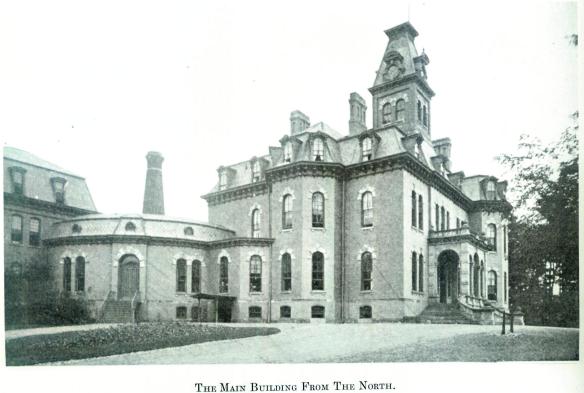
10-The Main Building From The North-Wayne E. Morrison, Sr. 1978

10-The Main Building From The North-Wayne E. Morrison, Sr. 1978

Willard Cemetery Memorial Project

Notes & Insights from Craig Williams – Willard Cemetery

Here are some wonderful notes, used with permission, from Craig Williams, Curator of History at the New York State Museum at Albany, concerning the burial ledgers of the Willard State Hospital Cemetery, and Ovid Union Cemetery. Mr. Williams is an expert on the history of the Willard Asylum and has always been more than willing to share his vast knowledge on the subject. He has provided me with maps, old photographs, answered my numerous questions, and filled in the gaps with insight that only comes from years of experience. I would like to take this opportunity to recognize and thank Mr. Williams for all the help he has given to me!

NYS Museum Albany album b 154-2 Old Cemetery

NYS Museum Albany album b 154-2 Old Cemetery

“As you know, those records are now among the sealed materials…. sad, since back when they were at Willard, the staff were only to willing to help locate “lost” relatives by using those records… Often overlooked is the section of the Union Cemetery dedicated to Willard. I have a memory of being told that there were over two hundred burials there. I’ve always meant to check with the Cemetery to learn if they have a log of burials. In the inside cover of Willard’s first burial ledger, there is the handwritten note stating – “January 17th, 1876 – Trustees of Union Cemetery at Ovid, N.Y. made deed of lot 161 to Willard Asylum for the Insane. Deed deposited with J. B. Thomas, Treasurer, Consideration, $25. // Ganett W. Freligh, Pred’d’t // John C. Meddick, Treas.” The Willard burials that I know of at Union are along the east center edge, by the main road. The few formally marked (you can see many more depressions) date from the 1980s plus or minus. Could that location be Lot 161? Is there another section at Union where there are older Willard burials? There must have been a period in the 1980s when people were being buried at both cemeteries. I wonder how that was decided?”

“One of the things I noted in the burial ledgers were the fair number of people later removed by family or for other reasons (move to a Catholic cemetery, for instance), maybe a couple dozen over the hundred plus years? The Stock memo says 5,757 burials and there were several burials after that date. The last “regular” burial was on November 18, 1991 (not counting the 2000 burial). As you know, at the very end, there were two burials of lab specimens (including one fetus). From the four manuscript ledgers, I get 5,249 burials (not counting the two above) in the main (“Protestant”) section. The Soldiers Cemetery account shows 106 burials. A few of those (half dozen) may have been counted among the 5,249, being reinterred when that section was set up in April 1885. The last burial there seems to have been done on December 10, 1926. The Jewish cemetery (old and new), first used in January 1932, appears to have 202 burials. The old portion is where the monument now stands. The new is in the far northeast section of the cemetery. Catholic (old and new), first used in January 1959, seems to have 327 (including the 2000 burial of M). Added together, I get 5,884. I did not deduct the burials that were later removed…”

“That first burial ledger has a number of interesting clues. It lists the first burial as being done on 5 January 1870, not long after the Asylum’s opening. This cemetery was (I think) immediately north of the Branch (Grandview)… maybe in what is now parking lot or closer (under?) the current building?… By December 1873 there was already some confusion over the number of burials (85 by that time). In March 1875 a 71-year-old woman was buried, with a place of birth being listed as “Africa.” I note that since in some Upstate cemeteries separate sections were made for African-Americans…never the case at Willard.

The first burial at the new cemetery (on “Risings Hill”) was on July 3, 1875. She is listed as burial 123. On October 16, 1875, the ledger notes that “This day, John Hanlon (Sexton), finished transferring bodies from the old “Cemetery” to the new, on “Risings Hill.” He reports he had removed 119 bodies, and that bodies corresponding to Nos. 7, 27, 64 and 70 had been disinterred. // Alexander Nellis, Jr., Assistant Physician.” That comment on “disinterred” doesn’t actually match the records. They were all placed in “Form 1” (Row 1?)…The July 3rd burial is the first one in Form 2 (Row 2?). Those rows were just north of Mocha’s shed. An implication of the removal to the new cemetery is that the old one had grave markers. Apparently, some things were overlooked. In the third cemetery ledger, in November 1898, there is the note of “Bones taken from new Branch” were put at the west end of Form 2. In 1897 and 1898 there was substantial regrading around the Branch. That work probably exposed the overlooked burial(s?).

The annual report for 1874 discusses the reasoning for the new cemetery. “Experience has demonstrated, that the present location of the cemetery is a bad one, though the most appropriate one on the asylum farm. It is inconvenient because of its distance (remember, the Asylum was still just Chapin Hall), from the nature of the soil, and it also interferes with the enlargement of the upper reservoir, which is indispensably necessary. We therefore desire to change the location. Twenty-five acres of land can be purchased a short distance north…”

“Obviously, the cemetery in the 19th-century only took up a small portion of the hill, the rest was probably used for farm purposes. The first engravings of that north edge of the Asylum land show what might be a bridge going across the ravine, the original entrance not being the current one. The Stock memo states “the current entrance was cut in and established because new more modern day vehicles could not cross the small culvert bridge. The story goes that the village mayor wanted the fire truck to be able to go in a parade down Main Street of Willard and enter the cemetery for ceremonies at the old Civil War cemetery site but could not because the bridge was too narrow. The new entrance was established. While doing this, some landscaping was required and the sharp embankment needed to be made more gradual. In that process, some heavy equipment was used and they proceeded to taper the hillside but had to stop when they began to strike some old grave sites.” The old entrance shows on the facility maps.

Just a couple other items from my notes from the cemetery ledgers. A note was made to the entry for a July 5, 1886, that a glass bottle with a person’s name was placed in the burial alongside the one whose name was so enclosed…. confusing, but implying that such identification practices happened early on. There are at least three references to infants being buried. One was from September 1896 and mentions a “Form A” location at the west end of Form (Row?) 1. Alongside a November 1880 burial entry is the note that the daughter was present at the burial of her mother. In the last ledger, especially from the 1940s on, there are frequent references to amputated limbs being buried in unrelated graves.”

Washington State – Grave Concerns Association Model of Memorialization

For the past few years I have tried to get the attention of state and federal lawmakers to pass a law in New York State that would provide for the release of patient names; dates of birth and death; and location of graves, of people who were committed to State Hospitals and Custodial Institutions during the nineteenth and early twentieth centuries who were buried in unmarked or numbered, anonymous graves, whether they be in formerly state, county, or city owned cemeteries. (See My Story) I also asked for a searchable, digital database, available to the public to be included in the bill. On August 22, 2011, I finally got the opportunity to meet with Kate Munzinger, Senator Joseph Robach’s Chief of Staff. Ms. Munzinger took the time to listen to what I was asking for.

Grave Concerns Association

Grave Concerns Association

The reason why I’m blogging about this issue again is because the bill in New York State has not yet become a law. There are caring people in several states who are pushing to get a similar law passed but state and federal representatives will not give them the time of day or they won’t even consider passing such a law because of the misinterpretation of the federal HIPAA Law. I want to help those people in other states by sharing with them what was shared with me. If not for Laurel Lemke, Chair of Grave Concerns Association, I don’t think I would have received the attention of Senator Robach. In 2004, Ms. Lemke and others, had fought for this cause, and managed to amend law 6678 in the State of Washington that allowed for the release of patient names for the purpose of memorialization. She emailed me the bill which I in turn gave to Kate Munzinger, Chief of Staff; Tim Ragazzo, Director of Operations & Legislation; and Senator Joseph Robach. A bill was drafted and introduced to the New York State Legislature in March 2012. The title of the bill is: “An act to amend the mental hygiene law, in relation to patients interred at state mental health hospital cemeteries.”

Western State Hospital, Pierce County, Washington, has 3,218 patients who are no longer anonymous. Grave Concerns Association has raised funds and replaced 1,200 names since 2004. The forgotten have been remembered with dignity. With community fund raising efforts and countless volunteers, inscribed headstones that identify the patient’s name, date of birth and death, have been placed at the graves; and a searchable, digital database has been uploaded to the internet. In contrast, New York State, with 22 or more former state custodial institutions combined has upwards of 11,000 or more people buried in anonymous graves who through no fault of their own have been erased from history. Willard State Hospital alone has close to 6,000 patients buried in anonymous graves.

Sherry Storms, Stacie Larson and Laurel Lemke, Grave Concerns Association, John Lucas, countless volunteers, and the State of Washington deserve to be recognized for their ground breaking, painstaking work, and above all, their model should be copied in every state in the union. The New York State bill is important and necessary in order to restore the dignity and personhood of the thousands of people who were incarcerated and died at former New York State Insane Asylums (later renamed State Hospitals), and State Custodial Institutions (for Feeble-Minded and Epileptic persons). When the bodies of the inmates were not claimed by family members, they were buried in anonymous, unmarked graves. Many of these unclaimed bodies went to medical colleges and pathology labs for the furtherance of medical science. These people deserve to be remembered, and we need to remember what happened to them so that we do not repeat the mistakes of our ancestors.

It is my hope that the State of New York, and all states, will pass similar legislation and follow the Washington State – Grave Concerns Model. They have done a great service for the community and the nation by naming the forgotten; setting up an exemplary, searchable, digital database; and trying their best to remove the stigma of mental illness.

WASHINGTON:
Grave Concerns Association
Volunteer Carla Wutz, descendent of Michael Wutz, updates the data base on the Grave Concerns website.

Grave Concerns Cemetery Database – Version 1.0 – Western State Hospital Historic PatientCemetery
http://www.wshgraveconcerns.org/search-the-database.html

Washington State Archives – Digital Archives

1898 Drugs For Mental Illness

I know that WIKIPEDIA is not the best place to find reliable information, however, finding definitions of drugs used in the late 1800s is not an easy task. I have provided the definitions from WIKIPEDIA, and the Merriam-Webster online dictionary, to help you understand what medications were prescribed to the mentally ill population incarcerated at insane asylums across the United States and abroad during the nineteenth century. The detrimental effects that some of these drugs had on the human mind and body were not fully understood.

These are the drugs that were mentioned in the book A Compendium of Insanity by John B. Chapin, M.D., L.L.D., first Medical Superintendent of The Willard Asylum for the Insane, published on 1898.

Drug Definitions:

Bromide: 1: a binary compound of bromine with another element or a radical including some (as potassium bromide) used as sedatives. 2: a dose of bromide taken usually as a sedative (MW)

Chloral: 1: a pungent colorless oily aldehyde C2HCl3O used in making DDT and chloral hydrate (MW)

Chloral Hydrate: a bitter white crystalline drug C2H3Cl3O2 used as a hypnotic and sedative or in knockout drops (MW)

Cocaine: a bitter crystalline alkaloid C17H21NO4 obtained from coca leaves that is used medically especially in the form of its hydrochloride C17H21NO4·HCl as a topical anesthetic and illicitly for its euphoric effects and that may result in a compulsive psychological need (MW)

Digitalis: 1: a capitalized : a genus of Eurasian herbs of the snapdragon family (Scrophulariaceae) that have alternate leaves and racemes of showy bell-shaped flowers and comprise the foxgloves b : foxglove  2: the dried leaf of the common European foxglove (Digitalis purpurea) that contains physiologically active glycosides, that is a powerful cardiotonic acting to increase the force of myocardial contraction, to slow the conduction rate of nerve impulses through the atrioventricular node, and to promote diuresis, and that is used in standardized powdered form especially in the treatment of congestive heart failure and in the management of atrial fibrillation, atrial flutter, and paroxysmal tachycardia of the atria ; broadly : any of various glycosides (as digoxin or digitoxin) that are constituents of digitalis or are derived from a related foxglove (D. lanata) (MW)

Ergot: 1 a: the black or dark purple sclerotium of fungi of the genus Claviceps that occurs as a club-shaped body which replaces the seed of various grasses (as rye) b: any fungus of the genus Claviceps. 2: a disease of rye and other cereals caused by fungi of the genus Claviceps and characterized by the presence of ergots in the seed heads. 3 a: the dried sclerotial bodies of an ergot fungus grown on rye and containing several ergot alkaloids (MW)

Ferric: 1: of, relating to, or containing iron.  2: being or containing iron usually with a valence of three (MW)

Hycoscin hydrobromate & Hycoscin: Scopolamine, also known as levo-duboisine, and hyoscine, is a tropane alkaloid drug with muscarinic antagonist effects. It is obtained from plants of the family Solanaceae (nightshades), such as henbane, jimson weed and Angel’s Trumpets (Datura resp. Brugmansia spec.), and corkwood (Duboisia species). It is among the secondary metabolites of these plants. Therefore, scopolamine is one of three main active components of belladonna and stramonium tinctures and powders used medicinally along with atropine and hyoscyamine. Scopolamine was isolated from plant sources by scientists in 1881 in Germany and description of its structure and activity followed shortly thereafter. The search for synthetic analogues of and methods for total synthesis of scopolamine and/or atropine in the 1930s and 1940s resulted in the discovery of diphenhydramine, an early antihistamine and the prototype of its chemical subclass of these drugs, and pethidine, the first fully synthetic opioid analgesic, known as Dolatin and Demerol amongst many other trade names.  Scopolamine has anticholinergic properties and has legitimate medical applications in very minute doses. As an example, in the treatment of motion sickness, the dose, gradually released from a transdermal patch, is only 330 micrograms (µg) per day. In rare cases, unusual reactions to ordinary doses of scopolamine have occurred including confusion, agitation, rambling speech, hallucinations, paranoid behaviors, and delusions. (W)

Hyoscyamine: a poisonous crystalline alkaloid C17H23NO3 of which atropine is a racemic mixture; especially : its levorotatory form found especially in the plants belladonna and henbane and used similarly to atropine (MW)

Hyoscyamus: Henbane (Hyoscyamus niger), also known as stinking nightshade or black henbane, is a plant of the family Solanaceae that originated in Eurasia, though it is now globally distributed.  Henbane can be toxic, even fatal, to animals in low doses…Common effects of henbane ingestion in humans include hallucinations, dilated pupils, restlessness, and flushed skin.  Less common symptoms such as tachycardia, convulsions, vomiting, hypertension, hyperpyrexia and ataxia have all been noted. (W)

Mercuric Chloride: a heavy crystalline poisonous compound HgCl2 used as a disinfectant and fungicide and in photography—called also bichloride, bichloride of mercury, corrosive sublimate, mercury bichloride (MW)

Morphia: morphine (MW)

Morphine: a bitter crystalline addictive narcotic base C17H19NO3 that is the principal alkaloid of opium and is used in the form of its hydrated sulfate (C17H19NO3)2·H2SO4·5H2O or hydrated hydrochloride C17H19NO3·HCl·3H2O as an analgesic and sedative (MW)

Opium: a highly addictive drug that consists of the dried milky juice from the seed capsules of the opium poppy obtained from incisions made in the unripe capsules of the plant, that has a brownish yellow color, a faint smell, and a bitter and acrid taste, that is a stimulant narcotic usually producing a feeling of well-being, hallucinations, and drowsiness terminating in coma or death if the dose is excessive, that was formerly used in medicine to soothe pain but is now often replaced by derivative alkaloids (as morphine or codeine) or synthetic substitutes, and that is smoked illicitly as an intoxicant with harmful effects (MW)

Potassium Bromide: a crystalline salt KBr with a saline taste that is used as a sedative and in photography (MW)

Potassium Iodide: a crystalline salt KI that is very soluble in water and is used medically chiefly in the treatment of hyperthyroidism, to block thyroidal uptake of radioactive iodine, and as an expectorant (MW)

Sodium Bromide: a crystalline salt NaBr having a biting saline taste that is used in medicine as a sedative, hypnotic, and anticonvulsant (MW)

Strychnine: a bitter poisonous alkaloid C21H22N2O2 that is obtained from nux vomica and related plants of the genus Strychnos and is used as a poison (as for rodents) and medicinally as a stimulant of the central nervous system (MW)

Sulfate: 1: a salt or ester of sulfuric acid  2 : a bivalent group or anion SO4 characteristic of sulfuric acid and the sulfates (MW)

Sulfonmethane (Sulfonomethane, Sulfonal: Acetone diethyl sulfone) is a chemical compound formerly used as a hypnotic drug, but now superseded by newer and safer sedatives. Its appearance is either in colorless crystalline or powdered form. In United States, it is scheduled as a Schedule III drug in the Controlled Substance Act. It produces lengthened sleep in functional nervous insomnia, and is also useful in insanity, being given with mucilage of acacia or in hot liquids, owing to its insolubility, or in large capsules. Its hypnotic power is not equal to that of chloral, but as it is not a depressant to the heart or respiration it can be used when morphine or chloral are contra-indicated. It is, however, very uncertain in its action, often failing to produce sleep when taken at bedtime, but producing drowsiness and sleep the following day. The drowsiness the next day following a medicinal dose can be avoided by a saline laxative the morning after its administration. It is unwise to use it continuously for more than a few days at a time, as it tends to produce the sulfonal habit, which is attended by marked toxic effects, disturbances of digestion, giddiness, staggering gait and even paralysis of the lower extremities. These effects are accompanied by skin eruptions, and the urine becomes of a dark red color (hematoporphinuria). Sulfonal is cumulative in its effects. Many fatal cases of sulfonal poisoning are on record, both from chronic poisoning and from a single large dose. (W)

Tonic: an agent (as a drug) that increases body tone (MW)

Trional: (Methylsulfonal) is a sedative-hypnotic and anesthetic drug with GABAergic actions. It has similar effects to sulfonal, except it is faster acting. (W)

SOURCES:

Merriam-Webster OnLine

WIKIPEDIA, The Free Encyclopedia

1902 Insane Patient Escapes

Insane Patient Escapes – Jumps From Ward’s Island Into The East River – Picked Up by Steamboat and Returned to Institution – Claims to Have Recovered His Reason. 1902.

Augustus C. Ward, who for the past seventeen months has been an inmate of the State Insane Asylum on Ward’s Island, escaped from the institution yesterday by jumping into the East River. He took with him a ten-foot plank, and when he was tired swimming he rested himself on the plank. He found it very difficult to steer a true course and was being carried rapidly down stream by the strong tide when he was picked up by the steamboat Middleton of the Hartford Line, bound from Hartford to this city. Ward was detained by the harbor police at Pier A, and later was taken back to Ward’s Island. When seen in the station house, Ward said that he came from Rastus, Banks County, Georgia, about three years ago and secured a position with Broadway Rouss in the tinware department. His health failed him and he became very nervous. He was sent to Bellevue Hospital, and he believes that through his brother’s wife, who lives in Washington, he was sent to Ward’s Island March 2, 1901. He said that he had written many times to his mother since his imprisonment in the asylum, saying that he was well and wanted to come home, but he thinks that his letters were intercepted. Whenever he received a message from home the letter was always opened and it would be marked, ‘Opened by mistake.’ He declared further that whatever trouble he may have had, he had entirely recovered, and that the authorities were only keeping him at the institution because he could do work with which others could not be trusted.

Joseph Reid, who has charge of the tinware department at Charles Broadway Rouss’s store, where Ward worked, said yesterday that the young man was there for about three months in the early part of 1901. One day he became melancholy, burst into tears, and was then sent to Bellevue Hospital. He was there examined by physicians, who said that Ward would have to go to some asylum for treatment. About three months ago, Mr. Reid said, he received a letter from Ward asking him to take him back into the store. Reid wrote to the authorities on Ward’s Island and received word from them that Ward was not in a fit condition to leave that institution. Superintendent A.E. MacDonald of the East Hospital, where Ward now is, said yesterday afternoon that the young man was very penitent, and had promised not to try to escape again.
SOURCE: Reprinted from The New York Times. Published July 24, 1902, Copyright @ The New York Times.

1906 After Care for the Insane

After Care for the Insane was another much needed service that was introduced, organized and came to fruition in 1906 by Miss Louisa Lee Schuyler. When inmates were discharged from the state hospitals, many had no where to go. They had no home, no job, no friends or relatives willing to help them and many had children that had been separated from them during their incarceration. Miss Schuyler and her league of volunteers of The State Charities Aid Association helped these people to re-enter society with a helping hand by working in co-operation with the superintendents of the state hospitals.

 FIRST ANNUAL REPORT OF THE SUB COMMITTEE ON THE AFTER CARE OF THE INSANE

“In our last year’s report we expressed the hope that during the coming year it might ‘be found possible to carry into practical operation some plan of assistance for those among the recovered insane (recently discharged from State Hospitals), who are in need of material relief or advice and counsel.’ This hope has been realized, and it is gratifying to be able to state that this Association, during the past year, has initiated and put into operation the first organized practical work in this country for After Care of the Insane. The first steps in this movement were taken on November 19, 1906, when at a conference of the State Commission in Lunacy with the Managers and Superintendents of State Hospitals, held in New York City, Miss Louisa Lee Schuyler, of our Committee on the Insane, upon invitation of the Chairman, Dr. Mabon, addressed the conference on the subject of ‘After Care of the Insane.’ Miss Schuyler gave a brief account of the work of the English After Care Association, based upon information obtained by her during the previous summer while in England, and closed with the following statement, outlining a plan for the organization of such work in the State of New York:

‘Conditions in England differ from those we have here, but the need of a helping hand to be extended to poor and friendless convalescents, and those discharged cured, upon leaving our State Hospitals, is just as much needed here as there, and this is what we ought to do. We need no new society because we have the machinery ready at hand; nor do we need to establish a new institution, or to own buildings, or incur large expense. All that we need is earnest interest in the subject, co-operation, organization, readiness to work.

I have thought that, with the concurrence of the medical superintendents, of two or three members of the re-established boards of managers of our State Hospitals, and of some of the local visitors of the State Charities Aid Association – those living in the respective State Hospital districts – that, with this combination, a working joint committee to provide After Care might be formed for each State Hospital. The experiment might be tried at first on a small scale, with one State Hospital, to see how it would work. I should like to see it tried, and will gladly help toward it in any way I can.’

The Chairman suggested that the subject be again presented in the form of a paper at a later conference. This suggestion was promptly adopted by the Chairman of the Committee on Topics and, at the next conference of the State Commission in Lunacy with the Managers and Superintendents of State Hospitals, held at the State Capitol at Albany, January 30, 1906, a paper upon After Care of the Insane, by Dr. Adolf Meyer, was read and discussed. The conference was largely attended, by representatives of the State Commission in Lunacy, by the medical superintendents and some of the managers of the State Hospitals, and by several officers and members of the State Charities Aid Association. It was presided over by Dr. William Mabon, President of the State Commission in Lunacy. The following resolutions were adopted by unanimous vote of the conference:

‘Resolved, That in the opinion of this Conference, it is desirable that there shall be established in this State, through private philanthropy, a system for providing temporary assistance and friendly aid and counsel for needy persons discharged, recovered, from State Hospitals for the Insane, otherwise known as ‘After Care for the Insane.’

Resolved, That the State Charities Aid Association be requested, by this Conference, to organize a system of After Care for the Insane in this State, and to put it into practical operation.

Resolved, That the representatives of the State Commission in Lunacy and the managers and superintendents of the State Hospitals for the Insane, here present, hereby pledge to the State Charities Aid Association their earnest and hearty co-operation in the establishment and maintenance of a system of After Care for the Insane in this State.”

“Immediately after this Conference the Committee on the Insane of the Association appointed a Sub-committee on the After Care of the Insane (Miss Schuyler, Chairman, Miss Mary Vida Clark, Secretary), to carry into effect the resolutions adopted by the Conference as quoted above.  At a meeting of the Board of Managers of the State Charities Aid Association, held February 9, 1906, the first report of the Sub-committee was presented and approved.  The report outlines the plan of organization as follows:

‘We propose that After Care Committees for each State Hospital shall be appointed by the Association, which shall work under the immediate control and direction of the ‘Sub-committee on After Care of the Insane’ of our Standing Committee on the Insane. These Hospital District Committees shall consist of the present visitors of the Association to the State Hospitals, or such of them as may be willing to serve, with others added as the need may arise, all residents of their respective Hospital Districts; and with them, as ex-officio members of the Committee, two or more Managers to be appointed by each Hospital Board, and the Superintendent of the Hospital. The chairmen and secretaries of the Committees are to be members of the Association. The Committees are to receive the names of their respective Hospitals, viz.: ‘Manhattan After Care Committee of the State Charities Aid Association,’ ‘Willard After Care Committee,’ etc.

In regard to expenses. Fortunately there is a humane provision on the statute books of our State, which makes it mandatory for Superintendents of Hospitals to supply to each patient leaving hospital, who may require it, clothing suitable to the season, and money, not to exceed $25, for traveling and other necessary expenses until he can reach his home or find employment. That section of the Insanity Law reads as follows:

Section 75. Clothing and money to be furnished discharged patients. No patient shall be discharged from a State Hospital without suitable clothing adapted to the season in which he is discharged; and, if it cannot be otherwise obtained, the steward shall, upon the order of the Superintendent, furnish the same, and money not exceeding twenty-five dollars, to defray his necessary expenses until he can reach his relatives or friends, or find employment to earn a subsistence.

It is expected that money advanced by the Committee for the temporary assistance of needy discharged patients, as defined and limited by the above section, will be repaid by the hospitals upon the presentation of proper vouchers.

For our part, we have offered to pay the entire administrative expenses; more especially for the employment of an agent whose duties, under our direction, will be to help local Committees requiring assistance in different parts of the State. This means a salary, traveling and other After Care expenses, which we estimate to amount to about $2,500 annually. For these purposes and for the assistance, if needed, of patients beyond the $25 allowed by the State, we shall have to ask for contributions from those who may wish to help.’

At the first meeting of the Sub-committee on the After Care of the Insane, held February 15, 1906, the first Hospital District Committee was appointed, that of the ‘Manhattan After Care Committee’ (Miss Florence M. Rhett, Chairman). Shortly afterwards an agent trained and experienced in work among the poor in their homes, Miss E.H. Horton, was engaged as After Care agent by the Sub-committee, and was immediately assigned to the duty of assisting the Manhattan After Care Committee.

After Care Committees were subsequently appointed as follows: For the Willard State Hospital, April 10, 1906; for the Hudson River State Hospital, May 22, 1906; for the Binghamton State Hospital, November 8, 1906.  These Committees have done very valuable work for the patients discharged, recovered, from their respective State Hospitals and have presented interesting reports to the Sub-committee. The work of the Committees outside of New York City has been done almost exclusively by the regular and ex-officio members, but the Agent of the Sub-committee has continued to assist the Manhattan After Care Committee in the great amount of work required in connection with the large numbers of patients discharged from the hospital on Ward’s Island to their homes in the City of New York, or frequently discharged to the Committee in the absence of a home or friends to whom they can go.

The plan of co-operation between the Hospital District After Care Committees and the State Hospitals has been outlined in detail and, to give a definite idea of the actual procedure which is followed, is here presented:

1. The Hospital is to notify the Committee of cases likely to be discharged, as soon as such discharge seems reasonably certain, preferably from a week to a month before the patient is likely to leave the Hospital. The Hospital is to furnish the Committee at that time with a summary of such facts in connection with the history of such patient recommended for supervision as will be of assistance to the Committee in the investigation of the case, including the name, age, nativity, creed, occupation, civil condition, date of commitment, previous commitments, form of insanity, character, habits and tendencies and previous history and circumstances of the patient, and the names and addresses of the patient’s relatives and friends, the character and condition of the home and the number in the family so far as known.

2. The Hospital is to notify the Committee of the final discharge, or discharge on parole, of every patient within 48 hours of such discharge, and to furnish at this time particulars regarding the case, if such particulars have not been previously furnished.

3. The Hospital is to notify the Committee if it learns of a likelihood on the part of any former patient to relapse, or of the desirability of assistance or advice in preventing a relapse on the part of former patients, whether such patients are on parole or have been finally discharged.

The Hospital After Care Committees undertake to visit through their members, or the agent of the Sub-committee, the homes and friends of patients about to be discharged, and to report immediately to the hospital such facts and recommendations as may seem likely to be helpful to the hospital in making a decision as to when and to whom patients should be discharged. The Committees also undertake to visit in their homes all patients discharged on parole, who in the opinion of the hospital may need supervision, and to report to the hospital before the expiration of the period of parole such facts as may be of service to the hospital. The Committees are ready, at the request of the hospital, to investigate the circumstances of any former patients who have been discharged, recovered, who may be considered by the hospital to be in danger of a relapse, and to require assistance or advice to maintain their physical or mental health.

In carrying out this plan of co-operation the hospital physicians have shown a generous appreciation of the value of the work done for their patients, and an earnest effort to fulfill the requirements made of them, by bringing to the attention of the Committees cases requiring assistance or supervision. By making suggestions from their extensive experience of such cases, as to the kind of assistance required, the hospital physicians can be, and have already proved themselves, invaluable allies of the Committees, co-operating with them for the permanent welfare of their patients. The practical operation of this plan may be better understood by a study of individual cases. We therefore select, from among those reported by the different After Care Committees a few individual cases assisted by these Committees, to illustrate the aims and methods and results of this work.

A.B. – A middle-aged woman, discharged from hospital May 14, 1906. She was too weak to work and the After Care agent arranged to send her to board in the country on a farm. While there she has gained steadily.  Upon her return a situation will be found for her.

C.D. – While in hospital for a number of months, her husband died, and her only child, a little girl of 12, had to be cared for by strangers. Mother worried about child, and doctor asked agent to see child and report. She found the child well and happy, and the man and wife with whom it was, much attached to the little girl. Agent secured a place with this family, at low wages, for the mother upon her discharge from the hospital. Has visited C.D. several times, and finds her much improved and very happily settled with her child.

E.F. – Discharged September 8, 1906. Agent visited her relatives several times, but found them not able to assist her in any way; also made various attempts to secure work for her. Finally found a place for her as ward helper in BellevueHospital, purchasing for her the necessary clothing. When calling to see her two weeks later, learned from the nurses that her work was satisfactory and that she was doing well.

G.H. – A married man, about 40 years old, who had broken down from over-work as bookkeeper in a large firm. After a few months at the hospital, he completely recovered, and a position was found for him in a bank, where he had formerly worked and where he was given employment of a less responsible and exacting nature, but at a very good salary.

J.K. – A young woman who had been a domestic. She was without friends to assist her and was provided for by the Committee with a temporary lodging place in the city, through the courtesy of the Children’s Aid Society Emergency Shelter, and later with a good situation, as a domestic, through the Charity Organization Society’s Agency for the Handicapped.

L.M. – A young girl of 17, whose mind became unbalanced largely because of poverty, sickness and unsanitary conditions at home. The Committee, with the co-operation of the Association for Improving the Condition of the Poor, the church and a settlement in the neighborhood, established the home-life on a somewhat better basis, provided better rooms and sent the girl and her little sister to the seashore and after their return, got the girl to join a social club at the Settlement where she will have pleasant associates and more opportunities for recreation.

N.O. – A preventive case, heard of through a State Hospital physician who served at a dispensary in the city, and there met a young girl who was so run down and nervous as to be threatened with a mental breakdown. She was sent to the country for several weeks and was completely restored to health.

P.R. – Young woman from the West who had no friends or relatives in the city; an excellent worker but, when recovered and able to leave the hospital, had no place to go to. She was discharged to the Agent who placed her with a lady, with whom she is happy, and who finds her a most satisfactory servant.

S.T. – Young woman, a Hungarian, entirely recovered, whose husband was anxious to take her home. Agent called to see her home, and found that the man was boarding in very crowded quarters and not working, although a plasterer who could earn good wages. Learned from neighbors and the woman’s family that he never had worked, that his wife had supported him. Her brother was willing to pay her passage home to Germany, where her father and mother have their own home, and she was glad to go. The husband was finally persuaded to consent, and the woman sailed for Germany within a week of her discharge from the hospital.

The Committee is glad to report that the expense of the work has not been so large as was expected at the outset. It has averaged about $100 a month. The comparatively small cost of the work is due to the fact that the Committee has been able to avail itself of the many existing charities in New York City which have shown a gratifying willingness to co-operate with our After Care Agency in furnishing temporary boarding places in the country or at the seashore, in providing material assistance in the home, in helping us to secure employment for our recovered patients, and in other ways.

The Committee has not been obliged, except in a very few instances, to call upon the State hospital funds for reimbursement for expenditures, provided for under section 75 of the Insanity Law, which authorizes the expenditure of $25 for the temporary assistance of a patient discharged from a State hospital. Whenever it has been found necessary to call upon a State hospital for such assistance the bills have been immediately approved and forwarded to the office of the State Commission in Lunacy where they have been honored. While the central office is responsible for the administrative expenses, including the salary and traveling expenses of the After Care Agent, and the hospital district After Care Committees are at liberty to call upon the Sub-committee to assist them, it is hoped that each Committee will endeavor to raise a small fund of its own over and above the amount received from the public funds, to meet the expense of assisting individual patients accepted for supervision by the Committee.

The Committee is gratified to note the many evidences of a widespread interest in After Care work. An account of the work of the Association for the After Care of the Insane was presented by Dr. Adolf Meyer, Director of the New York State Pathological Institute, at the annual meeting of the American Neurological Association, and by Dr. William Mabon, Superintendent and Medical Director of the Manhattan State Hospital, at a meeting of the American Medico-Psychological Association, both held in Boston in June, 1906.

The following resolution was unanimously adopted at the annual meeting of the American Medico-Psychological Association:

‘Whereas, The State Charities Aid Association of New York has recently established a Committee on the After Care of the Insane to work in co-operation with the State Hospitals for the Insane in that State, and to provide temporary assistance, employment and friendly aid and counsel for needy persons discharged from such hospitals as recovered, and Whereas, In the opinion of the American Medico-Psychological Association, it is very desirable that there should be carried on in connection with all hospitals for the insane such a system of After Care, therefore Resolved, That the American Medico-Psychological Association expresses its gratification at the inauguration of this movement in the State of New York, and its earnest hope that similar work may be undertaken for hospitals for the insane generally.’

Editorial articles on the subject appeared in the July, 1906, numbers of the ‘American Journal of Insanity’ and the ‘Albany Medical Annals.’ The Sunday editions of the New York Tribune and the New York Sun had, during the summer months, extensive articles on the work of the Association for the After Care of the Insane. A number of letters have been received from physicians and public officials in different parts of the country, referring to articles which had appeared in papers or medical journals and asking for printed reports and further information. Several of these correspondents have written with a view to the establishment of similar work in their localities. We greatly hope that work for the After Care of the Insane, now in practical operation in the State of New York, may soon be undertaken in other States of this country.”

SOURCE: Reprinted from Fourteenth Annual Report of the State Charities Aid Association to the State Commission in Lunacy, November 1, 1906, No.93, New York City, United CharitiesBuilding, 105 East 22d Street, Pages 20-28.  http://books.google.com/
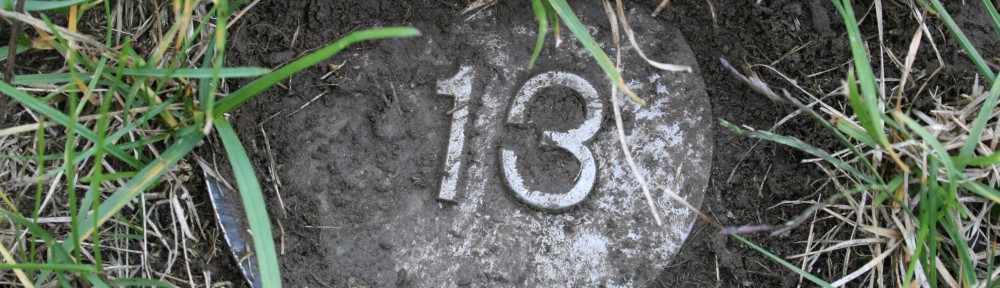
1917 Willard Maps

Many months ago, Mr. Craig Williams, Curator of History at the New York State Museum at Albany, sent me copies of two Willard State Hospital Maps from 1917: Willard West and East. I finally had a chance to work on them. As you can see, the complex was quite large, about 1,000 acres. The Branch (Grand View – Old State Agricultural College) is on the Willard East Map located at the bottom of the page. Click on the maps to enlarge. Willard Map Index

Willard Map 1917

Willard Map West 1917

I cropped the map so that you would be able to see the layout of each building. Chapin House is the Main Building. As far as I can tell, Willard was NOT a Kirkbride Building. The Maples was one of the cottages (detached buildings or blocks), that was built differently than the other three cottages.

97 Chapin House (Main Building)

97 Chapin House (Main Building)

63 The Maples (DB1)

63 The Maples (DB1)

105 The Pines (DB2)

105 The Pines (DB2)

44 Sunnycroft (DB3)

44 Sunnycroft (DB3)

107 Edgemere (DB4)

107 Edgemere (DB4)

Willard Map East 1917

Willard Map East 1917

Willard Map East - Grand View (The Branch)

15 Grand View (The Branch)