Unknown's avatar

About lsstuhler

Linda Stuhler is a Genealogy Geek from Rochester, New York, who loves to find out the facts. She has been researching her family tree for over twenty years and has accumulated an abundance of information on various subjects that she enjoys sharing on her blog at: https://inmatesofwillard.com/. She was responsible for the creation of the New York State Senate Bill S840, initiated in August 2011, which allows for the release of the names, dates of birth and death, of former patients who were buried in anonymous graves in New York State Custodial Institutions. The bill was changed from the original draft to S840A and does not work the way it was intended. It became a law on August 18, 2016, but it did not include provisions for a searchable database available to the public as New York State attorneys and the Office of Mental Health believed that if they did so, they would be sued. She is the author of "THE INMATES OF WILLARD 1870 TO 1900, A GENEALOGY RESOURCE."

1917 Willard Maps

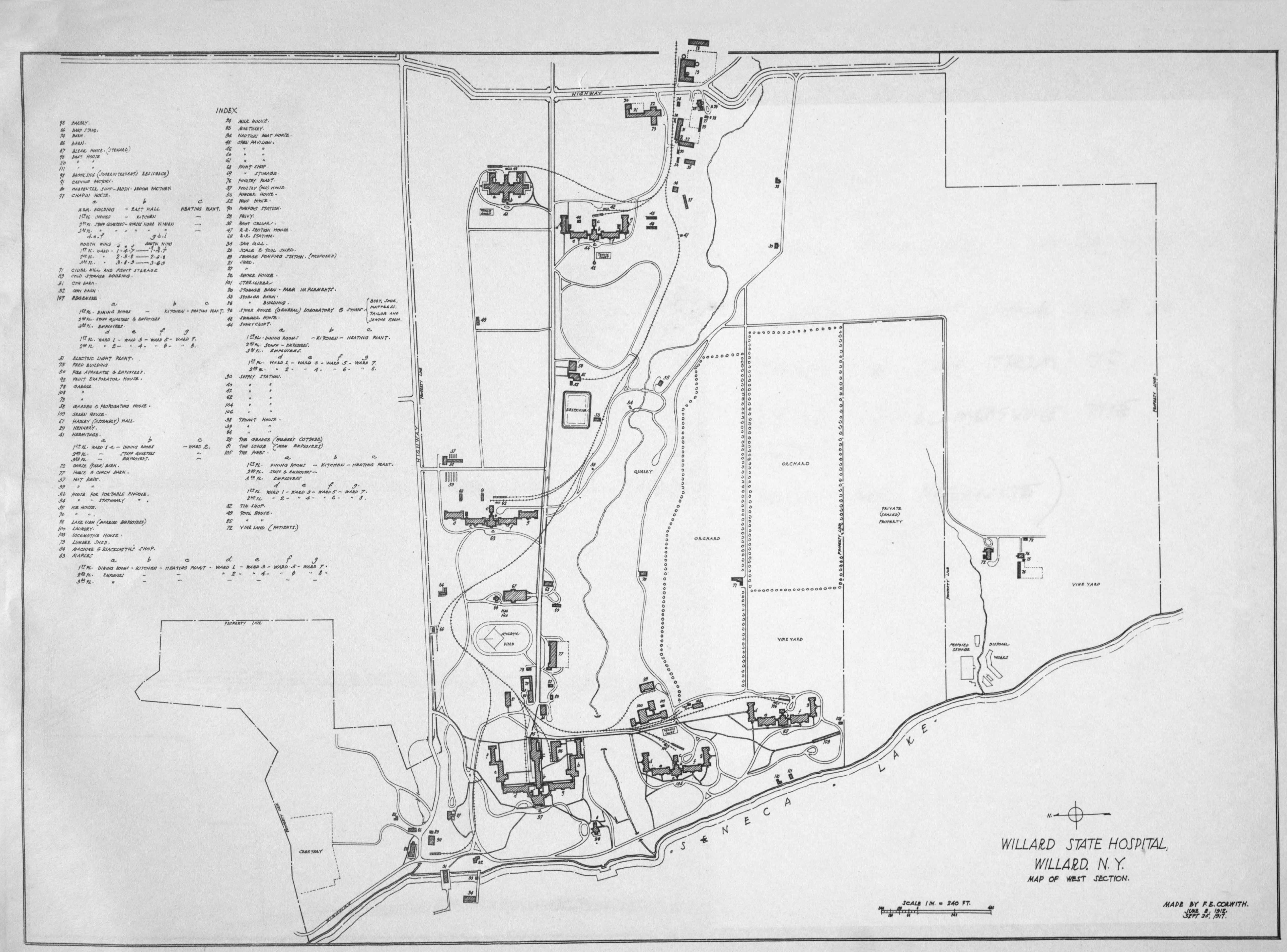
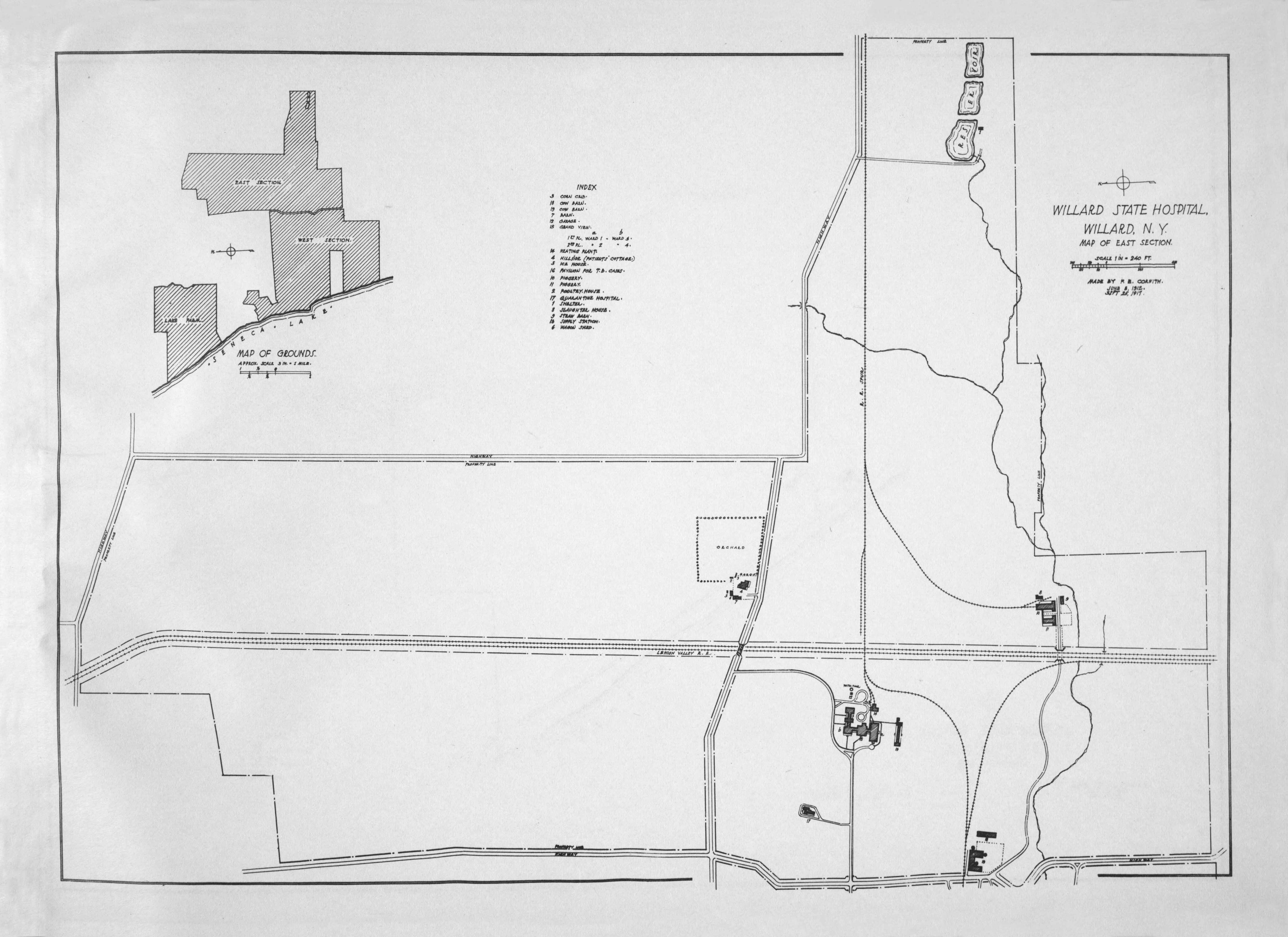
Many months ago, Mr. Craig Williams, Curator of History at the New York State Museum at Albany, sent me copies of two Willard State Hospital Maps from 1917: Willard West and East. I finally had a chance to work on them. As you can see, the complex was quite large, about 1,000 acres. The Branch (Grand View – Old State Agricultural College) is on the Willard East Map located at the bottom of the page. Click on the maps to enlarge. Willard Map Index

Willard Map 1917

Willard Map West 1917

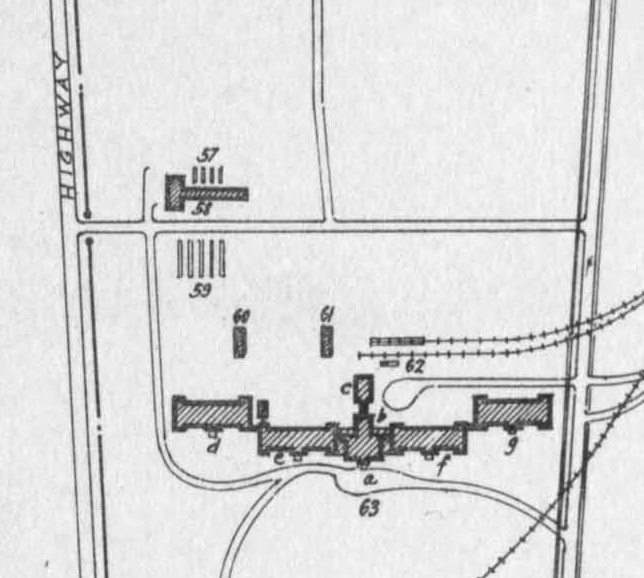
I cropped the map so that you would be able to see the layout of each building. Chapin House is the Main Building. As far as I can tell, Willard was NOT a Kirkbride Building. The Maples was one of the cottages (detached buildings or blocks), that was built differently than the other three cottages.

97 Chapin House (Main Building)

97 Chapin House (Main Building)

63 The Maples (DB1)

63 The Maples (DB1)

105 The Pines (DB2)

105 The Pines (DB2)

44 Sunnycroft (DB3)

44 Sunnycroft (DB3)

107 Edgemere (DB4)

107 Edgemere (DB4)

Willard Map East 1917

Willard Map East 1917

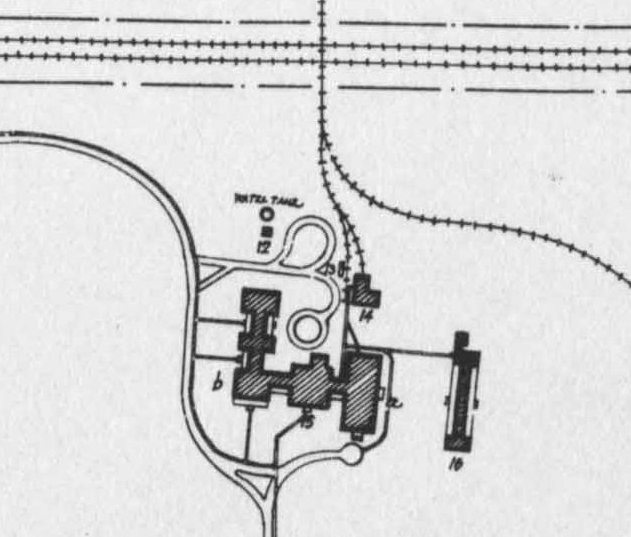
Willard Map East - Grand View (The Branch)

15 Grand View (The Branch)

My Story by L.S. Stuhler – July 23, 2012

Featured

I include here my story about trying to obtain my great-grandmother’s medical records and photographs from the Willard State Hospital, along with asking for the release to the public of former patient names; dates of birth and death; and location of graves, in order that these forgotten people, of which there are thousands, may be honored and remembered with dignity. It all began on February 24, 2001, when I found my great-grandmother’s obituary: According to the “PennYan Democrat” newspaper dated August 17, 1928: “PUTNAM, At the State Hospital in Willard, Monday, August 13, 1928, Mrs. Margaret Putnam, aged 76 years. She is survived by one son, Jarvis Putnam, of PennYan. The funeral was held from the Thayer Funeral Home Wednesday afternoon, Rev. W.A. Hendricks officiating. Burial in Lake View cemetery.” 

It took a long time for me to figure out where I should be looking in order to obtain information about my great-grandmother. In 2001, I was unable to find anything on the internet pertaining to this issue which is the main reason I created this blog (July 10, 2011) and wrote the book The Inmates of Willard 1870 to 1900, A Genealogy Resource (December 17, 2011). In 2007, I came across an article about a new book written by Darby Penney, MLS, and Peter Stastney, M.D., entitled The Lives They Left Behind Suitcases From A State Hospital Attic. Wondering if my great-grandmother’s suitcase was among the 400 discovered in an attic of the Willard State Hospital, I contacted Ms. Penney. Unfortunately, it was not among the surviving suitcases. Ms. Penney’s book revealed the practice of burying “mental patients” in anonymous graves. I must admit that I had never heard of this practice before and thought it was extremely cruel. What amazed me most was that no one (that I knew of) had ever tried to rectify this sad, dehumanizing situation. What needs to be acknowledged is none of these well documented facts about the thousands of people buried in anonymous graves at Willard, and all former NYS Hospitals and Custodial Institutions, would ever have come to light without the tireless efforts of Ms. Penney, Dr. Stastney, and Mr. Craig Williams, Curator of History at the New York State Museum at Albany. I also need to thank Laurel Lemke, from the Grave Concerns Association, for sending me the law that she helped to pass in the State of Washington in 2004. Without her help in emailing me the bill, I never would have gotten the attention of Kate Munzinger, Senator Joseph Robach’s Chief of Staff. I met with Ms. Munzinger on August 22, 2011. Senator Robach introduced the bill to the New York State Senate in March 2012.

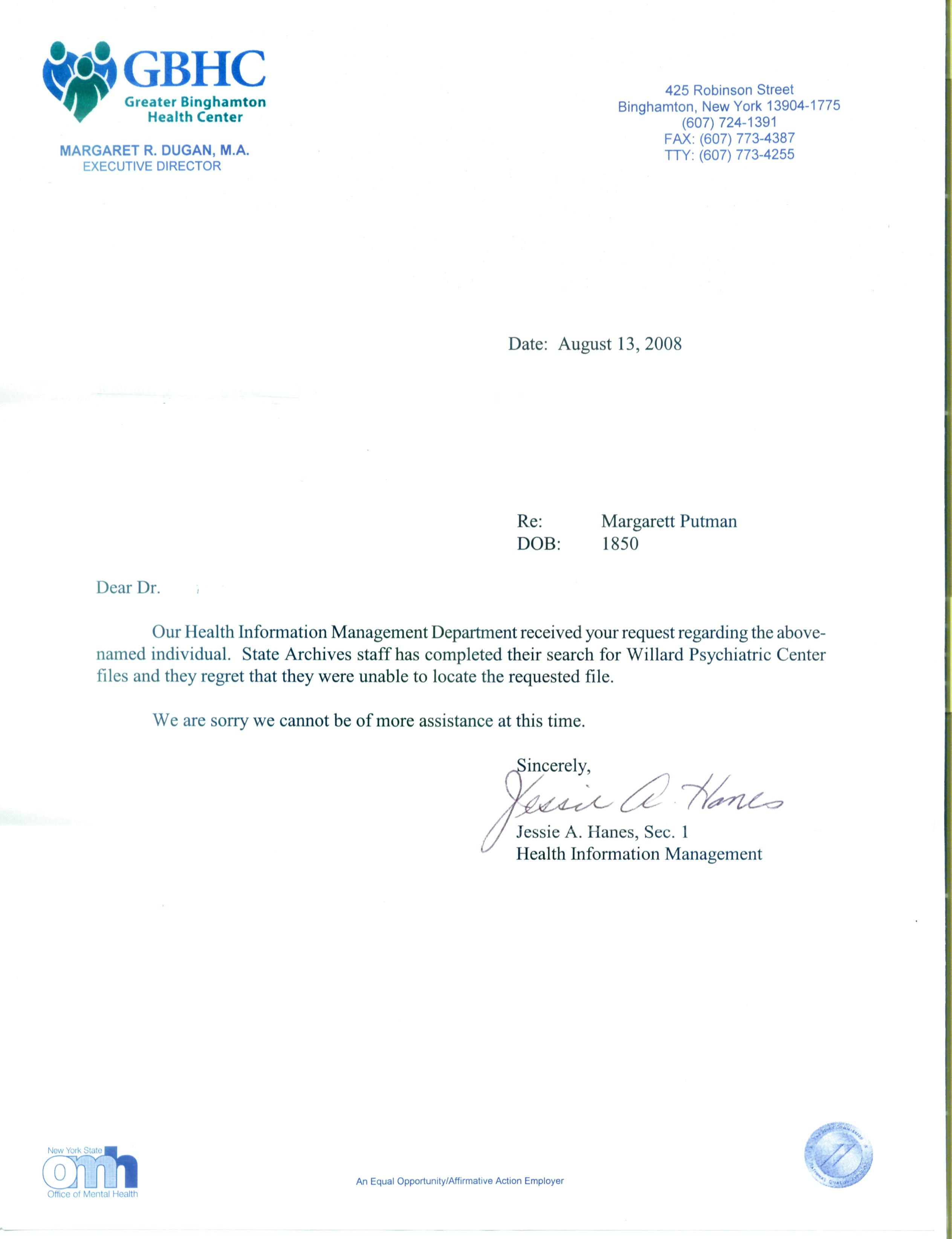
The following response letters, beginning in early 2008, are from everyone that I have contacted over the years. I have not included emails. Unless a modification is made to the present HIPAA Law and New York State Mental Hygiene Laws (See New HIPAA Update and S2514-2013), I and so many others like me, who want to know why our ancestor was committed to a state hospital, will never know the answer. My first response letter is dated April 16, 2008, in response to the original paperwork that my physician and I had sent in early September of 2007 (seven month wait). On August 13, 2008, I was denied a copy of my great-grandmother’s medical records and photographs from the Greater Binghamton Health Center. This three sentence response letter is the explanation given to me after waiting four months, taking the time and effort to speak with them on the phone, obtaining and filling out their required paper work with the help of my physician, and sending in the forms.

1- GBHC 04.16.2008

1- GBHC 04.16.2008

2 - GBHC 08.13.2008

2 – GBHC 08.13.2008

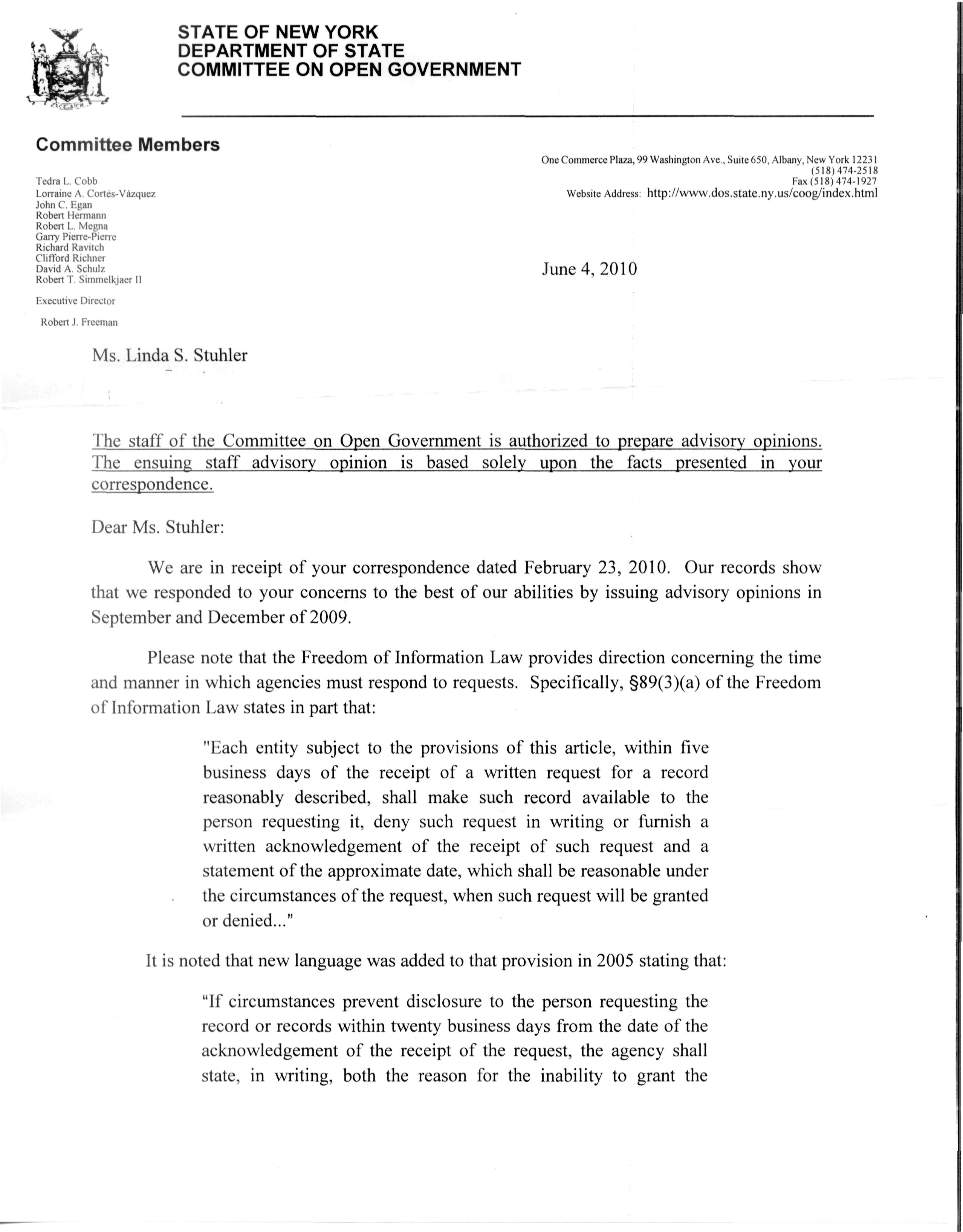
Besides writing a letter to former New York State Governor Patterson and present Governor Cuomo, both U.S. Senators from New York: Schumer and Gillibrand, State Senators, Congressmen, The Department of Correctional Services, The Commission on Quality of Care and Advocacy for Persons with Disabilities, The Office of Mental Health Counsel, and the State of New York Department of State Committee on Open Government (FOIL), I also wrote a letter to the doctor in charge of the Office of Mental Health Institutional Review Board asking permission to view, record, and publish the burial ledgers – names; dates of birth and death; and location of graves) located and stored at the NYS Archives. After waiting seven months for a response, I was told in an official letter, that my proposed study was not approved due to concerns about violating patient confidentiality. I was also told that I could take the New York State Office of Mental Health to court in order to get the names of former patients and the medical records of my great-grandmother, but seriously, who has the time and the money to go through all of that? Privacy ends at death but apparently patient confidentiality lasts forever.

I went through proper channels to obtain Maggie’s medical records and photographs. I filled out the paperwork, had my doctor and a witness sign the paperwork, and my doctor sent it in. I waited four months for a response and finally my doctor received a letter. I asked for the medical records and any photographs of my great-grandmother. When I received the response from the Greater Binghamton Health Center in August 2008, it stated the staff was unable to locate the requested file. Had I received my great-grandmother’s medical records, I would have been satisfied. Besides being genuinely interested in learning more about Willard, I created this blog for family genealogists like me, frustrated trying to find out if and when their ancestor was a Willard inmate, receiving the runaround obtaining their ancestor’s medical records and photos, and determining whether their ancestor is buried in the Willard Cemetery. The final answer came from the Commissioner of the NYS Office of Mental Health in responding to my inquiry by e-mail on October 25, 2010, which basically stated that publicly identifying former patients may be offensive to some families because of the stigma and repercussions that may follow, for example, in some small towns. I must say that I took offense to his statement because I live in a small town. What exactly was he trying to imply? It appears that we have not moved any further in our tolerance or understanding of people with problems and of people who live in small towns. I must say that my favorite letter is from the Commissioner, dated June 3, 2011, in which he reminds me “that the penalties for violations are very stiff – civil penalties under federal law can carry up to $10,000 per violation.”

Willard’s inmates who in life were incarcerated, forgotten, warehoused, and controlled by the state are once again controlled and intentionally forgotten in death by New York State, the New York State Office of Mental Health, or both. Perhaps they are interpreting the scope of the HIPAA Law incorrectly. The only logical assumption is the protection provided by these laws is not for long dead souls since U.S. Federal Censuses already reveal many of their names; it is for the protection of the descendants.

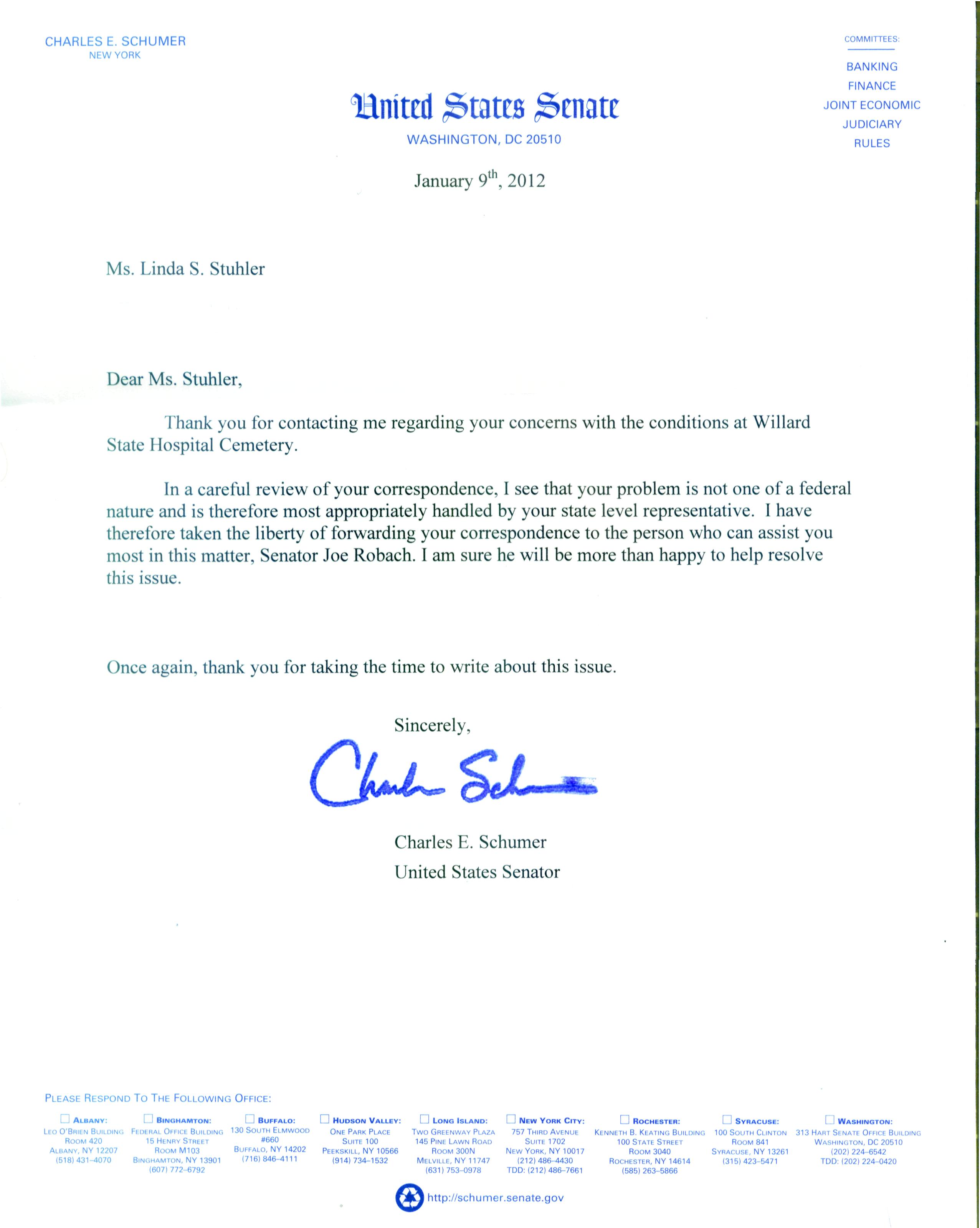
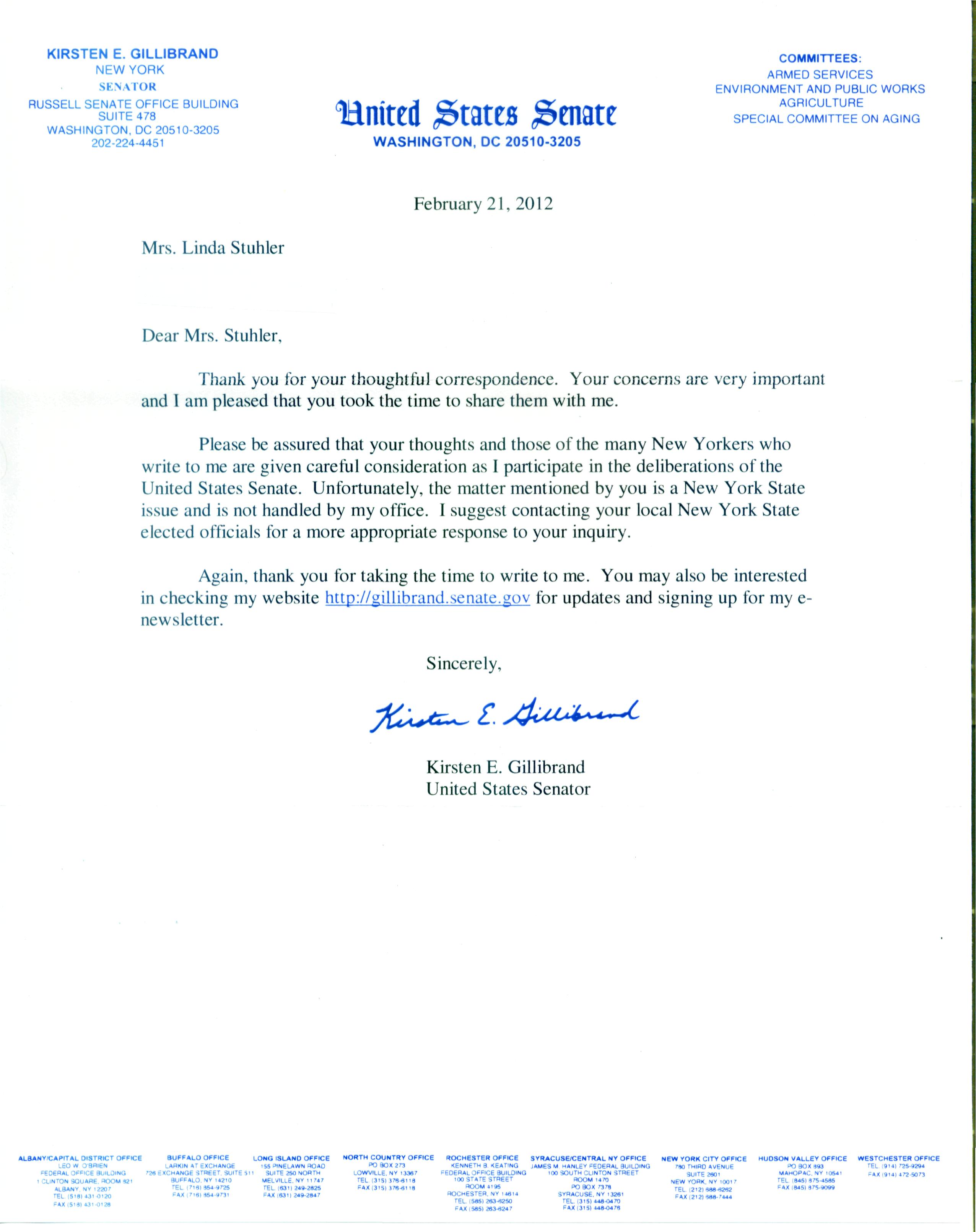
The responses from the Senators are interesting because they state that there is nothing they can do about the situation at Willard. They mention nothing about modifying the HIPAA Law which was one of the questions that I asked them to respond to. My understanding is that they are the only ones who can change or modify this federal law in order that descendants or anyone for that matter, would be allowed to have a copy of these historical medical records. When you’re dead, you’re dead. Who cares if someone looks at 80 year old medical records? The following letters were received by me from Senator Charles E. Schumer, dated January 9, 2012; and from Senator Kirsten E. Gillibrand, dated February 21, 2012. Perhaps this whole ridiculous situation of trying to uncover the identities and opening medical records of people who have been dead for one hundred years lies with the unique interpretation of the federal HIPAA Law by each individual state office of mental health.

Response Letter Senator Schumer 1.9.2012

Response Letter Senator Schumer 1.9.2012

Response Letter Senator Gillibrand 2.21.2012

Response Letter Senator Gillibrand 2.21.2012

14 - OMH 06.03.2011

14 – OMH 06.03.2011

13 - GBHC 09.07.2010

13 – GBHC 09.07.2010

11 - FOIL 06.04.2010-1

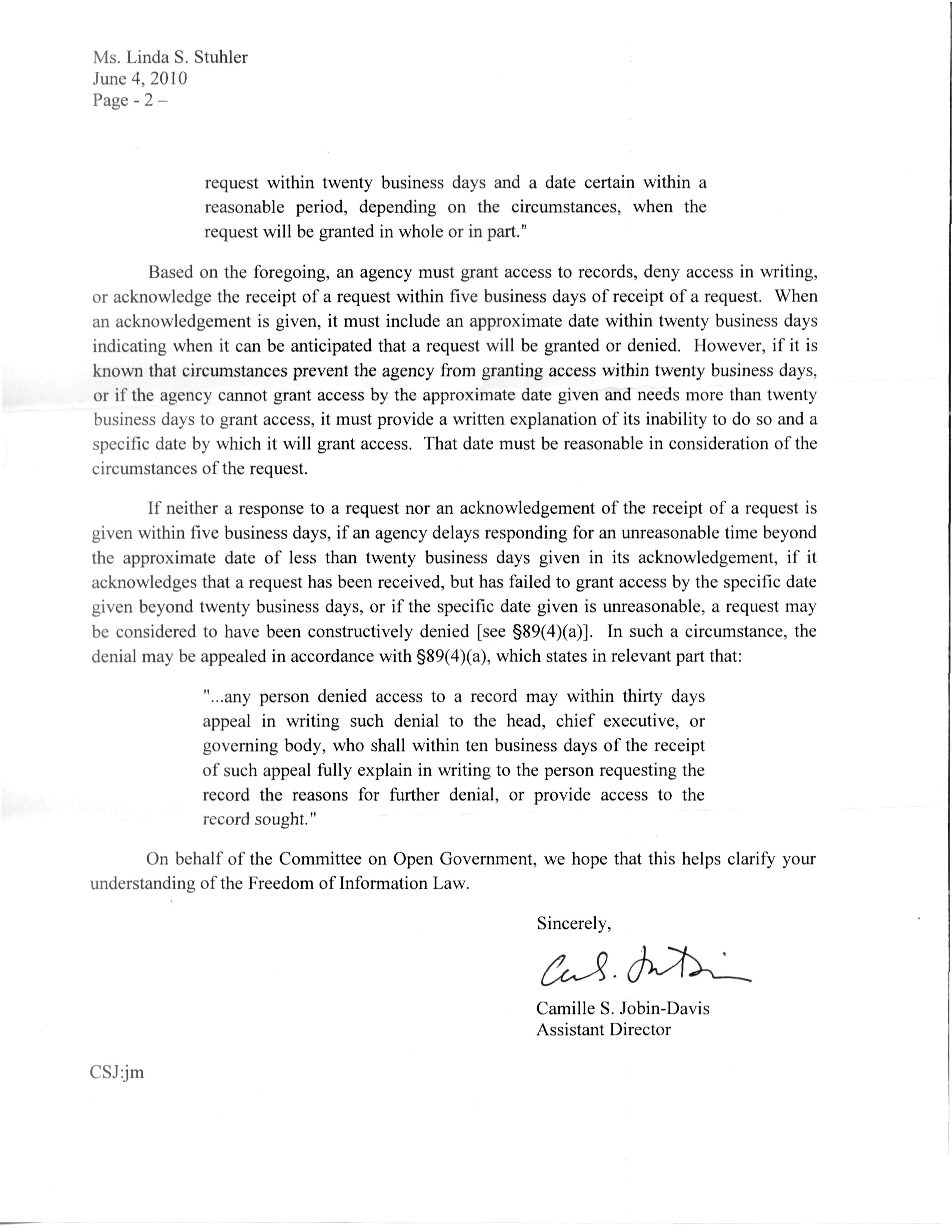
11 – FOIL 06.04.2010-1

12 - FOIL 06.04.2010-2

12 – FOIL 06.04.2010-2

10 - Correctional Services 01.15.2010

10 – Correctional Services 01.15.2010

7 - FOIL 12.10.2009-1

7 – FOIL 12.10.2009-1

8 - FOIL 12.10.2009-2

8 – FOIL 12.10.2009-2

9 - FOIL 12.10.2009-3

9 – FOIL 12.10.2009-3

5 - FOIL 09.25.2009-1

5 – FOIL 09.25.2009-1

6 - FOIL 09.25.2009-2

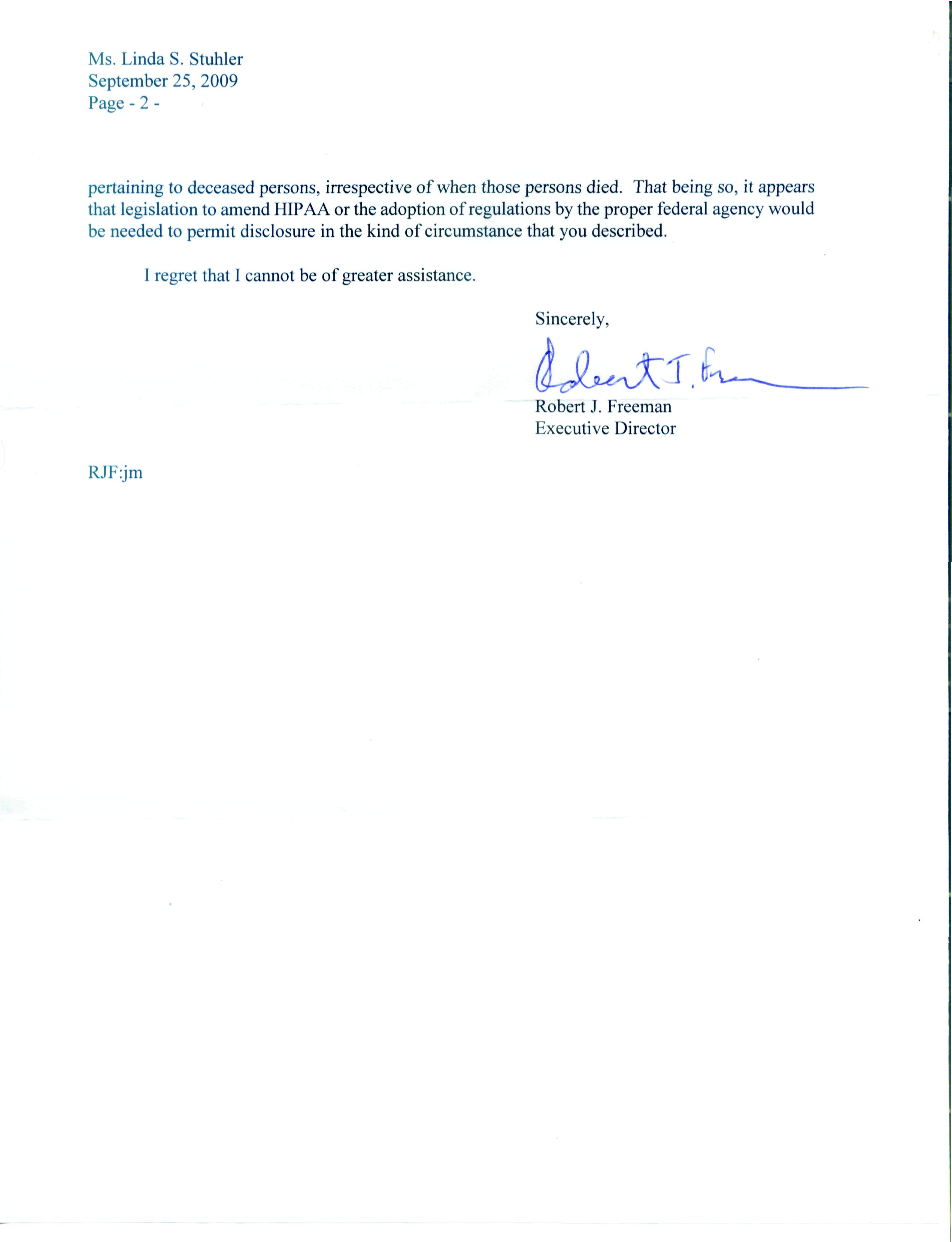
6 – FOIL 09.25.2009-2

4 - OMH Counsel 09.08.2009

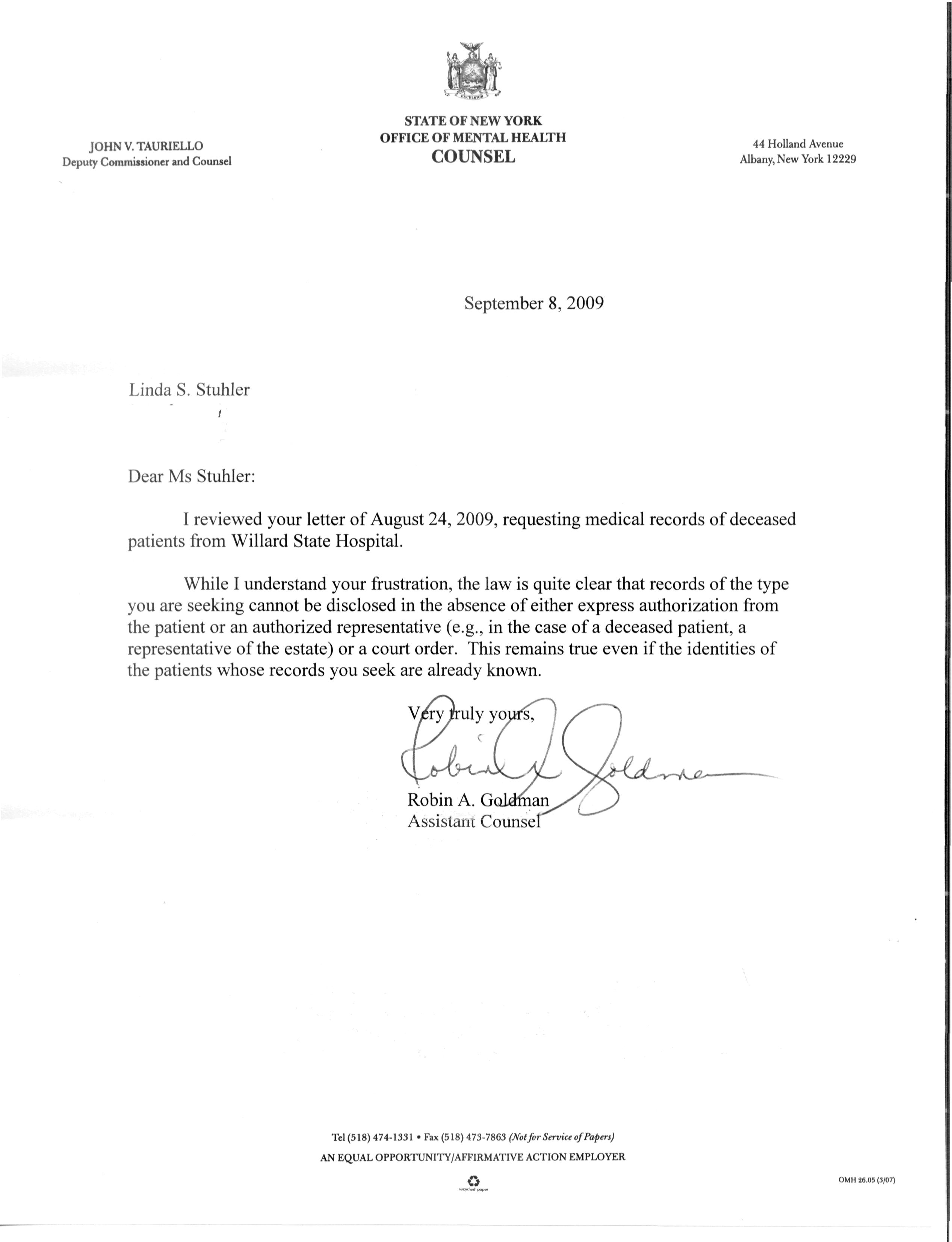
4 – OMH Counsel 09.08.2009

3 - Quality Care Advocacy 09.01.2009

3 – Quality Care Advocacy 09.01.2009

KINGS PARK-STORIES FROM AN AMERICAN MENTAL INSTITUTION – A Groundbreaking New Documentary – Lucy Winer

Kings Park Movie

Kings Park Movie

On June 21, 1967, at the age of 17, Lucy Winer was committed to the female violent ward of Kings Park State Hospital following a series of failed suicide attempts. Over 30 years later, now a veteran documentary filmmaker, Lucy returns to Kings Park for the first time since her discharge. Her journey back sparks a decade-long effort to face her past and learn the story of the now abandoned institution that once held her captive. Her meetings with other former patients, their families, and the hospital staff reveal the painful legacy of our state hospital system and the crisis left by its demise.

For More Information Click On The Links:

Kings Park Movie

Kings Park Movie on Facebook

Kings Park Movie Trailer

Life In A Mental Hospital by Lucy Winer

Demolition of Kings Park – CBS News

Kings Park: Stories from an American Mental Institution – A Review

My 8th Great-Grandmother – The Witch of Hartford, Connecticut

Since my book is based in genealogy, I couldn’t help but tie my English ancestors into the web of insanity and intolerance that occurred during the witch hunts of seventeenth century New England. This is the story of Rebecca Elson-Mudge-Greensmith, my eighth great-grandmother, who was hanged as a witch in 1662 on Gallows Hill in Hartford, Connecticut; and Edward Griswold, my ninth great-grandfather, who was on the jury that convicted and sentenced her to death. What follows are my own personal opinions, a little background information, and the disturbing story of how insanity took over the lives of villagers in one isolated community.
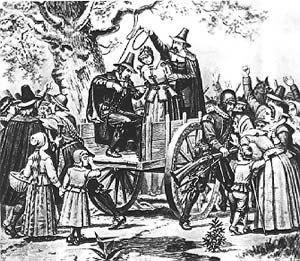
Witch Hanging

Witch Hanging

Background Information On My English Roots:
Many people are intrigued and fascinated with the Salem Witch Trials that occurred in America between February 1692 and May 1693 but most are not aware of the Connecticut Witch Trials that resulted in the hangings of ten innocent villagers between the years 1647 and 1663. I had no idea about any of this until I started doing genealogy thirteen years ago on the Griswold and Putman families. Jarvis Mudge Putnam (Putman) and Bessie May Griswold were my grandparents, the parents of my mother. With the family name of “Mudge” as Jarvis’s middle name, I knew that my grandfather was connected to this old English family. I was surprised to learn that the progenitor of my Mudge family in America was actually named Jarvis Mudge.

Jarvis Mudge was my eighth great-grandfather who was born in England about the year 1608. He came to America in 1638, landing in Boston, Massachusetts. Jarvis married Rebecca née Unknown at Wethersfield, Connecticut in 1649 and moved to Pequot (New London), Connecticut. Rebecca was married at least three times that we know of: first to Abraham Elsing (Elson, Elsen); second to Jarvis Mudge; and third to Nathaniel Greensmith. Rebecca was the widow of Abraham Elsing and the mother of his three daughters: Sarah, Hannah, and Mariah. Jarvis and Rebecca had two sons: Micah and Moses. Jarvis died in New London, Connecticut, in March of 1653. Rebecca then married Nathaniel Greensmith around 1654. They had no children together. No one is sure of Rebecca’s maiden name but the surname “Steele” has been floated about. She was born in England but the place and date of her birth is unknown. I have estimated that she was in her mid-fifties when she was executed but I certainly could be wrong, she may have been much older. According to Alfred Mudge in his book Memorials, Being A Genealogical, Biographical and Historical Account of the Name of Mudge in America from 1638 to 1868, Rebecca was the mother of Micah Mudge (3), son of Jarvis (my line).

It appears that women who were loud, outspoken, or strong willed, without prominent connections in the community were target victims. Abraham and Jarvis, by all accounts, appeared to have been good, upstanding men, while Nathaniel’s reputation is called into question. Perhaps he was abusive to Rebecca? Perhaps he drove her to insanity? Rebecca may have been suffering from depression, dementia or a number of illnesses. She had lost one child in infancy, maybe more, and she lived through the deaths of two husbands. For whatever reason, she was unjustly accused without counsel, and hanged for a crime that she did not commit.

My grandmother, Bessie, was a direct descendant of Edward Griswold. Edward, my ninth great-grandfather, was born in England about the year 1607. He came to America landing at Boston, Massachusetts, about the year 1639 and moved, just as Jarvis did, to Connecticut.  He was a prominent man in the community.

The interesting irony of the following story, recounted by John Metcalf Taylor in his book: The Witchcraft Delusion in Colonial Connecticut 1647 – 1697, is that 250 years after the death of Rebecca on April 10, 1912, these two families would forever be connected through the marriage of my grandparents, Jarvis and Bessie.

The line for my grandfather Jarvis is: Jarvis Mudge (married Rebecca unknown)> Micah Mudge> Ebenezer Mudge> Jarvis Mudge> Abigail Mudge (married Pieter Van Buren)> Catalina Van Buren (married James Putnam) > Jarvis Mudge Putman> Richard T. Putman> Jarvis Mudge Putman (Putnam).

The line for my grandmother Bessie is: Edward Griswold> Joseph Griswold> Francis Griswold> Francis Griswold> Francis Griswold> Jehiel Griswold> Aaron Griswold> Aaron H. Griswold> Sylvester Thomas Griswold> Bessie May Griswold (married Jarvis Mudge Putman (Putnam). (SOURCE: The Greswold Family 12 Generations in England by Robert L. and Esther G. French, Compiled by Coralee Griswold, 1999)
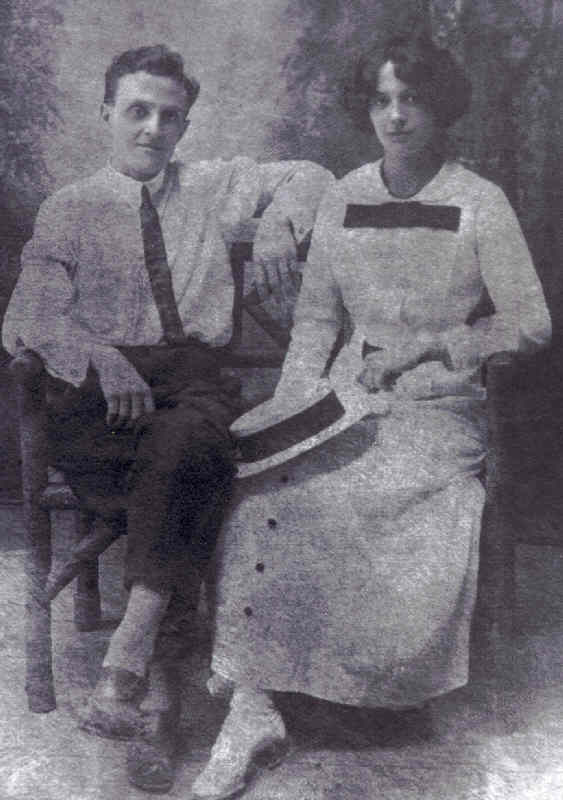
Jarvis & Bessie Putnam 4.10.1912

Jarvis & Bessie Putnam 4.10.1912

NATHANIEL AND REBECCA GREENSMITH
Nathaniel Greensmith
lived in Hartford, south of the little river, in 1661-62, on a lot of about twenty acres, with a house and barn.  He also had other holdings ‘neer Podunk,’ and ‘on ye highway leading to Farmington.’  He was thrifty by divergent and economical methods, since he is credited in the records of the time with stealing a bushel and a half of wheat, of stealing a hoe, and of lying to the court, and of battery.

In one way or another he accumulated quite a property for those days, since the inventory of it filed in the Hartford Probate Office, January 25, 1662, after his execution, carried an appraisal of L137. 14s. 1d. – including ‘2 bibles, a sword, a resthead, and a drachm cup’ – all indicating that Nathaniel judiciously mingled his theology and patriotism, his recreation and refreshment, with his everyday practical affairs and opportunities.

But he made one adventure that was most unprofitable.  In an evil hour he took to wife Rebecca, relict of Abraham Elson, and also relict of Jarvis Mudge, and of whom so good a man as the Rev. John Whiting, minister of the First Church in Hartford – afterward first pastor of the Second Church – said that she was ‘a lewd, ignorant and considerably aged woman.’

This triple combination of personal qualities soon elicited the criticism and animosity of the community, and Nathaniel and Rebecca fell under the most fatal of all suspicions of that day, that of being possessed by the evil one. Gossip and rumor about these unpopular neighbors culminated in a formal complaint, and December 30, 1662, at a court held in Hartford, both the Greensmiths were separately indicted in the same formal charge.

‘Nathaniel Greensmith thou art here indicted by the name of Nathaniel Greensmith for not having the fear of God before thine eyes, thou hast entertained familiarity with Satan, the grand enemy of God and mankind – and by his help hast acted things in a preternatural way beyond human abilities in a natural course for which according to the law of God and the established law of this commonwealth thou deservest to die.’

While Rebecca was in prison under suspicion, she was interviewed by two ministers, Revs. Haynes and Whiting, as to the charges of Ann Cole – a next door neighbor – which were written down by them, all of which, and more, she confessed to be true before the court. (Note. Increase Mather regarded this confession as convictive a proof of real witchcraft as most single cases he had known.)

THE MINISTERS’ ACCOUNT –
She forthwith and freely confessed those things to be true, that she (and other persons named in the discourse) had familiarity with the devil. Being asked whether she had made an express covenant with him, she answered she had not, only as she promised to go with him when he called (which she had accordingly done several times). But that the devil told her that at Christmas they would have a merry meeting, and then the covenant should be drawn and subscribed. Thereupon the fore-mentioned Mr. Stone (being then in court) with much weight and earnestness laid forth the exceeding heinousness and hazard of that dreadful sin; and therewith solemnly took notice (upon the occasion given) of the devil’s loving Christmas.

‘A person at the same time present being desired the next day more particularly to enquire of her about her guilt, it was accordingly done, to whom she acknowledged that though when Mr. Haynes began to read she could have torn him in pieces, and was so much resolved as might be to deny her guilt (as she had done before) yet after he had read awhile, she was as if her flesh had been pulled from her bones, (such was her expression,) and so could not deny any longer. She also declared that the devil first appeared to her in the form of a deer or fawn, skipping about her, wherewith she was not much affrighted but by degrees he contrived talk with her; and that their meetings were frequently at such a place, (near her own house;) that some of the company came in one shape and some in another, and one in particular in the shape of a crow came flying to them. Amongst other things she owned that the devil had frequent use of her body.’

Had Rebecca been content with purging her own conscience, she alone would have met the fate she had invoked, and probably deserved; but out of ‘love to her husband’s soul’ she made an accusation against him, which of itself secured his conviction of the same offense, with the same dire penalty.

THE ACCUSATION –
Rebecca Greensmith testifieth in Court Janry 8. 62.

1. ‘That my husband on Friday night last when I came to prison told me that now thou hast confest against thyself let me alone and say nothing of me and I wil be good unto thy children.

2. I doe now testifie that formerly when my husband hathe told me of his great travaile and labour I wondered as it how he did it this he did before I was married and when I was married I asked him how he did it and he answered me he had help yt I knew not of.

3. About three years agoe as I think it; my husband and I were in ye wood several miles from home and were looking for a sow yt we lost and I saw a creature a red creature following my husband and when I came to him I asked him what it was that was with him and he told me it was a fox.

4. Another time when he and I drove or hogs into ye woods beyond ye pound yt was to keep yong cattle severall miles of I went before ye hogs to call them and looking back I saw two creatures like dogs one a little blacker than ye other, they came after my husband pretty close to him and one did seem to me to touch him I asked him wt they were he told me he thought foxes I was stil afraid when I saw anything because I heard soe much of him before I married him.

5. I have seen logs that my husband hath brought home in his cart that I wondered at it that he could get them into ye cart being a man of little body and weake to my apprhension and ye logs were such that I thought two men such as he could not have done it.  I speak all this out of love to my husbands soule and it is much against my will that I am now necessitate to speake agaynst my husband, I desire that ye Lord would open his heart to owne and speak ye trueth.

I also testify that I being in ye wood at a meeting there was with me Goody Seager, Goodwife Sanford and Goodwife Ayres; and at another time there was a meeting under a tree in ye green by or house and there was there James Walkely, Peter Grants wife, Goodwife Aires, and Henry Palmers wife of Wethersfield, and Goody Seager, and there we danced, and had a bottle of sack: it was in ye night and something like a catt cald me out to ye meeting, and I was in Mr. Varlett’s orcherd with Mrs. Judith Varlett and shee tould me that shee was much troubled wth ye Marshall Jonath: Gilbert and cried, and shee sayd if it lay in her power shee would doe him a mischief, or what hurt shee could.’

The Greensmiths were convicted and sentenced to suffer death. In January, 1662, they were hung on ‘Gallows Hill,’ on the bluff a little north of where Trinity College now stands – ‘a logical location’ one most learned in the traditions and history of Hartford calls it – ‘as it afforded an excellent view of the execution to a large crowd on the meadows to the west, a hanging being then a popular spectacle and entertainment.”  (8:96-100)

“Connecticut can lose nothing in name or fame or honor, if, more than two centuries after the last witch was executed within her borders, the facts as to her share in the strange superstition be certified from the current records of the events.

How may this story best be told? Clearly, so far as may be, in the very words of the actors in those tragic scenes, in the words of the minister and magistrate, the justice and the juryman, the accuser and the accused, and the searcher. Into this court of inquiry come all these personalities to witness the sorrowful march of the victims to the scaffold or to exile, or to acquittal and deliverance with the after life of suspicion and social ostracism.

The spectres of terror did not sit alone at the firesides of the poor and lowly: they stalked in high places, and were known of men and women of the first rank in education and the social virtues, and of greatest influence in church and state. Of this fact there is complete demonstration in a glance at the dignitaries who presided at one of the earliest witchcraft trials–men of notable ancestry, of learning, of achievements, leaders in colonial affairs, whose memories are honored to this day.

These were the magistrates at a session entitled ‘A particular courte in Hartford upon the tryall of John Carrington and his wife 20th Feb., 1662.’  (See Rec. P. C., 2:17): Edw. Hopkins Esqr., Gournor John Haynes Esqr. Deputy, Mr. Wells, Mr. Woolcott, Mr. Webster, Mr. Cullick, Mr. Clarke.

This court had jurisdiction over misdemeanors, and was ‘aided by a jury,’ as a close student of colonial history, the late Sherman W. Adams, quaintly says in one of his historical papers.  These were the jurymen:

Mr. Phelps       John White      John More

Mr. Tailecoat   Will Leawis      Edw. Griswold

Mr. Hollister    Sam Smith       Steph Harte

Daniel Milton John Pratt        Theo Judd

Before this tribunal – representative of the others doing like service later – made up of the foremost citizens, and of men in the ordinary walks of life, endowed with hard common sense and presumably inspired with a spirit of justice and fair play, came John Carrington and his wife Joan of Wethersfield, against whom the jury brought in a verdict of guilty.

It must be clearly borne in mind that all these men, in this as in all the other witchcraft trials in Connecticut, illustrious or commonplace – as are many of their descendants whose names are written on the rolls of the patriotic societies in these days of ancestral discovery and exploitation – were absolute believers in the powers of Satan and his machinations through witchcraft and the evidence then adduced to prove them, and trained to such credulity by their education and experience, by their theological doctrines, and by the law of the land in Old England, but still clothed upon with that righteousness which as it proved in the end made them skeptical as to certain alleged evidences of guilt, and swift to respond to the calls of reason and of mercy when the appeals were made to their calm judgment and second thought as to the sins of their fellow men.

In no way can the truth be so clearly set forth, the real character of the evidence be so justly appreciated upon which the convictions were had, as from the depositions and the oral testimony of the witnesses themselves. They are lasting memorials to the credulity and superstition, and the religious insanity which clouded the senses of the wisest men for a time, and to the malevolence and satanic ingenuity of the people who, possessed of the devil accused their friends and neighbors of a crime punishable by death.”  (5:37-39)

“A Record of the Men and Women Who Came Under Suspicion or Accusation of Witchcraft in Connecticut, and What Befell Them.
Herein are written the names of all persons in anywise involved in the witchcraft delusion in Connecticut, with the consequences to them in indictments, trials, convictions, execution, or in banishment, exile, warnings, reprieves, or acquittals, so far as made known in any tradition, document, public or private record, to this time.”  (11:143)

“1662-63 was a notable year in the history of witchcraft in Connecticut. It marked the last execution for the crime within the commonwealth and thirty years before the outbreak at Salem.”  (11:150)

“ROLL OF NAMES (Names in Bold Print are those who were hanged).

  1. Alse Young 1647
  2. Mary Johnson 1648
  3. John Carrington 1650-51
  4. Joan Carrington 1650-51
  5. Goody Bassett 1651
  6. Goodwife Knapp 1653
  7. Lydia Gilbert 1654
  8. Elizabeth Godman 1655
  9. Nicholas Bayly 1655
  10. Goodwife Bayly 1655
  11. Goodwife Bayly 1655
  12. William Meaker 1657
  13. Elizabeth Garlick 1658
  14. Nicholas Jennings 1661
  15. Margaret Jennings 1661
  16. Nathaniel Greensmith 1662
  17. Rebecca Greensmith 1662
  18. Mary Sanford 1662
  19. Andrew Sanford 1662
  20. Goody Ayres 1662
  21. Katherine Palmer 1662
  22. Judith Varlett 1662
  23. James Walkley 1662
  24. Mary Barnes 1662-63
  25. Elizabeth Seager 1666
  26. Katherine Harrison 1669
  27. Nicholas Disborough 1683
  28. Mary Staplies 1692
  29. Mercy Disborough 1692
  30. Elizabeth Clawson 1692
  31. Mary Harvey 1692
  32. Hannah Harvey 1692
  33. Goody Miller 1692
  34. Hugh Crotia 1693
  35. Winifred Benham Senr. 1697
  36. Winifred Benham Junh. 1697
  37. Sarah Spencer 1724
  38. Unknown Norton 1768

What of those men and women to whom justice in their time was meted out, in this age of reason, of religious enlightenment, liberty, and catholicity, when witchcraft has lost its mystery and power, when intelligence reigns, and the Devil works his will in other devious ways and in a more attractive guise?

They were the victims of delusion, not of dishonor, of a perverted theology fed by moral aberrations, of a fanaticism which never stopped to reason, and halted at no sacrifice to do God’s service; and they were all done to death, or harried into exile, disgrace, or social ostracism, through a mistaken sense of religious duty: but they stand innocent of deep offense and only guilty in the eye of the law written in the Word of God, as interpreted and enforced by the forefathers who wrought their condemnation, and whose religion made witchcraft a heinous sin, and whose law made it a heinous crime.” (2)  (11:156-158)

SOURCES:
(1) Salem Village Witchcraft Victims’ Memorial At Danvers 

(2) Reprinted from The Witchcraft Delusion in Colonial Connecticut 1647 – 1697, John Metcalf Taylor, The Grafton Press Publishers, New York, 1908. (Records Particular Court (2:182); Memorial History Hartford County 1:274); Connecticut Magazine (November 1899, pp. 557-561).

(3) Mudge, Alfred, Memorials: Being A Genealogical, Biographical and Historical Account Of The Name Of MUDGE In America, From 1638 to 1868, Boston, Printed By Alfred Mudge & Son, For The Family, 1868, Pages 27-33.

Connecticut Witch Trials and Posthumous Pardons.

Witches and Witchcraft, The First Person Executed in the Colonies.

On May 9, 1992, the Town of Danvers, Massachusetts, acknowledged and took responsibility for the mistakes of their ancestors by presenting a beautiful granite memorial to the people of the state and the country in honor of the twenty villagers unjustly executed at The Salem Witch Trials which took place between February 1692 and May 1693. “The Memorial serves as a reminder that each generation must confront intolerance and ‘witch hunts’ with integrity, clear vision and courage.” (1) Forty-five years earlier between 1647 and 1663, the settlement at Hartford, Connecticut, also held witch trials that resulted in the hangings of at least ten innocent villagers, one of whom was my eighth great-grandmother, Rebecca Greensmith née Unknown. The Connecticut Witch Trials are dreadful examples of our country’s dark past that shows us how a secluded community made up of a particular group of people, persecuted, labeled, and punished other members of society simply because they didn’t like or understand them. Rev. John Whiting, minister of the First Church in Hartford stated that Rebecca was “a lewd, ignorant and considerably aged woman.” In another place, in another time, would Rebecca, who was unjustly accused without counsel, have been labeled insane? Would she have been a candidate for an insane asylum in 1880 or a nursing home in 2012? Were she and her friends simply dancing and enjoying a bottle of sack? Was it the isolation and strict rules of conformity that drove this community to insanity? I don’t think I would be out of line in suggesting that all the players in this tragic story of indifference were suffering from religious excitement which was listed as a cause of insanity at the Willard State Hospital as late as 1900.

I have read that the state of Connecticut will not grant posthumous pardons or exonerate the people unjustly accused of witchcraft, nor will they officially acknowledge the mistakes of their ancestors. Will New York State lead by example and end the disgrace of anonymous, unmarked graves by releasing the names and burial locations of our ancestors in a unified, digital database available to the public on the internet? Will they allow descendents to obtain the medical records and photographs of their loved one? Will New York remain as blind and indifferent as the state of Connecticut? The Salem and Hartford executions are grim reminders of the fear, ignorance, and intolerance that permeated America’s past, not dissimilar from what happened at long-closed insane asylums. Innocent people were unjustly singled out in shame because they were feared and misunderstood for being different. In both cases, these people were ultimately removed from society and erased from history.

1892 The Curious Case of Henry B. LaRue

The following three articles tell the fascinating story of how a wealthy businessman, Mr. Henry B. LaRue, was declared insane, made a pauper charge of Steuben County, and was locked up at Willard State Hospital in 1891 for fifty-two days. His tale is so unbelievable that it would make a great Hollywood movie! It might also explain why The Insanity Law of 1896 (New York State) was created. Although I was able to find the obituary for Miss Jennie O’Neil Potter, I was unable to find out more information about Mr. LaRue and the outcome of the trial. These articles give a wonderful insight as to how easy it was to have someone committed to an insane asylum during the nineteenth century.

1892. Miss Potter A Defendant,
Sued For Damages By An Eccentric Hornellsville Citizen.

Miss Jennie O’Neil Potter, the reader, is a defendant in a suit for damages brought by Henry B. LaRue of Hornellsville. She has not yet been served with a summons, and the exact nature of the suit or the amount of damages claimed cannot be learned. A year ago Henry B. LaRue was a prosperous railroad contractor and inventor, and enjoyed an income of about $6,000. He was often in New-York in the interest of his railroad inventions. Last Spring he attended an elocutionary entertainment given by Miss Potter. He was very much pleased with the entertainment, and became acquainted with the young reader. He invited Miss Potter to visit his wife in Hornellsville, and made arrangements to have her give an entertainment in the Hornellsville Opera House. The invitation was accepted, and Miss Potter went to the LaRue home.

LaRue proposed to become the reader’s manager, and arranged a date for her appearance in the Elmira Opera House. He made the date and commenced advertising Miss Potter without her knowledge or consent. He bought $500 worth of bouquets and hired four lackeys in livery to travel about the city and distribute the bouquets and advertisements of the entertainment. These extravagant preparations and other unusual actions attracted the attention of the authorities and newspapers, and a stop was put to further preparations. Mr. LaRue was induced to return to his home.

Mr. LaRue’s actions in Hornellsville were very eccentric, and he made the arrangements for Miss Potter’s appearance there in such a magnificent manner that every one thought he must be crazy. The night before the Hornellsville entertainment Mr. LaRue went to Elmira and demanded the keys of the Opera House at 3 o’clock in the morning. When they were refused he created a disturbance and was arrested. A few days afterward he was examined by three physicians and declared insane, and was taken to an asylum. Miss Potter gave the Hornellsville entertainment and then returned to New-York. In a few months LaRue was liberated from the asylum and returned home. He has now commenced suit for damages against the editors of several Elmira papers, many Elmira and Hornellsville citizens, the Superintendent of the asylum, and Miss Potter. Miss Potter is quietly evading a summons, and as the summons has not been served she is unwilling to say anything about the suit.” 
SOURCE: Reprinted from The New York Times. Published March 7, 1892. Copyright @ The New York Times.

Thursday, March 10, 1892. Mr. LaRue Wants Justice. He Also Wants Damages Claimed To Be $375,000 For False Imprisonment And Libelous Articles Published.

Mr. Henry B. LaRue of Hornellsville who, about a year ago was arrested at Elmira and locked up as a lunatic, and then committed to the State asylum at Willard, where he remained for fifty-two days before he was released began suits for damages against his abductors for $250,000, and against the Elmira Sunday “Telegram” and Elmira “Gazette” for commenting upon the facts for $125,000.

The Rochester “Democrat and Chronicle” says that: Since his release from the asylum Mr. LaRue has been carefully investigating the motives which led to his arrest. He charges that an attempt was made at Hornellsville to procure a decision that he was insane for the purpose of getting the option for the stock of the Morden Troy and Crossing Company out of his hands, and breaking up the deal at that time. He claims that three reputable physicians called upon him and refused to certify to his insanity alleging he was sane. The arrest at Elmira he ascribes to jealously on the part of one of the defendants at the success he was likely to achieve in the managing the entertainments of Miss Potter and that the arrest was timed so as to break up the two readings arranged for that city, and was instigated by telegrams from Hornellsville, that one of the defendants might himself manage the elocutionist. One of the grounds upon which the two Elmira physicians who saw him a few minutes at the jail at a late hour after his arrest, declared him insane, was that he had adopted a peculiar method of advertising the entertainments to be given by the elocutionist. One of these was the sending of cards of invitation to the best families of Elmira accompanied by a small bouquet. Mr. LaRue explains this by saying that the bouquets were small affairs costing only 5 cents each. Mr. LaRue has retained the services of J. and Q. VanVorhis of this city in all the cases and ex-congressman VanVorhis today stated to a Democrat and Chronicle reporter the facts fully sustained Mr. LaRue’s contention as to his entire sanity. It is nowhere stated that his relations with Miss Potter were otherwise than of a purely business character. While at Hornellsville the elocutionist was a guest at Mrs. LaRue’s. LaRue is a man of strikingly handsome presence and his friends scout the idea of his personal oddities which are said to be no more marked than those of any other business man, being construed into insanity. The summonses in the suits were severed some days ago, but this is the first time the contents of the complaints have been made public.” 
SOURCE: http://www.rootsweb.ancestry.com/~nysteube/this_that/pg2.html, [Rochester Democrat and Chronicle] copied by the Allegany Co. Reporter, Steuben County items mentioned in the Allegany County Reporter, Wellsville, Allegany County, NY, Abstracted by Judy Allen Cwiklinski – Steuben County, NY GenWeb coordinator.

1893. LaRue Wants Satisfaction. 
He Was Arrested As Insane And Made A Pauper Charge.

Rochester, N.Y., April 19, 1893. – At the special term of the Supreme Court to be held at Bath, Steuben County, N.Y., on Monday, April 24, will be called the first of a number of suits brought by Henry B. LaRue against certain newspapers and individuals for libel, abduction, and false imprisonment. The prominence of all the parties concerned, the highly-sensational character of the allegations in the plaintiff’s complaint, and the large damages which he claims, aggregating nearly $500,000, bid fair to make these cases celebrated.

The preliminaries of what is likely to prove a long and expensive litigation have all been arranged, and from the documents in the cases the following allegations are taken: Henry B. LaRue is a resident of Hornellsville, N.Y., and is a wealthy and highly-respected citizen, and as a railway contractor has been identified with many large enterprises. He is a heavy operator in railway switches and frogs, and his business takes him to all parts of the country. Mr. LaRue has a pleasant home and a charming family of three, a wife and two sons.

Among the temporary residents of Hornellsville in the Spring of 1891 was Mrs. Jennie O’Neil Potter, a popular and successful elocutionist. She was, in fact, a guest of Mrs. LaRue, and, having some leisure time on his hands, Mr. LaRue undertook to get up a series of readings for the lady, to be given in the Elmira Opera House on the evenings of April 29 and 30, 1891. He went to Elmira and engaged the Opera House and expended a considerable sum in advertising and other expenses. On this enterprise Mr. LaRue calculated there would be a net profit of $3,200, although he had been quite lavish in his expenditures, and had adopted some unique methods of advertising, which, however effective they might have been, were made one of the grounds upon which he was declared insane by two physicians who saw him in the Elmira Jail after his arrest.

On the day upon which the first reading was to be given, April 29, Mr. LaRue was arrested in Elmira charged with being a lunatic, and on the following day was committed to the State Asylum for Pauper Insane at Willard as a pauper lunatic and his expense charged to the County of Steuben. Here he remained for fifty-two days, until released by the operation of a writ of habeas corpus issued by the Judge of Seneca County, it being shown on this proceeding to the satisfaction of the court that Mr. LaRue was sane at the time of his arrest, and that he was confined without due process of law.

The arrest was commented on by the Elmira Gazette and by the Elmira Sunday Telegram, and subsequently Mr. LaRue brought suits against these newspapers for aggregate damages of $125,000. He also brought a suit for $250,000 damages for kidnapping and false imprisonment, naming as defendants John O. Adsit, Charles G. Hutchinson, William Richtmyer, O.M. Warner, Charles O. Green, William H. Murray, E.B. Yeomans, Roswell R. Morse, Chief of Police Levi Little, Dr. Henry Flood, Dr. I.A. Adams, Mrs. Jennie O’Neil Potter, and Charles W. Pilgrim, the Superintendent of the Willard Asylum.

In his complaint Mr. LaRue alleges that he was arrested without a warrant having been issued; that he was not permitted to have counsel or to communicate with his wife; that he was not arraigned before any Judge, Police Justice, or other judicial officer, and that he was not insane, but was in sound mental and physical health, and had been guilty of no offense whatever. Mr. LaRue also alleges that, although he had abundant means of support, and for many years had had a large income, the defendants falsely charged him with being a pauper and dependent on the County of Steuben for support, and caused him to be confined in an insane asylum for paupers at the expense of Steuben County, all of which he says was done ‘maliciously and for the purpose of humiliation the plaintiff.’

The plaintiff also alleges that at the time of his arrest he was negotiating for the purchase of the stock of the Morden Frog and Crossing Works of Chicago, and was organizing a New Jersey Company to take over the business; that his arrest and incarceration caused him to lose the benefit of this transaction and to lose $100,000 in that one item of business. Mr. LaRue says further that an attempt was made at Hornellsville to secure a decision that he was insane, for the purpose of getting out of his hands the option he held on the Morden Company. At this time, he says, three reputable physicians refused to certify that he was insane. The arrest at Elmira, he alleges, was instigated by jealousy on the part of one of the defendants because of his success in managing the two readings arranged for that city and was caused by a telegram from Hornellsville, so that one of the defendants might himself manage the entertainment. The defendants set up in their answer to the complaint, first the usual general denial of the facts alleged, and as a second defense they allege justification, inasmuch, as they claim that Mr. LaRue was actually insane at the time of his arrest. These cases are to be fought out on their merits. Among the defendants are some of the leading citizens of Elmira, men of wealth and high social and business standing. Some of them are known throughout the State as leaders in politics and as men of prominence in great business enterprises. The attorneys for Mr. LaRue are the Messrs. J. & Q. Van Vorhees of Rochester, while ex-Mayor John B. Stanchfield of Elmira represents the defendants.” 
SOURCE: Reprinted from The New York Times. Published April 29, 1893. Copyright @ The New York Times.

Jennie O'Neil Potter

Jennie O’Neil Potter

Jennie O’Neil Potter.

Miss Jennie O’Neil Potter, the elocutionist, died Tuesday night at St. Luke’s Hospital after a long illness. Death was caused by cancer of the stomach. Miss Potter was twenty-eight years of age, and came to this city from Patch Row, Wisconsin, about ten years ago. She had an ambition to become an elocutionist, and under the patronage of Mrs. William C. Whitney she met with success at private entertainments, and later in public through the recitation of “How Salvator Won.” She afterward went to London, where she was very successful. Last year she returned to this city, and in December was compelled to give up her work and go to St. Luke’s Hospital. Her last public appearance was on the evening of December 5 last, at a charity benefit at St. Thomas’s Church. The funeral will be held to-morrow morning in the chapel of St. Luke’s Hospital.”
SOURCE: Reprinted from The New York Times. Published April 19, 1900, Copyright @ The New York Times.  

“Out Of The Shadows” – Patricia E. Deegan

I found a very interesting silent movie that I wanted to share with you. It is posted on YouTube by Dr. Patricia E. Deegan and is entitled “Out of the Shadows.” It was filmed at Utica State Hospital in the 1920s.

Out Of The Shadows – Part One

Out Of The Shadows – Part Two

Out Of The Shadows – Part Three

Willard Suitcases – Darby Penney – Photos by Jon Crispin

Jon Crispin Suitcase 2 - http://joncrispin.wordpress.com/

Jon Crispin Suitcase 2 – http://joncrispin.wordpress.com/

Like so many others who have discovered that an ancestor was an inmate at Willard, I read the book The Lives They Left Behind Suitcases From A State Hospital Attic by Darby Penney and Peter Stastny in order to learn what life was like living inside the asylum. I contacted Ms. Penney to ask if my great-grandmother’s suitcase was found in the attic. It wasn’t. The authors were given permission to research the medical records of twelve patients and were allowed to use patient photographs in the book using factitious names. Since I am a descendent of a patient, I assumed that I would be able to receive a copy of my great-grandmother’s medical records and photographs. I was wrong. I learned that I have no right to this information unless my primary care physician needs the health records to diagnose or treat a condition. This explanation was given to me in a letter by the Commissioner of the New York State Office of Mental Health. It makes no sense to me considering that my great-grandmother has been dead for eighty-four years. I wonder if a diagnosis that was made eighty-four years ago would even be relevant today. My point is this: I want to know what happened to my great-grandmother. I want to learn her diagnosis and read about her experiences in a state hospital.

Jon Crispin Suitcase 6 - http://joncrispin.wordpress.com/

Jon Crispin Suitcase 6 – http://joncrispin.wordpress.com/

Ms. Penney is a national leader in the human rights movement for people with psychiatric disabilities. In an email I asked her, “When did the state hospitals go bad?” Her reply was, “It never went bad. Western society’s methods of dealing with people in mental and emotional distress have always been based on punishment and segregation. Anyone who is locked up against their will and kept in isolation is being treated poorly, to my mind.” Ms. Penney and the NYS Archives have the list of the former suitcase owners. Even though it is not a medical record it cannot be released to the public because it would identify former patients. You may contact Ms. Penney to inquire about your ancestor’s suitcase at: community@capital.net. For more information visit The Lives They Left Behind Suitcases From A State Hospital Attic Website. 

Jon Crispin Suitcase 10 - http://joncrispin.wordpress.com/

Jon Crispin Suitcase 10 – http://joncrispin.wordpress.com/

Willard Asylum Cemetery (Veterans Names) Military Section, Seneca County, NY:
http://www.newyorkroots.org/ontario/cems/SenecaCo/Willardceme.htm

Jon Crispin Suitcase 13 - http://joncrispin.wordpress.com/

Jon Crispin Suitcase 13 – http://joncrispin.wordpress.com/

Jon Crispin’s Notebook – Willard Suitcases:
http://joncrispin.wordpress.com/2011/03/18/willard-asylum-suitcase/

http://joncrispin.wordpress.com/2011/07/24/willard-asylum-suitcase-2/
http://joncrispin.wordpress.com/2011/10/04/willard-suitcase-3/
http://joncrispin.wordpress.com/2011/10/07/willard-suitcase-4/
http://joncrispin.wordpress.com/2011/10/16/willard-suitcase-5/
http://joncrispin.wordpress.com/2011/10/23/willard-suitcase-6/
http://joncrispin.wordpress.com/2011/10/31/willard-suitcase-7/
http://joncrispin.wordpress.com/2011/11/11/willard-suitcase-8/
http://joncrispin.wordpress.com/2011/12/05/willard-suitcase-9/
http://joncrispin.wordpress.com/2011/12/27/willard-suitcase-10/
http://joncrispin.wordpress.com/2012/01/13/willard-suitcase-11/
http://joncrispin.wordpress.com/2012/02/06/willard-suitcase-12/
http://joncrispin.wordpress.com/2012/03/03/willard-suitcase-13/

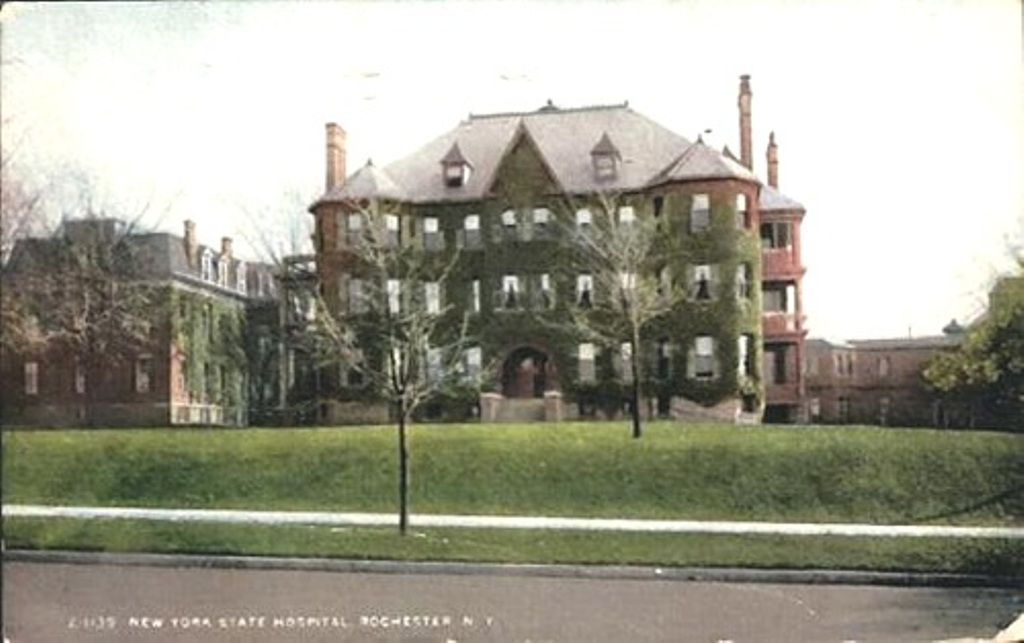
The Willard and Rochester State Hospital Connection

“The raving maniac, the young child, the infirm old man, and the seducer’s victim, were crowded in a building whose remembrance must seem painful.”
– W. H. McIntosh, History of Monroe County, New York

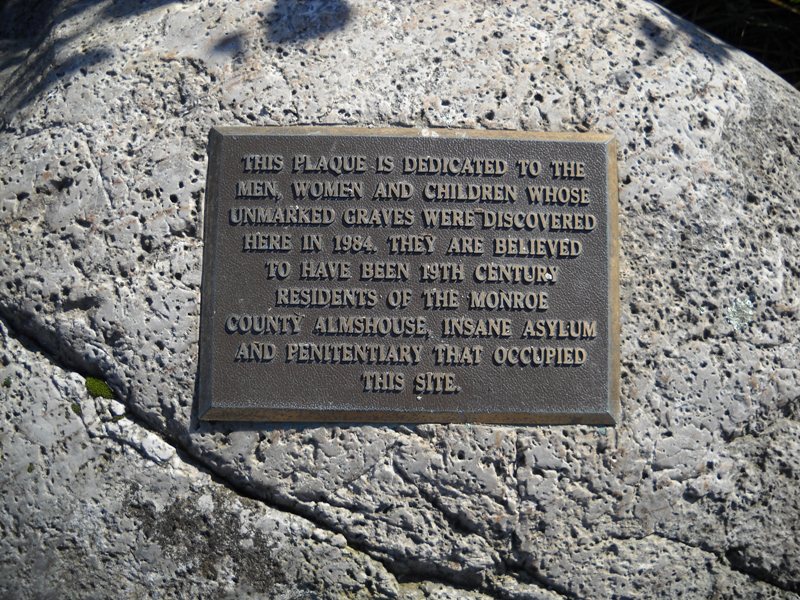
To the west of the entrance of the Vietnam Veterans Memorial of Greater Rochester in Highland Park (1440 South Avenue, Rochester, NY) stand three cream colored wooden arbors with benches, a lovely brick patio, and a small garden. This site, now known as The Remember Garden, marks the old burial ground that was used to bury paupers and criminals in unmarked, anonymous graves during the nineteenth century. In July 1984, approximately 900 human remains were discovered in this unmarked cemetery which was located behind the old Penitentiary. The bodies are believed to be the inmates who lived and died at the Work House (Penitentiary), Alms House, and the Insane Asylum between 1826 and 1863. 284 to 305 remains were re-interred in Mount Hope Cemetery in 1985. The memorial that marks the location of the cemetery in Highland Park was dedicated in May 2009, and the memorial to mark the re-interred remains at Mount Hope Cemetery may be dedicated in the spring of 2012. See 1872 “Bone Yard” The Remember Garden.

Remember Garden, Highland Park

Remember Garden, Highland Park

It is indeed unfortunate that thousands of poor “sane” men, women, and children, who lived and died in the county poor houses and other charitable institutions of our country, were buried in anonymous, unmarked graves; but their final resting places can be marked with engraved headstones. The same rule does not apply for those who were labeled as “insane” which also includes people who were diagnosed with epilepsy. It is virtually impossible for family researchers to obtain the medical records of their ancestors who were incarcerated at these long closed insane asylums because of the federal HIPAA Law which states, The Office for Civil Rights enforces the HIPAA Privacy Rule, which protects the privacy of individually identifiable health information; the HIPAA Security Rule, which sets national standards for the security of electronic protected health information; and the confidentiality provisions of the Patient Safety Rule, which protect identifiable information being used to analyze patient safety events and improve patient safety.” This rule has also been applied to burial ledgers and death records of former NYS Hospitals and Custodial Institutions. Everyone has been forced to sign HIPAA documents at their doctor’s office. Most people interpret this law as one that applies to the living, not the dead. An individual’s right to privacy ends at death but the right of patient confidentiality apparently lasts forever. What is even more confusing is that a few states have interpreted this federal law differently than New York State. SEE NEW HIPAA UPDATE!

Monroe County Poor House & Rochester State Hospital

Monroe County Poor House & Rochester State Hospital

Washington, Oregon, Massachusetts, and Minnesota have allowed the release of the names of former psychiatric patients buried in anonymous, unmarked graves to the public. In some cases, these states have provided funds for cemetery restoration and engraved headstones. One would presume that if other states have released the names of patients, then New York State should be allowed to do the same. To deny our ancestors this simple remembrance, for all eternity, on the grounds that they were unfortunately and unnecessarily labeled as mentally ill, is unconscionable. The people of the state and the country have a right to know where their ancestors are buried; and the patients should have the right to be remembered with dignity.

Bill S2514 has been introduced to the New York State Legislature by Senator Joseph E. Robach. Let’s keep our fingers crossed that this bill becomes a law.

So, what does Willard State Hospital have to do with Rochester State Hospital? (The main building of the Willard State Hospital was demolished in 1984/85. Some of the buildings currently belong to the NYS Prison System / Willard Drug Treatment Facility).

The Willard Act of 1865 was “An Act to authorize the establishment of a State asylum for the chronic insane, and for the better care of the insane poor, to be known as The Willard Asylum for the Insane.” This law introduced a new policy that “was to relieve the county of their care and devolve it upon the State through the ‘Willard,’ and the State Lunatic Asylum at Utica.” Willard opened its doors on October 13, 1869. From the beginning New York and Kings Counties were exempt from this law; Monroe County quickly followed. “An Act In Relation To The Chronic Pauper Insane” was passed on April 25, 1871. The board of State Commissioners of Public Charities was authorized to hear and determine all applications by the county superintendents of the poor of the counties of New York State. On written application the several counties had to prove to the Legislature that “the buildings and means employed to take care of the chronic pauper insane of such county are sufficient and proper for the time being for such purpose.” Monroe County was exempted from sending their pauper chronic insane to the Willard Asylum about the year 1872.

Willard State Hospital, Main Building, circa 1898.

Willard State Hospital, Main Building, circa 1898.

The Willard Asylum was unique because it was created to end the poor house system of caring for the insane. From 1869 to 1890, an inmate once committed to the facility, was prohibited from being returned to the county poor house unless the county was exempted, or the county did not want that particular patient returned. Willard provided a permanent home for the pauper chronic insane or “incurables” of the state. The term chronic refers to an individual who suffered from insanity for more than one year. Counties that were not exempt from the law were responsible for transporting their pauper chronic insane to Willard and paying the cost of the patients’ care, maintenance, and clothing. Willard was located in the towns of Ovid and Romulus, Seneca County, New York, on the shores of Seneca Lake and is roughly 80 miles from Rochester.

According to The Proceedings of the Board of Supervisors of the County of Monroe, 1871, the only patient who was sent to The Willard Asylum for the Insane by the County of Monroe was Francis J. O’Brien, at the yearly cost of $129.00. The U.S. Federal Census of 1870, which is the first census of the Willard Asylum, shows that Mr. O’Brien was 29 at his last birthday; male; white; born in the state of Michigan; insane. In 1880, he is listed as: 40 years old; married; occupation, physician; born in the state of Michigan; insane; living in the North wing of the main asylum building. The 1880 U.S. Federal Census Schedules of Defective, Dependent, and Delinquent Classes lists him as: residence when at home, Rochester, Monroe; form of disease, Chronic Mania; duration of present attack, 13 years; total number of attacks, 1; age at which first attack occurred, 27; what has been the total length of time spent by him (or her) during life in such asylums, 11 years. In 1900, he is listed as 60 years old; inmate, white; male; married; born in Michigan. His name does not appear on the 1910 Federal Census. Mr. O’Brien died between 1900 and 1910 and spent at least 31 years of his life locked up at Willard as did thousands of New Yorker’s during the last two centuries. We will never know how or when he died, or where he was buried unless current law changes.

The State Care Act passed in 1890. It was An Act to promote the care and curative treatment of the pauper and indigent insane in the counties of this state, except New York, Kings and Monroe counties, and to permit said excepted counties or either of them, in accordance with the action of their respective local authorities, to avail themselves or any one or more of them, of the provisions of this act.The State Commission in Lunacy was given the power to divide the State into hospital districts and dropped the distinction between acute and chronic asylums. This law also renamed state insane asylums to state hospitals. Willard was no longer an asylum for the chronic insane only and was renamed Willard State Hospital which served the counties of Allegany, Cayuga, Genesee, Ontario, Orleans, Schuyler, Seneca, Steuben, Tompkins, Wayne and Yates. The Monroe County Insane Asylum was renamed Rochester State Hospital and served the counties of Monroe and Livingston. On July 1, 1891, Monroe County came into the state system and the asylum was purchased by the state. The New York State poor house system of caring for the insane ceased to exist October 1, 1893, when the State Care system went into effect.

The commonalities of the Willard Asylum for the Insane and The Monroe County Alms House, were they both shared the same architect; Mr. John Rochester Thomas, born on June 18, 1848, at Rochester, New York. According to W. H. McIntosh in his book History of Monroe County, New York: “John R. Thomas, one of our most enterprising young architects, commenced the practice of his profession here in the year 1866, and now ranks with the leading architects of the country. Mr. Thomas has during the past ten years accomplished a very large amount of work. He introduced the Mansard roof, which was first applied to private dwellings. Mr. Thomas has made a specialty of the study of Gothic art, believing it will be the architecture of the future in this country. He has also designed largely for private dwellings in the city and adjoining country, among which is the residence of H. A. De Land, of Fairport, one of the most elegant and costly private residences in western New York. He also designed Rochester Theological Seminary buildings, Sibley Hall, on the University grounds, the Opera House, the Monroe County almshouse, the University of Virginia, at Charlottesville,Virginia, and the New York State Reformatory buildings, at Elmira. In the year 1874, Mr. Thomas received a very honorable appointment from Governor Dix as one of the State architects, and was assigned at once to the charge of the Reformatory at Elmira, which position he now holds.” (1) The choice of Dr. John B. Chapin, first Superintendent of The Willard Asylum for the Insane, choosing Mr. Thomas as the architect of The Willard Asylum for the Insane caused a great deal of controversy in New York State because at the time he was not yet a state architect. The “Mansard” or French roof is prominent in many of Mr. Thomas’s architectural designs.

The differences between Willard and Rochester State Hospitals, was that Willard had its own twenty-five acre cemetery located about a mile down the road from the facility which contains the remains of 5,776 patients buried in anonymous, unmarked graves. The Rochester State Hospital used Mount Hope Cemetery to bury its inmates. I spoke to a very knowledgeable gentleman from the Rochester Office of Mental Health who stated that the address of the Rochester State Hospital was 1600 South Avenue. He said the facility was torn down in the 1960s to make way for the Al Sigl Center. The address of the Al Sigl Center was given a new address by the U.S. Postal Service: 1000 Elmwood Avenue (corner of South Avenue). In the past, I have searched the Mount Hope Cemetery Records looking for family members and had often seen “1600 South Avenue” given as the residence for many people. I always wondered what it was and on occasion I had Googled the address but received no hits. Now I know why, the address no longer exists.

I have transcribed the earliest records: Names: Monroe County Poorhouse, Asylum, Penitentiary, Other Charities 1838 to 1860. If you believe that your ancestor was an inmate who lived and died at The Monroe County Insane Asylum / Rochester State Hospital you can search for them at the Rochester – Mt. Hope Cemetery Records online. Here is a brief description of what you will see if you decide to search the records for yourself: Under the heading “Residence,” a street name will be given with no specific address; or it will list the place where the person died such as: Insane Asylum, Asylum, County House, Jail, etc. (Be aware that there was an Asylum Street in the City of Rochester that as far as I know, had no connection with the Monroe County Insane Asylum). About 1891, you will start to see the words “Rochester State Hospital” under “Residence.” At some point in the 1900s, instead of listing the place of death as Rochester State Hospital the address has been given instead as “1600 South Avenue.” In some instances, the family of the deceased claimed the body and buried them in the family plot. In the case of pauper and indigent insane, the hospital buried them in unmarked, anonymous graves at Mount Hope Cemetery. Some unclaimed bodies were donated by state hospitals to state medical colleges for the advancement of medical science in which case no grave will be found.

At the very least, the location of these graves should be marked in Mount Hope Cemetery with a memorial indicating the final resting place of the patients of The Monroe County Insane Asylum and Rochester State Hospital. Providing individual, engraved markers would be ideal but without the actual death records this will not be possible. The Rochester State Hospital burial records do exist and should be released to the public, along with all former state hospital burial ledgers in a unified, digital, database in order that descendants and caring citizens can find their ancestors and mark the graves of these forgotten souls if they wish to do so. Hopefully, a new bill introduced into the New York State Legislature by Senator Joseph E. Robach will allow the release of the names of these people who have remained anonymous for over one hundred years. I would like to thank Senator Robach and his staff for writing and sponsoring the bill.

As a life-long Rochester area resident, I am proud to live in a community that has provided so many genealogical resources. I am truly grateful for The Friends of Mount Hope Cemetery who have taken the time and effort to assist me on more than one occasion. A few years ago, volunteer Frank Gillespie, who recently passed away in January 2012, helped me locate my great-grandparents’ grave by providing a map and directions. Marilyn Nolte, President of The Friends of Mount Hope Cemetery, has located the section where many of the Rochester State Hospital patients are buried, and she patiently answered numerous questions regarding the older sections of the cemetery, unmarked graves, and the responsibilities of plot owners. I thank them for their dedication, knowledge, and help.

(1) SOURCE: McIntosh, W. H., History of Monroe County, New York; With Illustrations Descriptive Of Its Scenery, Palatial Residences, Public Buildings, Fine Blocks, and Important Manufactories, From Original Sketches By Artists Of The Highest Ability.Philadelphia: Everts, Ensign & Everts, 716 Filbert Street, 1877, Page 142.

S6805-2011 – S2514-2013 – NY Senate Open Legislation – Relates to patients interred at state mental health hospital cemeteries – New York State Senate

NEW! UPDATED BILL: S2514-2013 – NY Senate Open Legislation – Relates to patients interred at state mental health hospital cemeteries – New York State Senate.

S6805-2011 – NY Senate Open Legislation – Relates to patients interred at state mental health hospital cemeteries – New York State Senate.

A10636-2011 – NY Assembly Open Legislation – Relates to patients interred at state mental health hospital cemeteries – New York State Assembly.

Imagine not being remembered in death because in life you were diagnosed with diabetes, heart disease or cancer. Most people would find this kind of treatment cruel and inhumane but it exists to this day for people who were diagnosed with a mental illness or developmental disability during the nineteenth and early twentieth centuries. This bill is important and necessary in order to restore the dignity and personhood of the thousands of people who were incarcerated and died at former New York State Insane Asylums and Custodial Institutions. When the bodies of the inmates were not claimed by family members, they were buried in anonymous, unmarked graves. They deserve to have their names remembered and available to the public in a searchable database.

The list of these former New York State Hospitals includes but is not limited to: BinghamtonBuffaloCentral IslipCreedmoorDannemoraEdgewoodGowandaHudson RiverKings ParkLong IslandManhattanMatteawanMiddletownMohansicPilgrimRochesterSt. LawrenceSyracuseUtica, and Willard

The Feeble-Minded (Intellectual Disabilities) and Epileptic Custodial Institutions of New York includes but is not limited to: Craig Colony for EpilepticsLetchworth Village for Epileptics & Intellectually DisabledNewark State School for Intellectually Disabled WomenRome State School for Intellectually Disabled Adults & Children, and Syracuse State School for Intellectually Disabled Children. There may be more.

There is no good reason why these long deceased souls need to be punished and stigmatized in death for an illness or disability that they lived with in life. The great majority of these former state hospitals closed in favor of smaller group home settings or changed their names to Psychiatric Centers about 1974. The cemeteries that belonged to these institutions are inactive. I do not understand why anyone would need to have their name withheld from any list until 50 years had passed after their death. This requirement in the bill only serves to feed the stigma. Let’s hope that even with this flaw, it becomes law.

Photo by Roger Luther at www.nysAsylum.com

Photo by Roger Luther at http://www.nysAsylum.com

The Willard Cemetery - Veterans

Veteran’s Graves 5.14.2011

Willard Cemetery 1 - 5.14.2011

Willard Cemetery 5.14.2011

Sally Green’s Anonymous Burial, Rochester, NY

I am writing this post in response to the story in the Rochester, NY, Democrat and Chronicle, of the anonymous burial of Sally Green, a woman who lived with a mental illness and somehow slipped through the cracks never receiving the help or care that she needed. What is most disturbing to me is the fact that her family was not notified of her death until she had been dead and buried for three weeks in a cardboard coffin (with or without a vault), in an anonymous, unmarked grave. In my opinion, the reason why this poor woman was buried in an anonymous grave wasn’t because her family didn’t care about her; it was due to the fact that she had mental health issues. The big questions in my mind are: why didn’t anyone take the time to locate her family, and who else is buried in this anonymous section of this public cemetery?

Sally Green Coffin - Tina Yee Photographer

Sally Green Coffin – Tina Yee Photographer

During the nineteenth and twentieth centuries, state “insane” asylums and hospitals, including the former Monroe County Insane Asylum later renamed Rochester State Hospital, buried thousands of patients in anonymous, unmarked graves. I was not aware that this practice was still in use. Who knows if the families of these patients were ever told what became of them. Most people are not aware that in the state of New York the unmarked, anonymous graves of the “mentally ill” located in former NYS Hospital cemeteries and public cemeteries such as Mount Hope Cemetery (Rochester, NY), cannot be marked with an engraved headstone and their names cannot be made public because of the interpretation of federal HIPAA Law by the NYS Office of Mental Health. To deny our ancestors and the recently deceased this simple remembrance, for all eternity, on the grounds that they were diagnosed with a mental illness, and, therefore, by law, they are not permitted to be remembered, is unconscionable.

Everyone should be remembered with dignity. I wonder if the public will be given an explanation as to why no one took the time to find out if Sally Anne had a family? These actions are dehumanizing, insulting and simply unacceptable.

Family Never Told Of Sally Green’s Death, Burial – Democrat & Chronicle 2.18.2012.
“Trudging through the wet grass in Oatka Cemetery, mud and rainwater creeping up the sides of her jeans as tears dripped down her face, Cynthia Green finally cried out. “This is so stupid! I’m just trying to find my sister!” On Jan. 19, Sally Green died at Strong Memorial Hospital, and in an apparent series of missteps and miscommunications, no one told her son Derrick or any of her eight living siblings that she had died until long after she was buried. Family members finally learned of her passing last week, and, seeking answers, they say they were repeatedly spurned by officials, none of whom were willing to claim responsibility for the mishap. When they finally visited the small section of Oatka Cemetery reserved for indigent burials — home to about 300 others that the county has had buried there over the past six years — they searched for her resting place for more than half an hour. Sally Green’s was one of the many unmarked graves, so the family eventually had to ask for assistance from the cemetery caretaker, who pointed them to the right spot: a flat pile of mud unmarked by anything other than a small yellow rock. They said a prayer as they gathered around the burial site, where beneath their feet, the body of their mother and sister lay in a coffin that was little more than a glorified cardboard box marked “Handle with care.” “Can you imagine someone in your family getting buried without notifying you, and then you find out a month later?” said Derrick Green. “All of this is just crazy. Mentally, I’m so drained right now. I just don’t want this to happen to no one else.”

A Troubled Life
Afflicted with a mental illness, Sally Green had been drifting for the past several years, said her sister Cynthia Green. She was in and out of homeless shelters, and a drinking problem led to numerous hospitalizations. She was found on the morning of Jan. 19 in a room at the Cadillac Hotel, where she’d been staying for the previous two weeks, and was pronounced dead at Strong at 10:07 p.m. She was 57. But family members say that no one at the hospital called them, nor did anyone at the Monroe County Public Administrator’s Office, which is tasked with tracking down surviving family members and preparing funeral arrangements if no family is located. In the case of Sally Green, this shouldn’t have been difficult. Her son, as well as six of her eight living siblings, lives in the Rochester area. She has numerous cousins in Rochester as well, four of whom work for the Rochester Police Department. Additionally, she always carried identification and an address book with her, but officials never showed up at the Cadillac Hotel to search her belongings, said Tina Spence, the hotel’s front desk clerk. “They could have easily found where I was at,” said Derrick Green, 42, of Rochester. The family now wants the county to pay to have the body exhumed so they can conduct their own funeral and bury Sally Green next to her mother, Cora Green. “My mom is not resting well right now,” said Derrick Green. “This way, at least we could say goodbye to her in the right kind of way.” They’d also like a better explanation as to the cause of her death. To date, the family has no insight into how she died other than a three-word description on the death certificate: “acute myocardial infarction” — or a heart attack, in common terms. On Friday, officials at Strong Memorial Hospital called the family and set up a meeting to explain the cause of her death further, said Derrick Green. Social workers at the hospital attempted to locate relatives on the day Sally Green was admitted but were unable to find any, said Teri D’Agostino, spokesperson for Strong Memorial Hospital. When Green died, the hospital turned the case over to the public administrator, Frank Iacovangelo, said D’Agostino. Iacovangelo’s firm, Gallo & Iacovangelo, did not return a call seeking comment. Monroe County also did not return a call seeking comment.

Fourth Of 10 Siblings
Born to Miles and Cora Green, Sally Green was the fourth of 10 siblings. As a youth, she would often wait until her mother fell asleep clutching her baby sister Cynthia before sneaking over and bringing the baby into her own bed to hold. She grew to be a caring girl with a sarcastic sense of humor and a penchant for taking baths — sometimes more than once a day, said her sister Linda Cloud. She had Derrick when she was 15 years old, but several years later, she began showing signs of mental illness. Unable to care for her son, she gave him up for adoption, but he returned to the family and reunited with his mother when he was 16, family members said. Later in her life, with her mental illness compounded by alcohol abuse, she often found herself staying at the House of Mercy, a homeless shelter in Rochester. There, she became affectionately known as the “lipstick bandit,” because she would often spread lipstick beyond the reaches of her lips and up the sides of her cheeks, said Cynthia Green. In recent months, she lived with her son and called him regularly when he wasn’t home. “I used to be like ‘Why are you calling me so much?'” said Derrick Green. “But thinking of it now, I think she wanted to be around me because she knew her days were coming to an end.” She moved into the Cadillac Hotel on Jan. 5, and her son was helping her find an apartment of her own, he said. Though she stayed there for only two weeks prior to her death, she endeared herself to the staff, thanks to her bright orange hat and affinity for burnt popcorn. On Jan. 29, two days after her burial, a one-line obituary ran in the Democrat and Chronicle, but several more days would pass before family members learned of her death. She is predeceased by her brother Gary, and survived by her son Derrick; her brother Miles; her sisters Gloria, Cora, Joyce, Cynthia, Clara Ingram, Mildred Gibson and Linda Cloud; and many other relatives. Derrick Green said he’s had trouble eating, sleeping, and working since his mother died. “I only have one mother,” he said, “and I want someone to be liable for what they have done.” SDOBBIN@DemocratandChronicle.com & Twitter: @Sean_Dobbin

Monroe County Public Administrator Reveals New Protocol For Finding Next Of Kin, Changes Made In Response To Sally Green Case – David Andreatta – Democrat & Chronicle 4.26.2012
“The circumstances that led to Sally Green being buried in a pauper’s grave unbeknownst to her family were “unusual and exceptional,” the Monroe County public administrator, who authorized the burial, wrote to the Monroe County Legislature in a letter dated this week. The public administrator, Frank Iacovangelo, wrote in response to legislators who questioned his protocol for locating next of kin following Democrat and Chronicle reports of Green’s burial and subsequent exhumation from Oatka Cemetery in Scottsville. Iacovangelo paid to have Green reburied at Mt. Hope Cemetery. A private lawyer under contract with the county, Iacovangelo wrote that the incident prompted a “thorough review” of his office’s protocol and “resulted in an enhancement of office procedures to prevent any recurrence of burial without family notification and approval.” The letter, dated April 23 and to which new procedures were appended, marked the first time he has publicly revealed the extent of the changes and said the Green situation was unique. “Up until (Green’s burial in) February of this year, I have never had a situation arise where I was unable to find a relative willing to act (on behalf of the deceased) when such a person actually existed,” the letter read. The matter of Green, who had drifted in and out of homelessness and was estranged from her family when she died in January, turned a spotlight on taxpayer-funded indigent burials and the function of the public administrator, who is charged with handling the estates of the poor and people who die without a will or executor. Much of the new protocol reads like a list of common sense steps one might take to track down relatives of people disconnected from society.” DANDREAT@DemocratandChronicle.com
http://twitter.com/dandreattaDandC