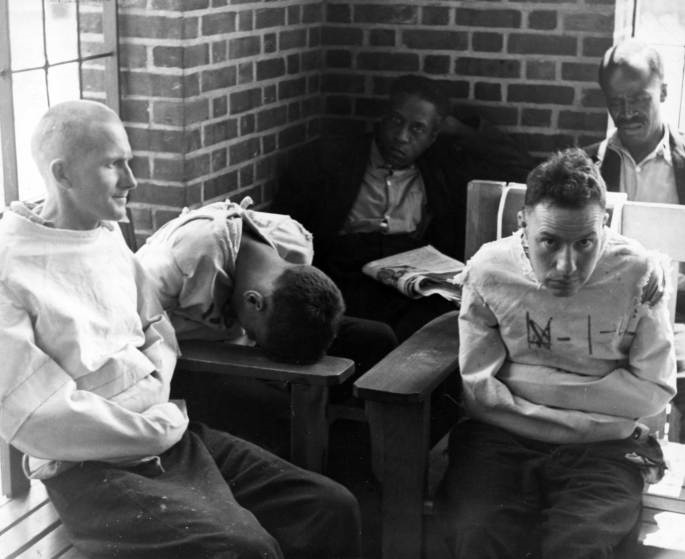
Newark State School for Women & Cemetery

New York State School – Newark Custodial Institution for Developmentally Disabled, Childbearing Age Women. February 17, 1932, Begins Accepting Boys.

1878-1885: The Newark State School operated as part of the Syracuse State School.
1885: By statute erected as the State Custodial Asylum for Feeble-Minded Women.
1919: Name changed to Newark State School for Mental Defectives.
1927: Became a part of the Department of Mental Hygiene and name changed to Newark State School.
1932: Accepts boys.

1916 Newark State Custodial Institution For Feeble-Minded Women.
Early State Schools in New York.
State of New York Thirty-Seventh Annual Report of the Board of Managers of the Newark State School for Mental Defectives, 1921 – Through – Fifty-Ninth Annual Report of the Board of Visitors of the Newark State School, at Newark, Wayne County, New York to the Department of Mental Hygiene 1943.

Newark State School 1937

Newark State School 1937

Newark State School 1937-2

Newark State School 1937-2

Newark State School 1937-3

Newark State School 1937-3


Newark State School for Women

Newark State School for Women

Photograph courtesy of The Museum of disABILITY History 

The New York State Custodial Asylum for Feeble-Minded Women was established in 1878 in response to an increasing awareness that almshouses were improper places for ‘feeble-minded’ women. Social reformer Josephine Shaw Lowell led the crusade, with assistance from the State Board of Charities. Lowell delivered several reports before the state legislature expressing her concern that feeble-minded women often disregarded moral and sexual restraint when placed in the undisciplined environment of an almshouse and frequently had illegitimate children who, in turn, became dependent on the state for their welfare. Women of child-bearing age, fifteen to forty-five, were admitted into this institution, in order to “prevent them from multiplying their kind.” (New York State Board of Charities Report, 1879).

CLICK HERE TO VIEW THE VIDEO They’re Buried Where? by Seth Voorhees

THE BAD NEWS: Thousands Remain Nameless! 6.15.2015.

THE GOOD NEWS: One Man Is Remembered! 6.14.2015.

Letchworth Village for the Developmentally Disabled and Epileptics & Cemetery

Letchworth Village – New York State Custodial Institution for Epileptics and the Intellectually Disabled.

1916 Letchworth Village State Custodial Institution For Feeble-Minded and Epileptics.
Letchworth Village Cemetery Names – Find A Grave.
Legend Tripping in Letchworth Village – AbandonedNYC – Will Ellis.

Letchworth Village

Letchworth Village

Photograph courtesy of The Museum of disABILITY History

Letchworth Village was established in 1912 to alleviate overcrowding at the existing state institutions of New York. Because the institution admitted people with developmental disabilities and people with epilepsy, a complex system of classification was established for both living arrangements and the educational training methods. Significant efforts were undertaken to ensure that the institutional atmosphere resembled a calm country village and emphasis was placed on the students’ happiness. Letchworth Village also focused on scientific research and Dr. George A. Jervis received international acclaim for his studies on phenylketonuria (PKU) in the 1930s.”

There is a plaque at the cemetery that has all the names of the patients who are buried there. I do not know if the town or any particular group maintains the cemetery.

CLICK HERE TO VIEW THE VIDEO They’re Buried Where? by Seth Voorhees

THE BAD NEWS: Thousands Remain Nameless! 6.15.2015.

THE GOOD NEWS: One Man Is Remembered! 6.14.2015.


Craig Colony for Epileptics & Cemetery

Craig Colony – New York State Custodial Institution for Epileptics.

1916 Craig Colony State Custodial Institution For Epileptics.
Craig Colony Cemetery Names – Find A Grave.
UPDATE Craig Colony for Epileptics Cemetery – June 2013.

Craig Colony for Epileptics

Craig Colony for Epileptics

Photograph courtesy of The Museum of disABILITY History

The Craig Colony for Epileptics was established in 1894 following the discovery of a promising new method of treatment for people with epilepsy. This method, known as the ‘colony care plan,’ was discovered by Dr. Frederick Peterson, a physician at the Hudson River State Hospital for the Insane. He had observed that the epileptic patients under his care were subjected to conditions that provided little remedy for their illness, and became interested in the search for ways to improve their treatment. In 1886, while on an “inspection tour of foreign asylums,” he came across Bethel Colony in the city of Bielefeld, located in the Westphalia region of Germany. Bethel Colony consisted of several thousand people with epilepsy living and working together to create a self-sufficient community. There were no secret remedies, and no all-healing drugs, there was simply attention paid to a proper diet, proper habits and a therapeutic environment. Most importantly, the inhabitants labored during the day to bring about a healthy physiological fatigue. Physicians believed that this helped exert energy that would otherwise have been released during an epileptic seizure.” (American Journal of Insanity, Vol. 49, 1893).

It appears that Craig Colony had at least some engraved headstones.

CLICK HERE TO VIEW THE VIDEO They’re Buried Where? by Seth Voorhees

THE BAD NEWS: Thousands Remain Nameless! 6.15.2015.

THE GOOD NEWS: One Man Is Remembered! 6.14.2015.
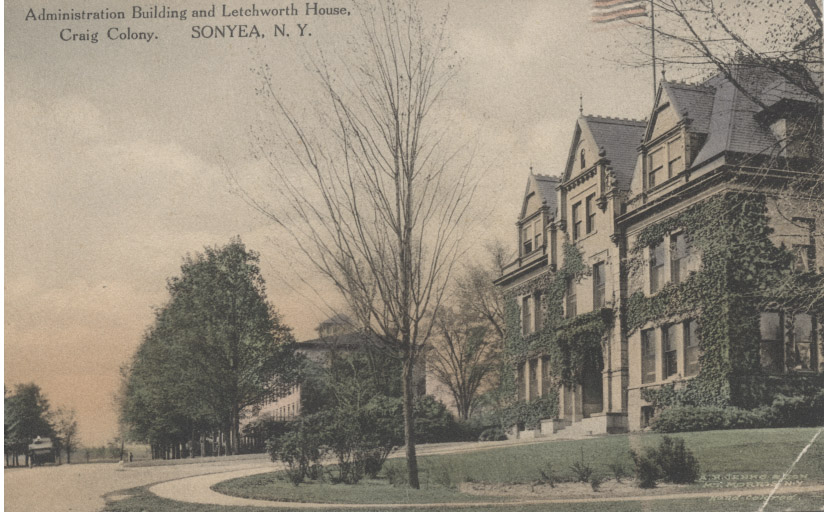
Utica State Hospital & Cemetery

The State Lunatic Asylum at Utica served the ENTIRE STATE OF NEW YORK from 1843 to 1890. After 1890, Utica State Hospital served the counties of Fulton, Hamilton, Herkimer, Montgomery, Oneida, Saratoga, Schenectady, and Warren.
1916 Utica State Hospital.

I believe that “Old Main” had its own cemetery located somewhere on the facility’s grounds. SOME of the deceased patients of Utica State Hospital were buried at Forest Hill Cemetery – Utica, New York.

Utica State Hospital by Roger Luther

Utica State Hospital by Roger Luther

Roger Luther – nysAsylum.

CLICK HERE TO VIEW THE VIDEO They’re Buried Where? by Seth Voorhees

THE BAD NEWS: Thousands Remain Nameless! 6.15.2015.

THE GOOD NEWS: One Man Is Remembered! 6.14.2015.

St. Lawrence State Hospital & Cemetery

St. Lawrence State Hospital served the counties of Clinton, Essex, Franklin, Jefferson, Lewis, Onondaga, Oswego, and St. Lawrence.

1916 St. Lawrence State Hospital.
2014 St. Lawrence State Hospital Preservation Society.

St. Lawrence State Hospital Cemetery Memorial by Colleen Spellecy

St. Lawrence State Hospital Cemetery Memorial by Colleen Spellecy

There appears to be a group already in place that takes care of the St. Lawrence State Hospital Cemetery. They have placed a beautiful memorial in the cemetery and it appears that they will, in fact, let you know if an ancestor is buried there if you write them a letter. In the meantime, please visit St. Lawrence State Hospital Preservation Society.

St. Lawrence State Hospital Memorial 2 by Colleen Spellecy

St. Lawrence State Hospital Memorial 2 by Colleen Spellecy

St. Lawrence State Hospital Cemetery by Colleen Spellecy

St. Lawrence State Hospital Cemetery by Colleen Spellecy

CLICK HERE TO VIEW THE VIDEO They’re Buried Where? by Seth Voorhees

THE BAD NEWS: Thousands Remain Nameless! 6.15.2015.

THE GOOD NEWS: One Man Is Remembered! 6.14.2015.

Rochester State Hospital & Mt. Hope Cemetery

Rochester State Hospital (Rochester, Monroe County, New York), served the counties of Monroe and Livingston. My understanding is that the anonymous graves are located in section Y of Mt. Hope Cemetery.

1916 Rochester State Hospital.
Rochester State Hospital
Rochester State Hospital – OPACITY.
Rochester State Hospital – Rochester, NY – 9.7.2013.
1872 “Bone Yard” The Remember Garden – Rochester, NY – 4.18.2013.
The Willard and Rochester State Hospital Connection – 4.18.2012.
1888 Monroe County Insane Asylum (Names).
https://mcnygenealogy.com/vr/insane-asylum-deaths.htm

Monroe County Poor House & Rochester State Hospital

Monroe County Poor House & Rochester State Hospital

RELATED LINKS & ARTICLES CONCERNING ROCHESTER:

Very interesting article on the use of TREADMILLS in Rochester, New York:
1843 A Christmas Carol – 12.9.2013.

Duffy’s Malt Whiskey Company, Rochester, New York:
1921 Duffy’s Malt Whiskey – Nostrums For Good Health! – 1.29.2014.

Susan B. Anthony:
1860 Susan B. Anthony – 10.19.2012.

Anonymous Burial In Rochester, NY:
Sally Green’s Anonymous Burial – 2.24.2012.

The Friends of Mount Hope Cemetery.
City of Rochester – Mount Hope Cemetery.
City of Rochester, Monroe County, New York.
The University of Rochester’s Connection to “Our Quietest Neighbor” – Rochester’s Hope (Includes Map of Mt. Hope Cemetery from 1885).
1906 Elopements, Suicides & Accidents at New York State Hospitals – 8.2.2012.

CLICK HERE TO VIEW THE VIDEO They’re Buried Where? by Seth Voorhees

THE BAD NEWS: Thousands Remain Nameless! 6.15.2015.

THE GOOD NEWS: One Man Is Remembered! 6.14.2015.

Pilgrim State Hospital & Cemetery

Pilgrim State Hospital served the counties of Brentwood, Suffolk, and New York. Pilgrim was the largest state hospital in New York State. At its peak in 1954 it held 13,875 patients.

2012 Pilgrim State Hospital History
Pilgrim State Hospital – OPACITY
Pilgrim State Hospital – Emptiness – OPACITY.
A word about TOM KIRSCH, the man who created OPACITY. His work is superb! You could spend a few hours just looking at his photographs!

Life.Time.Com – Strangers To Reason: Life Inside A Psychiatric Hospital, Pilgrim State Hospital 1938.

Alfred Eisenstaedt - Time & Life Pictures-Getty Images-Pilgrim State Hospital 1938-Woman

Alfred Eisenstaedt – Time & Life Pictures-Getty Images-Pilgrim State Hospital 1938-Woman.

(LIFE Magazine Article: The Shadow Of Insanity 1938.)


Alfred Eisenstaedt - Time & Life Pictures-Getty Images 1938-Pilgrim State Hospital 1938-Men

Alfred Eisenstaedt – Time & Life Pictures-Getty Images 1938-Pilgrim State Hospital 1938-Men.

 LIFE Magazine Article: The Shadow Of Insanity 1938.

CLICK HERE TO VIEW THE VIDEO They’re Buried Where? by Seth Voorhees

THE BAD NEWS: Thousands Remain Nameless! 6.15.2015.

THE GOOD NEWS: One Man Is Remembered! 6.14.2015.

Mohansic State Hospital & Cemetery

Mohansic State Hospital served the counties of Yorktown and Westchester.

1916 Mohansic State Hospital

CLICK HERE TO VIEW THE VIDEO They’re Buried Where? by Seth Voorhees

THE BAD NEWS: Thousands Remain Nameless! 6.15.2015.

THE GOOD NEWS: One Man Is Remembered! 6.14.2015.
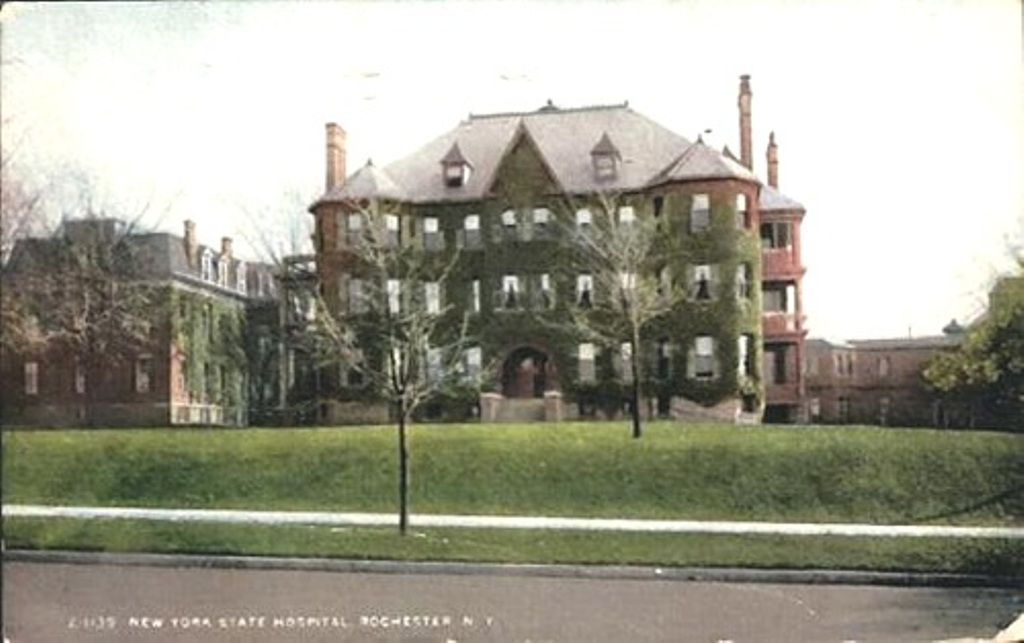
Middletown State Homeopathic Hospital & Cemetery

Middletown State Homeopathic Hospital served the counties of Orange, Rockland, Sullivan, and Ulster.

1916 Middletown State Homeopathic Hospital.

One of my blog followers has shared some great news about Middletown State Hospital. The Rockland Psychiatric Center has all the records for Middletown and will give the date of admission, date of death, and the marker number of your ancestor / loved one. The cemetery is located on Dorothy Dix Road, Middletown, NY. Call 845-359-1000 for more information.

Rockland Psychiatric Center
140 Old Orangeburg Road
Orangeburg, NY 10962

CLICK HERE TO VIEW THE VIDEO They’re Buried Where? by Seth Voorhees

THE BAD NEWS: Thousands Remain Nameless! 6.15.2015.

THE GOOD NEWS: One Man Is Remembered! 6.14.2015.
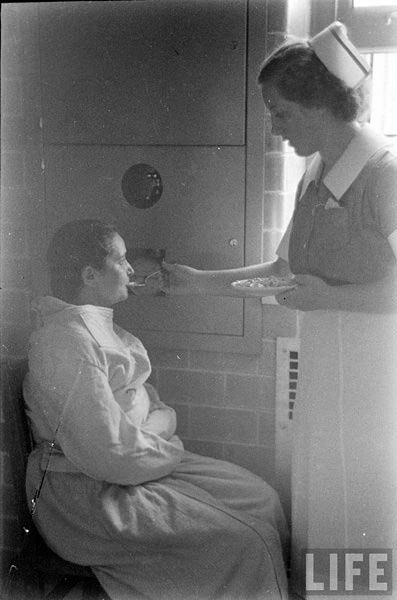
Manhattan State Hospital & Cemetery

At various times, New York City’s Insane Asylums included the asylums on Blackwell’s, Hart, Randall’s, and Ward’s Islands; and Central Islip. The Asylum for the Insane on Ward’s Island with branches on Ward’s and Randall’s Islands, were for Men. The Lunatic Asylum of Blackwell’s Island with branches on Blackwell’s and Hart Islands were for Women. On February 28, 1896, the New York City Asylum became Manhattan State Hospital. After 1896, it served the counties of New York and Richmond.

1916 Manhattan State Hospital.
1839 New York City Lunatic Asylum.
1887 Ten Days In A Madhouse by Nellie Bly.
1887 State of New York, State Board of Charities, In the Matter of the Investigation of the New York City Asylum for the Insane, Report, August 12, 1887.
Ward’s Island, now Wards Island.
Blackwell’s Island, Welfare Island, now Roosevelt Island.
Hart Island.
Randall’s Island.
Central Islip, New York.
New York City Map.

VARIOUS ARTICLES ABOUT MANHATTAN STATE HOSPITAL:
Kings county and New York county provide for their insane under special statutes. The former county provides for 800 or 1000 insane and the latter for over 1,700. On Ward’s island is situated the State Emigrant Insane Asylum which provides for the insane emigrants for the term of five years from the time of their landing in this country. This asylum furnishes accommodations for about 200 patients. The annual expense per patient in this institution is $150. The per capita cost of building $1,138 and the total annual cost, $22,500. There are upward of 500 patients in private asylums so that the insane population of New York state is probably not far from 7,000 or 8,000 at the present time. . .The annual expense per patient in the two New York county institutions is in the New York City Asylum for the insane $92.89, and for the New York Lunatic Asylum on Blackwell’s island $73.84. The annual expense per patient in the Kings County Lunatic Asylum, situated at Flatbush, L. I., is $120. The total annual cost for these three county institutions for the insane is as follows: New York City Asylum for the insane, Ward’s island, $53,504 ; New York Lunatic Asylum, Blackwell’s island, $89,420 ; Kings County Lunatic Asylum, Flatbush, $92,400. . .”
SOURCE: Proceedings of the Conference Of Charities, Held In Connection With The General Meeting of the American Social Science Association, Detroit, May 1875, Tolman & White Printers, Boston, Mass., October 1875, Page 56.

MEDICAL OFFICERS:
Hart’s Island – Superintendents. (First opened for 50 patients, January 23, 1877.) Dr. Armand Duploo 1877-1878; Dr. Andrew Egan 1883-1891; Dr. T. M. Franklin 1878-1879; Dr. George A. Smith 1892-1893; Dr. James R. Healy 1880-1882.

Ward’s Island – Department For Men. W. A Macy, M. D 1886-1897; Geo. F. M. Bond, M. D., acting med. supt 1890; Percy Bryant, M. D. 1897-1900.

Dr. Alexander Trautman, superintendent of the State Emigrant Hospital 1880-1881. Richard M. Lush, warden-in-charge 1872-1873. Dr. Alexander E. MacDonald 1874-1894 (Became general superintendent in 1894, so continuing until the departments for men and women were separated in 1900, when he became superintendent of the men’s division, so continuing until his resignation in 1903.) Dr. E. C. Dent 1904-1906; Dr. Wm. Mabon, supt. and med. director 1906.

Blackwell’s Island – Department For Women. Moses H. Ranney, M. D. 1857-1864; Ralph L. Parsons, M. D. 1865-1876; W. W. Strew, M. D 1876-1879; T. M. Franklin, M. D. 1880-1886; E. C. Dent, M. D. 1887-1895. (Institution abandoned in 1895.)

Ward’s Island—Women’s Department. Dr. E. C. Dent 1896-1906. (In 1906 the departments for men and women were consolidated and Dr. William Mabon became superintendent and medical director.)

Central Islip. Dr. H. C. Evarts, physician-in-charge 1889-1895; Dr. George A. Smith, superintendent 1895.

NEW YORK CITY ASYLUM FOR THE INSANE Medical Officers. Dr. J. N. DeHart 1875; Dr. Wickes Washburn 1875; Dr. W. V. Day 1875; Dr. John A. Arnold 1876; Dr. J. S. Christison 1876 …. ”
SOURCE: 1916 Manhattan State Hospital

“The most serious fire in the history of the State hospital system occurred at the Manhattan State Hospital on Sunday morning, February 18, 1923. The fire, which started in an attic above ward 43 on the third floor of the right wing of the main building of the men’s division of the hospital, was discovered by an attendant at 5.15 A. M. An alarm was immediately sounded and a stream of water from the standpipe in the ward was quickly applied to the flames. In spite of the most strenuous efforts of the attendants and the fire department of the hospital assisted by the New York City firemen, the fire spread rapidly and destroyed the entire roof and third story of the right wing of the building before it could be checked. Heroic efforts to save all patients in the burning section of the building were made, but owing to the dense volume of smoke and the falling of a water tank, the work of rescue was rendered extremely difficult. Twenty-two patients and three attendants lost their lives in the flames. Two patients later died from exposure. As we go to press the cause of the fire is being investigated.”
SOURCE: The State Hospital Quarterly, Volume VIII, November 1922, No. 1, New York State Hospital Commission, Albany, New York, Publication Office, Utica State Hospital, Utica, N.Y., State Hospital Press, Page 318.

“On February 28, 1896, by act of the Legislature, the New York City asylums for the insane were transferred to state care, under the name of the Manhattan State Hospitals, with three divisions, namely: Manhattan State Hospital East (male department)Manhattan State Hospital West (female department), on Ward’s Island; and Manhattan State Hospital at Central Islip for both sexes. At that date there were 30 buildings at Central Islip. In 1912, not including a group of four in process of construction, there are 118.”

NEW YORK CITY:
New York City is composed of five boroughs: Manhattan (New York County), The Bronx (Bronx County), Brooklyn (Kings County), Queens (Queens County), Staten Island (Richmond County)LONG ISLAND contains four counties: Kings, Queens, Nassau, and Suffolk. Apparently in today’s vernacular, “Long Island” refers to the suburban counties of Nassau and Suffolk only, in order to differentiate them from New York City even though all four counties are located on Long IslandMANHATTAN is a separate island. I always wondered where the patients of the New York City Asylums were buried. They may be buried on Hart’s Island. Please click to view THE HART ISLAND PROJECT.

CLICK HERE TO VIEW THE VIDEO They’re Buried Where? by Seth Voorhees

THE BAD NEWS: Thousands Remain Nameless! 6.15.2015.

THE GOOD NEWS: One Man Is Remembered! 6.14.2015.